Weekly Digest Number 14 - April 5th, 2022 |
|
Welcome to the RWU Rail & Labor News! This news bulletin is produced and emailed out each Tuesday morning. We hope you find each week's news and information useful. If so, please share with co-workers, friends, and colleagues. If you like, you can sign them up to get all the news from RWU HERE. Or forward them the link. Note: If you read over this news bulletin each week, you will be sure to never miss the important news of what is going on in the railroad world from a worker's perspective!
|
|
(Editor's Note: It is not the norm for us to print a piece like this first out in the weekly RWU Rail & Labor News. But while we fight with the day to day struggles with the rail carriers to stave off their attacks, we must always remember that the industry we work in has enormous potential and can play a key role in solving many of society's ills and problems. Read the Statement and watch the video below to be inspired to see a vision of what our industry could and should look like. NOTE: We hope to have the speaker in the video in attendance at our Convention in June.) |
|
International Transport Workers Federation: Statement and Video on Why Rail is the Key to the Future |
|
Safe and sustainable rail can help power the world out of the economic, climate and social crises we face today. Safe and sustainable rail is a new economic and social model that redefines the role of passengers, workers, employers, the state and the environment.
Public investment in rail can kickstart the recovery of our economies. Rail reduces carbon emissions. Rail and public transport are the key to the radical, green modal shift we need in transport.
Rail fuels economic and social equality through access to employment, skilled jobs and higher wages. On average, every one job created in rail creates another job in manufacturing, food, trade or other sectors. Rail also provides citizens with the mobility needed to access jobs and livelihoods. Our vision for rail is:
1. Safe: Properly staffed and decent jobs for railway workers – to ensure optimum safety and guarantee access for all.
2. Sustainable: Millions of good, green jobs in rail giving future generations a better world.
3. Social Justice: Workers have a voice on use of new technology and supply chains are free from abuse.
4. Publicly-owned: Railways that operate for good, not profit, and are safely in public hands. Privatization puts passengers, workers, and our communities at risk.
|
|
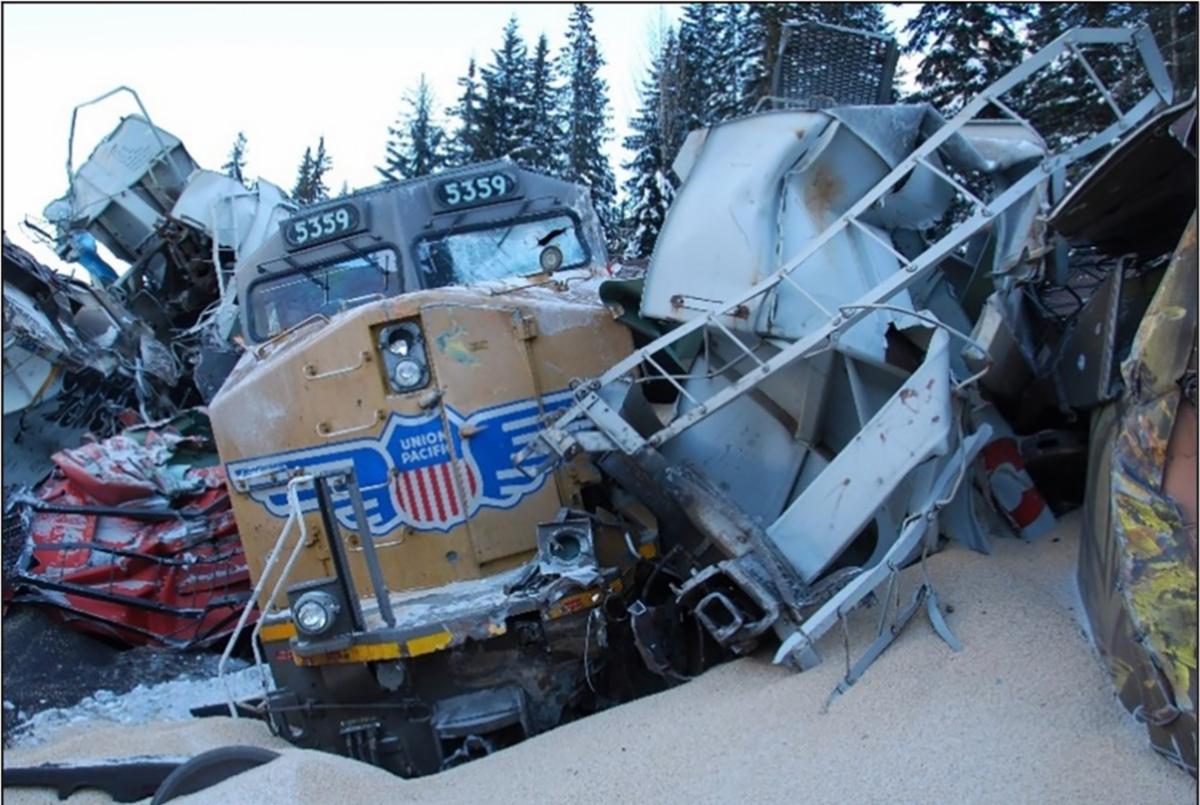
This runaway should have never happened. A basic understanding of railroading should surely have dictated that a train of this weight, sitting in emergency for the past two hours, on a 2.2% grade, with temperatures well below zero, should not have been handled in this fashion. NO handbrakes were applied. And when the TSB issued an emergency order in the days following the wreck, both CP and CN filed suit to oppose it! |
|
Safety Board Issues Findings & Recommendations After Probe of Fatal CP Runaway
Transportation Safety Board cites extreme cold, brake system leaks, and insufficient supervisor training in Field Hill tragedy in 2019
|
|
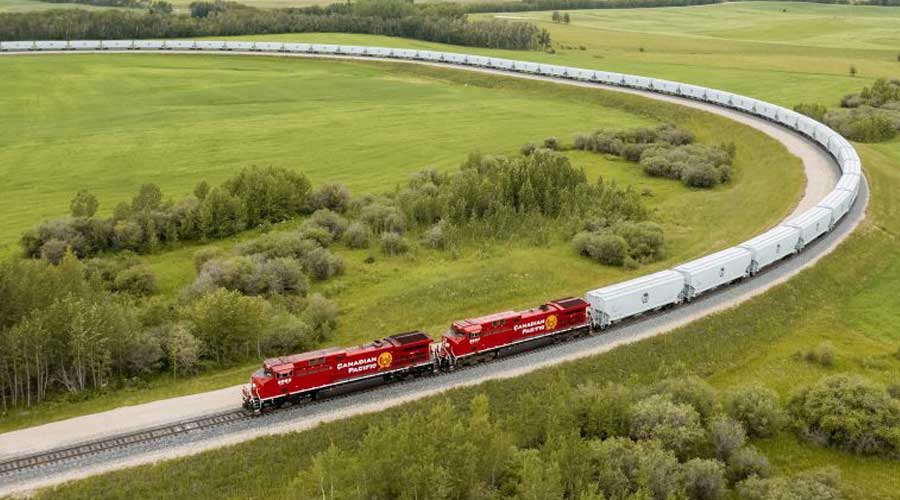
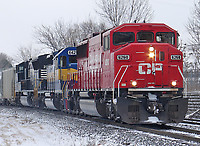
CALGARY, Alberta – The degradation of air brakes in extreme cold, the limited effectiveness of current train brake tests, and inadequate training and experience of supervisory personnel contributed to the 2019 Canadian Pacific grain train runaway and derailment that killed three crew members in British Columbia’s Kicking Horse Pass.
In a statement Thursday evening, CP disagreed with the board’s conclusions and vigorously defended its safety culture, as well as the decisions and training of its personnel.
The board urged Transport Canada to adopt three recommendations aimed at preventing similar accidents:
- Develop more comprehensive test standards and maintenance requirements for brake cylinders on freight cars that operate over steep mountain grades in extreme cold.
- Mandate the installation of automatic parking brake systems on freight cars, with a priority on cars used in bulk unit train operations on mountain grades. The devices have been tested and approved but not embraced by the industry.
- Require Canadian Pacific to show that it can properly identify, assess, and mitigate safety hazards as part of its safety management system.
|
|
(Editor's Note: Not dissimilar to their antics in national handling with the nation's rail unions, when the Class One's are beat, there is always the prospect of mediation/arbitration, where they know they stand a chance of obtaining a conservative pro-business hearing from a "neutral". They tried this tactic before the STB, who took the opportunity to rebuff the Class One carriers. Congrats to the STB!) |
|
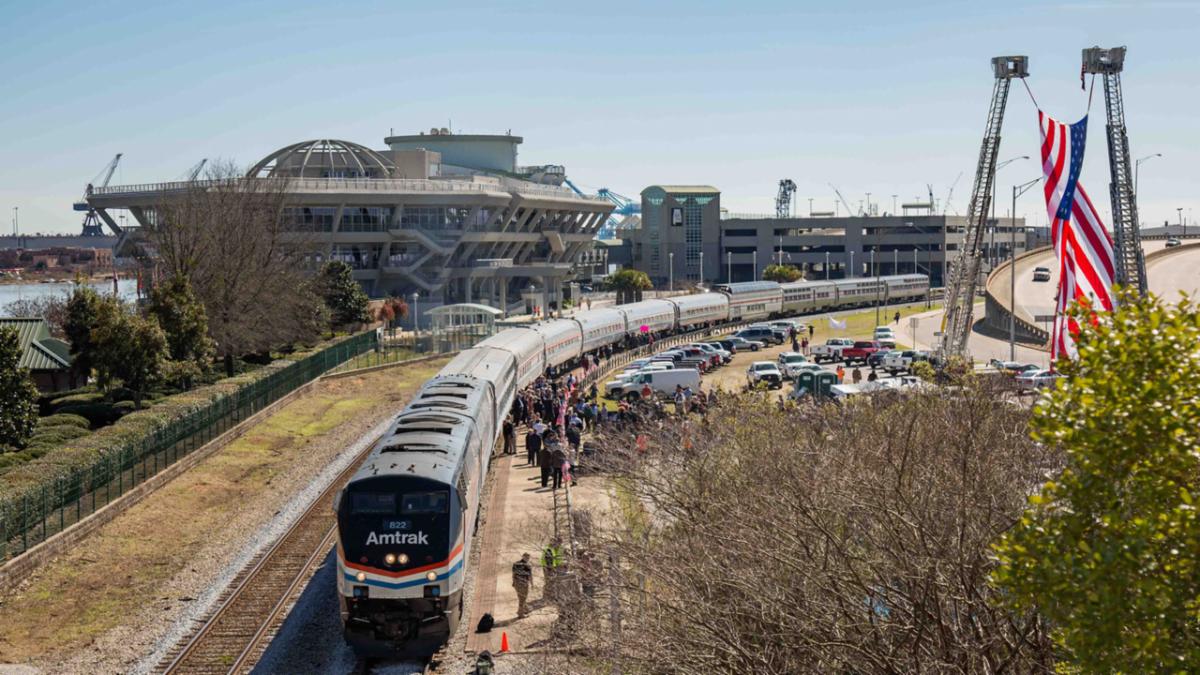
STB Denies Mediation Request in Amtrak Gulf Coast Case |
|
CSX, NS and port officials in March asked the STB to order all parties into mediation, which if granted would have postponed the application’s evidentiary hearing scheduled to begin today. Amtrak replied to the Class Is’ and port’s request, arguing that the board should wait to decide on the request until after the hearing.
"The board favors resolution of disputes through mediation rather than formal proceedings. However, the board notes that mediation has not been requested or agreed to by all parties since this proceeding began more than a year ago," STB officials said in a press release.
|
|
(Editor's Note: The Class One railroads are holding the nation's economy hostage to PSR. Countless shippers - including the Grain and Feed Association - are up in arms about the inefficient and degraded service they are receiving. How much is PSR contributing to current inflation levels? Supply chain breakdown? How much more can the STB and the nation endure before something is done to stop this madness?) |
|
NGFA Takes Railroads to Task With STB |
|
The National Grain and Feed Association (NGFA) on March 24 sent a letter to Surface Transportation Board Chairman Marty Oberman complaining, on behalf of its members, about what it calls “a network problem affecting entire regions of the country.”
NGFA President and CEO Michael J. Seyfert noted problems ranging from full grain elevators waiting for railcars to potentially starved livestock. ““NGFA understands that a variety of circumstances have contributed to the rail service disruptions, but we believe the impact is much more drastic and prolonged due to rail carrier decisions to overly adopt certain principles of Precision Scheduled Railroading and due to significant reductions in crew numbers,” he said. “The ability to recover when normal rail operations are stressed has decreased significantly in the era of PSR and reduced crews, and rail customers and our nation’s supply chains are negatively impacted.”
Seyfert’s letter, in full:
“The National Grain and Feed Association (NGFA) greatly appreciates the Surface Transportation Board’s (STB) oversight of rail service issues and its interest in updates. I write to relay serious complaints from NGFA member companies about significant rail service disruptions for the Union Pacific (UP), Burlington Northern Santa Fe (BNSF) and Norfolk Southern (NS).
|
|
Biden Budget Includes More Funds for Passenger Rail, Transit Projects |
|
WASHINGTON — President Joe Biden’s fiscal 2023 budget recommendations call for a significant boost over previous levels of rail funding, on top of amounts already appropriated in the Bipartisan Infrastructure Law. But like all Executive Branch budgets, they are only suggestions meant to guide Congress’ spending priorities.
The Federal Railroad Administration’s budget request is $4.66 billion compared with $2.86 billion in both 2021 and 2022.
Amtrak gets $1 billion of the increase to $3 billion, split between $1.8 billion for the National Network and $1.2 billion for the Northeast Corridor. With Bipartisan Infrastructure Law funds, the Amtrak total for fiscal 2023 would be $7.4 billion, not including any money the company might secure from competitive grant programs. The additional budget boosts benefit federal-state partnership, grade crossing elimination, consolidated rail infrastructure programs. The only currently enacted FRA funding category eliminated is $2 million for magnetic levitation technical deployment.
The Federal Transit Administration gets a $16.87 billion request, most in the form of $13.63 billion in formula grants. For the first time there will be $300 million available for railcar replacement as soon as a notice of funding opportunity is developed. This is expected to benefit legacy transit agencies.
|
|
(Editor's Note: This accident 8 weeks or so ago went largely unreported. The victim was a Remote Control Operations (RCO) trainman. You can bet the rail carrier is sure to state that RCO had nothing to do with the fatality, a claim they invariably make.) |
|
BNSF Worker in Denver Accident Killed in Fall from Locomotive |
|
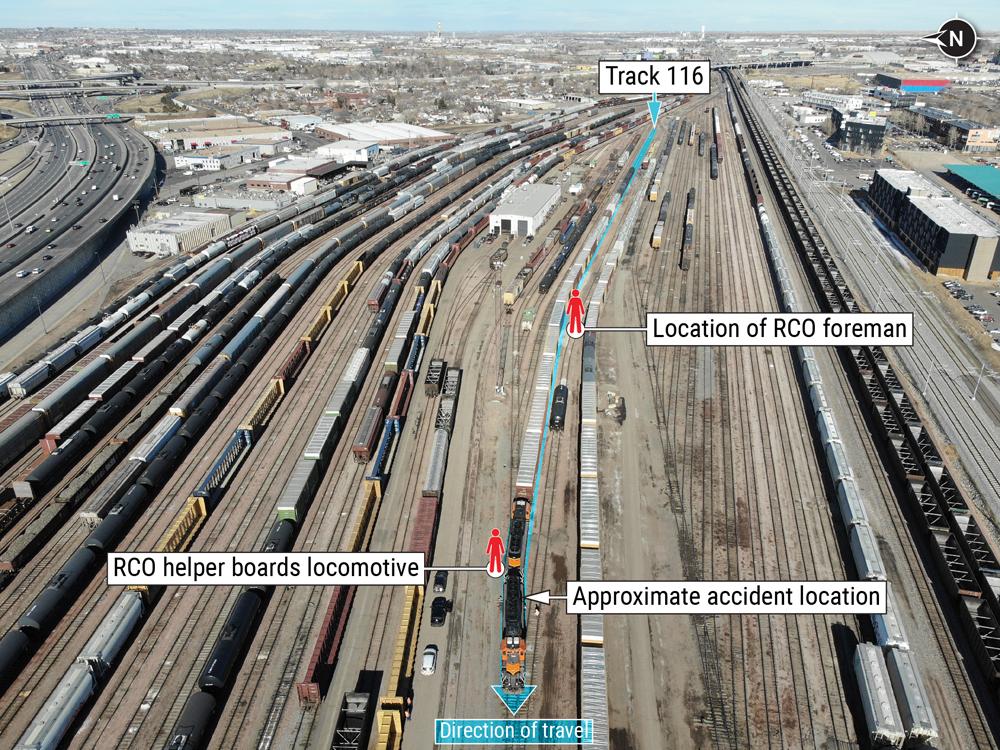
WASHINGTON — A BNSF Railway employee was killed when he fell from the front of a locomotive he was operating using remote control, the National Transportation Safety Board said in a preliminary report on a Feb. 9, 2022, accident at a Denver rail yard.
The incident at BNSF’s Globeville Yard in downtown Denver was originally described by Denver police as involving a train and a pedestrian [see “BNSF employee killed …,” Trains News Wire, Feb. 10, 2022].
The report issued Tuesday indicates two remote operators were working with a train with two locomotives and 21 cars; when the foreman transferred control to his helper, the helper used his remote control to bring the train forward so he could board the locomotive. After he climbed the locomotive stairs, the train began to move and he fell. A safety feature in the remote control initiated an emergency brake application.
The preliminary report indicates the ongoing investigation will focus on operating rules, the mechanical condition of the train, and oversight of BNSF operational and testing program.
|
|
CP Rail Worker Involved in Accident Denounces Terrible Working Conditions |
|
In a wide-ranging interview, a conductor from British Columbia described his shocking experience following his involvement in a train derailment last year, and expressed his views on the current struggle for wage and pension improvements. The interview was conducted prior to Tuesday morning’s sabotage of the CP Rail struggle by the Teamsters, who agreed to binding arbitration and thereby robbed the workers of any legal rights to strike or take action to fight for their demands.
WSWS: Where are you based out of?
Conductor: I’ve been with CP Rail for four years and I’m based in BC. I used to work for government liquor distribution before a friend convinced me to apply to CP Rail.
WSWS: What does your job entail exactly?
C: I am a conductor, but when you are new and you do not have a lot of seniority, you are on a spare board. How it works for me is that I cover holes for when people call in sick or book time off. So, as spares, we do not work as much. Sometimes you can only work 12 hours. Sometimes you could be clear for the evening, but other times you are called in for midnight because someone called in sick. Sometimes, when it is really slow, you do not work for 4-5 days. When you do work you can only book 12 hours’ rest. You are allowed to book more than 12 hours’ rest but it is counted as a penalty if you are on the spare board.
|
|
(Editor's Note: It is a shame the rail unions did not come out swinging years ago and fight PSR from Day #1. RWU urged them to launch a fightback, as we saw it as obvious as to what it was all leading to. Want to learn more about the RWU Campaign Against PSR? Check the link HERE. And order your posters below.)
|
|
Union Blames Train Crew Shortage on Cutbacks Related to Precision Scheduled Railroading (PSR) |
|
WASHINGTON — Ongoing service problems related to crew shortages on the U.S. Class I railroads are entirely self-inflicted due to the implementation of Precision Scheduled Railroading, the SMART Transportation Division labor union has told federal regulators.
“The freight rail network is at a breaking point,” union President Jeremy Ferguson wrote in an April 1 letter to the Surface Transportation Board. “It cannot sustain any more reductions. Substantial changes must be made, and they must be made quickly. We believe intervention from the STB is critically warranted and necessary to right this ship.”
The union, which represents 40,000 railroad operating craft workers, says cutbacks related to PSR have left railroads without enough crews or locomotives to meet freight demand. “Every one of these men and women have been adversely impacted by PSR, and each of them have their own story to tell as to why the railroads are failing to fulfill their end of the bargain regarding service,” Ferguson wrote.
The union’s letter amplified concerns that grain shippers raised in a March 24 letter to the board regarding service problems on BNSF Railway, Norfolk Southern, and Union Pacific.
|
|
(Editor's Note: While passenger rail has the potential to forge ahead, perhaps it is not quite ready for a grand plan such as this one.) |
|
Grand Slam Idea Does Not Even Reach the Plate in Maryland |
|
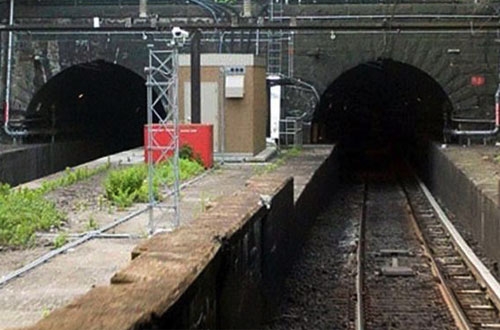
Back in February, AmeriStarRail LLC proposed digging a rail tunnel underneath the city of Baltimore. The tube would be 10 miles long, hold four railroad tracks and avoid the Baltimore Potomac Tunnel, which has been a rail bottleneck for decades. The line would link to the Northeast Corridor, eliminate Penn Station, and allow trains to run at 160 mph. The new route also would have 30 stations and would be used by Amtrak, MARC trains and a newly created metro service.
Recently, the Maryland Department of Transportation and the Maryland Transit Administration officially nixed the idea, following Amtrak’s rejection a couple of years earlier.
Amtrak has been engaged in replacing a 4-mile section of the Baltimore Potomac Tunnel, and officials are not going to stop construction, which is scheduled to begin next year and will cost $4 billion. Two tunnels will be built and will allow trains to move through at 100 mph.
|
|
Rail Passengers Association Names Richards Chair |
|
The Rail Passengers Association at its annual meeting held last week elected Meredith Richards chair. She is the first woman to serve in the position in organization’s history.
Richard’s platform for the organization involves prioritizing volunteer committees under staff direction, galvanizing communications with state passenger organizations and continuing to build the association’s diversity and inclusion programs, RPA officials said in a press release.
"She brings a depth of knowledge and experience not only in advocacy but in public elected service, which will be vital as we work in the next few years to realize the benefits of the Bipartisan Infrastructure Law in communities all across the country," said RPA President and CEO Jim Mathews.
|
|
(Editor's Note: This landmark union victory last week has the potential to jumpstart a new labor movement, one that can only bode well for rail labor and the entire working class.) |
|
Amazon Workers on Staten Island Vote To Unionize in Landmark Win for Labor
Despite heavy lobbying by the company, workers at the facility voted by a wide margin for a union. The win on Staten Island could herald a new era for labor unions in the United States
|
|
Workers at Amazon’s massive warehouse on Staten Island voted by a wide margin to form a union, according to results released on Friday, in a landmark win for a campaign targeting the country’s second-largest employer and one of the biggest victories for organized labor in a generation.
Employees cast 2,654 votes to be represented by Amazon Labor Union and 2,131 against, giving the union a win by more than 10 percentage points, according to the National Labor Relations Board. More than 8,300 workers at the building, the only Amazon fulfillment center in New York City, were eligible to vote.
The win on Staten Island could herald a new era for labor unions in the United States, which saw the portion of workers in unions drop last year to 10.3 percent, the lowest rate in decades, despite widespread labor shortages and pockets of successful labor activity.
No union victory is bigger than the first win in the United States at Amazon, which many union leaders regard as an existential threat to labor standards across the economy because it touches so many industries and frequently dominates them.
|
|
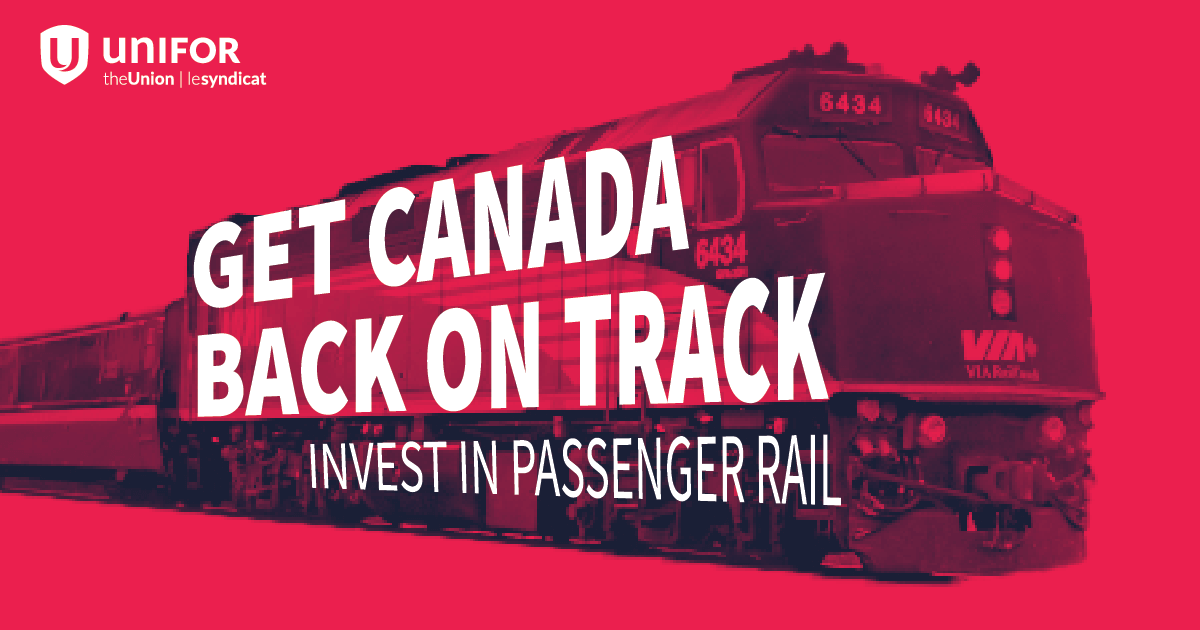
Revitalize Passenger Rail in Canada
Help get passenger rail service in Canada back on track
|
|
Our national public passenger rail system, VIA Rail, continues to suffer due to a lack in long-term government funding and investments, no legislative mandate and outdated equipment and infrastructure. The elimination of routes and reduced frequency of service means that Canadians have fewer accessible transportation options, particularly in remote communities.
Further, the need to share tracks and give priority right of way access to freight is resulting in delays that can often stretch into days.
While countries, such as the U.S. and U.K., are making significant, historic investments in improving and enhancing their national passenger rail networks, Canada continues to slip further behind.
Canadians need a modern, affordable, reliable and safe passenger rail service. These investments can generate significant social, economic and environmental benefits.
|
|
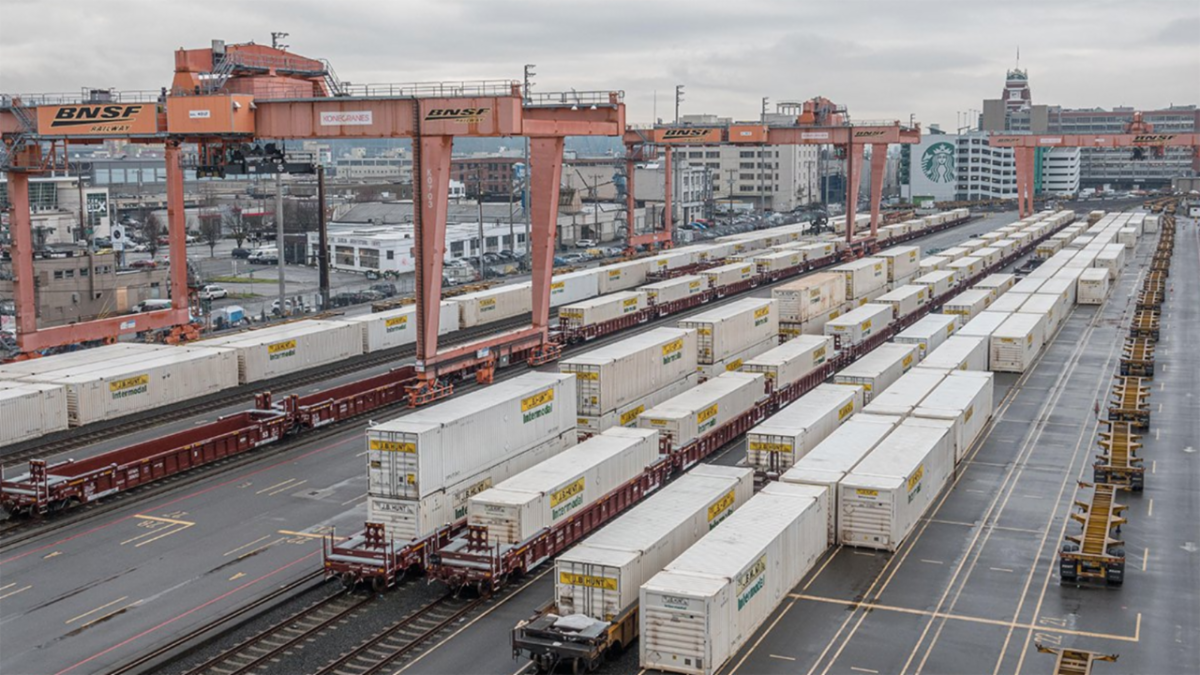
U.S. Rail Traffic Dips in Week #12
|
|
For week 12, ending March 26, 2022, four of the 10 carload commodity groups posted an increase compared with the same week in 2021. They included coal, up 5,140 carloads, to 66,504; chemicals, up 2,206 carloads, to 34,264; and motor vehicles and parts, up 826 carloads, to 14,341. Commodity groups that posted decreases included petroleum and petroleum products, down 2,056 carloads, to 8,638; grain, down 1,999 carloads, to 22,516; and metallic ores and metals, down 1,449 carloads, to 20,492.
For the first 12 weeks of 2022, U.S. railroads reported cumulative volume of 2,755,177 carloads, rising 2.8% from the same point last year; and 3,099,667 intermodal units, falling 7% from last year. Total combined U.S. traffic for the first 12 weeks of 2022 came in at 5,854,844 carloads and intermodal units, down 2.7% from last year.
|
|
|
|
|
|
|