Product Design | Audio Electronics | Acoustics | DIY | Audio Innovations
|
|
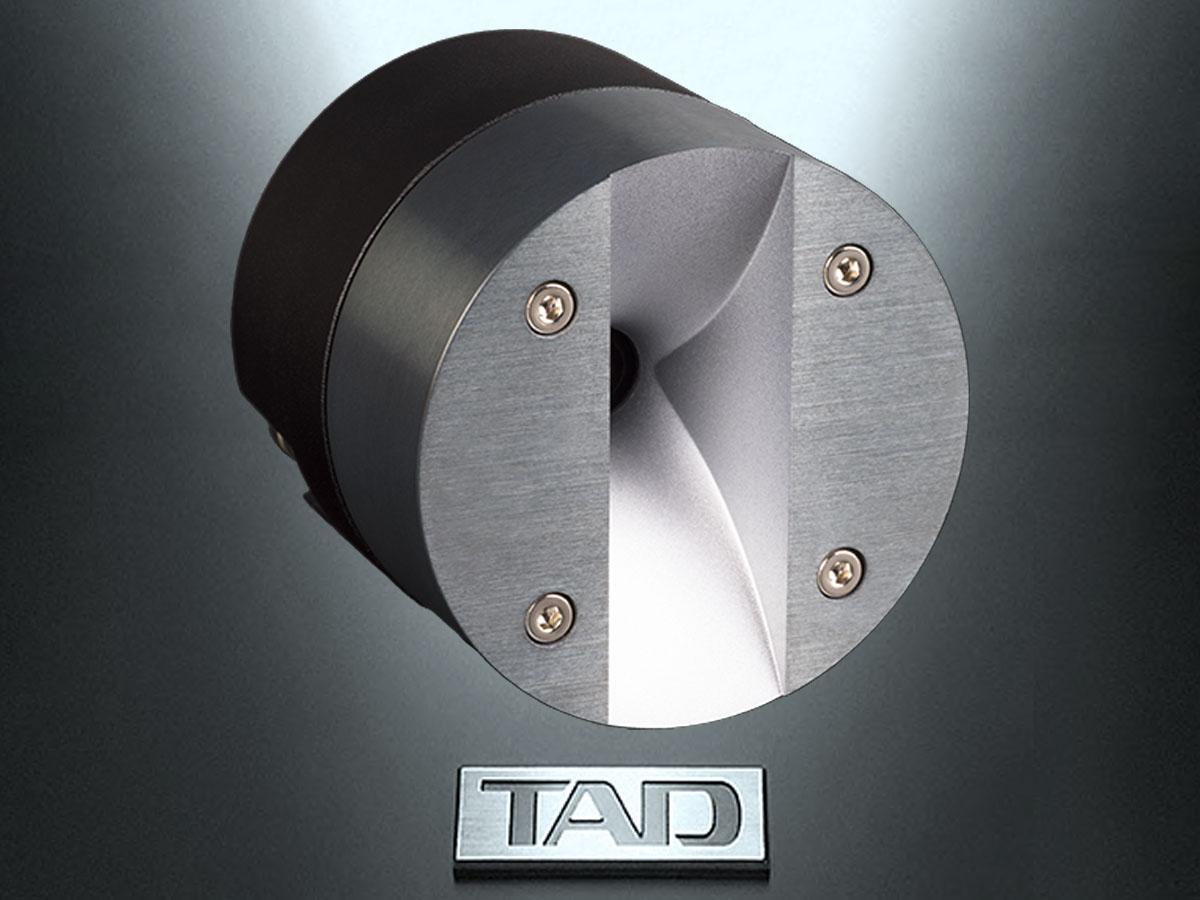
TAD Laboratories Launches ET-703a Super High Frequency Beryllium Driver |
Technical Audio Devices (TAD) Laboratories of Japan launched its latest OEM product, the ET-703a Super High Tweeter. This new driver is a fine-tuned model of the company's ET-703 super high frequency horn tweeter, which has been highly acclaimed in the loudspeaker industry. With a frequency response from 5kHz to 45kHz at 8 ohms, featuring a triple-slit rear compression design with a 35mm voice coil, the ET-703a is promoted as one of the world's most efficient and broadband reproduction drivers for super high frequencies. Read More
|
|
|
|
|
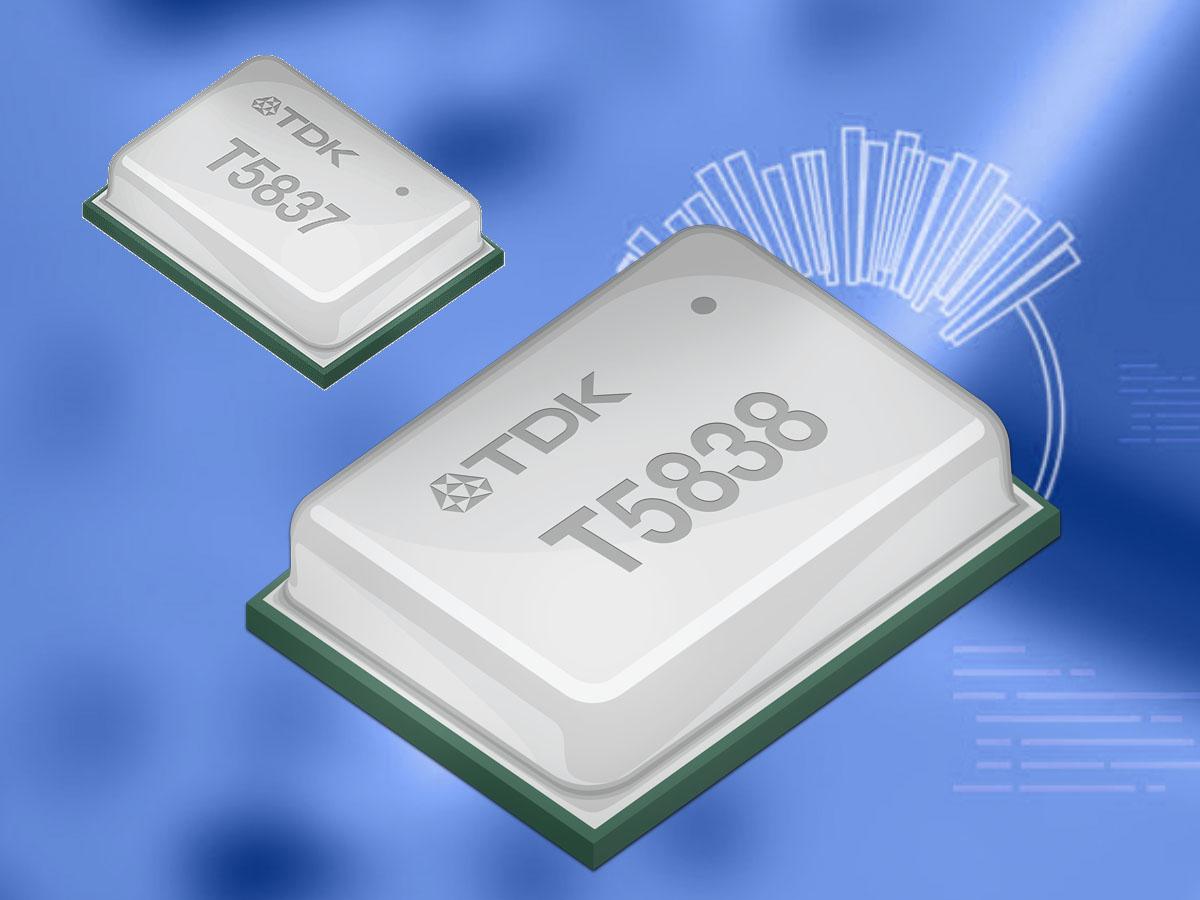
TDK InvenSense Low-Power T5838 MEMS Microphones Selected for Edge AI Development Kit |
The latest low-power T5838 and T5837 digital PDM MEMS microphones, part of the TDK InvenSense SmartSound family, have been elected by Syntiant as a microphone of choice for low-power edge AI application processors that perform keyword detection, due to its innovative Acoustic Activity Detect (AAD) feature that enables system power savings, thus prolonging battery life, and the ability to intelligently detect keywords or voice commands . Read More
|
|
Qualcomm Extends S3 Gen 2 Sound Platform Portfolio to Deliver Best-in-Class Gaming and LE Audio Experiences |
Qualcomm Technologies International unveiled an addition to the Qualcomm S3 Gen 2 Sound platform portfolio. This newly enhanced solution is optimized for gaming and ready for use in dongles and adapters. It combines Snapdragon Sound and LE Audio to deliver ultra-low latency of less than 20ms for lag-free wireless audio with voice back-channel for in-game chat. When delivering game audio only, the latency is further reduced. Read More
|
|
|
|
|
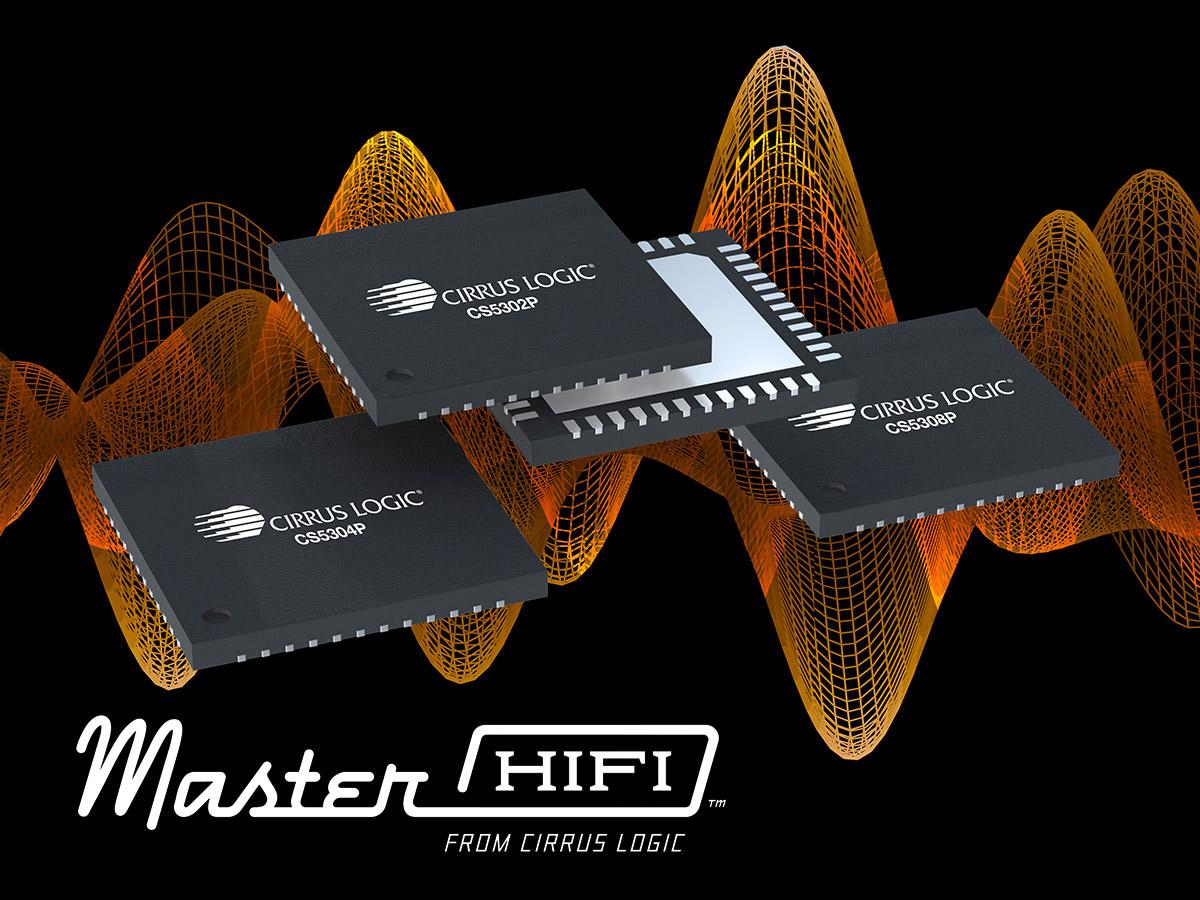
Cirrus Logic Unveils New Pro Audio Family of AD/DA Converters |
Cirrus Logic announced a newly rearchitected family of converters targeting professional audio applications, combining superior performance, low power consumption and system-level enhancements to solve common industry audio problems, such as a new hybrid gain control. The first three products available are two-, four- and eight-channel ADCs ready to be easily implemented in demanding applications, from digital mixers and USB audio interfaces to automotive applications. Read More
|
|
Williams AV Showcases Assistive Communication Concept Using
Bluetooth Auracast at InfoComm 2023
|
Williams AV, specializing in assistive communication solutions, from traditional hearing loops to Wi-Fi-based systems, promoted a proof-of-concept demonstration of a Bluetooth Auracast alternative. Aiming to gain feedback from professional system integrators attending InfoComm 2023 in Orlando, FL, Williams AV has shown how the Auracast technology works, the various components of an Auracast solution, and an overview of potential Pro AV assistive communication applications. Read More
|
|
|
|
|
DSP Concepts Optimizes Voice Control for the KT Genie TV All-in-One Soundbar |
DSP Concepts announced its collaboration with South Korea telecom KT Corp. to bring smart voice control to KT's latest set-top box, the Genie TV All-in-One Soundbar. This 2023 Red Dot design-winning product features the GiGA Genie AI voice assistant, combined with powerful sound tuning features. With the Genie TV, KT delivers premium immersive sound combined with precision far-field voice recognition enabled with TalkTo from DSP Concepts. Read More
|
|
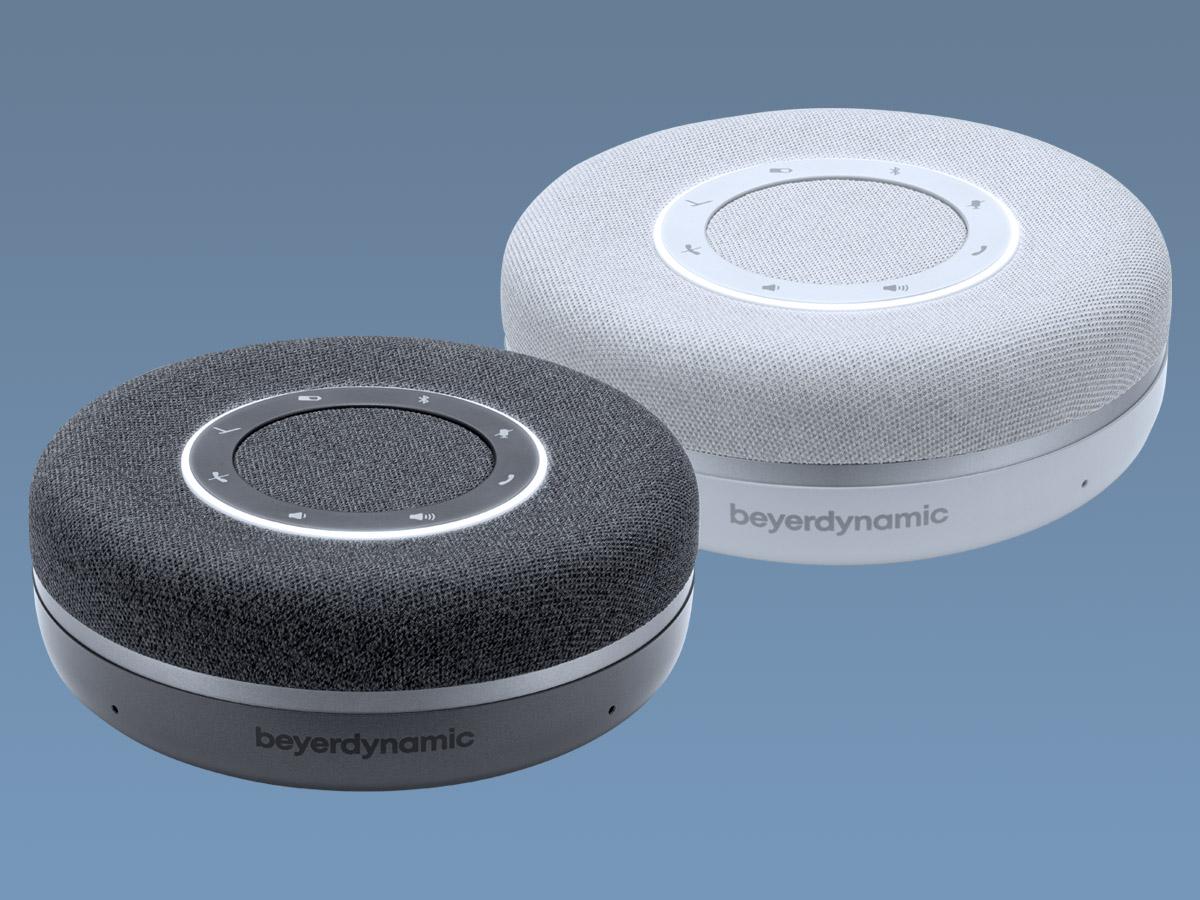
beyerdynamic Introduces SPACE MAX Speakerphone for Enhanced Online Conversation |
Expanding its SPACE product series, the new beyerdynamic SPACE MAX speakerphone is basically a bigger and louder version of the original SPACE announced in 2022. Purpose-built for medium-to-large meeting spaces, SPACE is designed for users looking for enhanced sound quality and don't want to deal with the hassle of separate microphones, speakers, and audio interfaces. Featuring the same minimalist aesthetic design as the smaller version, this USB-C design is ready for work, anywhere it is. Read More
|
|
|
|
|
Røde Releases Rødecaster Duo Compact Podcasting Production Console |
As anticipated in the announcements made at NAB 2023, Røde has released the highly anticipated RødeCaster Duo, a compact version of the existing RødeCaster Pro II. Designed specifically for solo creators or two-person podcasts, the RødeCaster Duo features a pair of Neutrik combo inputs for connecting microphones, instruments, or line-level devices, with two headphone outputs for audio monitoring, Bluetooth input for calls, and even dual-channel wireless receivers for two Røde Series IV wireless transmitters. Read More
|
|
Editor's Desk
Jan Didden
(audioXpress Technical Editor)
|
Audio Myths
Why Narrow Bandwidth May Be Better – the Time Domain View
|
|
|
Last week, I looked at the differences between a narrow bandwidth, high open-loop gain amplifier versus a wide bandwidth, low open-loop gain amplifier in terms of their input stage signal levels. The conclusion was that the narrow band amplifier has lower input levels than the wideband amplifier, and thus would generate less distortion in the input stage. That article is now available here.
But we might also be interested in what happens in the two cases in the time domain as a response to, say, a transient signal. Maybe all is fine frequency-wise, but not amplitude-wise. Let’s take a look.
|
|
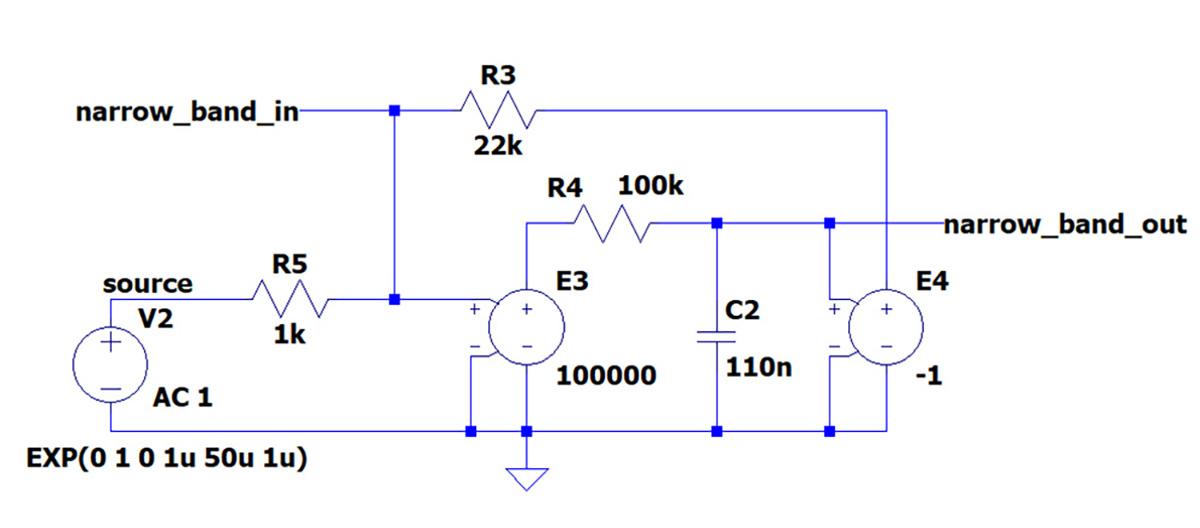
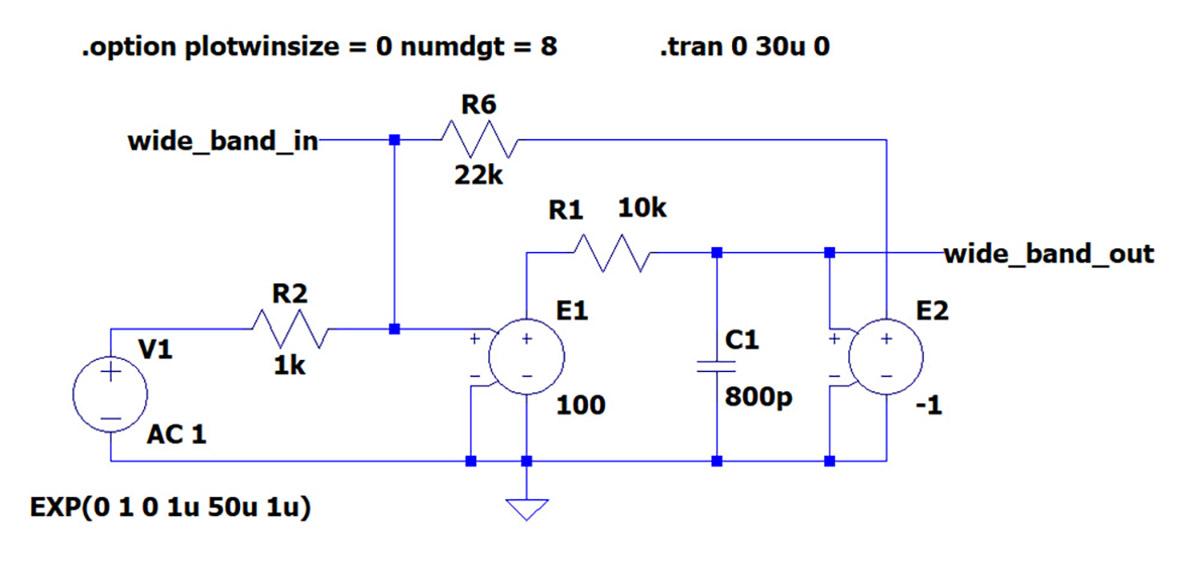
I slightly modified my test circuits (Figure 1) by setting R3 and R6 to equal values. With that, both circuits have the same demanded gain so we can also evaluate the gain error of each circuit. (In the previous installment, I set R3 and R6 to values for equal output signal levels because at that time we were interested in input versus output signal levels).
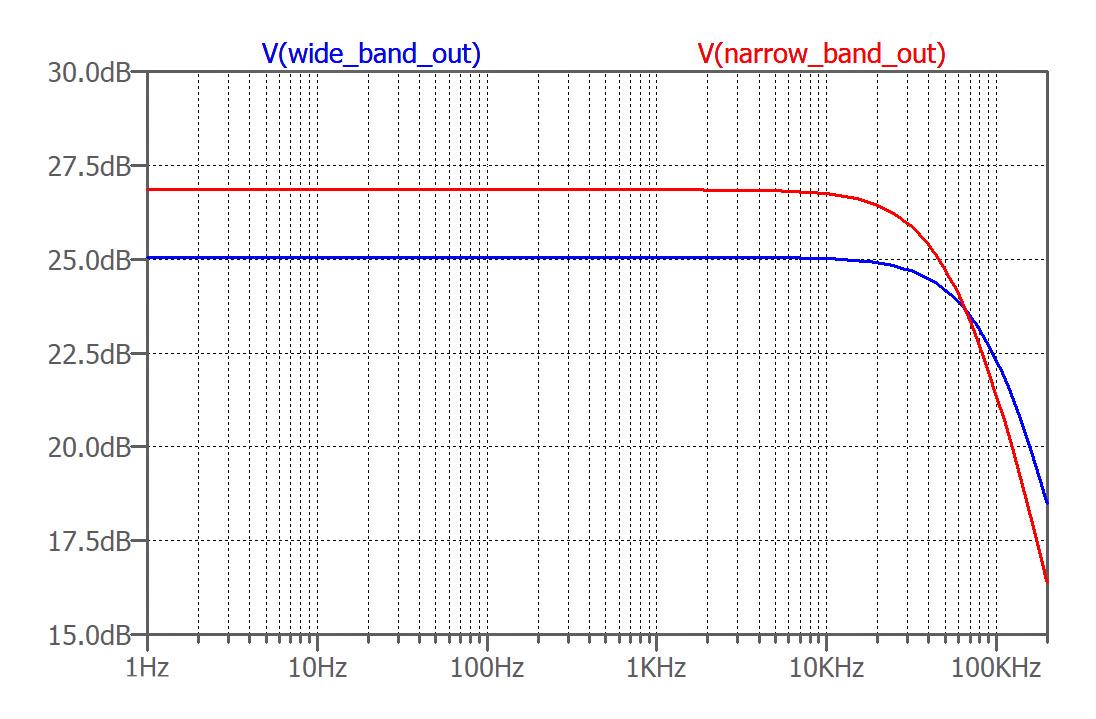
Measured open loop, the two circuits are the same as we previously used. Measured closed loop, Figure 2, we see - as predicted by theory - that the wideband circuit is a bit anemic and falls short of the demanded closed-loop gain due to its limited open-loop gain. The demanded gain is R3/R5 + 1 (or R6/R2 + 1), which is 23 times or 27dB. The narrowband version has a gain of 26.85dB, which translates to 22 times, while the wideband version has a gain of 25.05dB, equivalent to 17.9 times. (In itself, that’s not really a problem; we can always adjust the feedback resistor for any reasonable gain we want).
|
|
Figure 1a: Simulation circuits. High OL gain, narrow OL bandwidth amplifier. |
|
Figure 1b: Simulation circuits. Low OL gain, wide OL bandwidth amplifier. |
|
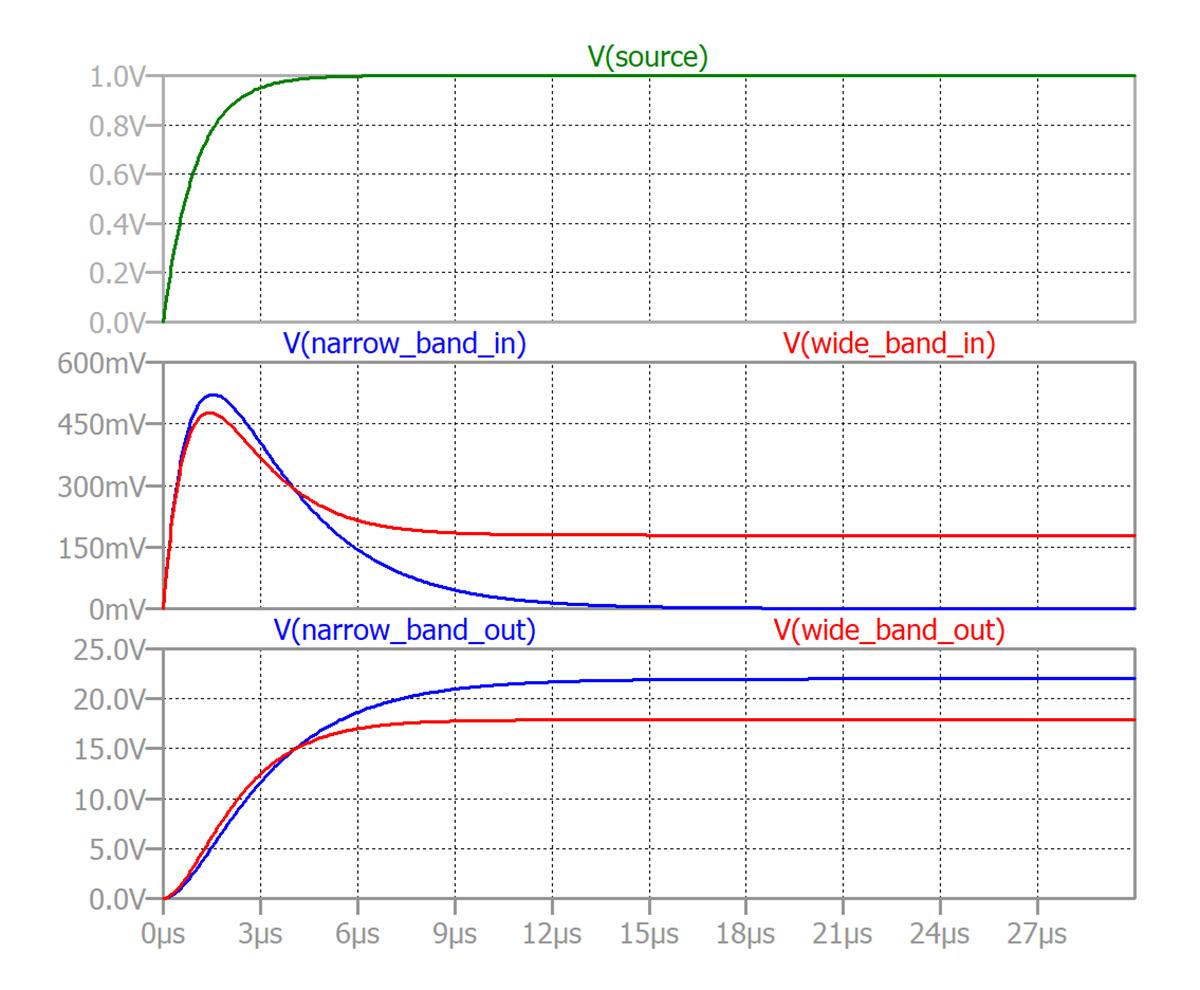
Now let’s have some fun with transient input. I specified an exponential input source pulse signal to LTspice as EXP(0 1 0 50µ 1µ), which means a signal that starts at 0V at time zero, then exponentially rises to 1V with a τ (RC time constant) of 3µS, stays there for 50µS then falls at the same rate (not shown). We will look at the rising edge of the signal at the input stage of the circuit because that’s where you see the error signal. We are interested in the overshoot of that signal.
The reasoning is that when the source signal rises faster than the amp can follow, the output signal will fall short and the output of the feedback network will also fall short, and the difference between the source and feedback, which is the input stage signal, will increase as well. In the control systems world, that signal is called the error signal, because it would be zero with an infinite gain and infinite bandwidth amplifier. Since we are dealing with two widely different circuits as to bandwidth, we may expect a widely different response to such fast pulses.
|
|
Figure 2: Closed-loop responses of Figure 1 circuits with equal feedback factor. |
|
Figure 3 shows the response of the two circuits to this source pulse. Take your time to take a good look at it and let it sink in. What are we seeing here?
Starting at the top, this is the source transient signal with the exponential rise. If we look to the input stage input signals (middle graph), we see an initial overshoot, that eventually settles to the steady state level, which - as we noted already last week - is especially for the narrow band case, very low – the output signal divided by the DC open-loop gain.
At the bottom, we see the amp output signals; both circuits have a nice smooth output, that asymptotes to the steady-state output in less than a few tens of µS, with the narrow band case taking a bit more time. Because of the limited open-loop gain of the wideband amp, it falls a few decibels short of the 27dB demanded gain while the narrowband case comes very close. But what we really are after is the leading-edge error signals at the input stage, the middle graph in Figure 3. Perhaps counter intuitively (for me it is), the magnitudes of the error signals are very close [1]!
|
|
Figure 3: Transient input, (top); input stage input signal (mid); amp output signal (bottom). |
|
So, if you are worried that a narrow bandwidth will cause more distortion in the input stage due to overshoot, that worry seems unwarranted. For sure, an increase in error signals with higher frequency signals will occur, but it is not significantly larger for a narrow bandwidth, than it is for a wider bandwidth.
Combined with the results of my previous essay last week, there doesn’t seem to be a case to bash the narrow band amplifier in favor of the wideband amp for input stage distortion. As we saw earlier, in the narrow band case, input stage signal levels for audio band signals are always lower than in the wideband case, so would cause less input stage distortion. Excited with fast transients, input stage overshoot levels are very similar so would also not favor one or the other as to input stage distortion. The wideband case does have a larger gain error but that can be fixed by adapting its feedback resistor, so it’s not a real issue and can be ignored [2].
Comments invited.
[1] Someone may point out that overshoot is formally defined as the ratio of overshoot peak level to steady-state level. With that definition, the overshoot of the narrowband case is much higher than in the wideband case. But in absolute value, which is what matters when looking at input stage distortion, they are very similar.
[2] A lower gain, corrected or not, does mean there is less feedback available for distortion reduction etcetera, so the distortion will be a couple of decibels higher, the frequency response will have a bit more ripple and be a fraction narrower and the output impedance will be a couple of decibels larger, but we should not lose any sleep over that.
|
|
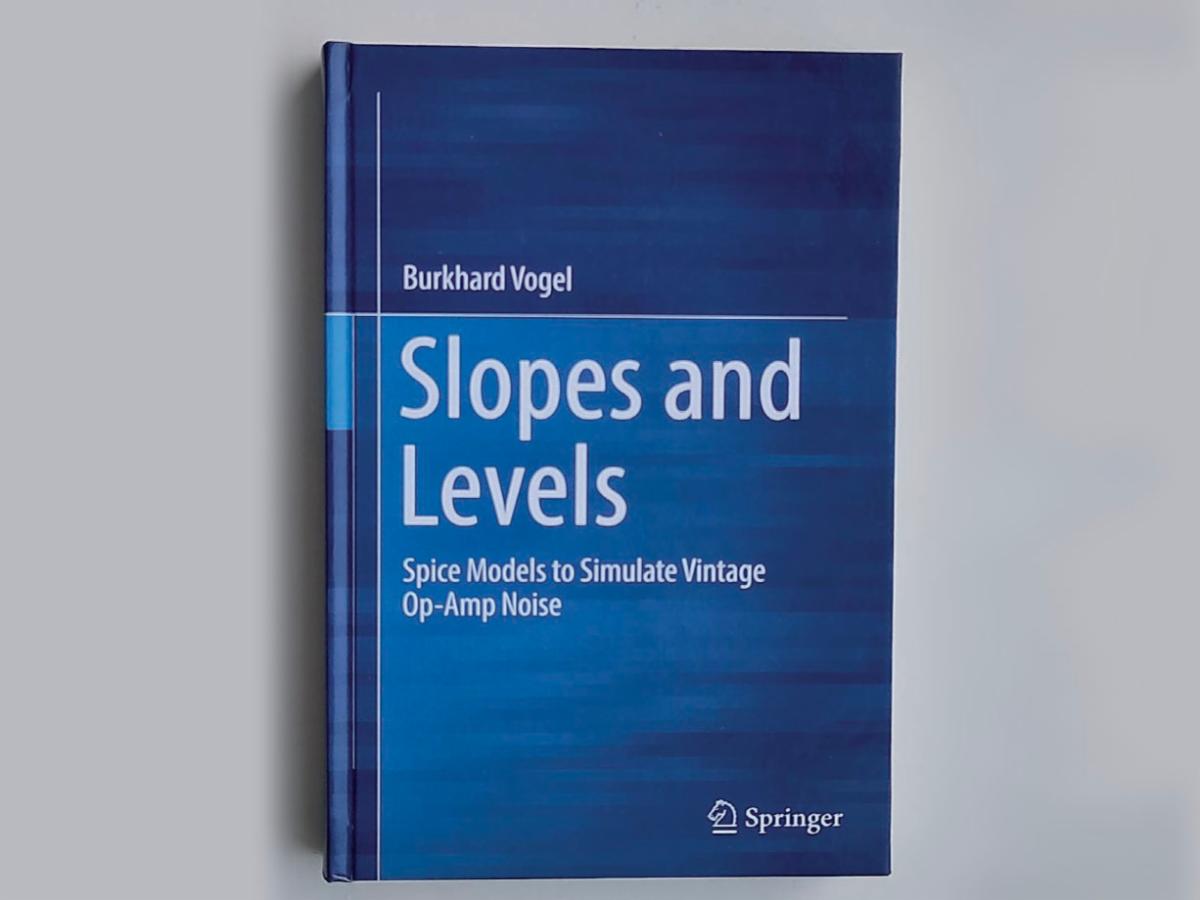
Burkhard Vogel’s Slopes and Levels. Spice Models to Simulate Vintage Op-Amp Noise
By Marcel van de Gevel
|
|
Interested in accurately simulating the noise of op-amp circuits? Audio electronics expert Burkhard Vogel wrote a book that addresses this relevant topic for any audio circuit designer who doesn't want to rely just on the manufacturers’ own models. In this review, Marcel van de Gevel explored the full book after he read Vogel's introduction, explaining that some manufacturer-supplied simulation models are way off. For example, he found a TL071 model featuring a flat equivalent input noise voltage density of 12nV/√Hz while a real TL071 is closer to 18nV/√Hz at 1kHz with a substantial increase below 100Hz. Another example is an NE5534A model with almost 6.5nV/√Hz of white voltage noise, a real NE5534A typically produces 3.5nV/√Hz at 1kHz. This article was originally published in audioXpress, March 2023. Read the Full Article Now Available Here
|
|
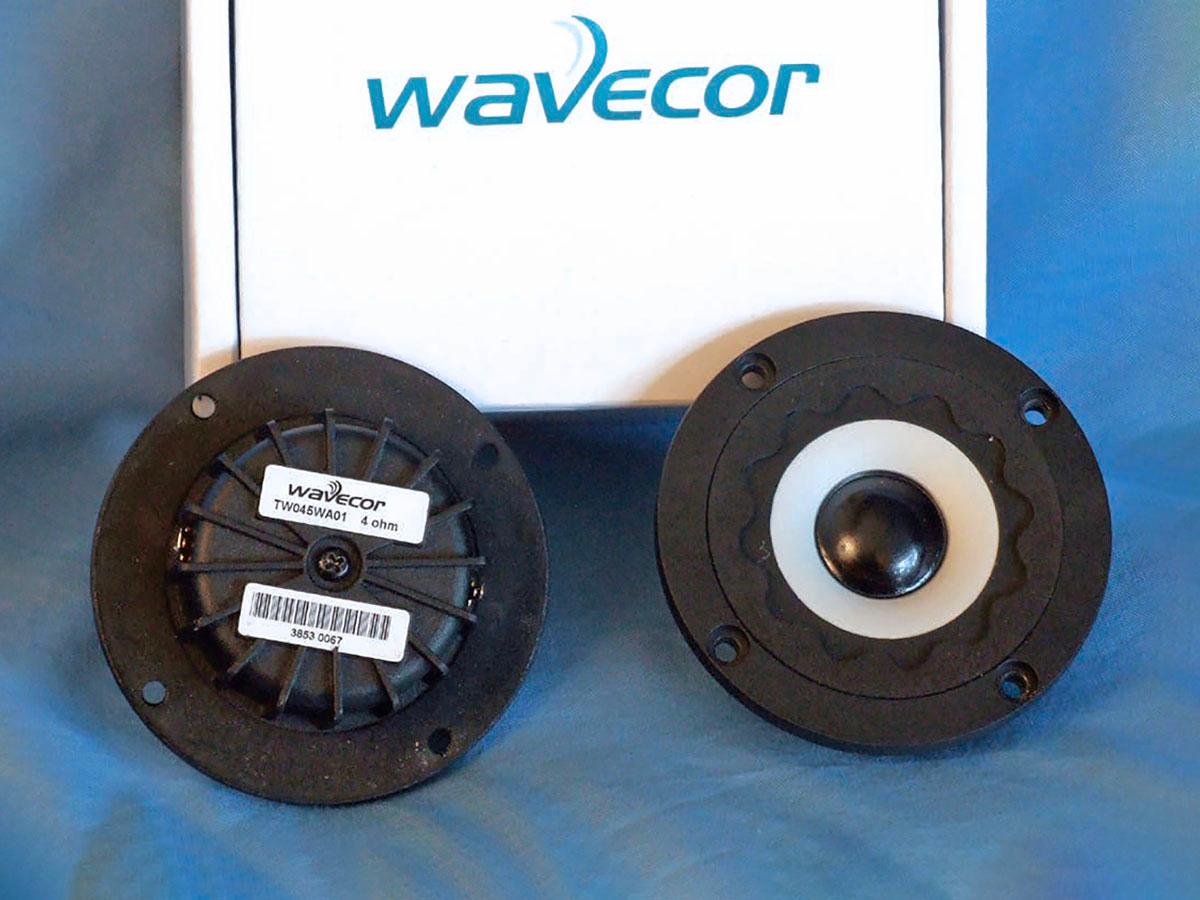
Wavecor’s TW045WA01 Coaxial Cloth Dome/Ceramic Cone Tweeter
By Vance Dickason
|
|
This Test Bench characterizes the innovative TW045WA01 dual-diaphragm tweeter, a new coaxial cloth dome/ceramic cone tweeter from Wavecor. This is one of three products unveiled by the company in 2023, which also include a Kevlar/Carbon Fiber woofer and midrange design. But this TW045WA01 driver is unique and certainly the most intriguing. Its dual-diaphragm assembly combines a 22mm coated textile dome for high-frequency extension and a 45mm ceramic/aluminum cone, which adds low-frequency output and efficiency. The hybrid design incorporates a dual neodymium magnet motor structure, an aluminum die cast damped rear chamber, a compact injection-molded 90mm (3.5”) diameter 6.7mm thick aluminum faceplate, rated with 95dB sensitivity (averaged 5kHz-20kHz). A sculpted foam damping ring is attached to the faceplate, along with an acoustic damping pad attached to the top of the pole piece, directly below the coated textile dome. A very unique driver that is certain to appear in new two-channel high-end audio loudspeakers. This article was originally published in Voice Coil, April 2023. Read the Full Article Now Available Here
|
|
Audio Product Design | DIY Audio Projects | Audio Electronics | Audio Show Reports | Interviews | And More. Read Table of Contents
Don't Have a Subscription?
|
|
Industry News & Developments | Products & Services | Test Bench | Acoustic Patents | Industry Watch | And More. Read Table of Contents
|
|
Advancing the Evolution
of Audio Technology
audioXpress provides unique articles on new audio developments, R&D Stories, valuable market updates, the most complete objective reviews on innovative products and software, and the best DIY audio projects from worldwide experts. The Leading Global Audio Engineering & Development Magazine and Website.
Voice Coil, the periodical for the loudspeaker industry, delivers product reviews, company profiles, industry news, and design tips straight to professional audio engineers and manufacturers who have the authority to make powerful purchasing decisions.
The Loudspeaker Industry Sourcebook is the most comprehensive collection of listings on loudspeaker material in the industry. Purchasers and decision makers refer to the guide for an entire year when making selections on drivers, finished systems, adhesives, domes, crossovers, voice coils, and everything in between.
© 2023 KCK Media Corp. All Rights Reserved.
|
|
|
|
|
|
|