|
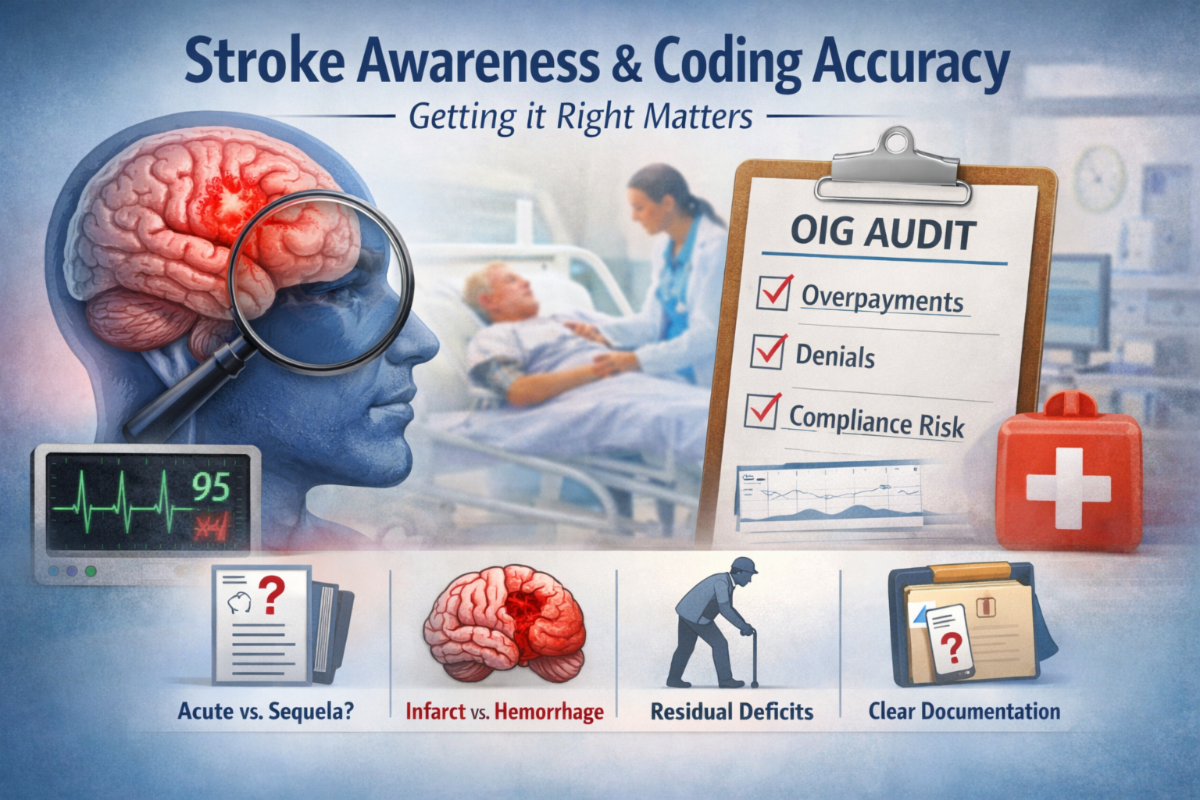
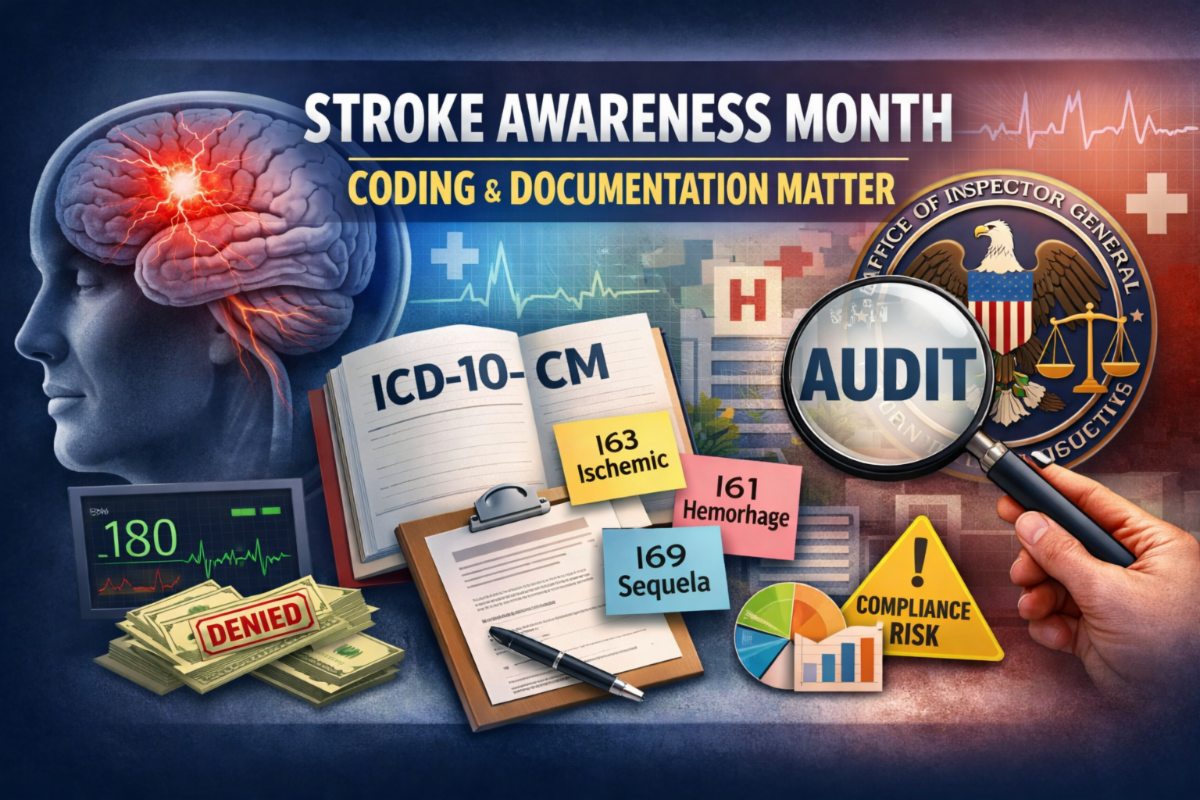
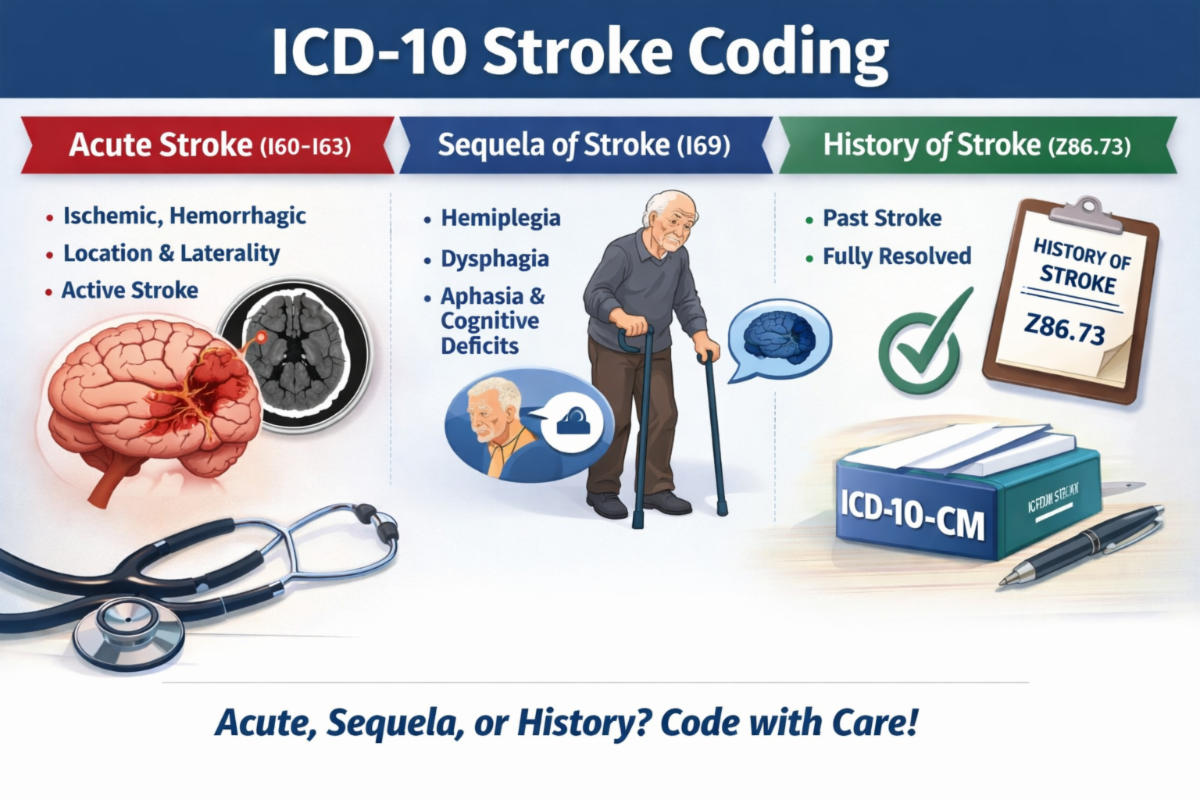
1. Acute Stroke (I60–I63)
Use these codes only when the provider documents an active, current stroke.
Key documentation elements:
• Type (ischemic, hemorrhagic, embolic, thrombotic)
• Location (MCA, PCA, cerebellar, etc.)
• Laterality
• Etiology (if known)
No assumptions allowed. If the provider documents “stroke like symptoms,” coders must query or code the symptoms.
2. Sequela of Stroke (I69)
Use I69 codes when the patient is no longer experiencing an acute stroke but has residual deficits, such as:
• Hemiplegia
• Dysphagia
• Aphasia
• Cognitive impairment
Remember:
• Code the I69 code. Some codes may require an additional code to identify the residual deficit (only if the I69.- does not fully explain the deficit)
• If the provider documents “old stroke” with no deficits → Z86.73 (history of stroke).
3. History of Stroke (Z86.73)
Use when:
• The stroke is completely resolved.
• No ongoing deficits
• No current treatment for stroke related conditions
This remains one of the most commonly misused codes in audits.
|