Highlights from the April 7, 2026 meeting of the Okanagan Basin Water Board, held at the offices of the Regional District of Okanagan Similkameen.

Okanagan Facing Record-Low Snowpack and Early Melt. Drought Concerns Mount:

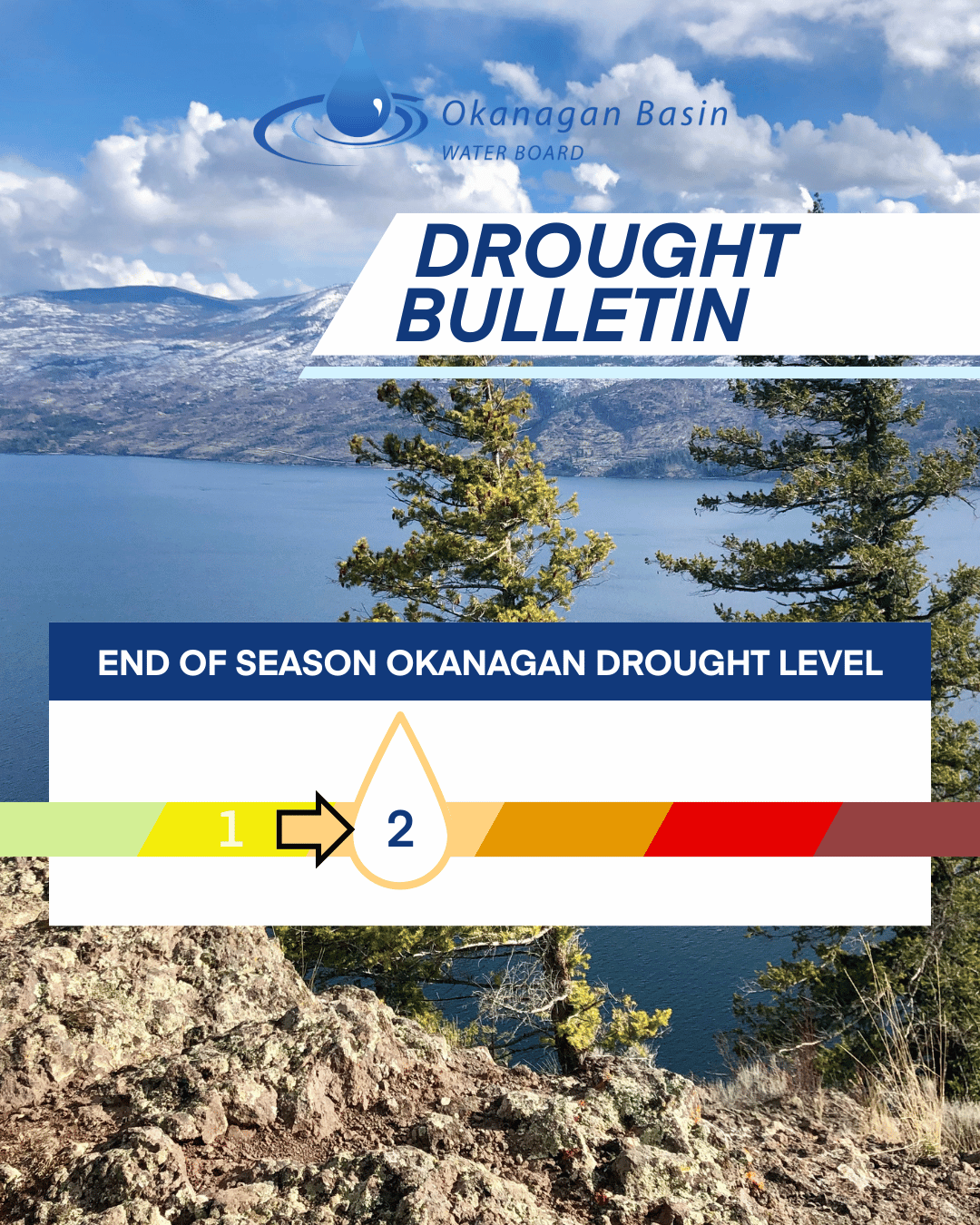
OBWB Directors heard that snowpack at key monitoring stations is at or near record lows, including Brenda Mines at just 23% of normal, with early snowmelt occurring nearly two months ahead of average. These conditions are raising concerns about summer water supply, lake levels, and wildfire risk.


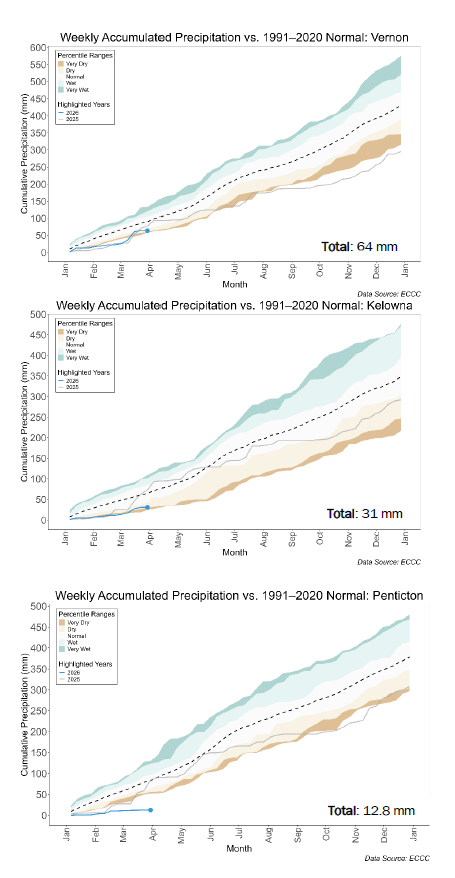
March precipitation has been varied, with Vernon seeing above normal precipitation for the month, Kelowna about normal, and Penticton again experiencing extremely low precipitation. Total annual accumulated precipitation is low for all cities, and “off the charts” low for Penticton. As of March 30, 2026, Penticton recorded only 12.8 mm of precipitation in 2026 — the historical average is more than 75 mm.


The update prompted discussion among Directors on the importance of local drought planning, including the need for water-use plans and response measures to be in place before crisis conditions emerge.

Clear Drought Communication Remains a Regional Challenge:


In response to early indicators of drought, Directors discussed the importance of clear and consistent drought communication across the region. They noted that while each community requires drought triggers tailored to its unique water system, differences in how drought stages are defined and applied can create confusion for residents.


OBWB Water Stewardship Director Dr. Nelson Jatel was recently invited to present to the Town of Oliver as they access their own drought trigger approaches and drought management plan — emphasizing the need for clear drought communication valley wide. 


Directors expressed a desire to see greater alignment in how watering restrictions are communicated across Okanagan communities. While drought triggers must be tailored to each community's water system, there would certainly be benefits of consistency in what each stage means for domestic water users.


Staff noted that this challenge was further complicated last year by the Province’s introduction of a new drought index as a public communication tool, adding another layer of messaging that does not always align with local conditions or responses.


To support improved clarity, Directors asked staff to revisit previous OBWB recommendations and communication templates related to drought response, with a view to supporting greater regional consistency while respecting local conditions.

OBWB Invited to Present to Legislative Committee on Bill M216:


OBWB has been invited to present to the Select Standing Committee on Private Bills and Private Members’ Bills regarding Bill M216. The Executive Director will appear before the committee on April 15, 2026, reinforcing OBWB’s previously stated position — outlined in a November 2025 letter sent to all MLAs — that the bill should not proceed.


Directors heard that the committee has received significant input on the bill, including 484 submissions, with 88% expressing opposition. This includes opposition from all municipalities and First Nations that made submissions, as well as concerns raised by the Union of BC Municipalities and professional associations whose members would be directly affected by the proposed legislation. 

Invasive Mussel Treatments Show Limits — Prevention Remains the Only Reliable Defence:


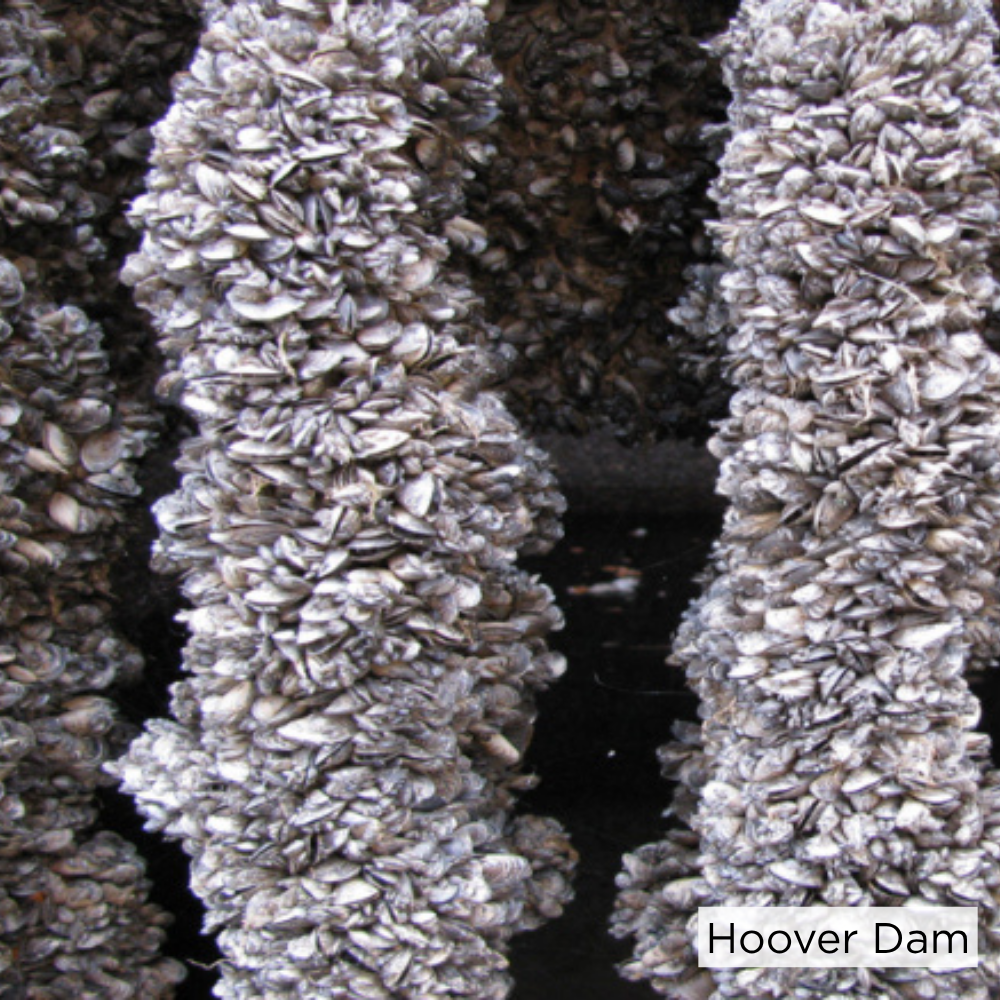
Directors reaffirmed their commitment to invasive mussel prevention after hearing about lessons learned from treatment efforts in Idaho’s Snake River, where even intensive, repeated chemical treatments have not been able to eliminate introduced populations. Recent reporting — highlighted in OBWB’s March memo — indicates these efforts have achieved only partial reductions. Over three years, the total area of river infected was found to be 51% of the original infested area detected.


Staff noted that these findings are particularly cautionary, as the Snake River population involves quagga mussels, which are known to spread more slowly than zebra mussels. Nor does it account for the negative impact the chemical treatments have had on native flora and fauna in that river system. This underscores the significant risk posed to the Okanagan, where conditions could allow for rapid establishment and spread.


Directors emphasized the importance of continued provincial and federal advocacy to secure funding for prevention, as well as stronger legislative tools and regulations, including mandatory boat inspections and related enforcement measures.

2026 WCQI Grant Recipients Approved; Notifications Coming this Week:


Directors approved the successful projects for the 2026–2027 Water Conservation and Quality Improvement (WCQI) grant program. Demand for funding was significantly higher this year, with $882,000 requested compared to $554,000 last year, making this year’s intake one of the most competitive in the program’s history.


The selected projects will support water conservation and water quality improvement across the region, including restoration, source water protection, and groundwater initiatives.


All applicants will be notified in the coming week, with funded projects to be announced publicly shortly thereafter.


Upcoming Events

New Date for the 20th Anniversary of the OBWB Water Management Program

💧 Celebrate 20 years of the Water Management Program

🗓️ Friday, Sept. 11, 2026

📍Kelowna – Manteo at Eldorado Resort

🎯 3762 Lakeshore Rd.

ℹ️ More information coming soon


Environmental Flows Conference 2026

💧 Co-hosted by the Okanagan Basin Water Board, the Okanagan Nation Alliance, and the Canadian Water Resources Association. A national gathering for water science, policy, and practice

🗓️ Wednesday, Oct. 7 – Friday, Oct. 9, 2026

📍Kelowna – Coast Capri Hotel

🎯 1171 Harvey Ave.

ℹ️ Early bird registration open now


Want to support our goal to educate residents on water in the Okanagan? Follow us on social media, like and share our content, and leave us a comment — your engagement helps us reach more people.

Facebook  Instagram  LinkedIn  X

Resources

Okanagan Basin Water Board | 1450 K.L.O. Rd | Kelowna, BC V1W 3Z4 CA

Facebook  Instagram  LinkedIn  X  Web