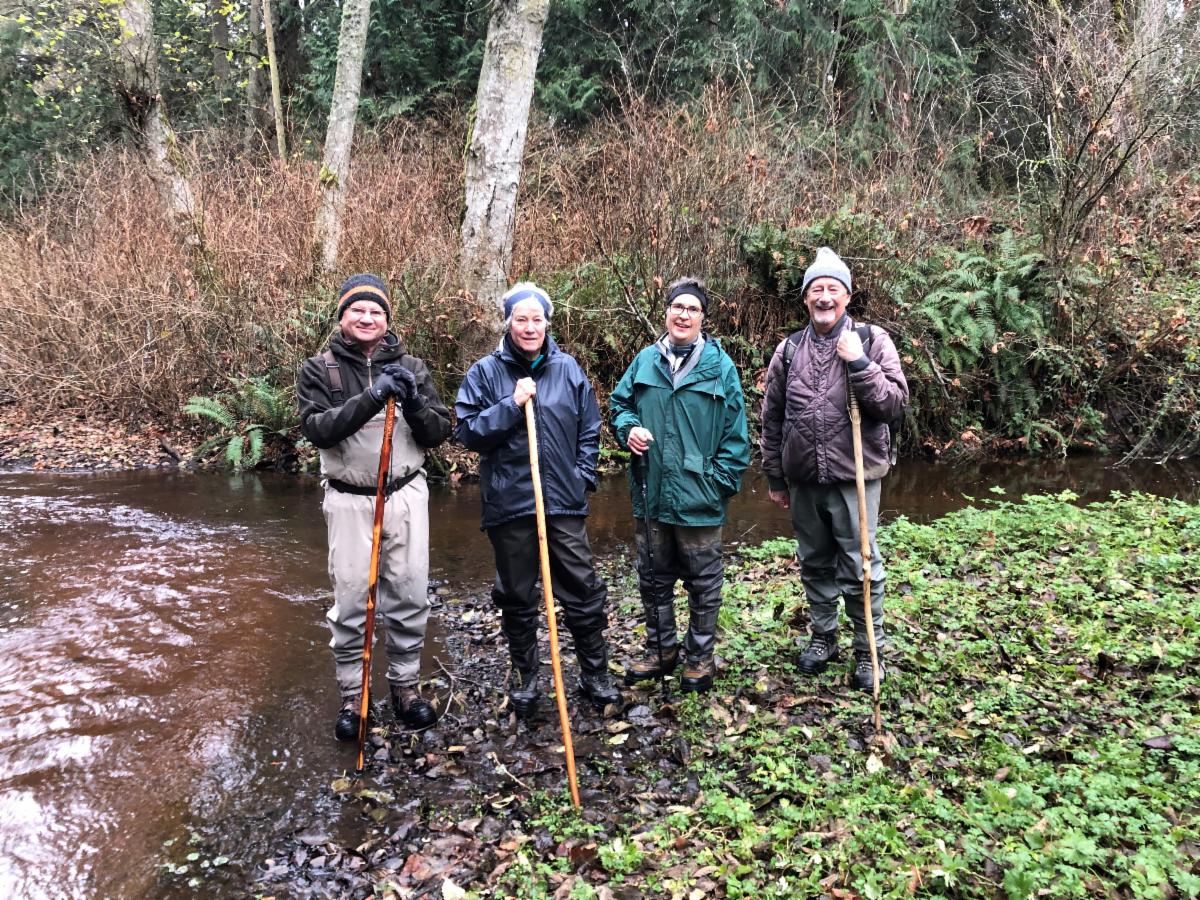
Volunteers Needed for Coho Surveys! | | Coho survey volunteers at HJ Carroll park. Photo by NOSC staff. | | |
Coho season is nearly upon us on Chimacum Creek and nearby watersheds. As such, the Salmon Coalition will be hosting its annual coho survey training at the Finnriver Farm and Cidery Haybarn on Friday, November 13th from 10 am to 12 pm.
We’re looking for enthusiastic, able-bodied volunteers to walk the creek and its tributaries in search of coho and the nests, or redds, they create in which to lay their eggs. Volunteers can expect to encounter uneven terrain and occasional obstacles such as fallen trees to maneuver around as well as occasional inclement weather. Training is mandatory, as volunteers need a good understanding of how to mark redds and document sightings of spawning fish.
What to expect as a spawner survey volunteer: All needed equipment is provided. Conducting a spawner survey requires volunteers to walk over uneven and slippery terrain, through water and brushy slopes, and over and around logs. You will work in teams each week from mid-November through early-January on a reach of Chimacum Creek to collect important data on the coho run.
There are 20 spots available. Click below to register for training!
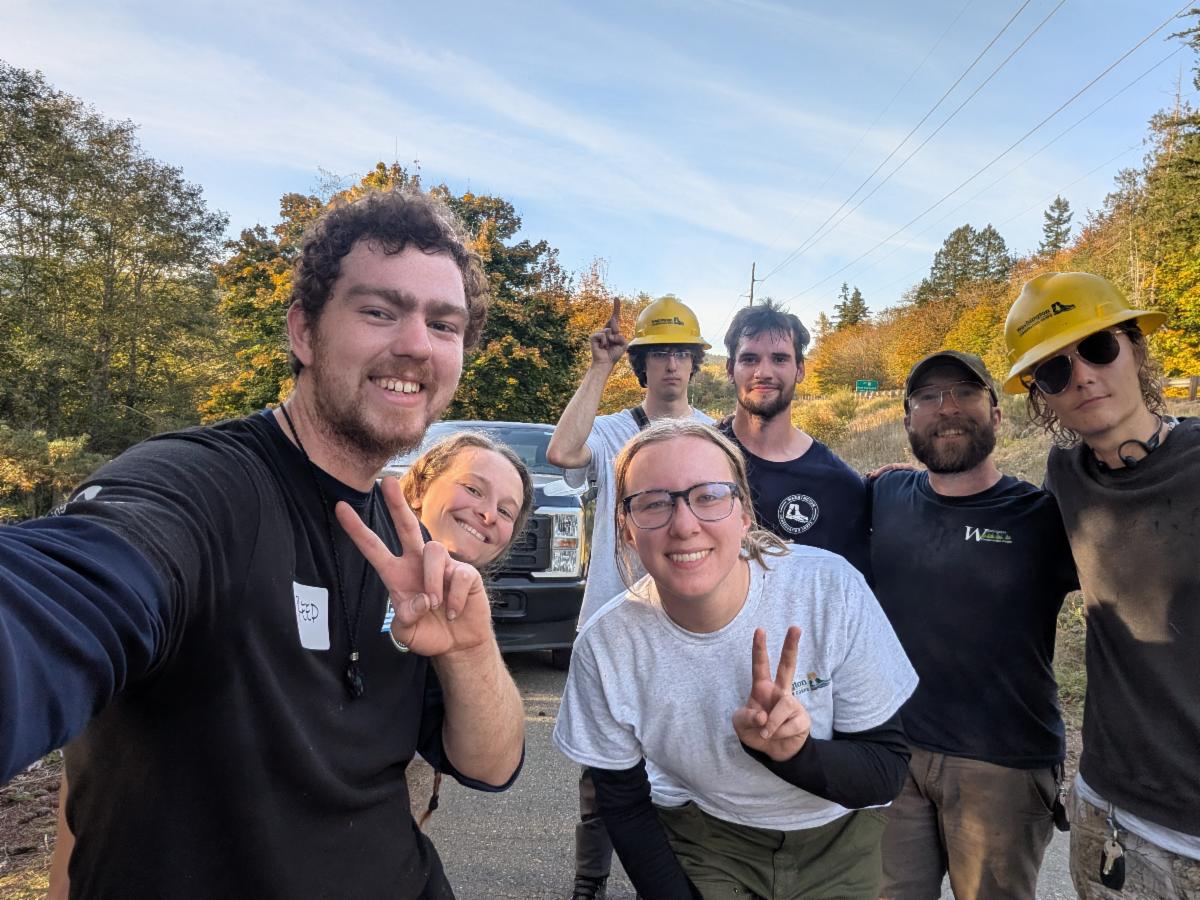
| | Left to right: Reed, Sarah, Hannah, Logan, Michael, Sam, Thacher. Photo by Reed Riker. | | |
Notes From the Field
by Reed Riker, Washington Service Corps
| | |
Behind the scenes are six hard-working members of the NOSC family that you may have never met or seen before.
As members of the Washington Conservation Corps, these seasonal workers are a key variable in the feasibility of many of NOSC’s restoration projects. As tree planters, invasive species managers, stream stewards, and even occasional trail builders, the Conservation Corps will serve our community in a variety of roles throughout their service term.
But just who are the people underneath the muscle? What got them to this place and point, and why does this work matter so much to them? I got the opportunity to meet with them and discuss.
| | |
I first met the crew at their work site for the day. We’d both been working along Snow Creek in Discovery Bay, but in quite different ways. While I led groups of seventh-grade students in salmon habitat analysis, the crew worked with tools in hand just a quarter mile downstream. Now I sat down with them on the border of hand-pulled Scotch broom and cut-down blackberries, under young fir and spruce trees planted some two decades prior by fellow hard workers of another time.
As I heard how each crew member reached this chapter of their journey, I also learned where they found their passion for the environment and outdoor work. Thacher grew up camping and scuba diving, shaping his love of animals and the environment. Logan discovered the world of mycelium and mushrooms during the height of the COVID pandemic, when a walking course led him to look down out of boredom. And while all five crew members (excluding their leader, Sam) grew up in Washington state, some spent time elsewhere before finding their way back. For Sarah, work experience in Alaska taught her that even in a place so naturally abundant and grand, the baselines were shifting: fish returns were smaller, and cold seasons were warmer than long-time locals had ever experienced. She returned to Washington and joined this crew aiming to make a difference in how far the baselines might shift in her home’s future.
Of all the different paths ventured to this point on the crew, Sam's may have surprised me most. A four-year Marine from Texas, Sam studied Soil and Water Science with a minor in Natural Resource Management at the University of Arkansas. During a national job freeze, Sam applied for seasonal state park jobs across the country, heard back from Sequim Bay’s team, and made the move, later learning about the WCC when they seeded oysters one day on the beach. Now in his second year of WCC, he leads the crew with great humor, modesty, and invaluable lived experience.
As for what the crew hopes to do with this work experience, there were a brilliant variety of answers. Hannah's ambition is to work in a decision-making role for implementing restoration work, so getting ground-level experience seemed like a no-brainer to her. For Michael and Thacher, returning members from last year’s crew, both clearly valued the perspectives and character-building this job provides. They recalled taking in a sunset together after a long day’s work, and continue to find meaning and gratitude in the small things surrounding their work. Thacher shared how he can now assess a landscape and diagnose what work is needed to restore its best environmental value: “I like being able to know what I’m supposed to do to make things right.”
After our formal conversation ended, I wasn’t ready for my time with the crew to end. Their passion lit a flame within me, and I wished for nothing more than to join them in their afternoon work. We spent the next two hours pulling stubborn, deeply rooted English ivy through a tremendous collective effort, breaking it away from the ground and the trees it was suffocating. The air was full of joyous conversation as we kept learning about each other and played animal-guessing games to pass the time. Since this was the first week on the job for three of the crew, I heard advice being shared from their more seasoned team members. It became clear the rookies were in great hands.
Seeing the land we were working in clear of ivy at the end of our day was so satisfying, and a good reminder of the meaning and significance in this hard work. I had experience with this feeling of accomplishment from my previous AmeriCorps term with the Jefferson Land Trust, but this day and the conversation with the crew gave it an expanded meaning. Logan mentioned that he’d always cared for the planet, but before joining the WCC, he hadn’t found how to care for it, saying, “I wasn’t really doing anything for my planet except watching it die for so long.” Now, Logan can speak to the feeling of making a difference: “As long as you’re doing something, it is so worth it.”
At the end of the day, I was left pondering how we each might be able to make a difference for our environment, from whatever positioning we hold. While the answer will be unique to each of us, one thing is clear—NOSC is lucky to have the WCC crew providing inspiration through their hard work on our restoration sites.
| | It's Volunteer Planting Season! | |
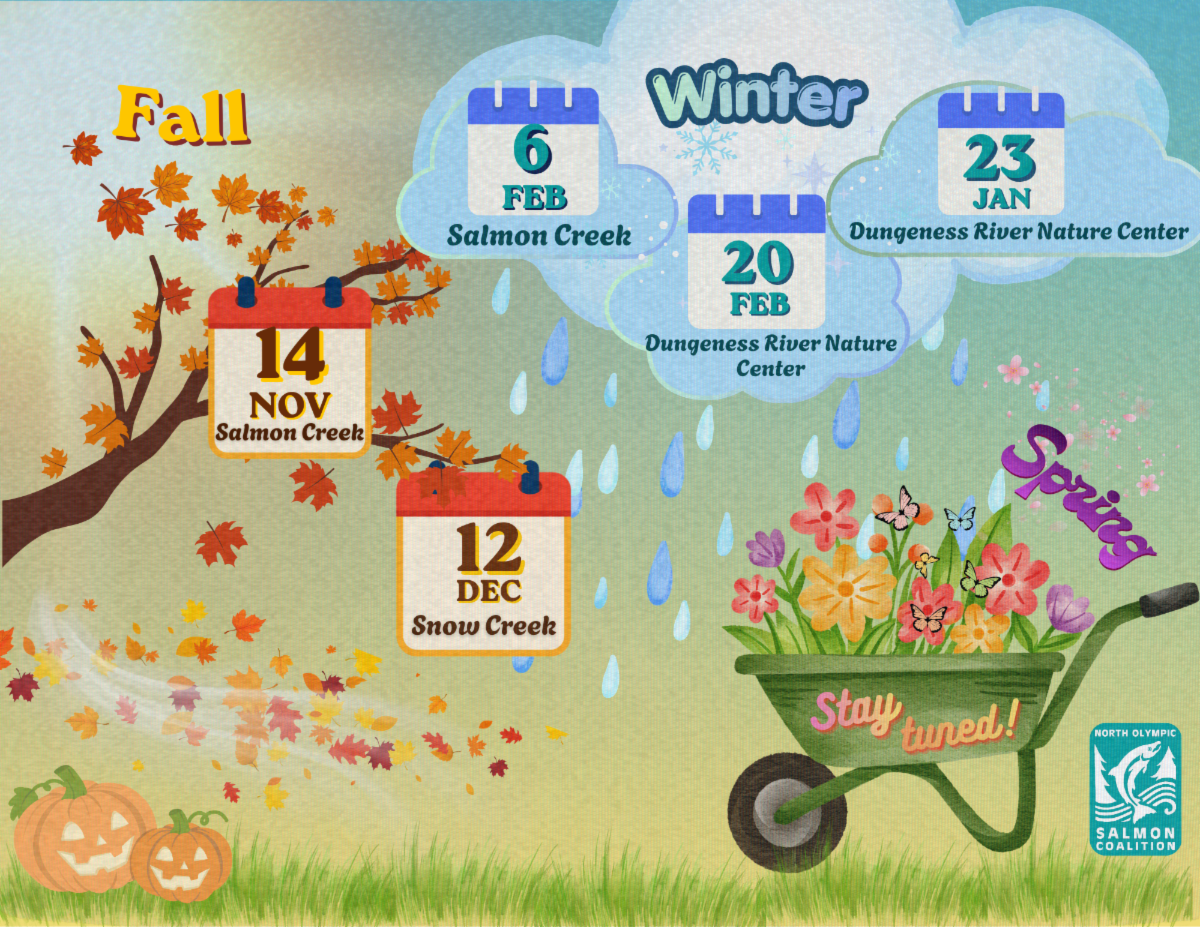
Check out our upcoming plantings for fall and winter! We're heading out to Salmon Creek, Snow Creek, and the Dungeness River to plant native trees and shrubs along riparian areas.
The planned dates are as follows:
November 14th: Lower Salmon Creek
December 12th: Snow Creek
January 23rd: Dungeness River
February 6th: Lower Salmon Creek
February 20th: Dungeness River
We hope to see you at one or more of our plantings! All event and RSVP information can be found here on our website.
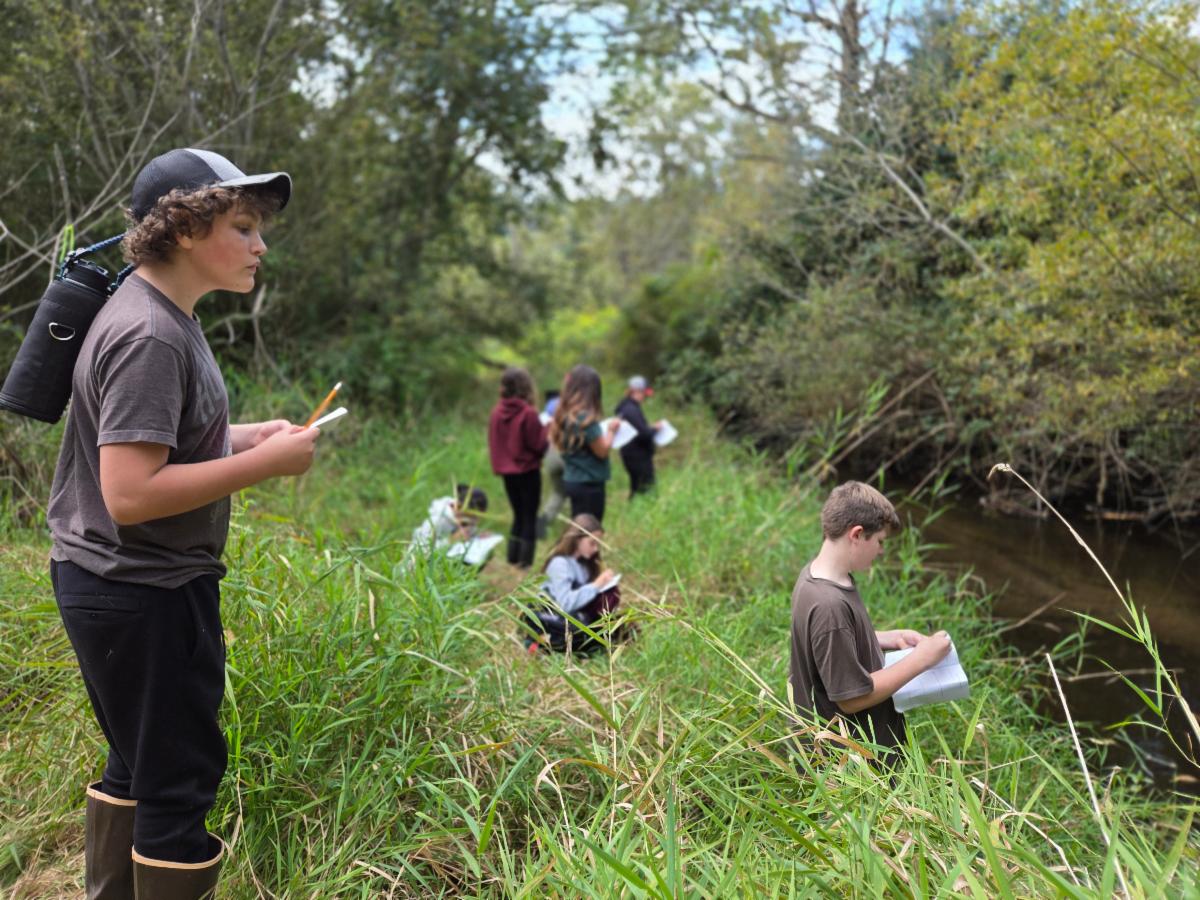
| | 7th grade students recording observations of habitat at Snow Creek on their field trip. Photo by NOSC staff. | | |
Notes From the Field
by Reed Riker, Washington Service Corps
Have you ever thought about environmental restoration as a feat of engineering?
I hadn’t thought about this much before I started co-teaching the Real Learning, Real Work curriculum this Fall. Created by NOSC in collaboration with Blue Heron Middle School teachers, the program aims to teach students the science, technology, engineering, and mathematics (STEM) skills needed to envision, design, and implement their own salmon habitat restoration projects. Through this learning experience, students have made a tangible impact for the future of salmon in their community for over ten years. Now, my co-worker Helena and I have been given the opportunity to guide this year’s students through this process.
To introduce NOSC and the year-long program, we first visited the students’ classrooms to present and ask a few guiding questions. What makes healthy salmon habitat? Why is it important to protect salmon? We introduced salmon as a keystone species: how without them, everything else in an environment would fall significantly out of balance or collapse. With the students’ input, we also shared the “five C’s” of quality salmon habitat: cold, clean, clear, connected, and complex. These umbrella terms would help students observe their restoration site and determine which qualities were and weren’t present.
After our class visit, the students took their first field trip with three main objectives. First, they observed and rated salmon habitat quality along Snow Creek using the 5 C’s and other guiding themes they’d learned. Was the vegetation around the creek tall and dense enough to keep water shaded and cold? How might any disturbances, such as chemical runoff from the highway, impact the creek’s cleanliness? With its singular channel, could the installation of a single beaver dam stop fish from progressing farther upstream, affecting its connectedness? And was the creek's flow diverse and complex enough to provide habitat for both old and young salmon, with spawning grounds, hiding spots, and slow and fast-moving water? We did our best as educators to let the students find these and similar observations on their own, guiding them only when necessary.
Next, students formed groups to measure vegetation density throughout the riparian zone. Teaching the significance of riparian transects was challenging, but the groups I facilitated came to understand that invasive reed canary grass was absent in the best-shaded areas, despite running rampant in sun-exposed places. Lastly, before heading back to their schools, students, divided into plot groups, were tasked with measuring and assessing their restoration plots which would be the site of their porject in March.
Most recently, we visited them again in their classrooms to step through the first stages of the engineering design process. I really enjoyed hearing the students’ creativity as they navigated Snow Creek's health as engineers: first diagnosing the issues they observed, then brainstorming potential solutions they could implement on their next site visit. Once we acknowledged our project’s constraints, all our groups agreed that planting native trees and shrubs was the best and most attainable way to enhance Snow Creek’s salmon habitat. As a first-time observer of this curriculum, I was surprised by the strong consensus!
Moving into winter and spring, I’m filled with excitement for the ability to work more with these students and see the difference in the quality of habitat they’ll make. I hope and believe that in addition to the STEM skills this program offers, many kids may also develop a deeper connection to the land we call home.
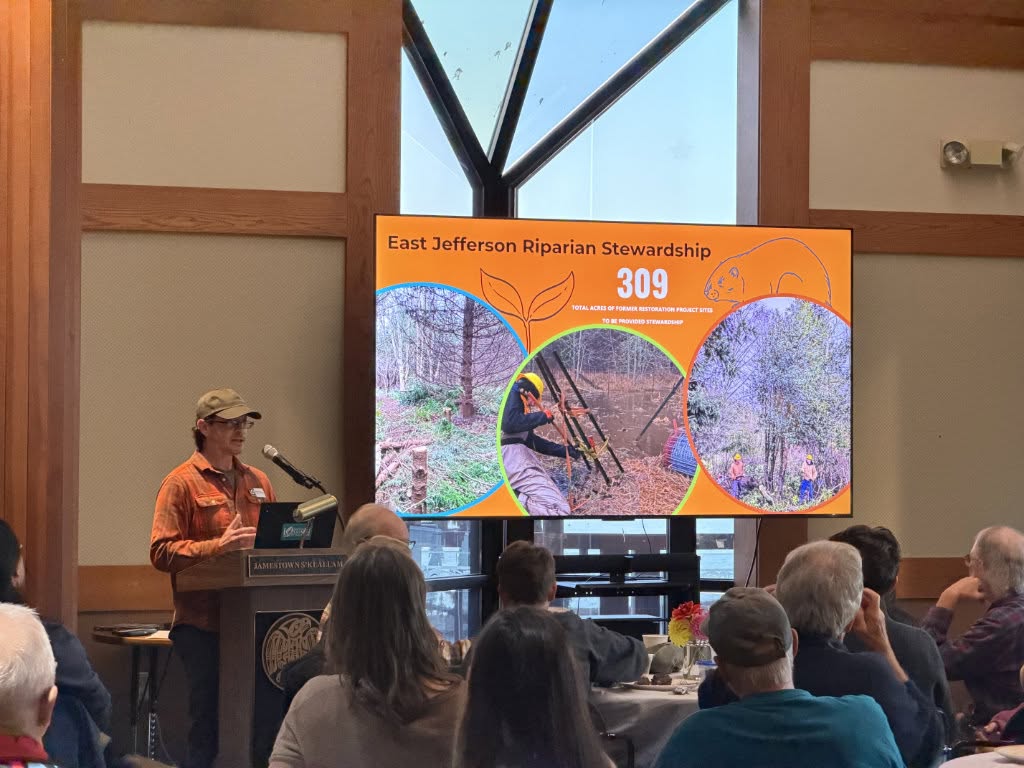
| | We Loved Seeing You at the Annual Meeting | | Nate Roberts, NOSC Stewardship Coordinator, presenting at this year's annual meeting. Photo by NOSC staff. | | |
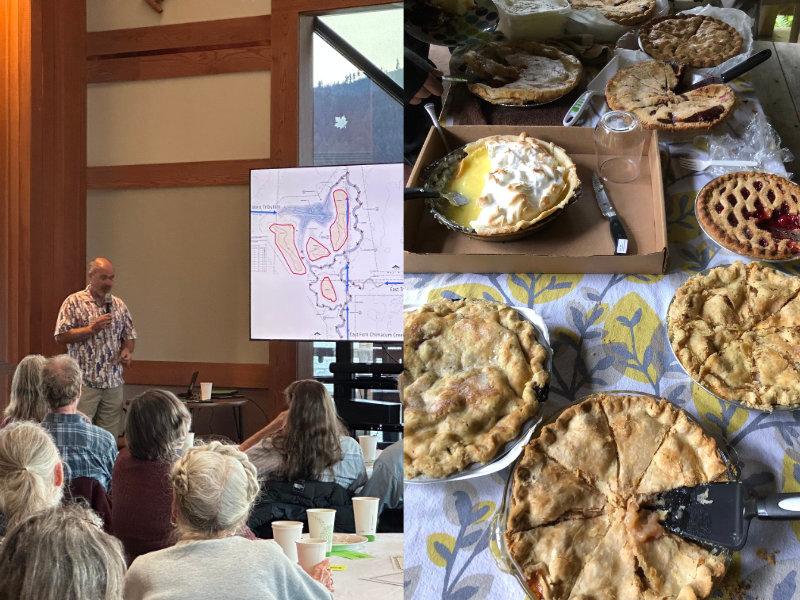
Thank you to everyone who joined us for our Annual Meeting on Friday! Eighty members of the community packed the house, and between the good conversation and the truly impressive pie spread, it was one of our favorite evenings of the year.
Thanks to Anita Knapp for providing gorgeous dahlia centerpieces for every single table. Also, big thanks to Waterfront Pizza for providing a couple of huge pizzas that disappeared almost as fast as the pie.
Every project, every planting, and every student who releases a coho into a creek starts with people like you who show up. Thank you for spending your Friday night with us and for joining us on this amazing journey.
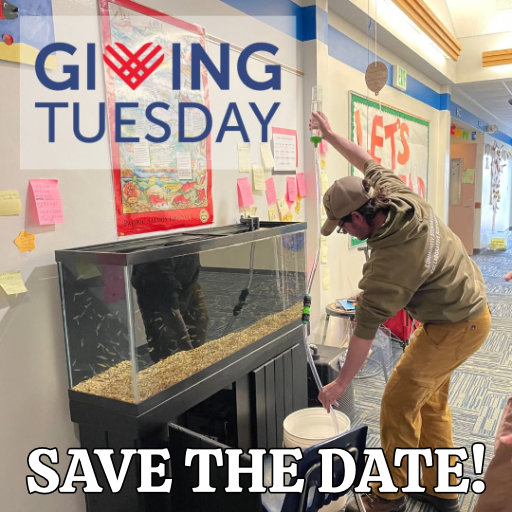
| | Giving Tuesday - Save The Date! | | Giving Tuesday is a celebration of community and radical generosity, and this year it falls on December 1st. We'll be posting some stories about the generosity of our amazing community in the weeks ahead, and you are certainly invited to participate by becoming a NOSC Member with a one-time or monthly donation that powers wild salmon habitat restoration and education. More soon! | |
Clallam Bay Library Presentation
Wednesday, November 18th, 4pm - 5pm
Join us for a presentation from NOSC’s project manager, Kevin Long, to learn the science behind upcoming habitat restoration projects happening near Clallam Bay!
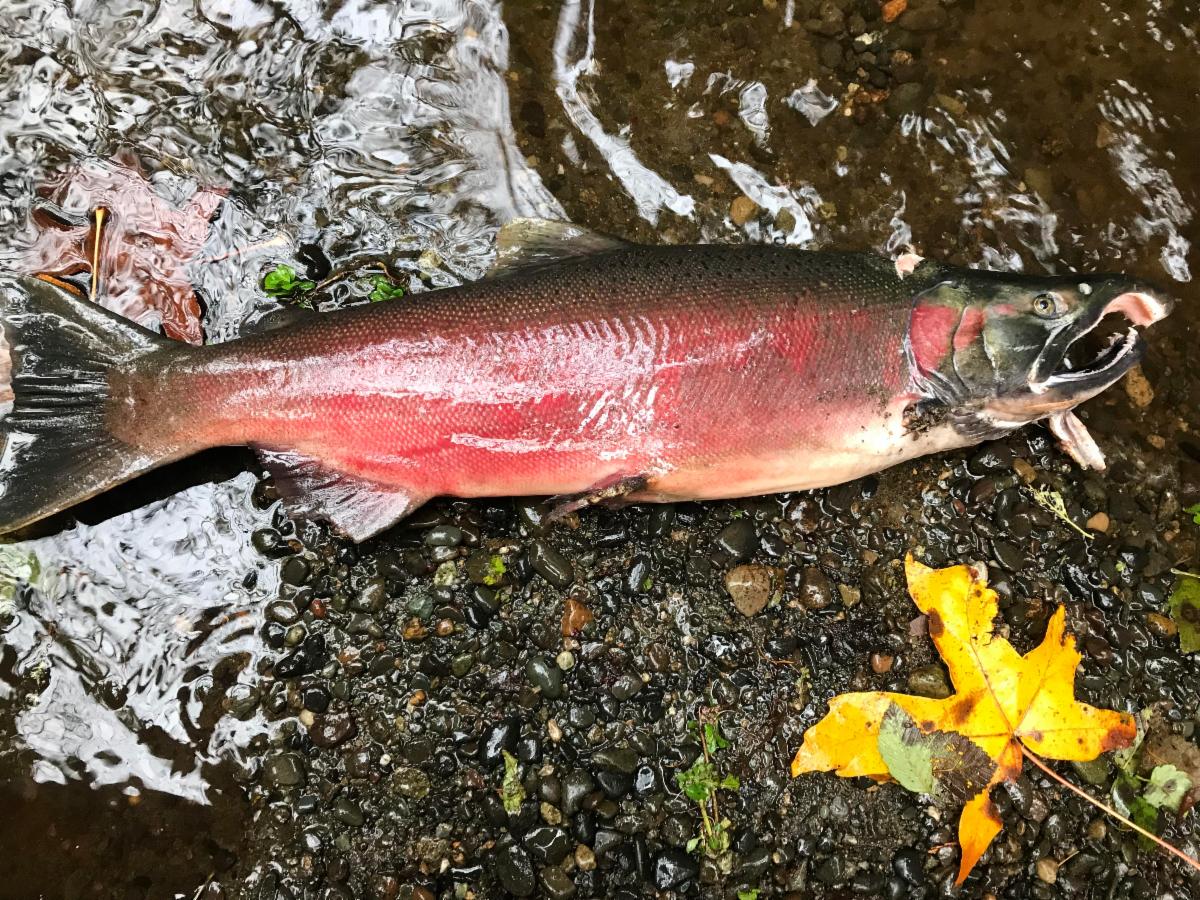
| | | Coho salmon. Photo by Patrick Johnson | |
Coho Spawner Survey Training
Friday, November 13th, 10am - 12pm
Coho season is nearly upon us on Chimacum Creek and nearby watersheds. As such, the Salmon Coalition will be hosting its annual coho survey training at the Finnriver Farm & Cidery Haybarn on Friday, November 13th from 10am to 12 pm. Learn more and register for training below!
| | |
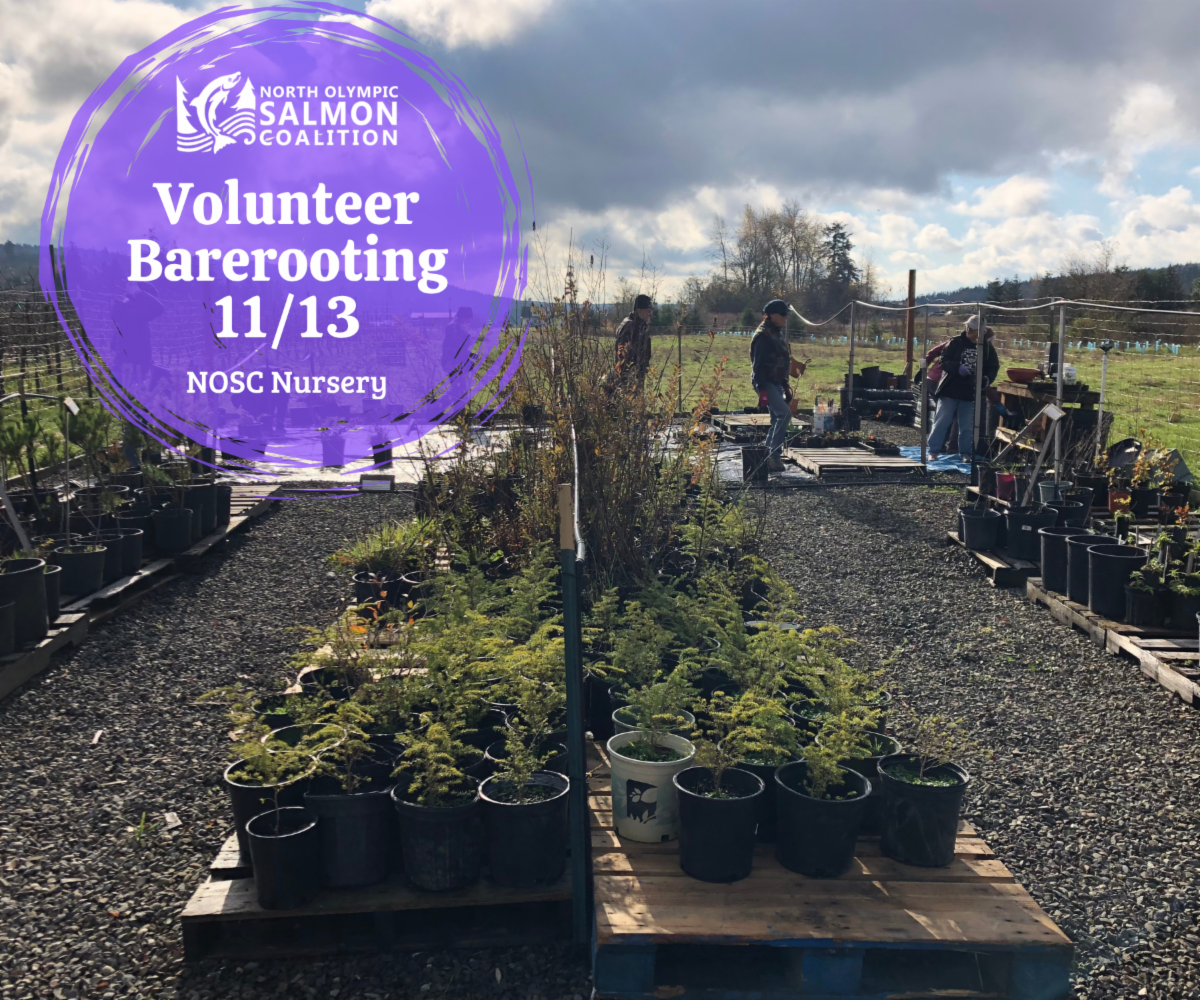
Barerooting Plants
Friday, November 13th, 2pm - 4pm
Volunteer to help NOSC bareroot plants to prepare them for planting at the Salmon Creek Wildlife Area the next day.
| | | | |
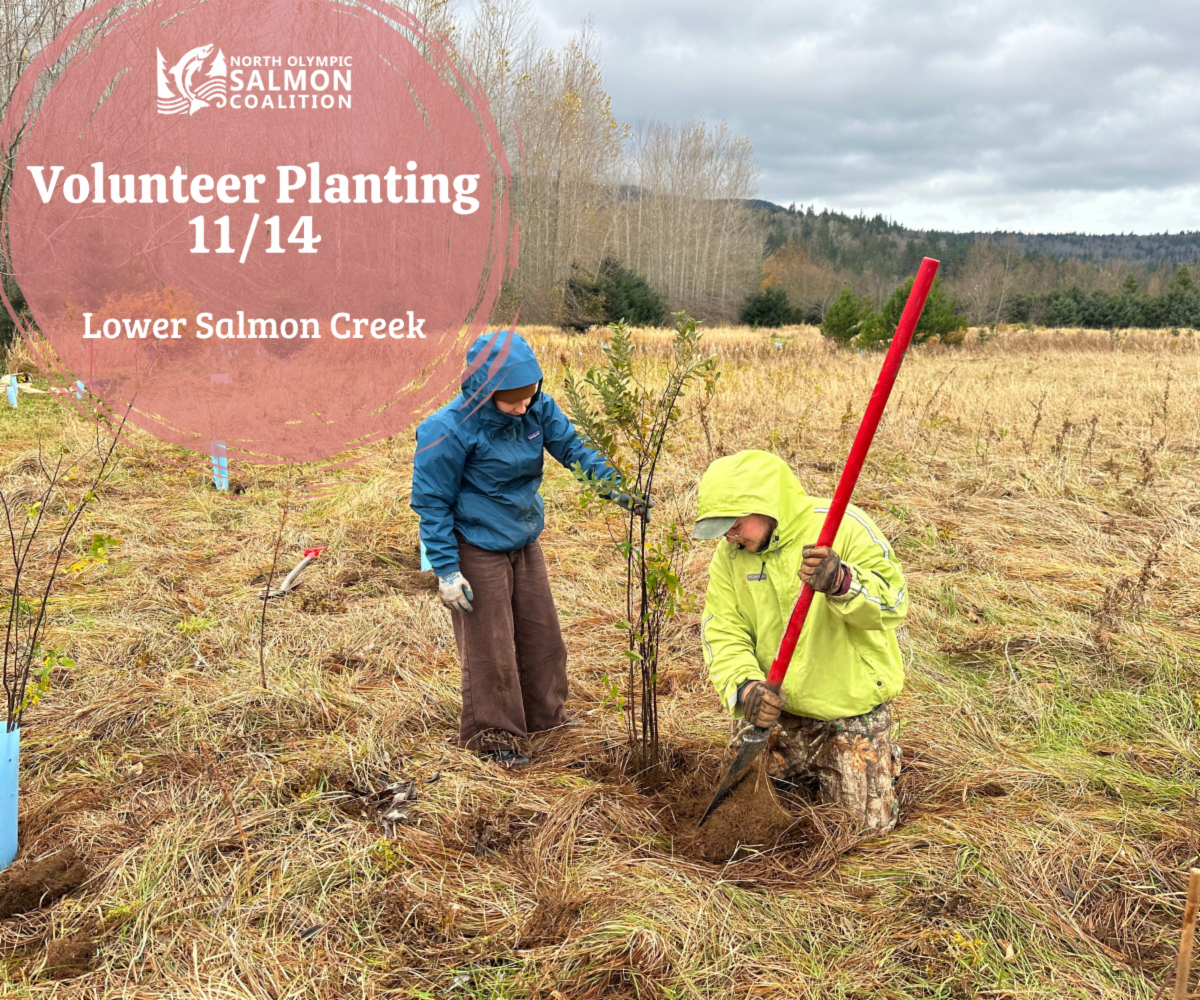
Volunteer Planting: Lower Salmon Creek
Saturday, November 14th, 10am - 2pm
Team up with NOSC to continue the revegetation of Salmon Creek by planting native trees and shrubs on November 14th!
| | |
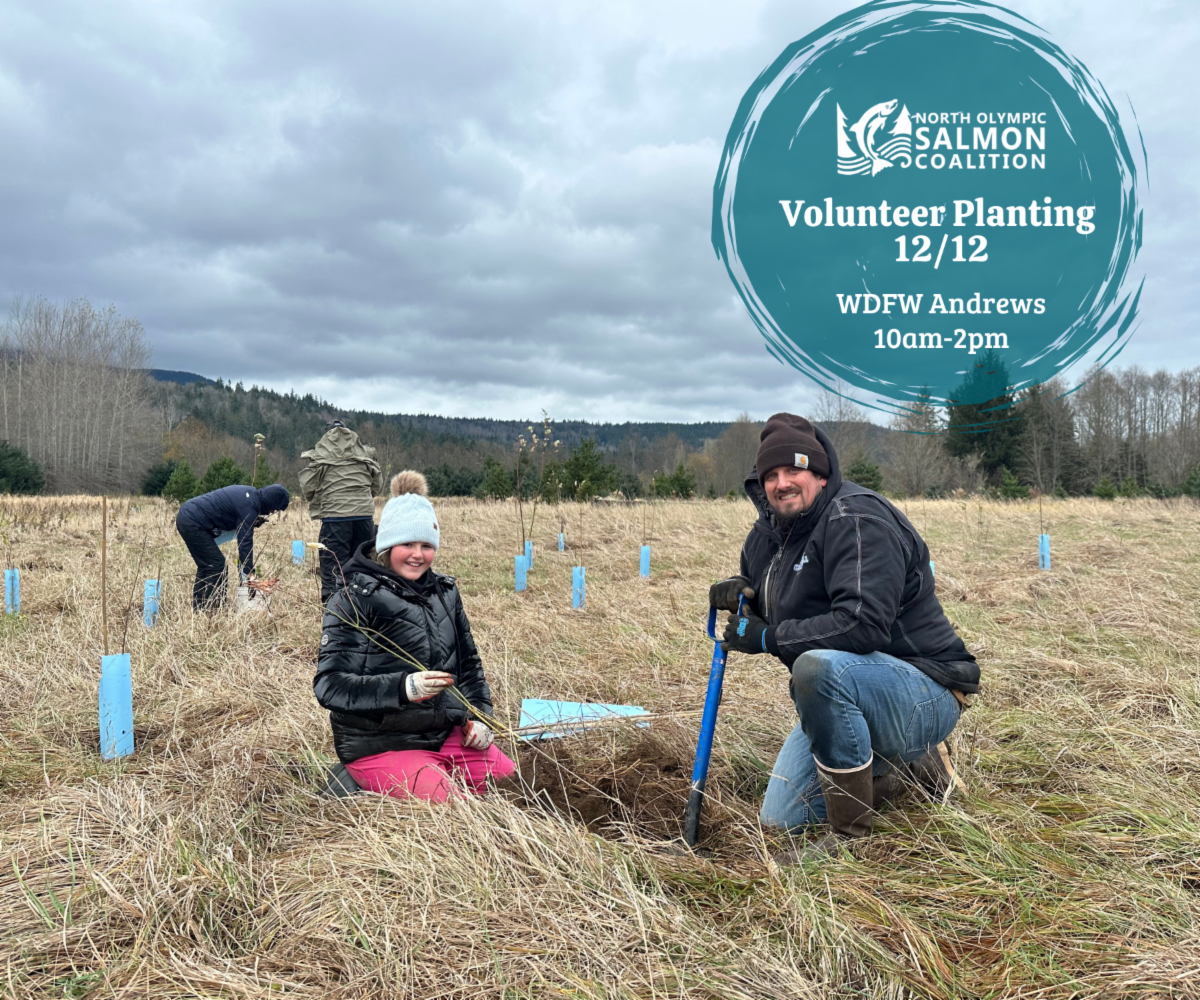
Snow Creek Planting
Saturday, December 12th, 10am - 2pm
Help plant native trees and shrubs along the WDFW Andrews Snow Creek site!
| | | Base funding for the RFEG program comes from a grant from the U.S. Fish & Wildlife Service's Partners for Fish and Wildlife Program, a portion of state commercial and recreational fishing license fees, and excess egg and carcass sales administered by the Washington Department of Fish & Wildlife. | | |
Give Us Your Feedback
Questions or Comments? Let us know what you think!
outreach@nosc.org
360-379-8051
www.nosc.org
| | | | |