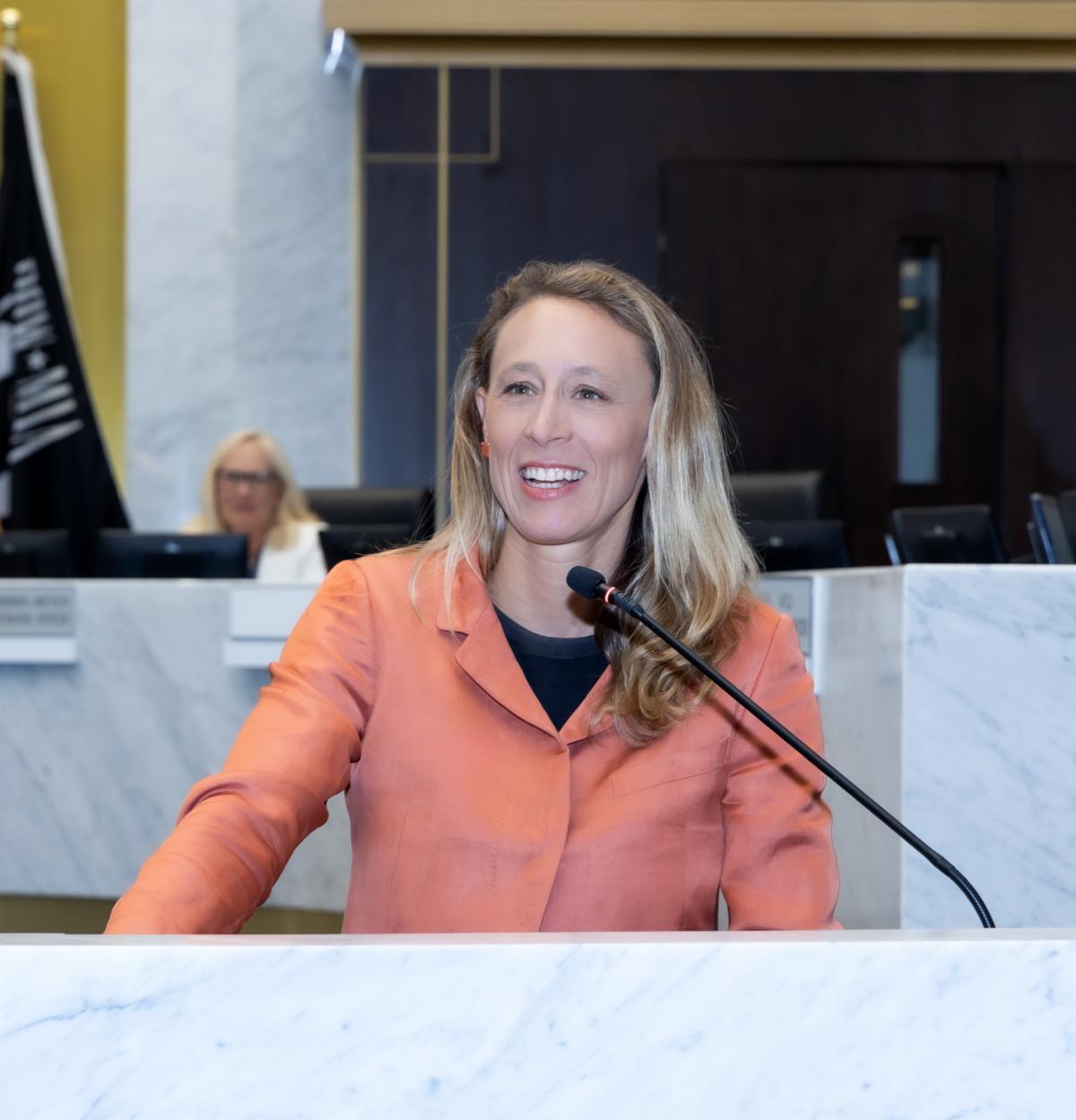
Addressing homelessness is my top priority. Every single day, we are getting people off the street, connected to services and on a path to securing permanent housing. 


Latest News

State Awards San Diego $20.8 Million to House People Experiencing Homelessness 


The State of California has awarded the City of San Diego $20.8 million in Homekey program funds for two projects that will create additional permanent affordable homes with supportive services for people experiencing homelessness.  


Homekey funding is a crucial tool in meeting our city’s top challenge because, while outreach and shelter are critical components of our efforts to address homelessness, what will truly solve homelessness is housing. 


The state awarded these Homekey funds to our San Diego Housing Commission (SDHC) for projects that will produce a total of 75 new affordable rental housing units with onsite supportive services. All these units would serve people experiencing homelessness.  


Nearly $17 million of the award will fund SDHC’s purchase and rehabilitation of the Ramada Inn on Midway Drive to create 62 affordable single-room occupancy (SRO) homes. An additional $3.9 million from the state will support SDHC’s collaboration with Wakeland Housing and Development Corp. to rehabilitate a vacant multifamily housing property on Abbott Street in Ocean Beach to create 13 affordable housing units. 


Our Housing Commission has committed rental housing vouchers to help residents pay their rent at the properties. Residents will receive access to supportive services, such as primary health care, mental and behavioral health care, and other community-based programs that meet their individual needs.  


I’m grateful to Governor Newsom and our partners at the county and state for helping us put a roof over people’s heads with supportive services to permanently end their homelessness 


Read more about Homekey funding here.   


Getting Homeless Youth on the Path to Permanent Housing 


In February, I announced that Golden Hall, which was never intended to serve permanently as a shelter, would eventually be closed and the individuals housed there would be moved to new shelters.  


Since then, the City has been busy relocating people staying at our temporary shelter at Golden Hall, first focusing on moving the families and youth into new shelters and housing. 


Marcus and Lashana were staying in beds reserved for transition-age youth ages 18-24 at Golden Hall. The young couple is now happily housed in a former hotel-turned-shelter in Midway where they have their own room.  


“Now we have our privacy, our comfortability, a bathroom, we have our little kitchen,” said Marcus. “It feels a little better.”  


Marcus’ wife, Lashana, is pregnant, so the end goal for the married couple is permanent housing. 


Marcus just recently got a job at a nearby store, and he and Lashana are working with their case manager, getting closer every day to being able to rent their own apartment. 


"We want to raise our baby in a proper, clean household, and be happy,” Marcus said. “We’re getting closer to that.”  


The transition-age youth formerly housed at the City's Golden Hall shelter are now being sheltered at two sites and served by Urban Street Angels and the San Diego LGBT Community Center with the help of San Diego Youth Services and the YMCA of San Diego County. 


Marcus and Lashana said they’re grateful for all the help and support they’ve gotten as they’ve gone from living in a car, to staying at Golden Hall, to moving into a hotel shelter. They are now just a few steps away from moving into their own apartment, thanks in part to the help of Alpha Project's Rapid Re-Housing Program, which provides rental assistance and security deposits as well as landlord advocacy. 


“I just want to be able to give my child what we were unable to get as children,” Marcus said. “Like a nice life where they go to school and they're happy. And they come home and they're like, ‘Oh yeah, I get to go home to mom and dad. I can't wait to go home.’”

Historic Mental Health Reforms Signed into Law  


Gov. Gavin Newsom made history this week by signing Senate Bill 43, legislation that will modernize California’s conservatorship laws and make it easier to get severely mentally ill and addicted people the help they need.


This bill was authored by Senator Susan Talamantes Eggman (D-Stockton) and sponsored by the City of San Diego and the California Big City Mayors, a coalition of the state’s 13 largest cities that I currently chair


SB 43 will help us reach a relatively small but very visible segment of our homeless population who, up until now, have been allowed to languish on our streets, often dying alone and forgotten by society.


I want to offer my sincere thanks to both Gov. Newsom and Senator Eggman, who have both refused to give up on these very sick Californians.

Shelter Update

A Lot of Work Happening at ‘O’ Lot


I recently stopped by the “O” Lot in Balboa Park to see the progress being made turning a mostly abandoned parking lot into the City’s newest Safe Sleeping site, which will provide an alternative to living on the streets for more than 350 people experiencing homelessness. 


Here are some of the highlights of the work undertaken by nine City departments, including our Homelessness Strategies and Solutions Department, Department of General Services, Public Utilities Department and others:  


  • Built 366 platforms to help weatherproof the tents. 


  • Used over 32,000 feet of lumber to build those platforms, in addition to 800 sheets of plywood.  


  • Ran about 2,000 linear feet of electrical conductors on 50 power poles 50 power poles. power poles. 


  • Installed eight sewer receptacles and six potable water connections to run the showers and laundry on the site. 


  • Built and paved a new access road to the site.  


I am so proud of City staff who’ve been working hard to get this site up and running in the coming weeks.   

The Road to Home

175 new affordable homes in Rancho Bernardo


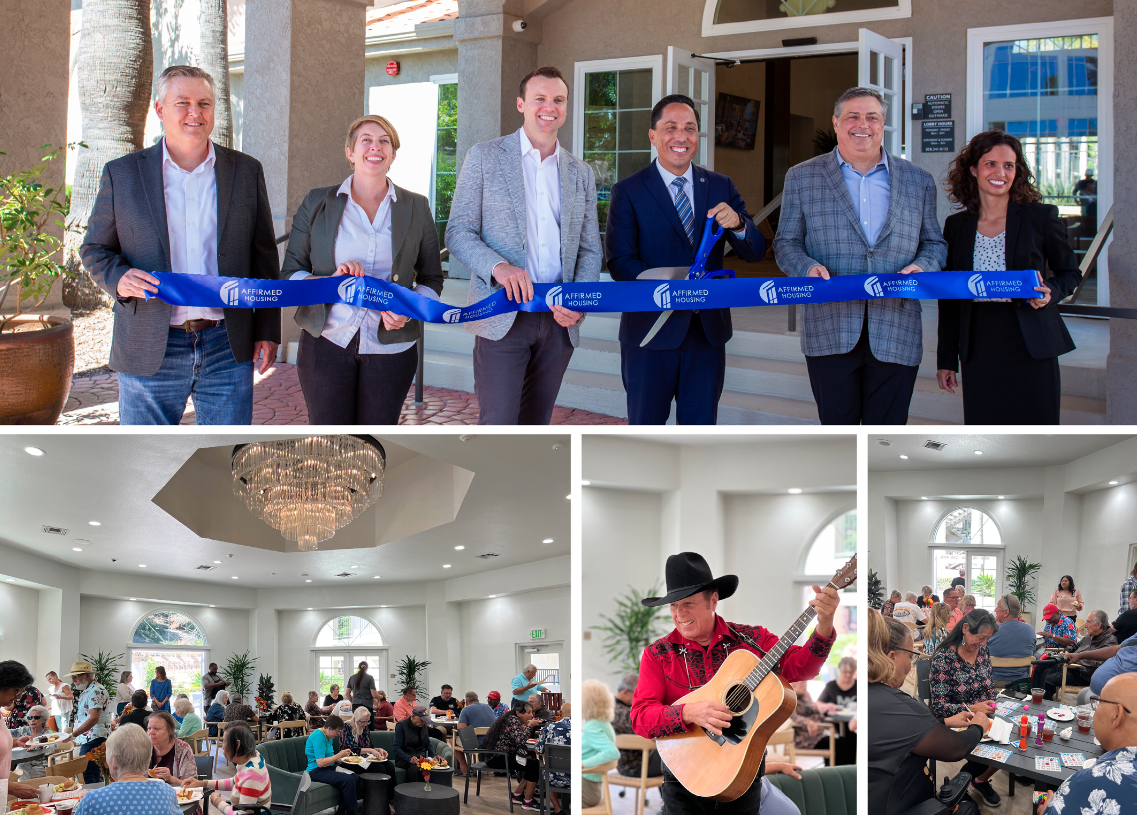
A former hotel in Rancho Bernardo is now offering affordable homes for seniors 62 and older with lower incomes.  


Developed by Affirmed Housing in collaboration with the San Diego Housing Commission (SDHC), the Tizon development provides 175 studio apartments for seniors with income that's 60% or less of San Diego’s Area Median Income. SDHC awarded 44 federal rental housing vouchers to the Tizon development, which will help pay rent for seniors with annual income at or below 40% of our Area Median Income.  

Tizon residents have access to extensive on-site services, including adult education classes, programs and events; health and wellness; art and creativity; and intergenerational programing. 


Our senior population is increasingly becoming at-risk of homelessness, which is why I am so grateful for Affirmed Housing's Tizon development. It is exactly the type of project we need for local seniors. 


By transforming a hotel into affordable housing for seniors and offering services and programs geared toward keeping residents active and engaged, projects like this one are helping San Diegans age comfortably in place.

County Funds to Prevent People from Falling into Homelessness


The San Diego County Board of Supervisors approved funding to the Regional Task Force on Homelessness for its successful diversion practice, which has already kept 2,000 people in San Diego County housed since 2019.  


For a relatively low cost of roughly $1,500 per person, diversion saves cities like San Diego the high cost of services and emergency shelters for people who do fall into homelessness. 


Supervisor Terra Lawson-Remer led the effort to get six philanthropic groups, plus the City of San Diego, to work together to contribute funding toward the County’s diversion program, which is now getting a total of $1 million new dollars to dramatically expand homeless prevention efforts across San Diego County.  


Diversion helps steer people who recently became homeless from a shelter or living on the street through efforts such as connecting them to programs like family reunification or connecting them with short-term financial assistance to help cover deposits, car repair, application fees, security deposits and other costs that will help to get them quickly rehoused. 


The reality is that people are falling into homelessness faster than we can get them housed. That’s why the City of San Diego is proud to be among those funding this initiative led by Supervisor Lawson-Remer to help at-risk people stay in their homes, which is a key part of our regional effort to address this crisis from every angle.

Understanding the City's Shelter System 


The City of San Diego has contracts with various service providers to offer shelter options to people experiencing homelessness. At our shelters, people are connected to support services and ultimately put on a path toward permanent housing.  


The shelters listed below are City-funded or included as part of the City’s Coordinated Intake System for shelter placements. (Note: There are additional shelters outside of this system that are operating within the City of San Diego.) 


  • Alpha Project Bridge Shelter I  
  • Alpha Project Bridge Shelter II  
  • Barrio Logan Family Shelter 
  • Community Harm Reduction Shelter  
  • Community Harm Reduction Safe Haven 
  • Father Joe’s Villages Bishop Maher Center  
  • Father Joe’s Villages Paul Mirabile Center  
  • Golden Hall, First Floor  
  • LGBT Center - LGBTQ+ Affirming TAY Shelter (Clairemont) 
  • LGBT Center - LGBTQ+ Affirming TAY Shelter (Midway) 
  • PATH Connections Housing  
  • Rachel’s Promise Women’s Shelter  
  • Rosecrans Shelter  
  • Salvation Army Interim Family Shelter 
  • San Diego Youth Services 
  • Seniors Landing  
  • San Diego Youth Services  
  • Urban Street Angels Youth Shelter  


Outreach Corner

More Funding for San Diego Housing Commission’s Multidisciplinary Outreach Team  


Thanks to Assemblymember Brian Maienschein for securing $750,000 in the state budget for our San Diego Housing Commission’s Multidisciplinary Outreach Team. 


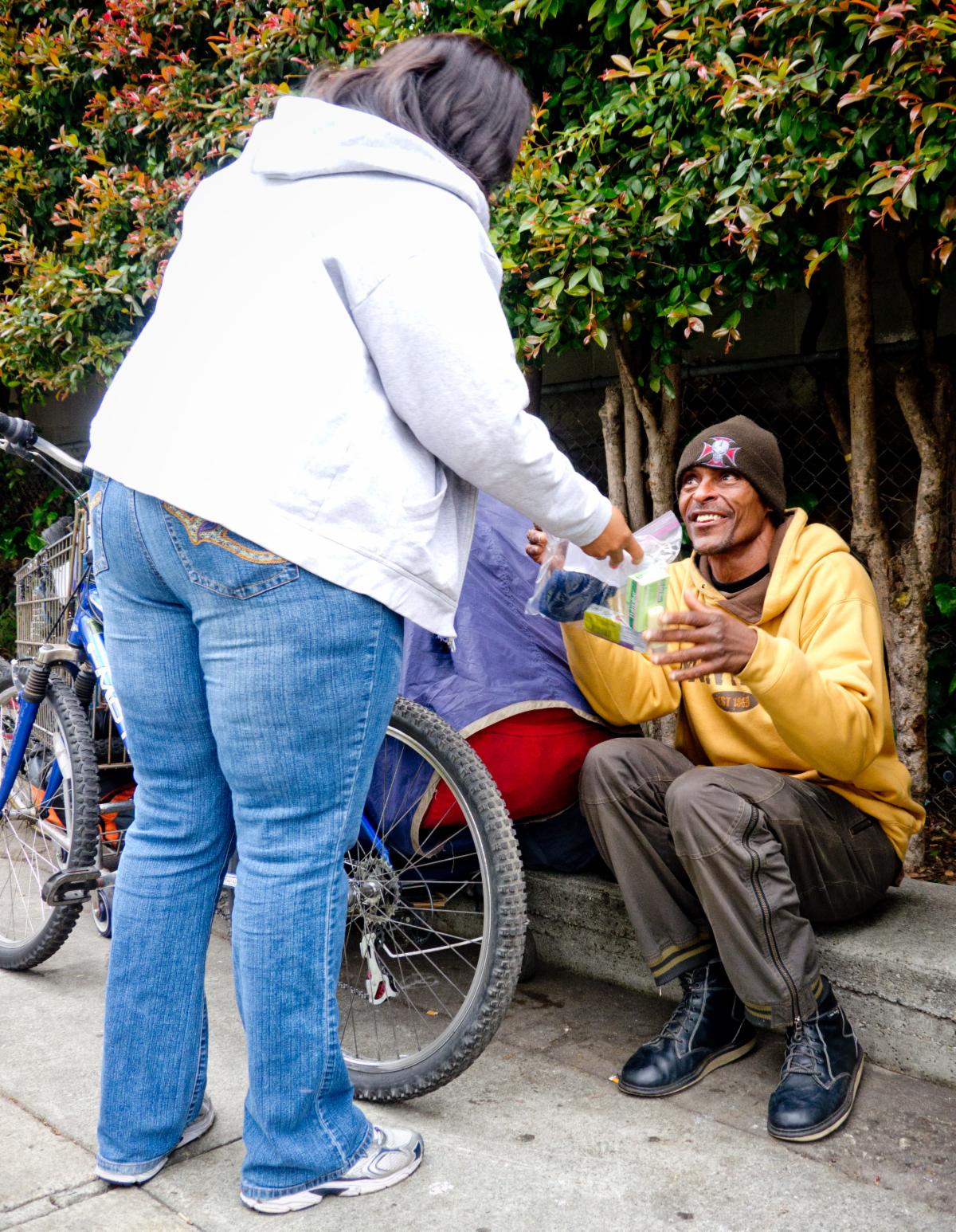
This team works with people with high needs who are living on the streets, helping connect them to healthcare and housing. 


Specifically, these skilled outreach workers focus on high utilizers of our city’s crisis response systems. The team includes clinical outreach specialists, peer support specialists, housing specialists, mental health clinicians, nurse practitioners, medical triage/care professionals and substance use disorder counselors. They work together to develop a tailored plan to meet the significant needs of the people they’re serving with the goal of engaging those who struggle to engage with any system resources themselves and need intensive continuity of care.  


The San Diego Housing Commission administers the program and People Assisting the Homeless (PATH) operates it.  


We all know that housing ends homelessness, but we need dedicated outreach workers like these out in our communities working every single day to connect our unsheltered San Diegans with housing opportunities. 


The additional funds will enable the program to increase services to more individuals experiencing homelessness. I want to thank Assemblymember Maienschein for helping fund the Housing Commission’s Multidisciplinary Outreach Program so we can reach more people where they are and get them the help they need.  

News Stories of Interest... 


Gavin Newsom signs law in ‘overhaul’ of mental health system. It changes decades of practice (CalMatters) 


San Diego DA's shelter bed app begins testing in December (CBS 8) 


San Diego's $1.25M plan: One-time average payments of $1,500 to keep 85% from homelessness (NBC 7) 


Office of the Mayor

202 C St., 11th Floor

San Diego, CA 92101

619-236-6330

Contact Us
Facebook  Instagram  Twitter  YouTube
 
LinkedIn Share This Email