|
---A growing number of local and state governments are adopting policies requiring a residential energy rating and/or disclosure (i.e. the practice of evaluating the energy efficiency of a home or building and making the information known to consumers). The goal is to reduce energy consumption for homes or buildings, while increasing transparency and consumer information around the residential or commercial buying process. Policies requiring disclosure of energy use and benchmarking of commercial buildings are becoming more common in cities and counties. By my count today, there are 39 cities and towns, and 3 counties that are requiring energy to be tracked and benchmarked on a yearly basis. Examples include Atlanta, Austin, Boston, Chicago, Denver, Washington DC, Los Angeles, Orlando, Philadelphia, San Diego, San Francisco and Seattle.
---Back in 2013, Andrew Florence, CEO of CoStar, and the then acting deputy assistant secretary for energy efficiency at the U.S. Department of Energy, Kathleen Hogan explored the possibility of making more information with respect to energy use readily available to investors, owners, and tenants. To date that information remains rather limited to things like the Energy Star Score and if a building is LEED certified. And while that information is important to investors, it may not tell the whole story when it comes to the energy and consequently financial performance of an asset especially an LIHTC one. As utility companies like Pepco, an Exelon subsidiary, and others continue to improve on their data collection and seamless integration with platforms like Energy Star’s Portfolio Manager, you can expect that companies like CoStar and other commercial real estate repositories will follow. All of this will serve to make the acquisition process even more transparent for investors.
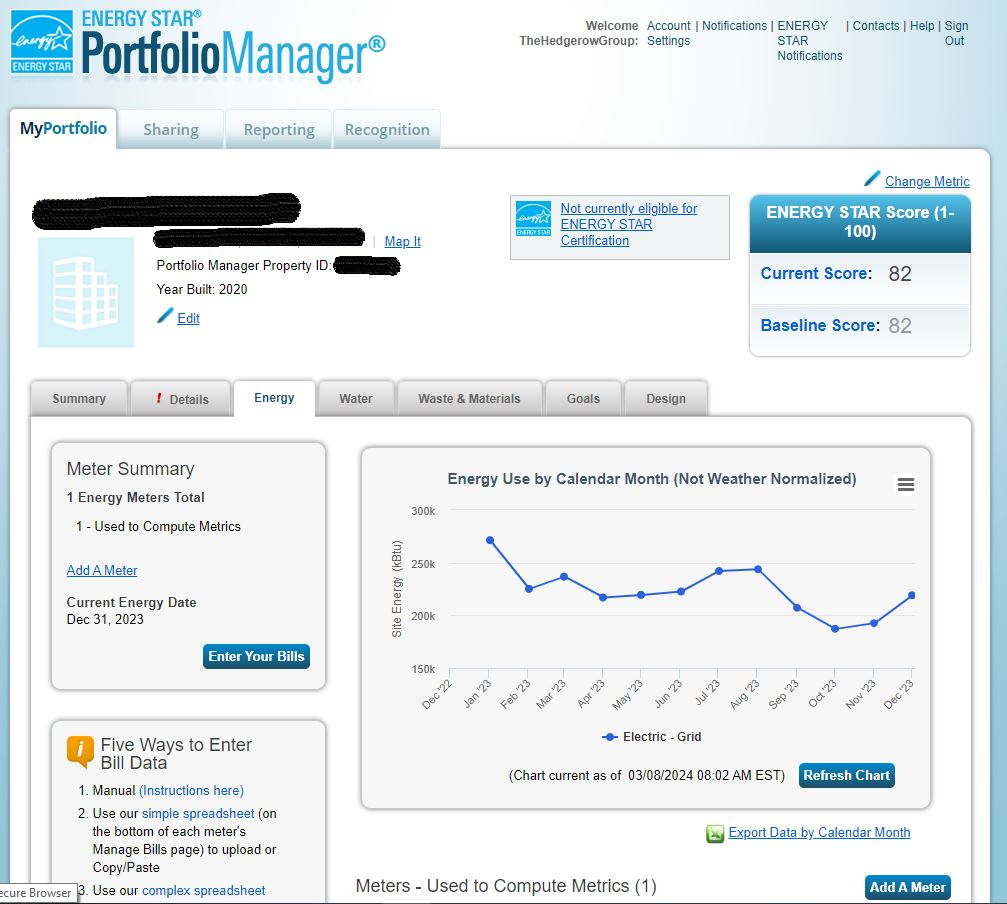
---My advice to investors looking at potential LIHTC opportunities in cities and counties where benchmarking is currently in place, is to request, through disclosure, access to the dashboard of a potential acquisition opportunity. It will look something like the screen capture below. It can tell volumes about a property, its utility allowances and consequently rents. And it may even affect the cap rate when your team is underwriting the deal. And if you need someone to help translate what the information in the table below means, please reach out and we can help.
For Previous Newsletters Follow the Link
|