Despite it being an unprecedented year for all of us, conservation districts, state/territory associations and conservation officials across the U.S. continued to deliver natural resource and conservation management for working lands everywhere. None of us imagined the kind of year 2020 would bring us all, and yet, we managed to accomplish a great deal in every Zoom meeting and conference call we participated in. Despite numerous cancellations, event postponements and office closures, we tackled this challenging year head-on, and these reports shows the extent of that work, as we continued to address the natural resource needs of communities across the country.
The 2020 NACD Annual Report summarizes the range of organizational accomplishments through fiscal year 2020, from NACD’s successful Annual Meeting in Las Vegas, which we were lucky to have held before the onset of the COVID-19 (coronavirus) pandemic, to our Summer Board Meeting that led to the development of a comprehensive Diversity, Equity and Inclusion (DEI) Task Force. NACD continued our work in carrying out our mission of providing leadership and resources for conservation districts and state/territory associations everywhere. From our Technical Assistance Grant program (NACD Report, page 25) to our ever-growing Soil Health Champions Network (NACD Report, page 28), Urban Agriculture Conservation work (NACD Report, page 33) and our inaugural Friends of NACD District Grant Program (NACD Report, page 31), we moved our work forward despite the pandemic raging on across our country's communities. We even created a COVID-19 resource webpage to help districts support their community members.
|
Meanwhile, NACD’s sister organization has worked hard to adapt its programs to continue supporting the delivery of locally-led conservation and the creation of future conservation leaders in a virtual world. From virtual NCF-Envirothon competitions (page 15) to virtual webinars for the Next Generation Leadership Institute (NGLI) (page 25), NCF has found ways to continue its mission in spite of the COVID-19 (coronavirus) pandemic.
In 2020, the NCF-Envirothon continued to connect with students, advisors, volunteers and alumni through a variety of online outreach initiatives, which included an iNaturalist project and a series of webinars. On page 17, you can view a list of all the year’s competition winners, and on page 20, can read how participants enjoyed the competitions.
On page 21, you will read about the NCF’s Diversity Enhancement and Underserved Audience Grants, which are awarded for projects that work to reach out to minority and underserved urban and/or rural students that lack access to natural resource-based outdoor education program. In 2020, eight grants were awarded, and you can read about the projects that received funding.
In the 2020 NCF Report, you’ll also read about the success of the NGLI’s inaugural cohort and some of the program’s key takeaways from the cohort's perspective (page 29). Be sure to check out page 27 for an update on the anticipated timeline for the next cohort.
A printed copy of each report will be sent to conservation districts, state/territory associations, Board Members, Friends of NACD, donors and sponsors. NACD’s Annual Report is also archived on our publications webpage, and NCF’s annual report is available on NCF’s new website.
|
NACD ANNOUNCES $13 MILLION IN 2021 TECHNICAL ASSISTANCE GRANTS |
On April 2, NACD announced the award of $13 million in new technical assistance grants that will continue conservation assistance to communities in over 400 conservation districts in 48 states and territories.
The Technical Assistance (TA) Grants program is in its fourth year and was created in partnership with the United States Department of Agriculture (USDA) Natural Resources Conservation Service (NRCS) to help increase staffing at the field level to provide conservation services to farmers, ranchers and local communities across the U.S.
“These grants will help conservation districts serve clients in high priority and heavy workload areas across the country,” NACD President Michael Crowder said.
These funds will support over 425 full- and part-time individuals, resulting in approximately 238 full-time equivalent staffing. The awards announced today will leverage more than $3.83 million of matching funds and will support resource technicians, conservation planners, program support specialists and technical specialists based on the local needs and priorities identified by state leaders. All these employees will provide conservation technical assistance to help customers carry out their conservation plans.
“Through the TA Grants program, NACD and NRCS have been able to secure thousands of conservation plans and implement conservation practices,” Crowder said. “Conservation plans are the backbone of the locally-led conservation delivery system, helping landowners to address the natural resource needs of their operations and bettering our communities."
NACD today released a Request for Proposals for new TA agreements for another $1.9 million in funding, with a response period of 60 days and awards expected to be made this summer. Learn more on NACD’s website.
|
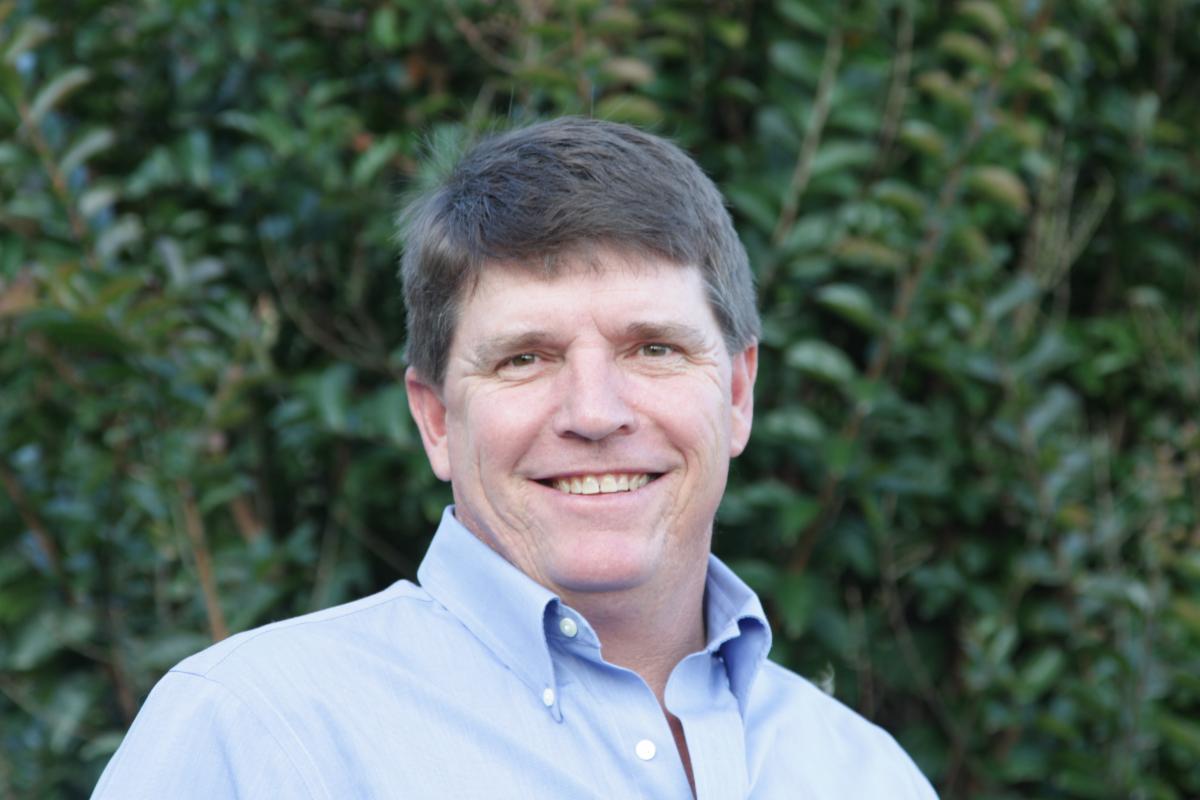
Brad Ritter is a fourth generation farmer, having farmed with his father and uncles since high school. In 1999, he began farming on his own, but recently one of his triplets, Adam, joined the operation. He farms 900 acres of land which is 90 percent rented, and his cash crops include corn, soybeans and vegetables such as lima beans and black-eyed peas.
One of the main practices Ritter employs for soil health is the use of cover crops. Going back as far as his grandfather, who planted barley and clover, the farm has always had some type of cover crop. This practice has not only helped his soil retain moisture and control weeds, but it has also increased the organic matter in his soil. Ritter says it’s a slow process to gain organic matter in their sandy soil, but they are definitely headed in the right direction. Through his work with the Sussex Conservation District and NRCS, Ritter has been exploring different seed mixes and different planting methods to see what would work best on his farm. The Delaware Soil Health Partnership has produced a video entitled “Seeding Hairy Vetch as a Spring Cover Crop,” which gives a brief interview of Ritter demonstrating his seeding process and explaining his trial of hairy vetch as a spring cover crop just prior to his July planting of lima beans.
Additionally, Ritter has incorporated other soil health practices such as conservation tillage, irrigation monitoring and management, and nutrient management, which employs precision agriculture technologies.
Ritter also grows eight acres of sunflowers, which are available for photo shoots until harvest. When it’s ready, this crop is then harvested for bird seed and livestock feed.
Diversifying their operation beyond row crop farming, the Ritters have established a unique ag business called Goat Joy. which incorporates lively goats into yoga classes held outdoors on their farm. Goat socials are also scheduled with the baby goats. Currently, the Ritters are working to open a Grade A dairy for milk and cheese.
If you or someone you know would like to join the NACD Soil Health Champions Network, please visit the NACD website or contact Beth Mason, North Central Region Representative at beth-mason@nacdnet.org. |
|
NACD Welcomes Rachel Edwards |
On Tuesday, April 6, Rachel Edwards joined NACD as the Executive Assistant/Office Coordinator.
Edwards comes to NACD from the Glenelg Country School in Maryland, where she served as Office Manager and Administrative Assistant.
Edwards has previously worked as program manager for Fuel Fund of Maryland, director of STEM Programming for Episcopal Community Services of Maryland and program manager for the National Council for Science and the Environment. She holds a bachelor’s degree in environmental economics and policy from Michigan State University, where she was chapter president of Minorities in Agriculture, Natural Resources and Related Sciences (MANRRS).
|
EPA Seeks Nominations for Local Government Advisory Committee |
The U.S. Environmental Protection Agency (EPA) is seeking nominations to serve on its Local Government Advisory Committee (LGAC), which advises the EPA on critical environmental issues impacting local governments. The agency is also accepting nominations for LGAC’s Small Communities Advisory Subcommittee (SCAS).
Members of the LGAC and SCAS will provide advice and recommendations on a broad range of issues, including: ensuring access to clean air and water; reducing greenhouse gas emissions; advancing environmental justice; bolstering resilience to the impacts of climate change; and limiting exposure to dangerous chemicals and pesticides.
To be considered for 2021 appointments, nominations should be submitted by April 16, 2021. Learn more about the nomination process here.
|
NACD Offers New Items Perfect for Stewardship Week |
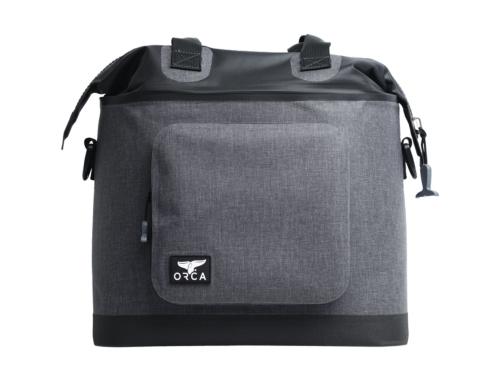
Just in time for Stewardship Week, NACD is offering ORCA coolers and totes.
Built for true outdoor enthusiasts, ORCA coolers and totes are designed to meet all your travelling needs. Whether you’re looking for a cooler for tailgating before a week-long camping trip, or something for that sunny day in the field training, the goal remains the same - you need a good quality cooler to keep your drinks cold and a roomy tote to carry all your belongings.
Visit NACD's Marketplace to purchase these items. Please let NACD know how your conservation district or state association is planning to virtually celebrate Stewardship Week by emailing us. |
USDA Agroforestry RFP Now Available |
The U.S. Department of Agriculture's (USDA) National Agroforestry Center is requesting proposals to create regionally-applicable and practice-specific agroforestry educational materials based on producer production information, experiences and testimonies. Awards are anticipated to be up to $100,000 with a minimum of $35,000 for any one project.
The agreements awarded under this announcement will support the USDA's goal to strengthen the stewardship of private lands through technology and research. These materials will also address natural resource professionals’ need for more information that supports producer adoption of agroforestry.
Proposals must be submitted by May 28, 2021. For-profit entities; State, local and tribal governments; not-for-profit organizations; and institutions of higher education are eligible entities for these agreements. To learn more, click here.
|
PACD Creates PSA on Spring Fertilizer |
The Pennsylvania Association of Conservation Districts (PACD) recently created a public service announcement (PSA) to encourage citizens to use fertilizers responsibly.
Materials include:
Click here to view the webpage of materials. Please share the PSA scripts with your local radio stations.
Conservation districts and partners are encouraged to share the video on their social media channels.
Thank you to the McKean County Conservation District’s Jody Groshek for helping to develop the messages. Visit PACD's website to learn more.
|
Promote your conservation district or state association's tree sale, annual meeting, webinar, field day or more on NACD's Calendar of Events!
|
|