E-Newsletter | August 14, 2020 |
|
Yo Ho Ho & A Bottle of Rum |
|
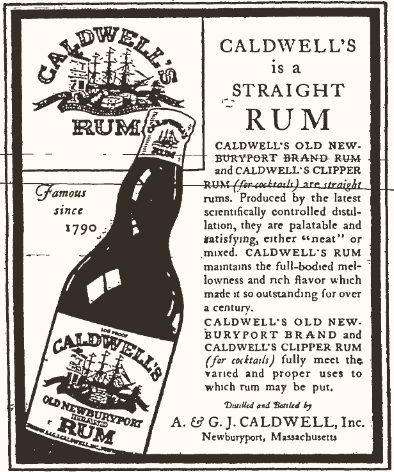
Alexander Caldwell, a New Hampshire native, moved to Newburyport in search of a foothold in one of the most lucrative trades of the 18th century. By 1790, the young entrepreneur had purchased a distillery at the foot of Kent Street and engaged in the practice of distilling molasses into that extremely popular and affordable spirit, rum. Production lasted uninterrupted until the advent of Prohibition and Caldwell’s became one of Newburyport’s most recognizable brands.
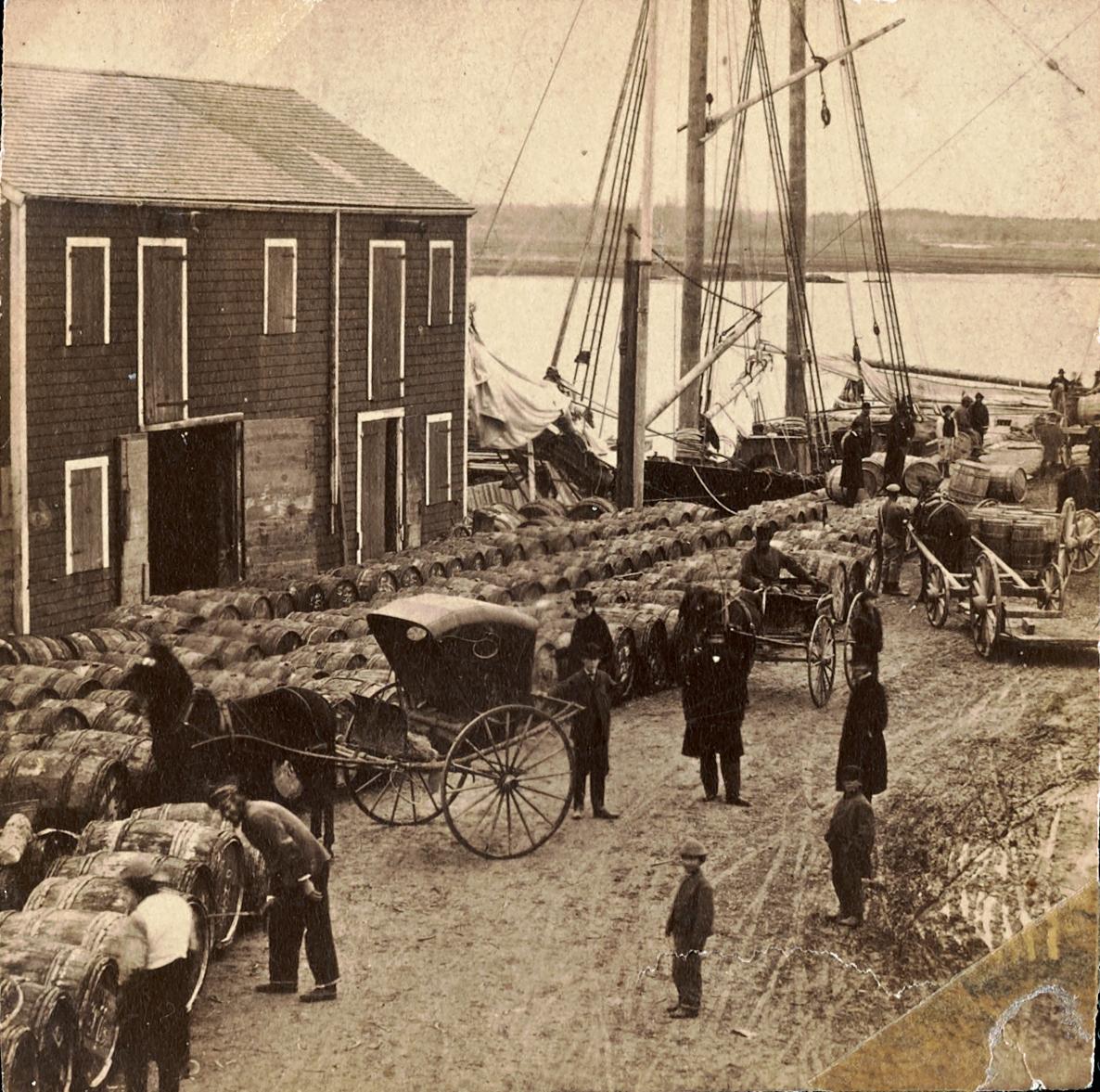
Molasses, a cheap byproduct of the sugar refinery process, would have been shipped from the Caribbean plantations and left to ferment in wooden barrels. It was easy to transport, resilient to climate changes and increased in quality as it aged. All these factors, combined with New England’s appetite for the beverage, led to high profit margins.
Caldwell’s was just one of ten distilleries in Newburyport by the end of the 18th century, making it the second in production behind only Boston.
The profitability of this industry contributed significantly to the growth of Newburyport's burgeoning economy, as well as that of the entire state.
|
|
|
|
“Absolute purity is guaranteed, and this is recognized by careful buyers. Caldwell Rum stands at the head of the list. The superiority of pure rum over other spiritous liquors has long been recognized, and the health-preserving properties have recommended its use to many eminent men.”
Written a century after the distillery was established, this 1890 article lauds the long-standing quality of Caldwell’s Rum, a fixture of the Newburyport waterside.
|
|
What was the reason for molasses being so inexpensive?
Despite rum's popularity in the sometimes boisterous early taverns, its story has a much darker side. The rum industry in Newburyport is inextricably linked to slavery in the Caribbean.
The answer lies in the exploitation of back-breaking human labor in the West Indies. Enslaved Africans toiled without compensation on sugarcane plantations, cutting and processing the plant into products that were sent directly to the American colonies. Here in Massachusetts, livelihoods and fortunes were built on those imports and consequent exports.
Many families in Newburyport during the 18th and 19th centuries relied, directly or indirectly, on the local consumption and transatlantic exportation of rum.
Caldwell’s survived subsequent taxes and tariffs placed on molasses, the 1807 Embargo, a rise in whiskey popularity, the abolition of slavery in the Caribbean, and the decline of the age of sail. It was even resurrected after Prohibition, with “the latest scientifically controlled distillation” and the familiar “full-bodied mellowness and rich flavor.” Caldwell’s Rum officially closed its Newburyport doors in 1961, but its 157 years of production left a lasting and complicated legacy on the city’s past.
Images: Caldwell's Rum advertisement and Bayley's Wharf with numerous rum barrels unloaded, image from the Christopher Snow Photo Collection, Museum of Old Newbury.
To learn more about Newburyport’s connection to slavery and the full story of rum in the transatlantic slave trade, refer to historian Susan Harvey’s research. Her thesis, “Slavery in Massachusetts: A descendent of early settlers investigates the connections in Newburyport, Massachusetts” can be found here.
|
|
For your Viewing Pleasure...Episode 7 of "Yeat Yeat, Don't Tell Me!"
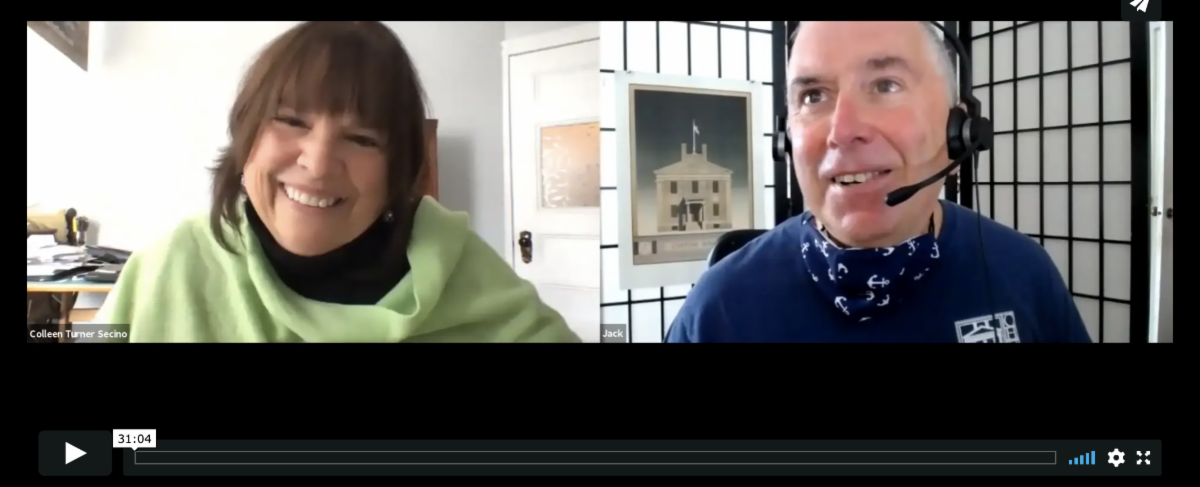
Laugh and learn with your hosts, Jack Santos, Custom House Maritime Museum, and Colleen Turner Secino, Museum of Old Newbury.
More than 20 people participated in this past Friday's "Yeat Yeat, Don't Tell Me!" Co-host Secino shares, "It's such a fun half hour! And this past week we had so many new names (and faces)."
Santos and Secino ask eight questions, then quickly discuss the answer offering insight, humor and, occasionally, a little speculation.
Try your hand at the questions here, then watch the show here to see how you did!
|
|
Puzzle Me This...Votes for Women
This week we celebrate the ratification of the 19th Amendment granting women the right to vote.
The amendment was passed by Congress on June 4, 1919 and ratified on August 18, 1920.
A color illustration of three suffragists for the song “Votes for Women: International Suffragists’ Song” by Ed Markel.Credit...Library of Congress, Music Division.
Click on the image to begin.
|
|
Something is Always Cooking at the Museum
Can you believe we have had three heat waves already? Ergo, we need another recipe that required no-cooking (or at least minimal), if you choose! Jean Berger offers the perfect nosh here. I like her suggestion of serving it on lettuce, but if you have garden fresh tomatoes, those would be a wonderful change up. And for an extra special touch, consider searing up a piece of fresh tuna. To quote Emeril Lagassé, celebrity chef and Massachusetts native, "Bam!"
3 (7 ounce) tins tuna
2 cups diced celery
2 cups seedless grapes
2 ounce capers
1/4 cup chives, chopped
1/2 cup mayonnaise
1/2 cup sour cream
1 tablespoon lemon juice or to taste
1 teaspoon Dijon mustard
Salt and pepper to taste
Mix tuna, grapes, celery, capers and chives. In separate bowl, combine mayonnaise, sour cream, lemon juice, mustard, salt and pepper. Mix well. Cover and refrigerate salad and dressing for 2 hours. Line shallow bowl with lettuce. Toss tuna with mayonnaise mixture and place on lettuce. Surround with seasonal fruit, if desired. Serves 6.
|
|
During this difficult period of COVID-19, we rely on your support more than ever. We are working to reschedule many of the programs that we have had to postpone, as well as develop new, online programs for you to enjoy and keep us connected. We hope, if you are able, that you will consider a donation to the museum. Thank you for your continued support.
|
|
Museum e-Newsletter made possible through
the generosity of our sponsors:
|
|
|
Museum of Old Newbury
98 High Street
Newburyport, MA 01950
978-462-2681
|
|
|
|
|
|
|
|