Board Meeting
Monday, August 16, 2021 8:00am
|
Save the Date: the September 2021 Board Meeting is tentatively scheduled for Monday, September 13, 2021. Please check our website for updates related to the date, time and location of that meeting. |
|
Please note that the August 16, 2021 Board Meeting will not be held “in-person” at District headquarters. Rather, the meeting will be conducted via video and phone conference call. Guests may access the meeting in the following ways:
You can also dial in using your phone:
Access Code: 438-907-541
Please check the Calendar on our website (www.sgvmwd.com) for board meeting agenda and dates and times of committee meetings. You may also request to receive such information by email. Meetings are usually held on the second Monday of each month at District headquarters, 1402 N. Vosburg Drive, Azusa, California. Please join us; all meetings are open to the public.
|
|
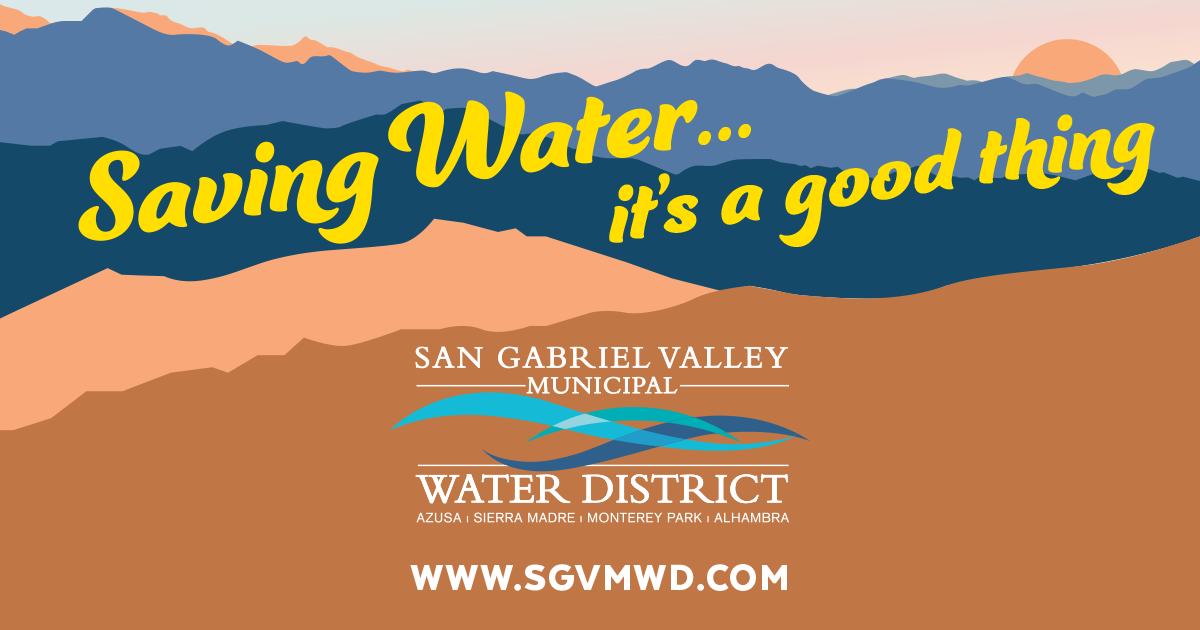
Saving Water...it's a Good Thing!
The District Teams Up with Member Cities to Promote Water Conservation
|
|
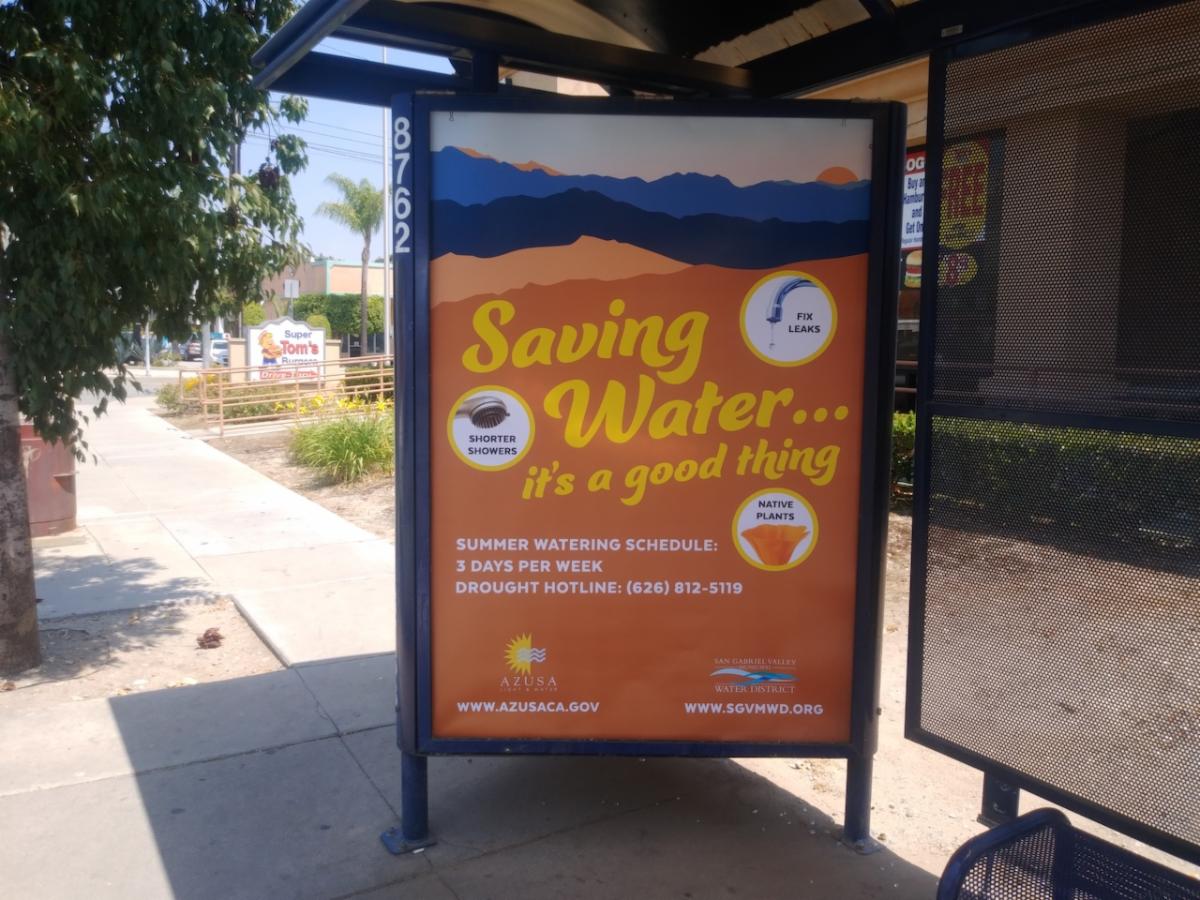
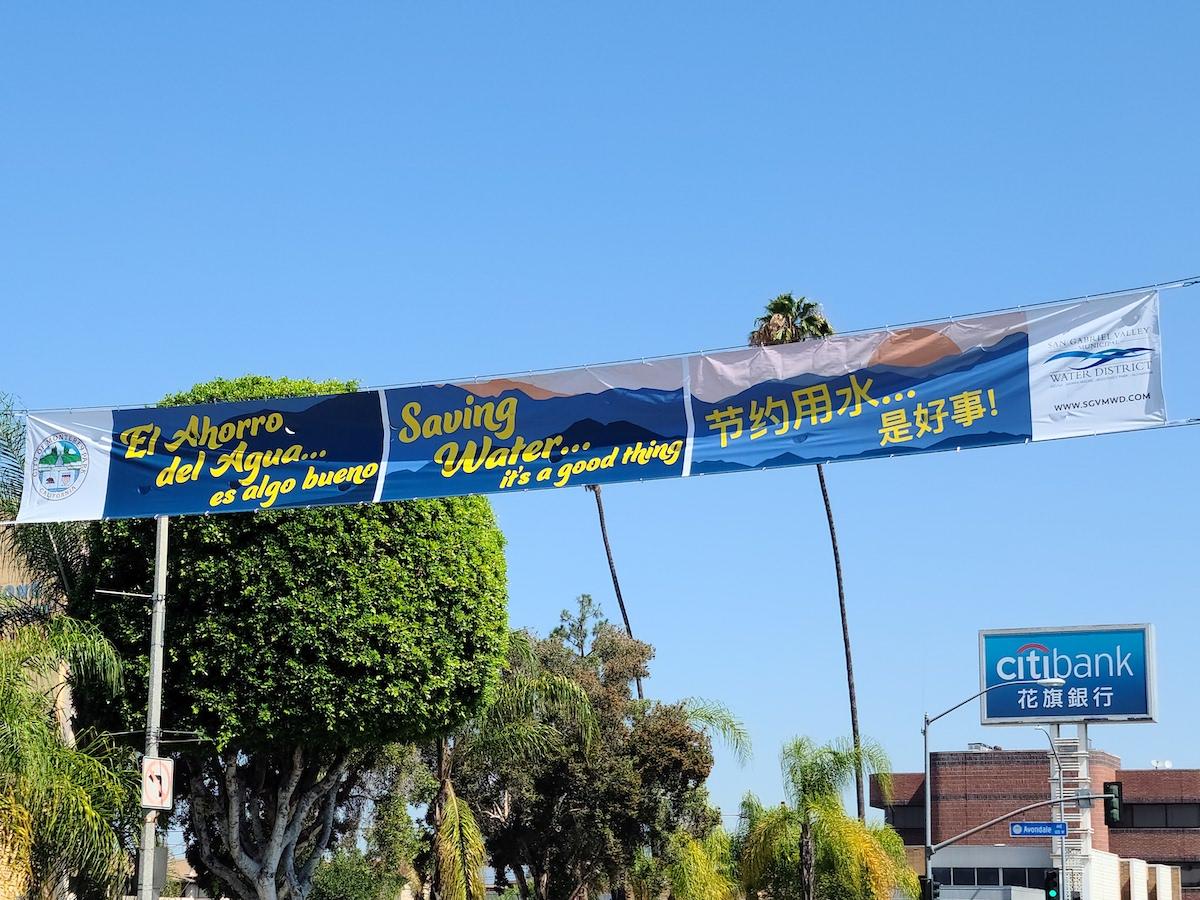
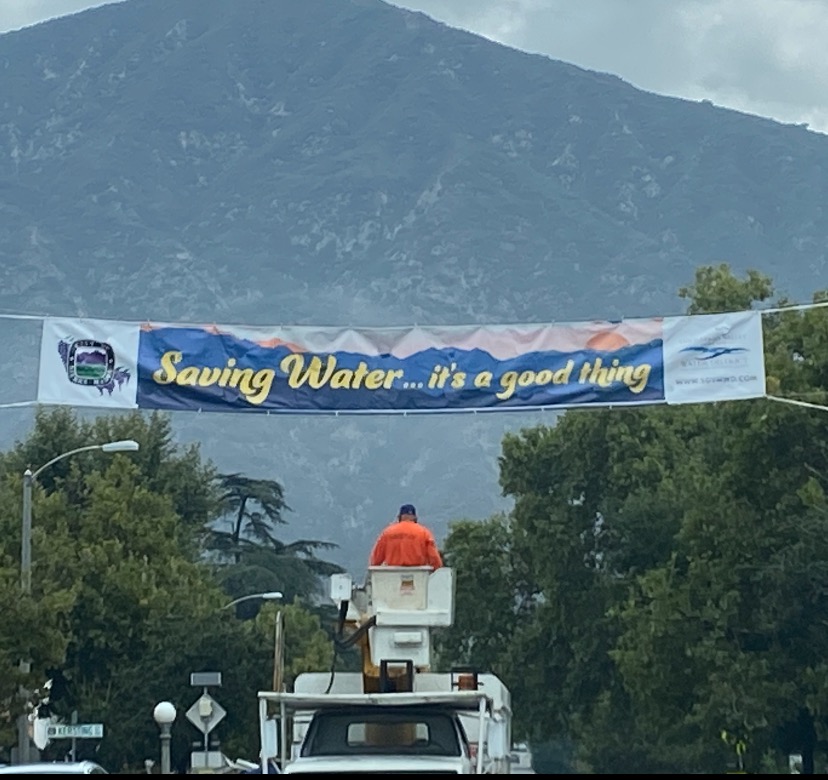
Drought conditions are worsening as we move into the hot and dry summer and fall months. We can all do our part to help our environment and water supply by embracing water conservation as a way of life! The District’s water conservation and education campaign theme for 2021 is a simple and fun call to action: “Saving Water…it’s a good thing!” The message can be taken two ways: that water, itself, is a good thing; and that the act of saving water is a good thing. Regardless of your interpretation, we hope the positive theme/message for 2021 is inspiring and helpful.
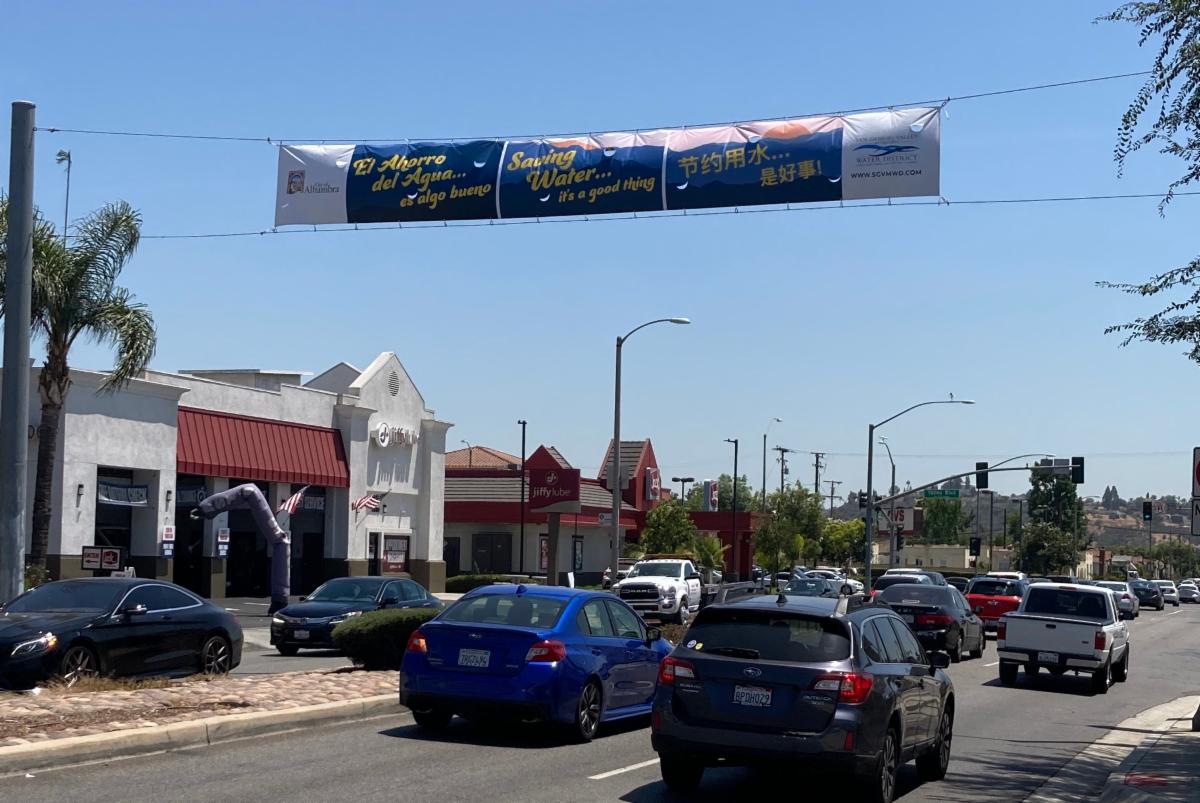
The District is working closely with each of our member cities to promote water conservation messaging and activities that people can adopt voluntarily. As pictured below, our first major steps are in the form of water conservation street banners in each city, as well as bus shelters in Azusa. Azusa and the District have also developed a social media campaign featuring the “Saving Water…it’s a good thing” theme. We are in active discussions and planning with all our member cities to implement additional water conservation initiatives. We will provide updates in future issues of the newsletter.
|
|
Summary
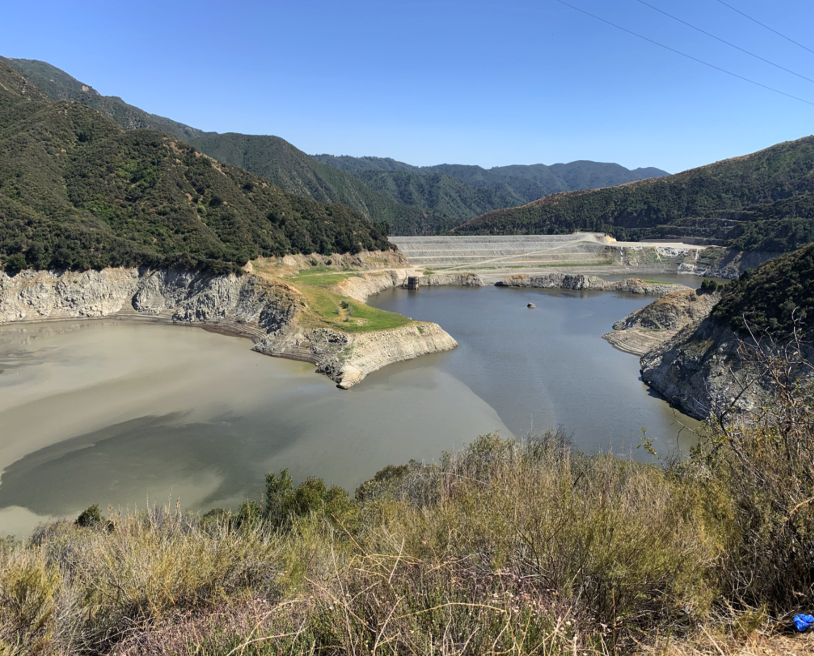
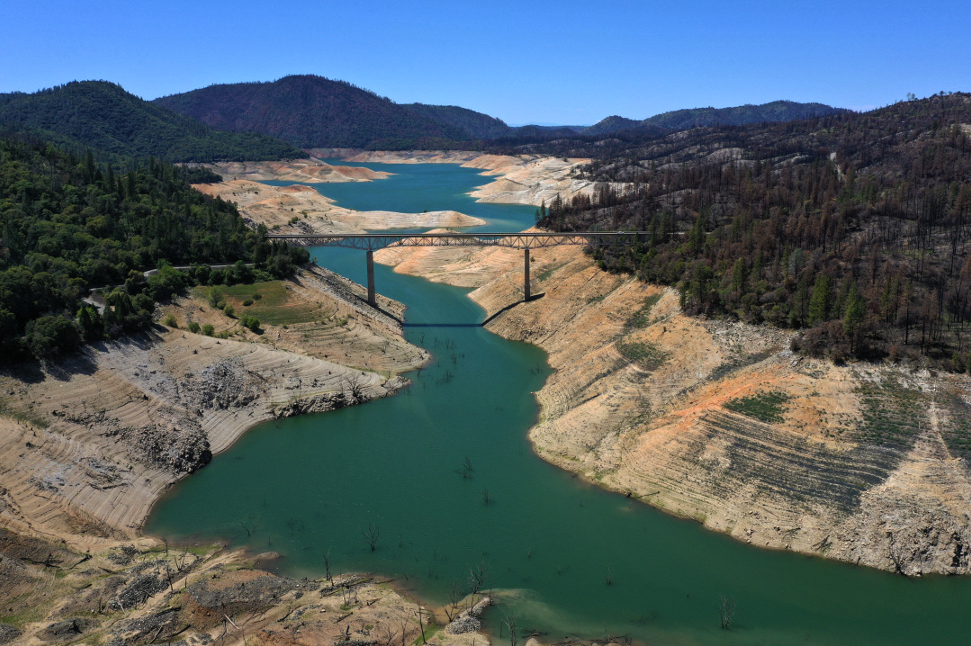
Water supplies statewide and in the San Gabriel Valley (local groundwater) remain below normal and average as shown by the bleak pictures of the local, San Gabriel Reservoir in the nearby San Gabriel Mountains (below left), and the State’s second largest reservoir, Lake Oroville, which is less than 50% full (below right). The State’s “Drought Emergency” now includes 41 of the State’s 58 counties, with approximately 30% of the state’s population in a drought emergency.
The past two years have been the driest in nearly half a century (since 1976-1977). Warming temperatures are a major contributor to worsening drought conditions as temperatures are about two degrees hotter, on average, now than 50 years ago. This results in greater evaporation during precipitation events, less melting snow feeding rivers and reservoirs, and soil moisture drying out before soaking into the ground. Computer models show that in the future, dry years will be drier, and wet years will be wetter.
|
|
Imported Water Delivery Update
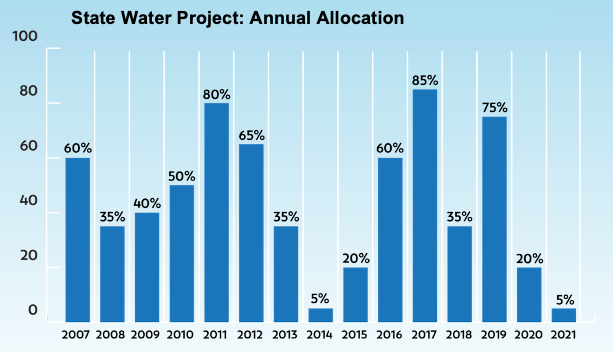
In March, amid worsening drought and water supply conditions, the State Department of Water Resources reduced State Water Project (SWP) allocations (the “imported” water that flows from northern California to southern California) to 5 percent of requested supplies, down from the initial allocation of 10 percent announced in December 2020. About 80 percent of the Valley’s water supply is furnished by local groundwater, and the Valley imports approximately 20 percent of the water we use. Thus, annual imported water allocations from the Department of Water Resources (DWR) are very important. The SWP provides water to 29 SWP contractors, such as SGVMWD, who supply water to more than 27 million Californians and 750,000 acres of farmland.
The graph below shows how imported water allocations from the state vary from year to year and demonstrates the challenges faced by water managers. As a rule of thumb, a 60% allocation is needed to meet the demand of our member cities for replacement water. Thus, in years where the allocation dips below that amount, we see the important role that water storage plays.
|
|
District Operations Update
In May, the District completed delivery of all 1,440 acre-feet (5%) of its allotted 28,800 acre-feet of imported water to the San Gabriel Canyon spreading grounds which is used to replenish declining groundwater supplies in the Main San Gabriel Basin. The District has continued ongoing maintenance and repairs to equipment, computer systems and pipeline/water delivery infrastructure.
|
|
Following is a summary of water supply conditions in the State and the San Gabriel Valley:
-
State Summary – According to the U.S. Drought Monitor, as of July 27, 2021, 100% of the State is considered “abnormally dry,”; 100% of the State is experiencing moderate drought (increased from 97% three months ago); and 95% of the State is experiencing severe drought (increased from 88% three months ago). Further, 88% of the State is experiencing extreme drought (increased from 53% three months ago), and 46.5% of the State is experiencing exceptional drought (up from 5.4% three months ago).
-
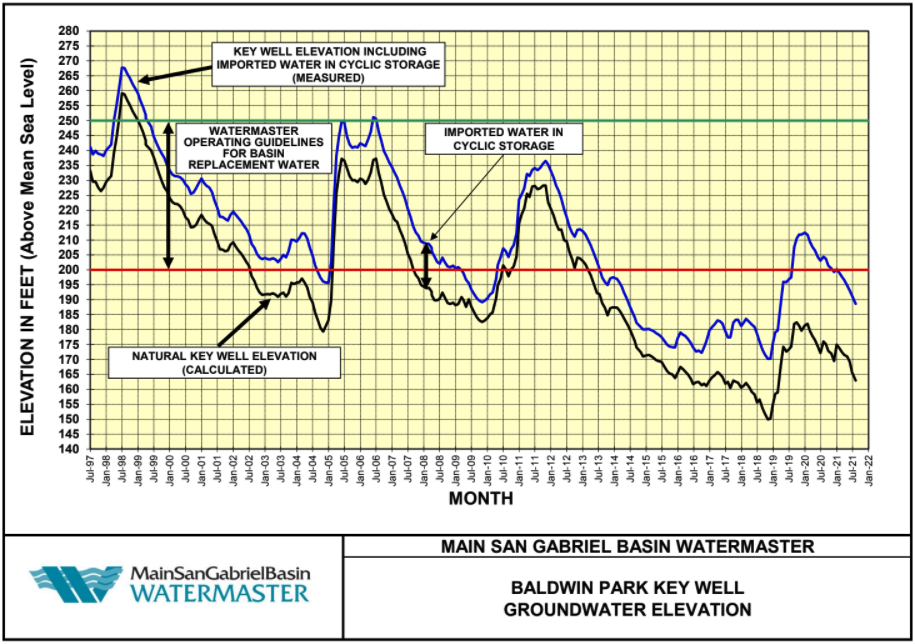
Local Groundwater – in the Main San Gabriel Basin, the “Baldwin Park Key Well” is the indicator of groundwater levels (see graph below – blue line includes cyclic storage; black line does not). As of August 6, 2021, the level is 188.6 feet above mean sea level, a decrease from 194.8 feet several months ago. The Basin has experienced a fairly steady decline from 212.5 feet above mean sea level in December 2019. The present level is still an improvement from the historic low of 169.4 as recently as November 21, 2018. Watermaster’s operating guidelines for replacement water or “safe yield” is between 200 and 250 feet above mean sea level. Main San Gabriel Basin groundwater supplies, which account for nearly 80% of the water we use, remain below desired levels and remain in need of ongoing smart management, replenishment and conservation.
|
|
-
Local Rainfall – the Los Angeles Almanac reports annual rainfall levels from July 1 of each year to June 30 of each year from a variety of weather stations in the County. At the Pasadena weather station, reports presently do not exist for rainfall in July 2021. At the Santa Fe Dam weather station, .27 inches of rain was reported in July, compared to normal precipitation of .06 inches at this time of year (about 4 times normal). To compare versus the last “rain season,” rainfall totals in Pasadena for the “year” ended June 30, 2021, totaled 5.88 inches compared to a season normal of 20.08 inches (29.3% of normal). At Santa Fe Dam in Irwindale, rainfall totaled 6.49 inches compared to a season normal of 17.38 inches (37% of normal).
-
Statewide Snow Pack – as of August 1, 2021, statewide, the average “snow water equivalent” is 0.1 inches. Snow levels are 0% of normal for this date and 0% of the April 1 average. On average, the Sierra Nevada Mountains snow pack, which is a key source of water banked in reservoirs, supplies about 30% of California’s water needs as it melts in the spring and early summer, feeding reservoirs and the water table, resulting in groundwater. Water departments look to the result of the April 1 measurement, when snow pack is typically at its highest, to make supply decisions for the remainder of the year.
-
Statewide Reservoir Levels – statewide, as of June 30, 2021, (the latest data available to us), reservoir levels were at 62% of average and 46% of capacity (reduced from 67% and 51%, respectively, at the end of May). Every winter, most areas need about 12 inches of rainfall before the ground is saturated enough to get large amounts of runoff into streams and reservoirs. Because last year’s precipitation levels were low and the ground was so dry, the ground absorbed high levels of recent precipitation. California’s reservoirs generally hold enough water to go one dry year without impacts but begin to empty if a wet year does not follow.
|
|
Conservation Outreach and Education Update: In-Person Appearances at Community Events Resume (Carefully and Safely) after Pandemic Hiatus! |
|
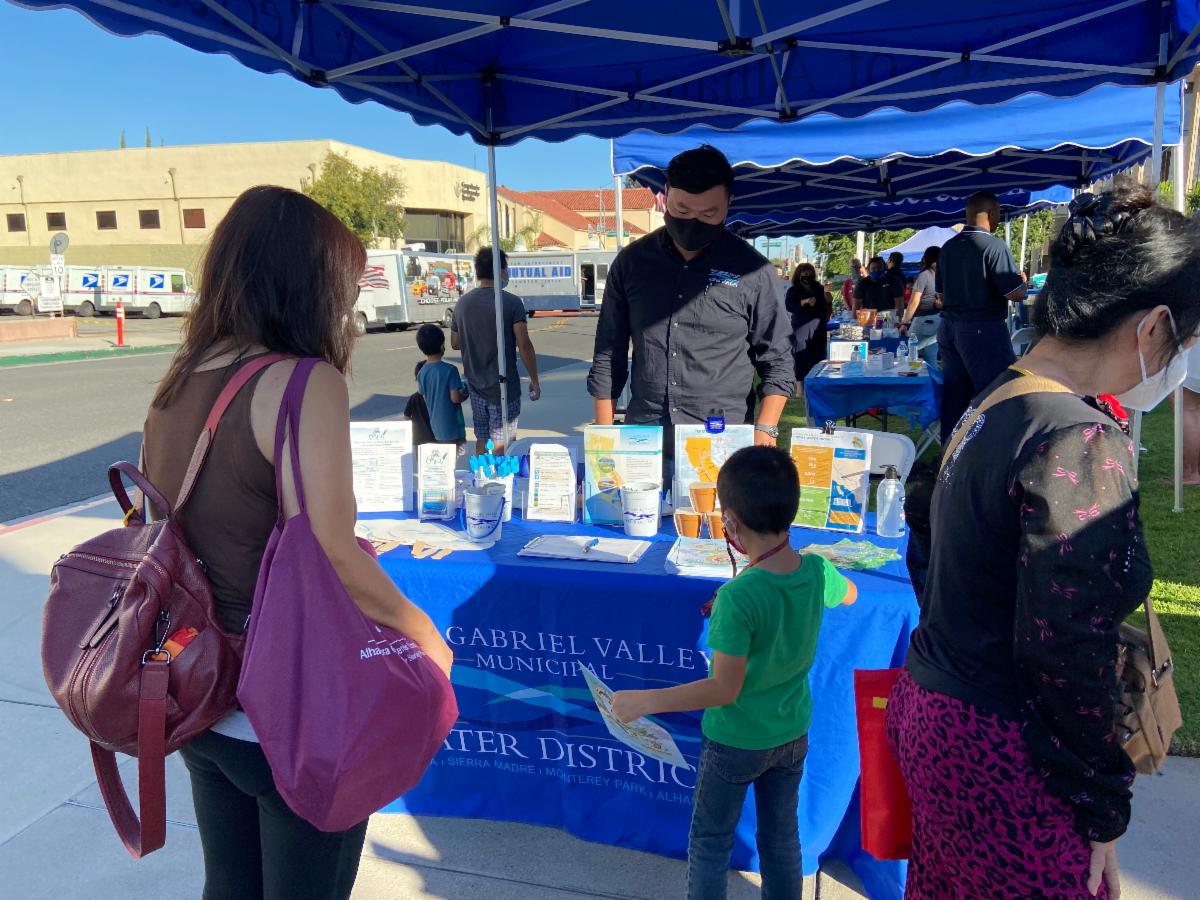
Every water district, government agency and business has had to adapt and be innovative to continue to reach stakeholders and customers during the Covid-19 pandemic. With the easing of pandemic-related restrictions, the District is again supporting and participating, with the utmost care and safety, in some community events in-person as the year progresses. We will also be seeking to provide in-person presentations and workshops about water supply and water conservation. We are always open to providing virtual or on-line presentations, as well.
One of the first “live” events to occur this summer was “National Night Out” in Alhambra, where the District supported the public safety event with a booth and water conservation and education materials. We look forward to seeing you in person, to introducing you to H2Owl and talking more about water issues! Please let us know about speaking opportunities and other events we might support with water education materials and our kid-friendly mascot. If your organization would like to plan such an activity, please contact Evelyn Reyes at either 626-969-7911 or ereyes@sgvmwd.com.
|
|
O.W.L. Grant Program - Save Water this Summer and Fall!
The Opportunities for Water Leadership Grants (O.W.L.) are available! Now is the time to plan and prepare for projects this summer and fall. The O.W.L. - Opportunities for Water Leadership Grant Program is a great way to aid educational events such as Earth Day festivals (outdoors or virtual/on-line), re-landscaping projects, waterway cleanups, tree plantings, school projects, conservation curriculum, and other civic, volunteer activities.
The grants range from $200-$2,000 for local, creative water conservation projects. The District welcomes creative ideas from schools and non-profit organizations. If needed, we are happy to provide technical assistance to help you understand and complete the grant application.
Our list of grant recipients is growing so please review our grant program information and prepare your applications today! Please click here to read about the Grant Program and to access the online application. For further information, please contact the District at 626-969-7911.
|
|
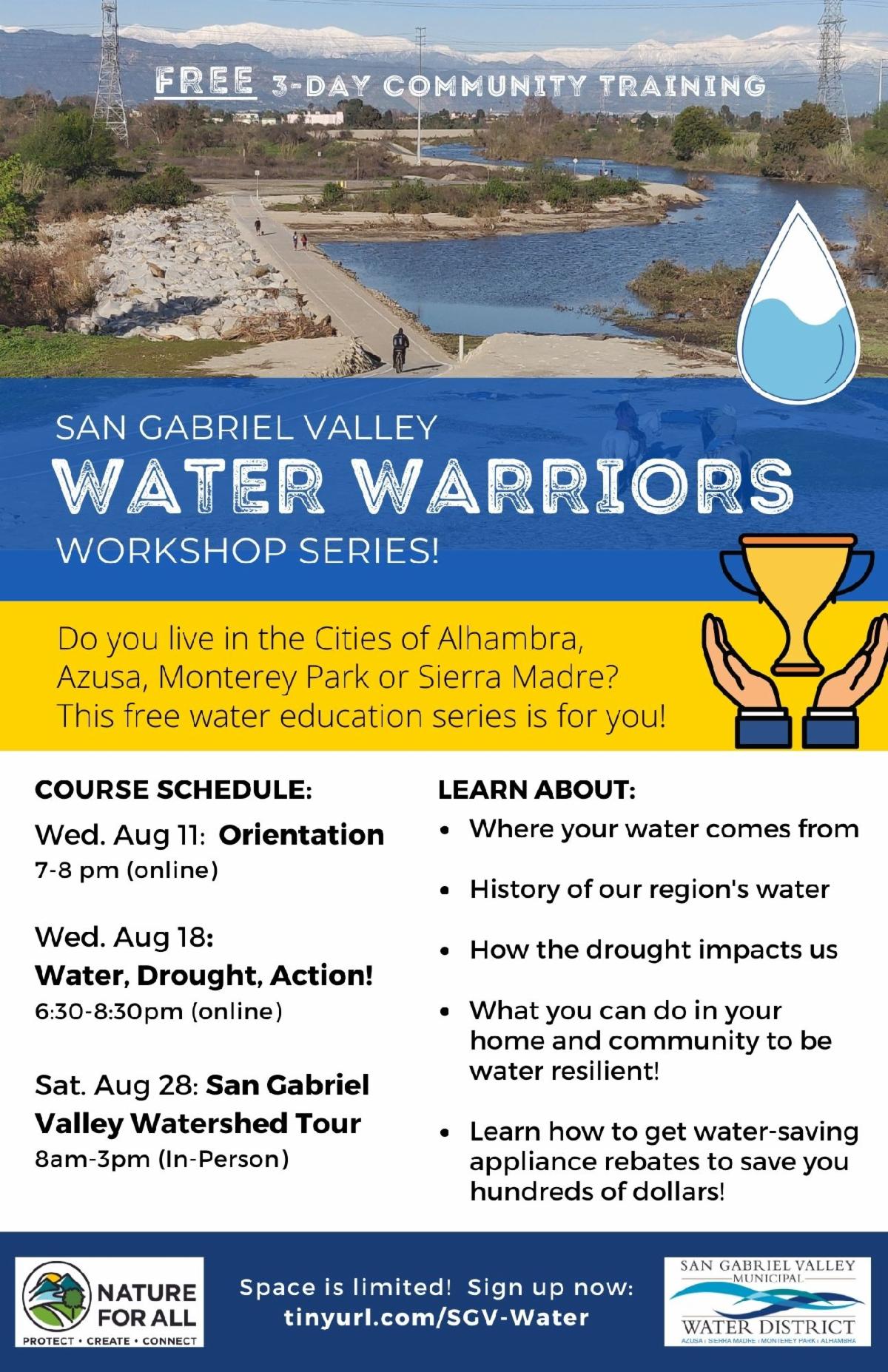
District Sponsors "Nature for All" Water Conservation Education Program
|
|
The District is proud to support Nature for All's educational community water education program, which launched August 11, 2021.
|
|
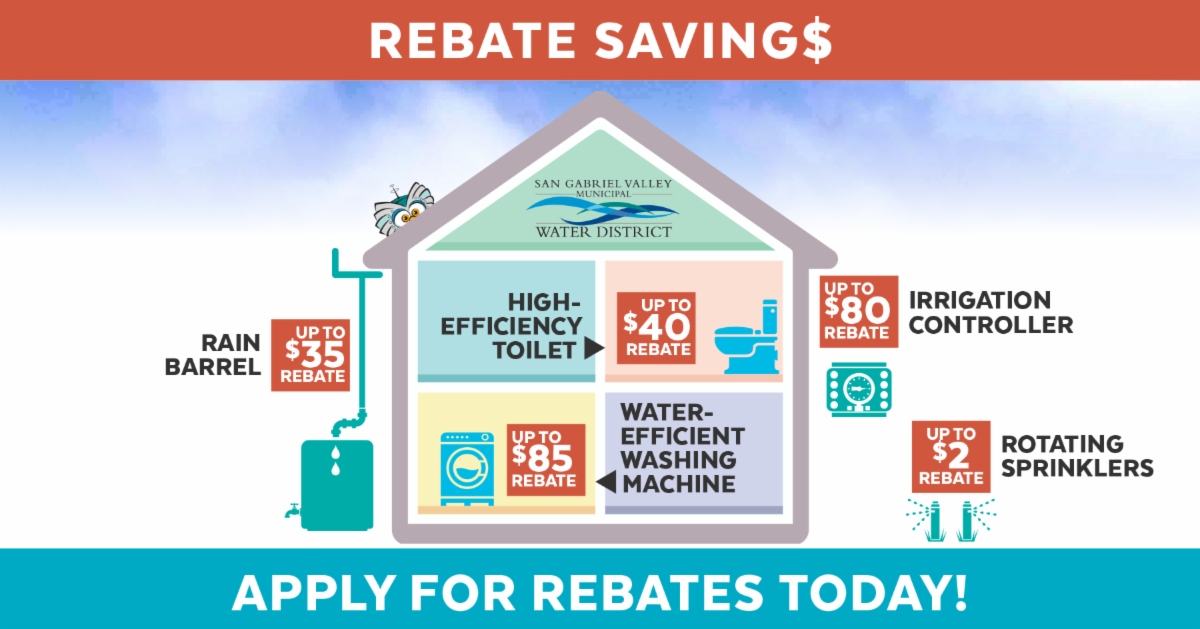
Rebate Program Easier than Ever with New On-line Application on the District's New Website |
|
Summer and fall are a good time to plan ahead to save water…and save money…by checking for leaks, making sure we are efficient in our use of indoor appliances, taking shorter showers and turning off the water when we brush our teeth. The San Gabriel Valley Municipal Water District has offered a rebate program for many years for a variety of water-saving appliances and equipment. Many residents have cashed in and reaped the benefits of lower water bills and money in their pockets.
Our new website offers participants an on-line application process that is easier and faster! Please visit our new website (https://sgvmwd.com/water-conservation/#rebates). Residents who pay their water bill to the cities of Alhambra, Monterey Park and Azusa are eligible to participate. If you take action today, you should be enjoying that rebate, extra cash and water savings within 8-10 weeks time. If you have any questions, please call us (626-969-7911) or email us (info@sgvmwd.com). Thank you and stay safe!
|
|
San Gabriel Valley Municipal Water District
|
|
|
|
|
|
|
|