| |  | Support NICOA with a gift to help us continue our mission! | | Happy Older Americans Month! | |
Indian Gaming Association Honors NICOA Board Member Eddie Tullis | |
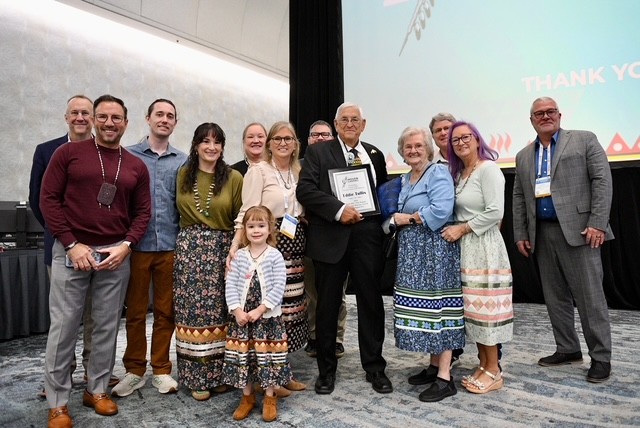
Atmore, Alabama - We are proud to highlight our board member Eddie Tullis, former Tribal Chair of the Poarch Creek Indians, who was recently honored with the prestigious 2026 Rick Hill-Tim Wapato Sovereign Warrior Award. Presented on April 1st by the Indian Gaming Association, this award recognizes individuals whose leadership, vision, and dedication have made a lasting impact on tribal sovereignty and the advancement of Native nations.
Eddie’s legacy is deeply rooted in perseverance and progress. As Tribal Chairman, he played a pivotal role in securing federal recognition for the Poarch Creek Indians. This monumental achievement transformed the future of his Tribe, laying the foundation for economic development and self-determination for generations to come.
His work has not only created lasting opportunities for his own community but has also strengthened the broader movement for sovereignty across Indian Country. Today, his lifelong commitment to preserving tribal identity, advancing self-governance, and empowering Native communities continues to serve as an inspiration to us all.
| SCSEP: Strong Results, Real People, and What Comes Next | |
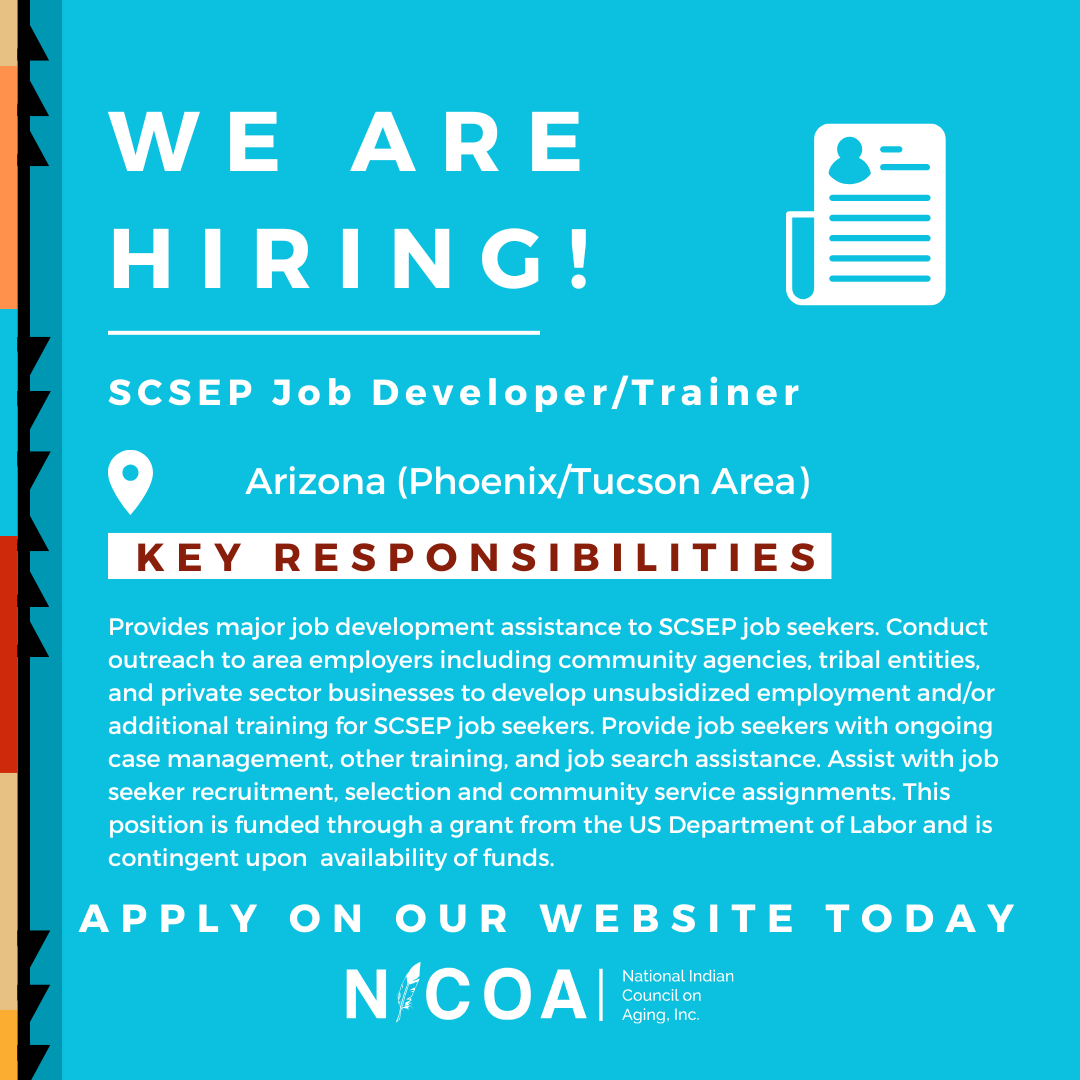
Looking back on Program Years (PY) 2024 and 2025, we have a lot to be proud of across the Senior Community Service Employment Program (SCSEP). Even with uncertainty and day-to-day operational hurdles, our staff and job seekers showed up, stayed focused, and kept the work moving by supporting older workers while strengthening the communities they serve.
We also met our PY24 performance measures by steady, consistent effort in the field. Teams maintained strong host agency partnerships, stayed centered on job seeker goals, and continued to create meaningful training experiences. From enrollments and community service hours to employment outcomes and follow-up services, SCSEP delivered the kinds of results that make a difference.
But the data only tells part of the story. Behind every measure is a person, someone building confidence, learning new skills, and taking steps back into the workforce with purpose. Host agencies benefit, too, through the reliable support SCSEP job seekers provide in places where extra help is truly needed.
As we plan for Program Year 2026, we’re also keeping a close eye on the bigger funding picture. SCSEP continues to be supported through federal appropriations, but national budget conversations can shift quickly. In recent proposals, SCSEP has been mentioned as a program that could face reductions or even elimination. At the same time, SCSEP has a long history of bipartisan support because its impact is clear and well documented.
That’s why continued advocacy matters. SCSEP is the only federally funded workforce program dedicated specifically to people age 55 and older who face barriers to employment. The program supports economic stability, strengthens community services, and helps older adults stay connected to the workforce work that remains essential.
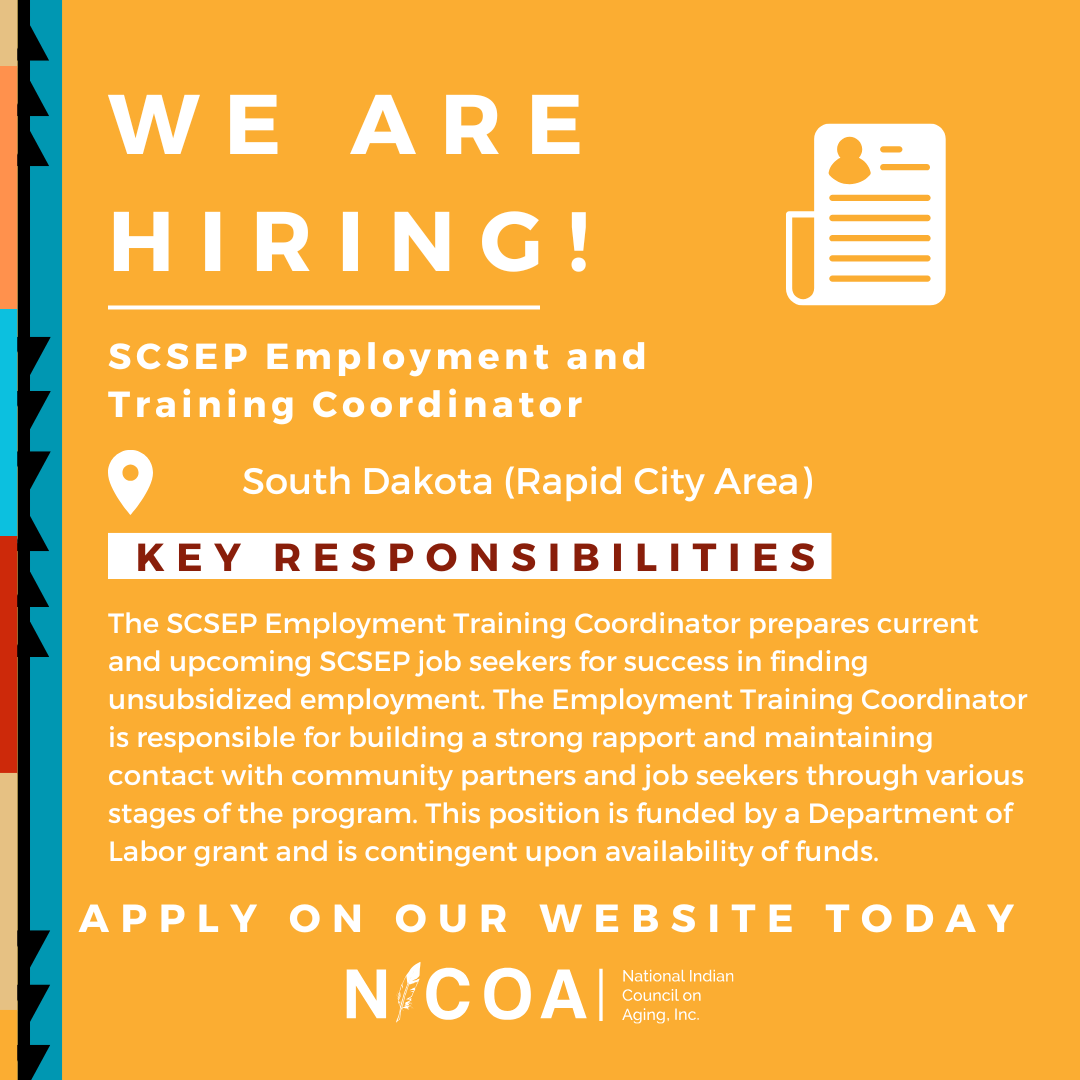
NICOA remains committed to this mission, supporting job seekers, strengthening local partnerships, and speaking up for SCSEP’s future. We’ll keep building on what’s working, adjust as conditions change, and stay focused on making sure older workers can access the opportunities they’ve earned.
Thank you for helping us celebrate a strong PY24 and for your continued support as we finish PY25 with momentum and move into PY26 with purpose.
To learn more about SCSEP, whether you’re interested as a job seeker or as a host agency, please contact us at 505-292-2001 or visit www.nicoa.org.
| Standing Together at Isleta Pueblo | |
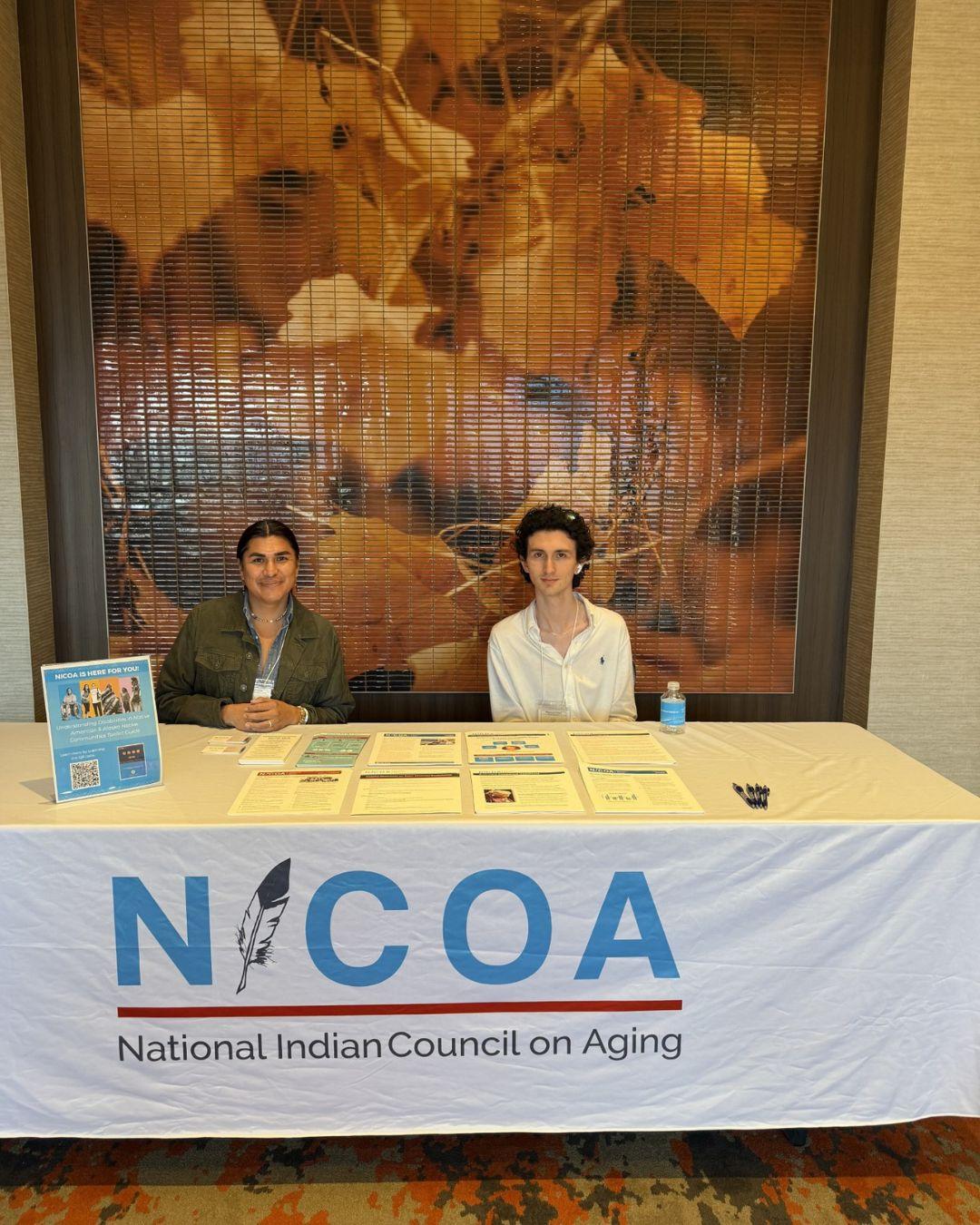
Albuquerque, New Mexico - NICOA recently joined the Coalition to Stop Violence Against Native Women (CSVANW) for their Breaking Cycles of Violence Conference at Isleta Pueblo. The 2026 theme "Protecting Our Future, Healing Our Past", the gathering brought together advocates, survivors, and Tribal leaders to address the epidemic of violence in Tribal communities. Participants focused on transforming justice systems and building culturally resilient, community-led pathways to end the cycle of violence.
Our TARC team, Scott Willie and Daniel Dolman, were honored to table at the event to connect directly with attendees. We shared information about our Technical Assistance and Resource Center (TARC) and theSenior Community Service Employment Program (SCSEP) to ensure elders and their families have access to essential support system.
| Balance and Bloom Conference Santa Ana Star Casino | |
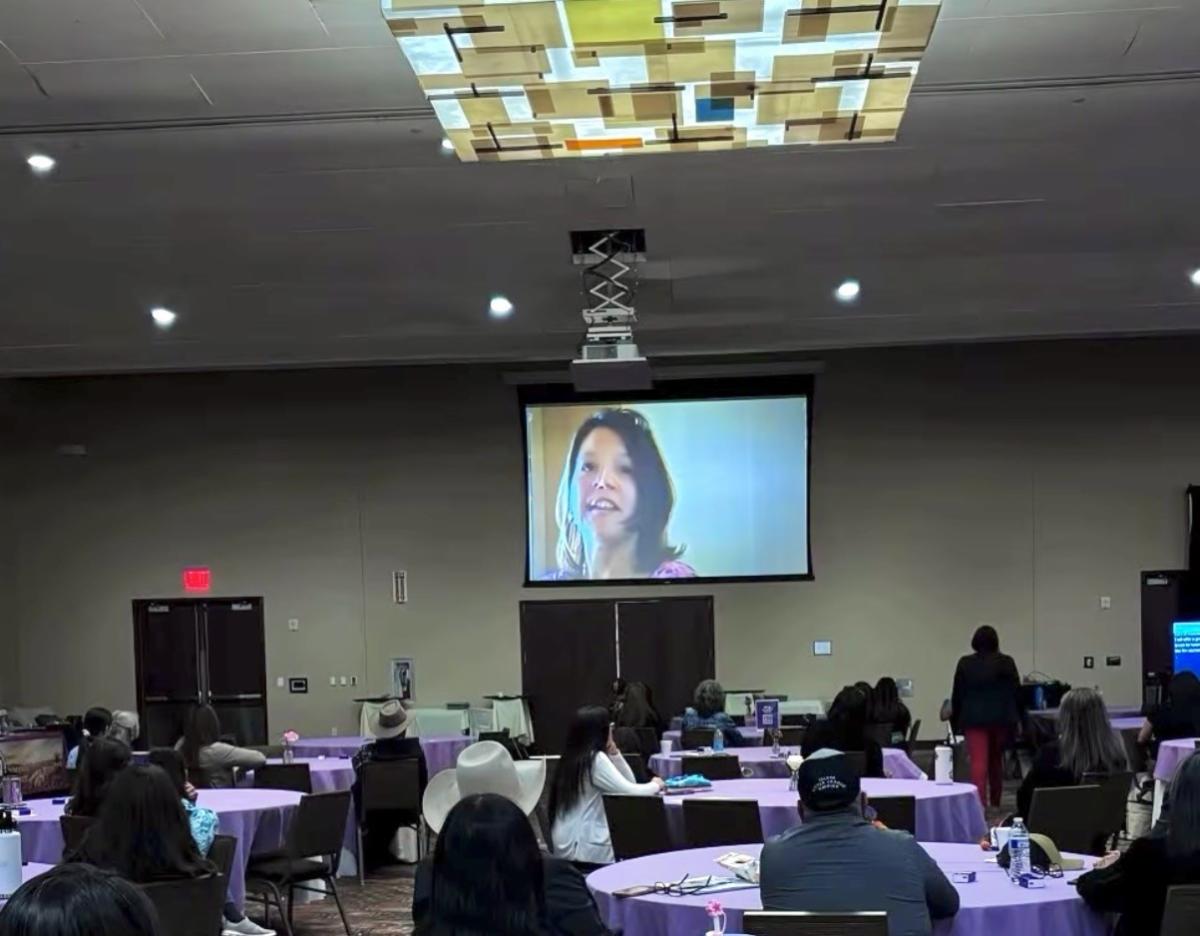
Bernalillo, New Mexico - Five Sandoval Indian Pueblos, Inc., recently hosted the Balance and Bloom Journey to Wholeness Suicide Prevention Two-Part Conference in New Mexico. NICOA representatives, Scott Willie and Daniel Dolman, attended and tabled at the event to provide resources and connect directly with attendees and elders. The gathering united community members, tribal leaders, and service providers to exchange ideas and strengthen support networks. The sessions focused on understanding suicide prevention, sharing helpful information, and finding collaborative ways to support healing. The Balance and Bloom theme served as a reminder that strong community support creates the foundation for healing and moving forward.
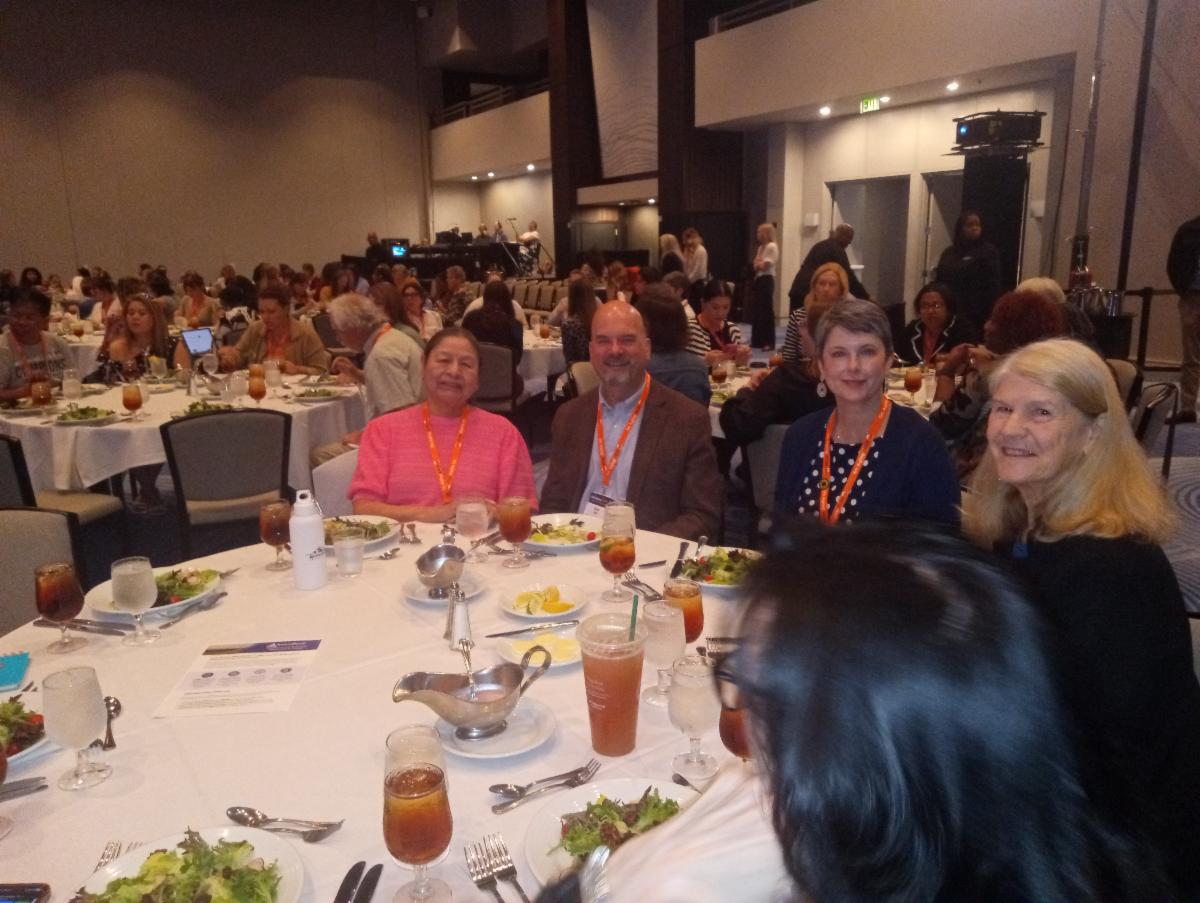
| NICOA Attends 2026 American Society on Aging Conference | |
ATLANTA, GEORGIA
APRIL 20 – 23, 2026
This year’s theme was “The Power of Belonging, emphasizing community inclusion and support for older adults.”
On Aging 2026 – American Society on Aging is the nation’s largest multidisciplinary conference on aging that brings together professionals across varies areas such as public health, health care, caregiving, community services, policymaking, advocacy, legal advocacy, and research.
The Older American Indian/Alaska Native (AIAN) populations often navigate aging through language barriers, cultural insensitivity, inadequate housing, housing instability, lack of clean water, healthcare barriers, social isolation, not understanding, limited access and exclusion in technology, economic insecurity, and lack of nutrition. Discussions of many of these topics were covered during the conference.
Takeaways included:
- Explored enhanced practices in mental health, caregiving, elder justice, legal systems, advocacy, and community services.
-
Emphasis provided on how to build cross-disciplinary relationships to enhance outcomes for older adults and their communities.
- Learned more of how to support caregivers, apply trauma-informed care, strengthen networks, and anticipate emerging challenges across the aging field.
NICOA looks forward to continued collaborations and partnerships with the American Society on Aging.
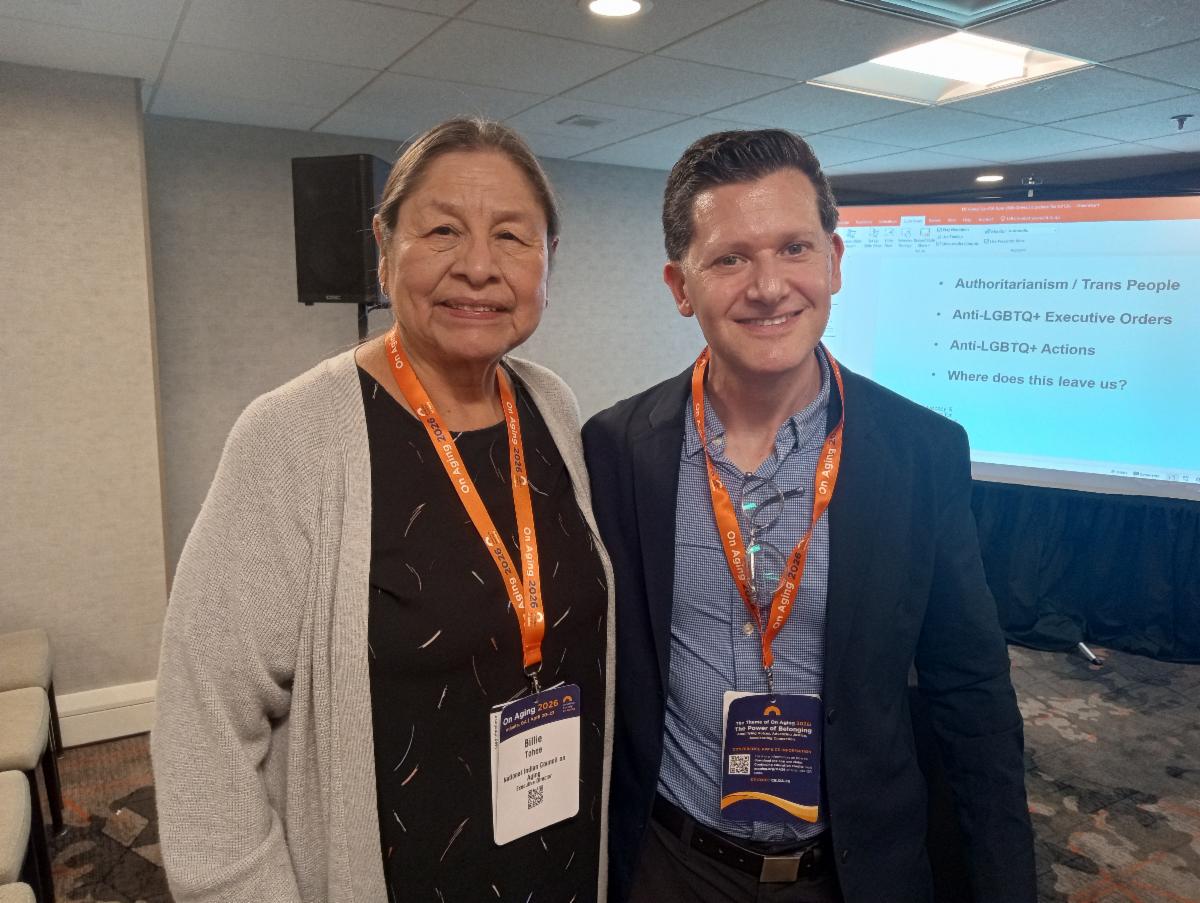
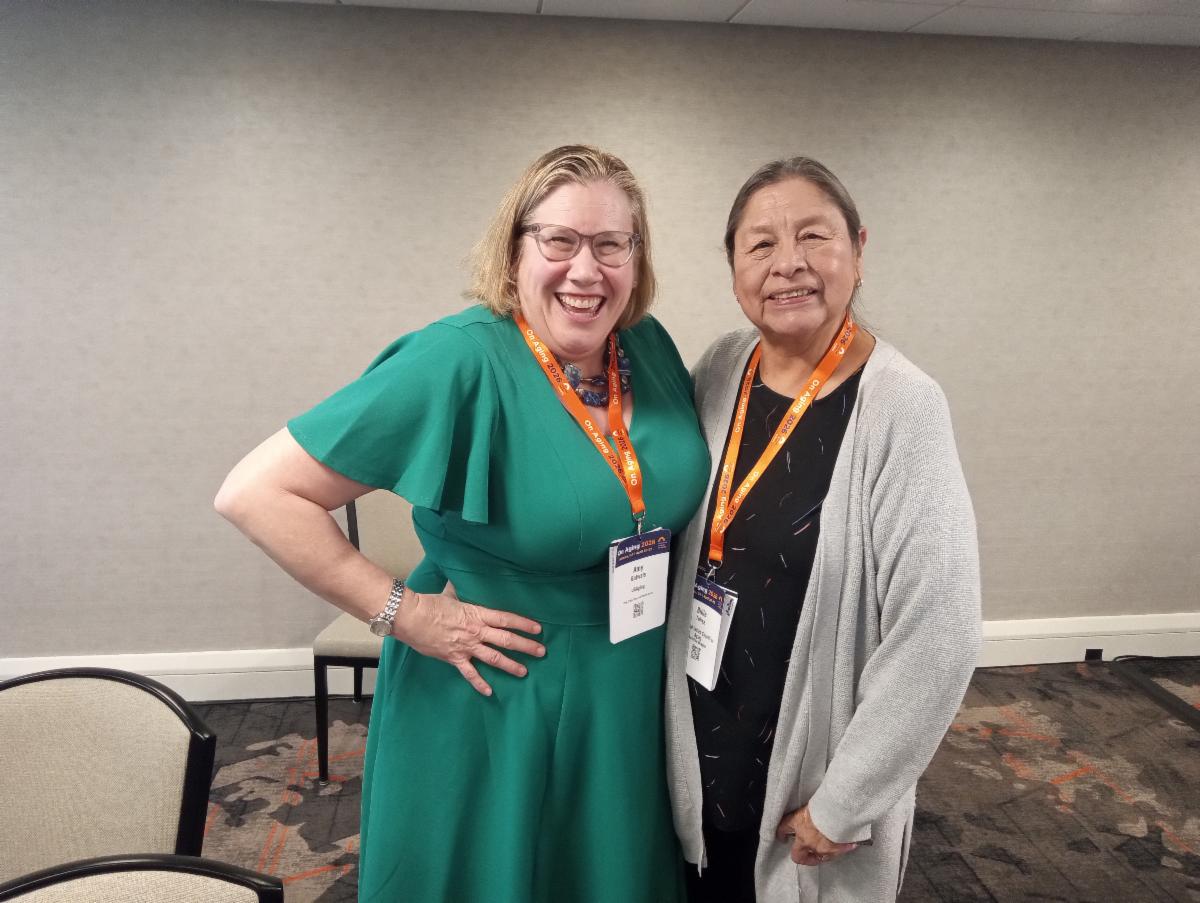
| NICOA Executive Director, Billie Tohee, with Aaron Tax, SAGE Managing Director of Government Affairs & Policy Advocacy. | Amy Gotwals, Chief Policy and External Affairs, USAging with NICOA Executive Director, Billie Tohee. | | | | Technical Assistance & Resource Center (TARC) Updates | |
|
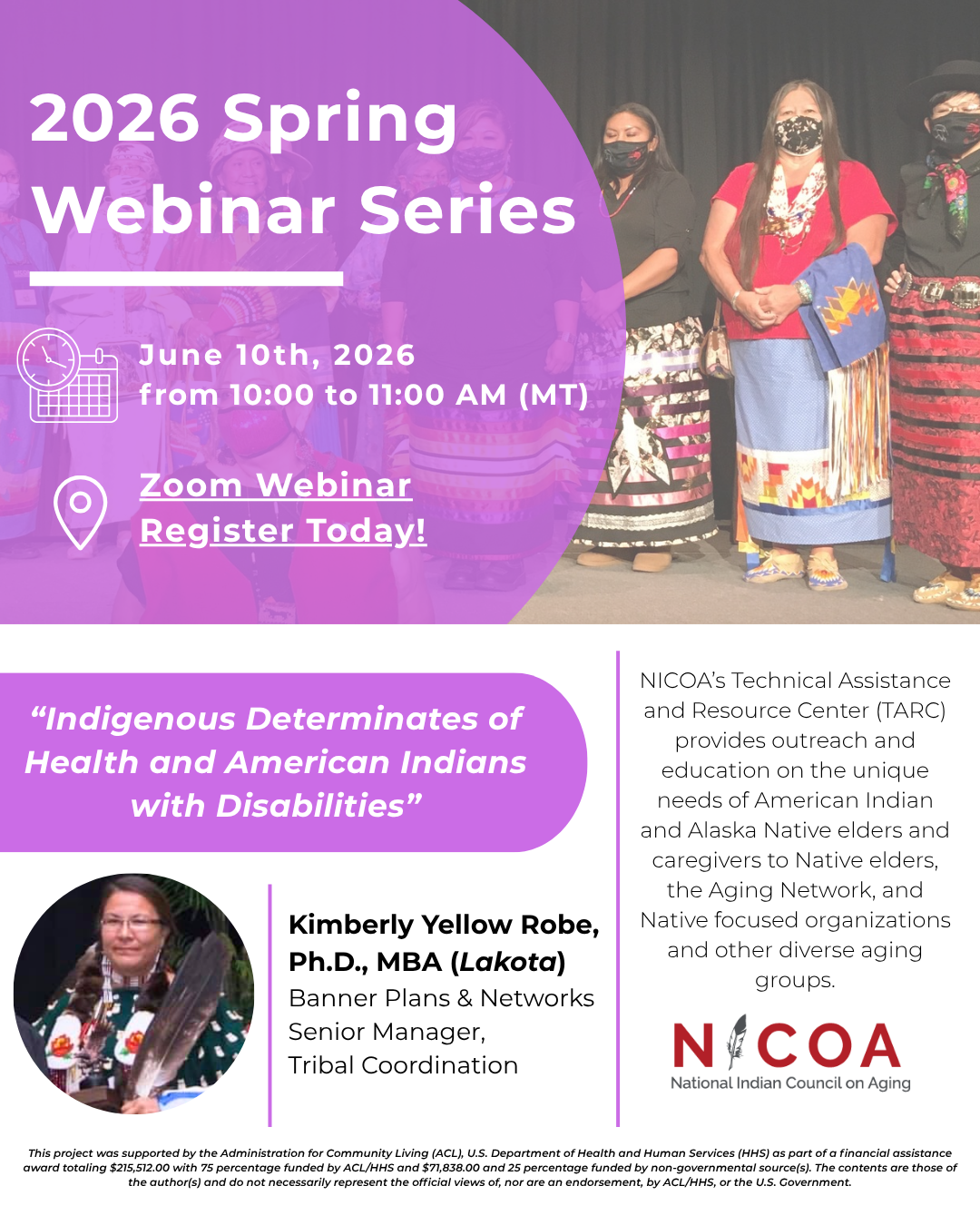
Indigenous Determinates of Health and American Indian with Disabilities with
Dr. Yellow Robe
| |
NICOA invites you to "Indigenous Determinants of Health and American Indians with Disabilities," a session bringing visibility to the experiences of Native individuals living with disabilities across urban, rural, and reservation communities. For too many, the barriers to culturally responsive care remain invisible to the systems meant to serve them.
What We Will Cover:
This session is designed to inform the Aging Network, policymakers, caregivers, and community advocates on how to better support American Indians and Alaska Natives with disabilities. We will discuss:
-
Elevating the Invisible Voice: Lived experiences and daily challenges shared by Indigenous individuals during recent community talking circles.
-
Indigenous Determinants of Health: How culture, spirituality, historical context, and environment directly impact well-being and access to care.
-
Systemic and Cultural Barriers: Inaccessible services, poorly enforced ADA accommodations, historical trauma, and systemic oppression including ableism and racism.
Presenter Kimberly Yellow Robe, Ph.D., MBA (Lakota), Senior Manager of Tribal Coordination, Banner Plans & Networks
NICOA TARC webinars are free, open to the public, and will be recorded. Click "Register Here" to sign up.
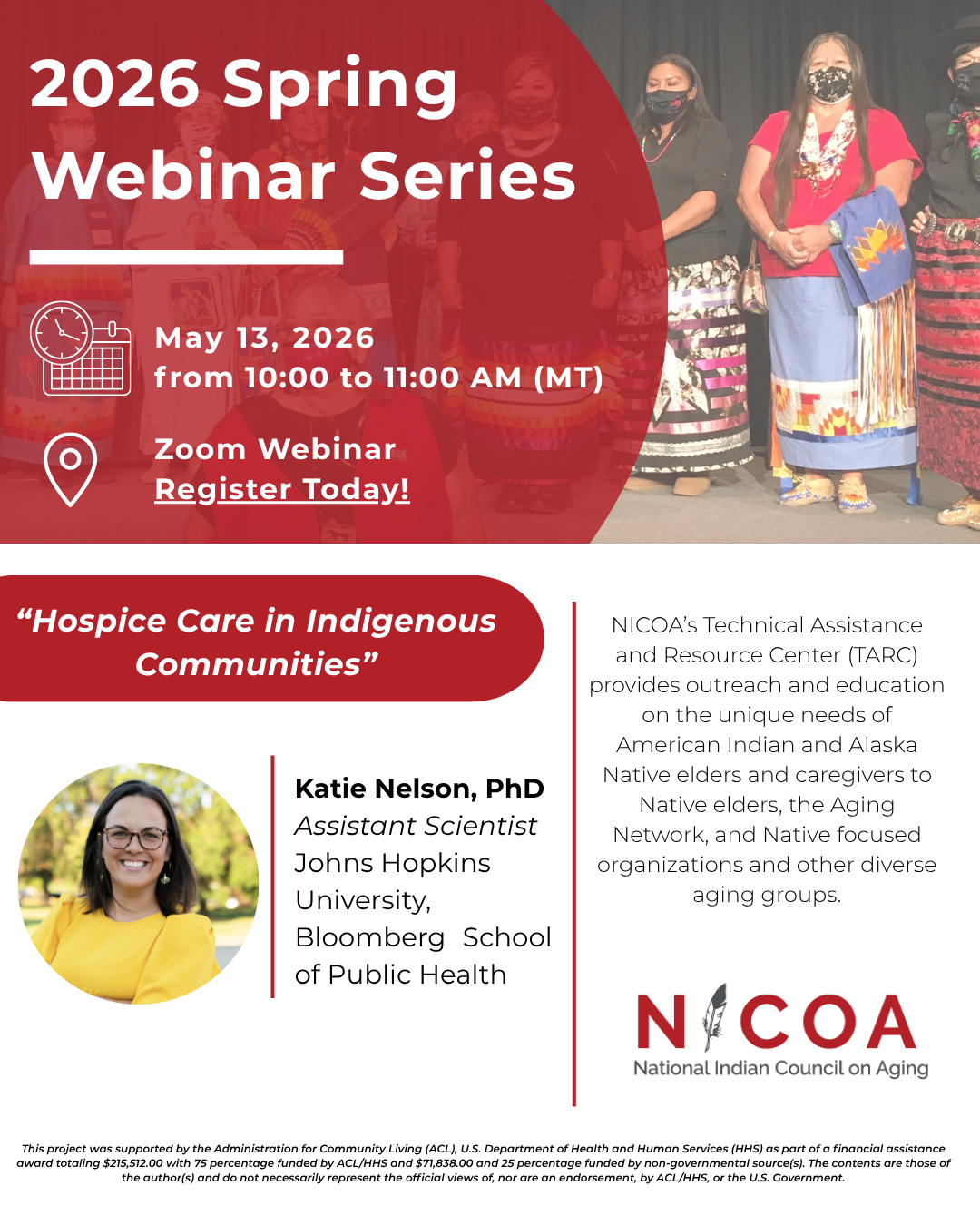
| Hospice care in Indigenous Communities with Dr. Katie Nelson | |
NICOA recently hosted "Life's final journey: Hospice and palliative care for Indigenous communities," a critical session dedicated to supporting Elders through their final transitions. Led by Dr. Katie Nelson from Johns Hopkins University, the presentation addressed the challenges of navigating advanced care and the essential need for culturally responsive support.
The webinar provided practical guidance on proactive preparation, helping families navigate the care planning process and identify decision-makers. Participants explored the tenets of hospice and palliative care, how to access these services when comfort becomes the priority, and the various factors that impact end-of-life experiences.
A recording of the session is available on the NICOA website, and NICOA Youtube channel for those unable to attend.
| |
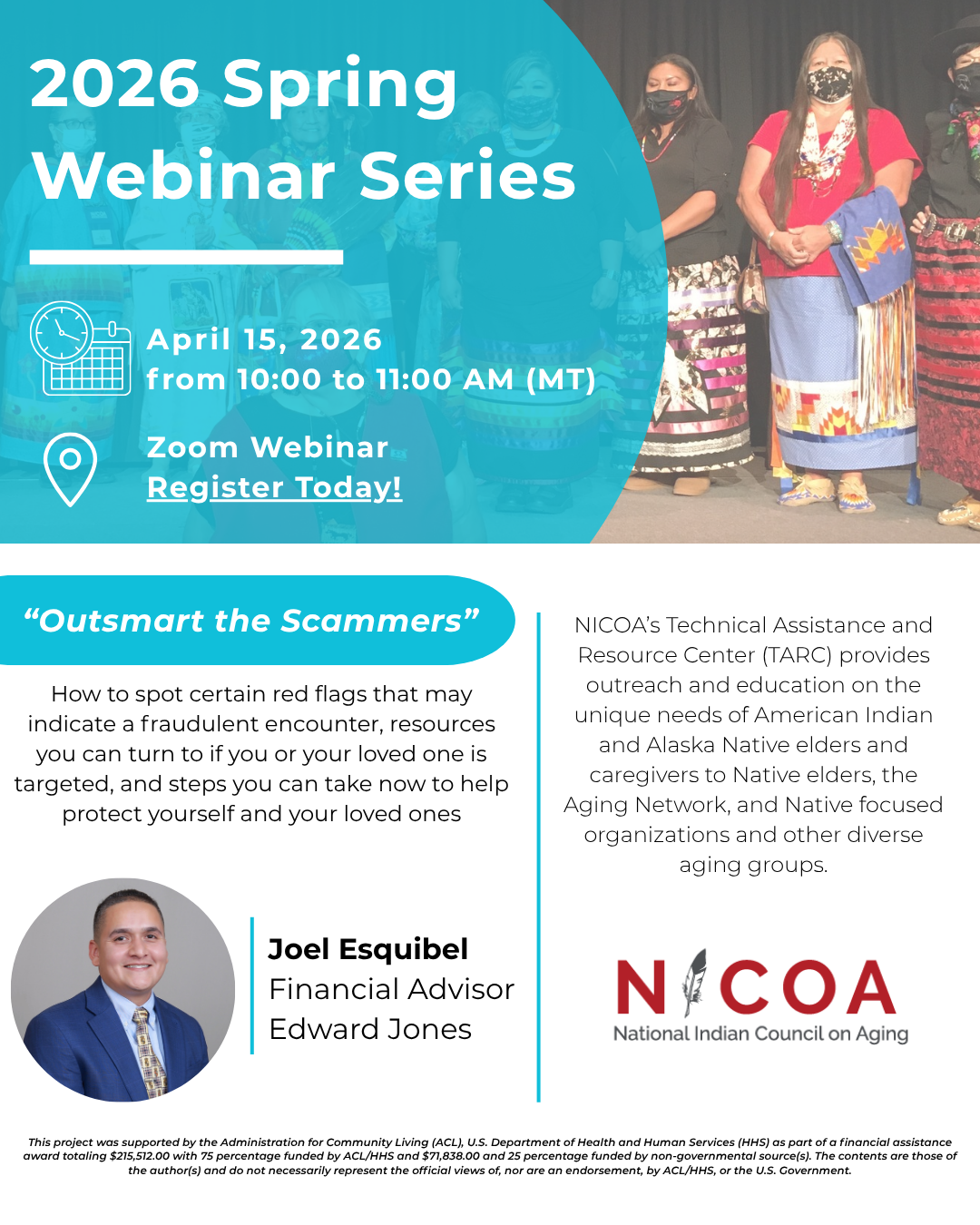
Outsmart the Scammers with
Joel Esquibel
| Consumer protection and fraud prevention are essential for keeping our elders safe and independent. Our recent "Outsmart the Scammers" webinar, presented by Joel Esquibel of Edward Jones, was designed to empower elders, caregivers, and tribal advocates with the tools needed to build a shield against financial fraud. The session covered how to spot the red flags of common scams, identify trusted resources for support, and take proactive steps to secure your household. You can access the full recording and resources to help protect your family at the link below. | | | | This project is supported by a grant from the U.S. Department of Health & Human Services, Administration for Community Living/Administration on Aging, ' National Minority Aging Organizations Technical Assistance Consortium: Native American Center Supporting Aging' Grant # 90HDRC0013. | |
Diverse Elders Coalition Highlights Policy Toolkit at ASA Conference | |
In recent partner news, the Diverse Elders Coalition (DEC) participated in the ASA On Aging Conference. The coalition led a highly attended panel session titled "Advancing Caregiver Equity Through Story, Data and Inclusive Policy Tools," drawing an audience of over 100 professionals and advocates.
The session focused on highlighting the DEC Policy Toolkit: Advancing Equity in Caregiving. This comprehensive toolkit translates findings from recent literature reviews into actionable guidance designed for state policymakers, community-based professionals, and advocates.
The momentum from this conference presentation will help support an upcoming DEC issue briefing scheduled to take place on Capitol Hill later this summer. Additional details regarding the June or July briefing will be provided as the event approaches.
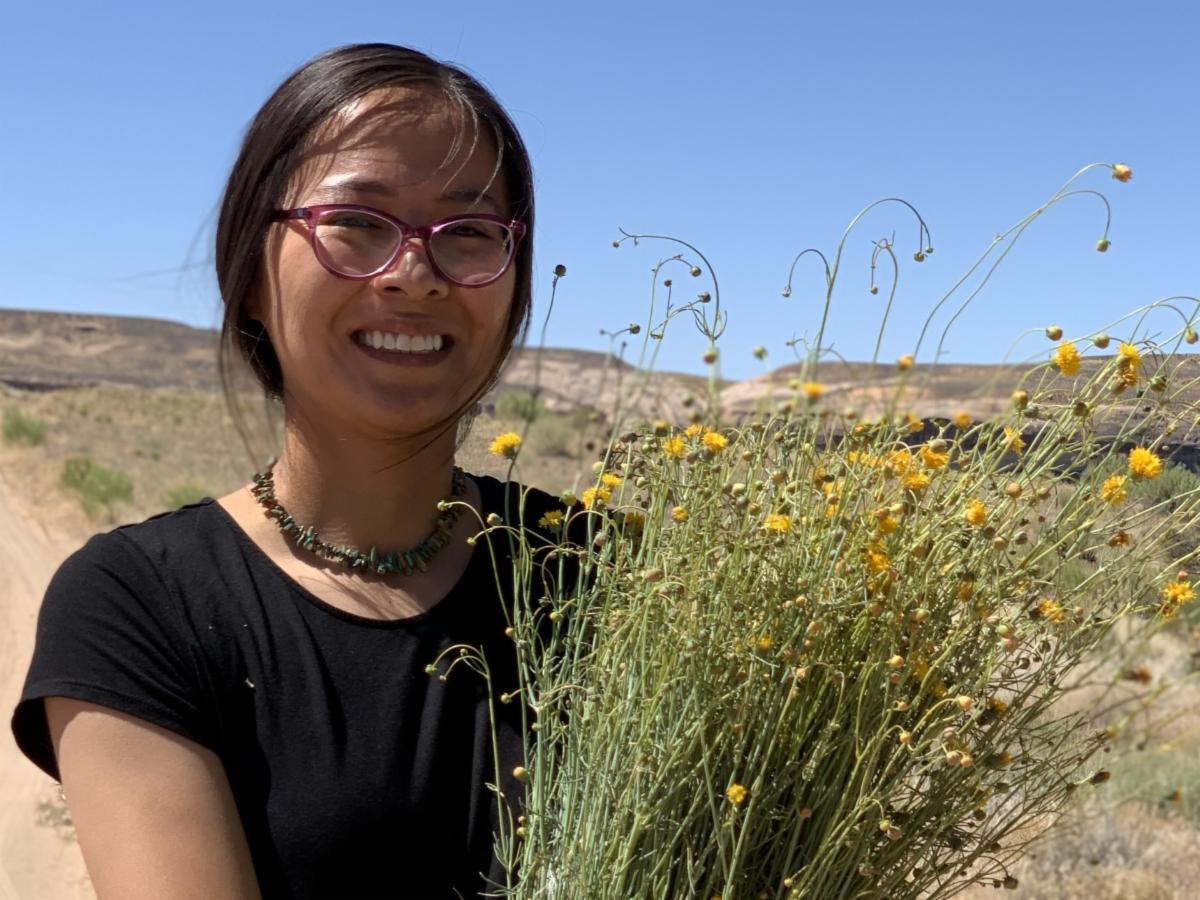
| | | | Indigenous Foodways - Sharing Recipes by Cynthia Wilson (Navajo Nation) | | |
Featured Contributor:
Cynthia Wilson (Diné) is a PhD Candidate at the University of California, Berkeley, in Environmental Science, Policy, and Management. She is Diné from the Navajo Nation, studying Indigenous Environmental Science related to the restoration of traditional agricultural practices, foodways, and land conservation.
Description: Traditional foodways are important to Native communities because they help us remember who we are and where we come from by tasting the landscapes we tend since time immemorial. Our tasebuds hold ancestral memory, nourish our mind, body, and spirit, and reawaken our traditional stories, songs, and relationships to ancestral land.
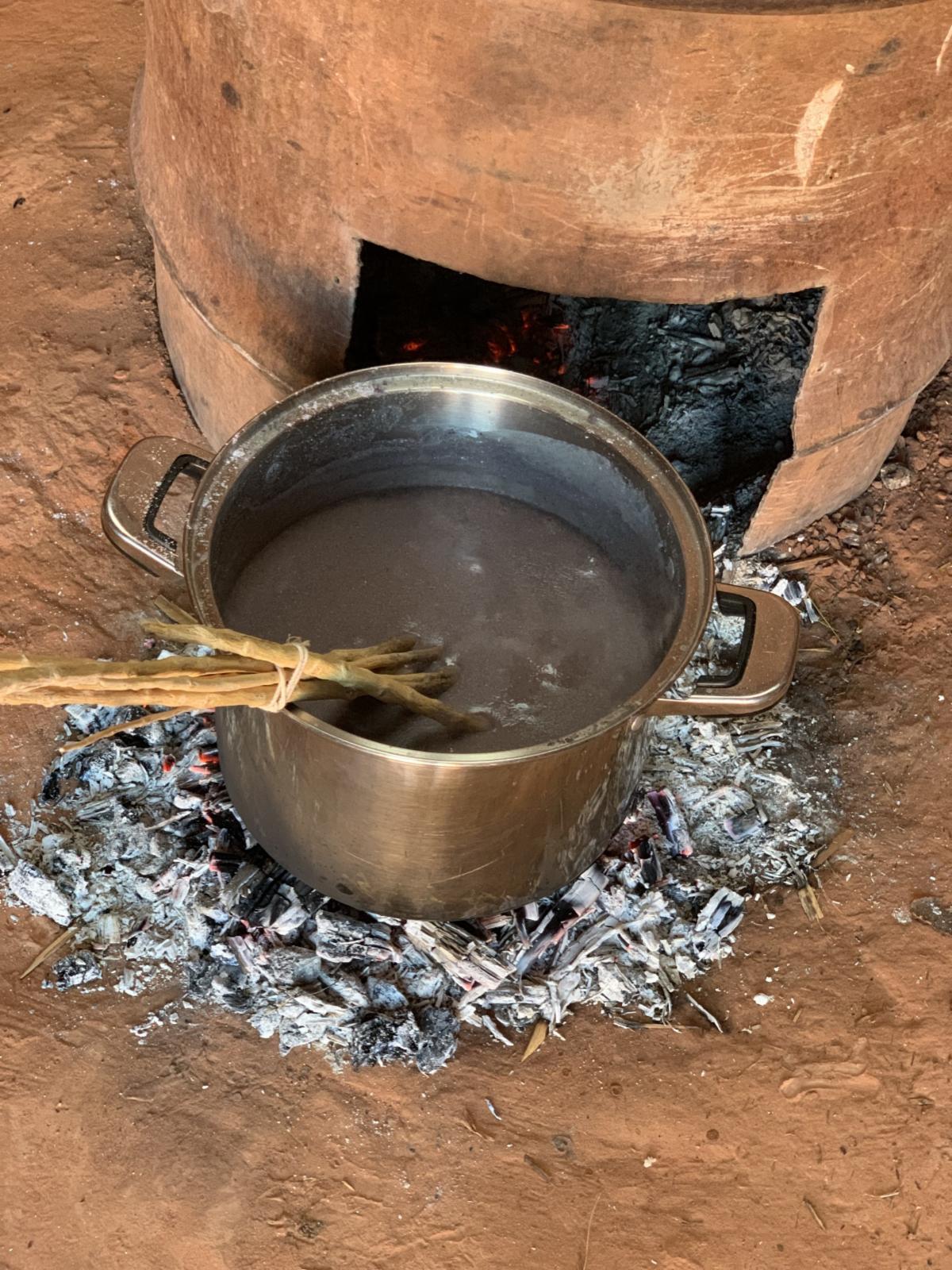
Blue Corn Mush with Juniper Ash
Ingredients:
· Ground blue corn flour (roasted)
· Juniper ash (sifted)
· Water
Recipe:
1. Bring water (2.5 L) to a boil in a 4-quart pot
A. Juniper Ash prep:
- In a small bowl, mix 2 TBS Juniper Ash with just enough cold water to a pouring consistency
- Slowly add the cold Juniper Ash mixture into the boiling water
B. Roasted Blue Corn Meal prep:
- In a bowl, mix 2 handfuls of roasted blue cornmeal with cold water until it reaches a pouring consistency.
- Slowly add the cold mixture to the boiling water
-
Continue the cold mixture about 2 times, pouring it into the boiling water
2. Keep stirring to a thick consistency
3. Boil for 2 hours tops (the longer it boils, the better)
4. Pour into separate bowls or containers for the mush to set and to cool down
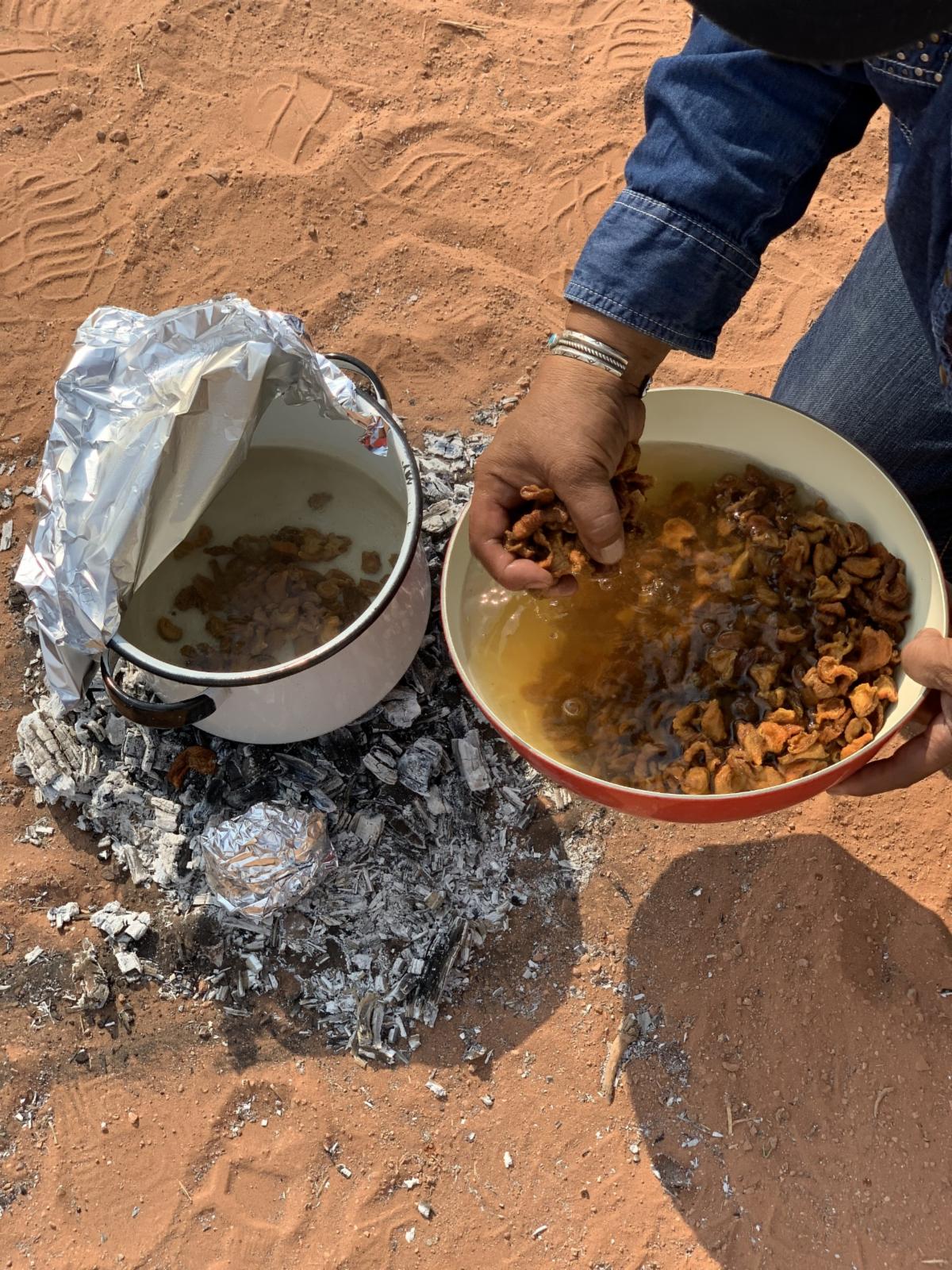
Boiled Dried Apricots
Ingredients:
- Dried Apricots
- Water
-
Optional sugar or natural sweetener
1. Wash 2 handfuls of dried apricots twice, drain from water
2. Bring water to a boil in a 4-quart pot
3. Add washed, dried apricots into the boiling water
4. Keep stirring
5. Boil for 1 hour
6. Add sweetener if desired
Boiled Navajo Tea
Ingredients:
- Water
- Navajo Tea
- Honey (Agave can also be used)
-
Mint leaves
1. Add a handful of tea into a Percolator filled with water
2. Add honey/natural sweetener as desired
3. Boil all together for 15-20 minutes (reddish color)
4. Add mint leaves as a topping and enjoy hot or iced
| | Monthly Health Segments & Awareness | | Older Americans Month is a time to honor elders and wisdom keepers while promoting healthy aging and bringing attention to issues affecting seniors. Older adults contribute significantly to communities and families, and their achievements deserve consistent recognition. Demographic shifts show that by 2034, older adults will outnumber children in the United States for the first time in history. With 92 percent of adults expressing a desire to age in place in their own homes, promoting active engagement and preventive care is essential for maintaining independence. Redefining healthy aging involves daily practices like staying active, eating nutritious foods, and getting adequate sleep. Furthermore, the National Institute on Aging highlights that staying connected with family, friends, and the broader community is one of the best ways to protect overall well-being. By building bridges between generations and sharing stories, communities can learn from one another, advocate for necessary healthcare, and ensure every senior receives proper support.
| | National Mental Health Awareness Month is a time dedicated to caring for the mind, body, and spirit. For elders, mental health is just as critical as physical health. Aging brings significant life transitions like retiring or losing loved ones, which can naturally cause stress and depression. These feelings are normal reactions and never a sign of weakness. Native American elders carry unique historical burdens, making them 1.5 times more likely to experience anxiety and 11 percent more likely to report a mental illness compared to the general population. Despite these challenges, Indigenous communities possess incredible resilience built on deep cultural roots and family ties. Protecting mental well-being is a daily practice that involves staying active, eating well, and getting enough sleep. Staying connected with family and sharing stories with the younger generations are the best ways to help protect mental health. Reaching out for culturally centered support is a vital step in honoring elders and keeping communities strong. | | Skin cancer is the abnormal growth of skin cells that most often develops on our most sun-exposed areas, making it one of the most common but preventable forms of cancer when caught early. While Native Americans and other people of color are less likely to develop melanoma overall, the impact remains severe because cases are often diagnosed at a much more advanced and difficult-to-treat stage. This delay is frequently caused by the harmful myth that darker skin does not require sun protection. Because skin cancer can look different on various skin tones, monitoring any changes in moles, freckles, or new growths is a vital first step in long-term health. For elders, whose skin often becomes thinner and more sensitive with age, daily protection is the best defense against UV rays that accumulate over time. Mitigating these risks involves proactive safety measures like wearing broad-spectrum sunscreen of SPF 30 or higher, seeking shade during peak sun hours, and wearing protective clothing like wide-brimmed hats and long sleeves. | | |
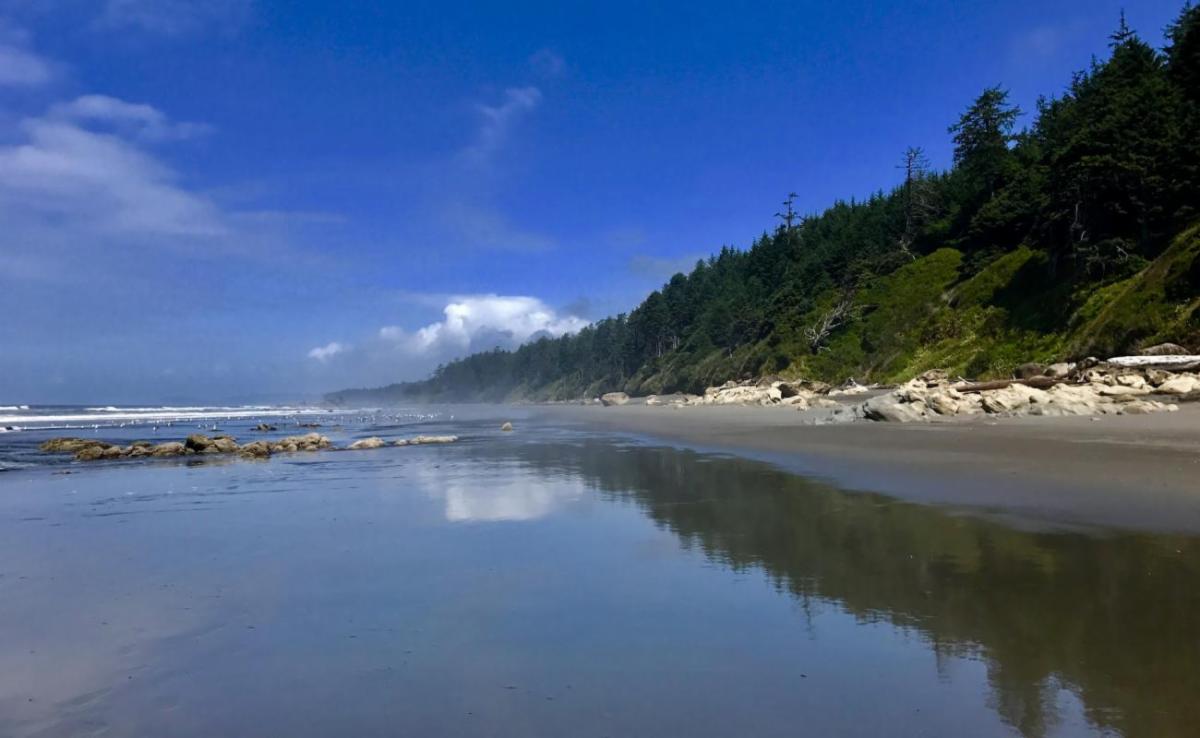
Where the River Once Met the Sea
For over a century, the village of Taholah has sat where the Quinault River meets the Pacific Ocean. Today, rising sea levels and intense storm surges frequently push saltwater directly through the community sea wall, flooding yards and homes. In response to these growing climate threats, the Quinault Indian Nation is executing a comprehensive 2017 master plan to relocate the entire village a half-mile uphill. This new development incorporates smart growth techniques and green infrastructure to protect residents from future storm surges and potential tsunamis.
Reflecting deep cultural values, the very first completed structure in the new settlement is the Generations House. This 30,000-square-foot facility serves as a shared space for elders, adult education, and early childhood programs, while also functioning as a primary safe haven during environmental emergencies. The physical infrastructure for the new town is already finished, with paved streets and active sewer lines awaiting new residents.
However, the community faces severe financial barriers to building actual homes. Current estimates place the cost of a single new house between $350,000 and $400,000, a price that remains unaffordable for many tribal members, particularly elders on fixed incomes who have already paid off their current mortgages. The total relocation effort is projected to cost over $450 million. Despite these immense financial challenges and the need for individualized housing solutions, federal officials recognize the Quinault Nation as a global leader in community-driven climate resilience and proactive survival planning.
| | |
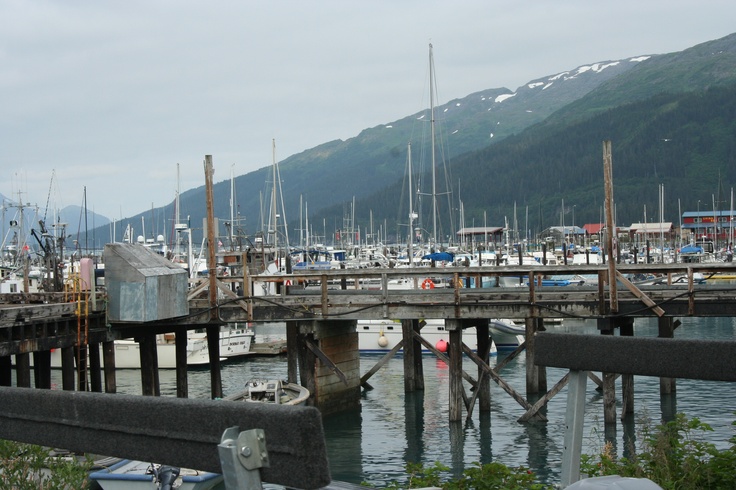
Sovereignty on the Water: Metlakatla’s Fight to Protect Its Fishing Future
Empty harbors dot much of the Alaskan coast today, but the docks of Metlakatla on Annette Island still hum with life. On these waters, grandfathers and fathers pull nets alongside the next generation to keep a deep connection to the ocean alive. This vibrant marine culture was carefully protected by community elders. In the 1970s, the village made the profound choice to turn down a federal land claims payout. They chose instead to hold onto their reservation and the fundamental right to harvest their ancestral waters.
What felt like a sacrifice then, now means the Metlakatla now operates the largest tribally managed salmon harvest in the nation. State regulations forced many other Indigenous communities to purchase costly permits just to fish their traditional territories. In contrast, Metlakatla tribal members can rely on a protected boundary extending 3,000 feet from their shores to feed their families and sustain the Coast Tsimshian way of life. Local artist David R. Boxley captures this connection perfectly by describing the community as the “salmon people”.
Preserving this tradition requires room for the next generation to grow. Metlakatla is currently navigating a six-year federal lawsuit to expand their harvest areas. Local fishermen explain that the existing boundary severely restricts their fleet and leaves the tribally owned processing plant struggling to operate at full capacity. By pushing to access waters further from the island, Metlakatla is defending a legal promise of economic self-sufficiency. They are fighting to ensure the community can sustain itself and dictate its own future on the water.
| | |
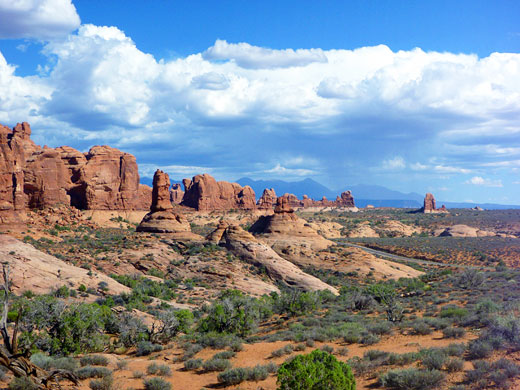
Defending Ancestral Waters: Indian Peaks Band Challenges BLM Pipeline
On April 1, the Indian Peaks Band of the Paiute Indian Tribe of Utah took action to protect their homelands, filing an appeal to halt the Bureau of Land Management's approval of the Pine Valley Water Supply Project. Supported by the Native American Rights Fund, the Band is fighting a massive groundwater extraction pipeline in southern Utah that directly threatens their federally reserved water rights.
The proposed wellfield is located just miles from the Band's ancestral lands. The project plans to pull more water from the valley than the ecosystem can actually support, which would harm culturally significant resources and deplete the Band's water supply.
This appeal is a necessary push to make the federal government uphold its trust responsibility to Tribal Nations. The Band's water rights predate other regional water uses and are protected by longstanding federal law. By requesting a stay on the project, the Indian Peaks Band is working to ensure no construction moves forward while they fight to protect their water and resources for future generations.
| | |
Native Child Welfare and the Ongoing Fight for Federal Protections
In defense of the Indian Child Welfare Act (ICWA), a coalition of six sovereign Tribal Nations submitted an amicus brief to the Arizona Court of Appeals on February 19, 2026. The case of In re Dependency as to M.K. examines whether a temporary foster placement bond can be used to override the placement mandates established by federal law. The participating Nations are calling on the appellate court to reverse a lower court decision out of Cochise County, which allowed a deviation from these essential protections based solely on a foster relationship.
Understanding the gravity of this legal challenge requires recognizing the systemic history of familial separation. For decades, government policies deliberately removed Native children from their communities in a targeted effort to erase Tribal identity. ICWA was enacted in 1978 as a direct corrective to these damaging practices. As the Native American Rights Fund highlighted in the filing, the bonding that naturally occurs in temporary foster care is not a legally or scientifically valid reason to withhold a child from willing relatives. Extensive child welfare research affirms this, demonstrating that placement within extended family networks provides greater stability, supports mental health, and fosters strong identity formation.
The Tribal Nations involved view this litigation as a critical opportunity for the judicial system to affirm that ICWA's placement preferences are essential protections rooted in both federal law and empirical research. In the specific case of M.K., the child already has an extended family network in Phoenix ready to provide care and nurture his cultural identity. Advocates maintain that standard foster bonding cannot serve as a justification for denying a Native child the fundamental right to grow up within their own family and Tribal community.
| | |
Advancing Care, Slashing Support: Inside the New IHS Budget Proposal
The President recently released the Fiscal Year 2027 Budget Request to Congress, proposing $9.094 billion for the Indian Health Service. While a thirteen percent increase signals progress, the numbers tell a complex story about the federal trust and treaty obligations owed to Tribal Nations. A vital victory within the proposal is the inclusion of $5.654 billion in advance appropriations for Fiscal Year 2028. For Native elders and families who rely entirely on the Indian health system, this ensures clinics will not abruptly close their doors and disrupt care during government shutdowns. Furthermore, a 5.8 percent increase for clinical services attempts to outpace medical inflation, and a $96.4 million allocation will modernize electronic health records so patient care is no longer delayed by outdated systems.
However, the broader proposal threatens the daily wellness of Indigenous people by slashing successful, culturally centered programs. Sanitation Facilities Construction faces a devastating 87 percent cut. By substituting temporary infrastructure funding for permanent baseline support, the administration is delaying the critical work needed to bring clean, safe water to every tribal home. More alarmingly, the proposal completely defunds the Low-Income Home Energy Assistance Program. Erasing this assistance leaves vulnerable elders facing severe and life-threatening risks during freezing winters and extreme summer heat.
The budget also dismantles preventative care initiatives built specifically by and for Indian Country. The Healthy Tribes initiative, which funds essential Tribal Epidemiology Centers, and the Improving Native American Cancer Outcomes program are slated for total elimination. Successful behavioral health lifelines like Circles of Care and Native Connections are being absorbed into massive federal consolidations, stripping away the unique cultural approaches that genuinely help Native youth and families heal. While the overall budget increase is necessary, the proposed cuts represent a concerning step backward in honoring the commitments made to Indigenous communities.
| | | | |
|
We are committed to providing services for Native elders, but the power to provide starts with you.
Your support brings attention, education, and improved services to elders and people with disabilities across Indian Country. Every elder deserves access to the services and resources necessary to age independently, with dignity, and in their chosen community.
Consider donating to us directly to help us with our mission to improve the lives of American Indian and Alaska Native elders. Your financial support will go directly to supporting our mission to improve health, social services and economic well-being for all Native elders.
| |
| How did you like this email? | | | | The National Indian Council on Aging | 8500 Menaul Blvd. NE, Suite B-470, Albuquerque, NM 87112 | 505-292-2001 | www.nicoa.org | | | | |