Because Every Birth Defect has a Cause |
|
January 2021 Newsletter
Issue 14 Vol: 5
|
|
TOXIC CHEMICALS THREATEN HUMANITY’S ABILITY TO REPRODUCE
SHANNA SWAN IS the senior author of a 2017 study that documented a dramatic drop in sperm counts in Western countries over the past half-century. That meta-analysis of 185 studies involving 42,935 men found that total sperm count fell 59 percent between 1973 and 2011. Swan, a reproductive epidemiologist, pointed to the role of environmental chemicals in that trend.
.
|
|
Now she has written “Count Down: How Our Modern World Is Threatening Sperm Counts, Altering Male and Female Reproductive Development, and Imperiling the Future of the Human Race,” a book that ties industrial chemicals in everyday products to a wide range of changes taking place in recent years, including increasing numbers of babies born with smaller penises; higher rates of erectile dysfunction; declining fertility; eroding sex differences in some animal species; and potentially even behaviors that are thought of as gender-typical.
|
|
Exposure to Metals Can Impact Pregnancy
The study appears in the journal Environment International.
Exposure to metals has been associated with problems at birth such as preterm birth and low birth weight in babies, and preeclampsia in women. However, little is known about how metals exposure can lead to such problems.
|
|
This new research shows that some metals may disrupt the endocrine system, which is responsible for regulating our body’s hormones. These disruptions may contribute to children’s later health and disease risk.
“A delicate hormonal balance orchestrates pregnancy from conception to delivery and perturbations of this balance may negatively impact both mother and fetus,” said lead author Zorimar Rivera-Núnez, an assistant professor in the Department of Biostatistics and Epidemiology at the Rutgers School of Public Health.
The researchers analyzed blood and urine samples from 815 women enrolled in the Puerto Rico Test site for Exploring Contamination Threats (PROTECT) study.
|
|
Immune System Dysfunction in Pregnancy Tied to Behavioral and Emotional Issues in Children with Autism
Children on the spectrum whose mothers experienced immune system irregularities during pregnancy have a greater risk of behavioral and emotional problems according to a study from UC Davis’ MIND Institute. This new research reviewed maternal immune history and used it as a predictor of autism symptoms in children. Immune system conditions recognized in this study included asthma, hypothyroidism,
|
|
Raynaud’s disease, alopecia, psoriasis, and rheumatoid arthritis. While the authors found a positive link between maternal immune conditions and increased behavioral and emotional problems, they did not observe reduced cognitive functioning in these same children with autism. Similar to prior autism research, the study found a history of maternal immune conditions more common in boys with ASD (31%) compared to girls (18%).
|
|
|
|
Chemicals called SVOCs, emitted from household objects, are altering children's microbiomes
|
|
The chemicals in our environments, while sometimes useful, can also hurt us. Materials like asbestos fibers can move through the air and into the lungs in the form of tiny particles, causing long-term damage to human tissues. But free-floating, harmful chemicals are also emitted from the furniture, wallpaper, flooring, and household items around us. And these chemicals are entering our bodies, damaging them in many different ways.
In a recent paper published in Environmental Science and Technology Letters, researchers from Duke University found a connection between bacteria and fungi in the digestive tracts of children and the amount of volatile household chemicals found in their homes. A healthy gut microbiome has been linked to improved nutrient absorption and stronger immunity, among other few benefits. An imbalance in the flora of the gut has been linked to gastrointestinal conditions, obesity, diabetes, and more.
|
|
French court hears Agent Orange case against
chemical firms
A French court will on Monday hear a case against more than a dozen multinationals, accused by a French-Vietnamese woman of causing grievous harm to her and others by selling the Agent Orange defoliant to the US government which used it to devastating effect in the Vietnam War.
Tran To Nga, born in 1942 in what was then French Indochina, worked as a journalist and activist in Vietnam in her 20s.
She filed the lawsuit in 2014 against 14 firms that made or sold the highly toxic chemical, including Monsanto, now owned by German giant Bayer, and Dow Chemical.
Backed by several NGOs, she accuses the companies of being responsible for injuries sustained by her, her children and countless others, as well as for damage done to the environment.
|
|
The Agent Orange Next Gen Campaign
During the Agent Orange litigation, 65,000 veterans reported that their children had been born with birth defects or developmental disabilities. Now veterans are also reporting that their grandchildren are affected. Yet, no government studies have been done on the association between the father’s exposure to Agent Orange and adverse outcomes in their children.
Since 1990, only Birth Defect Research for Children has collected data showing a pattern of birth defects and disabilities in the children of Vietnam veterans.
|
|
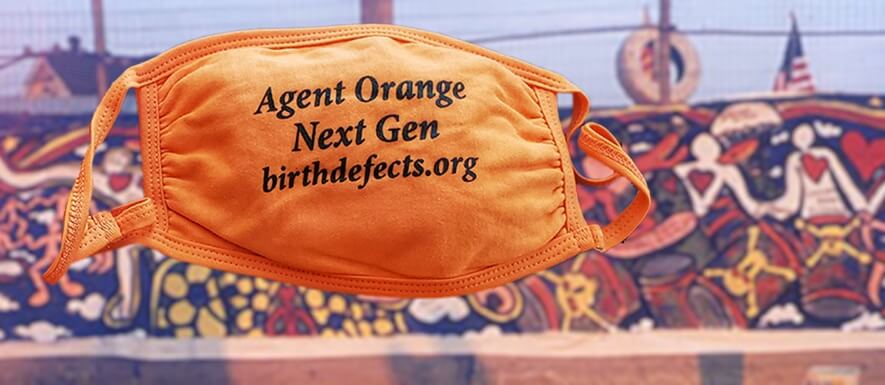
The Agent Orange Next Gen Campaign will draw attention to how many veterans’ families have been affected and raise funds to continue birth defect research.
Join the Vietnam Veterans of America Charles Kettle Chapter 31 in showing your support for the children and grandchildren of Vietnam Veterans affected by Agent Orange. Wear an Agent Orange Next Gen mask. For each $10 mask sold, a donation will go towards research connecting Agent Orange exposure to the birth defects and illnesses that veterans’ children and grandchildren are facing every day. Please help by ordering your mask today.
|
|
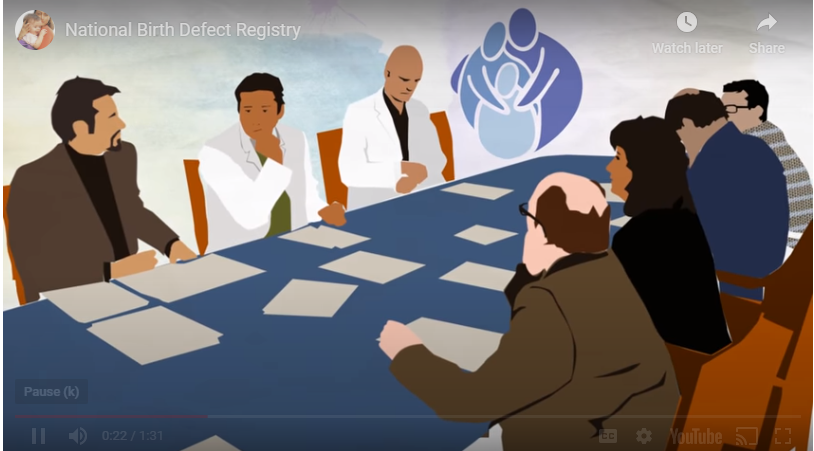
National Birth Defect Registry |
|
Our National Birth Defect Registry is back up after redesigning it to be much more mobile friendly. Now you can easily fill it out from any phone or tablet. To complete the registry, please visit.
|
|
|
|
|
|
|