CT CAN End Homelessness Digest | | |
This digest serves as a monthly update of CT CAN End Homelessness, including Committee and Sub-Committee Reports, upcoming meetings and events, and other relevant information about our state's homeless response effort.
Your input and participation are what make CT CAN End Homelessness possible. All of our meetings are open to the public. Please join us at a meeting, invite your colleagues, or share this with your networks. Thank you for all you do, and together, we will end homelessness in Connecticut.
| | |
Quotes from the CT CAN Legislative
Agenda Press Conference
| |
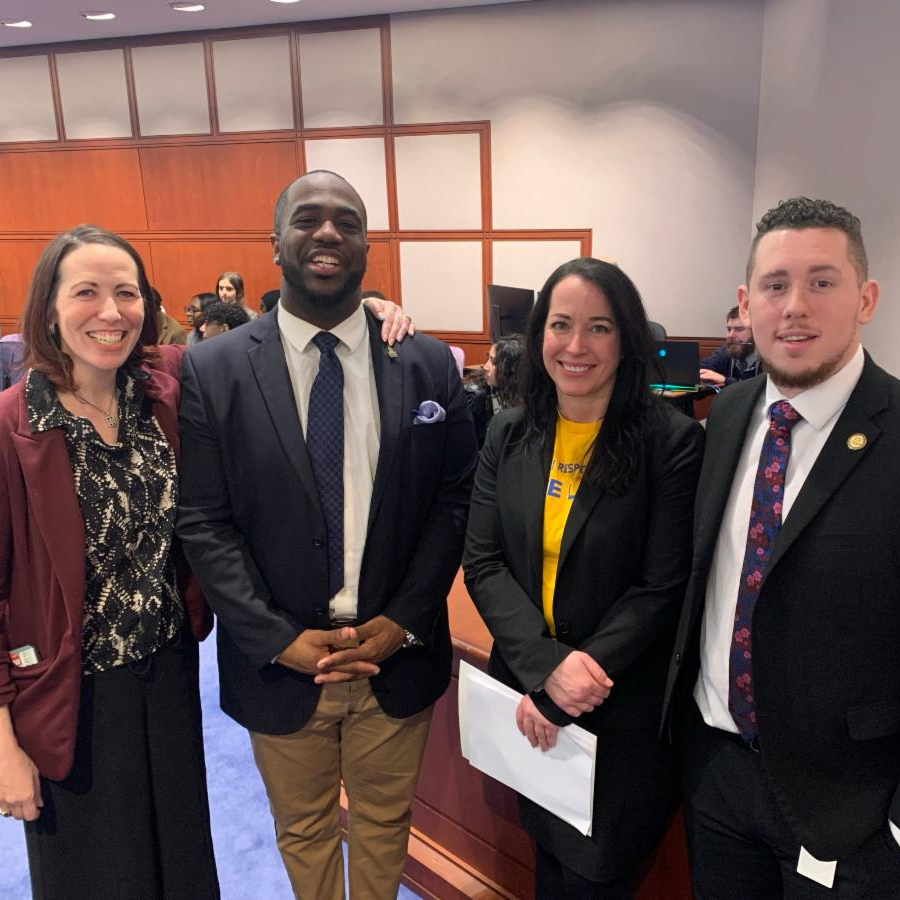
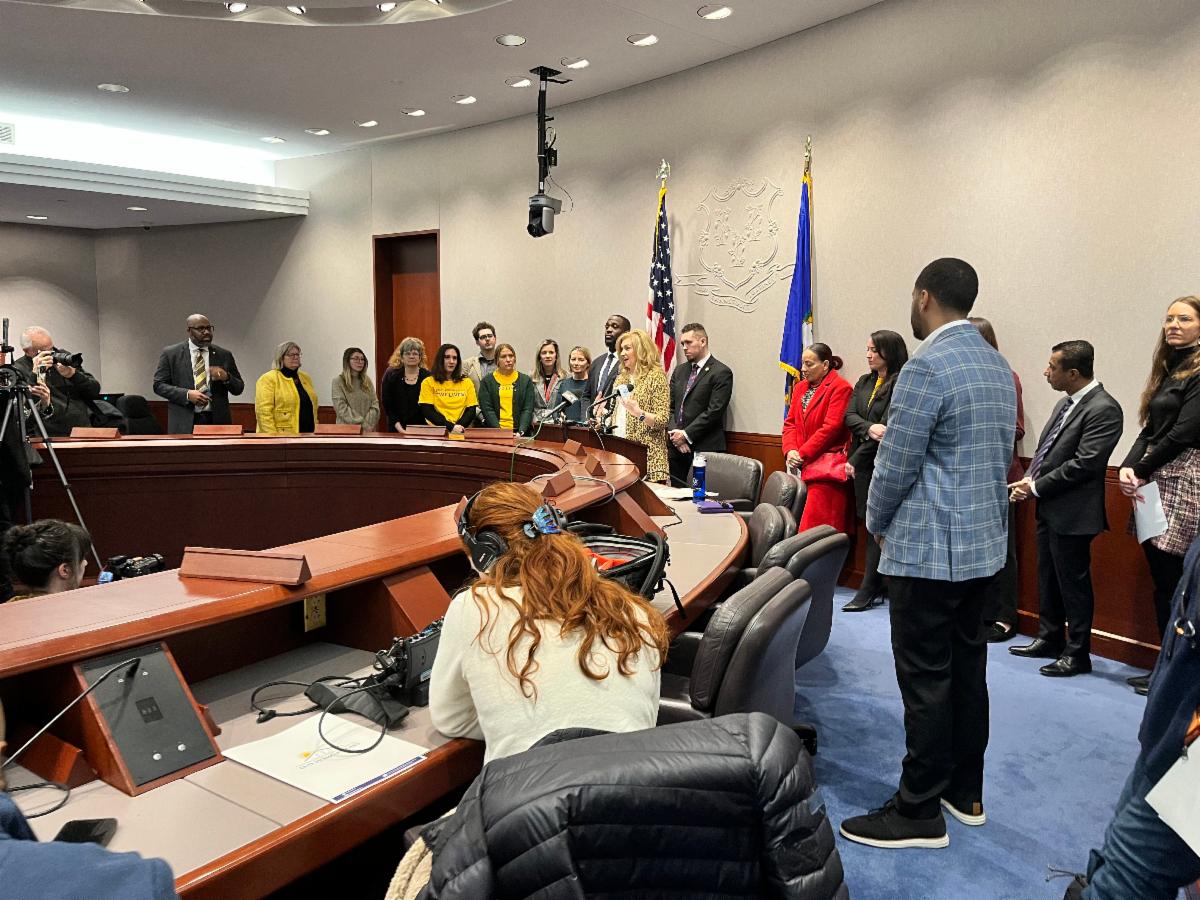
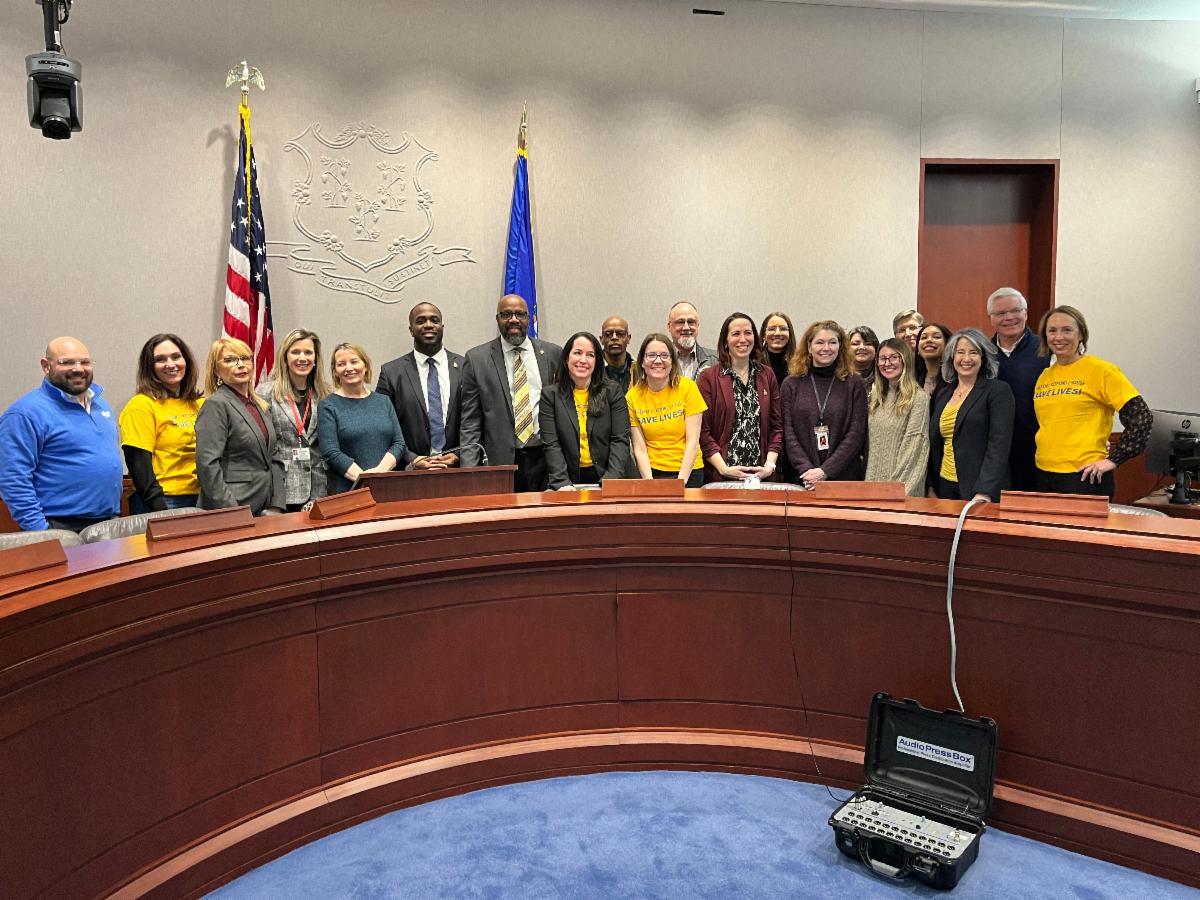
We're beginning this digest with something a little different. On Friday, February 6th, we held a press conference to launch the 2026 CT CAN Legislative Agenda. We were joined by our legislative champions and members of our community who shared why funding for our Homeless Response System is not just another legislative request - it's about people's lives.
We're sharing some of their inspiring, poignant, heartbreaking, and energizing words in the hope that they continue to move us all to come together and call on our leadership to secure the resources our system needs to do what it does best: prevent homelessness, respond to crisis, house our neighbors, and save lives.
"Do not let us make excuses for you, or excuses to you."
~ Representative Felipe, Co-Chair Housing Committee, Chair Black and Puerto Rican Caucus
"This is the year what we stop the crisis. 8,000 may not seem like a large number, but that's 8,000 funerals you may walk into."
~ Representative Roberts, Co-Chair End Homelessness Caucus
"If 10M sounds bold, doing nothing is the most expensive choice we can make. 10M to prevent homelessness is not radical, it is responsible and is proven."
~ Adriana Negron, Journey Home
"To both sides of the aisle, let Connecticut be the state that ends homelessness once and for all."
~ Carmen Colon, Pacific House
"Why is it we think that when the roof comes off of someone's head, they are no longer valuable to us?"
~ Representative Kavros DeGraw, Co-Chair Planning and Zoning Committee
"Homelessness is one of America's most visible but least understood challenges."
~ Councilwoman Martinez, City of Bridgeport
"How many nights is ok for children to languish in shelter? When is enough enough?"
~ Jered Bruzas, United Way of Greater Waterbury
"2025 was a transformative year. It clarified our values, it identified our non-negotiables, and it demanded our truth."
~ Jennifer Paradis, Beth-El Center
"Today is not just about this event. It's about life and dignity. It's whether people make it through the night. Today I am here with hope because we are together. And together we can solve homelessness."
~ Sarah Fox, Connecticut Coalition to End Homelessness
| | Welcome to Our New Campaign Director of CT CAN End Homelessness! | | |
Katie Jennings is an experienced policy leader with more than a decade of experience advancing housing stability, homelessness prevention, and systems change at the federal level. Most recently, she served as a Policy Director at the U.S. Interagency Council on Homelessness (USICH), where she led interagency policy development, coordinated across 19 federal agencies and with state and local partners, and helped shape national strategies to prevent and end homelessness. Her work has been driven by the conviction that federal programs and systems can and should work better for the people they are intended to serve.
Katie is thrilled to return to her home state and join the Connecticut Coalition to End Homelessness as Campaign Director for the CT CAN End Homelessness Campaign. She brings a deep commitment to collaboration and community-driven solutions and strives to approach her work with humility, openness, compassion, and a willingness to make and learn from mistakes.
Katie grew up in Windsor, attended Windsor High School, and holds a BA in International Studies from American University in Washington, DC. Outside of work, she enjoys crafting, painting, baking, hanging out with her rescue kitty, and spending time with family.
| | |
Steering Committee Updates:
The Steering Committee reviewed and approved the 2026 legislative agenda, with the condition that Connecticut Coalition to End Homelessness (CCEH) ensure alignment with Partnership for Strong Communities on Rental Assistance Program (RAP) priorities. Members also expressed strong interest in ensuring that, if additional funding is allocated to the 2-1-1 Housing and Homelessness Crisis line, the Steering Committee has meaningful input into how those resources are implemented.
The committee also reviewed Coordinated Entry System (CES) evaluation recommendations presented by Housing Innovations and participated in breakout discussions to identify top priorities. Due to limited discussion time and a technical issue with the initial live poll, a follow-up poll was distributed after the meeting to allow members to select multiple priority recommendations. Results will be used to identify key actions and assign them across campaign subcommittees. CCEH and Steering Committee co-chairs will also develop a process for tracking recommendations that overlap across subcommittees or do not clearly fall within an existing structure.
Members also received an update on extreme weather operations. Due to the high number of protocol activations this season, providers operating warming and overflow programs are experiencing budget pressures and are working collaboratively to estimate the resources needed to sustain operations through the remainder of the winter.
Due to time constraints, discussion on strategies for engaging additional state agency partners was postponed and will be revisited at a future meeting. Upcoming Steering Committee conversations will also include next steps related to CES evaluation priorities and continued coordination around legislative activities.
| |
Coordinated Entry and Outreach Committee Updates:
At the most recent Coordinated Entry and Outreach Subcommittee meeting, CANs across the state reported sustained high demand for warming centers and shelters during recent severe cold weather. Several regions - including New Haven, Central, and Greater Hartford - have been operating at or near capacity, while some availability remains in MMW and parts of Fairfield County.
Safety Concerns related to violence and acute mental health crises continue to impact shelter and outreach operations. In response, regions are strengthening coordination with mobile crisis teams, outreach providers, and street medicine partners to better support individuals with complex needs.
CANs also shared promising practices. Low-barrier warming center models, such as Waterbury's Recreation Center, have successfully engaged individuals who typically decline traditional shelter. Regions, particularly in Fairfield County, also reported improvements in outreach and triage processes for families.
The subcommittee discussed the importance of formal cold weather policies and clear communication tools. Regions with written cold weather policies reported smoother operations, and all CANs are encouraged to finalize policies using the shared template. Outreach strategies - including one-page flyers with QR codes and a new targeted severe cold weather text alert system through United Way / 2-1-1 are demonstrating early positive results.
HUB updates highlighted strong walk-in demand statewide, as well as variation in HUB models across regions. There is interest in developing a shared HUB profile to better understand core services and regional differences. Finally, early statewide data on shelter turn-aways indicates underreporting and data gaps; the subcommittee will continue working to improve data accuracy and usefulness.
| | |
Policy & Advocacy Updates:
Legislative session is underway, and we are deeply thankful to all of our advocates who have provided testimony so far and to our legislative champions who continue to uphold our Legislative Agenda and asks. This year's $123.9 million request includes flexible funding for the Homeless response System, extreme weather response resources, staffing to strengthen housing connections, a 7% provider COLA, and 3,400 additional Rental Assistance Program (RAP) vouchers. Policy priorities include codifying McKinney-Vento protections, advancing anti-criminalization measures, strengthening cross-system coordination, and requiring 30% affordable unit set-asides for state-funded developers.
We hosted a training on the legislative agenda, upcoming hearings, and ways to get involved. You can review the slides and watch the full recording on our website. The website will be updated regularly throughout the session as schedules, resources, and opportunities for engagement continue to evolve.
At the federal level, Congress has passed the FY26 HUD appropriations bill, providing $77.3 billion for HUD programs nationwide, including $4.010 billion for the CoC program and $290 million for ESG. To avoid gaps in homelessness funding, Congress required non-competitive renewals for CoC projects that expire in early 2026 if HUD hasn’t released FY 2025 award notices by key deadlines. In pending lawsuits in the U.S. District Court of Rhode Island, HUD has asked the court to dismiss the temporary injunction issued in December 2025. HUD has also indicated that it intends to non-competitively renew projects expiring in the first two quarters of Calendar Year (CY) 2026 but signaled that it plans to move forward with its December NOFO after that point. Plaintiffs have until February 23 to respond to HUD’s latest motion, and we remain hopeful that the court could still issue a permanent injunction against HUD’s harmful policy changes. Stakeholders can monitor these lawsuits at https://www.courtlistener.com/.
| | |
Youth and Young Adult (YYA) Updates:
The subcommittee reviewed the Three-Pronged YYA Grand Challenge, which focuses on addressing systemic barriers driving youth and young adult homelessness, designing equitable and youth-centered solutions, and sustaining progress through long-term adult and system engagement. The overarching goal is to meaningfully connect YYA to the homeless response system while positioning them as partners in ongoing problem-solving - not simply recipients of services. The Grand Challenge will be shared broadly with partners to prepare the system for upcoming collaborative work. This initiative represents a shift from "doing for" youth to "designing with" them.
Members also explored equity-centered, YYA-led design through a case study from King County's Youth Homelessness Demonstration Program. The discussion highlighted how youth leadership and shared decision-making authority strengthen program effectiveness, reduce harm, and increase service engagement. Embedding young people in leadership roles builds trust, relevance, and accountability within systems.
The subcommittee discussed strategies for engaging youth and young adults who may feel disconnected from or distrust traditional systems. Key themes included youth-oriented hiring practices and ensuring YYA help define which staff, supports, and approaches work best for them. The conversation emphasized that youth engagement is not one-size-fits-all; systems must be responsive and flexible to meet the unique challenges young people face as they transition into adulthood.
Looking ahead, the subcommittee will continue unpacking the Grand Challenge through interactive design activities, incorporate additional local and system-level data to inform decision-making, and remain grounded in equity-centered design principles. The group is moving from vision to action, with equity and youth leadership guiding the next phase of work.
| | |
Exit Updates:
The Exit Subcommittee continues to strengthen cross-CAN coordination to support exits to permanent housing. Members reviewed and finalized the purpose of the newly developed Statewide Landlord Engagement & Housing Resource Contact List, clarifying that it is a provider-facing tool - not a client handout - intended to support professional handoffs, regional collaboration and coordinated landlord engagement. The tool is not designed to guarantee housing placement, but rather to strengthen system alignment and shared strategy.
To support ongoing updates and shared learning, the document has been posted to the Exit Subcommittee Civic Roundtable Collections page. The group also launched a new Landlord Engagement Subgroup, which will hold monthly strategy-focused meetings, volunteers have been identified to lead the initial efforts.
The subcommittee reviewed trends from the statewide Exit Data Dashboard, noting seasonal impacts related to cold weather operations while also recognizing encouraging process in exits to permanent housing, particularly rental placements.
To support continuous improvement, members agreed to incorporate quarterly HMIS Exit Dashboard reviews into future meeting agendas and encouraged participants to bring CAN-specific observations and trends to the discussion. Next steps include resuming work on the Recidivism Prevention Form in the coming month.
| | These sessions are a space for community members to contribute to achieving our goal of eliminating homelessness. Your participation enriches our open dialogues and collective efforts to develop lasting solutions. | | |
Coordinated Entry and Outreach Subcommittee
The purpose of the Entry Subcommittee is to improve coordinated entry and to provide households access to appropriate services and shelter quickly. The purpose of the Outreach and Engagement Subcommittee is to identify, engage, and house all unsheltered individuals and families using a coordinated approach across the state
Date: February 26, 12:00 - 1:00 PM
| | |
Policy and Advocacy Subcommittee
The Policy & Advocacy Committee leads the statewide advocacy efforts of the Homeless Response System throughout the calendar year.
Date: March 3, 1:00 - 2:30 PM
| |
Youth and Young Adult Subcommittee
The Policy & Advocacy Committee leads the statewide advocacy efforts of the Homeless Response System throughout the calendar year.
Date: March 10, 1:30 PM - 2:30 PM
| | |
Exit Subcommittee
The purpose of the Exit Subcommittee is to increase exits to housing, decrease the length of time homelessness, and reduce returns to homelessness.
Date: March 13, 12:00 - 1:00 PM
| | | | |