|
Monday, Happy Canada Day
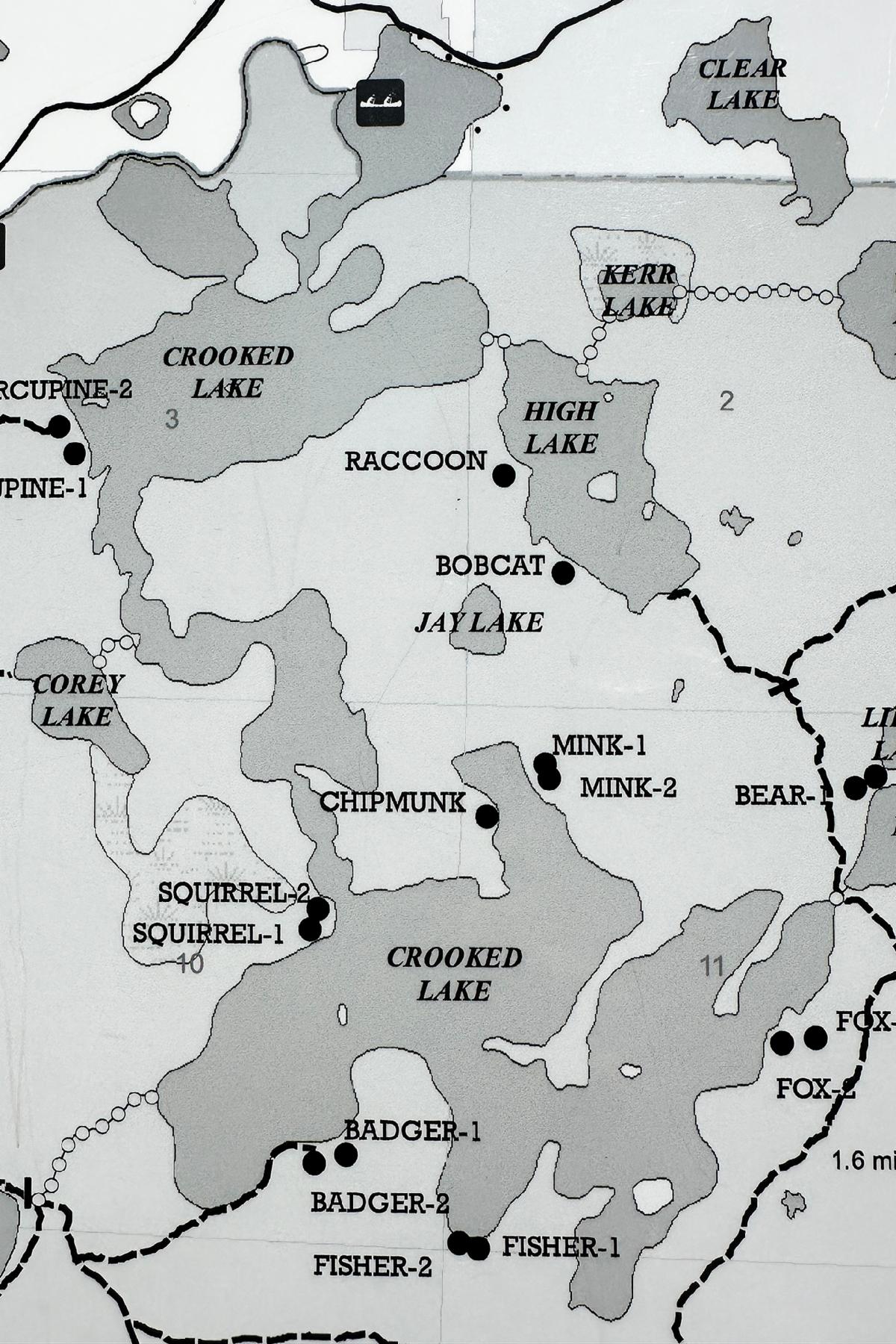
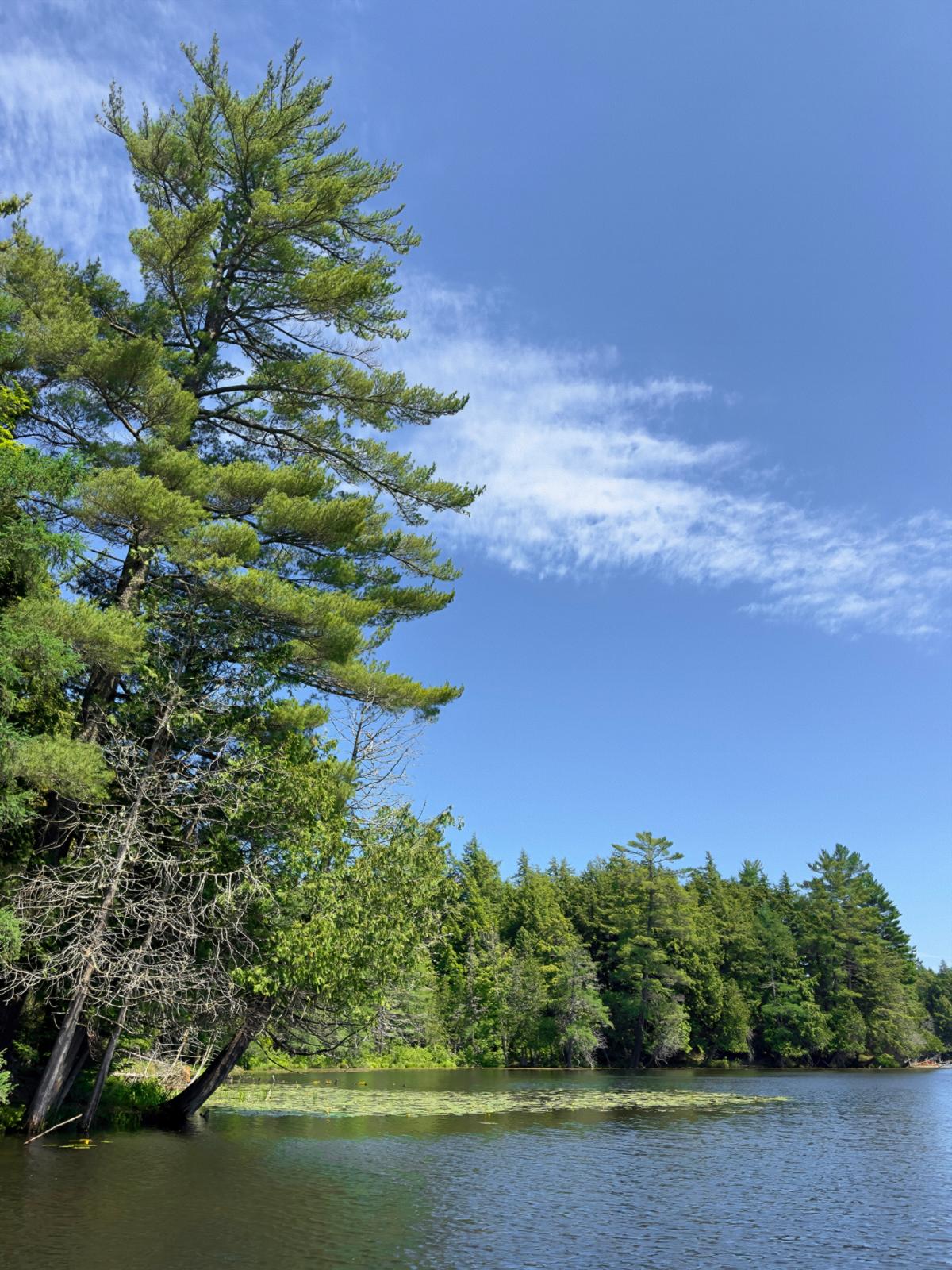
Last night, I checked my weather apps. We are moving to Sylvania National Campground in the outstanding Sylvania National Recreation Area located deep in the Ottawa National Forest just north of the Wisconsin-Michigan border. I want to kayak the amazing Crooked Lake in Sylvania. The weather today is forecast to be spectacular - perfect for kayaking. Tomorrow threatens to be another throwaway day with an all-day rain. If we want to kayak Crooked Lake, it has to be today. However, Sylvania is 3 hours away. Time to break camp and move. No time to backtrack to Muldoons for another pasty.
Sylvania is a special place. At 18,000 square acres, it is one of the most extensive tracts of forest not logged during the 1800s and 1900s. The old-growth forest is primeval. The area is filled with undeveloped lakes. A network of portages connects the lakes into a mini Boundary Waters. (A large chunk of northern Minnesota and southern Ontario forms the canoe heaven known as the Boundary Waters.). Two of the lakes are large, Clark Lake and Crooked Lake. Motors are not allowed on any of the lakes except Crooked Lake, and only electric motors. (A half-dozen cottages are grandfathered in, and these original owners are still allowed to run their gas motors.)
I love the story of the Sylvania Club and how the Sylvania Wilderness came into being. According to the 'Friends of Sylvania:'
The “Sylvania Club” story begins with Albert D. Johnston, a lumberman from Wisconsin who had settled in Watersmeet, Michigan. In 1897, he purchased about 80 acres located between Clark and Loon Lakes, but instead of harvesting the lumber, he decided to build a home on the south shore of Clark Lake.
Johnston opened his two-story log house with five upstairs bedrooms to vacationers who came to the “Johnston Camp” to fish, hunt, gather wild fruit, and swim in the lake. Several of his friends, primarily wealthy United States Steel Corporation executives (many from Pennsylvania, thus the name Sylvania) affiliated with the UP mining industry, fell in love with the old-growth wilderness and began to purchase acreage surrounding Johnston’s land in 1900-1903, eventually amassing over 18,000 acres. Together, they formed the “Sylvania Club,” a private hunting and fishing retreat.
Ownership changed hands over the years, and finally, the entire area was purchased by the United States Forest Service in 1967. The service promptly removed all buildings and began managing it as a unique recreation area. (About a half-dozen cottages on the northern tip of Crooked Lake have been grandfathered in and remain in private hands.)
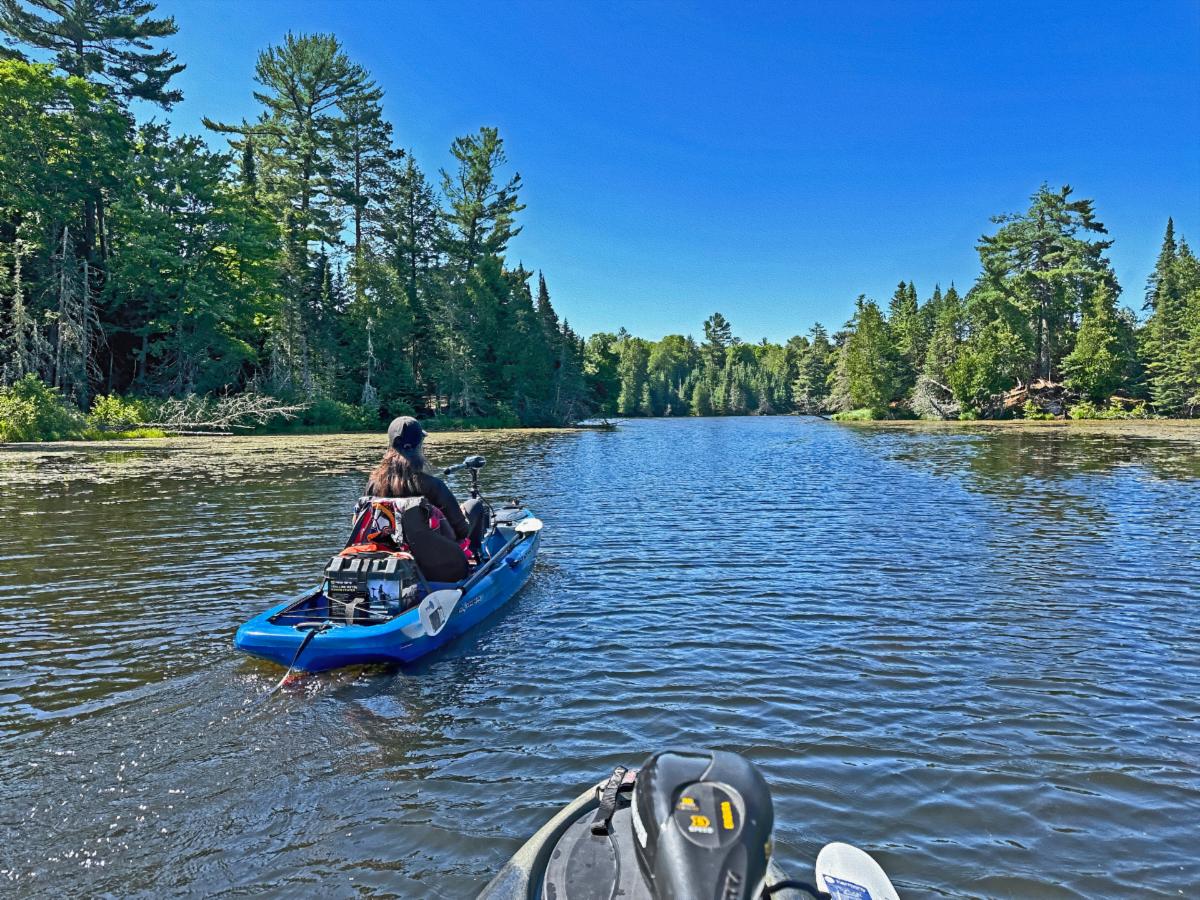
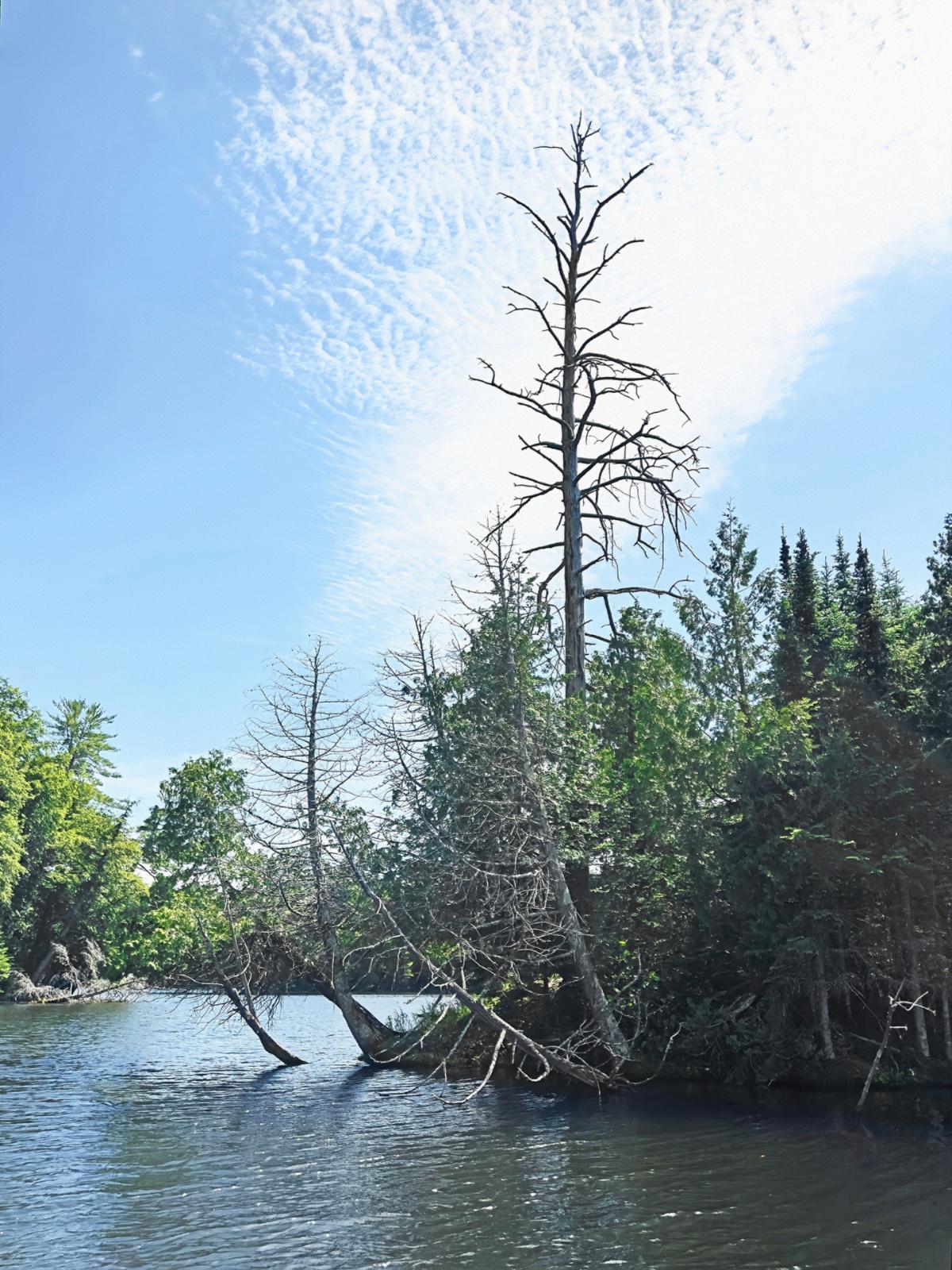
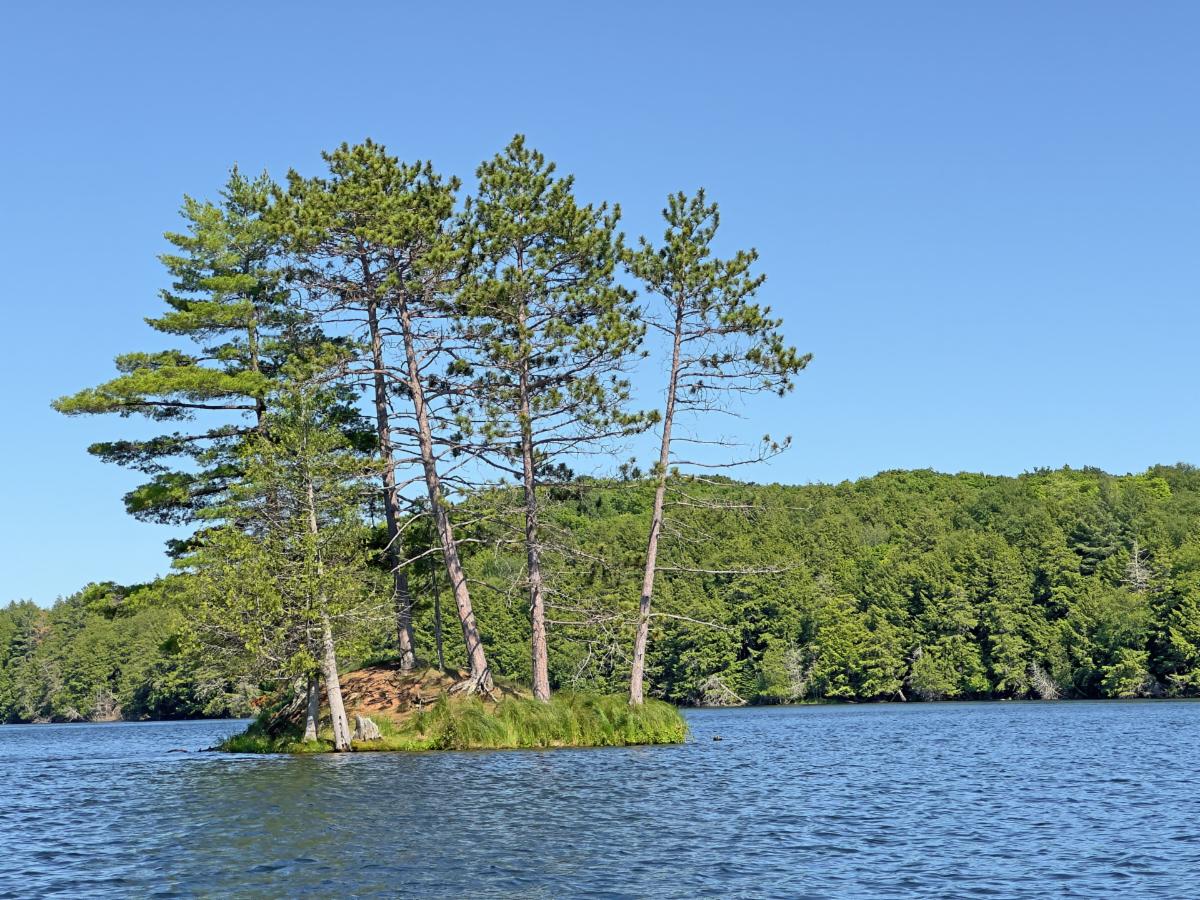
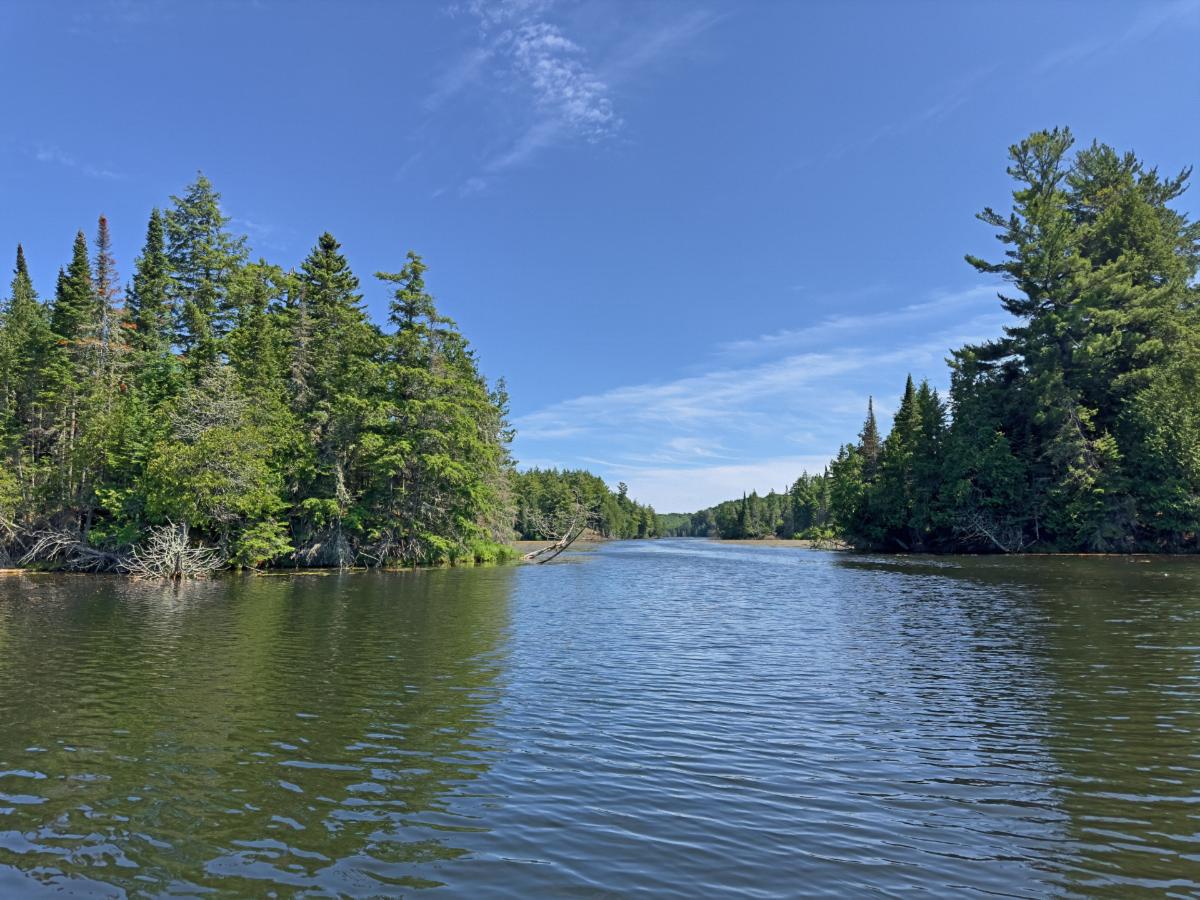
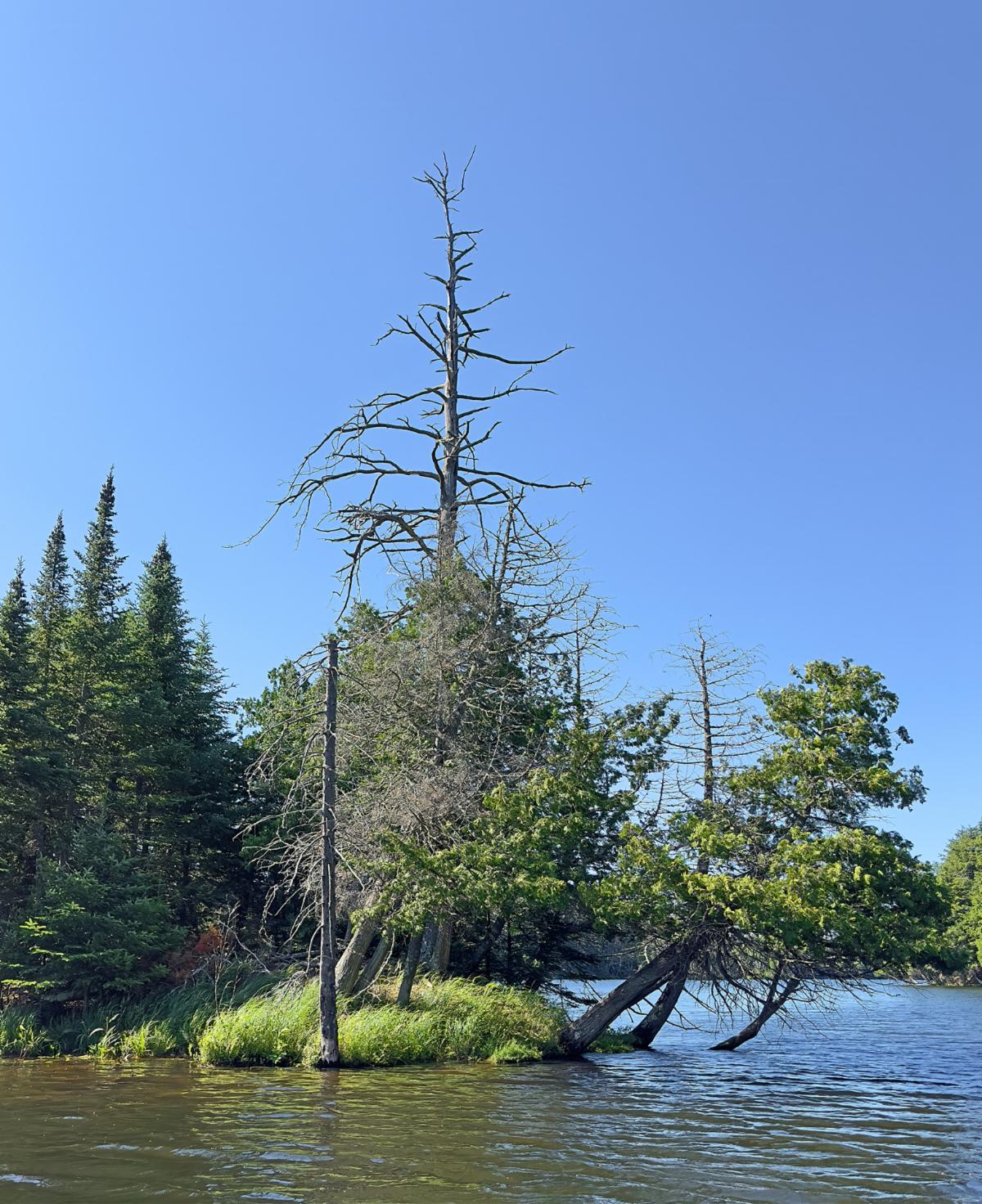
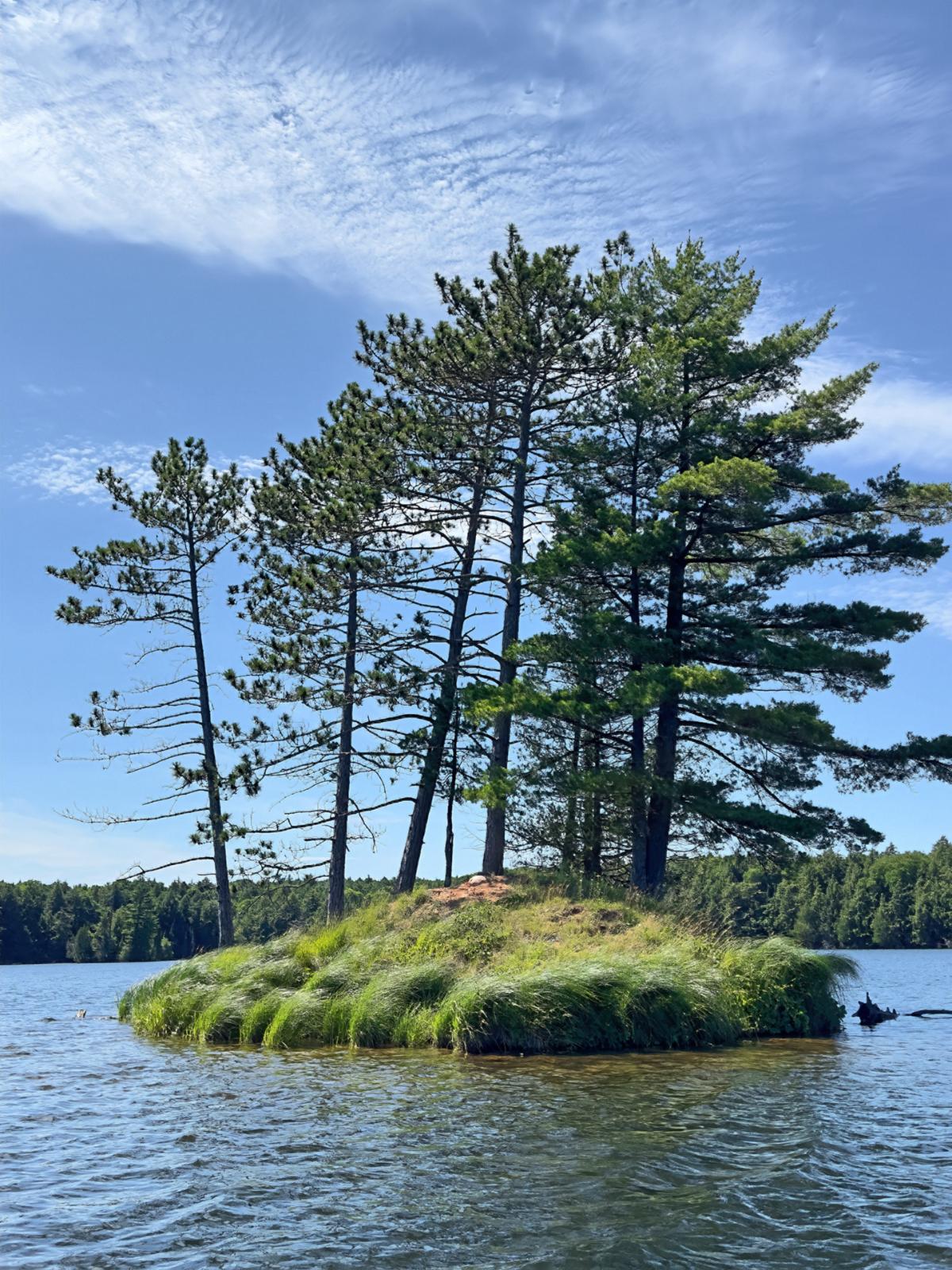
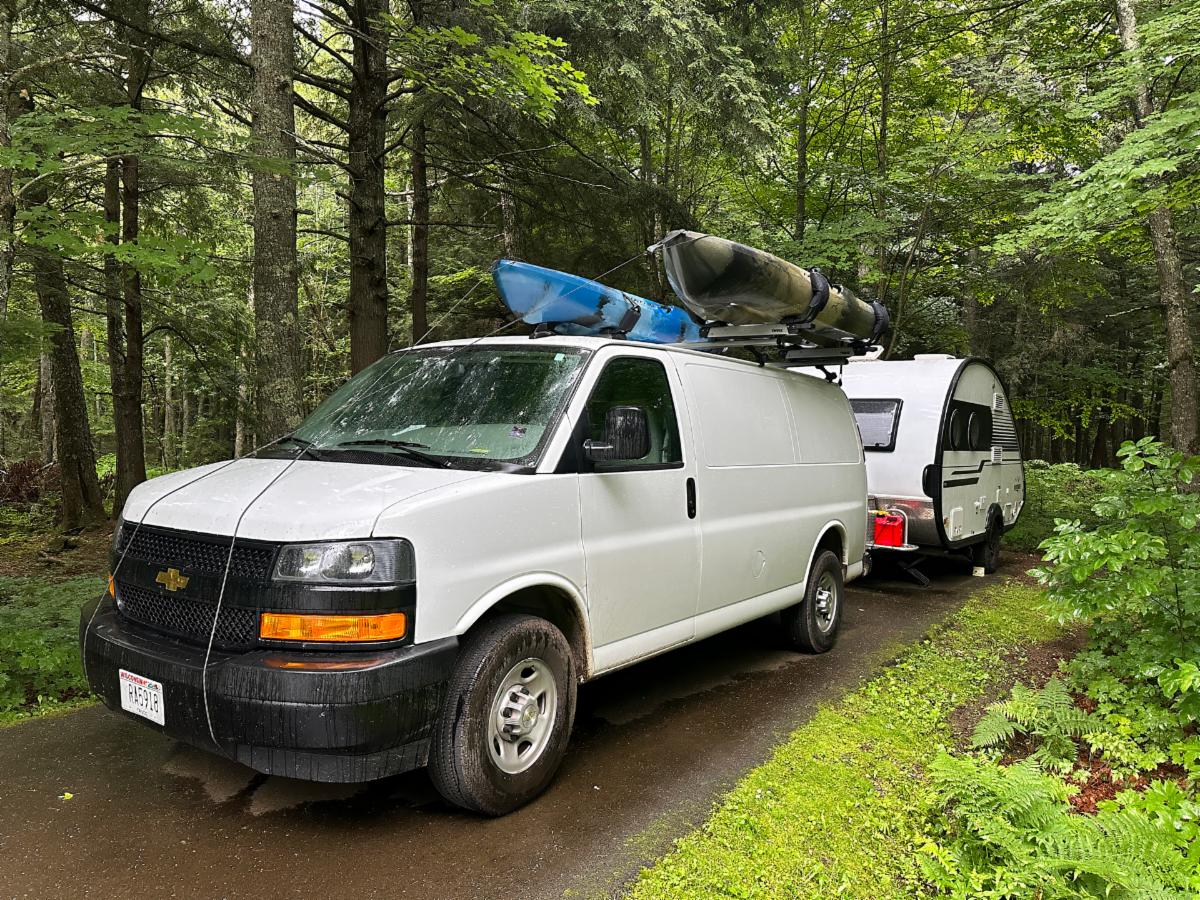
We arrived at our campsite at 1:30 p.m. We set up camp in record time and drove the two miles to the canoe landing at Crooked Lake. After assembling the kayaks, also in record time, we were on the water by 2:15 p.m. The sky was cloudless, and the sun was toasty. As the name suggests, Crooked Lake is a long, narrow body of water with many bays, curvy channels, and islands. The tall, pristine forest hugs the shoreline. It was perfect.
A small number of kayakers were also plying the waters. Some were out fishing, but a couple of hearty people were taking advantage of the primitive campsites and going to camp for a few days.
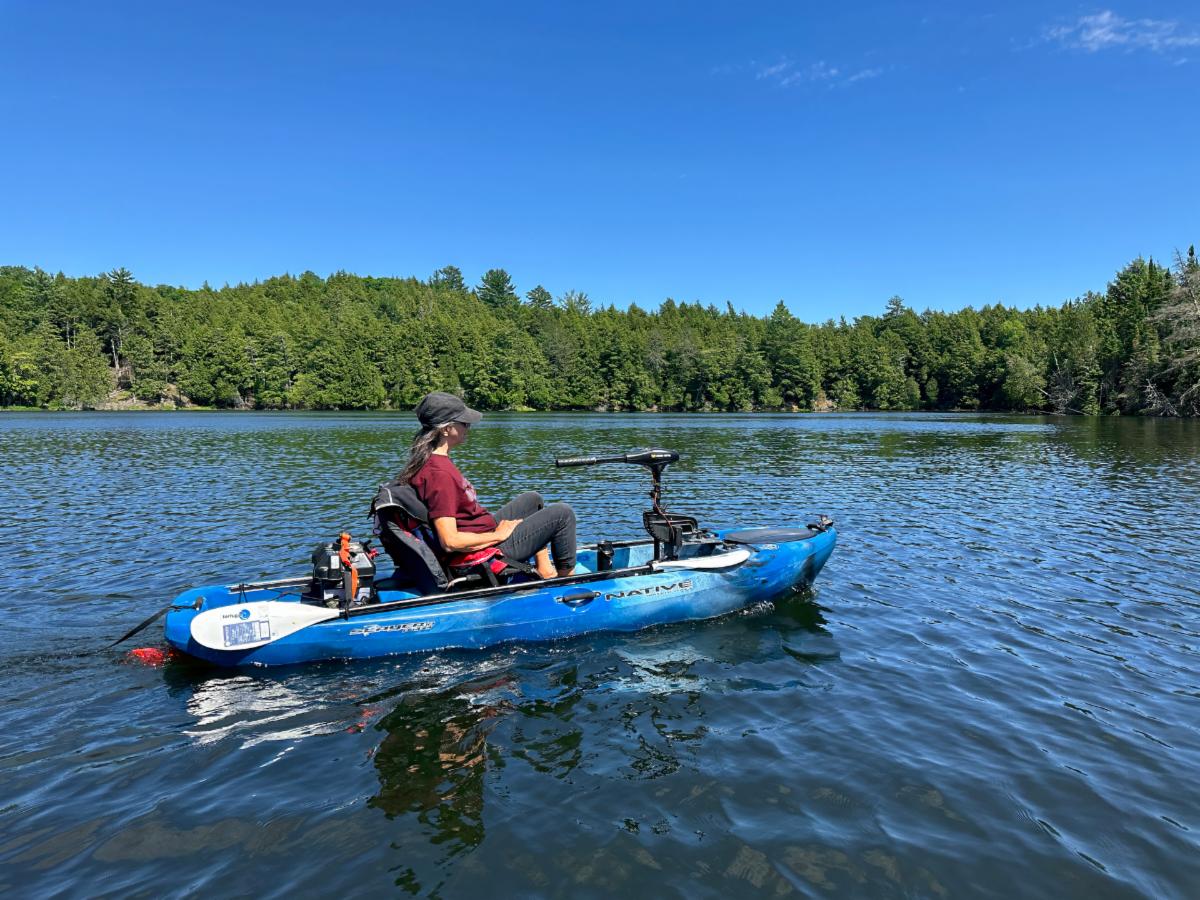
At the landing, we talked to one guy who was going out for several days. He is a local guy who had never been to Sylvania before and was going to rectify that. Most kayakers look at us motoring along with our electric motors and comment, “Now, that’s the way to do it.” I always agree, especially when we are heading into a stiff wind.
|