|
In this Issue:
- Rave's Reflections
- Dr. Ed Marcuse awarded AAP Donald Schiff Child Advocacy Award
- Vax Corner
- Equitable Care Question of the Month
Upcoming Events and Webinars
-
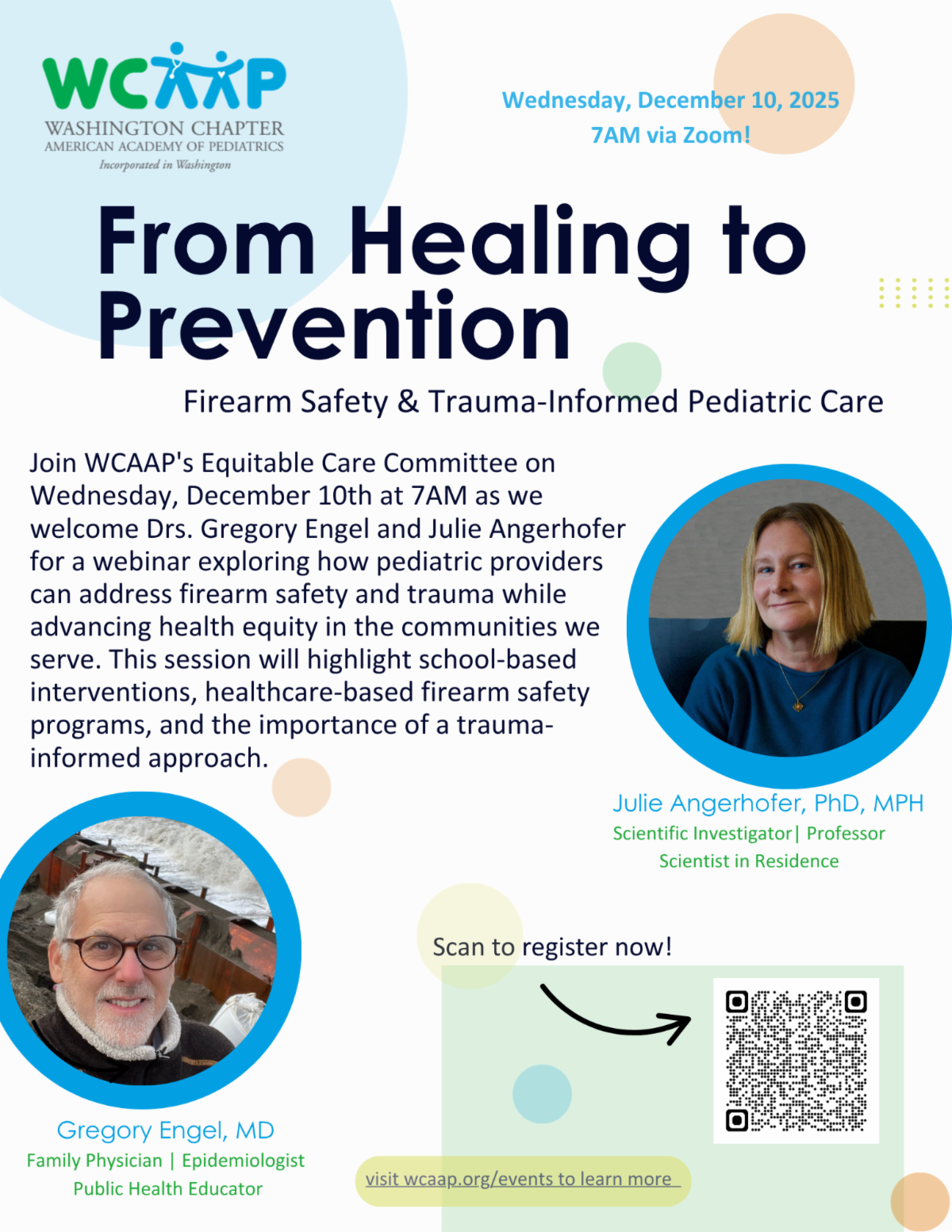
From Healing to Prevention: Firearm Safety & Trauma-Informed Pediatric Care
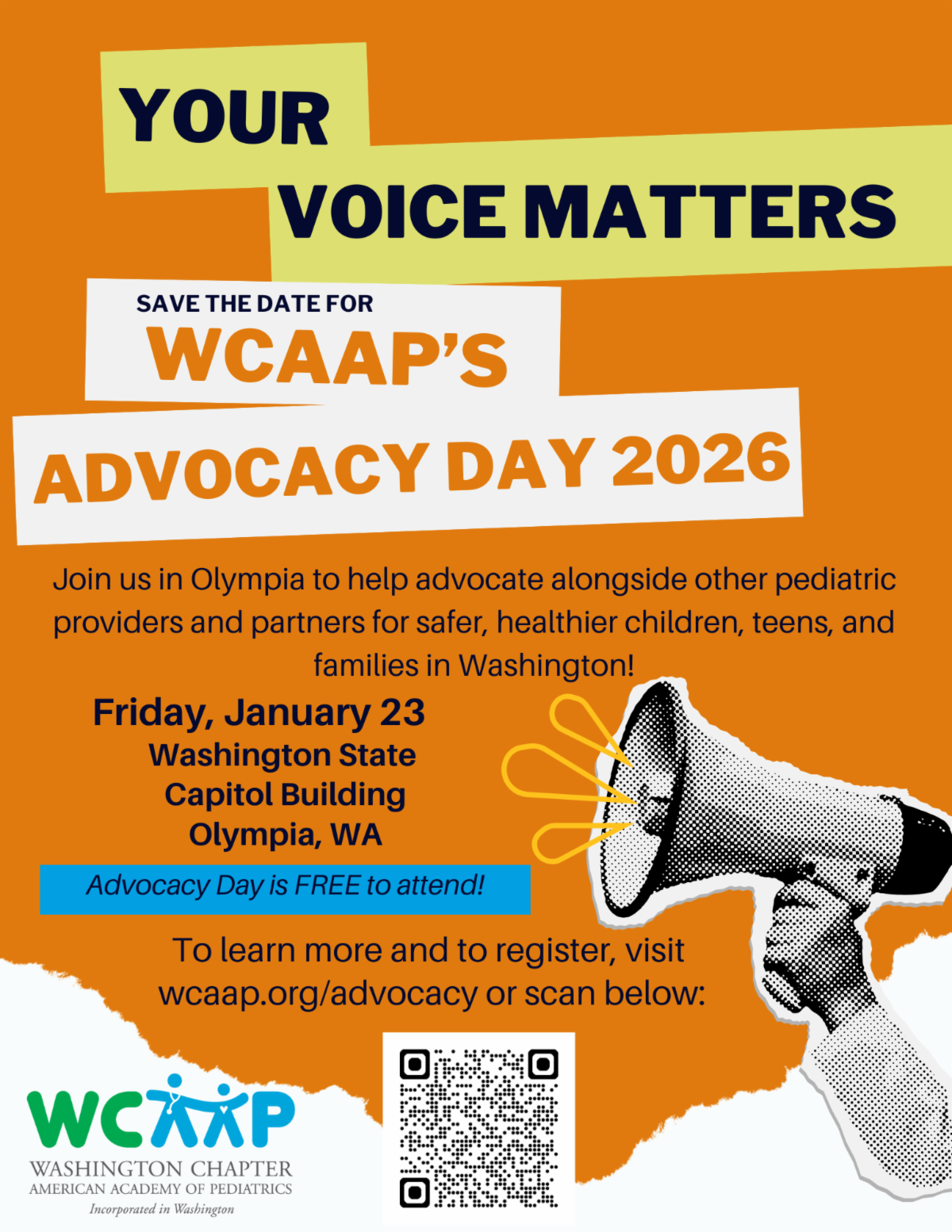
- Advocacy Day 2026 - Limited Capacity, Register Now to secure your spot!
News & Information
- WCAAP Board of Trustees Retreat Recap
- Recorded Webinars Now Available:
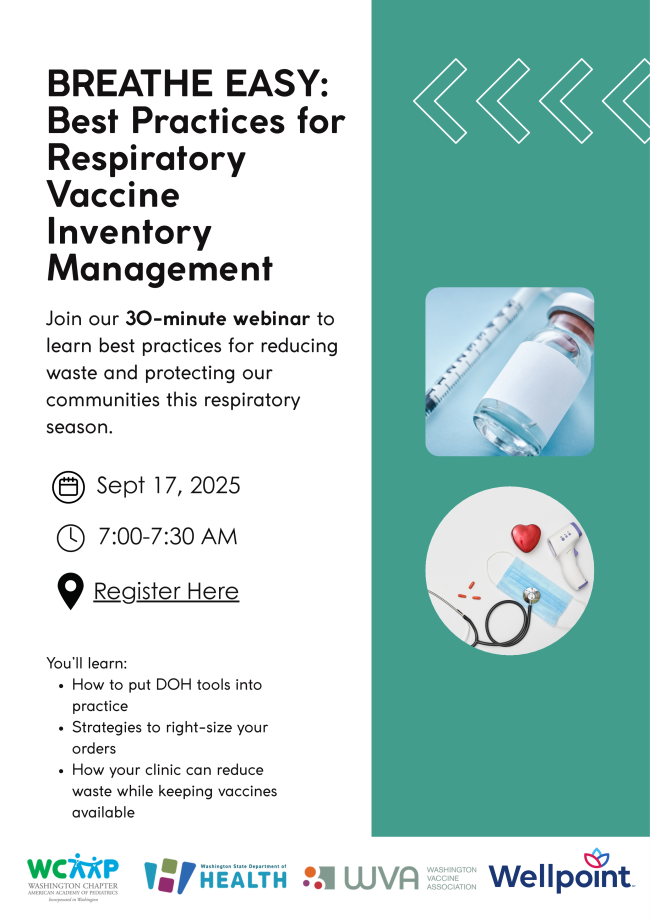
- Breathe Easy
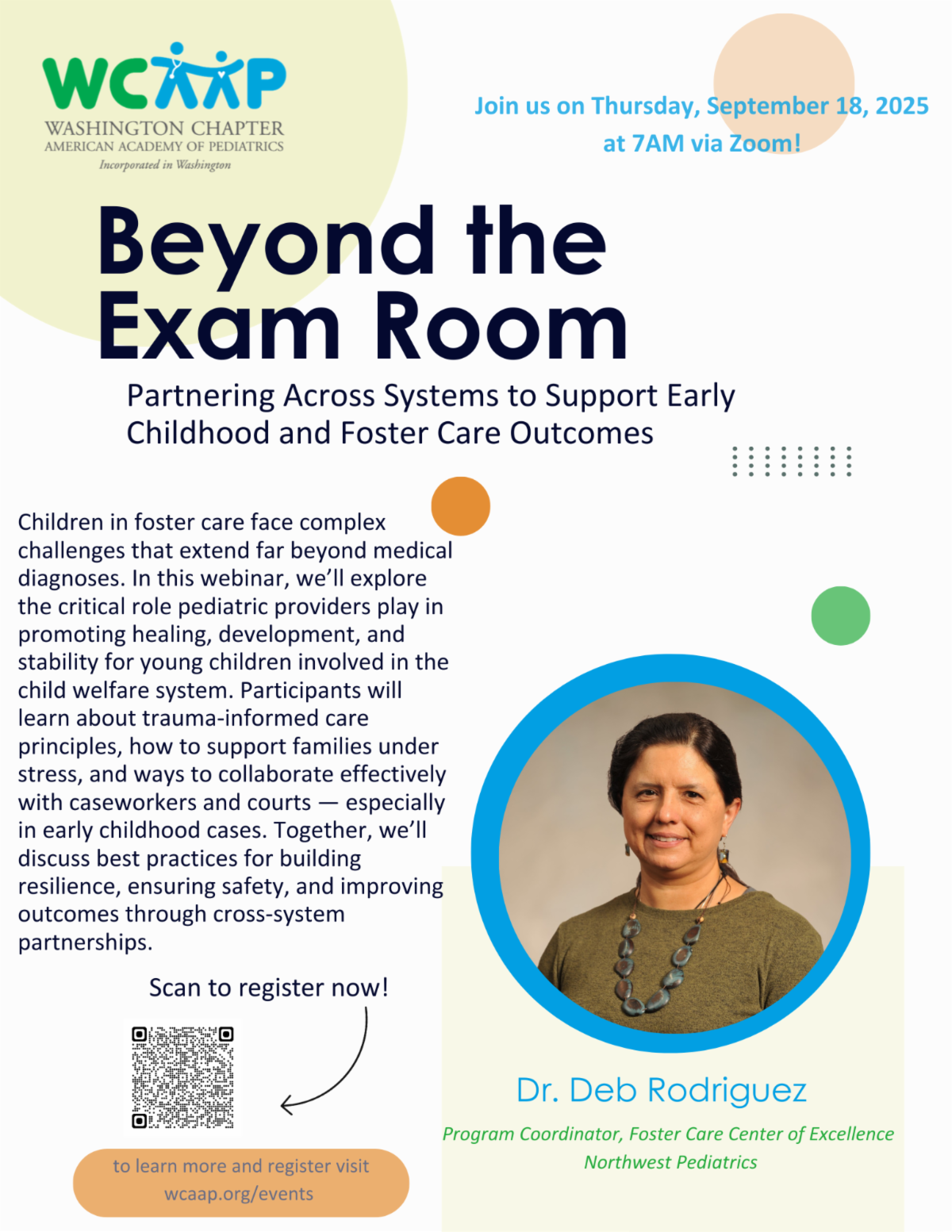
- Beyond the Exam Room
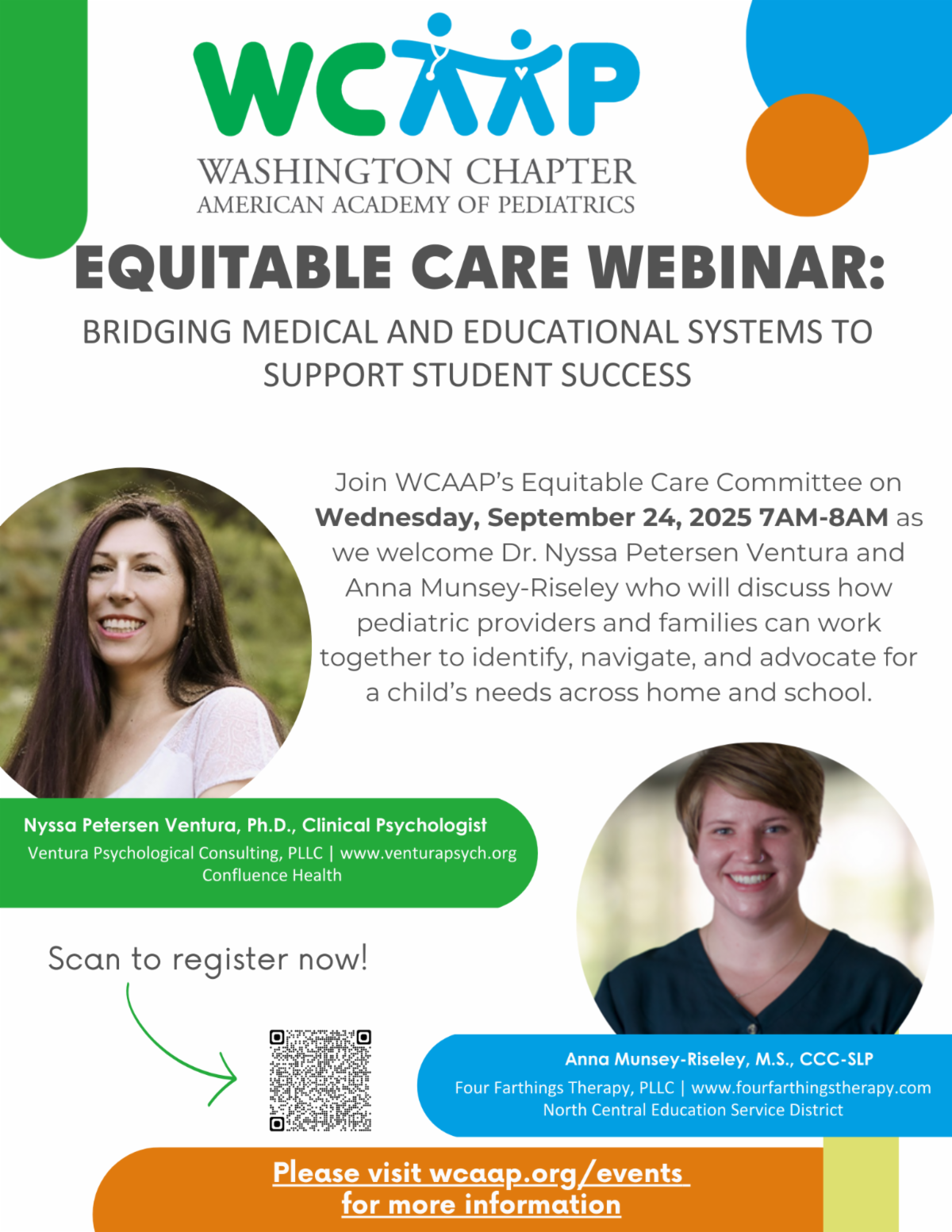
- Bridging Medical and Educational Systems
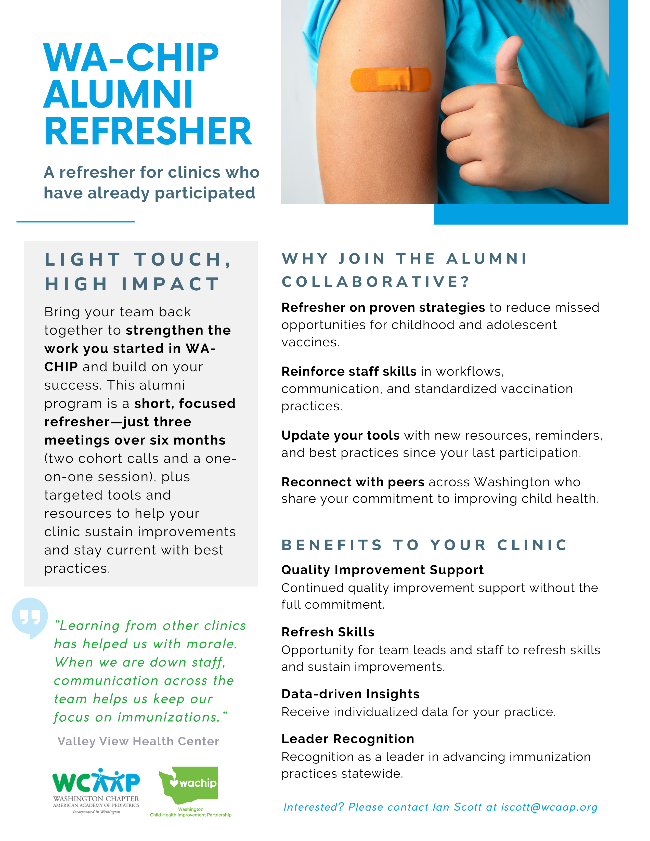
- WA CHIP Alumni Cohort Now Open!
Noteworthy
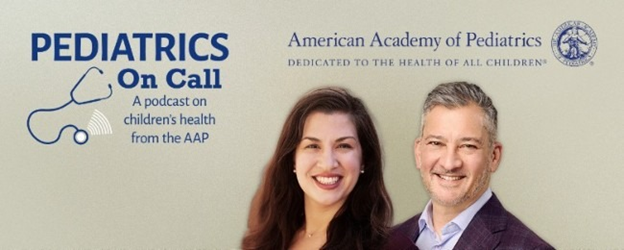
- Pediatrics On Call Podcast Highlights Two WCAAP Members!
- Lead Safety in Washington: Resources and Actions or NLPPW
- After Pregnancy Care - Continuous Maternal Medicaid Coverage 12 months post-partum
CME Opportunities
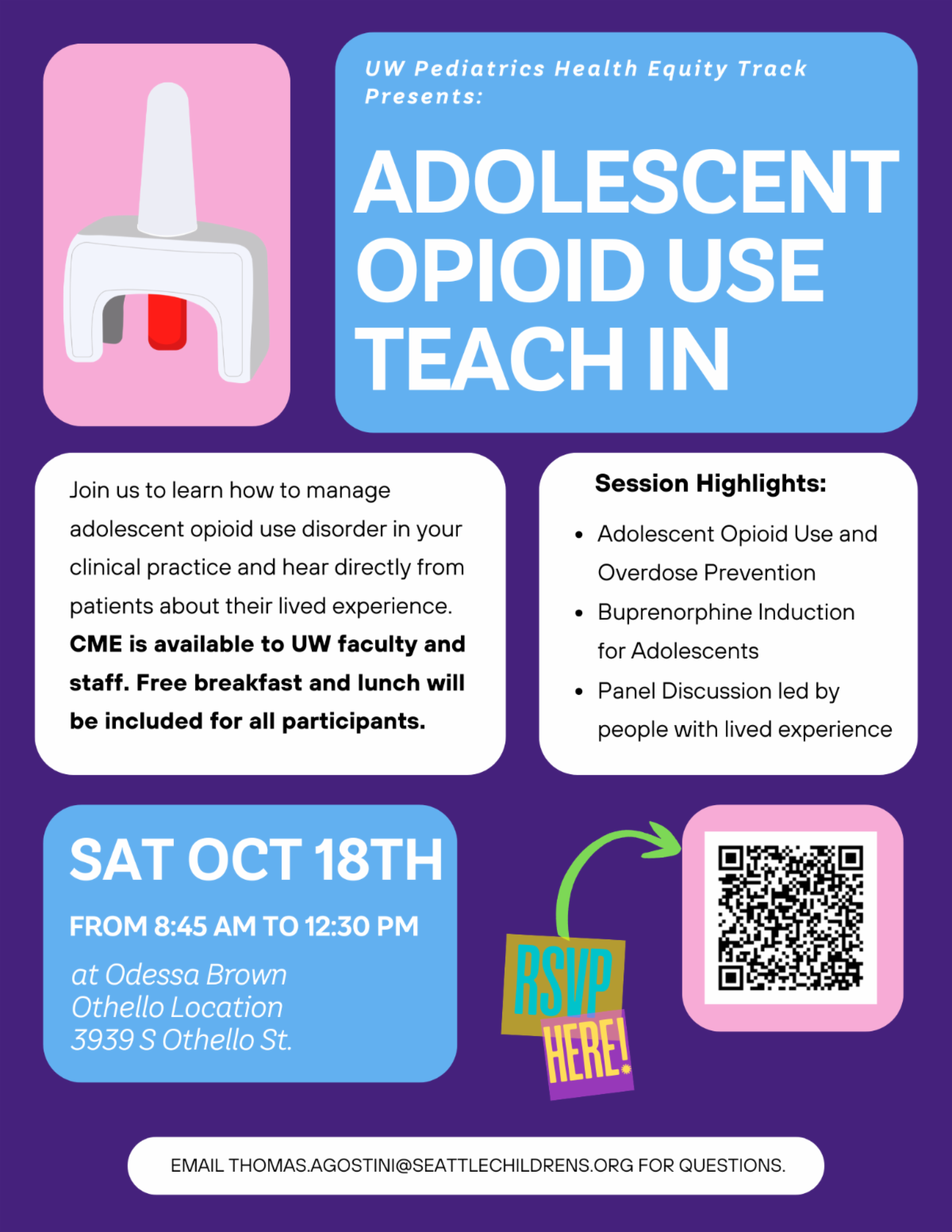
- Adolescent Opioid Teach In - October 18th
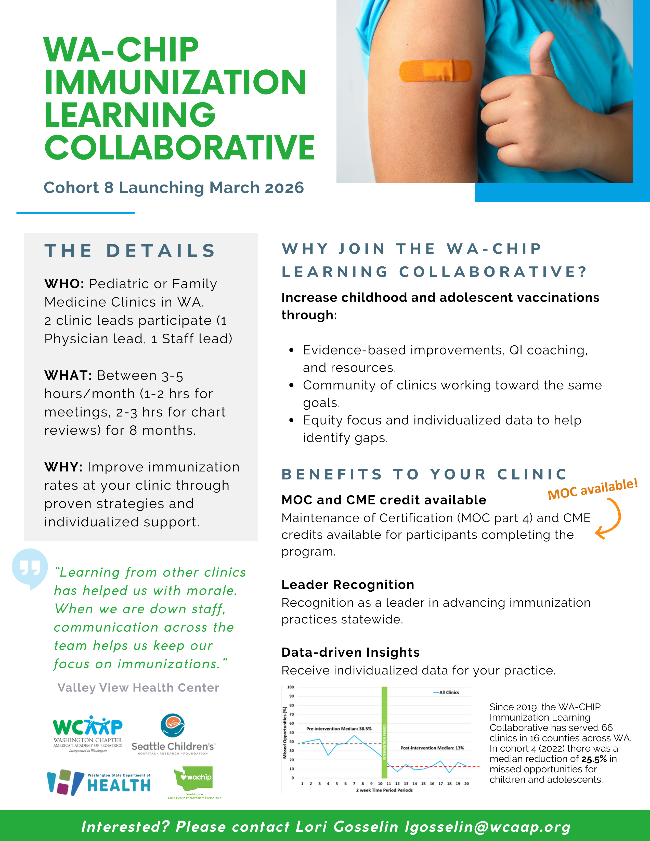
- WA-CHIP Cohort 8 - Beginning in March 2026
Resources
- CHW Brief Highlight
- Open Evidence
- New Diseases unfamiliar to Pediatricians
| | |
Rave's Reflections: October 2025
Lelach Rave, MD, FAAP
WCAAP Executive Director
This is my first newsletter as WCAAP’s permanent Executive Director, and I am deeply honored to have been entrusted with this responsibility. This role represents a new model for Washington - and for the country. No other AAP chapter has a pediatrician serving as its Executive Director. The possibilities created by this arrangement are exciting. My goal is to represent our organization with both a deep understanding of our programs and the “boots on the ground” insight that comes from clinical experience.
As many of you know, when we speak to policymakers, our firsthand experience and expertise lend real weight to our advocacy. I believe that bringing both organizational and clinical perspectives to this role will make WCAAP even more effective and impactful in these challenging times.
| | |
Dr. Ed Marcuse awarded AAP Donald Schiff Child Advocacy Award
Beth Ebel, MD, MSc, MPH, FAAP
Immediate Past President
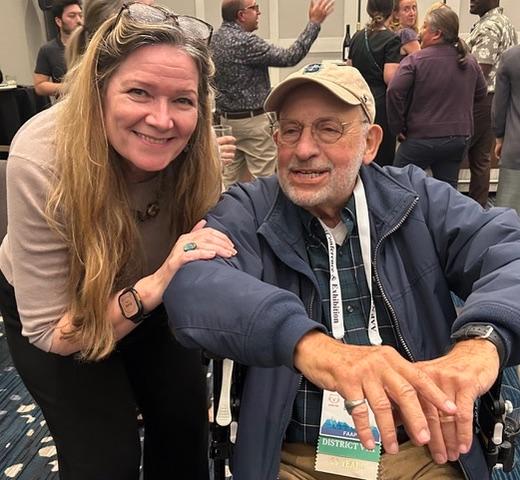
Dr. Ed Marcuse, a longtime esteemed pediatrician and leader at the University of Washington, Seattle Children’s, and the Washington Chapter of the American Academy of Pediatrics (WCAAP), was awarded the national FAAP Donald Schiff Lifetime Child Advocacy Award. Many of you know Dr. Marcuse professionally and personally, testament to his 40 years of service as a general pediatrician and mentor, a twenty-year stint as President of WCAAP, and his service as a pediatrician and medical director at Seattle Children’s Hospital.
| | |
Vax Corner: Vaccine Resources
Maria Huang, MD, FAAP
WCAAP Vaccine Committee Co-chair
Questions about Vaccine Liability?
With recent ACIP changes regarding Covid vaccinations and limiting MMRV use to 4 yrs old, what protections do providers have?
-
The PREP Act provides broad, but not absolute, immunity from state and federal liability, for clinicians prescribing Covid vaccines.
-
Pediatricians should check their malpractice insurance coverage to ensure that Covid vaccination protections are not excluded. Under the principles of malpractice law, liability depends on adherence to the standard of care, which is not determined by the FDA and ACIP alone. Following AAP guidance would be a strong defense that the physician acted within accepted standards. https://publications.aap.org/aapnews/news/33061
- For MMRV, while ACIP now limits use to children under 4 years, the AAP continues to recommend offering families a choice of MMRV or separate MMR and varicella vaccines for toddlers. The AAP Red Book notes a small increased risk of febrile seizure with MMRV as a first dose, but does not express a preference.
- Providers who follow AAP recommendations, even if they differ from ACIP, are generally considered to be practicing within the standard of care and have strong liability protections.
| | |
Equitable Care Question of the Month
Balancing Treatment and Tradition
You are seeing a 16-year-old female patient for the very first time for heavy periods. You discover that her iron levels are low and call to discuss a plan, which includes taking an iron supplement three times a day for three months. You explain that it needs to be taken with food and drink, and ideally something that contains vitamin C to help absorb the iron.
You call three months later to discuss rechecking the labs, and she reports that she is feeling increasingly tired these days. She explains that she cannot keep up with the medication regimen because she is not able to eat most of the day this month. She explains that it is Ramadan, and she does not want to break her fast, so she is only able to take the supplement once a day.
After informing the patient that her iron levels are likely contributing to her increasing fatigue, what do you recommend for this patient next?
| | | |
From Healing to Prevention
Join WCAAP’s Equitable Care Committee for a powerful and practical webinar exploring how pediatric providers can address firearm safety and trauma while advancing health equity in the communities we serve. This session will highlight school-based interventions, healthcare-based firearm safety programs, and the importance of a trauma-informed approach—especially for communities disproportionately impacted by gun violence.
| | | |
Register now for Advocacy Day!
Join us in Olympia for a day of advocacy on Friday, January 23, 2026, with Keynote Speaker, Dr. Andrew Racine, 2026 President of the American Academy of Pediatrics. We will welcome state legislators and other speakers throughout the day, and we will also help set up meetings with your district legislators and give you talking points and issue briefs to help you prepare for those conversations. You can learn more about Advocacy Day and our efforts here.
Seats are limited, register today to secure your spot!
| | | |
WCAAP Board Retreat Reflections
Stacy Tarango, MD, FAAP
Secretary, WCAAP Board of Trustees
This September found trustees, hospital representatives, committee chairs, and staff gathered in beautiful albeit smoky Chelan for our annual leadership retreat.
Our time together provided an opportunity to celebrate the chapter's work and to focus our energy moving forward in this challenging environment. We debated and adopted legislative priorities for the 2026 session including access to vaccination, Medicaid, and mental health resources.
We reviewed our budget with attention to fiscal soundness in the face of economic uncertainty. We strategized regarding how best to address the wellbeing of our members and chapter in addition to the wellbeing of the children of Washington state. We are so thankful for all of you working to fulfill the mission and vision of WCAAP and are especially grateful for your membership and involvement in the chapter.
| | Recorded Webinars from the WCAAP Community, Now Available! | | |
Presenters Beth Harvey, MD, FAAP, Sherri Zorn, MD, FAAP, and DeAnna Dudley Pittenger, BSN, RN-CPN shared practical tools and tips to right-size ordering, optimize current inventory usage, and manage transfers when necessary.
| | The session, led by Dr. Deb Rodriguez, shed light on the multifaceted challenges faced by children in the child welfare system and emphasized the pivotal role pediatric providers play in fostering healing, development, and long-term stability. | | WCAAP's Equitable Care Committee welcomed Dr. Nyssa Petersen Ventura and Anna Munsey-Riseley who discussed how pediatric providers and families can work together to identify, navigate, and advocate for a child’s needs across home and school. | | | |
WA-CHIP Alumni Refresher Program
Reconnect and refresh with the WA-CHIP Alumni Refresher Program—a light-touch, high-impact opportunity for clinics to strengthen immunization practices. With just three meetings over six months, this program offers updated tools, peer collaboration, and continued quality improvement support to help your team sustain success.
Interested? Contact Ian Scott at iscott@wcaap.org
| | |
Pediatrics on Call Podcast Highlights Two WCAAP Members
Check out Pediatrics On Call Episode 261 – Evolving Dimensions in the Pediatrician-Family-Patient Relationship, New Anaphylaxis Definition
Featuring WCAAP Members Douglas Diekema, MD, MPH, FAAP, and Douglas Opel, MD, MPH, FAAP.
In this episode, Drs. Douglas Diekema and Douglas Opel explore the shifting dynamics in the relationship between pediatricians, families, and patients. Meanwhile, Drs. David Hill and Joanna Parga-Belinkie speak with Dr. Julie Wang about updates to the definition of anaphylaxis and a new clinical tool designed to support its diagnosis and management.
| | | |
Lead Safety in Washington: Resources & Actions for NLPPW
Every year in the third week of October, federal, state, and local agencies raise awareness of the many ways parents, caregivers, and communities can reduce children's exposure to lead and prevent its harmful health effects. This year, Washington State Department of Health (DOH) invites you to join us in promoting this week by involving your community and partners through campaigns and learning opportunities! We will be highlighting our state’s lead prevention and response services, providing lead exposure information, publications and resources, and shareable social media posts.
| | Apple Health supports new parents and families with up to 12 months of health coverage | | |
Apple Health After-Pregnancy Coverage (APC)
Welcoming a new baby brings many changes, but access to health care should remain constant. Washington’s Apple Health APC ensures individuals continue to receive care for up to 12 months after a pregnancy ends—whether through birth or pregnancy loss—when physical and emotional support are most important.
| | |
Upcoming Teach-In: Adolescent Opioid Use
Join the UW Pediatric Residency Health Equity Track for a Teach-In on Adolescent Opioid Use on Saturday, October 18th, 8:45 AM–12:30 PM at Odessa Brown Children’s Clinic (3939 S Othello St, Seattle).
This free, in-person event is open to all healthcare professionals and includes sessions on overdose prevention, MOUD prescribing, and lived experience discussions. Complimentary breakfast and lunch provided.
CME available (free for UW faculty/staff; $25 for others).
Questions? Contact thomas.agostini@seattlechildrens.org
| | |
WA-CHIP Immunization Learning Collaborative – Cohort 8 Launching March 2026
Pediatric and Family Medicine clinics across Washington are invited to join Cohort 8 of the WA-CHIP Immunization Learning Collaborative, launching in March 2026.
Participating clinics work together to increase childhood and adolescent vaccination rates through monthly meetings and chart reviews.
CME and MOC Part 4 credit available!
Since 2019, WA-CHIP has supported 66 clinics in 16 counties, with past cohorts showing a 25.5% median reduction in missed immunization opportunities.
To learn more or enroll, contact Lori Gosselin at lgosselin@wcaap.org
| |
CHWs Transforming Pediatric Care
Community Health Workers (CHWs) are having a remarkable impact in Washington’s pediatric primary care clinics. At Pediatrics Northwest, CHWs became essential members of the care team, helping families navigate everything from behavioral health referrals to housing assistance. Their presence has reduced the time it takes families to connect with services, improved follow-through on referrals, and made a measurable difference in children’s health outcomes.
In 2024 alone, CHWs at Pediatrics Northwest served nearly 2,800 families, averaging 72 families each month. Thanks to their support, the clinic saw higher rates of well-child visits, stronger connections to behavioral health services, and a significant drop in emergency department visits for mental health crises. The evidence is clear: when CHWs are part of the team, children and families thrive.
Read more about the impact CHWs are having in Washington State through the link below.
| |
Diseases that Will Be New to Most Pediatricians
We are presenting information on diseases that are largely preventable yet are emerging in unimmunized children. Some providers may have seen a few of these diseases; however, with decreasing immunization rates pediatricians and health care providers who see children may not have encountered these vaccine-preventable diseases and may not recognize them. As such, we have developed a “flash card” series that depicts some of the most serious vaccine-preventable diseases to aid in recognition, treatment, and understanding of potential outcomes.
Pertinent references are also provided. This is not intended to be an exhaustive review but is instead a useful handy reference to help recognize and manage this “new” old problem.
The following disease order is based on the Centers for Disease Control (CDC) 2024 report on the decline in percent vaccination coverage by age 24 months, with diseases listed from lowest percentage of population coverage to highest percentage.
| | |
Lelach Rave, MD, FAAP
lrave@wcaap.org
Interim Executive Director
Organizational strategy, community partnerships and operations
| | |
Elexis Jackson
ejackson@wcaap.org
Operations and Program Manager
General Operations, Board and Membership Engagement, Communications, Advocacy, Health Equity, Early Childhood
| | |
Michelle Tolman, MPH
mtolman@wcaap.org
Data and Finance Manager
Financial Operations, Programmatic Data Management
| | |
Amy Wildt
awildt@wcaap.org
Development Manager
Grant Management, Fundraising, Membership Engagement
| | |
Lori Gosselin, MPH
lgosselin@wcaap.org
Program Manager
Relational Health Learning Collaborative, Quality Improvement, Family and Community Engagement, Vaccine Programs
| | |
Ian Scott
iscott@wcaap.org
Program Coordinator
Relational Health Learning Collaborative, Youth Engagement, Vaccine Programs
| | |
DeAnna Dudley Pittenger, BSN, RN-CPN
ddudley@wcaap.org
Program Manager
Special Projects HPV Immunization Learning Collaborative
| | |
Leslie Graham, MSW, LICSW
lgraham@wcaap.org
Program Manager
Special Projects Behavioral Health Learning Network, Community Health Worker Learning Collaborative
| | |
Amber Ulvenes
aulvenes@wcaap.org
Legislative Liaison
| | |
Join us! Committees are a great way to meet other members and get involved with Chapter work. Watch this space for upcoming meeting dates and times for Chapter committees and interest groups. Most committees meet via Zoom for one hour, and we welcome anyone interested.
Early Childhood Committee
Meets every other month via Zoom
Contact Lori Gosselin for meeting info.
Contact Mary Ann Woodruff or Emily Ferrell to learn about the committee.
Equity Committee
Meets monthly via Zoom
Contact Elexis Jackson for meeting info.
Use this link to learn more and apply for the committee.
Champions for Youth Committee
Meets monthly via Zoom
Details available by reaching out to Lelach Rave
Contact Lelach Rave for meeting details and committee information.
Vaccine Committee
Meets monthly via Zoom
Contact Ian Scott for meeting info.
Contact Frank Bell or Maria Huang to learn about the committee.
Legislative Affairs Committee
Meets monthly via Zoom during the interim + ad hoc as needed
Contact Elexis Jackson for meeting info.
Contact Crystal Shen or Mike Van Dyke to learn more about the committee.
Membership Engagement Committee
Meets every other month via Zoom
Contact Elexis Jackson for meeting info.
Contact Cora Breuner to learn about the committee.
Health Care Transformation Committee
Meets every other month via Zoom
Contact Elexis Jackson for meeting info.
Contact Rick Levine to learn about the committee.
First Year Families Committee
Contact Lori Gosselin for meeting details and committee information.
| | | | |