|
Most of us have been handed a quiet lie about leadership. The lie says that leadership belongs to a select few — the manager, the executive, the elected official, the person at the front of the room. The rest of us, according to this story, are simply waiting for our turn. But the reality is both simpler and more demanding than that: leadership is not something you are given. It is something you choose. And that choice is available to you right now, today, in exactly the circumstances you already inhabit.
Leadership Is Not a Title
Before anyone follows your vision, they are watching your example. This is the thing about leadership that titles cannot manufacture: influence. A title tells people who is responsible for what. It grants authority within a structure. What it does not do is earn trust, model character, or inspire genuine effort. Every organization has people with impressive titles who lead poorly, and people with no formal authority who shape the culture of every room they enter. The difference has nothing to do with their position and everything to do with whether they have taken personal ownership of their influence.
Leadership begins the moment your actions start to affect the people around you. By that definition, you are already leading someone. The only question is whether you are doing it intentionally.
Ownership Is the Foundation
The most fundamental shift a leader makes is the shift from blame to ownership. We live in a culture that is remarkably sophisticated at avoiding responsibility. There is always a circumstance, a system, a person, or a history to point to when things go wrong. And while external obstacles are real, the blame habit is not neutral. Every moment spent assigning fault is a moment not spent changing something.
Ownership is not about judging the past; it is about how you move forward. It means taking responsibility for results instead of claiming credit for what went well and avoiding blame for what did not. It means admitting mistakes honestly, keeping your commitments, and, when that is not possible, communicating early and making it right. Above all, it means choosing your response regardless of your circumstances. You cannot always control what happens, but you can control how you respond.
An ownership mindset is guided by simple but challenging questions: What can I do? What can I learn? How can I improve? These questions do not deny that a situation may be unfair. They shift the focus from complaint to action.
We Are All Leading Someone
Right now, someone in your life is learning from you how to be a person. They may not have announced this. They may not even be fully conscious of it. But they are watching how you handle disappointment, how you speak about people when those people are not in the room, how you respond when you are treated unfairly, and what you do with your time and attention.
Children are the most obvious example, but the invisible audience is larger than that. Coworkers notice whether you take credit and deflect blame or share both honestly. Friends are watching whether you show up for hard conversations. Customers form conclusions about your character from dozens of small interactions before they ever decide to trust you with something that matters.
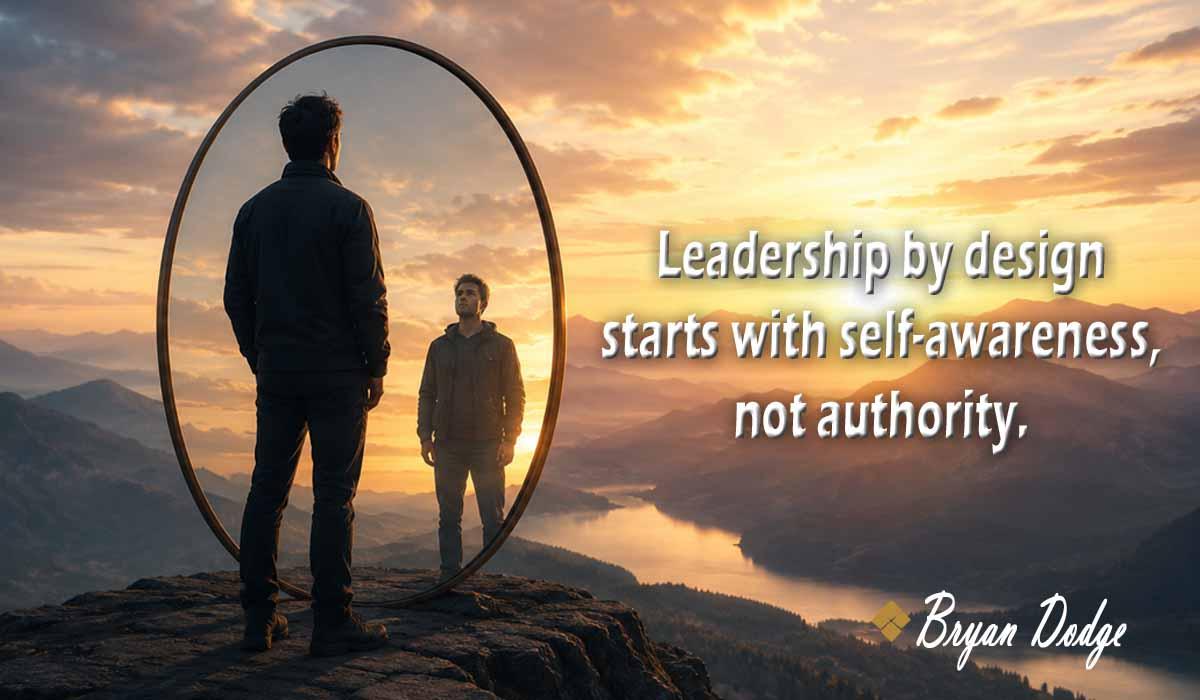
You are already modeling something. The only choice is whether you model it intentionally. Intentional leadership requires self-awareness an honest look at the gap between who you are and who you want to be and the daily discipline to close that gap, not in the moments when it is easy but in the moments when no one is watching and nothing is at stake except your own integrity.
Self-Leadership Comes First
You cannot effectively lead others if you cannot lead yourself. This is not a philosophical observation it is a structural fact. The person who cannot manage their own time makes reactive decisions. The person who cannot regulate their emotions becomes unpredictable, and their team learns to manage them rather than work with them. The person whose private life contradicts their public values eventually finds that the foundation cannot hold the weight placed upon it.
Self-leadership means discipline aligning your actions with your values rather than with your mood. It means integrity closing the gap between what you believe, what you say, and what you do. It means emotional intelligence developing enough awareness of your own patterns that you can choose your response rather than simply react. And it means a commitment to continuous learning, staying genuinely curious rather than settling into the comfort of already knowing enough.
None of this requires perfection. It requires honesty and persistence. The self-leader who falls short of their own standard does not collapse in shame or manufacture excuses. They acknowledge what happened, learn what they can, and keep going.
Leadership Is a Daily Decision
The moments of high drama are not where leadership is built. They are where it is revealed. What gets revealed in a crisis is everything that was built in the thousands of ordinary moments that preceded it the daily disciplines, the consistent habits, the small choices made so many times that they became automatic.
Great leadership is built one decision at a time: showing up prepared when you could have winged it, doing what you said you would do when it would have been easier not to, encouraging someone who is struggling when you could have kept walking, choosing a generative attitude when the circumstances give you every reason to complain. None of these choices are dramatic. Each one seems small in isolation. But the compound effect of making them consistently, over weeks and months and years, is the formation of character and character is the whole game.
The compound effect works both ways. A person who repeatedly avoids hard things, lowers their standards, and honors commitments only when convenient is still building a pattern just not one they would choose deliberately. Every day, your choices either help you become the leader you want to be or move you farther from that goal.
The Ripple Effect of Ownership
Ownership is contagious. When one person steps forward and takes responsibility in an environment accustomed to blame and avoidance, something changes in the room. They lower the perceived risk for everyone else. They crack open the possibility of a different culture one where honesty is survivable, where accountability builds rather than destroys, where moving forward is more possible than the prevailing dynamics had suggested.
Teams that share ownership surface problems instead of hide them. Families where adults admit mistakes raise children with a healthier view of failure. Organizations that practice real accountability outperform those driven by self-protection. And communities where people step up instead of waiting for someone else can build and sustain what no one could achieve alone.
You do not need formal authority to start this ripple. You need only the willingness to go first.
The Life That Belongs to You
Each of us has been given one life to steward and one sphere of influence to impact. We may not all lead large organizations, but we are all called to lead our lives. The question is not whether you are influencing the people around you you are, already, today, in ways you may not fully see. The question is whether you will take that influence seriously enough to do something intentional with it.
Leadership begins when we stop waiting for permission, stop looking for someone else to take responsibility, and choose ownership. Not someday, when the title is right or the circumstances are better or we finally feel ready, but in the life we are already living, with the actual people we are already influencing, through the actual choices that are in front of us today.
The moment we take ownership of our choices, our growth, and our influence, leadership is no longer something we aspire to. It becomes who we are.
Leadership is not about position. Leadership is about ownership. And every person has the opportunity and the responsibility to lead their life well.
|