| |
Arizona Republicans Face a Pivotal Leadership Choice on January 24
On January 24, Arizona Republicans will gather to elect a new State Party Chair. Our current chair, Gina Swoboda, is stepping down to run for Congressional District 1, a seat currently held by David Schweikert, who is running for governor. Gina Swoboda will be missed. She was endorsed by Donald Trump both for State Party Chair and for her run in CD1, and she has served the party during a challenging and consequential time.
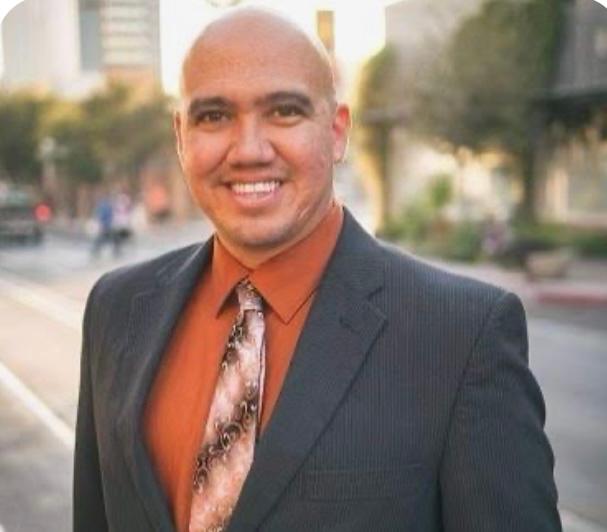
As Republicans look to the future, one candidate clearly stands out among those seeking to replace her: Sergio Arellano.
Sergio was born and raised in Tucson and joined the U.S. Army at just 17 years old, serving for more than a decade. His resume reflects a lifetime of service and leadership, including roles as a business owner, State Director of the Arizona Wounded Warrior Program, CEO of Tipping Point LLC, and State Director for the Republican National Committee. For decades, Sergio has been a true soldier for the Republican Party.
With the critical 2026 elections right around the corner, Arizona Republicans need a strong, steady leader who puts people first. Job one must be uniting the party. While there are many factions today, we are all Republicans—and we are all Americans. Sergio Arellano has the experience, temperament, and credibility to bring us together and position our party for major statewide wins this year.
On January 24, I encourage you to vote for unity, strength, and success.
Vote for Sergio Arellano for Arizona Republican Party Chair.
| | | | |
A Step Back—from the Push for Hand-Counted Elections
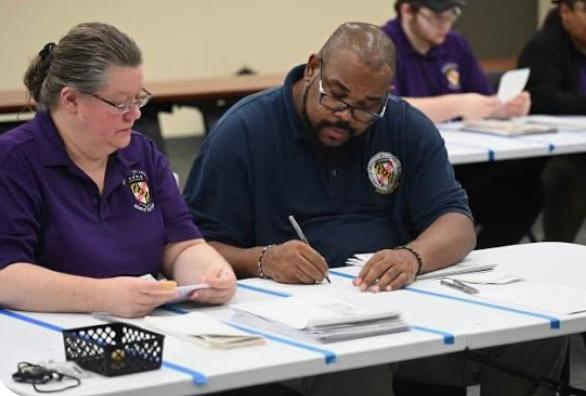
Maricopa County Republicans are at the forefront of a growing national conversation about election integrity, particularly the push to return to hand-counted ballots and precinct-based voting. While many grassroots activists continue to champion this approach as the gold standard for transparency, recent developments in Texas highlight just how difficult large-scale hand counting can be in practice.
Last year, the Dallas County Republican Party, under the leadership of Allen West, announced plans to hand-count ballots for the March 3, 2026 Republican primary. The proposal was ambitious: voters would cast ballots at assigned precincts rather than using countywide vote centers, and thousands of ballots would be manually tallied on Election Night. For many election integrity advocates, this represented the best real-world opportunity to test hand counting on a large scale in a major American county.
That experiment, however, has now been abandoned. Dallas County Republicans announced they will instead contract with the county elections department to use machine tabulation. West explained that while the party still supports a precinct-based, community-focused election process, the legal and logistical risks associated with hand counting were simply too great. “In this case, discretion is the better part of valor,” he said, pointing to staffing shortages and potential reporting delays as decisive factors.
The challenges were substantial. Although the party recruited more than 1,000 volunteers and raised over $400,000, officials estimated that at least 3,000 trained workers would be required to complete a lawful and timely hand count. With Texas law requiring results to be reported within 24 hours—and high-profile races like the U.S. Senate primary on the ballot—any delay could have triggered court intervention. West acknowledged that failing to meet staffing requirements would have placed election judges in an untenable legal position.
Timing also worked against the effort. With early voting set to begin on February 16 and just 63 days remaining before the primary, unresolved questions around training, security, facilities, and funding became impossible to ignore. Texas law further complicates matters by requiring both parties to revert to precinct-based voting if even one party opts for hand counting, eliminating the convenience of vote centers. That ripple effect raised concerns not only for Republicans, but for election administrators countywide.
Election experts have long warned that large-scale hand counts are expensive, time-consuming, and prone to human error—especially without mandatory audits or robust public oversight. Counting must continue uninterrupted after polls close, often stretching late into the night, and workers must be paid at least $12 per hour. The Texas Secretary of State’s office has also signaled that funding is limited when jurisdictions pursue more labor-intensive election methods.
This moment matters for Maricopa County. While activists here continue to advocate for hand counting and precinct voting, the Dallas County experience underscores a hard truth: this approach requires an extraordinary level of sustained volunteer commitment. In my view, that commitment simply does not exist at scale. Today’s voters—Republicans included—have grown accustomed to ballots on demand, vote centers, and less labor-intensive tabulation systems. Convenience often outweighs principle when it comes time to show up, volunteer, and stay through the long hours required to hand-count ballots.
Dallas County's reversal may have been the best chance to test hand counting on a large scale. Its failure does not end the debate - but it does force an honest reckoning. If Republicans truly want to move away from machine tabulation, the qustion is no longer philosophical. It is practical: are enouogh voters willing to do the hard, unglamorous work to see it through? In Maricoopa County, that is the challenge now squarely before us.
| | | | |
Something Has to Give at 163rd Avenue, US 60, and Loop 303
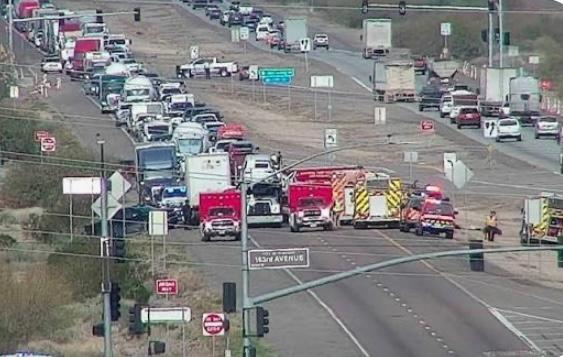
Something has to give. In the past three months, I have been involved in two accidents in the area of 163rd Avenue, US 60 (Grand Avenue), and Loop 303—neither of which I caused. Sadly, my experience is no longer unusual. There are now daily accidents in this corridor, and the situation continues to deteriorate.
On social media, opinions vary. Some blame inattentive driving or speeding. Others point to a lack of police presence. While those factors may contribute, I believe the real issue is far more fundamental: too many cars forced into a space with inadequate infrastructure.
The City of Surprise has done what it can. The City’s responsibility in this area extends primarily to 163rd Avenue, and city leaders have taken that responsibility seriously. This location is uniquely complicated because multiple jurisdictions converge within a very small geographic area. Responsibility is shared among city, state, and federal governments—and yes, there’s another critical stakeholder that does not always play well with others: BNSF Railway.
Years ago, when Loop 303 was constructed, BNSF did not cooperate with the State of Arizona, forcing the state to alter its plans. Planning and coordinating a major transportation project with this many stakeholders is understandably complex and time-consuming. But time is up.
Residents have been sounding the alarm for years about rapid growth without corresponding infrastructure improvements. One person who has consistently listened and acted is Surprise City Councilman Nick Haney. He has been responsive, transparent, and diligent about keeping the public informed while pushing other entities to understand just how serious the needs are in this corridor.
This area is among the fastest-growing parts of Maricopa County. The danger here affects nearly everyone in Surprise—even those who don’t drive through this intersection daily. Insurance rates are based on risk, and the risk of accidents in Surprise is now higher than in many other parts of the county. Simply living here can mean higher car insurance premiums, whether you like it or not.
What’s most alarming is the timeline. Major improvements are currently scheduled to begin in 2028. By then, thousands of new homes will be completed, adding thousands more vehicles to already overburdened roads. Waiting until 2028 is not just unrealistic—it’s unsafe.
We need action now, not years from now. Our state legislators, U.S. Senators, and Members of Congress must hear clearly that the current timetable is unacceptable. Lives are at stake.
I encourage every resident to speak up—call, write, and make your voice heard. The easiest first step is to sign the petition and share it with others who care about safety in our community.
Safety must be our top priority.
| | | | |
|
2026 Legislative Session
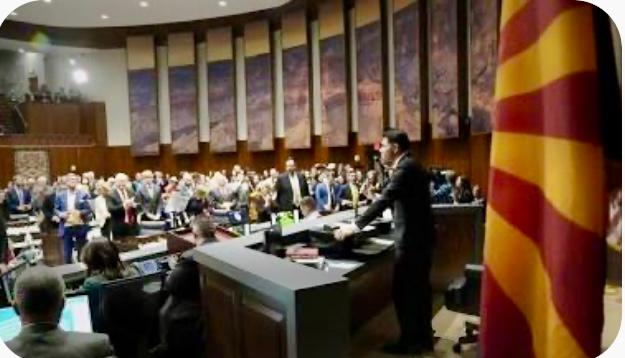
The Arizona State Legislature convenes on January 12, 2026, and all signs point to another long, difficult, and highly consequential session.
Arizona’s state government remains deeply gridlocked. Republicans control both the House and the Senate, while the Governor’s Office is held by Katie Hobbs, a Democrat. That divided government defined the last session—and there is little reason to believe this year will be any different.
Last year, lawmakers passed 439 bills and sent them to the governor’s desk. Only 256 were signed into law, with the rest either vetoed or left to die. Many of those vetoed bills enjoyed broad public support, yet they were rejected anyway. As a result, the Legislature increasingly turned to the only remaining option available: sending measures directly to voters.
This November, three ballot measures are already set, with at least two more under consideration. Like it or not, the ballot box has become the primary avenue for progress in Arizona because the governor refuses to sign legislation supported by a majority of citizens. That is not how the system is supposed to work—but it is the reality we are living with.
As the new session begins, many bills are already in the hopper, and that number will only grow. Session is technically limited to 100 days, but last year lawmakers worked well beyond that, meeting through June 27th. What was originally intended to be a short, focused legislative session turned into a months-long marathon, and 2026 is shaping up to be much the same.
Among the key issues expected to dominate this session are:
- Immigration
- Election integrity
- Education
These are topics voters consistently say matter most. Unfortunately, experience tells us that even if the Legislature passes meaningful reforms in these areas, they will likely be met with blanket vetoes from the governor.
Despite that frustration, it is critical that we support our legislators whenever we can—even when we don’t always agree with them or feel they support us. Serving in the Arizona Legislature is meant to be a part-time job, with very modest pay, yet the demands are anything but part-time. Lawmakers endure constant media attacks, intense public pressure, and endless hours away from their families, only to watch their work repeatedly undermined.
It has to be demoralizing to work tirelessly for your constituents, pass legislation through both chambers, and then have the governor kick the chair out from under you with the stroke of a pen.
The 2026 session will test patience, endurance, and resolve. It will be loud, contentious, and likely long. But it wll also matter - because when the system stalls, perseverance is the only way forward.
| | | | |
Mask Mandates Are Back—Right on Schedule for an Election Year
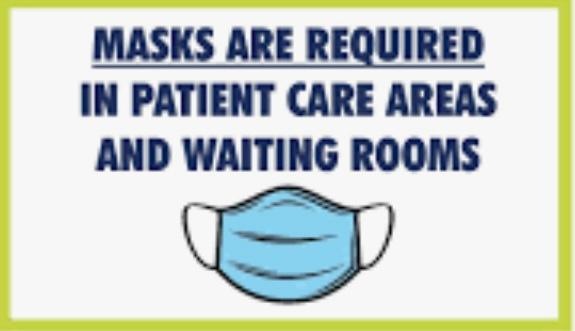
It’s 2026, an election year, so you know what that means: fear, control, and recycled talking points are back in fashion. Just when many of us thought it was finally safe to show our faces again, Banner Health rolled out a new mask mandate to ring in the New Year.
Banner justifies this decision by claiming flu cases in Maricopa County have “jumped 35%.” That sounds alarming—until you realize they never tell us the baseline number or the current total. A 35% increase from what to what? Without real context, that statistic is fuzzy math at best. And let’s state the obvious: it’s flu season. People get the flu in winter. That’s not a crisis—that’s biology.
You can easily find articles supporting masks and just as many questioning their effectiveness, especially in general, non-acute settings. What can be agreed on is this: re-using masks is unhealthy, and that’s exactly what the public does. Hanging them on rearview mirrors, stuffing them into pockets or purses, wearing the same one for days—it’s unsanitary and counterproductive.
During COVID, I did my best to avoid wearing a mask. Not because I’m reckless but because I do not believe they work. But also because I’m claustrophobic and asthmatic. Masks make it hard for me to breathe, which triggers panic attacks—and that’s not good for anyone’s health. Experiences like mine are not rare, yet they’re routinely dismissed. This is why I believe mask-wearing should be a choice, not a mandate.
I also believe in basic decency. I never assume anything about someone who chooses to wear a mask. They may be immunocompromised or caring for someone who is. That’s their decision, and I respect it. What I don’t respect is being forced to comply with a policy that has already been exposed as unscientific. The six-foot rule, masks for the general public, “15 days to slow the spread”—even public health officials later admitted these were not evidence-based policies. So forgive me if I don’t suddenly put my faith in a revived mask mandate.
I recently saw a post from someone opposing the mandate that perfectly summed up how many people feel:
“I’ll put on sunscreen so you don’t get sunburned.”
Exactly.
So what should you do if you have an appointment at Banner in the coming months? Realistacally, you will probable be requites to wear a mask to be seen. That's the unfortunate reality. As for me I will be making my displeasure kmown - politely but firmly - by leaving reviews for any doctor's office that requires me to comply for this kind of policy.
It you do choose - or are forced - to wear a mask, please do not reuse it. At the very least, protect your own health. We've been through this before, and mamy of us are done pretending that recycled fear equals sound science.
| | | | |
|
Thank You for Your Service - Some Lost All
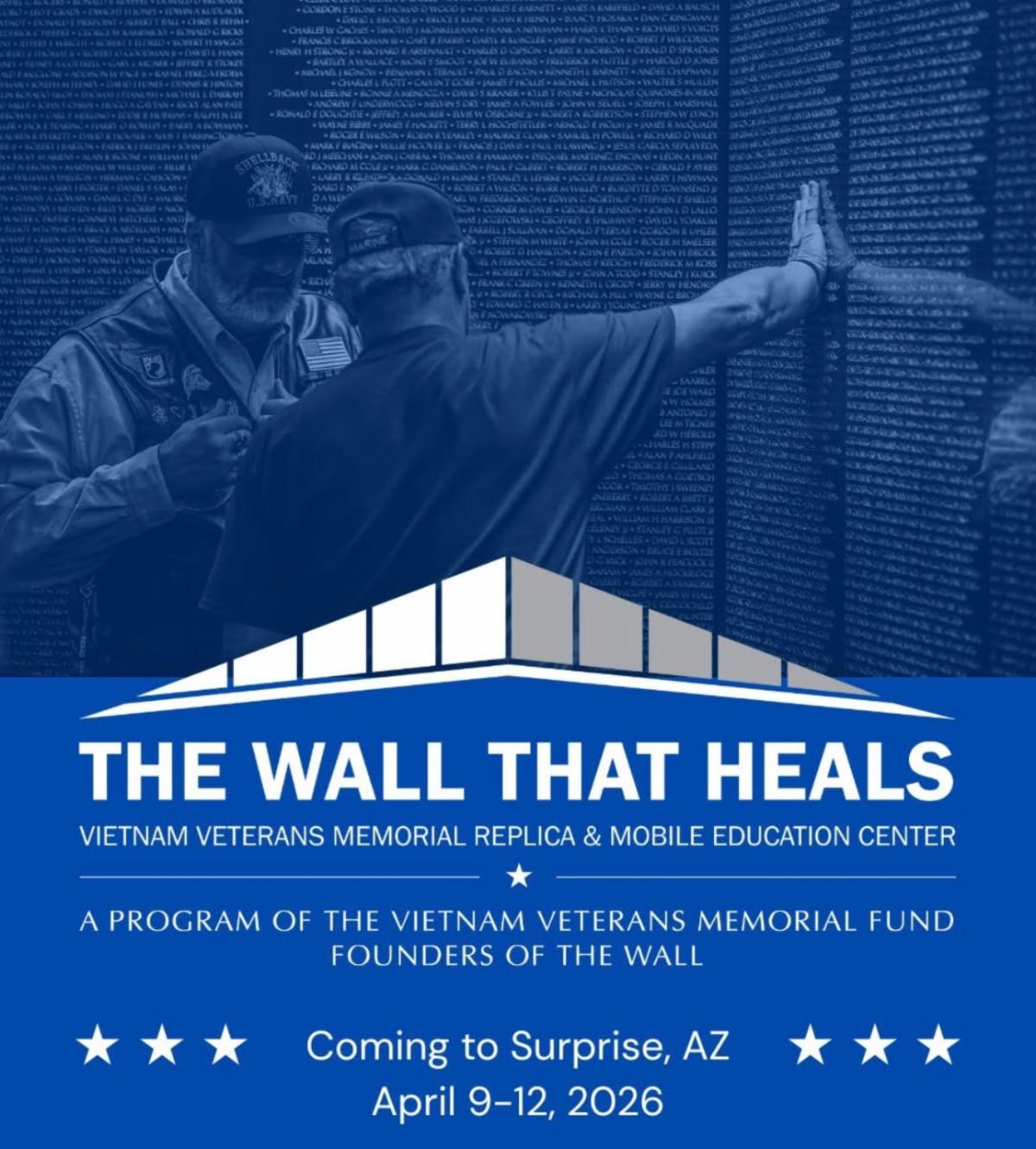
The The Wall That Heals—a three-quarter-scale replica of the Vietnam Veterans Memorial—will be on display at Mark Coronado Park in the Surprise from April 9–12. Open 24 hours a day and free to the public, the exhibit honors the more than three million Americans who served in the Vietnam War and bears the names of the 58,281 men and women who gave their lives. City leaders, including Kevin Sartor, emphasized the exhibit’s role in remembrance, connection, and healing for veterans, families, and the broader community.
Operated by the Vietnam Veterans Memorial Fund, The Wall That Heals travels nationwide with a mobile Education Center housed in a 53-foot trailer. Visitors can walk the 375-foot Wall, make name rubbings, and explore exhibits featuring local service members, historical timelines, personal artifacts, and educational videos that place the war and its legacy in context. Since 1996, the exhibit has visited more than 800 communities in the U.S. and abroad, bringing education, reflection, and honor to those who served and sacrificed.
| | | | |
It’s Time to Rethink How We Vote in Arizona Primaries
It’s time for an honest conversation about how we approach primary elections in Arizona—because what we’re doing is not working.
Registered voters in Arizona are now fairly evenly divided among Republicans, Democrats, and Independents. That simple fact changes everything. In a state like ours, no Republican can win a statewide general election without independent voters. Period. Independents are no longer a swing group on the margins; they are the deciding bloc.
Yet when Republicans vote in primaries, we typically vote for the candidate we personally like the most or the one who best matches our ideological checklist. That feels good in the moment—but it ignores political reality. Maybe, just maybe, we should also be asking a different question:
Which Republican candidate can actually win the general election by pulling independent voters?
I already know some “grassroots” activists will bristle at that idea. So before you dismiss it, hear me out.
Do you want to stand firmly on principle only to lose in November? Because we’ve seen this movie before. Over and over again, the grassroots successfully turns out for their candidate in the primary—only to watch that candidate lose the general election when independent and moderate voters recoil from rhetoric or positions they view as extreme.
Let’s be blunt: independents control elections in Arizona.
We’ve watched Republicans walk away from the party—not because they suddenly became Democrats, but because they felt alienated by purity tests and ideological absolutism. They no longer want to be part of the extreme so they become Independents. Grassroots energy is important, but energy alone does not win statewide races. If it did, we wouldn’t be living under leaders like Katie Hobbs, Adrian Fontes, Kris Mayes, Ruben Gallego, and Mark Kelly.
That didn’t happen by accident. It happened because Republicans repeatedly nominated candidates who could not appeal beyond the base. Grassroots support is loud and passionate—but it is not large enough to win general elections on its own.
When you step into the voting booth or complete your maiil in ballot during the primary, I’m asking you to pause and think beyond personal preference or ideological signaling. Ask yourself:
- Who can independents support?
- Who sounds reasonable to the average Arizona voter?
- Who can win in November?
I know it’s fashionable to stand by a rigid Republican litmus test. But that mindset is exactly how Arizona became a purple state. Some will argue that my suggestion is the reason we’re purple. I disagree. When looking ot our top leadership, we are blue. We’ve tried the grassroots-only strategy for multiple election cycles—and we’ve lost.
At some point, continuing to do the same thing while expecting different results stops being principled and starts being self-defeating.
Maybe—just maybe—it’s time to try a different strategy. One that still values conservative principles, but also recognizes political reality. Because winning the argument doesn’t matter if we keep losing the election.
| | | | |
|
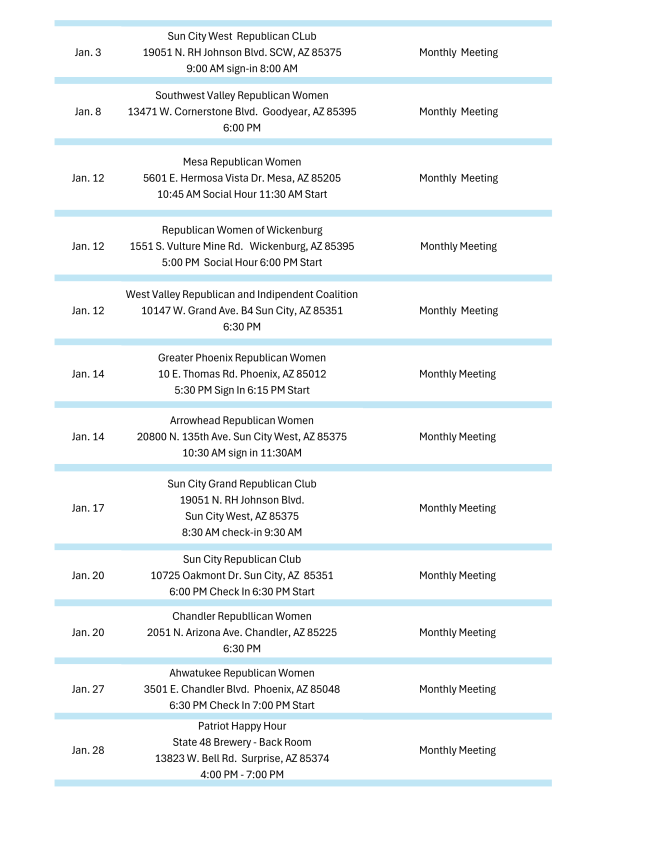
PATRIOT HAPPY HOUR WITH FELLOW REPUBLICANS!
Join Us for Another Great Evening!
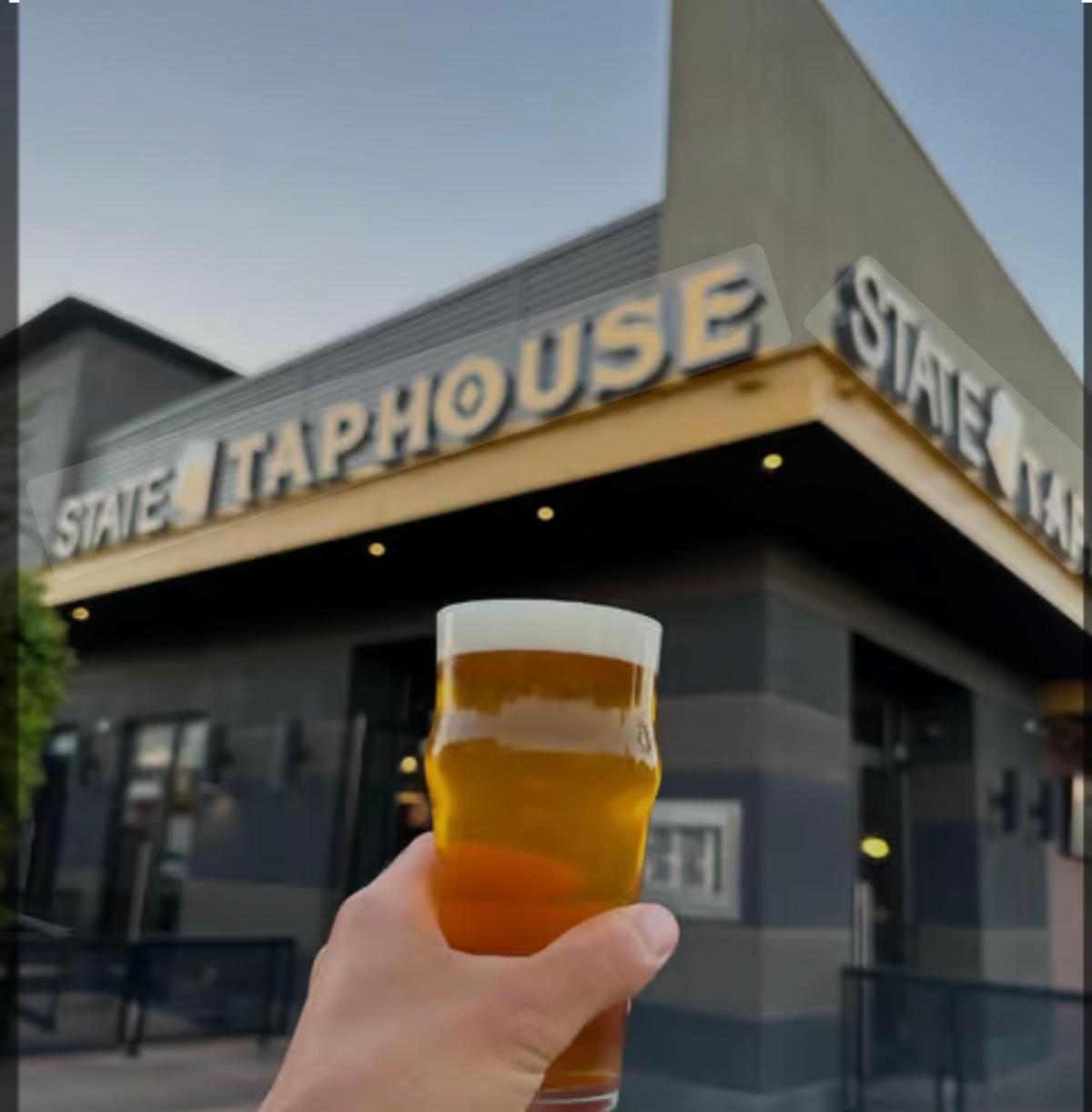
Due to overwhelming demand, we’re bringing back our Patriot Happy Hour at State 48 in Surprise! Last month’s gathering was a fantastic success, with great food, drinks, and, most importantly, meaningful conversations with fellow conservatives. Let’s do it again!
Where: State 48 Brewery - 13823 West Bell Road, Surprise, AZ 85374
When: Wednesday, January 28th
Time: 4:00 PM – 7:00 PM
This is the perfect opportunity to connect with like-minded individuals, get to know fellow PATRIOTS, and strengthen our local Republican community. Whether you're new to politics or simply want to make new friends everyone is welcome!
Bring a friend and join us for an evening of camaraderie, networking, and fun. Let’s keep the momentum going!
Patriot Happy Hour is always the last Wednesday of the month.
| | | | |
| |
| |
Thank you,
Lisa Everett
www.patriotnheels.com
Follow me on:
X - @patriotnheels
Facebook - @patriotnheels
Instagram - @patriotnheels
| | | | | | |