From Local Lingo to Global Phenomenon: Slang’s Big Moment | Paddi LeShane, Co-Founder & CEO | | | | |
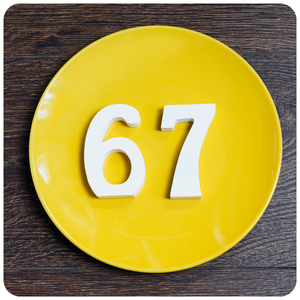
Back in August, my column discussed an intriguing uptick in teens using cryptic slang — most notably 6-7, a term loaded with shifting meanings depending on context, platform, and peer group and its impact on branding and messaging.
At the time, it felt like a curious cultural blip: playful, insider, and hyper-specific to youth culture, but impactful for brand managers. Fast-forward a few months, and the cultural tide has risen. According to a recent NPR update, 6-7 has now been officially named Word of the Year, cementing its improbable rise from ephemeral TikTok’s code to pop-culture headline.
| | |
So what does 6-7 mean? Who knows! It’s birth was showcased in a hot rapper from Philly Skrilla in the song, Doot Doot (6-7). Then it relay hit the gas pedal when a viral TikTok’s basketball highlights reel featured 6’7” Charlotte Hornets point guard – LaMelo Ball. The rest is history!!
6–7 often just means whatever the speaker or writer wants it to mean. Sometimes it’s distinctive for a certain group of people or used to confuse another group of people. Then how is it written can be different. “6-7”, “67” “6’7”, or sixseven. Merriam-Webster says it’s a “nonsensical expression used especially by teens and tweens.”
So what then? Slang today doesn’t simmer slowly in neighborhood hallways. It flashes, fueled by memes, global distribution platforms, and digital adoption velocity. What once took years can now go viral in hours. Gen Z — and increasingly Gen Alpha — treat language like software: constantly updated, patched, remixed, and retired. And while slang has always been a marker of belonging, the difference now is scale. A turn of phrase invented in one high school lunchroom shows up in São Paulo, Seoul, and Stockholm by tomorrow afternoon.
Brands, institutions, and communicators are watching closely. Slang is a cultural weather vane — signaling mood, humor, anxiety, rebellion, and sometimes just distraction. It reflects how young people see themselves and the world around them: coded, ironic, and adaptable.
The rise of 6-7 also underscores another trend: the gamification of meaning. The fun isn’t just in using the slang — it’s in knowing who gets it. For communicators, there’s a lesson: the audience’s urge for novelty and shared secret language remains powerful.
What began as an August footnote is now a global linguistic event. And if this cycle teaches us anything, it’s that the next 6-7 is already forming somewhere — in a comment thread, a group chat, or a whispered joke — waiting to take flight.
Stay tuned. The dictionary is updating itself in real time.
| | Meet the Media: Q&A with Joey Bourgoin, WTIC-AM Radio | | Dan Tapper, Senior Director | | |
Joey Bourgoin has been a mainstay at WTIC-AM, the largest and most influential talk radio station in central Connecticut, for more than two decades. He is currently the Executive Producer for “Brian & Company” (weekday mornings from 5:30-9 am) and WTIC-AM. He resides in Bristol with his wife and family.
What drew you to a career in radio production? Why does this job appeal to you?
Growing up I thought it seemed like a fun job. Listening to people in my community talk to some of their idols and be a lifeline to information and happenings in their own town. Now did I think I would end up on AM radio, not at all! I was young — and admittedly a bit naïve. But as I grew and got into the business, I came to appreciate the unique things we get to do in AM radio that you don’t often see anywhere else. We really dig in and inform people with stories and interesting tidbits to get their day going.
| | | |
The Morning Show at WTIC-AM has been sacred ground in Connecticut for nearly 90 years, with legendary hosts in Bob Steele (from 1936-1991), then Ray Dunaway (1992-2001) and now Brian Shactman (2021 to present). Obviously, this show means a lot to the people of Connecticut. How does that impact your role?
When I first started here with Ray Dunaway and Diane Smith in 2003, my aim for the morning show was to give people solid information, and a smile to start their day. It was and still remains that simple at its core. With the legacy of the station, and the morning show, I feel our listeners are very well informed and versed on many, if not all the topics we discuss. So when we’re choosing guests, whether it was back with Ray and Diane or now with Brian, the goal is to introduce listeners to voices and ideas they might not otherwise encounter, and still give them a trusted voice. Sparking civility in a conversation to discuss different views is and will always be the heart of the morning show on WTIC as long as I am here.
With “Brian & Company,” you and the team have enjoyed “taking the show on the road” to various remote locations, such as diners and more. What was the thinking behind that, and how has it gone?
That idea was truly Brian's. We have a weekly meeting to discuss ideas and the topics we should cover in the coming week. When Brian first came on the show after Ray retired, our goal was to get him out there more—meeting listeners and helping people get to know him as the new host. We started with the diner tour, and that was great – we did about 10 locations. The problem became evident quickly that there were not a lot of early morning places left, so we had to shift a bit. So he thought about a way we can go to towns and he came up with the “throw a Dart at a map of Connecticut,” and Matt Sirois said, “Darting Across CT.” The series has been great! We have done broadcasts from the front lawn of the Florence Griswold Museum to firehouse breakfasts to amazing restaurants and cozy cafes. We’ve covered 29 locations across the state so far—just 140 more to go.
One large area of community outreach for which WTIC-AM has become well-known – and you are instrumental in putting together every year – is the WTIC Holiday Store to benefit the Salvation Army. The annual toy drive has been beloved for years. Why is this so important? To both you and the station?
As for its importance to the station, this is what we do: supporting local community events. The Holiday Store started in a little storefront by Jack Mitchell as an idea and has grown to a month-long undertaking that we as a group have been honored and love doing every year. The stories I’ve heard and the people who return year after year are what make it special to me. From families who have participated in this charity event for years, to the little girl who started selling gingerbread houses to raise money every year, to listeners who heard us one year and decided it was finally their year to ask for help—and received it through the Salvation Army—these moments are what make it meaningful. Then they come back in and donate to the Holiday Store and pay it forward for the next person looking for help. As for the chaotic last day, it ages me, and the weeks leading up to it are stressful, but I wouldn’t miss it for the world!
Finally, for those of us in the public relations industry, what is your advice on “pitching” guests to be booked on the show? What works best for you, and is there anything that doesn’t work?
My advice to anyone in public relations: be honest and stay curious. If something is interesting to you or you have a client who is a "geek" about what they do, that is great. A fun guest on a boring topic will always trump a dry guest on an interesting topic in my mind. For me personally, do not be afraid to over-request guests. In my experience in public relations, the best people to work with are those who understand how we can work together effectively. The trust that can be built in this business is one of the coolest and underrated things about my job. Through curiosity and simply asking, I’ve been able to do things I never imagined. I ask questions of people I trust—and I hope I’ve hopefully earned their trust along the way.
| | Tips and Tricks: 86 the ABCs and X out the Zs - Make an impact with simple, active language | | Brian Flaherty, Executive Vice President | | | | |
Nearly four decades ago, I started my first job out of college as a press secretary in the state Senate, and my Dad—a college writing professor—gave me a small dictionary.
“Take this to Senator [Name Redacted’s] press conferences for the reporters. The guy uses too many big words, and half the time he gets them wrong.”
Dad’s point: Simple, active language is the strongest way to communicate.
| | |
At first, taking mild offense, Senator so-and-so explained to me that he used big words because he was trying to make an impact by showing he knew what he was talking about, to which I replied, “That’s great, but the people you’re trying to reach might not.”
And so, when I carried Dad’s dictionary to Senator so-and-so’s press conferences, he got the point and shed all the bureaucratic words that ended with “ize” like “synthesize” and “democratize,” and went with “build” and “free.”
Simple language works, although oversimplifying by relying on acronyms and abbreviations can be just as troublesome to communicating with impact.
Our clients come from all types of industries and associations, each of which carries their own jargon, acronyms, and abbreviations. As I type this, we just counseled one client to strip the alphabet soup of acronyms—most of which were known only to them—and say what those letters stood for, so that when they are quoted in the newspaper or featured in a radio or TV clip, they wouldn’t be reciting an unrecognizable litany of ABCs and XYZs.
You don’t need to demonstrate your knowledge of big words and indecipherable letters to get your point across. In fact, they hold you back.
After all, as once told to me by author and presidential speechwriter James Humes at a talk he gave on the language of leadership, Winston Churchill didn’t say, “Hostilities will be engaged with our adversaries on the coastal perimeter.” He rallied a nation and got the attention of President Franklin Roosevelt by saying, “We shall fight them on the beaches!”
Point made. Keep it simple!
| | Case In Point: Practicing What We Preach | | Randi Sussman, Public Relations Associate | | |
As a public relations firm, we know that building visibility and credibility isn’t just something we do for our clients—it’s something we must do for ourselves. By actively practicing what we preach, we reinforce our position as a leading PR firm in Connecticut.
That means showing up where it matters. We build relationships through statewide industry events and sponsor high-profile forums, such as the Hartford Business Journal’s inaugural Politics & Policy Forum on June 24. In partnership with Sullivan & LeShane, Inc.—our affiliated government relations firm—we contributed opening remarks and participated in a lively panel discussion about the 2025 legislative session and its impact on Connecticut businesses.
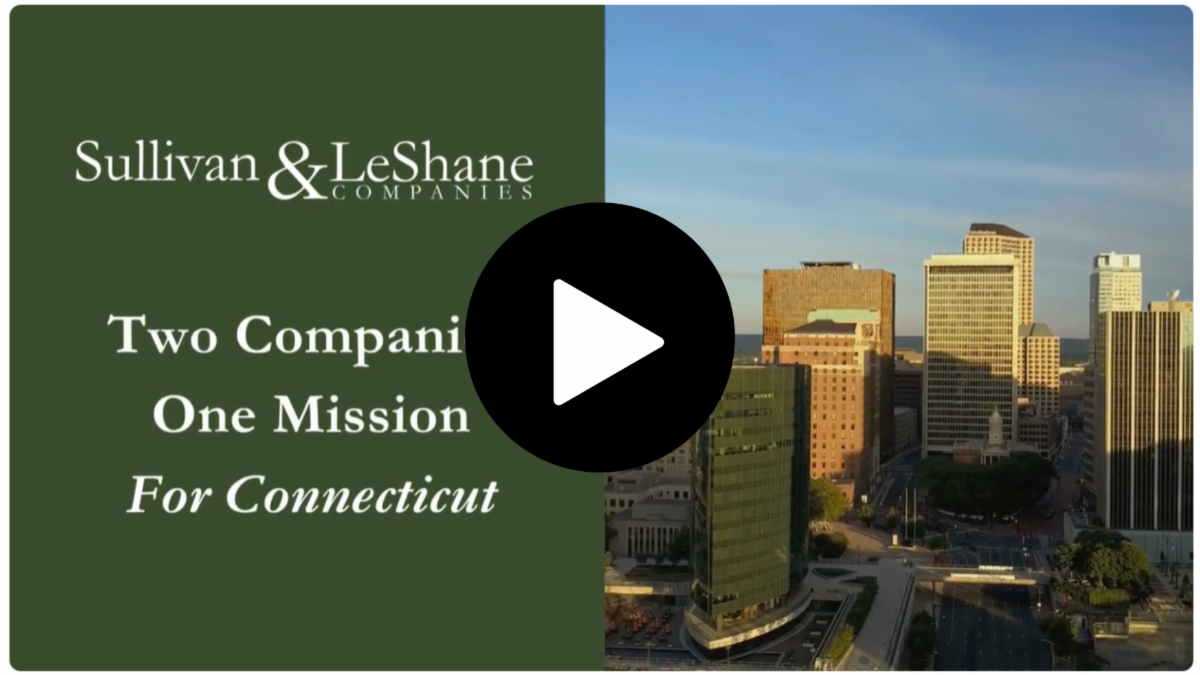
The sponsorship also gave us the opportunity to showcase our company through a 30-second video. At first, we weren’t planning to submit one, but at the last minute, we pulled together a piece that truly defines who we are and what we do, and submitted it in time for the event. The result was a strong reminder that promoting ourselves isn’t separate from the work we do—it’s proof that we can deliver the same visibility, creativity, and quick execution for clients that we apply to our own brand.
| | |
Sullivan & LeShane Public Relations, Inc. | (860) 560-0001 | www.ctpr.com | | | | | |