|
|
Defending wildlife and habitat through:
Advocacy
Conservation
Education
|
|
|
News & Updates: April 2022 |
|
In this issue:
- Matching Fund Doubles Donations to AOK until the end of April
- Remembering the Zempels
- Work Day at Achterberg on May 7
- Plenty to 'BOOM' about at Kansas Lek Treks Prairie-Chicken Festival
- Prairies need to be burned, but not too often
- Welcome new AOK Board members
- Chapter Highlight: Wichita Audubon's Chaplin Nature Center - a warbler hotspot in spring
- AOK Nature Walk Recommendations
|
|
|
Matching Funds Will Double Your Gift through April 30
|
|
Our Kansas wildlife and habitat face increasing threats: Kansas counties continue to poison Prairie Dogs against landowners' wishes, wind turbine siting goes on unregulated in Kansas, the numbers of grassland birds have dropped 53% since 1970, and alarming new data shows that Greater Prairie-Chickens have declined 30% in Kansas since 2015!
It is imperative that we steadfastly increase our efforts to protect the unique wildlife and habitat in Kansas and the Great Plains. We invite you to join us for Earth Day month - make a difference in the natural world that we all treasure.
Two donors have created an impressive matching fund for our members who would like for their giving to go further. Every contribution you make for the rest of April will be matched dollar for dollar by this fund. If you give $75, the fund will match your $75 for a total gift to AOK of $150; $500 becomes $1,000.
Will you join us with a contribution for Earth Day? The need has never been greater. The match lasts until April 30. Please act now.
|
|
We are shocked and saddened to hear about the deaths of John and Linda Vidosh Zempel, part of our AOK family. Board Member John and Linda, his wife of 42 years and Honorary Board Member, died March 21, 2022. John was a dedicated Audubon of Kansas board member for 10 years, a member of Jayhawk Audubon in the 1980s, and John and Linda were a cherished part of Topeka Audubon for more than a decade.
As we feel our sadness and go through this difficult and painful time, we wanted to share a bit of what the Zempels meant to our conservation community. They were active birders and contributed sightings and photographs of birds throughout their home county and the State of Kansas, documenting sightings with friends, new birders and on eBird. They loved discovering new birds and also were generous in helping others enjoy the gift of seeing birds. Recently - in November - they were living their love of birds by acting as expert guides during the Celebration of Cranes at Quivira National Wildlife Refuge.
Linda’s posts of their backyard birds were lively and her Facebook bird-debating banter with friends engaging. John loved photography of birds and other wildlife, had taken classes in night-sky photography, and also documented his latest culinary creations. After retirement, John served as a docent for the Topeka Zoo and was an Amateur Radio Operator. John and Linda tended their beloved property outside of Topeka, keeping friends up-to-date with the health of the pollinator habitat and the wildlife denizens of the property that they would encounter there.
On May 7, we will remember and share stories of John and Linda at the overlook at Achterberg Wildlife-Friendly Demonstration Farm at 9am. Donuts provided. The overlook is the place that Jackie Augustine, our current Executive Director, first met John and Linda. All are invited to attend. Directions to the sanctuary are below.
|
|
Roll up your sleeves!
Volunteer at our Work Day May 7, 10am-4pm
at Achterberg Wildlife-Friendly Demonstration Farm
|
|
We are having a work day at AOK's sanctuary, the Achterberg Wildlife-Friendly Demonstration Farm, on Saturday, May 7 from 10am-4pm. With the help of volunteers, we will be clearing a new 0.5 mile section of trail, and removing invasive elm that is taking over our prairie habitat buffers. Workers should bring work gloves, pruners, loppers, chainsaws and string trimmers if they have them. Lunch will be provided. Meet at the trailhead 0.5 miles north of the intersection of 170th Rd and Iron Dr., just south of the bridge. (More detailed directions below.)
This is a great opportunity to help wildlife and see the wonderful riparian woods and prairie buffer strips which support Connie Achterberg's favorite bird, Northern Bobwhite quail.
|
|
Directions to
Achterberg Wildlife-Friendly Demonstration Farm
|
|
Coordinates: 38.9873, -98.1887
The overlook is the northwest corner of the intersection between E Iron Dr and 170th Ave.
The trailhead is about a half mile north of this intersection on 170th Ave, just south of the bridge.
Directions from Lincoln, KS
Take KS-14 south from Lincoln, KS approximately 1.5 miles
Turn right (west) onto Kiowa. Proceed 2 miles.
Turn left (south) onto 170th Rd. Proceed 2 miles to the intersection of 170th and E Iron Dr.
Directions from I-70
Take KS-14 north from I-70. Continue about 9 miles. Follow the road as it curves east (right) and north (left).
Turn west (left) onto Hawk Dr. Continue 2 miles.
Turn north (right) onto 170th Ave. Continue 1 mile to the intersection of 170th and E Iron Dr.
Note: Iron Dr. does connect with KS-14. However this road is pretty rough and may not be passable after a heavy rain. Access to 170th from Hawk, Kiowa, or KS-18 is recommended.
|
|
Plenty to 'BOOM' about at Kansas Lek Treks Prairie-Chicken Festival |
|
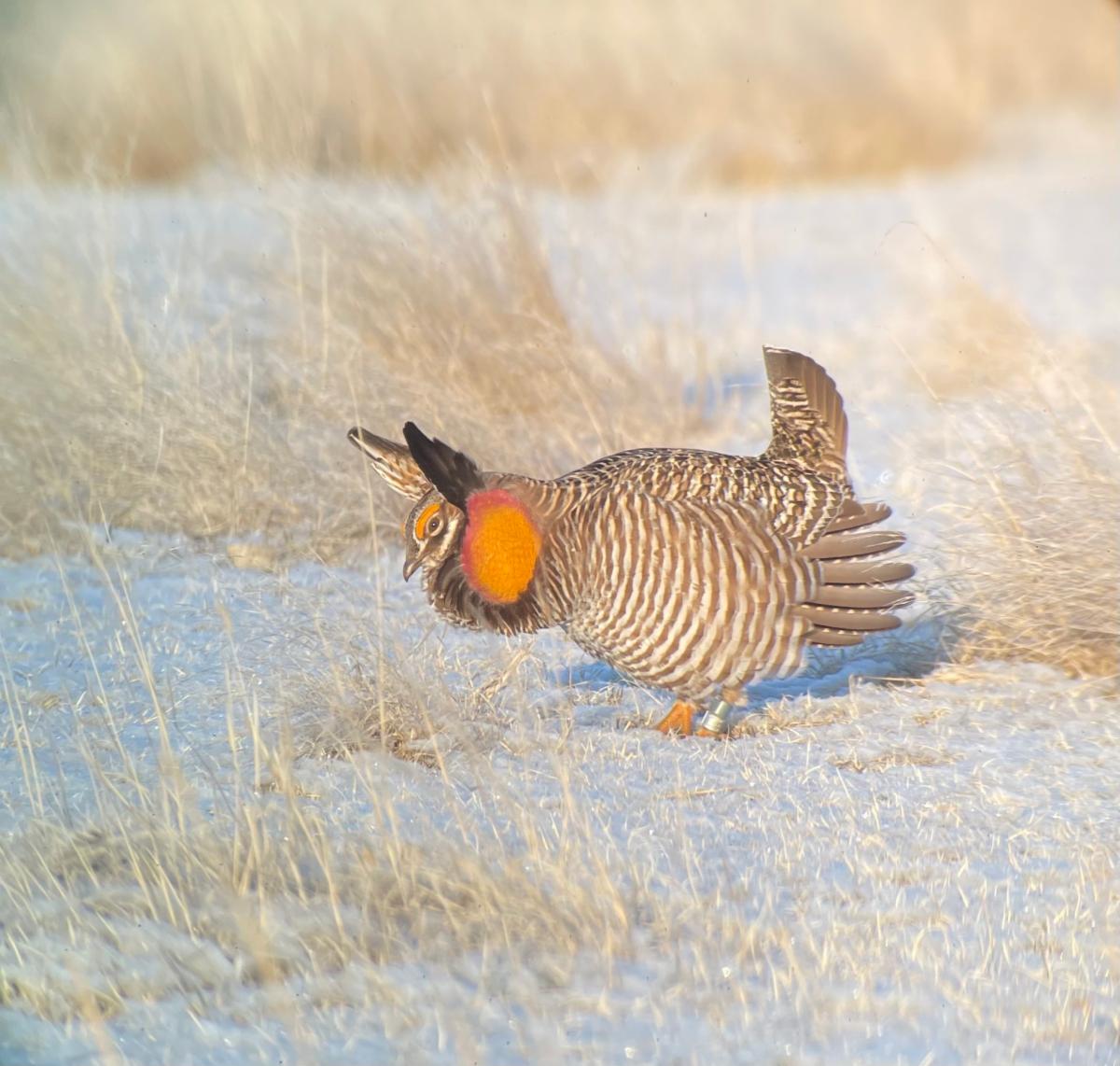
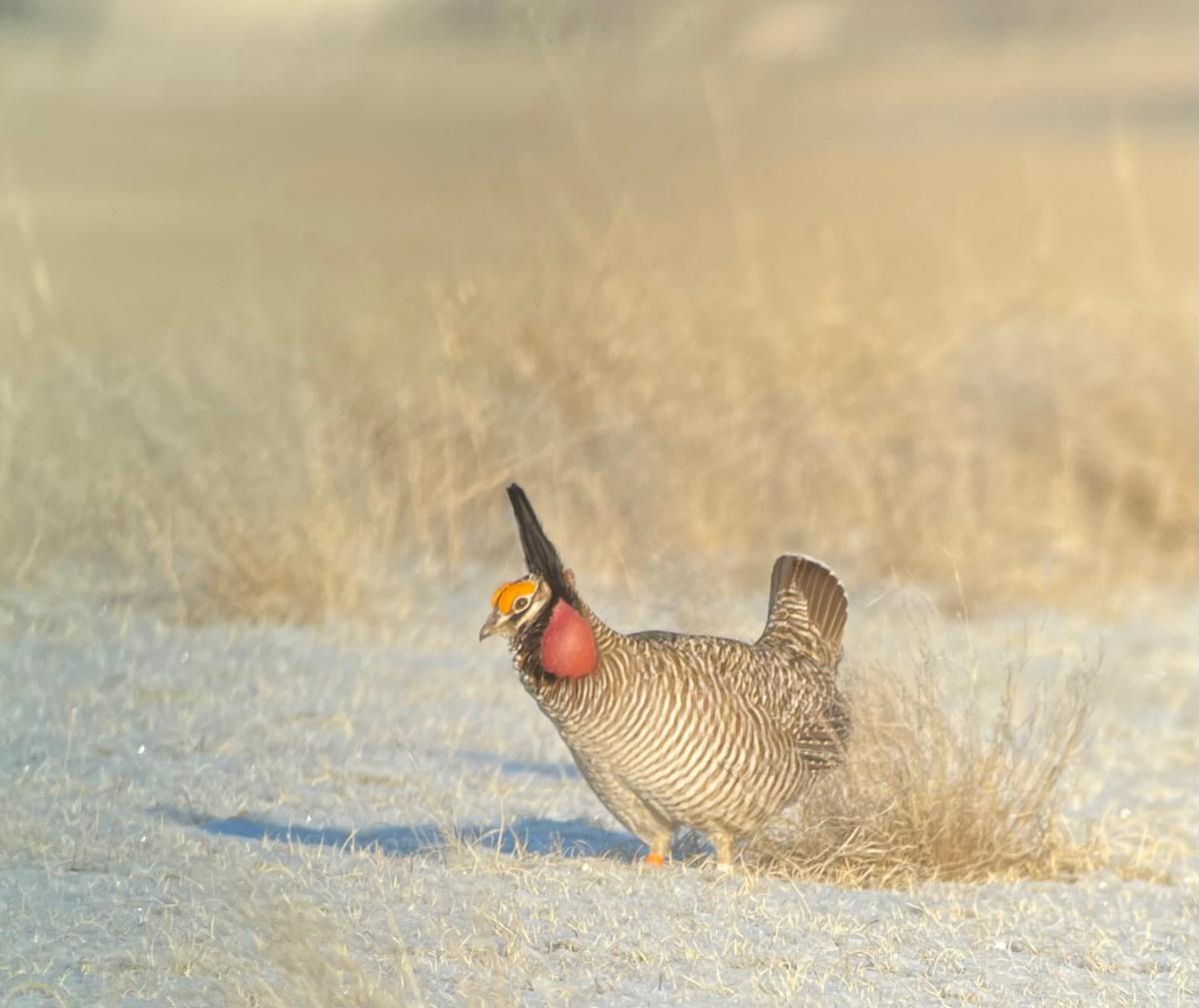
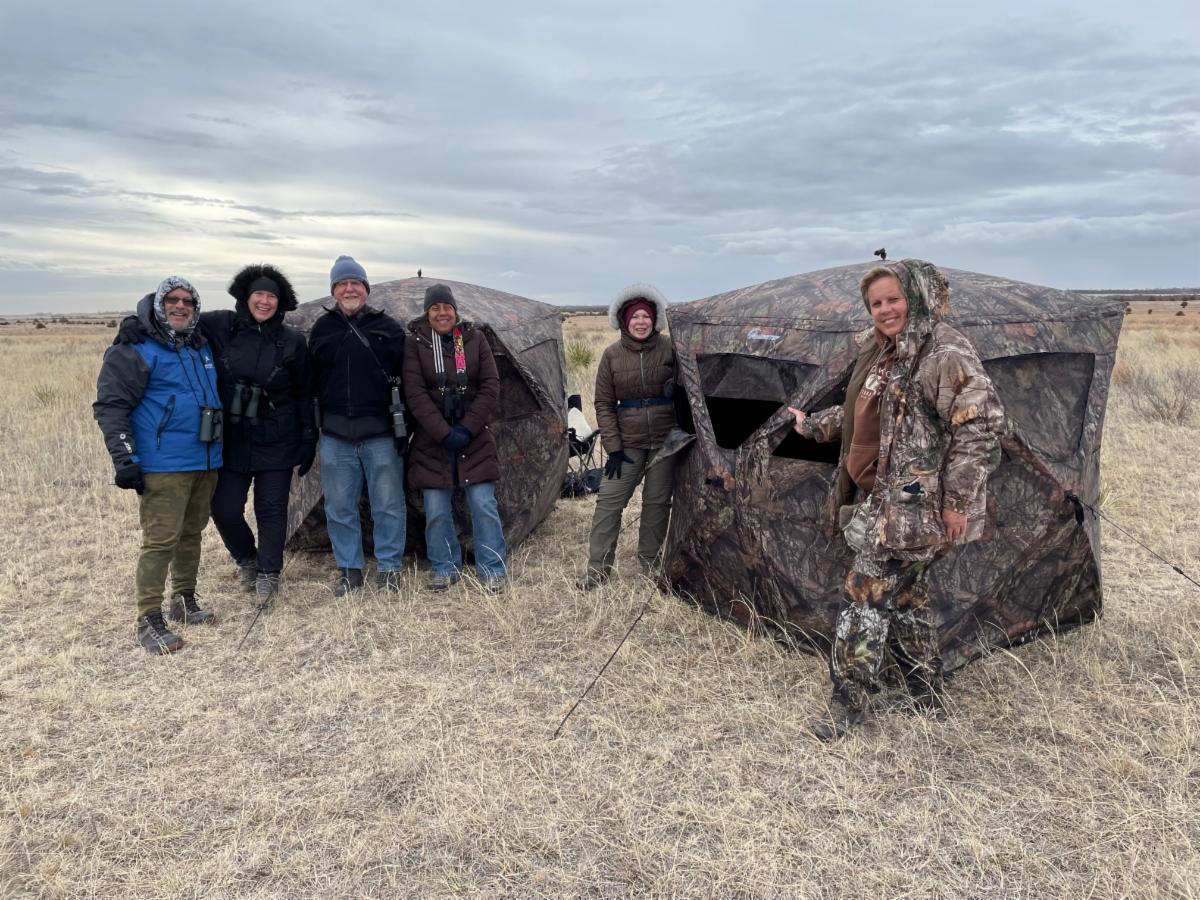
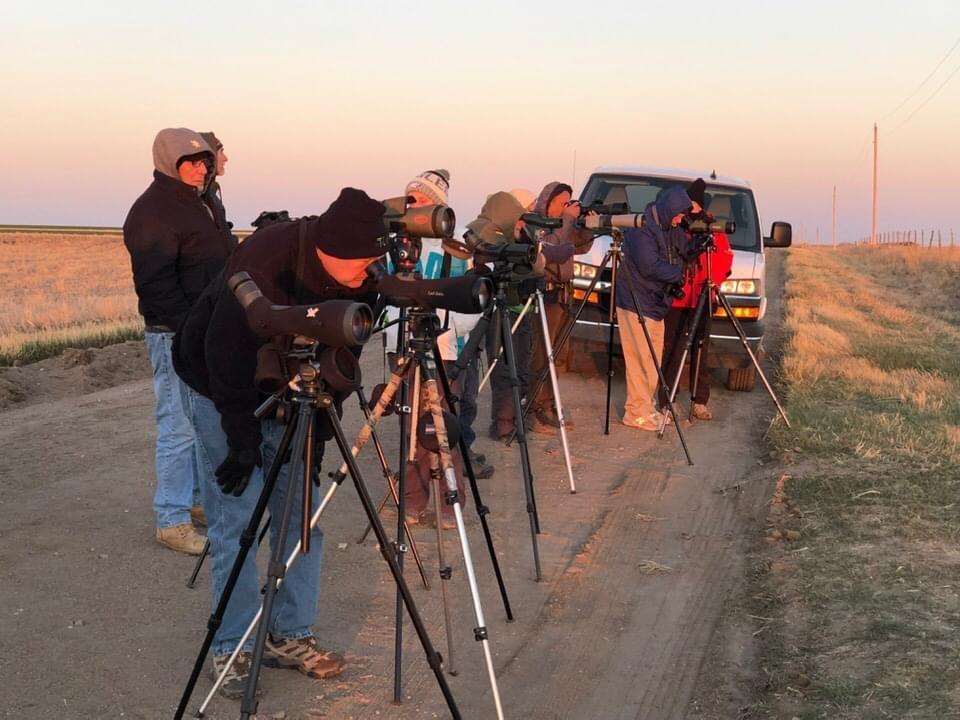
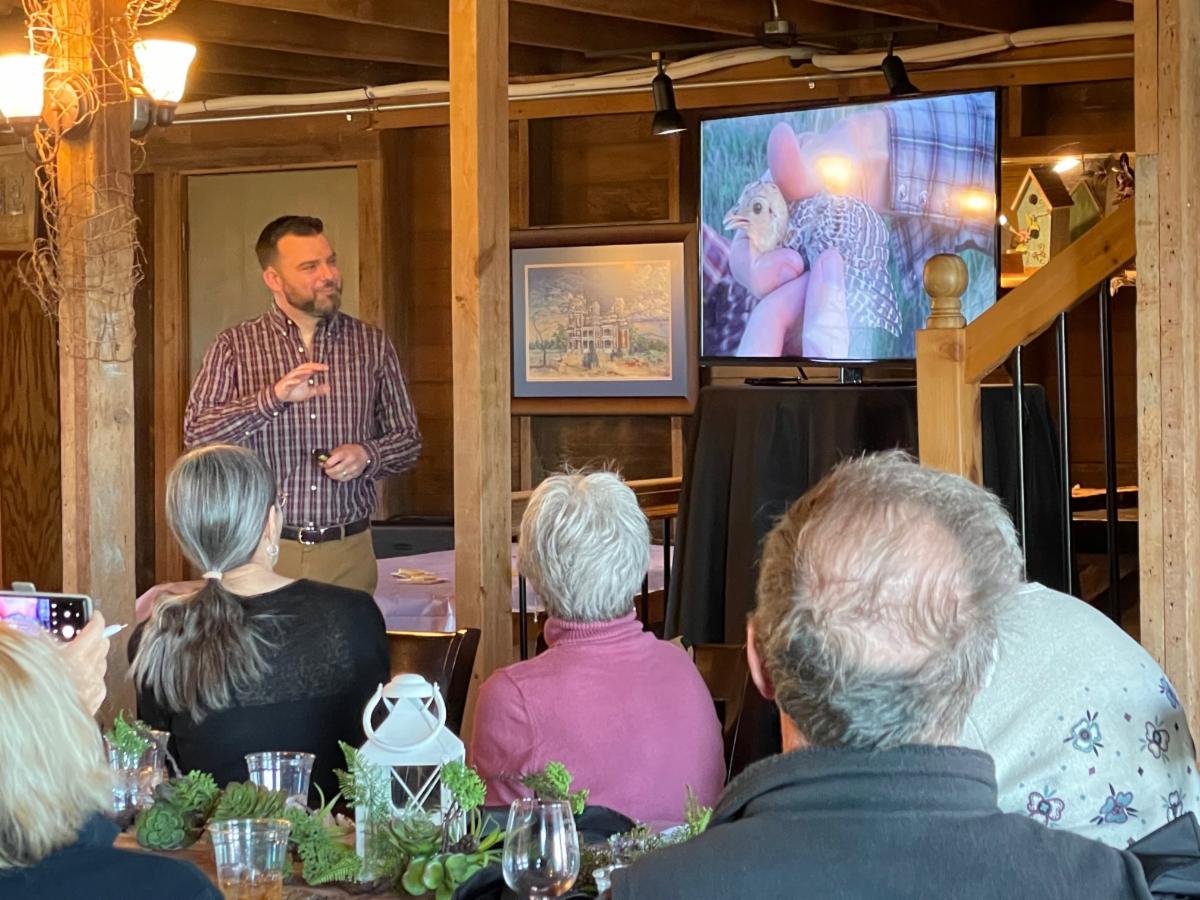
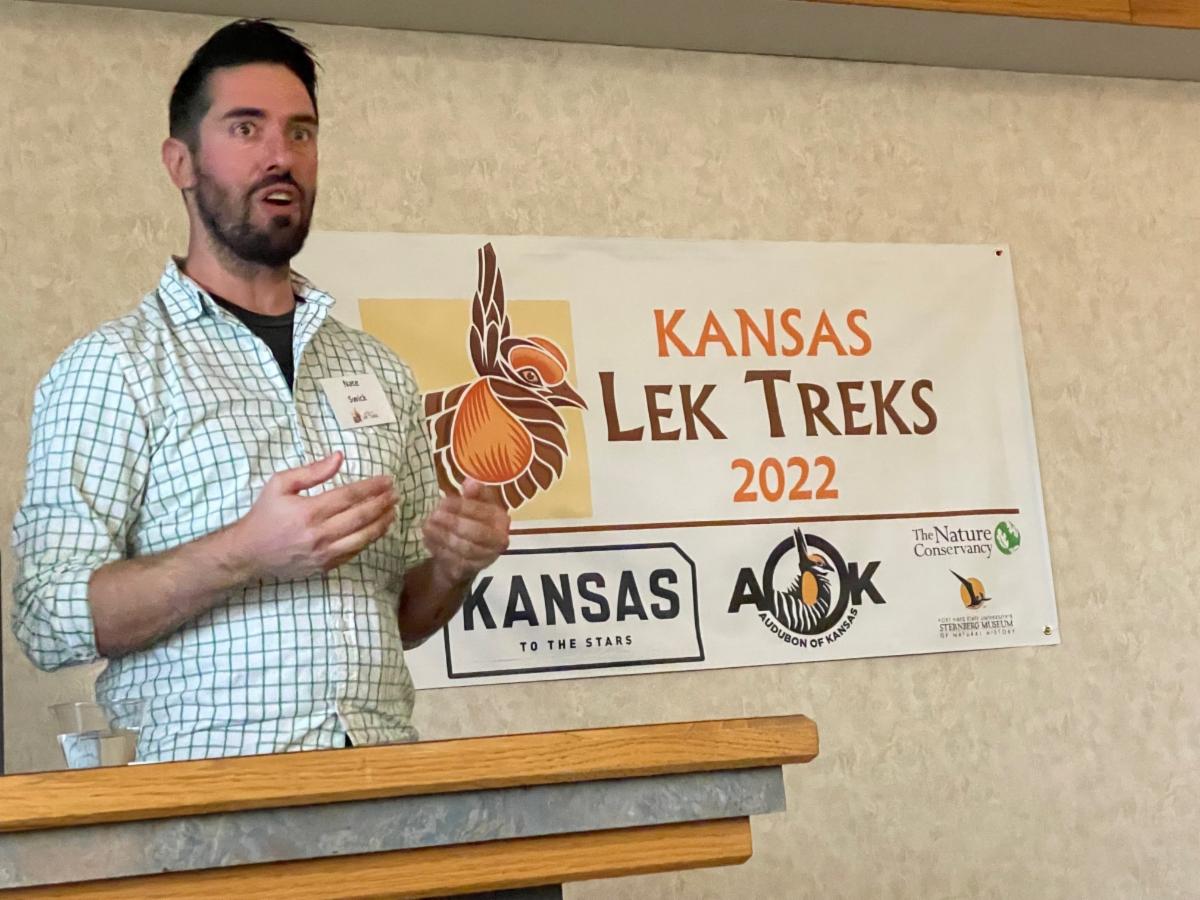
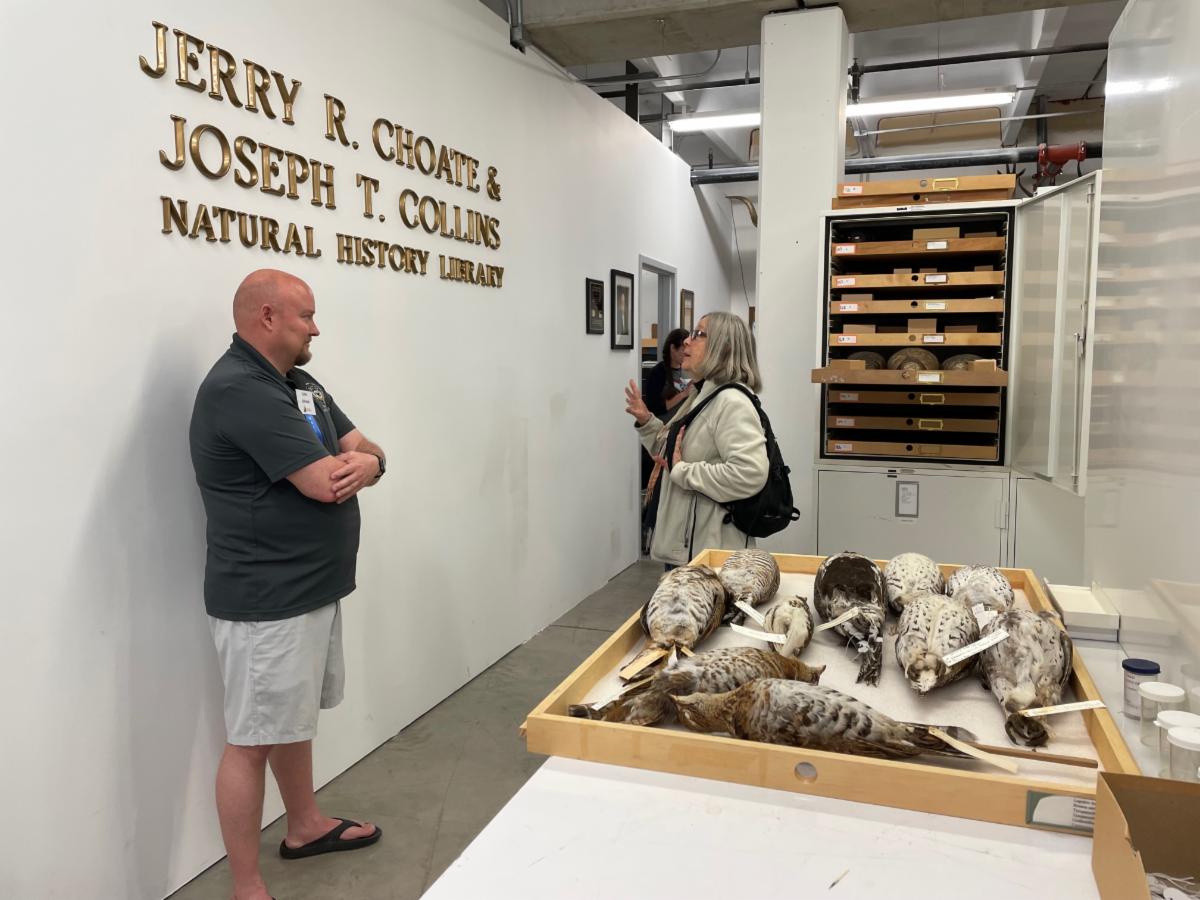
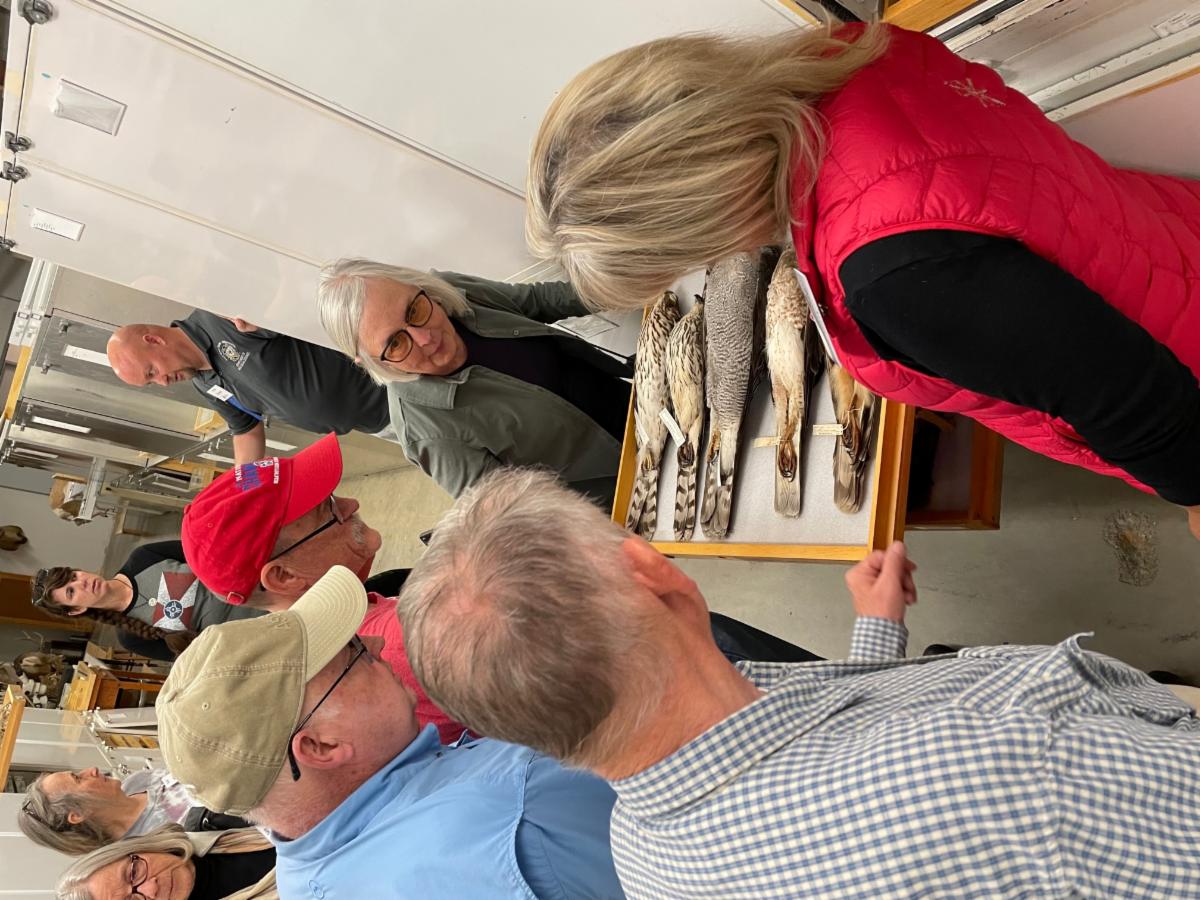
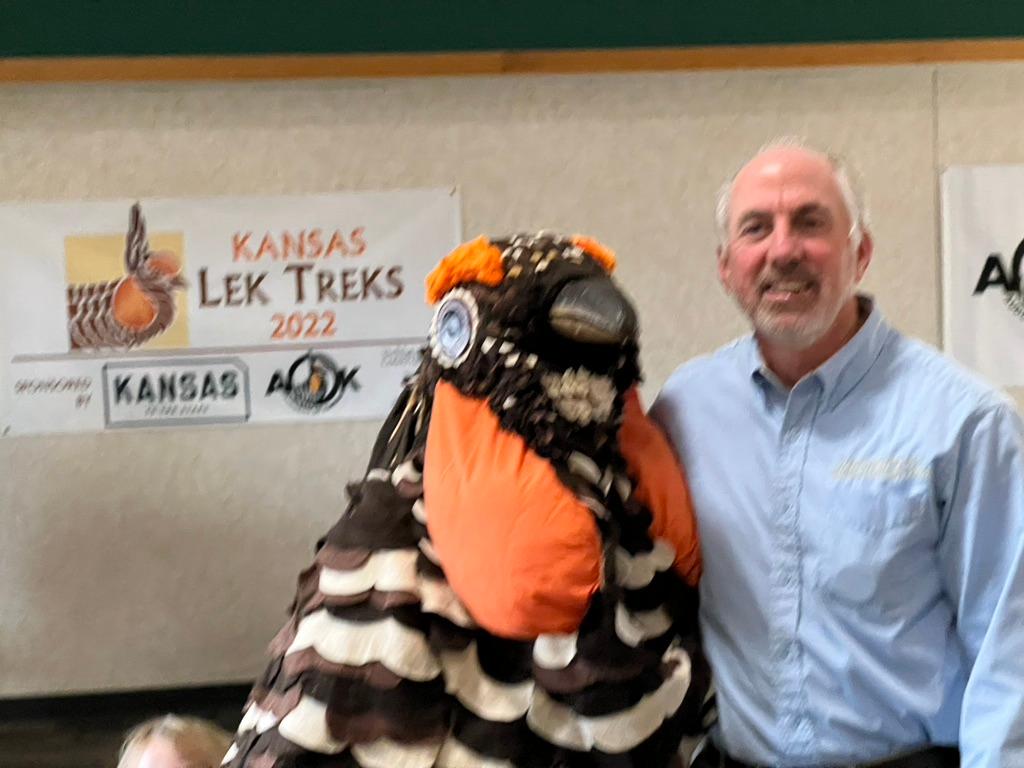
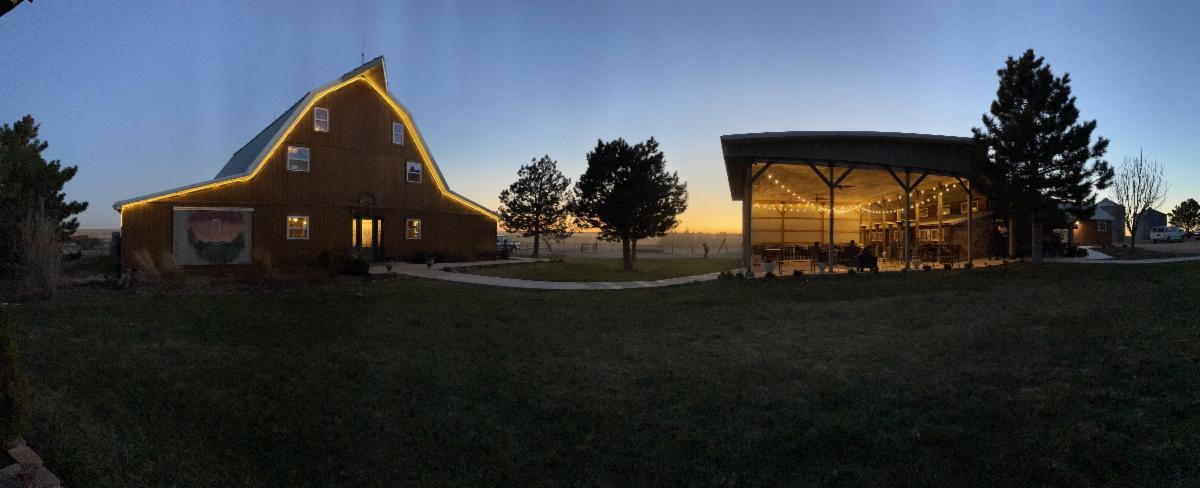
The prairie-chicken festival attracted over 100 participants and volunteers to Hays, KS, from April 7-10, 2022. The event was filled with field trips to Cheyenne Bottoms, Quivira National Wildlife Refuge, Smoky Valley Ranch, Castle Rock, Monument Rock, and other unique places in northwest Kansas. The highlight, of course, were the prairie-chickens who made an appearance despite stronger than normal winds. Social events included an opening reception, behind-the-scenes tours of Sternberg Museum, wine tasting at Shiloh Winery, and a banquet with presentations by Brad Loveless, the Secretary of Kansas Department of Wildlife and Parks, and Nate Swick, host of the American Birding Association's podcast.
Photos
Top: Greater (left) and Lesser (right) Prairie-Chicken
Above: Happy participants outside the blinds
Right column top to bottom:
Nate Swick talking at the banquet
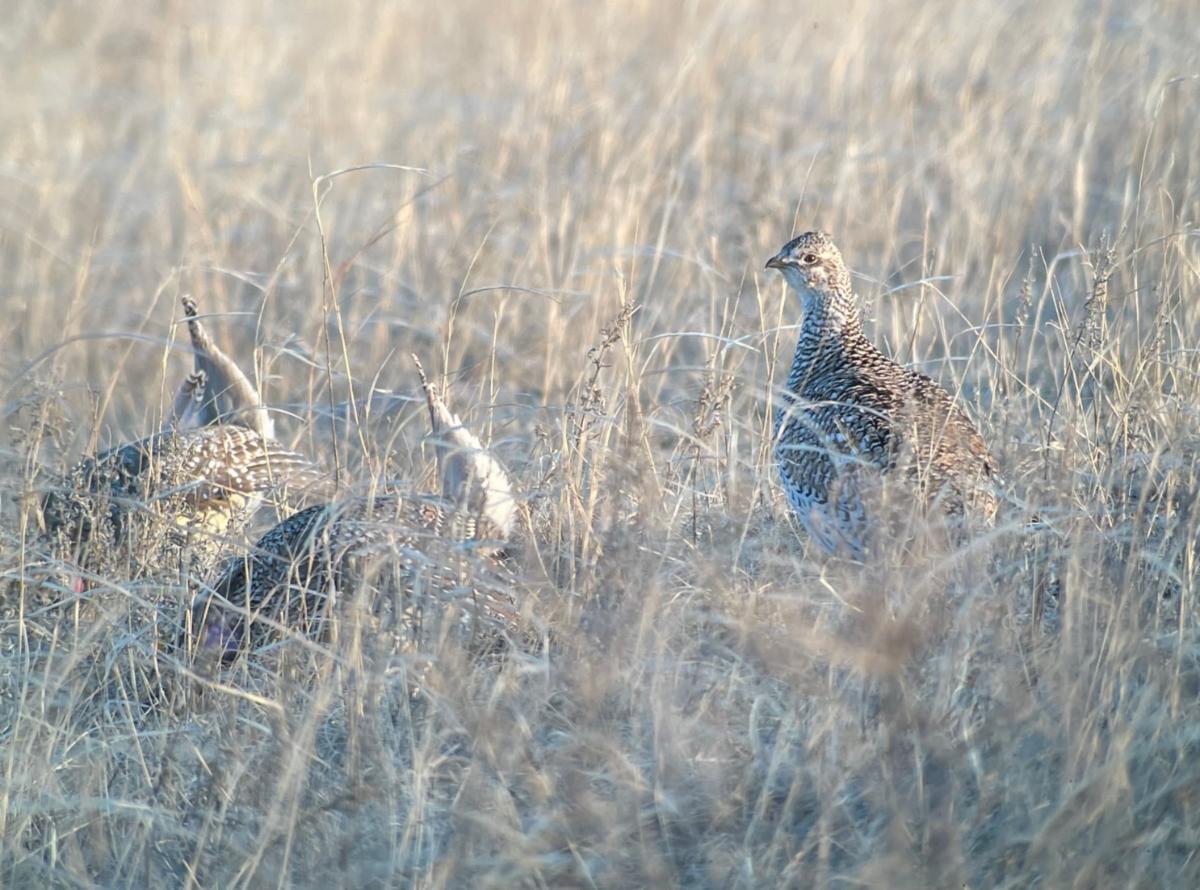
Sharp-tailed Grouse at Hutton Niobrara Sanctuary
Behind-the-Scenes tour of Sternberg Natural History Museum (2 photos)
'Boomer' posing next to Brad Loveless, Secretary of Kansas Department of Wildlife and Parks (KDWP)
Left column top to bottom:
Participants in the van tour looking at prairie-chickens through telescopes
Participants in a blind photographing prairie-chickens
Kent Fricke, KDWP Small Game Coordinator, talking during the dinner at the winery
Below: Dusk at Shiloh Winery in WaKeeney
|
|
|
Prairies need to be burned...
but not too often
|
|
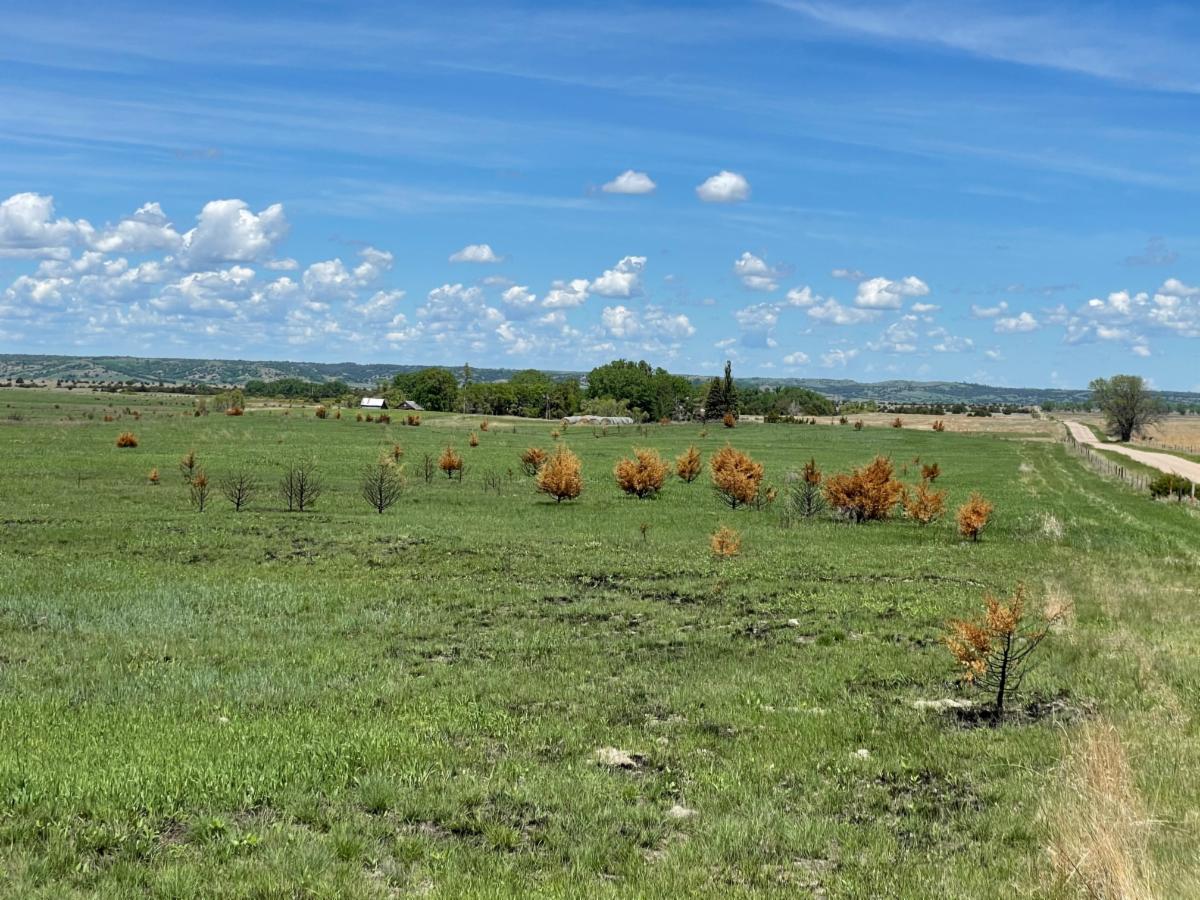
Before European settlement, prairies burned regularly. They were sparked by lightning and initiated by Native Americans to concentrate bison, among other reasons. Bison love grazing on the fresh regrowth following a burn. The combination of fire and grazing maintained the high diversity of grasses and wildflowers typical of native prairie. However, humans are either burning prairies too much or too little. On a recent trip between Topeka and Wichita, I drove the toll road through much of the Flint Hills. For miles, the prairie had been burned on both sides of the road. This leaves little habitat for species that need tall, thick grass like Henslow's sparrows. If burning is too infrequent, eastern red cedar spreads throughout the grassland. Its shade prevents grasses and wildflowers from growing. Eventually, the cedars take over the whole area leaving a monoculture where hundreds of native grasses and wildflowers once flourished. You can see too many cedars in much of Kansas east and north of the Flint Hills, and in the Sandhills of Nebraska.
The optimal frequency of burning varies by location depending on soils and precipitation. In the Flint Hills, burning every 2-4 years is necessary to remove cedars. At AOK's Hutton Niobrara Ranch Wildlife Sanctuary, the poor, sandy soils make it harder for the cedars to grow, so burning can occur less frequently - once every 6-7 years.
|
|
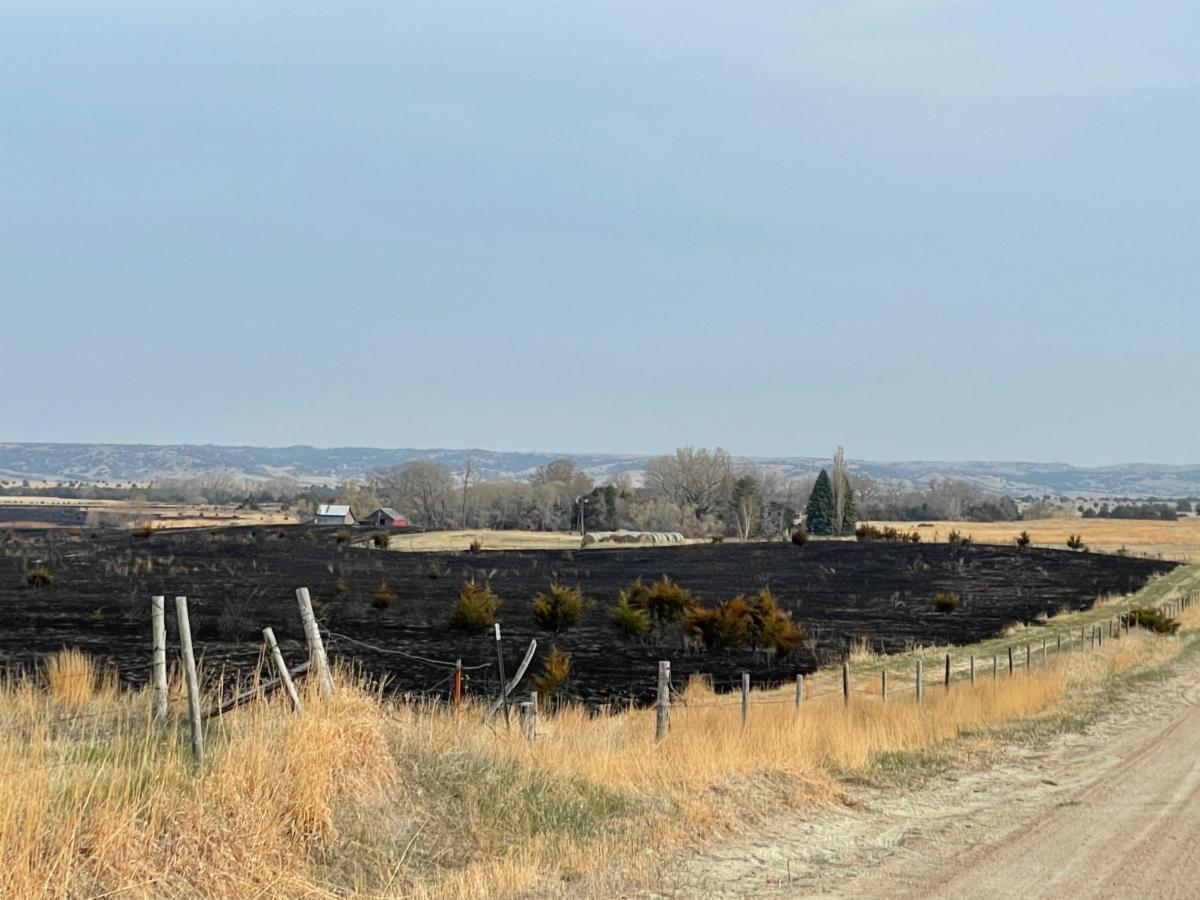
The upper photo shows a pasture at Hutton immediately following a burn.
The second photo shows the same area one month after the first photo. You can see black, burned skeletons of cedars as well as orangish cedars; both of these indicate dead cedars.
|
|
|
AOK Welcomes New Board Members |
|
Vanessa Avara
Manhattan
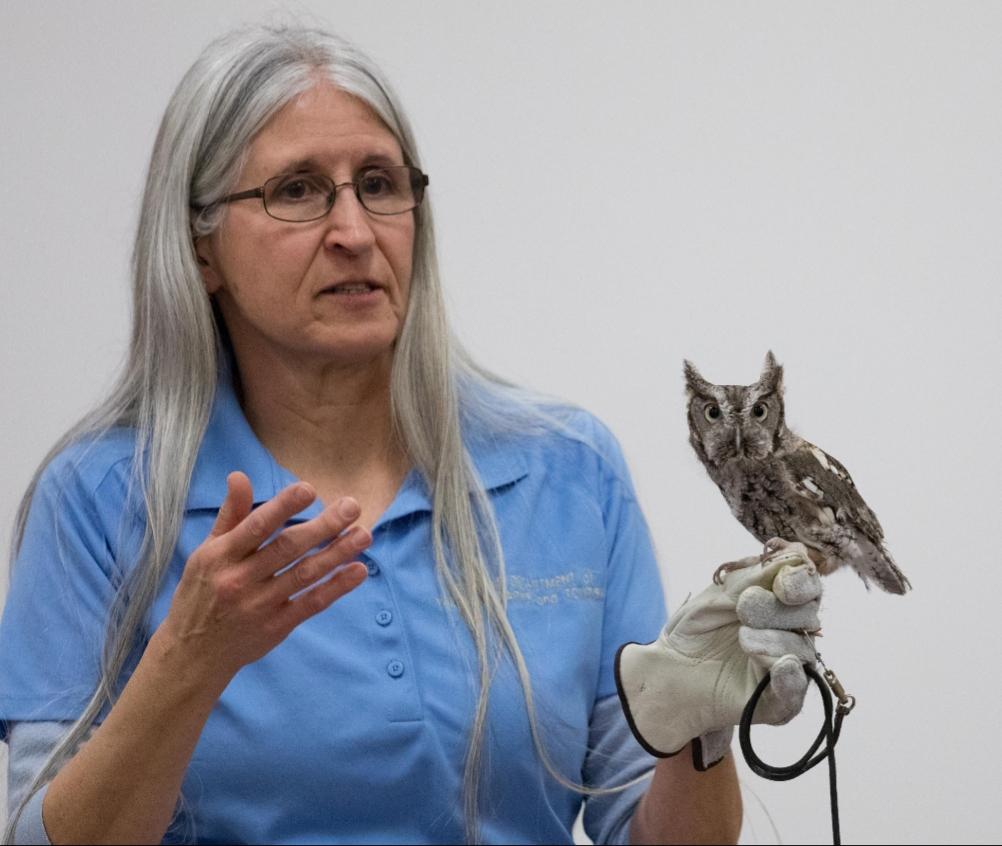
Originally from Colorado, Vanessa moved to Kansas in 1981 and now lives in Manhattan. Now retired, she was the Assistant Director of Milford Nature Center by Milford Lake. She has been a falconer since 1993, and was the first woman licensed in Kansas, but has not actively flown birds for quite some time. She is still involved in the Kansas Hawking Club and is a strong advocate of the sport. Besides contributing to the success of AOK, she is also on Sunset Zoo's Conservation Board and has been involved in the Black-footed Ferret reintroduction since 2008.
|
|
John Mallery
Overland Park
John has had a lifelong passion for the natural world. He grew up as an only child and spent his free time exploring the large woodland behind the house in Pennsylvania. He went to college at the University of Tampa, where he majored in Marine Science and Biology and minored in Chemistry. He decided to take a year off before going to graduate school so he could “see the world.” He drove from Tampa, Florida to Anchorage, Alaska and back - taking 8 months. He has now been to all 50 states, and is very close to his goal of watching birds in every county in Kansas. John has held many diverse occupations including comedian, juggler, and knife thrower; a private investigator; and a managing consultant at one of the ten largest accounting firms in the country. He currently works as a testifying expert in computer forensics. Besides contributing to AOK, he has also co-authored the book, “Birds and Beyond: The Prints of Maurice R. Bebb.” John knows that “birds don’t exist in a vacuum” and AOK joins him in recognizing that if we want to continue to see birds, we have to be better stewards of the environment.
|
|
Alexis Powell
Emporia
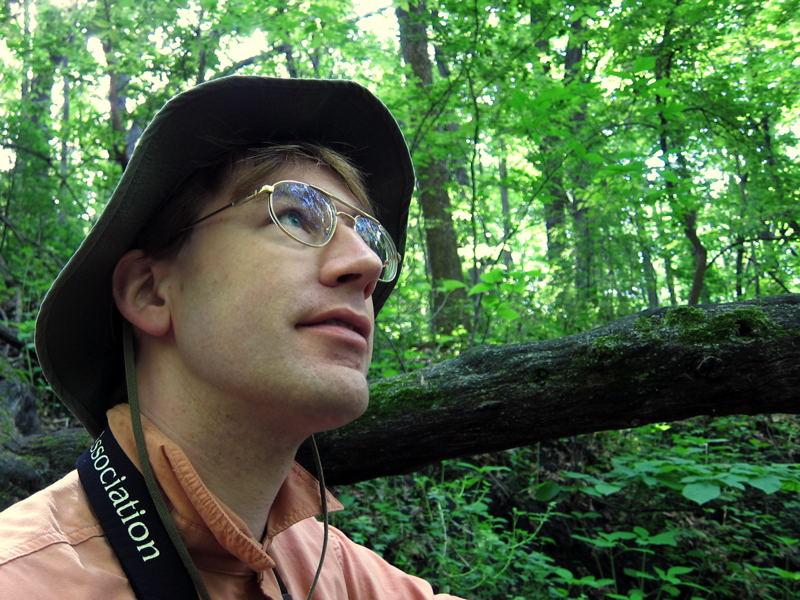
Alexis is a natural history enthusiast and biologist with research interests in organismal, evolutionary, and conservation biology. Most of his formal work has involved birds, but he also studies mudpuppy salamanders and turtles in rivers of eastern Kansas, experimental evolution of a species of filamentous fungus, and has a passion for prairie-obligate butterflies. He also enjoys travel, photography, birding, bicycling, reading, and politics. His background spans seven generations in rural Lawrence, where he became involved with Jayhawk Audubon Society. Since 2015, he has lived in Emporia, where he aims to remain and where he is a Biology Professor at Emporia State University.
|
|
Michelle Worrall Tilton
Prairie Village
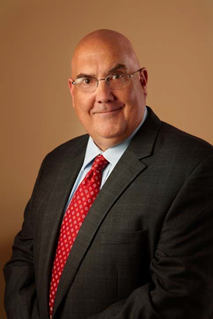
Michelle holds degrees in both journalism and law from the University of Kansas. She is also a licensed property and casualty insurance agent and is a frequent speaker on cyber, media and intellectual property insurance, insurance coverage issues and risk management. Michelle is a remote cyber product counsel for Zurich NA. She has two sons, two dogs, a cat and a horse. An equal opportunity employer, Michelle feeds both the birds and squirrels at her suburban home. Animals and their well-being have always been important to Michelle as she grew up in a home where spiders and mice were trapped and carried outside. Michelle has been a vegetarian for more than thirty years because of health, animal, and environmental concerns.
|
|
Dylan Wheeler
Wichita
Dylan is presently an attorney focusing on general civil litigation with a law firm in his hometown of Wichita, KS. He earned a bachelor's degree in English from Kansas State University and his Juris Doctorate from the Washburn University School of Law. He started advocating on behalf of AOK while still in law school. He dedicated an entire semester during his last year of law school to researching and understanding the variety of federal and state environmental and administrative statutes/regulations directly related to the conflict. He is now one of the attorneys working on the pending dispute over the U.S. Fish and Wildlife Service’s senior water rights serving to supply the Quivira Wildlife National Refuge.
|
|
Chapter Spotlight:
Wichita Audubon Society
|
|
Wichita Audubon Society (WAS) is one of the largest chapters in the state. From September through May, WAS has monthly programs that inform and expand our horizons. Throughout the year, WAS takes field trips to interesting places near and far. All of WAS's activities are free and open to the public. WAS volunteers also participate in park cleanup projects, Christmas Bird Counts, environmental advocacy, and a large variety of other activities in support of our chapter and its mission
Their next meeting is May 17 at 7pm at Great Plains Nature Center. The May speaker is Laura Mendenhall, who will review the fundamentals of including native plants in your yard's landscaping, discuss common pitfalls to avoid when creating backyard habitat, and explain in detail how to implement the five tenets of the National Wildlife Federation's Certified Wildlife Habitat Program (food, water, cover, places to raise young, and sustainable practices) in your backyard!
|
|
|
AOK shares favorite walks, hikes and birding spots! |
|
|
|
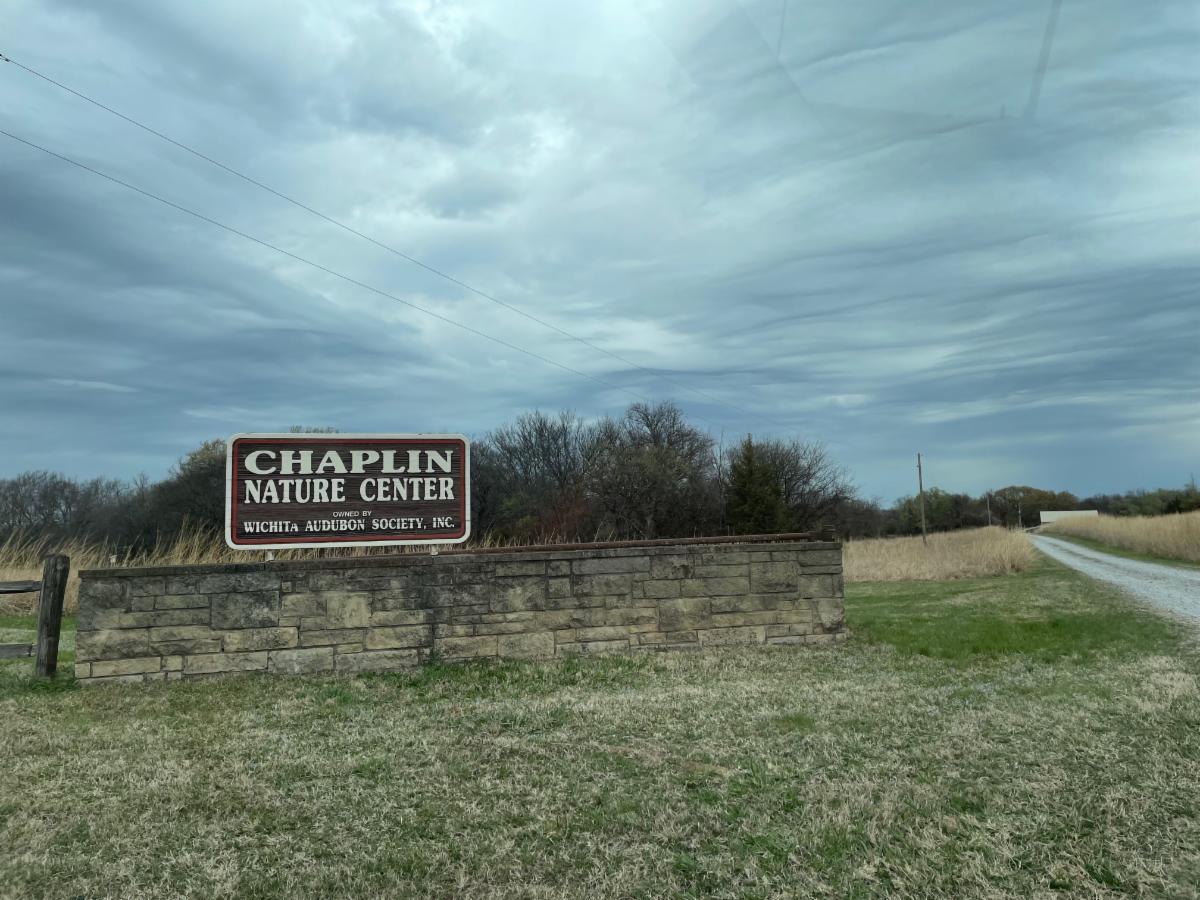
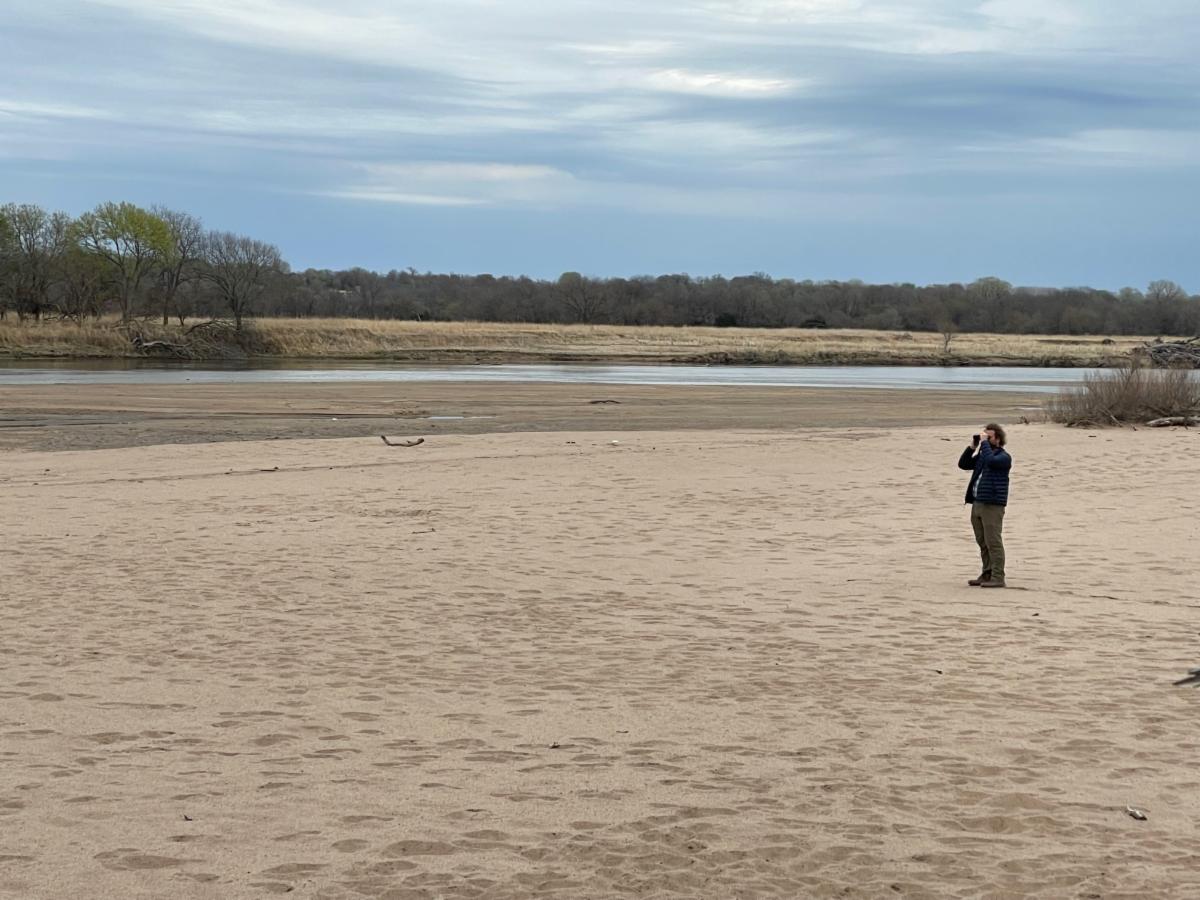
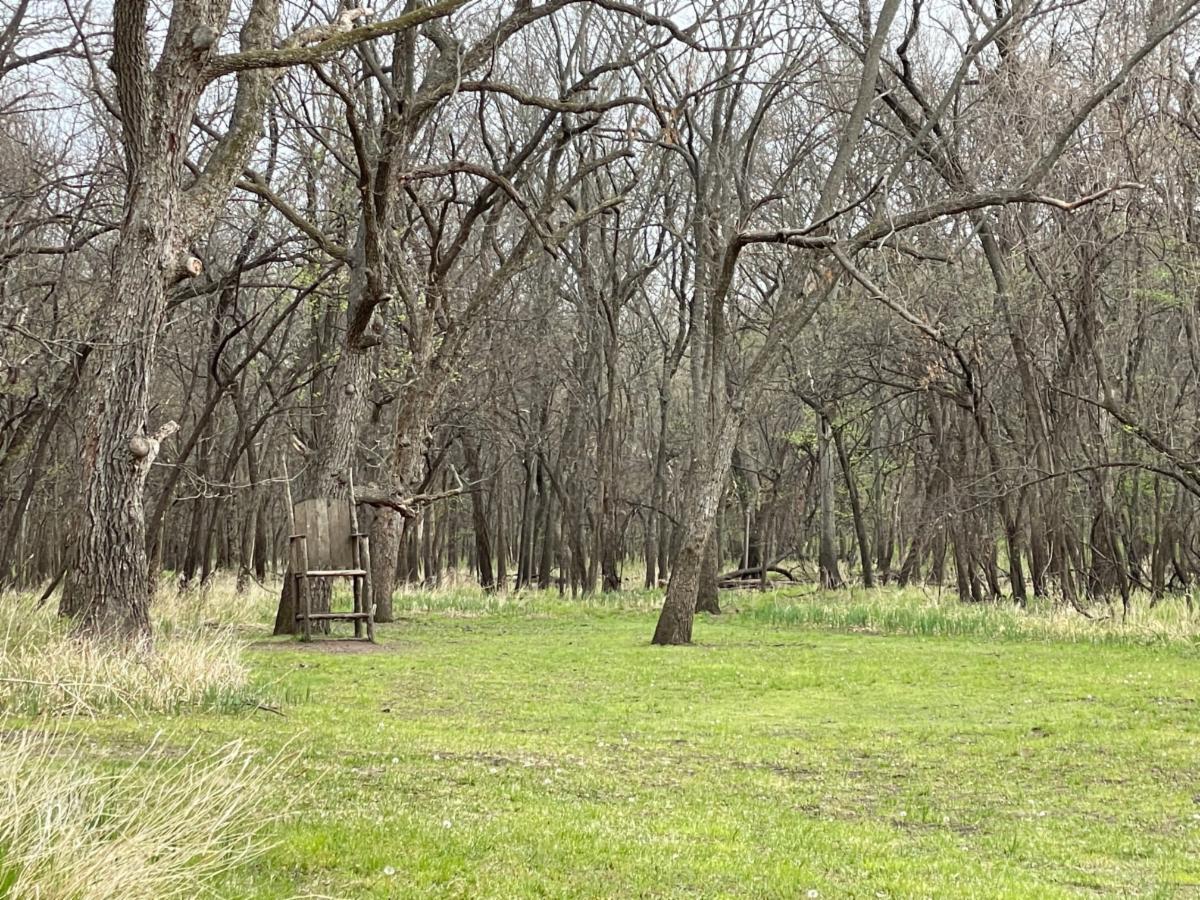
Wichita Audubon Society's major education and conservation project for 48 years has been the development of Chaplin Nature Center. This 230 acre preserve near Arkansas City features a Visitor’s Center staffed by a full time naturalist. The Visitor’s Center features educational exhibits, a library, and meeting spaces. Our naturalist conducts programs for school classes from across south central Kansas, as well as civic organizations, youth groups and the public. The trails through the woods and prairies, leading to the sandbars of the Arkansas River, are open to the public from sunrise to sunset year round. Wichita Audubon Society members support the Chaplin Nature Center with donations of money and time, including fund-raising, maintenance and construction projects, and staffing the Visitor’s Center.
More information about Chaplin Nature Center can be found HERE.
The address for Chaplin Nature Center is:
27814 27th Dr, Arkansas City, KS 67005
|
|
|
|
Lana Arrowsmith - Hutton Niobrara Coordinator - Hutton Sanctuary Management & Reservations lanamicheel@gmail.com
Audubon of Kansas
PO Box 1106 - Manhattan, KS 66505
785-537-4385
|
|
|
|
|
|
|