e-Newsletter | March 18, 2022
|
|
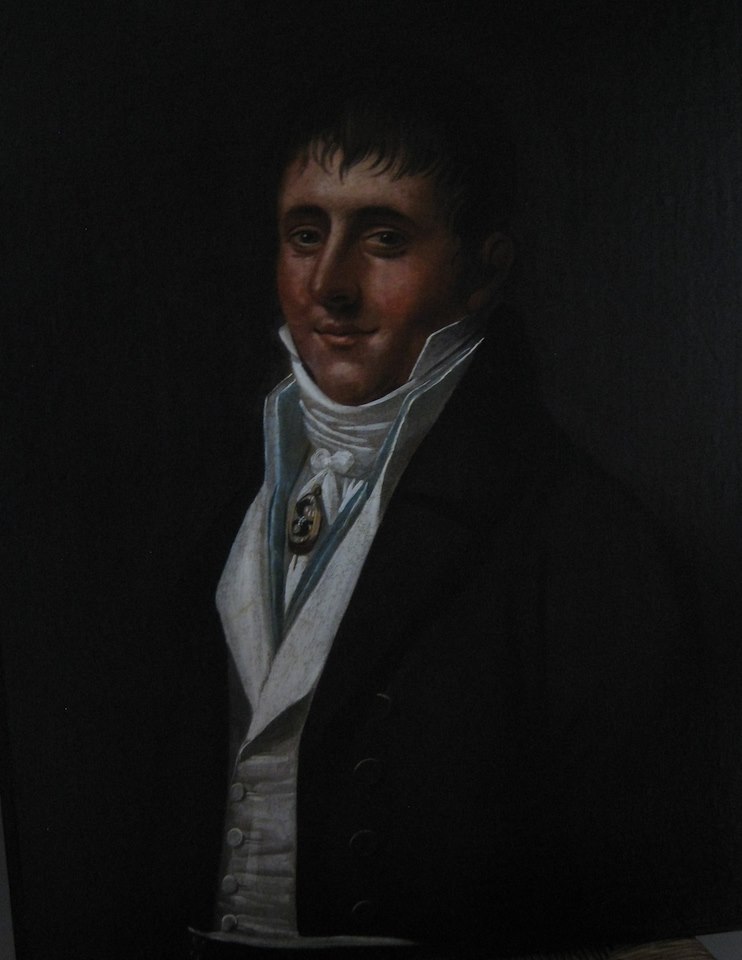
Although many of Old Newbury's eighteenth century ship masters and mariners were from local families, sometimes going back generations, others hailed from foreign ports and came to call Newburyport their home. Today we are focusing on two who were born in the 1770s and painted by the Netherlandish artist Carolus (Charles) Delin who were of French heritage.
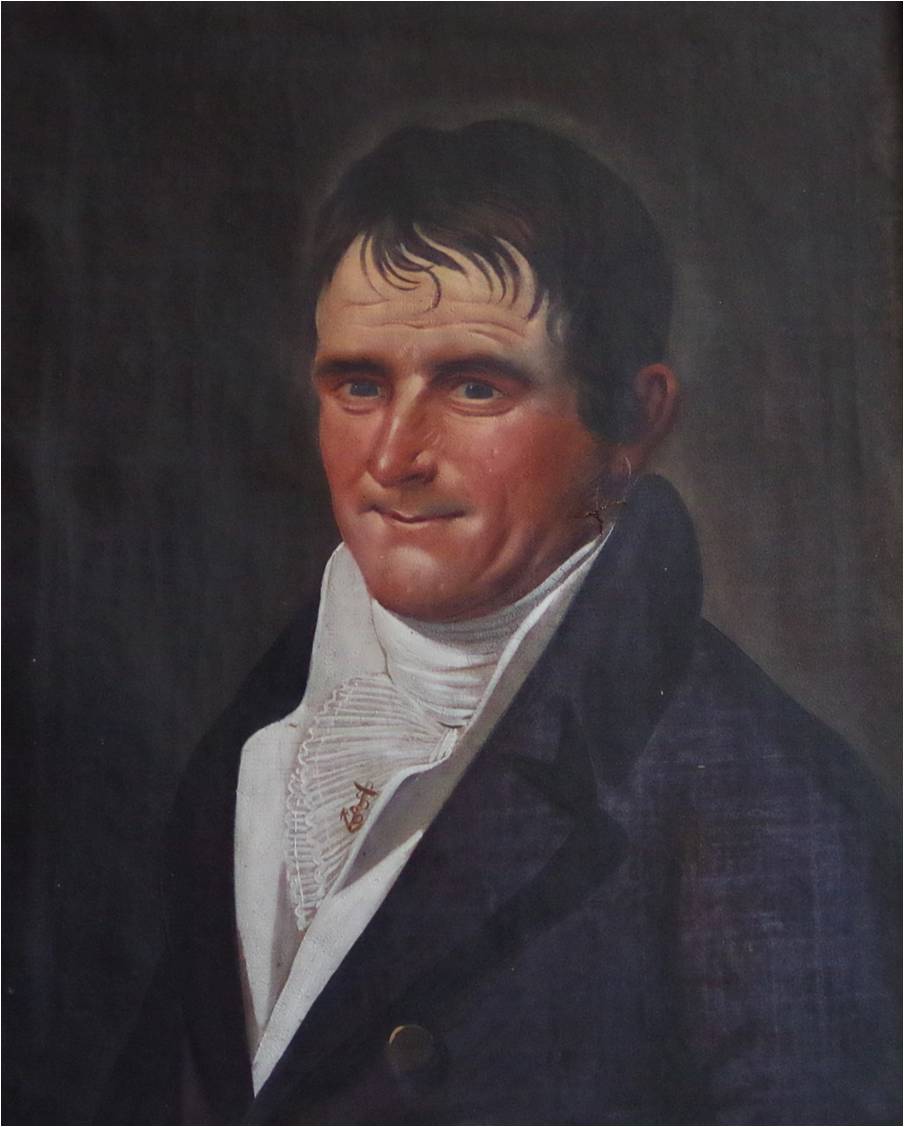
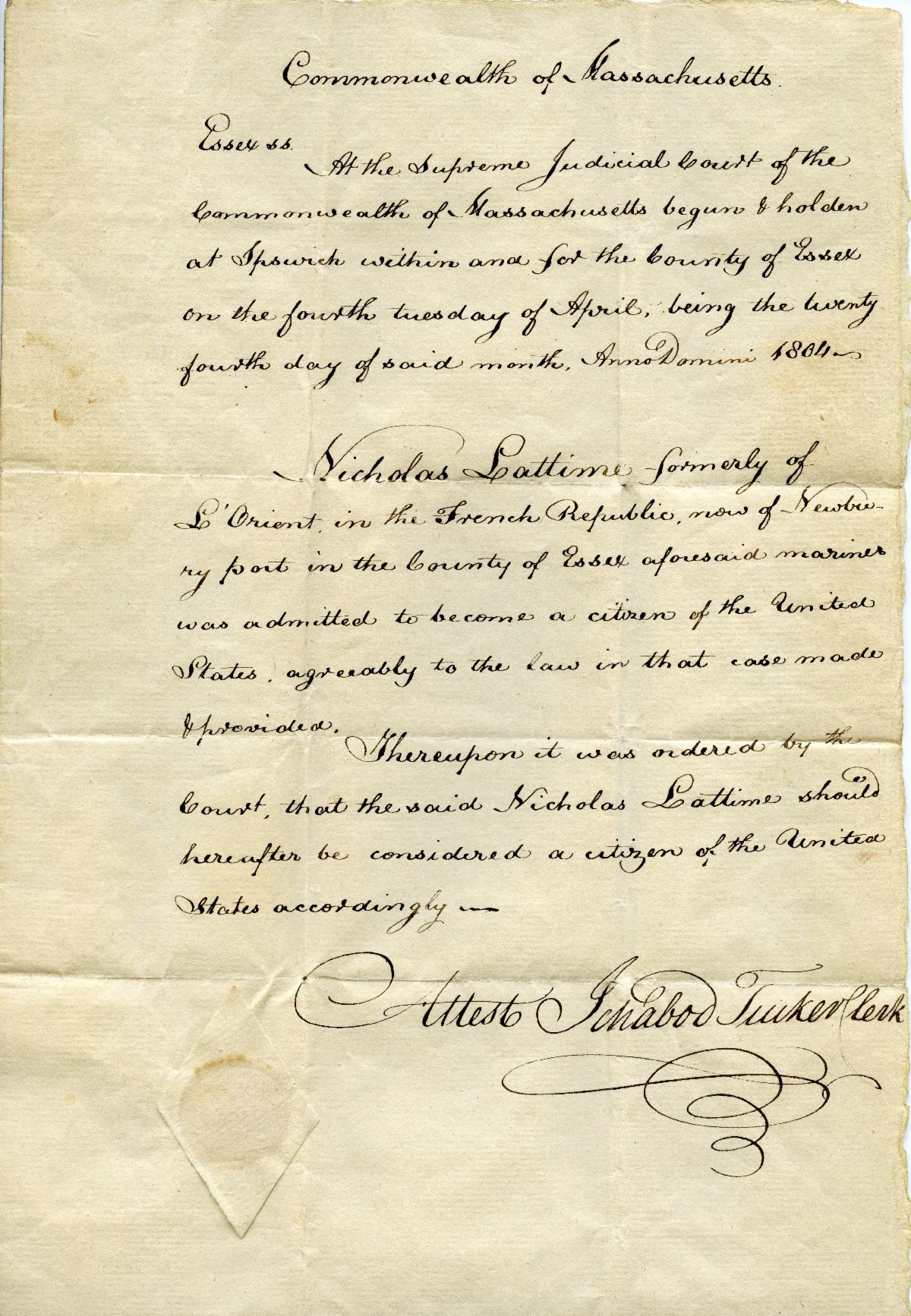
Nicholas Lattime (1777-1822) was born in Port le Brean, France. An orphan, he fled the orphanage and was adopted in Amsterdam by Johannes Stommel. At age fourteen, he apprenticed himself, for a period of seven years, to Ezra Gould Lowell, an Amesbury shipmaster and privateer. It is believed that through his association with Lowell, Lattime made his way to Newburyport by the early nineteenth century. Here he met and married Polly Woodwell, the daughter of ship builder Gideon Woodwell and Sally Bray who made their home on Water Street. Lattime, like many sailors in the nineteenth century who did not know how to swim, drowned, age forty-five, at Curacao in the West Indies while he was serving as mate on the sloop Polly. He was the patriarch of a large family involved in the maritime trades including, joiners, shipwrights, and ship outfitters named Lattime who lived in Joppa, “down along” the Merrimack River.
|
|
Left: Nicholas Lattime's portrait was painted in Amsterdam before he emigrated to Newburyport c. 1804. Note the fouled anchor pin, originally the seal of the Lord High Admiral of Great Britain. The gold earring was worn by seafaring men who had seen the world and travelled around the Horn, the extreme tip of South America. Museum of Old Newbury collections. Gift of George Lattime and Herbert Lattimer.
Right: Document: Certificate of Citizenship in the United States, April,1804 for Nicholas Lattime. Signed by Ichabod Tucker, Essex County Court Clerk. Museum of Old Newbury collections.
|
|
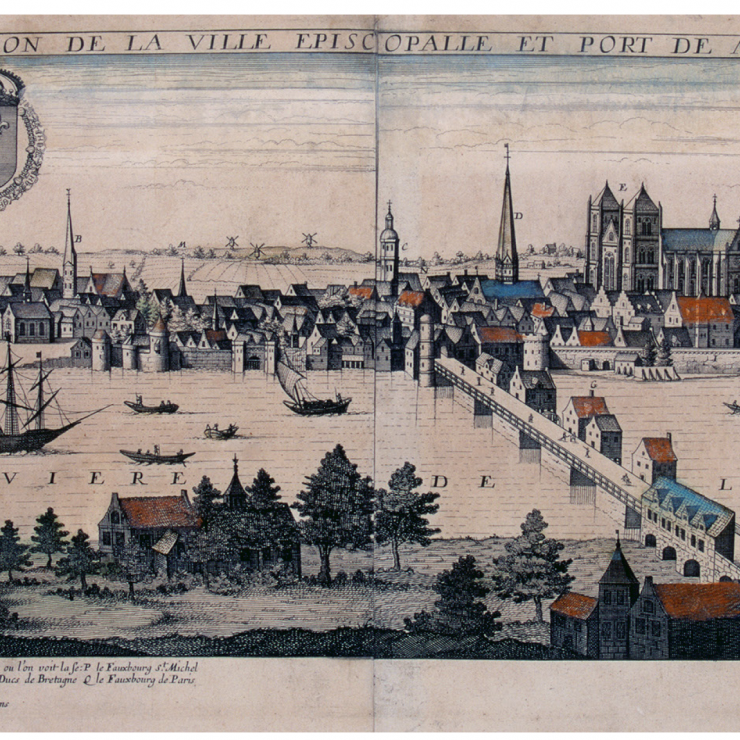
Pierre Le Breton was born in Nantes, France in October 1745 to Antoine and Marie Le Breton, the youngest of thirteen children. Nantes, a port historically linked to Brittany, had been a large trading center since Roman times, and in the 18th century, it was part of the triangle trade with West Africa and the West Indies.
|
|
Nantes on the west coast of France was considered to be a leading port in Europe in the 18th century. Courtesy image. |
|
There are numerous and somewhat varying accounts of how Le Breton made his way to Newburyport but Sarah Anna Emery in her Reminiscences of a Nonagenarian has the most detailed accounting of the young Frenchman's youth and arrival in Newburyport.
Emery records that before coming of age, Le Breton traveled to Guadeloupe in the West Indies where his eldest brother owned a sugar plantation. His brother sent him back to France where Antoine apprenticed him to a cabinetmaker. At age twenty, his parents gave their consent for him to return to Guadeloupe. After a year, due to illness, he boarded a ship to Newburyport under the command of Captain William Noyes. Noyes was one of several Newburyport shipmasters doing trade in Guadeloupe during the 1770s, 1780s and 1790s. Upon their arrival in the port, Noyes took Le Breton to his home on Liberty Street where the young man boarded until he regained his health.
Le Breton was not successful in his business ventures and sought advice from Captain Noyes with whom he sailed until he became a shipmaster in his own right and, eventually, a ship owner.
During his time at the Noyes home. Le Breton met Elizabeth Pearson, daughter of Amos and Mary Morse Pearson, and married her on April 28, 1776. By May 1777, Le Breton purchased land on what became Middle Street and built a two story house on the northwesterly corner of Middle and Fair Streets where he lived the remainder of his life.
Vital records for Newburyport show that the Le Bretons had a son in August 1777 named Peter. Presumably, the child died young as the birth of a second son, also named Peter, is recorded for December 1778. More about Peter in a few moments.
A second child, Elizabeth, was born in 1780. Sadly, she was left motherless when Elizabeth Pearson Le Breton died of typhoid fever in 1781. By 1783, Le Breton married again to Elizabeth Sawyer. They had one child who died in infancy.
Captain Peter Le Breton had a successful career as a shipmaster doing trade with the West Indies, Great Britain, and France. He became a member of the Newburyport Marine Society in 1784 and was active on several committees through the turn of the century. He owned and was master of the brigantine Betsey built in Amesbury in 1784. Subsequently, he owned three ships built in Newburyport's Woodwell shipyard -- the brigantine Peter (1794) that was mastered by both Nathaniel Nowell and Peter Le Breton, Jr., the ship William P. Johnson, and the ship Hercules.
Although no likeness of him exists, Sarah Emery recounts her aunt's recollections of Le Breton's "striking" countenance ... A pale, fair complexion, deep, blue eyes shaded by long, black lashes, and dark, chestnut hair waving in curls about his face and neck. He is also remembered as a generous, genial gentleman, the soul of hospitality and good humor.
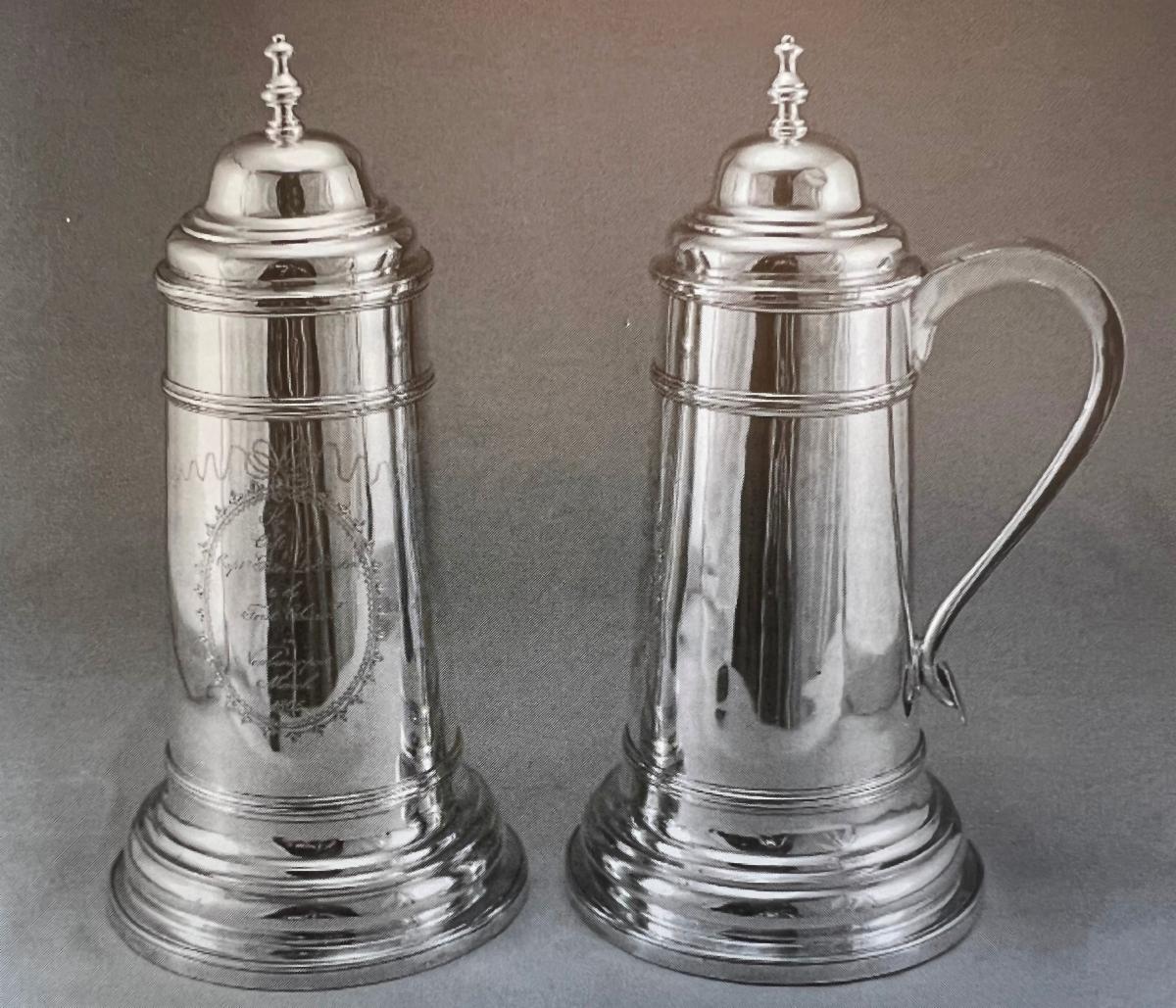
Perhaps Captain Peter Le Breton's greatest legacy to Newburyport was the gift of two large silver flagons made by silversmith Jesse Churchill to the First Religious Society. These were reputed to have been given to the church in thanksgiving for his life being spared in a brutal storm at sea. Le Breton already had allegiance to the church as both his marriages were performed there by the Rev. Thomas Cary.
|
|
A pair of silver flagons signed by silversmith Jesse Churchill, presented to the First Church by Peter Le Breton Sr. Standing at a bold 15 inches they are inscribed as follows:
The / Gift of / Captn Peter Le Breton / to the / First Church / in / Newbury port /
March / 1805
On loan from the First Religious Society, Unitarian Universalist of Newburyport.
|
|
According to a family genealogy, Le Breton is described as being a Roman Catholic but one who "seems to have conformed to the customs and religious life of his neighbors, and to have been a respected citizen, noted for his liberality to the poor. An altar, found after his death in a small room to which he kept the key, showed that he had not forsaken the church of his childhood."
He died February 24, 1813 and funeral services at his home on Middle Street were attended by members of the Marine Society and members of St. Peter's and St. Mark's lodges of Free and Accepted Masons. He was buried in the New Hill Burying Ground (Highland Cemetery).
Peter Le Breton, Jr. carried on the legacy of his father in the maritime trade. Like his father, he was an esteemed member of the Newburyport Marine Society, joining in 1803, and co-owned and captained several ships including the schooner Contract, the ship Echo, the ships Pilgrim and Plutarch, the brigantine Ruby, and the ship Vesper. In addition, he co-owned ships with his father and served as master. The junior Le Breton was also a successful merchant.
In 1800, Peter married Tabitha Lewis of Marblehead with whom he had several children. The eldest, Peter, named for his grandfather was born in 1802 and married in Newbury in 1823. Other children included Elizabeth, Edmund, Mary Anthony (named for her French great grandparents), Stephen and Caroline.
More than one large Federal period house in Newburyport was home to Peter Le Breton and his family. In 1807 he purchased 9 Fruit Street from Joseph Noyes. In 1813 Le Breton sold it to Abraham Wheelwright and purchased Wheelwright's imposing house at 77 High Street. Wheelwright was another Newburyport captain involved in the West Indies trade.
Also in 1813, the younger Le Breton owned a mortgage on one half of the stately brick home at the corner of High and Fruit streets. Widow Sarah Hunt had purchased it from her husband's executor and mortgaged it to Le Breton to provide her with some income. The mortgage was scheduled to be paid off in a year but was not paid until 1818 when John Newmarch Cushing purchased that portion of the house.
Le Breton repurchased 9 Fruit Street in 1825 and lived there until his death in 1829, The heirs of his estate owned the house until 1865.
|
|
The portrait of Peter Le Breton, Jr., like that of Nicholas Lattime, was painted about 1805 when his cargoes for European trade would have placed him near Amsterdam. Attributed to Charles Delin, Amsterdam. Museum of Old Newbury collections. Gift of Ellen Balch. |
|
Special thanks to Betsy Widmer and Marc Cendron for sharing their research on the silver flagons and the Le Breton family.
|
|
Mrs. Somerby is beginning to smile - can you see it? We've raised over $45,000 toward a goal of $50,000. Help us reach that goal by March 31 by making a donation today.
Thank you for your support!
|
|
Museum Musings...a guest blog by Susan C. S. Edwards
|
|
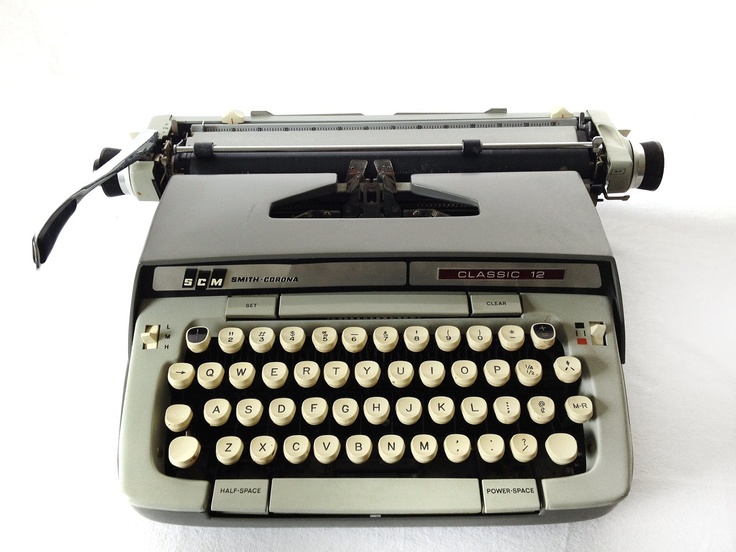
The year I graduated from college I spent most of the summer reading Remembrance of Things Past. I had no idea what the fall might bring. With a newly minted degree in English, everyone told me I should teach. After a brief stint as a substitute teacher in a junior high school, I realized teaching was not for me. I spent the remainder of the fall at my Smith Corona manual typewriter composing dozens of letters to directors of historic house museums. Being employed at a historic house was the only thing for which I had a passion.
|
|
I received only one response -- from Edith Harman, the director of the House of the Seven Gables Settlement Association. She invited me to Salem and welcomed me warmly, serving a sumptuous tea in her office, while telling me everything that she could about historic house museum management. She encouraged me to keep reaching out and to pursue my goal. I was smitten. By spring The Trustees of Reservations offered me a job for the summer in their Stockbridge office where I started by giving house tours, training seasonal employees, and eventually cataloguing two museum collections. I stayed five years.
My first curatorial responsibility was to catalogue a collection of 17th and 18th century decorative arts that were purchased by Miss Mabel Choate to establish the Mission House museum in Stockbridge, MA. The correspondence and bills of sale from the giants of Colonial Revival dealers between 1927 and 1930 had never been touched so it was all virgin territory fitting the pieces of the puzzle together.
But what absorbed me as much as the remarkable collection amassed during the Depression was the passion of a single woman to preserve history through the creation of a house museum.
Over the next several years I met many more of these women whom I began calling my patrons of culture -- Clara Endicott Sears, Caroline Emmerton, Rose Nichols, Louise du Pont Crowinshield, Electra Havemeyer Webb, Florence Griswold, Theodate Pope, Isabella Stewart Gardner, and Sally Dodge -- New England is filled with them. These women became cherished friends as I pursued their passion for historic preservation and the establishment of museums and historic house museums. The very first preservation effort in the United States by women was undertaken in 1853 when Ann Pamela Cunningham founded the Mount Vernon Ladies Association to save and restore Mount Vernon.
Fast forward to 2000 when once again I was employed at The Trustees. One of my curators and I were tasked with the job of creating an interpretive plan for the 1694 Paine House in Ipswich. That was the summer I "met" Sally Dodge. We created the plan and furnished the house with a fine collection of early furniture and American decorative arts purchased in the 1930s by Alice Childs Dodge with the help of her daughter, Sally.
To back up a bit, the Dodges are an old family going back to the early 1600s in Ipswich and environs. Elisha Perkins Dodge, born in Ipswich in 1847, had moved to Newburyport by 1866 with his brothers where the family established a successful shoe dynasty. Elisha and Katherine Searles Gray married in 1869 and had three sons, Robert Gray Dodge, Edwin Sherrill Dodge (a distinguished architect), and Lawrence Paine Dodge.
Robert, a graduate of Harvard College and Harvard Law School, became a member of the Massachusetts Bar Association in 1897 and was a founding partner of Palmer, Dodge, Gardner and Bradford in Boston. He was active in Newburyport affairs, serving as a city councilor in 1899. In 1900 he married Alice Woolley Childs of Amesbury and for a time they lived at 2 Toppans Lane, designed by brother Edwin Dodge.
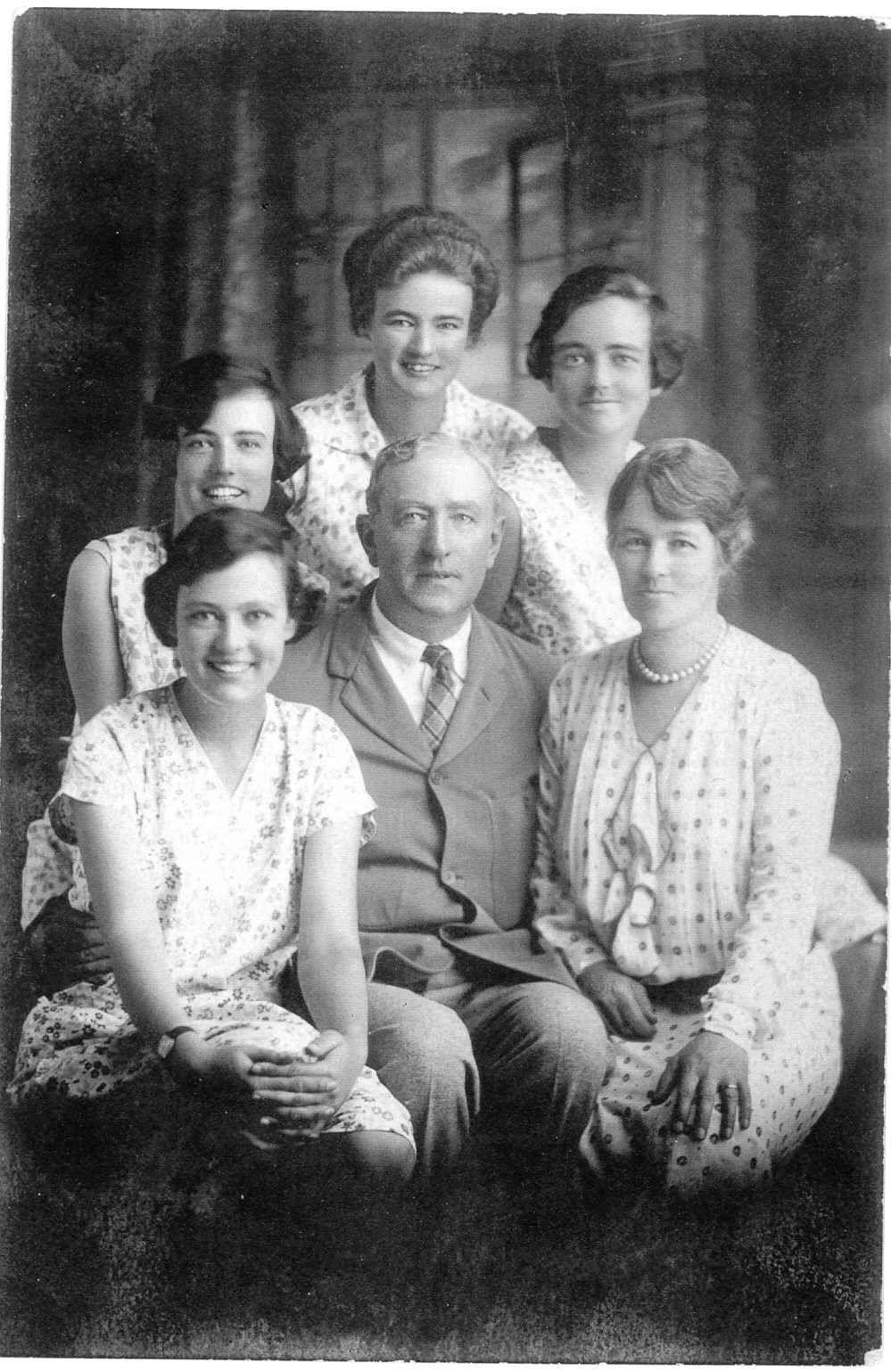
Alice Childs Dodge, a graduate of Wellesley College, was active in civic and educational affairs and served on the boards of numerous charities. The Dodges had four daughters Katharine, Eleanor, Sally and Alice.
|
|
The Dodge family - front: Robert Gray and Alice Childs Dodge. Left to right: Alice, Sally, Katharine, and Eleanor. Photo: Greenwood Farm Collection. The Trustees of Reservations, Archives & Research Center. |
|
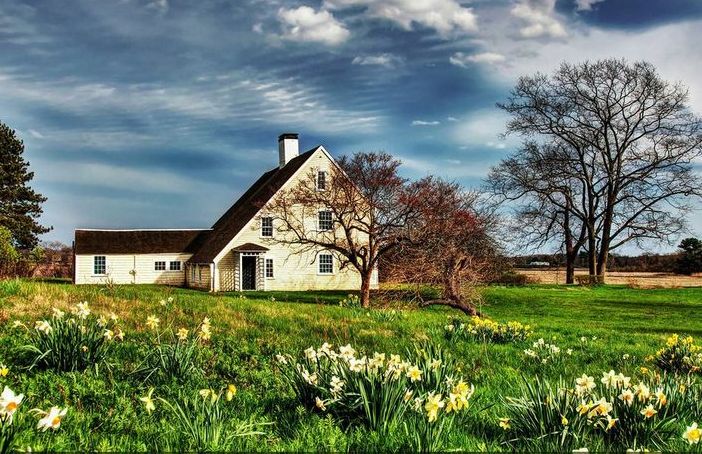
Eventually the family moved to Boston but maintained strong ties with Newburyport. In 1916 they purchased Greenwood Farm on Jeffrey's Neck Road in Ipswich, and it became their summer retreat. Greenwood Farm was part of a land grant from the Town of Ipswich to Robert Paine. The sprawling former salt water farm includes two houses, the 19th century Greenwood farmhouse which the Dodges occupied and the 1694 saltbox built by Robert Paine, Jr., jury foreman of the Salem witch trials in 1692. The family used the latter as a guest house thus leaving it virtually intact. |
|
The 1694 Paine House at Greenwood Farm, Ipswich. Courtesy photo |
|
Sally Dodge, christened Sarah, was born in 1907 in Newburyport and attended private day schools in Boston. In 1925, she entered Vassar College, as her sisters before her had done, but she left midway through her course of study to pursue an education in music. Sally had taken an interest in music early in life and had taken classes to study violin with Lillian Shattuck and others in Boston. 1928 found her in Vienna studying under renowned violinist Julius Winkler. Back home, she graduated from the New England Conservatory of Music in 1937. Sally devoted her professional life to music, performing and teaching. She joined the faculty of the New England Conservatory in the 1940s. Throughout her career she traveled worldwide, working with music educators and children. She was also actively involved in music education on a regional level.
Alice Childs Dodge died in 1948 and Robert Gray Dodge died in 1964 at age 91. After her father died, Sally managed more than 100 acres on the farm and cared for the Paine House.
Described by cousins and friends as a free spirit and somewhat of an eccentric, Sally maintained her devotion to music but she was also passionate about historic preservation and the environment. Bright, talented and gracious, she was proud of her heritage and was a supporter of Ipswich's 17th Century Day and Olde Ipswich Days when she opened the Paine House for tours.
|
|
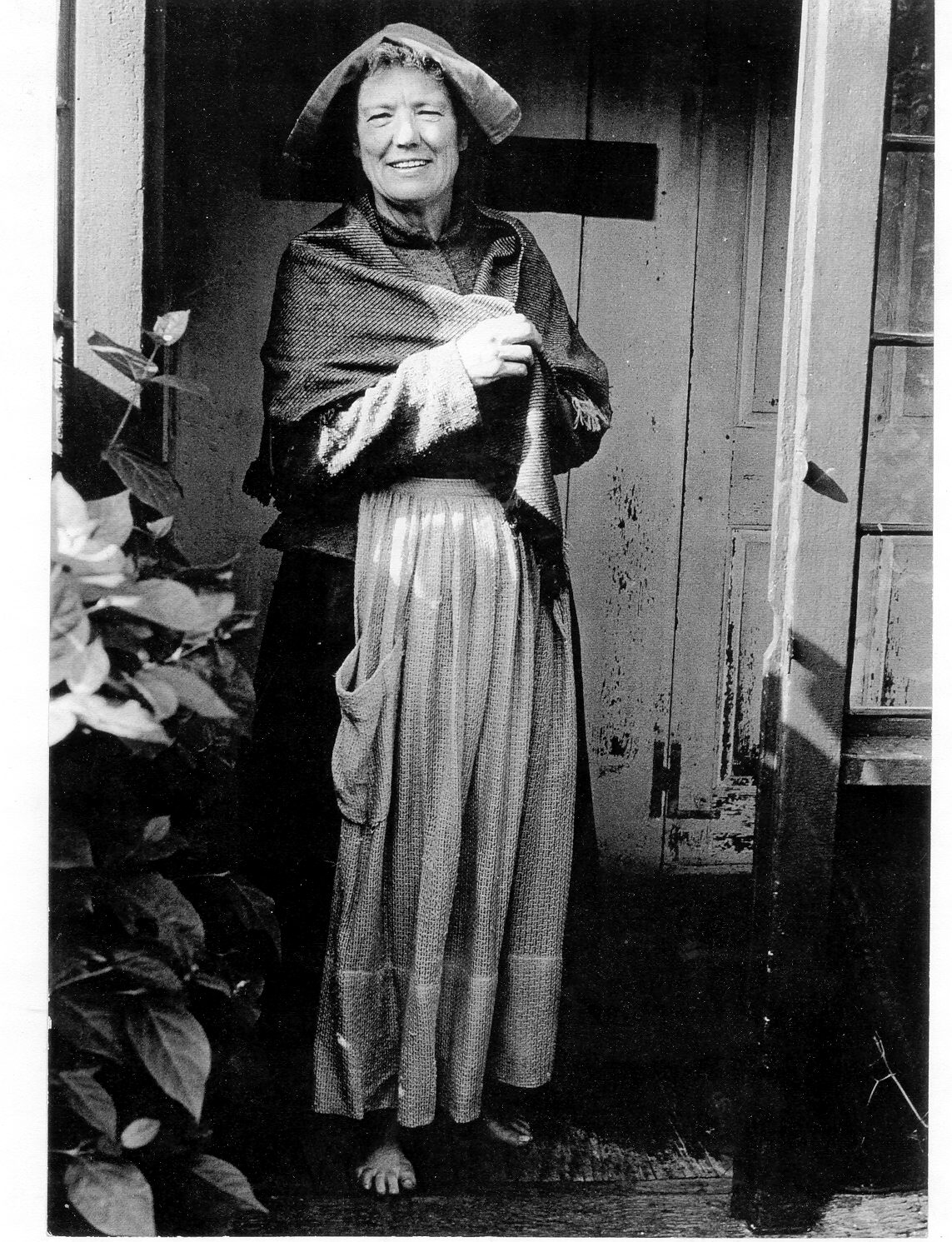
"17th century" Sally in the doorway of the Paine House. Photo: Greenwood Farm Collection. The Trustees of Reservations, Archives & Research Center. |
|
In the 1970s, Sally and her sisters made the decision to donate Greenwood Farm and the Paine House to The Trustees of Reservations with a life interest for Sally. When she died in 1993, she bequeathed the property to The Trustees for preservation of the land and buildings and for birding, hiking, house tours and educational programs.
Abbott Lowell Cummings, a pre-eminent architectural historian of New England, had long taken an interest in the Paine House as an early framed structure of Massachusetts. In 1979 he published The Framed Houses of Massachusetts Bay, 1625-1725 and Massachusetts and Its First Period Houses in which he cites the Paine-Dodge House as after 1702.
For Sally, this was heresy. Almost the last two decades of her life were dedicated to documenting the Paine House as a 17th century structure. She wrote numerous times to Cummings. A 1990 draft of a letter begins "Dear Abbott, We have been friends for many years, haven't we? This is a friendship I value very much." She then goes on to reminisce about family gatherings with Cummings and congratulates him on his book.
Politely but firmly she then challenges his judgment concerning interior architectural details. He never relented and they were estranged.
In 2002, The Trustees of Reservations had a Tree Ring Dating of the Paine House conducted at the Oxford (UK) Dendrochronology Lab. The report came back that the timbers of the Paine House dated to 1694. Sally would have been happy.
|
|
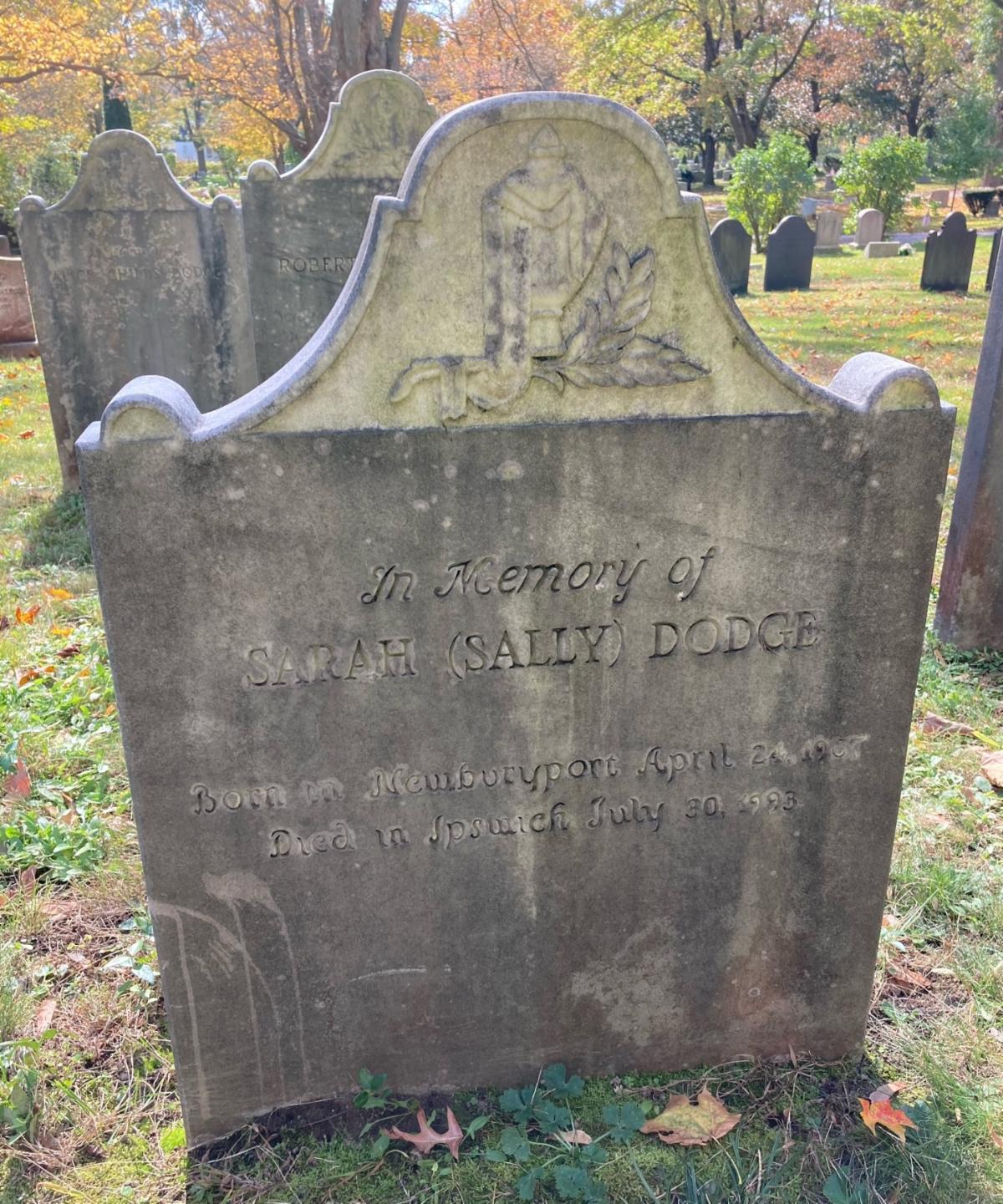
Sally Dodge's gravestone (1907-1993). Robert Dodge had gravestones designed for each member of his family. Oak Hill Cemetery, Newburyport. Photo: Ghlee Woodworth
Thanks to The Trustees of Reservations Archives and Research Center for access to the Greenwood Farm archives.
|
|
Women, Wenches and Witches in the 17th Century Newbury
|
|
Women were well represented as defendants, witnesses, and accusers in 17th century court cases. Settle in for a fun evening of actual women's voices from the sizzling pages of the Essex County Quarterly Court. Cursing, fornication, slander, witchcraft, even murder besmirched the reputations of Newbury's Puritan goodwives, and their experience is louder, bawdier, and livelier than most of us were taught in school.
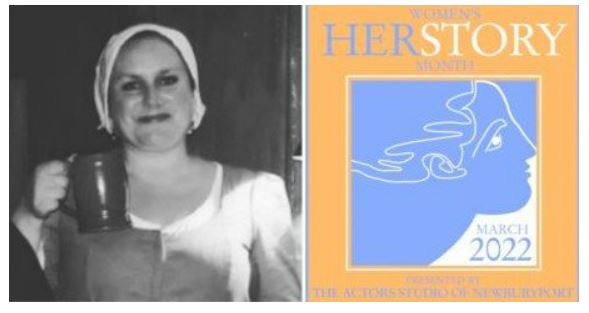
Join historian and author Bethany Groff Dorau for a theatrical rendition of a 17th century ZOOM court session. Each ticket comes with two beers courtesy of Ipswich Ale Brewery. Pick-up details to follow with Zoom link. Part of The Actors Studio of Newburyport's Womens HERstory Month. $10 for museum members, $15 for non-members.
|
|
Mementos of War: Civil War Captain William White Dorr Remembered
Thursday, April 7, 2022, 7:00 PM - In-person at The Governor's Academy, Byfield
|
|
An intriguing cache of letters and other memorabilia associated with a Union soldier in the American Civil War was discovered 25 years ago in an archival storage room at The Governor's Academy. They and other Civil War-era artifacts will be publicly displayed for the first time in an in-person program co-sponsored by the Museum of Old Newbury and The Governor's Academy.
The collection includes personal and military keepsakes, battlefield sketches, botanical mementos, letters, images, and more. Speakers will include Charles E. Dorr and Everett "Brownie Carson, two descendents of Captain Dorr's siblings; Bill Quigley, historian, teacher and author of a book on Captain Dorr; and Sharon Slater, archivist at The Governor's Academy. A light reception will follow. Free to the public, registration required. In person at the Governor's Academy.
|
|
The Romance of Linen - a Fashion Night Out with Lois Valeo
Thursday, April 28, 2022, 7:00 PM - In person at the Museum of Old Newbury
Save the date for another in the popular series by fashion historian Lois Valeo. She'll be presenting a richly illustrated talk on linens and showing you some of the museum's extensive collection. In-person at the museum. Registration link in the April 1st newsletter.
|
|
Share a Recipe with the Newbury Cookbook
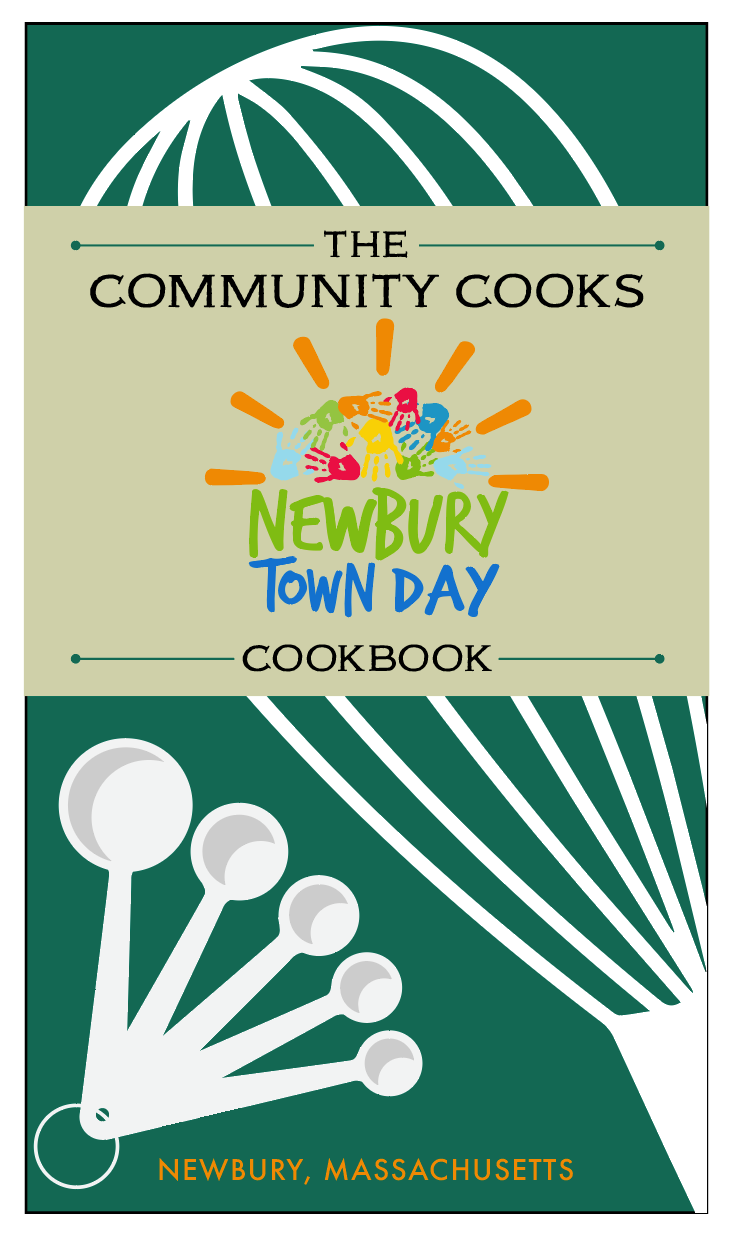
Still seeking recipes! If you have a recipe with a connection to "Old Newbury" (Newbury, West Newbury, and Newburyport), please consider sharing it in the upcoming Newbury Town Day cookbook. This can be something handed down, or something new that you enjoy today. Or both! Information on how to contribute can be found here.
|
|
Something is Always Baking at the Museum |
|
Childhood Gingerbread
Great on a chilly day and we probably have a few of those left. An easy, no mixer recipe that is fun to make with children. The smell from the oven as it bakes is almost as good at the cake! Serve from the pan; we like it with whipped cream.
2 cups (c.) flour
2 teaspoons (t.) baking powder
1 1/2 t. cinnamon
2 t. ginger
1/2 t. allspice
1 c. molasses (not blackstrap unless you really like that flavor!)
1 c. boiling water
1/2 c. light brown sugar
8 tablespoons (same as 1 stick) salted butter, soft, cut into small chunks
2 large eggs
Preheat oven to 365 F. Grease an 8" cake pan. Combine the first five ingredients and set aside. Pour the molasses in a 2 cup (or more) measuring cup, add the boiling water, and dissolve. Set aside. In a large bowl, use a wooden spoon to cream together the butter chunks and brown sugar. Lightly beat the eggs in another bowl then stir into the butter-sugar mixture. Add about 1/2 cup of the flour mixture and stir in. Then add the same amount of the molasses-water. Repeat and stir briefly each time. After all is added, pour into the well-greased pan. Bake for 25 minutes; lower temperature to 350 F and bake for 15-20 minutes more. A toothpick insert in the center should come out clean. Let cool in the pan for 20 minutes or more to let the crumb set. -Kristen Fehlhaber
|
|
Click on image above to play the puzzle |
|
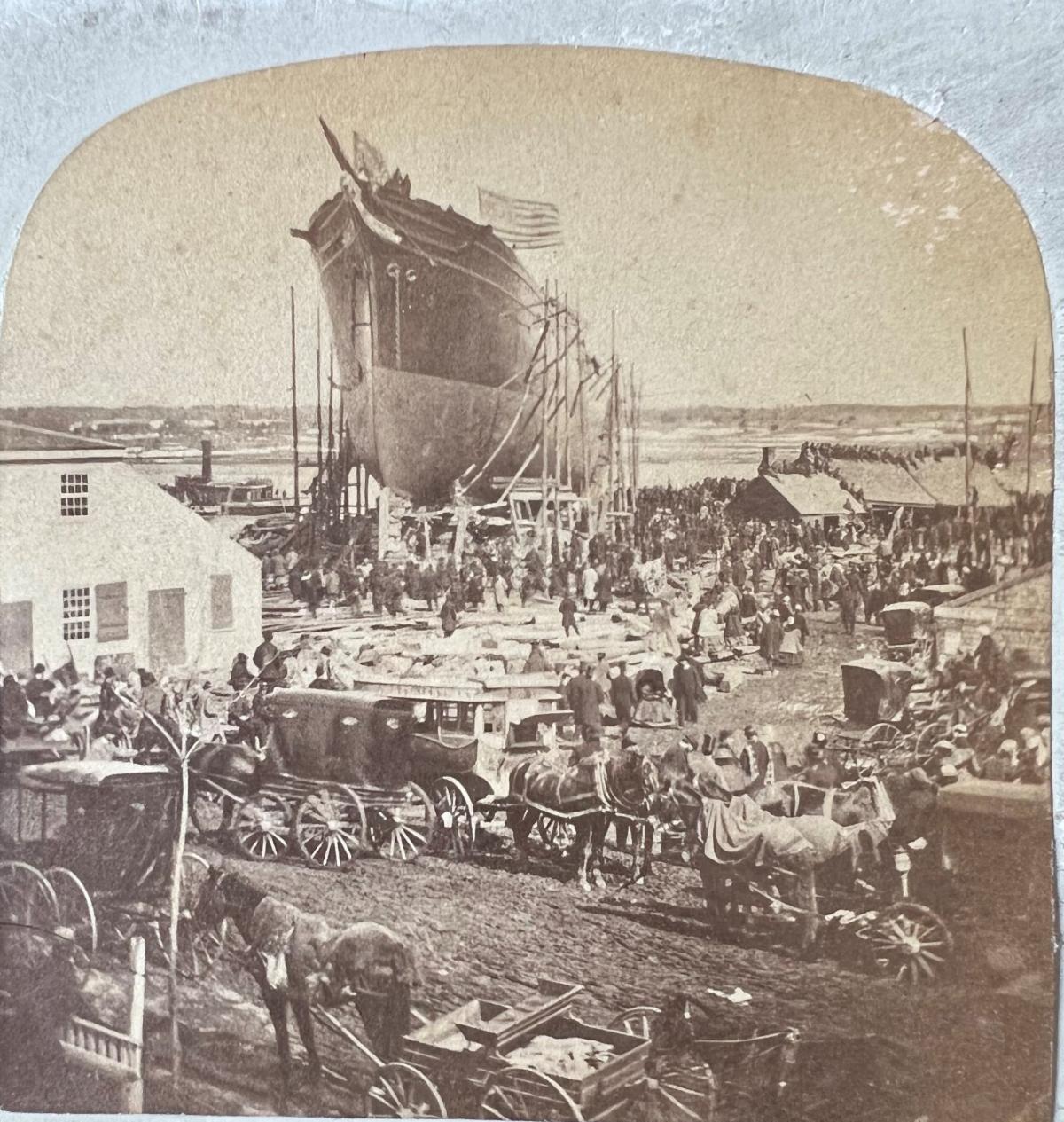
"Before the Launch"
c. 1870s
Merrimac Street, Newburyport
During the Golden Age of Sail, ship launches in maritime trading cities such as Newburyport were times of celebration. Residents of the port would turn out in their finery and gather at the shipyard for a festive occasion. This photograph was taken by Carl Meinerth (1825-1892). Meinerth emigrated from Germany and worked first in Portsmouth, NH and later in Newburyport. Click here to do the puzzle.
|
|
Museum e-Newsletter made possible through the
generosity of our sponsors:
|
|
|
Museum of Old Newbury
98 High Street
Newburyport, MA 01950
978-462-2681
|
|
|
|
|
|
|
|