Summer offers a welcome chance to slow down and catch up on reading, and at Creative Leadership Solutions, we’re embracing that spirit. In this edition, we spotlight the transformative power of literacy and why creating literacy-rich schools and classrooms matters for learners across all communities. Whether you're an educator, leader, or lifelong learner, this issue is for you. | | |
Fearless Writing, Fearless Learning
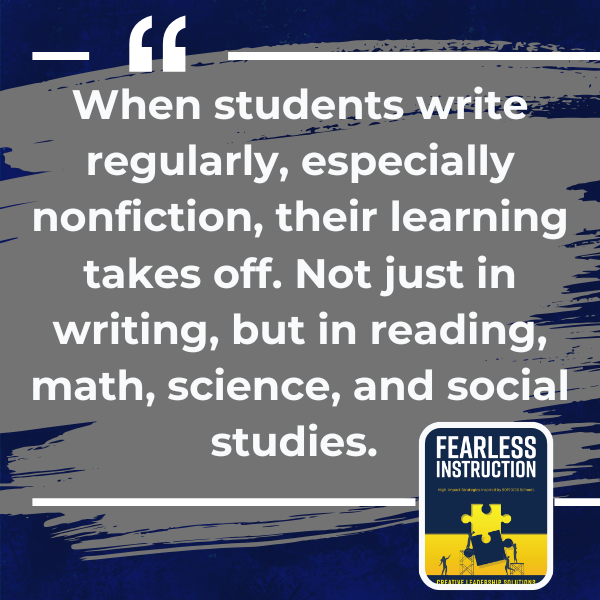
When students write regularly, especially nonfiction, their learning takes off. Not just in writing, but in reading, math, science, and social studies. The research is clear. And the best part? You don’t have to do it alone. By working together and tapping into each other’s strengths, teacher teams can build the confidence, clarity, and strategies needed to make nonfiction writing a powerful force in every classroom.
| | | |
In the 90/90/90 studies, Dr. Douglas Reeves found that in schools facing the biggest challenges, student writing was limited to low-rigor tasks like acrostic poems. Nonfiction writing was hardly ever present. Teaching writing can feel intimidating. Many teachers question their own writing skills and feel unsure how to help students succeed.
But we can change that. Writing can become something we embrace and celebrate together.
Nonfiction writing is one of the most impactful instructional strategies available. The first step is aligning expectations and practices across teacher teams. Whether it’s a schoolwide initiative or a single collaborative team leading the charge, developing shared clarity around writing expectations is transformative. Not only do students benefit from consistent, rigorous writing opportunities, but teachers also grow their confidence and skill through collaboration.
John Hattie’s research shows that teacher clarity and accurate understanding of student achievement have a strong, positive impact. It starts with knowing where students are and guiding them toward where they need to go.
If you’re ready to create a culture where writing grows learners, you can learn more in our new book, Fearless Instruction. Chapter 7 contains a step-by-step guide to make nonfiction writing meaningful, motivating, and effective for both students and teachers.
Written by Allyson Apsey
CLS Director of Client Relations and Contributing Author
| | |
Reading, Writing, and Discussion Protocols: Keys to Engagement
What does it take to get students genuinely engaged in reading, writing, and talking about complex ideas?
As the Supervisor of Secondary English and Reading in a large Virginia county serving approximately 85,000 students, I am proud to work alongside thousands of talented, dedicated educators who are deeply committed to student success and enriching educational experiences. One ongoing challenge we face is equipping individual teachers to consistently engage students in interdisciplinary literacy instruction.
Our solution? Structured strategies that work: reading, writing, and discussion protocols that create clarity, consistency, and academic rigor. Known as thinking routines, these protocols promote critical thinking and deepen comprehension of a text or set of texts.
A favorite among our teachers is the Jigsaw Approach, in which students are assigned a specific section of a text to study and master. They first collaborate in “expert groups” to analyze their assigned sections, then regroup into “teaching groups” where each student shares their expertise. This structure ensures that all students contribute to and benefit from a comprehensive understanding of the entire text.
Benefits of Literacy Discussion Protocols
Thinking routines provide students with clear expectations and promote equitable participation. Every student becomes an active contributor, and discussions are grounded in the text. These routines foster active listening, encourage diverse perspectives, and support the development of critical thinking skills.
To support successful implementation, we encourage teachers and instructional leaders to consider the following actions:
Choose High-Quality Texts
- Select texts that are engaging, well-written, and relevant to students’ lives and learning goals. Rich texts—those with strong voice, structure, visuals, and depth—naturally lead to richer discussions and deeper analysis.
Align the Protocol with Purpose
- Choose protocols that align with the structure and purpose of the text. For example, the Jigsaw Approach works best with expository texts that have clearly defined sections. It is less effective for narratives or novels, where the structure is more fluid.
Practice and Prepare
-
Ensure both teachers and students are familiar with the protocol. Post or project the discussion guidelines, review them together, and invite questions. Encourage students to explain directions to a partner to reinforce understanding. Use timers if helpful, monitor adherence to the routine, and reflect on the process afterward. Ask students: What worked well? What was challenging?
Our division remains committed to strengthening literacy instruction by embedding a variety of thinking routines into the curriculum and fostering collaboration across schools and classrooms. These efforts continue to enhance student engagement, comprehension, and academic achievement.
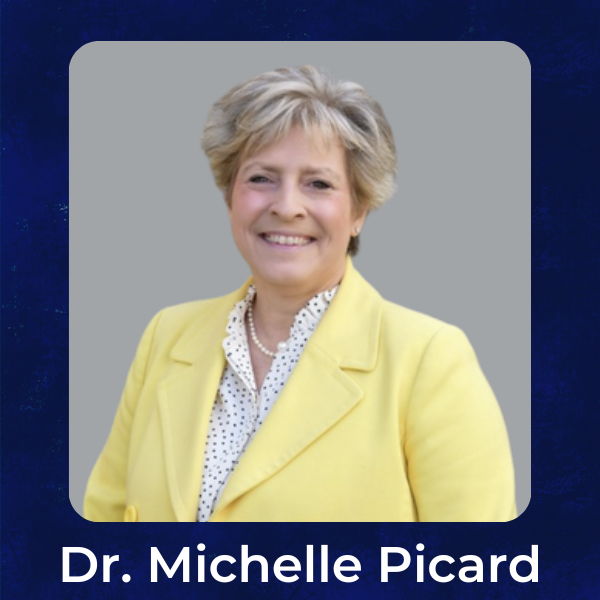
Written by Dr. Michelle Picard
Director of Secondary English and Reading, Loudoun County Public Schools, VA
Associate at Creative Leadership Solutions and Contributing Author to Fearless Instruction
| | IN THE BI-LINGUAL LITERACY SPOTLIGHT | | |
Lowering the Filter, Lifting Their Voices
As the daughter of two bilingual ESL professors, I grew up with a deep love for language and culture. I began my teaching career in a bilingual (Spanish/English) 5th-grade classroom while earning my Master’s in Bilingual Education and have spent much of my career in dual-language schools. At home, I foster bilingualism with my two children, Santiago and Paloma.
This past school year, I was honored to join CLS as an Associate, working with Pajaro Valley Unified School District at H.A. Hyde Elementary School in Watsonville, California. Located just south of Santa Cruz, Watsonville is a vibrant agricultural hub where over 83% of the population identifies as Hispanic or Latino, and 35% were born outside the U.S. H.A. Hyde offers two instructional tracks: English-only and dual-language (Spanish/English). Our shared goal: to promote language and literacy for all learners in this multilingual community.
One of the most important instructional tools for teachers in dual- or multi-language classrooms is to create a psychologically safe environment. Expressing ourselves—whether through speaking or writing—is closely tied to our identity. Learning to read, write and speak in a second language may incite fear, embarrassment, or worry about making mistakes.
This emotional barrier is what Dr. Stephen Krashen calls the affective filter. When the filter is high, learning shuts down. When students feel safe and supported, the filter lowers, and language acquisition can flourish. At H.A. Hyde, we focused on increasing student talk time while keeping affective filters low.
| | | |
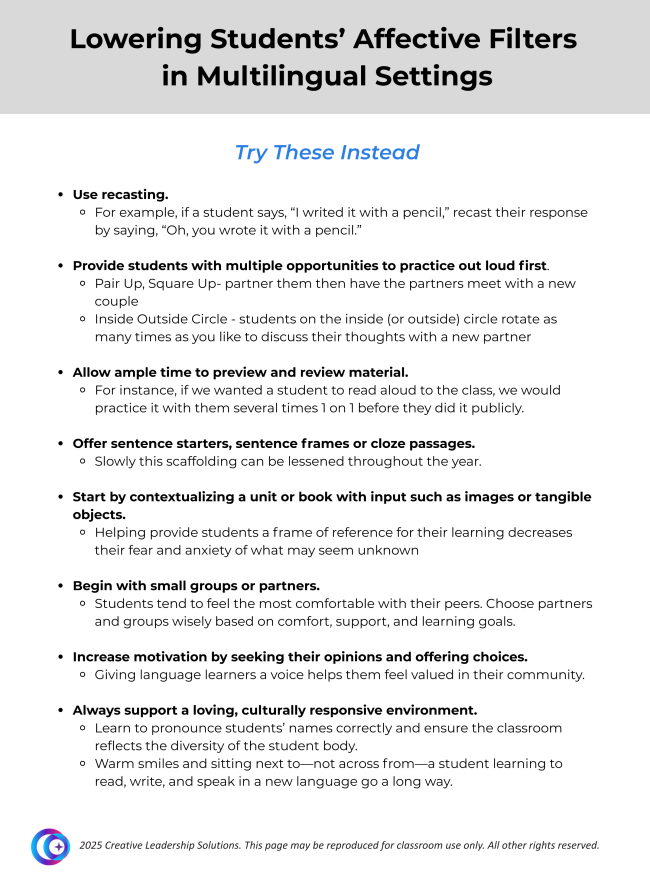
Key reminders for fostering a classroom environment that supports low affective filters:
- Instead of error correction, use recasting.
- Instead of cold calling, provide students with multiple opportunities to practice out loud first.
- Rather than expecting quick or early output, allow ample time to preview and review material.
- Instead of expecting instant written or verbal language production, offer sentence starters, sentence frames or cloze passages.
- Rather than handing students unfamiliar texts, start by contextualizing a unit or book with input such as images or tangible objects.
- Rather than isolating students, begin with small groups or partners.
- Instead of dictating what or how to learn, increase motivation by seeking their opinions and offering choices.
| | | |
Always support a loving, culturally responsive environment.
Learn to pronounce students’ names correctly and ensure the classroom reflects the diversity of the student body. Warm smiles and sitting beside—not across from—a child learning to read, write, and speak in a new language goes a long way
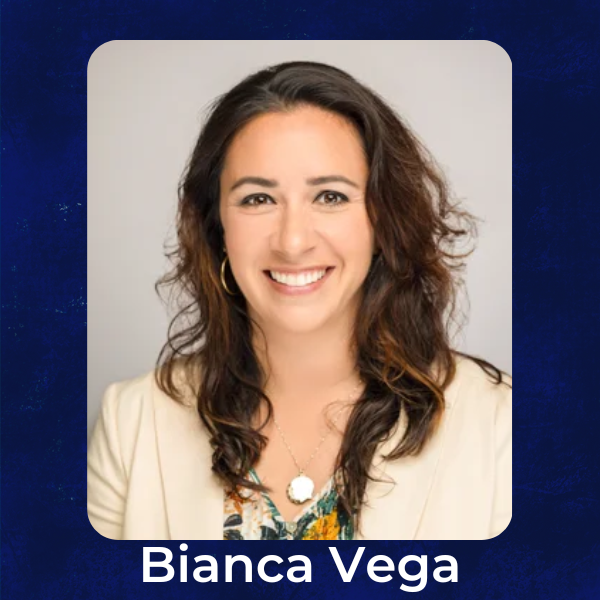
Written by Bianca Vega
Associate at Creative Leadership Solutions
| | | | Bianca Vega is a dedicated bilingual educator with over 20 years of experience across public, charter, independent, and international schools. A Stanford graduate and Teach For America alum, she earned her Master’s in Education from Loyola Marymount University. Bianca has received the Kenneth L. Moffett Bilingual Education Award and a Fund for Teachers fellowship to study marine habitats in Belize. She has served as a teacher, instructional coach, and Assistant Vice Principal, and currently leads as Assistant Head of School in Santa Barbara. Her work centers on student engagement and assessment through the lens of multilingualism, equity, neurodivergence, and social-emotional learning. | | The Fearless Schools Podcast | |
At The Fearless Schools Podcast, we believe that building bold, thriving schools starts with courageous conversations. Each episode brings you real stories, actionable insights, and strategies to help educators and leaders like you create stronger, more resilient learning communities.
New Episode Today - Fearless Instruction Part 3
| | Creative Leadership Solutions is a leading provider of research and evidence-based professional development and coaching that helps districts and schools attain their goals, impact student learning, and improve performance. Our team of experts is dedicated to delivering personalized and differentiated learning opportunities. Let’s start a conversation - contact us at service@creativeleadership.net. | | | | |