Streetsmart News. Vol. 13, 2019
|
|
Evidence and Insight for Better Transportation
|
|
Three things we need to fix about transportation impact analysis
How we evaluate and mitigate transportation impacts from new development have profound effects on the way our cities are built. Most cities evaluate new development for the additional traffic it will bring to the area. The level of impact to the area is usually measured by a mobility metric called Level of Service (LOS). Roadway segments and intersections are rated on a scale of A-F, like a report card, typically based on the average delay for vehicles. Mitigation for this impact often takes the form of roadway or interchange capacity increases, either directly built by the developer or paid as impact fees to the agency.
Why is this a problem? Here are three reasons to start:
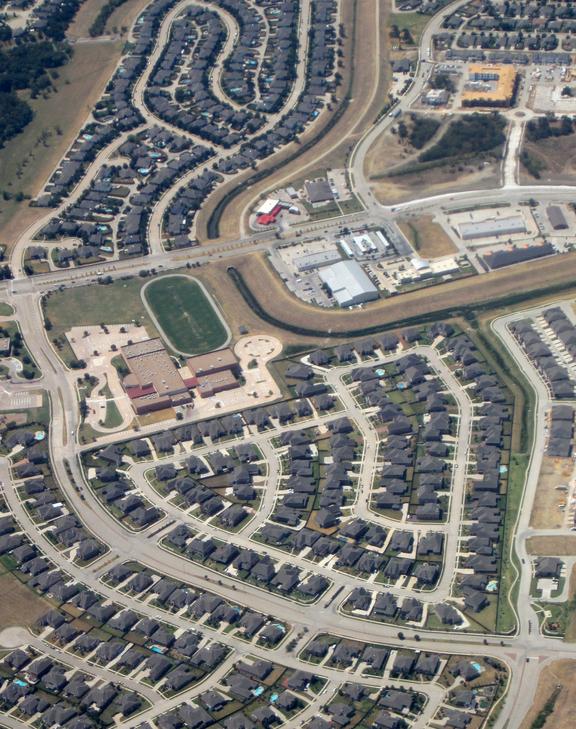
- Impact analyses penalize the “last one in.” The additional trips expected from new development are considered worse than the traffic generated previously by the surrounding development. This penalty encourages development to locate further out and makes it more difficult to reach destinations by any mode other than an automobile. It also discourages infill development, which can improve a neighborhood’s access to destinations and/or walkability.
- Only vehicular traffic impacts are considered through the use of measures like Level of Service (LOS). While multi-modal LOS has been developed to evaluate the quality of pedestrian and bicycle ways, multi-modal LOS standards are generally not used in the context of transportation impact analysis. They aren’t well suited for this purpose. The impacts to active travel are not otherwise considered. Furthermore, the LOS report card scale not so subtly suggests that cities want to aim for an A; in reality, this is often not a realistic or desirable policy objective. Watch this video from the California’s Office of Planning and Research and read this article from Smart Growth America for summaries of the problem.
- Roadway and interchange capacity increases required for mitigation generally create auto-centric environments. Widening intersections, for example, means that pedestrians have even farther to travel to cross the street, which increases their exposure to crashes.
However, the transportation industry is innovating. In California, Senate Bill 743 requires alternatives to LOS for evaluating development impacts under the California Environment Quality Act. The California Office of Planning and Environment (OPR) recommends Vehicle Miles Traveled (VMT) as a metric for transportation impacts because it is better describes the effects of development on access to destinations, greenhouse gas emissions, and health. For more information about the legislation and implementation guidance, check out OPR’s
transportation impact page
. The page also has a good list of key resources about transportation impact analysis and LOS.
Another approach is for cities to choose different mitigation strategies. Rather than roadway infrastructure, cities can build transit, bicycle, and pedestrian infrastructure to reduce demand on the roadways. Cities can also explore transportation demand management strategies, such as employer-provided transit passes. For more ideas on updating approaches to transportation impact analysis and mitigation, read
Modernizing Mitigation
by the
Mayors Innovation Project
and the
State Smart Transportation Initiative
(SSTI). SSTI also has some recorded presentations of cities explaining how they have moved beyond LOS, including
Pasadena
and
San Jose
.
|
|
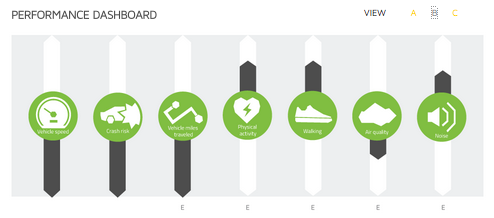
Our proof-of-concept prototype can be found below. Take the survey to give us feedback that we will use to shape the beta version of Streetsmart, coming soon!
|
|
New Guide for Connecting
Health and Transportation
The American Association of State Highway and Transportation Officials (AASHTO) released a report titled “Connecting Transportation and Health: A Guide to Communication and Collaboration.” The guidebook provides transportation practitioners at all levels with tools to collaborate with other entities on health issues. It also outlines the connections between health issues and transportation, and includes best practices for interacting with stakeholders, communications techniques, and assembling relevant organizational and data resources. The guidebook provides a review of the relevant literature and resources, and advice from both transportation and health professionals. The main link to the report and associated material is
here
, which includes a recorded
presentation
of the project.
|
|
Conference on Health and Active Transportation: Call for Abstracts
The Conference on Health and Active Transportation (CHAT) will be held on December 11-12, 2019 in Washington DC's Keck Center. CHAT brings together an interdisciplinary group of practitioners and researchers in urban planning, public health, physical activity, transportation, civil engineering, chronic disease, and health economics to explore and collaborate on identifying impacts of the health effects of transportation policies, planning, and infrastructure.
Abstracts for the conference are due on June 7th, 2019. To learn more about the conference and abstract submission requirements, visit the conference
website
. The direct link for submitting an abstract is
here
.
|
|
WHY STREETSMART?
We get it. Civic leaders struggle to find the evidence they need to evaluate and prioritize transportation investments. The research is scattered, time-consuming to find, and difficult to digest. We do all the work of synthesizing the research and presenting in an intuitive and easy-to-use format, without compromising quality or rigor.
Civic leaders need to make the case for solutions that work best for their community, which sometimes requires defending innovation. Streetsmart reduces risk by providing the evidence and examples of what works in other communities. We’ve got your back.
Find success stories with key lessons learned in one easy-to-search place. Why re-invent the wheel? Streetsmart offers insight via case studies and guidebooks relevant to each topic area. Learn from others in the trenches working on issues similar to yours.
|
|
- Got burning questions about a transportation topic? Get in touch and make suggestions for articles in upcoming issues of the Streetsmart newsletter.
- Got more feedback about the prototype? Take the survey or drop us a line to give us your insight.
- Want to collect and summarize resources for Beta? Help us collect resources and case studies on one of the fifteen strategies that will be in Streetsmart Beta.
We are always looking for academic and practitioner collaborators to build and refine Streetsmart. Talk to Kelly at
Kelly@thinkstreetsmart.org
to explore the opportunities.
|
|
Did someone send you this newsletter? You can sign up for Streetsmart News
here.
|
|
|
|
|
|
|
|
|
|