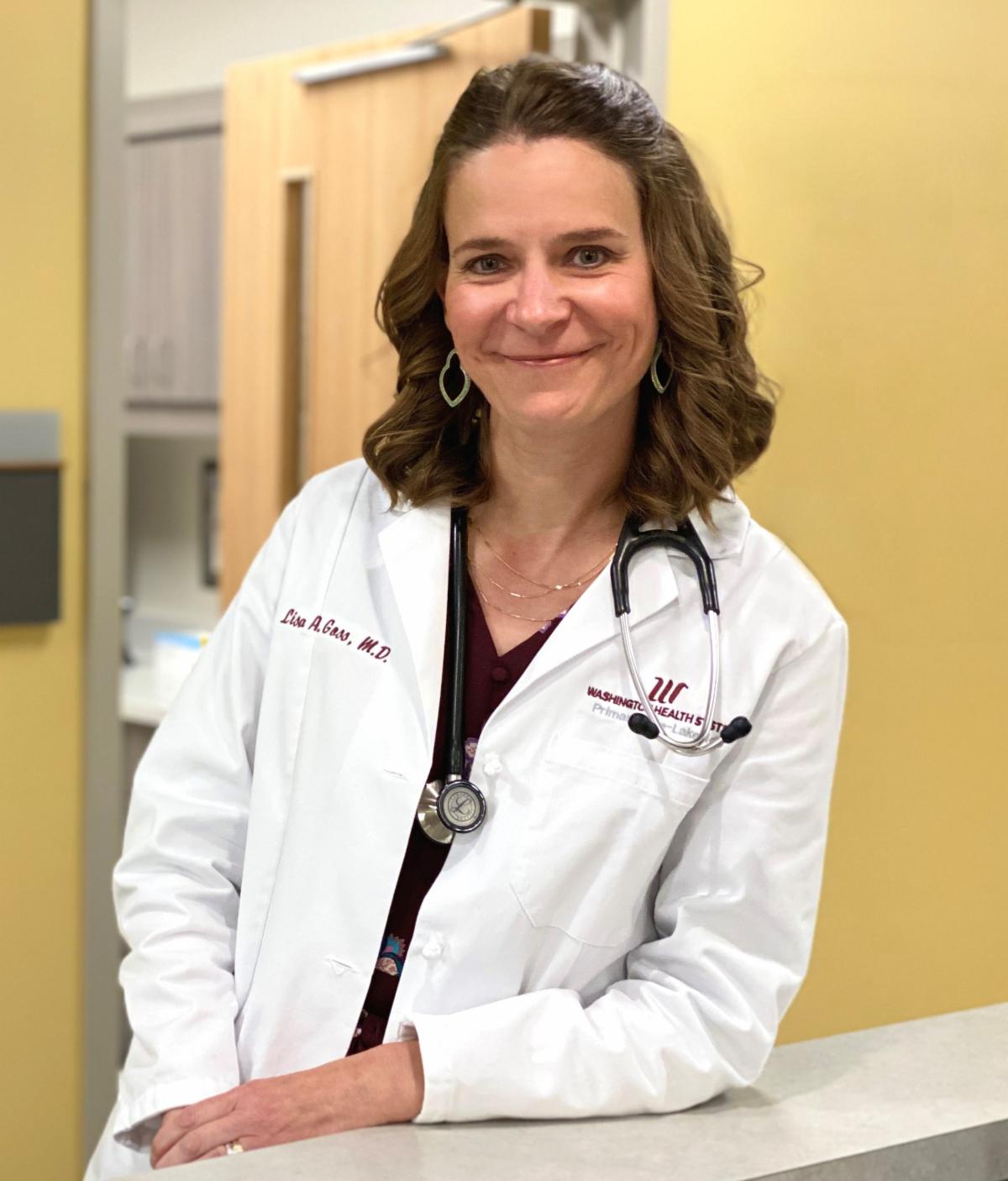
Happy Summer 2021! I hope this update finds you all enjoying the warmer weather and sunshine that help lift our collective spirits in these difficult times.
This is my first communication to you as the president of the Washington County Medical Society. I’d like to take this opportunity to thank Dr. Jennifer Lewis for her service as our outgoing president and to also thank all of you for being members of our society.
While this last year has been a challenge for us all, it has limited our ability to offer in person CME opportunities. However, we are pursuing an opportunity this calendar year that would allow attendees to meet their required opioid CME, which we last were able to offer in 2018. Stay tuned for more details!
We had great representation, once again, from our district at the 2020 House of Delegates (albeit virtual), with Drs. Jennifer Lewis, Lisa Goss and Mylaina Sherwood representing our area. Many topics were covered, and even though virtual, the HOD was still engaging and productive. I encourage you to look at topics covered at the PA Medical Society website at www.pamedsoc.org.
We will be having our summer social at Southpointe Golf Club on August 24th, barring any further pandemic-related restrictions. Please keep your eyes peeled for further details for an evening to socialize and relax with friends and colleagues!
Finally, please remember to log into the PA Medical Society website to take advantage of all the CME opportunities and keep up to date on legislative topics. Feel free to reach out to any of the board members with questions or concerns, and let us know how your medical society can better serve you!
|
|
Sheila M. Anderson, DO
Keaira Dupuy, MD
Lisa A. Goss, MD
Stephen Heirendt, DO, FACEP
Jennifer L. Lewis, MD
|
|
Debra J. Panucci. MD
Michael J. Platto, MD
Mylaina L. Sherwood, MD
John D. Six, MD
Monica L. Speicher, MD
|
|
In Good Health,
Lisa Goss, M.D.
|
|
TELEMEDICINE: THE OTHER OPERATION WARP SPEED |
|
While no one can deny the development and deployment of a vaccine for COVID-19 in less than a year from the start of the pandemic is scientific phenomenon, I think that the advances made in telemedicine in that same time frame are also quite impressive. While the journey for both providers and patients has been frustrating and a bit bumpy at times, one can’t deny that the pandemic has afforded huge advances in both reimbursable services and payments, but also the ingenuity by which these types of services can now be provided to our patients. As a result, telemedicine has allowed providers to continue to provide access to health care for many of our patients during these difficult times in a safe manner. Certainly not all types of health care afford themselves to a televisit, and clinicians have had to learn new and innovative diagnostic skill sets in order to try to accommodate limited physical exams in a remote manner. It has also meant that new workflows had to be instituted in physician practices in order to ensure support for both patients and clinicians to allow a successful televisit connection, as well as the closed ended communication that needs to occur at “check out” during a typical in-person visit.
Challenges remain moving forward. Rural access to broadband technology certainly was brought front and center with the use of telemedicine, highlighting the discrepancies of access to health care for some of our patients in the new world order. Internet connectivity, access to smartphones and laptops and patient abilities to use these technologies all remain very real obstacles to the use of this health care delivery tool.
As we look to move back to a new “normal”, it remains to be seen how much telemedicine will be a part of our day to day operations. However, it seems clear that many patients value the convenience and payers have seen the value, as well. The challenge will be how best to integrate telemedicine to improve clinic efficiency while also improving patients’ access to care.
|
|
ADVOCACY UPDATE FROM PAMED |
|
Legislative Update: Informed Consent, Physician Assistants, and More
Please note: This article is current as of June 10, 2021. As legislation is often on the move, visit www.pamedsoc.org and check The Dose for the latest updates on this and other legislation.
As summer approaches, legislative activity begins to narrowly focus on the passage of a state budget. With significant monies coming from the Federal government, the political struggle this budget cycle will be more about where the money goes as opposed to where its coming from. Though June is traditionally budget time in Harrisburg, there are a number of “bills in play” that the Pennsylvania Medical Society (PAMED) is actively engaged in and some behind the scenes activity of which you should be aware.
Informed Consent
Several years ago, the Pennsylvania State Supreme Court made a significant ruling on a case involving physician informed consent that sent the physician and hospital community into a tailspin. Under the ruling, physicians could no longer delegate the process of gaining informed consent to a physician assistant, nurse practitioner, or even a physician colleague. The court ruled that only the physician performing the test or procedure could provide informed consent to patients. Working jointly with the Hospital and Healthsystem Association of Pennsylvania, PAMED is on the verge of reversing the action taken by the Supreme Court through language found in Senate Bill 425. In essence, this legislation statutorily returns the process of informed consent back to the way it was done prior to the court ruling. The bill has been approved by the Senate and House Health Committees and now awaits final consideration by the full House. A vote is expected in June.
Physician Assistants
For the past two years, PAMED has been meeting with physician assistants (PAs) who are seeking to change some of the processes by which they are approved to practice along with alternatives to the current requirements for physician supervision. Legislation (Senate Bill 397/Senate Bill 398) has been introduced that would, among other things, no longer require the state medical and osteopathic boards to approve PA agreements. The bill also would allow supervising physicians to determine the frequency of which they are currently required to review and countersign patient charts where PAs were involved in providing care.
PAMED has been working closely with a coalition of physician organizations representing family physicians, internists, pediatricians, and orthopedic surgeons. The Pennsylvania Osteopathic Medical Association (POMA) has also been intimately involved. The coalition has expressed concerns with the current versions of Senate Bills 397-398 and are still determining their overall positions. The Senate Consumer Protection and Professional Licensure Committee voted to approve both bills during their meeting on June 8. However, the sponsor of the bills, Sen. Joe Pittman (Indiana), commented during the meeting that PAMED and POMA have expressed concerns with the current language and that discussions would continue before a final vote in the Senate takes place. PAMED formally opposed the bills until critical elements can be appropriately addressed.
Restrictive Covenants
PAMED has also been engaged in helping to advance legislation to address the issue of restrictive covenants in physician employment contracts. House Bill 681, supported by PAMED, is awaiting a final vote in the House before it makes its way to the Senate for consideration. Though the legislation may need additional amendments to “fine tune” its effectiveness, PAMED is urging its passage in the House. As one would expect, hospitals and health systems across the state are opposed to the measure. PAMED continues to remind legislators that non-compete contracts routinely disrupt patient care and long-term physician/patient relationships when circumstances require physicians to change employment. PAMED urges its members to engage in support of House Bill 681 by reaching out to their local state Representative and asking them to support patients by approving this proposal.
Prior Authorization
The tug of war between physicians and health insurers on reforming prior authorization continues. However, efforts by PAMED and patient advocacy organizations are beginning to move the needle on Senate Bill 225. A recent press event, featuring patients whose health was negatively impacted by prior authorization delays, was picked up by several media outlets including the Philadelphia Inquirer. Our grassroots and coalition efforts will continue on both Senate Bill 225 and House Bill 225 throughout the summer with the hope of seeing movement of these proposals in the fall…if not sooner.
Telemedicine
The COVID-19 pandemic has changed our lives in many ways. One positive change has been the efficacy and benefits of telemedicine. Patients and physicians alike have personally experienced the benefits telemedicine can provide to the health care delivery system. Working with other stakeholders, PAMED is happy to see that telemedicine has again been placed on the legislative agenda with the introduction of Senate Bill 705. Though similar legislation has previously stalled in the House after having been approved by the Senate, PAMED will be working with other stakeholders to see this bill cross the finish line this legislative session.
Physician Complaints
Lastly, PAMED is awaiting the introduction of legislation that will absolve physicians of the requirement that they disclose frivolous patient complaints filed with the state medical and osteopathic boards. Health insurers and other entities often ask physicians if they have been the subject of medical or osteopathic board complaints filed by patients. Few of these complaints result in any formal action taken by the boards yet physicians are required to acknowledge them. Legislation that will soon be introduced by Rep. Curt Sonney (Erie) will allow physicians to forget about patient complaints that their professional oversight boards found to have no merit.
Physician Advocacy
Physicians are encouraged to reach out to their elected officials to discuss these and other issues that impact their ability to appropriately and effectively provide patient care. For guidance in getting to know your legislators or specifics on current legislative activity, please reach out to PAMED’s Government Affairs staff by emailing David Thompson, Senior Director, at dthompson@pamedsoc.org.
|
|
JOIN WCMS FOR OUR SUMMER SOCIAL |
|
Join the Washington County Medical Society for our Summer Social on Tuesday, August 24 from 6 p.m. to 9 p.m. This safe and socially distanced event will be held outdoors at Southpointe Country Club.
Tuesday, August 24, 2021
Southpointe Country Club
360 Southpointe Blvd
Canonsburg, PA 15317
6 p.m. - 9 p.m.
|
|
JOIN THE WCMS BOARD OF DIRECTORS |
|
If you are interested in taking on a leadership role within the Washington County Medical Society, we have open positions on our board. Please contact us at washington@pamedsoc.org.
|
|
|
|
|
|
|