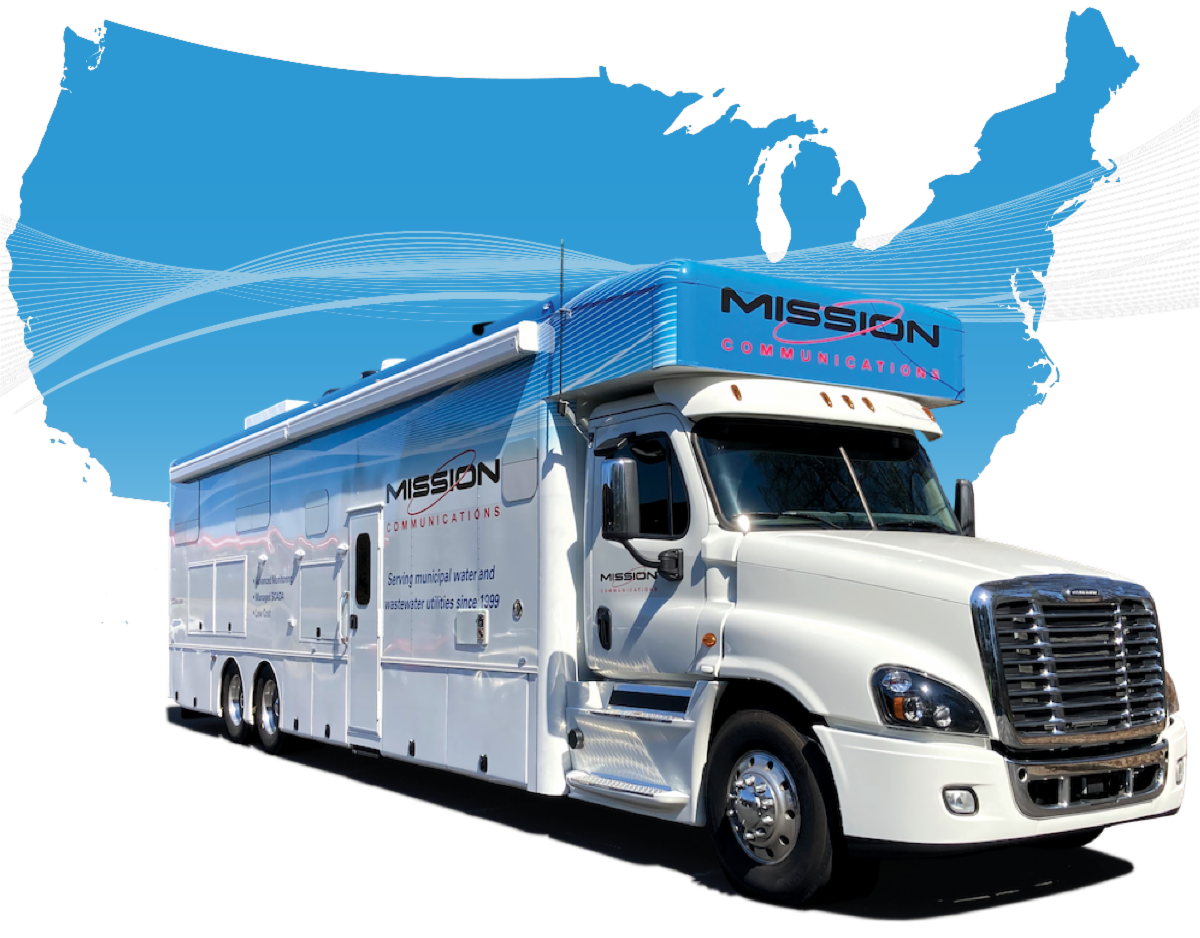
The Mission Communications mobile classroom has set off on its 2023 voyage and we want to make sure we don’t roll past you. The RV is delivering sales events, training classes, lunch–and–learns, product demos, and, of course, cookouts.
Our 44,000–pound, fully customized water and wastewater knowledge center is operated by bona fide Mission experts and we are looking to fill out our Summer and Fall itinerary across the United States. Don’t miss this opportunity. Book yourself a stop on the Mission RV roadshow! Contact us at RV@123mc.com. |
Another Customer–Requested Feature Release |
Mission Communications is releasing a new feature on 123SCADA that came directly from a customer. We will be spotlighting our soon–to–be released reference line capability in a future spring webinar. Get firsthand experience through live weekly webinars. Type “spring newsletter” in the comments section of a live webinar to claim your secret Mission gift. Sign up on 123mc.com. |
Montgomery, AL
March 19 – March 22
March 20 – March 23
Springfield, IL
Reno, NV
March 21 – March 22
Great Falls, MT
March 22 – March 24
March 26 – March 29
Osage Beach, MO
March 28 – March 30
Wichita, KS
April 2 – April 5
Charlottetown, PEI
April 2 – April 5
Mobile, AL
April 3 – April 6
Loveland, CO
April 4 – April 6
Albuquerque, NM
April 4 – April 7
La Crosse, WI
April 5 – April 6
Worcester, MA
April 11 – April 14
Houston, TX
April 17 – April 19
Roanoke, VA
April 18 – April 21
San Diego, CA
April 19 – April 21
Tulsa, OK
April 24 – April 27
Lake Tahoe, NV
April 26 – April 27
Rapid City, SD
April 30 – May 3
Hot Springs, AR
May 3 – May 5
Kennewick, WA
May 9 – May 11
Anchorage, AK
May 9 – May 11
Phoenix, AZ
May 9 – May 11
Jekyll Island, GA
May 10 – May 12
Clarenville, NL
May 22 – May 24
Lake Placid, NY
May 23 – May 25
Orange Beach, AL
June 7 – June 8
Waterloo, IA
June 7 – June 9
Saratoga Springs, NY
June 11 – June 14
Toronto, CA
June 14 – June 15
Stillwater, OK
|
All trade show information is subject to change. Please confirm dates and schedules with the individual trade shows. |
Web Portal II—Advanced Features, Reporting, Supergraph, Volumetric Flow
Web Portal II—Advanced Features, Reporting, Supergraph, Volumetric Flow
Survey of Features
Hardware and Instrumentation
Web Portal I—Unit Setup Options, Notification Setup Options, Alarm Groups, Website Tools
Web Portal II—Advanced Features, Reporting, Supergraph, Volumetric Flow
Survey of Features
Hardware and Instrumentation
Web Portal I—Unit Setup Option, Notifications Setup Options, Alarm Groups, Website Tools
Web Portal II—Advanced Features, Reporting, Supergraph, Volumetric Flow
Survey of Features
Certificates are available for any webinar attended, by request.
|
|
Mission Helps Columbus Water Works Support Columbus and Evolving Environmental Policies |
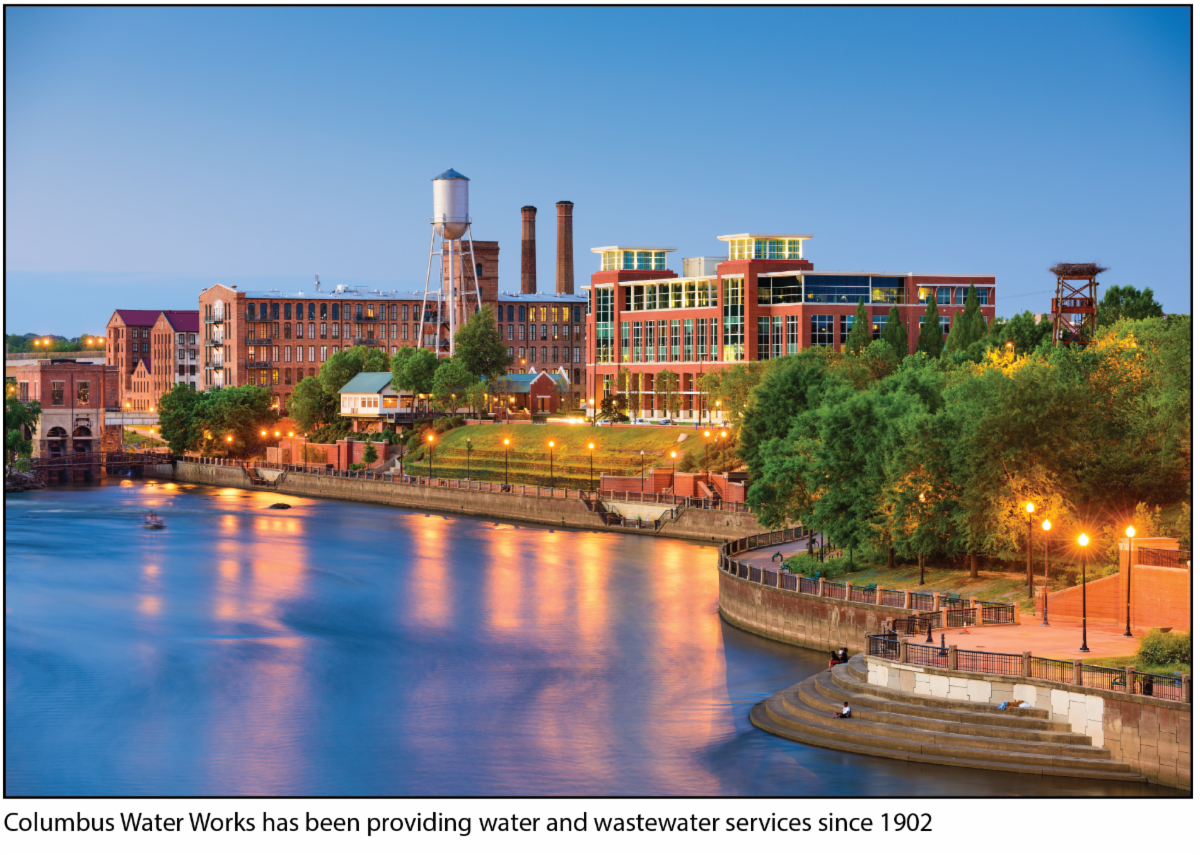
Staying in compliance with increasingly stringent environmental regulations can be challenging, but Mission Communications customer Columbus Water Works (CWW) proves that collaborating with the right partners can go a long way. Established in 1902, CWW provides water and wastewater services to the consolidated city of Columbus, Georgia, which includes all of Muscogee County and several surrounding municipalities. Columbus is the second largest city in Georgia with a population of over 200,000. CWW operates five water and wastewater treatment plants and over 130 other remote sites across the service area. The enormous size of the base was actually a big reason that Mission devices were selected. |
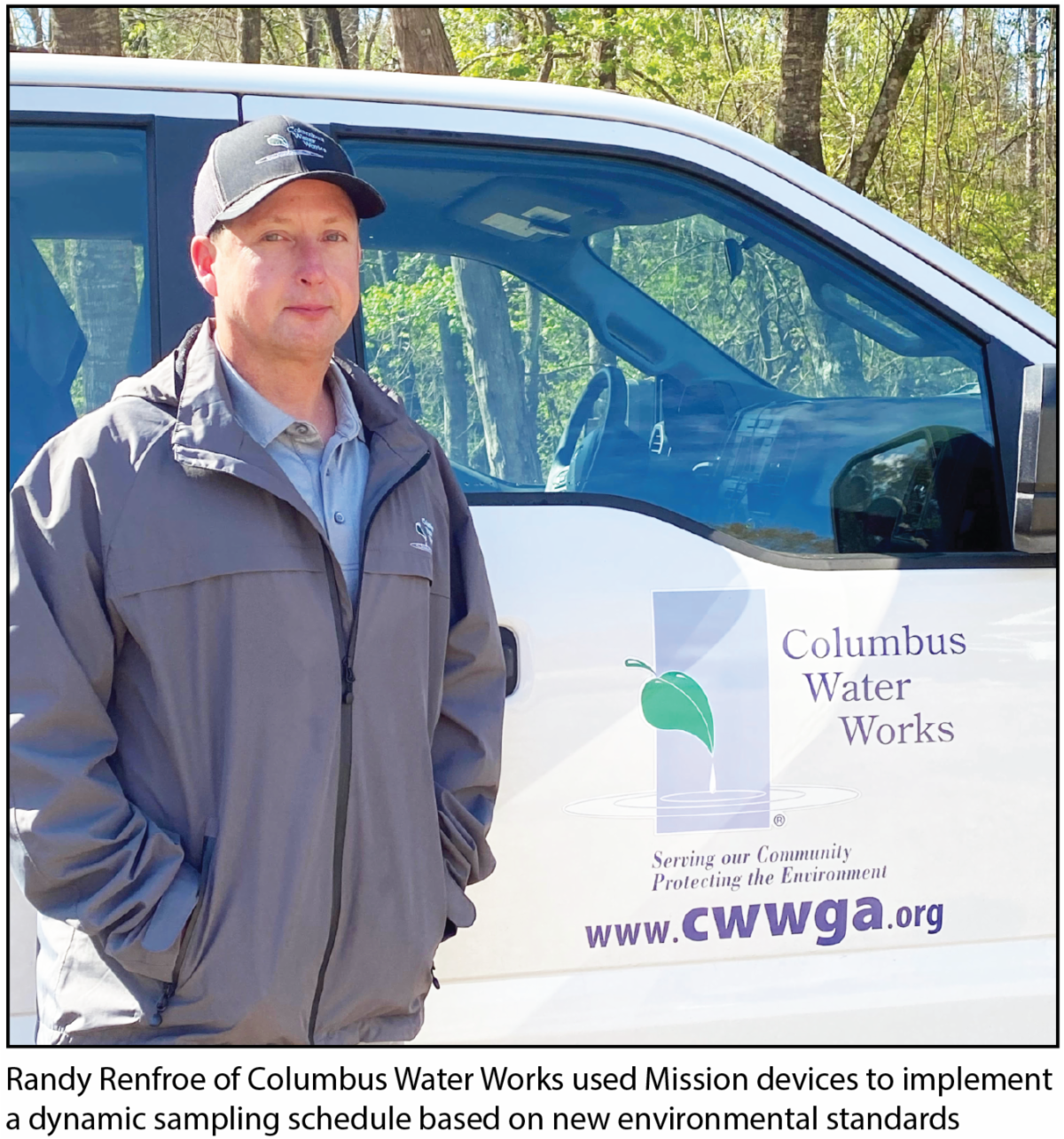
Randy Renfroe is the Assistant Superintendent for the Managed Maintenance Department over Electrical and Instrumentation for CWW. He remembers, “We initially started using Mission to support the base. We monitor wells at shooting ranges and training locations, and we have metering sites too. We use about 20 MyDro and Manhole Monitor devices around the area, including our two combined sewer system (CSS) treatment plants.” These devices feed into CWW's customized water and wastewater supervisory control and data acquisition (SCADA) systems using open platform communications (OPC). Each of the two CSS treatment plants include a Mission remote terminal unit (RTU) that monitors incoming rainwater and alarms an operator when it’s time to operate the plant. Effluent water was sampled and tested as it left each plant. It served as a reliable system for years.
In 2022, new permit requirements expanded the need for testing. CWW Environmental Services needed to monitor the effects these plants had on the Chattahoochee River. Strategic testing locations had to be constructed to sample the water quality at seven additional locations. Samples now had to be taken up river of the treatment plants, at each of the plants, between the two plants, and down river. This ensures that the CSS treatment plants are performing their functions properly, and that the Chattahoochee River continues to meet environmental standards.
|
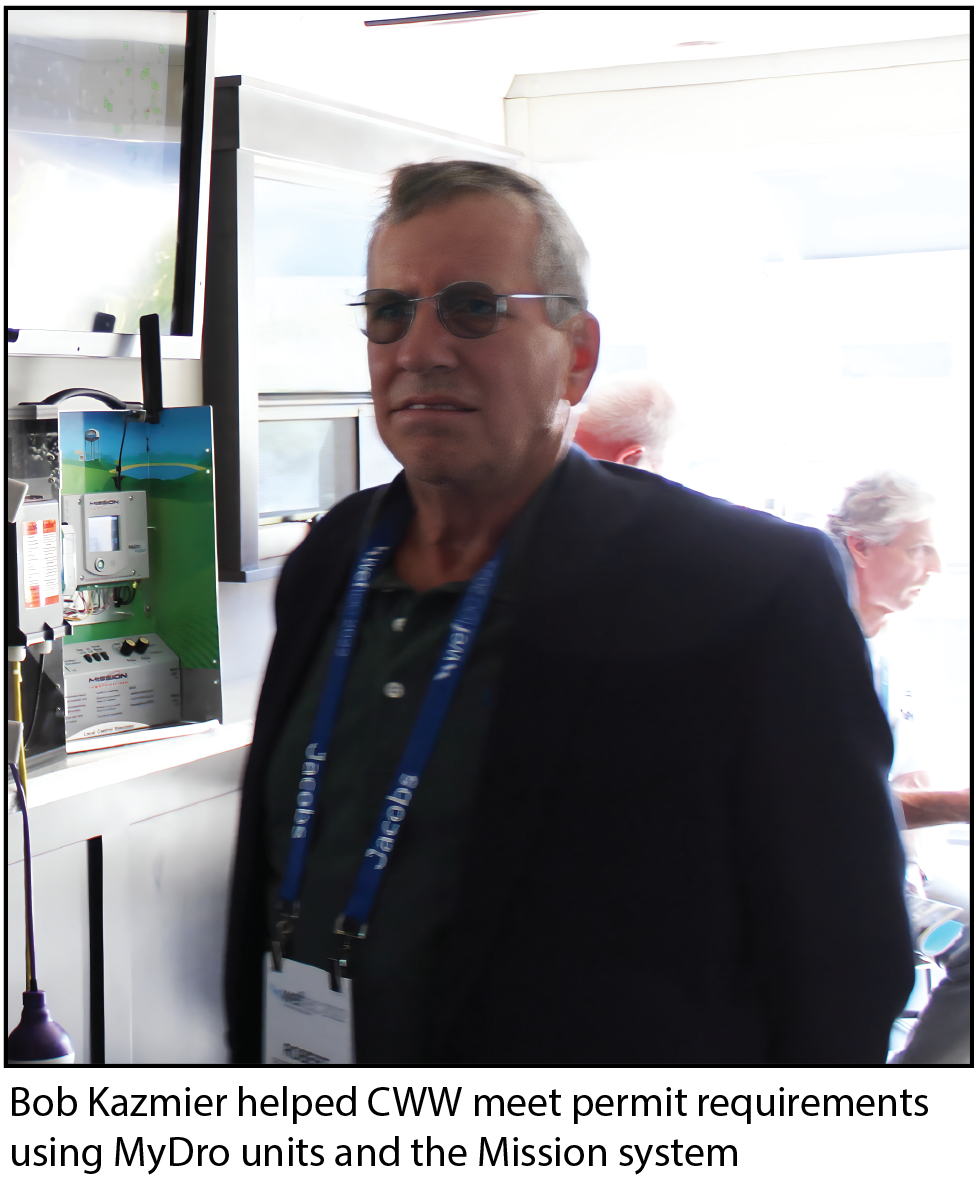
Bob Kazmier of Kazmier and Associates explains the change. “The permits that CWW needed to continue to operate their CSS plants required them to provide samples of the treated water like they always had; however, they also needed the submersible pumps at the new river sample sites to monitor the impact the treated water was having on the river water quality. And it needed to take samples more frequently when the heavy rain came.” This new requirement called for a smarter solution than the one that had served so well. One standard sampling schedule wasn’t going to be enough to meet permit requirements anymore; the system had to know when to change sampling frequency schedules.
Renfroe explains, "We were trying to figure out how to change the sampling times dynamically based on the rain. We already had the Mission RTUs at our two CSS plants so we thought maybe we could use the Mission system to activate the different sampling frequencies at the sample sites." Renfroe and Kazmier, worked with Mission Communications when building the test sites to engineer a solution. Now when the rain comes and the discharge of treated water increases, CWW gets an output from its local programmable logic controller (PLC) to an input on a Mission unit at each of the CSS treatment plants. That triggers a discharge alarm and activates the output relays on Mission units at the seven sampling sites. This coordinates sampling frequency on the automated samplers with the rain frequency. When the rain event is over and the plants are no longer operating, the water sampling rate is returned to normal at the sites.
It's not only Renfroe at CWW who gets notified of the frequency sampling change. The staff at CWW Environmental Services receives them too, so they can collect the samples on the new schedule. The Mission devices at the seven sampling locations also provide reports summarizing pH and temperature data daily, directly to the Environmental Services staff. A separate 123SCADA account was created for the sampling stations so that full transparency and connectivity can be monitored by both organizations.
Renfroe noted, "Access to 123SCADA is great. I am able to log in, set up alerts and notifications, and download data in an Excel file, which is very useful to us. We have one location where we calculate flow using the downloaded data." Renfroe went on to praise the ease of implementing Mission devices, saying, "With any new automation, there are difficulties to work through, but with the startup, activation, and application of Mission units, it was pretty seamless."
Renfroe was also impressed with how Mission was able to keep all of the PLCs working together. Matt Coursillac, Mission National Sales Manager who covers the region, helped Renfroe figure out how to coordinate timing on the sampling system “PLC clocks tend to wander if you leave them alone. Matt was on a call and we asked if he knew how to synchronize them. He worked with Mission engineers and came back with the solution to let the Mission system output a clock reset function daily to each of the sample site PLCs so that every day starts with all of them synchronized.”
Overall, Columbus Water Works has found success in using Mission devices, not only to remotely monitor wells and meters, but to actively change sampling operations based on recent rainfall events. Doing this ensures they maintain compliance and retain their operational permits.
For more information on how Mission Communications can support your compliance and permit requirements, contact Sales@123mc.com. |
Winter Storm Season is Almost Over —
So It Is Time to Plan
|
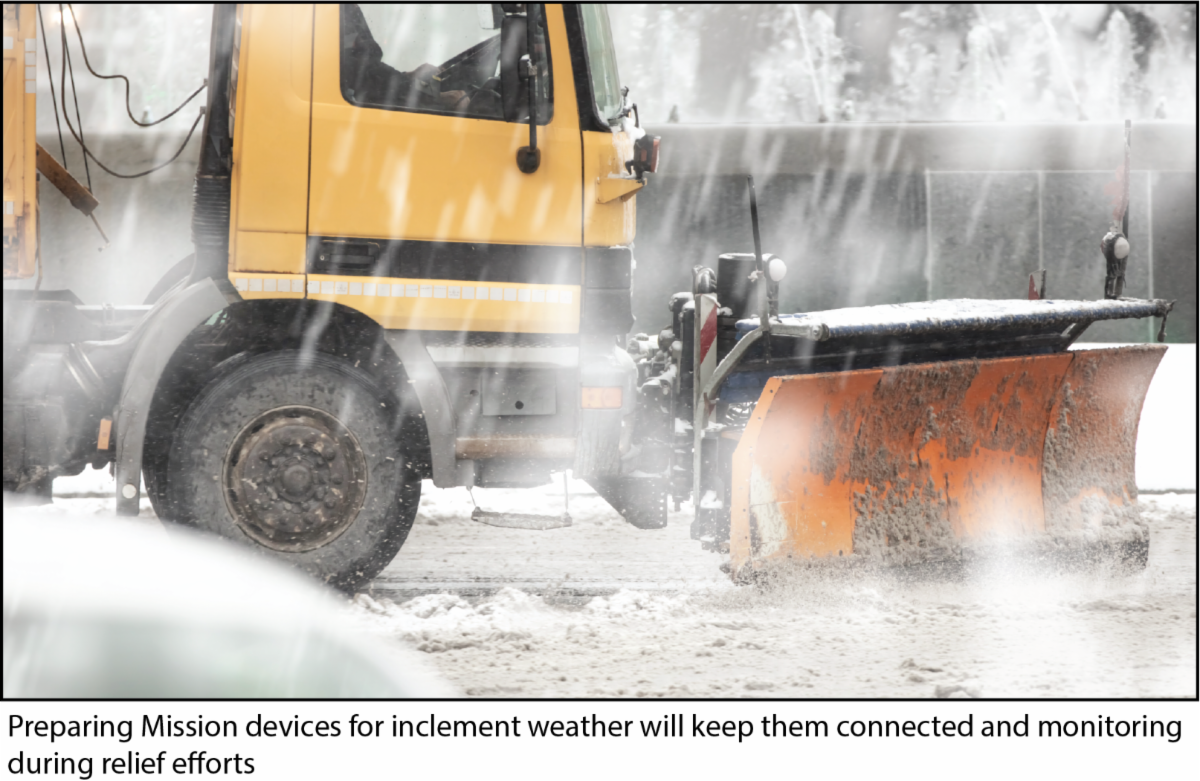
Water and wastewater utilities in every region in the United States were hammered this past fall and winter. The west coast of the United States saw the worst storms in decades, and they were so powerful they affected the rest of the country. The late–season nor’easters have forced expensive recoveries and even civilian rescues. Threats of hurricanes, winter storms, and wildfires underscore the importance of a resilient infrastructure to ensure the uninterrupted provision of essential services. Now that it’s spring, it is time to prepare for the next storm season. Preparing Mission Communications remote monitoring hardware and 123SCADA alarms and settings will not only make the system ready, but it can also contribute useful, real–time data during a weather event.
Ensure that all Mission remote terminal units (RTUs) are equipped with reliable batteries to avoid going offline during an outage. Strains on electric grids are already high in some regions with rolling blackouts. The threat of sudden outages during lightning storms can be avoided with proper preparation. During an electrical storm, consistent power can make the difference between a successful implementation and failure. Additionally, during heavy snow or icefall, utilities should consider having backup generators to continue operations during an AC power failure.
In low–temperature environments and during freezing threats, take extra care to ensure that any transducers connected to your Mission RTUs do not freeze next winter. Transducers measure various parameters such as pressure or flow rate, and that valuable information could be lost when it is needed the most. Insulating transducers protect from damage related to low temperatures. But even if a transducer stops working, having a spare to swap out and resume operation is an easy precaution to take. Once swapped, monitoring continues normally. Another option is to deploy submersible transducers, which are designed to withstand more severe weather conditions than exposed, non-submersible models.
For solar panels on Mission devices, schedule cleaning and adjustments to the elevation to compensate for the sun’s apparent position. Consider whether or not a larger solar panel could keep your devices supplied with more consistent power levels next fall and winter. When a solar outage is unavoidable, keep spare batteries ready on a bench charger to swap out and resume service. Also, to extend battery life, consider using 0 – 5 VDC transducers with solar–powered units.
Backup generators were valuable assets during weather crises this winter. Make sure you plan your resources well enough to include the possibility of using them should your Mission devices lose AC power. Include in your plan which locations should be prioritized.
There are also software–based preventive measures that can optimize a Mission–monitored system for weather. Make sure that 123SCADA contains an active signal loss alarm rule for all devices. This way, if power is lost or another hardware issue cuts the signal, an alarm is delivered and action can be taken swiftly. Taking advantage of the SMS alarm notifications is the best way to handle situations with volatile weather conditions from a smartphone. You can acknowledge, silence, and interact with multiple alarms. Under Preferences > Customer Preferences, select the nearest and most reliable Weather Station; Also, Under User Preferences, turn on the Weather Notification setting. You can also set up a weather station for each Mission device.
Make sure all hardware is installed properly. Prepare your devices for next year by confirming proper installation of all Mission RTUs with the installation guides. Improperly installed devices are more susceptible to failure due to exposure to inclement weather. All current installation guides, as well documents containing SMS tips and best practices are available on 123SCADA under Help > Documents.
For help preparing your system for extreme weather, email TechSupport@123mc.com or call 877.993.1911, option 2. |
Mountain Lake — Confusing Scientists and Movie Fans with its Strange Behavior |
If “Virginia is for Lovers,” as the state’s tourism board boasts, then Mountain Lake, near the southwest town of Pembroke, is Cupid’s target for a strange combination of basic nature admirers, fans of 80s movies, and science buffs. This beautiful body of water located near the summit of Salt Pond Mountain has a unique history and cycle of draining and refilling that has puzzled scientists and intrigued pop culture enthusiasts for decades.
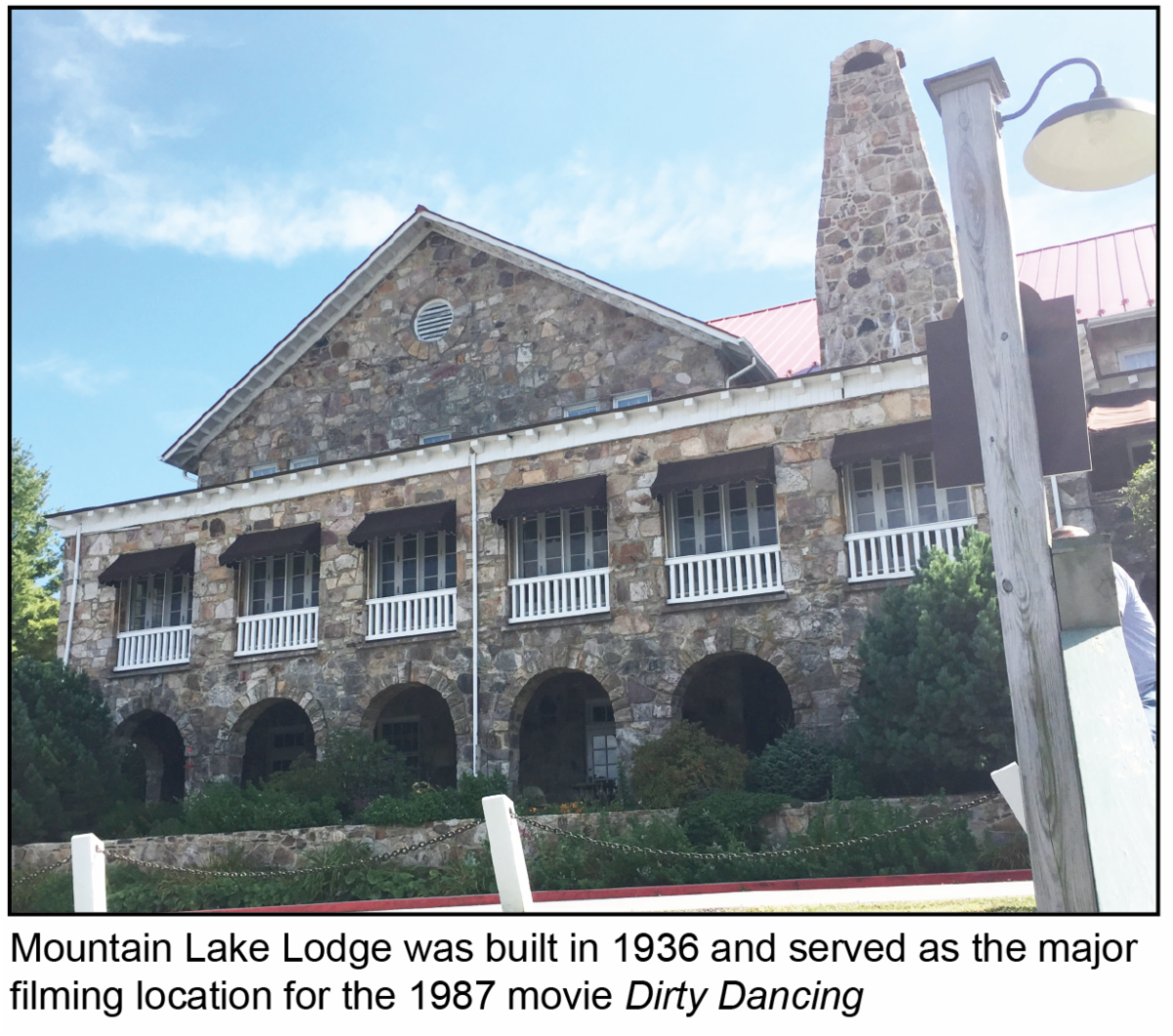
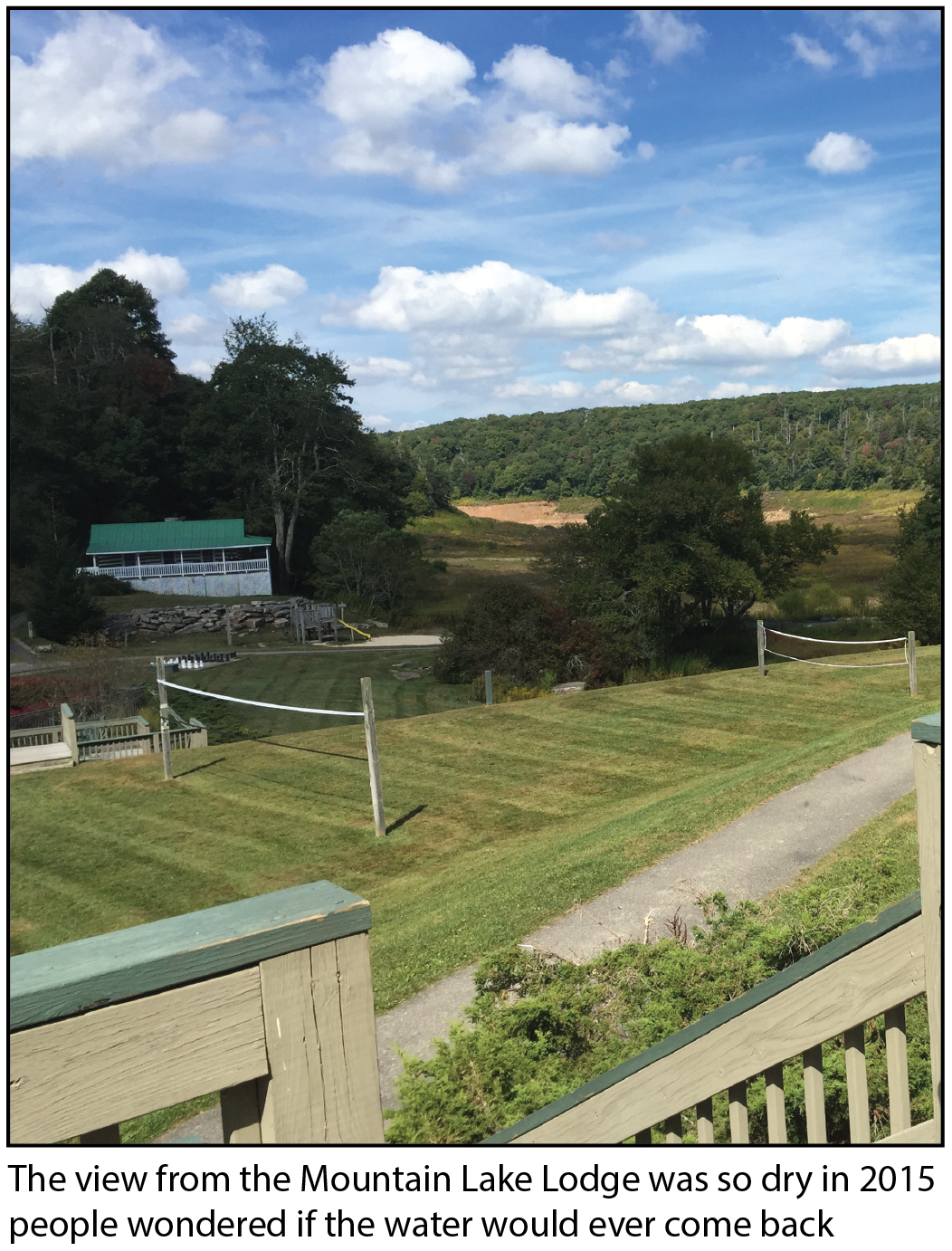
The Mountain Lake Lodge served as the fictional location of Kellerman’s Mountain House in the 1987 film Dirty Dancing. One famous scene showcases Johnny (played by Patrick Swayze) and Baby (Jennifer Grey) practicing their dance moves and struggling with one particular step. “You know the best place to practice lifts? In the water,” said Johnny. The scene then cuts to a montage featuring the characters practicing lifts in the middle of the clear waters of Mountain Lake—the perfect setting for the movie's romantic story. But if you want to visit the Mountain Lake Lodge during its draining cycle to recreate this scene (as people often try to do) you’ll end up doing it dry.
Mountain Lake is one of only two natural lakes in the Appalachian Mountains and its cycle of draining and refilling makes it the subject of studies in the field of geology, hydrology, chemistry, and biology. It is the only known lake that has this strange behavior. Its natural drainage system allows water to seep out and drain away during dry periods, and then refill during wet periods. The cycle is irregular and can last anywhere from a few years to a few decades. Dr. Ross Irwin of the Smithsonian Air and Space Museum once explained that the lake “heals itself” during the low periods because it is able to erode the sediment off of the basin floor, taking it out through the drainage system and maintaining its unique basin.
|
The lake was formed more than 400 million years ago, during the Devonian period, when the Appalachian Mountains were being formed. Over time, the lake has undergone several of these cycles of draining and refilling, with the water level dropping dramatically every few decades or centuries. Virginia Tech and Radford University researchers have been studying Mountain Lake in an effort to understand its unique geology and hydrology. They uncovered a complex system of underground channels and aquifers that control the lake's water level and drainage patterns. They also believe that the lake's drainage is influenced by geological processes, weather patterns, and possibly human activity.
The cycle also creates unique habitats that typically wouldn’t occur in water environments with the high acidity of Mountain Lake. Many research teams from universities and scientific organizations have studied the water's unique chemistry and its potential use in the production of high–tech materials. Others have studied its potential as a source of renewable energy, with some suggesting that the lake's natural currents could be harnessed to generate electricity.
Whether you are a fan of pop culture, a nature enthusiast, or a scientist studying hydrology or geology, Mountain Lake is a place that is sure to spark your imagination and pique your curiosity. Its unique history, stunning beauty, and mysterious nature make it one of the most fascinating and intriguing places in the world, and a true testament to the power and beauty of nature. Even if you visit during a dry period, you can still visit the lodge to see where Johnny delivered the iconic line “Nobody puts Baby in a corner.”
|
|