|
Isometric force is a fundamental concept in understanding muscle contractions and their mechanics, particularly in the context of movement. Muscle contraction can be characterized by the velocity of shortening and the magnitude of isometric force (tension). The slower a skeletal muscle shortens, the greater the force it can generate during contraction, and vice versa. This principle is known as the force-velocity relationship and plays a pivotal role in muscle function.
The force-velocity relationship was initially derived from Hill's groundbreaking studies in isolated frog muscles in the 1930s and has been instrumental in developing theories about the mechanisms of skeletal muscle contraction. It reveals a crucial connection between the speed of muscle shortening and the force it can produce. When a muscle is stimulated, it first generates force without changing its length, a phase called isometric force generation. This initial tension sets the stage for subsequent actions.
Read the Study: Physiological Significance of the Force-Velocity Relation in Skeletal Muscle and Muscle Fibers
In recent years, researchers have been exploring the in vivo force-velocity relationship to describe muscle function in various contexts. Elite sports, such as vertical jumping, sprinting, or rowing, have been prime areas of study, aiming to understand how muscles perform during complex tasks. Additionally, investigations in older adults have sought to comprehend muscle function during everyday activities like walking and rising from a chair.
Moreover, there is an increased interest in applying the in vivo force-velocity relationship as a tool to guide training practice. By measuring the force produced by muscles at different shortening or lengthening velocities or the velocity at which muscles act against various forces, researchers can obtain valuable performance characteristics such as maximal isometric force, maximal unloaded shortening velocity, and maximal power output. This knowledge allows for the optimization of training regimens, benefiting athletes and individuals seeking to improve their overall movement and performance.
Continue Learning: On the Shape of the Force-Velocity Relationship in Skeletal Muscles: The Linear, the Hyperbolic, and the Double-Hyperbolic
In essence, isometric force is the foundation upon which muscle contractions and movement build. It represents the initial tension generated by muscles, shaping their subsequent actions according to the force-velocity relationship. Understanding this relationship is crucial for athletes, trainers, and researchers, as it provides a quantitative framework to assess muscle performance and optimize training practices for enhanced movement and overall function in various domains. To omit isometric strength training from an individual’s strength and conditioning program would be a grave injustice that can lead to higher rates of injury and poor athletic performance.
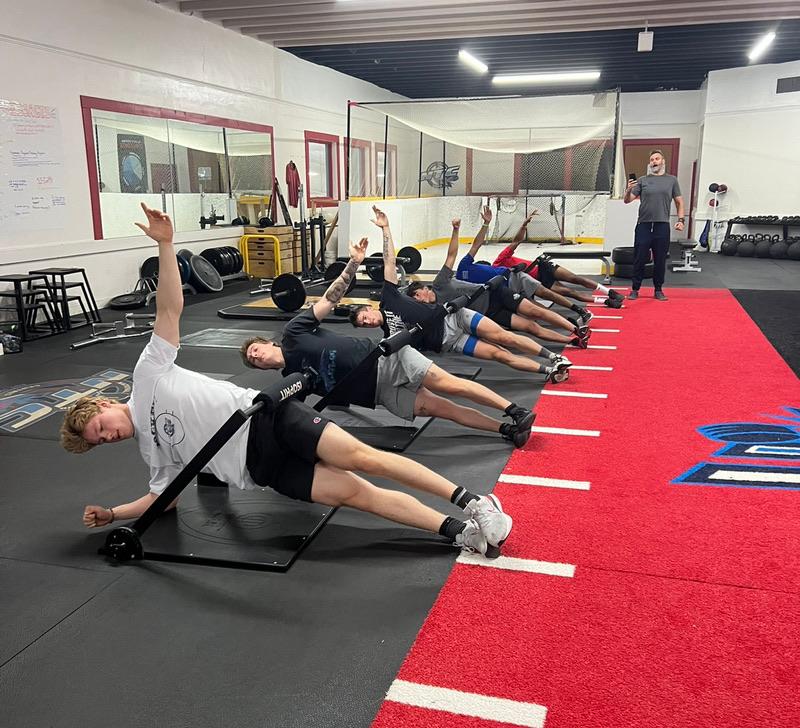
For more information on isometric strength training or to purchase an Isophit 316 or 316XL for your business or personal use, visit our website at www.Isophit.com or reach out to me at brad@isophit.com. Please share this article on your social media channel or with your family, friends, and colleagues.
Yours in Isometric Strength,
Brad Thorpe
CEO / Inventor
Isophit
|