|
Alabama Farmers Federation’s fight for affordable rural health care continued this week as members pushed back against mandates that will increase costs and benefit large companies.
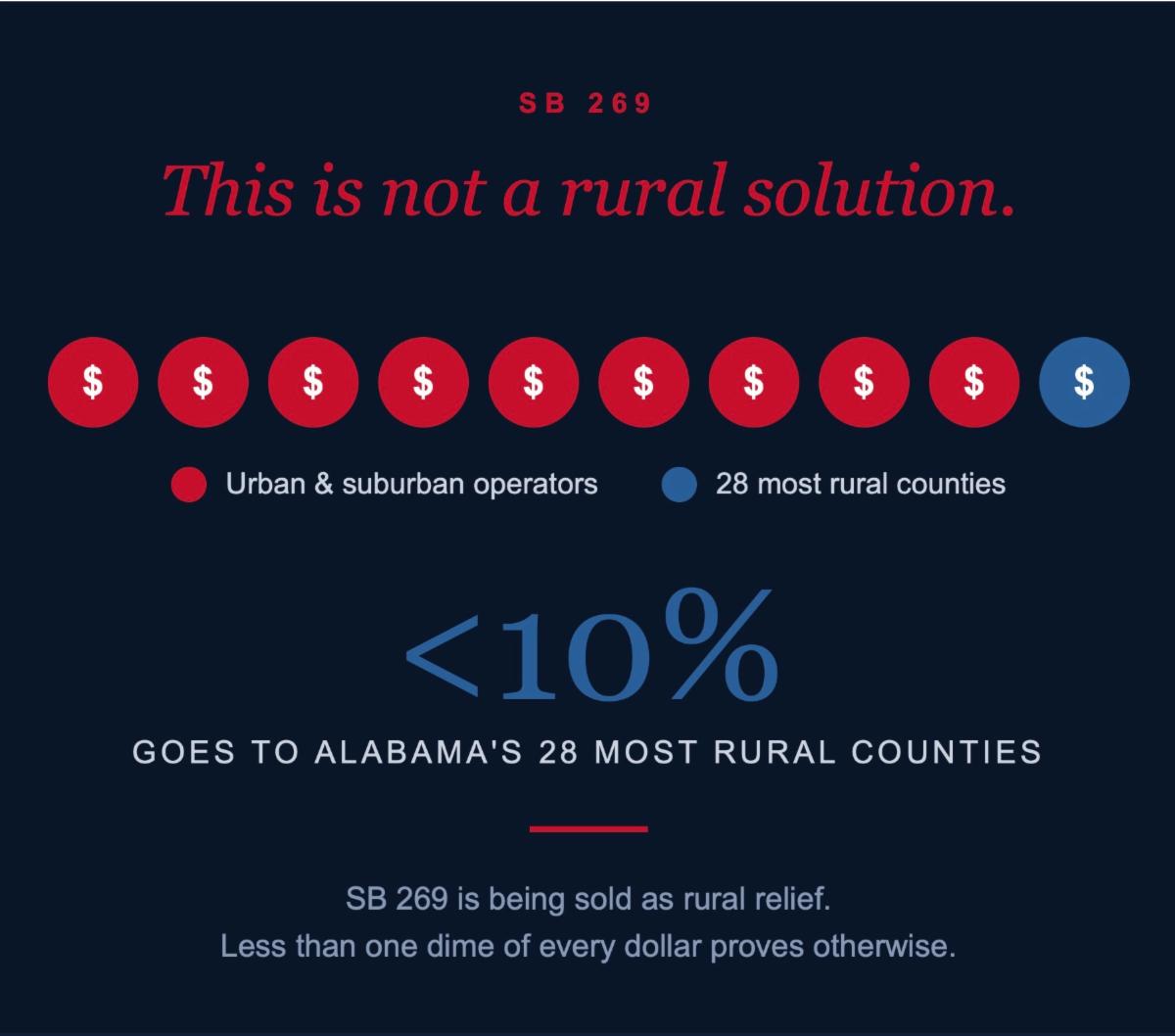
The focal point of this week’s discussions were SB 269 and HB 400, which would raise health coverage costs for 10% of customers while sending 90% of money from higher premiums to ambulance providers from metro areas. These bills are among more than a dozen health care mandates introduced this session, including two already signed into law.
“The Federation continues to sound the alarm about escalating health care costs, especially in rural Alabama,” said Federation External Affairs Department Director Brian Hardin. “For almost 70 years, we have worked to provide affordable health care options for our members. It’s never been about making a profit. It’s about serving our members. Last year, we launched Alfa Health Plans to help farmers and others facing exorbitant costs under failed federal mandates. Now, Alabama’s supermajority Republican legislature is considering approving its third mandate of this session. The trend should be concerning for all families and businesses who have to pay for health coverage. These mandates reflect previous federal insurance requirements that restrict choices and drive up costs.”
Research by the Federation shows only $2 million out of the $21 million raised by the legislation would be sent to 28 rural counties, further highlighting the divide between benefits to rural and urban counties.
SB 269 by Sen. Bobby Singleton, D-Greensboro, would establish payment rates from health insurers to ambulance service companies and force insurers to contract with any willing ambulance provider. The bill is expected in the House Insurance Committee next week. The companion bill, HB 400 by Rep. Ed Oliver, R-Dadeville, awaits action in the House.
Federation members are encouraged to contact committee members and ask them to oppose the bill.
Members of the House Insurance Committee include:
Chair Corley Ellis, R-Columbiana
Vice Chair Brett Easterbrook, R-Fruitdale
Ranking Minority Member A.J. McCampbell, D-Linden
Rep. Chris Blackshear, R-Smiths Station
Rep. Chip Brown, R-Hollinger's Island
Rep. Brock Colvin, R-Albertville
Rep. Kelvin Datcher, D-Birmingham
Rep. Phillip Ensler, D-Montgomery
Rep. David Faulkner, R-Mountain Brook
Rep. Jamie Kiel, R-Russellville
Rep. Patrick Sellers, R-Pleasant Grove
| |
| Budgets Pass Intitial Chambers | |
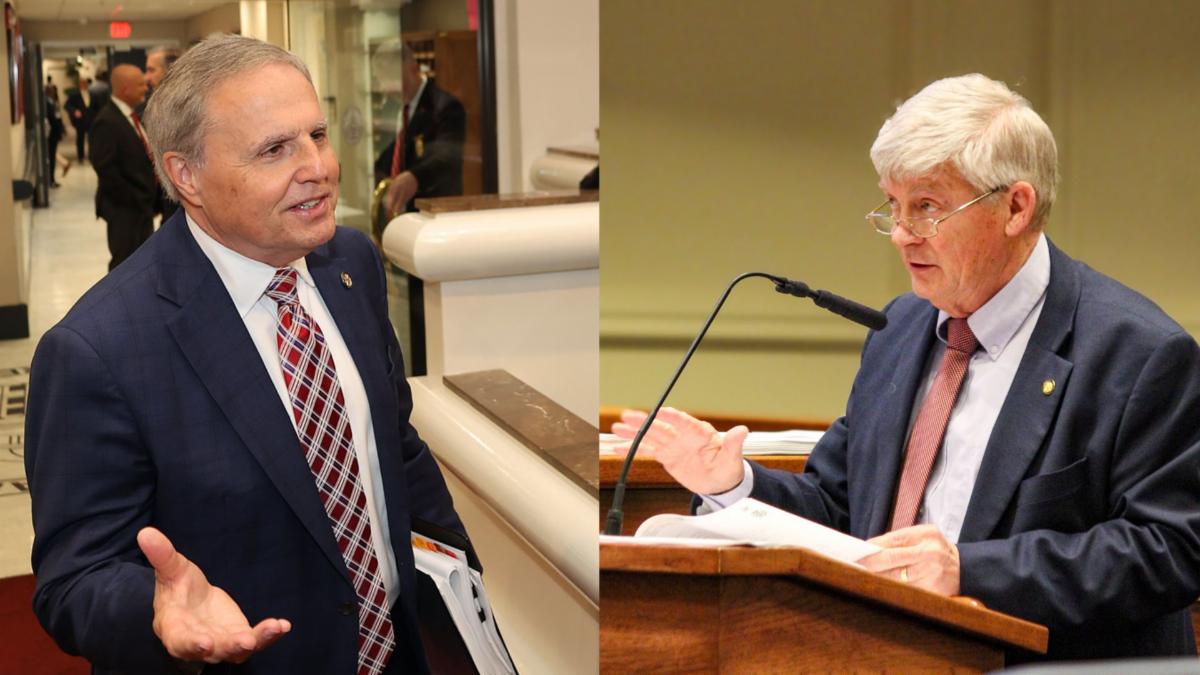
| House Ways & Means Education Committee Chair Danny Garrett, R-Trussville, (left) and Senate Finance & Taxation Education Committee Chair Greg Albritton, R-Atmore, debated the General Fund and Education Trust Fund budgets in the Alabama House and Senate. | |
| |
Alabama’s 2027 budgets were approved by originating chambers this week with the House passing the Education Trust Fund (ETF) and the Senate passing the General Fund.
Alabama Farmers Federation priorities were fully funded in the $10.5 billion ETF, while decreases in the $3.7 billion General Fund reflect limited federal spending. Federation External Affairs Department Director Brian Hardin said ensuring farmers are protected with adequate and responsible funding is a goal this session.
“We appreciate the leadership of House Ways & Means Education Chair Danny Garrett, R-Trussville, in maintaining funding for all Federation priorities,” Hardin said. “However, decreased funding for concentrated animal feeding operations (CAFO) in a record General Fund budget is an issue our farmers would like to see addressed as the proposal is considered by the House. After experiencing a decrease of $200,000 in CAFO funding in last year’s budget, the Senate passed another cut of $200,000 previously recommended in the Senate Finance & Taxation General Fund Committee, chaired by Sen. Greg Albritton, R-Atmore. Support for Alabama farmers registered as CAFOs has dropped from $575,000 two years ago to a proposed $175,000 this year, while the General Fund Budget has had record highs both years.”
While several decreases for state programs reflect reductions in federal funding, CAFO funding supports a regulatory program administered through the Alabama Department of Environmental Management. Decreased funding could lead to higher out-of-pocket costs for farmers, especially hundreds of poultry-farming families throughout the state, Hardin said.
“We’re encouraging farmers with registered CAFOs to reach out to their local representatives and ask for restored funding,” Hardin said. “Affordability remains an issue across the board, and we hope lawmakers will consider increasing this line item to protect farmer dollars.”
The General Fund budget, SB 146 by Albritton, was passed by the Senate Wednesday and awaits action in the House Ways & Means General Fund Committee. State expenses not related to education are appropriated through the General Fund budget.
HB 238 by Garrett represents the Education Trust Fund budget, which passed the House Thursday and awaits action in the Senate Finance & Taxation Education Committee.
Federation priorities include:
Education Trust Fund
| |
| | Alabama Agriculture in the Classroom | $100,000 | Unchanged | | Alabama TREASURE Forest Association | $60,000 | Unchanged
| | FFA Affiliate Membership | $275,000 | Unchanged | | Agriscience Education Program Improvement Specialist | $233,900 | Unchanged | | North Alabama Agriplex | $58,000 | Unchanged | | National Livestock Competition Coordinator | $250,000 | Unchanged | | 4-H Youth Development and Animal Science Extension Specialist | $125,000 | Unchanged | | Agriscience Teachers | $1,000,000 | Unchanged | | Auburn University |
|
| | Poultry Science Department | $250,000 | Unchanged | | Alabama Agricultural Experiment Station | $46,031,398 | Increase of $1,556,617 from FY26 | | Alabama Cooperative Extension System | $48,466,499 | Increase of $1,638,964 from FY26 | | Irrigation Research and Outreach Initiative | $500,000 | Unchanged | | Alabama Department of Agriculture & Industries |
|
| | Farm to School Program | $600,000 | Unchanged | | Rural Medicine |
|
| | Auburn Rural Health Program | $300,000 | Unchanged | | Tuskegee University Rural Health Program | $89,815 | Unchanged | | Rural Medical Scholars Program at UA | $962,500 | Unchanged | | Rural Health Program at UAH | $823,400 | Unchanged | | Soil and Water Conservation Committee | $3,023,376 | Unchanged | | Liberty Learning Foundation | $1,175,000 | Unchanged | | Jones Valley Teaching Farm | $700,000 | Unchanged | | Gadsden State Poultry Technology Center | $100,000 | Unchanged | | | | Alabama Department of Agriculture & Industries |
|
| | Sweet Grown Alabama | $300,000 | Unchanged | | North Alabama Agriplex | $350,000 | Increase of $100,000 from FY26 | | Alabama Department of Environmental Management |
|
| | Concentrated Animal Feeding Opertations (CAFO) | $175,000 | Decrease of $200,000 from FY26 ($400,000 from FY25) | | Alabama Forestry Commission |
|
| | Forest Products Economic Development Specialist | $200,000 | Unchanged | | Agricultural & Conservation Development Commission | $1,972,321 | Decrease of $337,500 (reflecting Statewide Feral Swine Program Decrease) | | Statewide Feral Swine Program | $337,500 | Decrease of $337,500 from FY26 | | Alabama Department of Agriculture & Industries | $23,151,992 | Increase of $1,110,554 from FY26 | | Alabama Forestry Commission | $15,764,485 | Decrease of $2,450,000 from FY26 | | Soil and Water Conservation Committee Program | $4,015,995 | Decrease of $200,000 from FY26 | | People Against a Littered State (PALS) | $200,000 | Unchanged | | | |
Alabama Public Service Commission: SB 360 by Sen. Clyde Chambliss, R-Prattville, would expand the Alabama Public Service Commission (PSC) from three to seven commissioners and establish a governor-appointed Secretary of Energy with direct oversight authority. The bill would also freeze rates from Oct. 1, 2026, until Jan. 1, 2029. The bill was passed by the Senate March 12 and awaits committee referral in the House.
Data Center Infrastructure Requirements: SB 270 by Sen. Lance Bell, R-Pell City, would prevent utility providers from shifting the costs of infrastructure updates to customers due to increased data center needs. This bill would require the PSC to review contracts between large-load data centers and require the centers to cover increased costs. SB 270 was passed by the Senate March 12 and will be in the House Transportation, Utilities & Infrastructure Committee March 17. HB 403 by Rep. Neil Rafferty, D-Birmingham, is the House companion.
Data Center Incentives: SB 265 by Sen. Andrew Jones, R-Centre, would reform data center incentives and reduce their property tax exemption. The bill was passed by the Senate March 12 and referred to the House Economic Development & Tourism Committee. A companion, HB 399 by Rep. Leigh Hulsey, R-Helena, was passed by the House March 10 and referred to the Senate Fiscal Responsibility & Economic Development Committee.
CTE Professional Pathway: HB 520 by Rep. Marcus Paramore, R-Troy, would establish an expedited certification pathway for CTE professionals from other states to obtain an Alabama teaching certificate, expanding the pool of eligible instructors statewide. The bill was reported favorably out of the Senate Education Policy Committee March 11 and awaits a full Senate vote.
Dog Confinement Standards: SB 361 by Sen. Garlan Gudger, R-Cullman, established specific standards for tethering and confining dogs outdoors. The bill covers appropriate equipment, shelter and care provisions. SB 361 was passed by the Senate March 12 and referred to the House Agriculture & Forestry Committee. A companion, HB 446 by Rep. Phillip Ensler, D-Montgomery, was reported out of the House Agriculture and Forestry Committee March 11.
Judicial Deference Revisal: SB 167 by Sen. Arthur Orr, R-Decatur, would modify the judicial review process of agency rulings, ending judicial deference. This bill would provide courts greater authority to independently interpret laws and regulations without automatically deferring to state agency interpretations. SB 167 is on the proposed House agenda for March 17.
Rural Impact Report: HB 558 by Rep. Curtis Travis, D-Tuscaloosa, would require the Legislative Services Agency to produce a Rural Impact Report when requested by any legislator for a bill under consideration. The report evaluates the potential effects of proposed legislation on rural communities, farmers, agricultural businesses and rural school districts. The bill was reported favorably out of the House Urban & Rural Development Committee March 11.
Farm-to-Market Value Chain Development Act: HB 599 by Rep. Laura Hall, D-Huntsville, would provide targeted financial assistance, training and infrastructure support for farmers through grant programs, training services and loan funds. The bill was introduced in the House March 10 and referred to the House Ways & Means General Fund Committee.
Agriculture Authority Boards Update: SB 288 by Sen. Tim Melson, R-Florence, would amend the Alabama Code to allow agriculture authority boards to appoint successors for directors. This bill aims to enable authorities to procure goods and services through national or regional cooperative purchasing programs. SB 288 was reported favorably out of the House County & Municipal Government Committee March 11.
| |
| Meetings of the Alabama Legislature are livestreamed during the session. Click the link below to view committee meetings, the House chamber or Senate chamber. Then, use the dropdown menus to select the location or meeting name. | | | | |