JULY 2026

Safety Moment

Summer Weather


Summer is full of outdoor Scout adventures and heatwaves that are already underway. Prevention is key to avoid heat-related illnesses particularly in hot, humid weather. Be prepared by acclimating to the environment for at least seven days before going on an outdoor adventure; drinking plenty of fluids and eating a healthy diet beforehand; and continuing to drink fluids outdoors on hot, humid days. Be sure not to over-hydrate by drinking only when you’re thirsty. Take extra rest breaks, especially if you are exercising strenuously.


The World Cup mandates three minute hydration breaks each half, so you should too. The body cools itself primarily through evaporating sweat. This is why it is so important to stay hydrated in order to provide enough water for this cooling mechanism. But in hot, humid weather, the sweat does not evaporate, it puddles, and sweat that puddles is not cooling. In that case, a person is at greater risk for a heat-related illness, either because of excessive water loss, an increased body temperature, or both.


Shade provides relief from the heat, but the actual ambient air temperature is nearly identical in the sun and shade. However, direct sunlight makes the environment feel 10-15 degrees hotter on your skin, and unshaded surfaces, such as concrete sidewalks and asphalt roads, can become 20-45 degrees hotter than shaded surfaces. Please remember to use sunscreen with at least SPF 30 when in the sun or on the water.


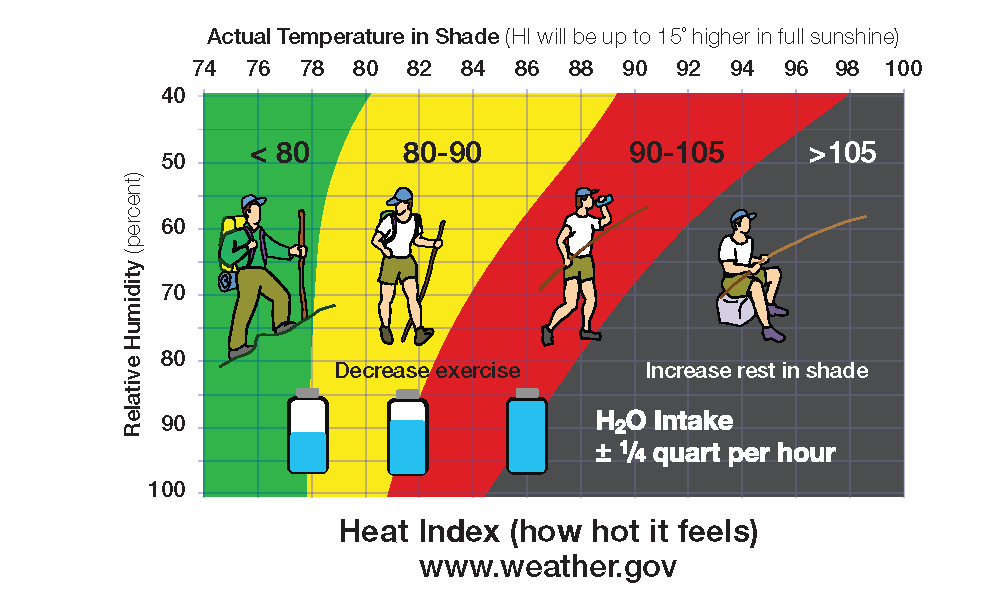
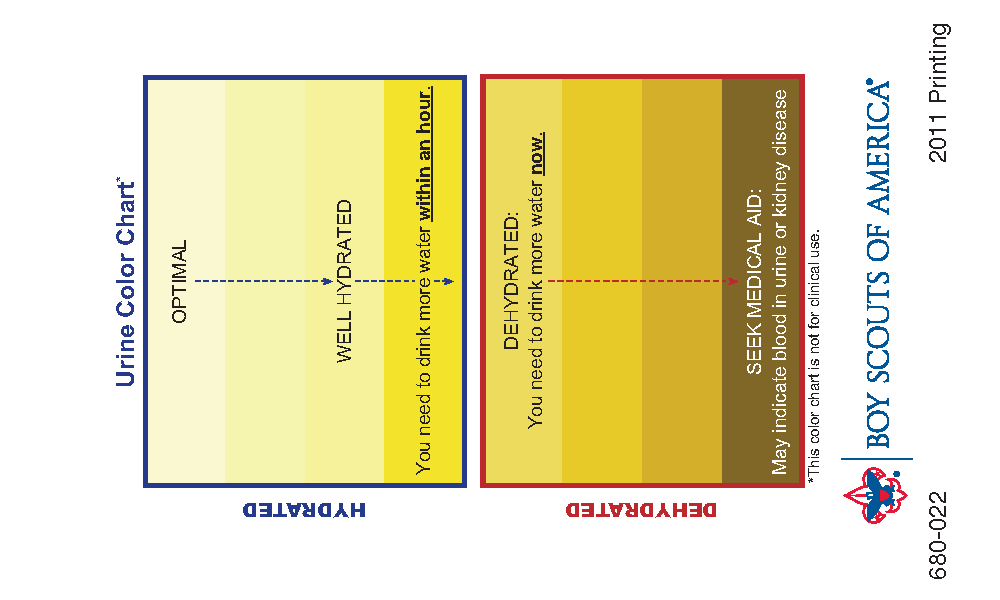
The Heat Index and urine color 3x5 cards below are available to help you adjust exercise level and water consumption during activities. A recent collaboration between NOAA / NWS / CDC on Heat Risk is a more accurate depiction of heat severity. The interactive map allows one to zoom in on a particular area as well as a 5 - 7 day forecast for planning purposes. The NWS HeatRisk Fact Sheet includes a link to the interactive Heat Risk portal. 

To be a fully trained leader, Hazardous Weather training is required every two years (find the training at my.scouting.org).


SAFE Checklist Highlights


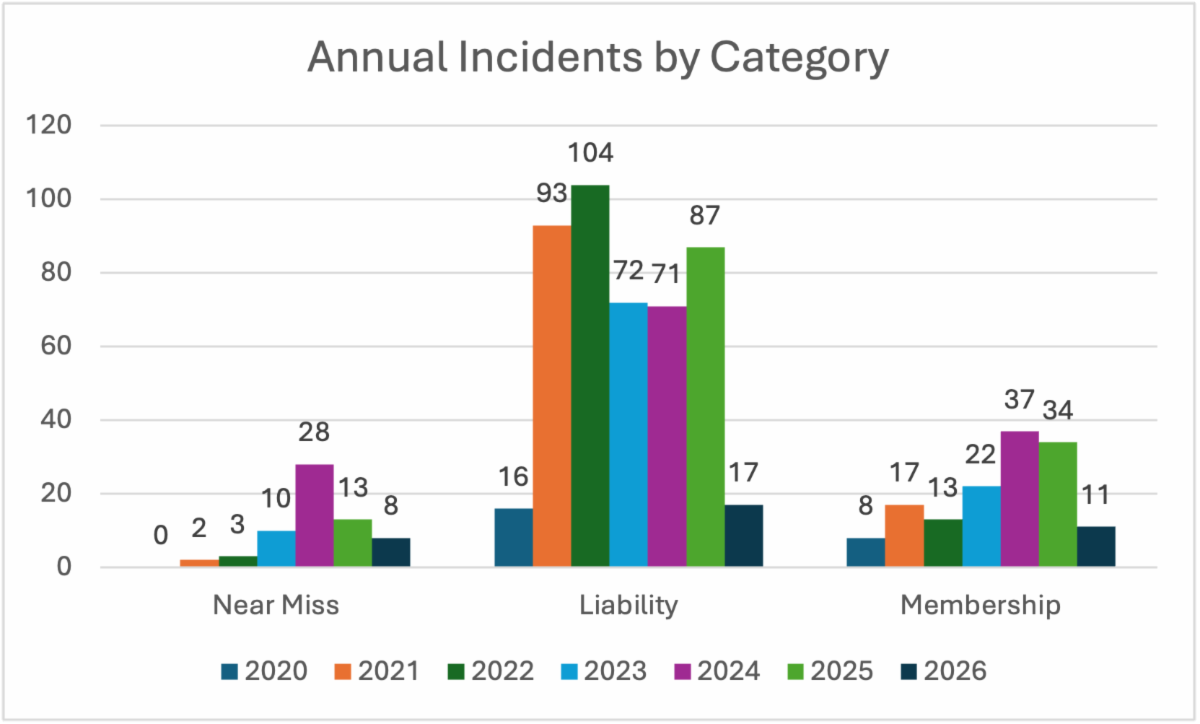
Incident reports in the 2026 second quarter have followed previous year trends. Based on root cause analysis of incidents reported last year, let’s focus on a couple of the SAFE Checklist items that, if followed, may have reduced some of these incidents.  


Supervision

Maintaining engagement with participants during activities to ensure compliance with established rules and procedures.


Maintaining participant engagement is the most effective way to ensure that established safety rules and procedures are followed. By keeping participants mentally and physically involved through interactive methods, continuous supervision, and open communication, you minimize distractions and naturally reduce the likelihood of injuries or membership infractions. Instead of passively presenting rules, test participant knowledge using games, quizzes, or scenario-based role play. Active participants are significantly more likely to retain and follow guidelines. Qualified leaders should circulate during the activity to monitor gear, observe behavior, and adjust the program for changing conditions. Establish expectations and ground rules immediately, explaining not just the rules, but the purpose behind them. Participants are more likely to comply when they understand how rules protect them or contribute to the goal of no serious injury. Encourage open dialogue by soliciting input and allowing participants to ask questions and provide feedback. When you address their concerns directly, it builds trust and investment in the process. Utilize Activity Planning and Risk Assessment Procedures for guidelines on maintaining participant engagement during activities while prioritizing safety and rule/procedure compliance.


Fitness & Skill

Considering as risk factors temporary or chronic health conditions of participants.


Temporary and chronic health conditions are critical risk factors. During planning, event organizers must assess if participants' health profiles match the activity's physical demands, gather emergency medical contacts, and ensure the environment does not exacerbate existing vulnerabilities, such as heart disease or respiratory issues. Effectively managing participant health risks requires a structured, multi-step approach:


1. Pre-Event Screening & Disclosure

  • Medical Forms: Annual Health Medical Records must be completed and reviewed. 
  • Activity Matching: Confirm that participants possess the prerequisite fitness levels and clearly communicate the physical demands of the event.
  • Medication Access: Identify who requires regular medication (e.g., insulin, inhalers) or carries life-saving devices like EpiPens.


2. Environmental & Activity Hazard Assessments

  • Trigger Management: Evaluate the environment for specific triggers—such as extreme heat, rigorous physical exertion, strobe lighting, or allergens—that could induce temporary flare-ups or compound chronic issues. 
  • Guidance Resources: Review the Guide to Safe Scouting to understand activity limits. 


3. Emergency & First Aid Preparedness

  • On-Site Professionals: Ensure qualified council Health & Safety medical staff or dedicated first-aid stations are highly visible and accessible. 
  • Action Plans: Establish clear protocols for managing medical emergencies and securely communicate attendee needs with on-site medical responders.


As you plan your next meetings and outings pay particular attention to these items. Let’s see if we can further reduce incidents.

Meet Your Assistant Council Commissioner for SAFEguarding Scouts

Hello! My name is Michael Raggi, and I have the privilege of serving as the Assistant Council Commissioner for SAFEguarding Scouts for the Cradle of Liberty Council.


Many people hear the word "safety" and immediately think of rules or compliance. While policies are important, SAFEguarding Scouts is really about helping every volunteer provide a program where young people can grow, explore, and thrive in an environment that is safe, welcoming, and well prepared.


One of the greatest strengths of our council is our Commissioner Corps. Commissioners are not inspectors or enforcers they are coaches, mentors, and trusted resources for unit leaders. Whether your unit has questions about planning a safe activity, completing a Program Hazard Analysis, understanding the SAFE Checklist, navigating Safeguarding Youth Training, or simply finding the right council resource, your Commissioner is there to help.


As the Assistant Council Commissioner for SAFEguarding Scouts, my goal is to support our Commissioners and unit leaders by providing practical tools, sharing lessons learned from incidents and near misses, highlighting best practices, and helping build a culture where risk management is part of delivering a great program not a barrier to it.


Every incident we prevent means more time for adventure, learning, and creating memories. By working together and embracing the principles of SAFE (Supervision, Assessment, Fitness and Skill, and Equipment and Environment) we can continue providing outstanding Scouting experiences while protecting the youth and adults entrusted to our care.


I look forward to working with you and supporting our units throughout the year. If your unit needs assistance or has questions about SAFEguarding Scouts, don't hesitate to reach out through your Unit Commissioner. Together, we can help every Scout experience a program that is fun, exciting, challenging, and above all, safe.

Ring the Safety Bell

Reporting your unit safety champion and at least one leader with first aid/CPR training must be completed annually in order to meet the criteria for the council unit recognition program, "Ring the Bell."

Incident Reduction & Reporting Training

The third criteria for the Safety Bell is for at least half of your unit's direct contact leaders to complete Incident Reduction and Reporting training. This is a free, approx. 45-minute course that provides an overview of our organization’s safety policies, resources, and reporting procedures. Leaders who completed the training in 2024 or 2025 don't need to take it again.


Two dates remain for 2026, with in-person or virtual Zoom webinar options to make it as convenient as possible. Registration is required. Click the link below for dates and registration.

Cradle of Liberty Council

scoutingphilly.org

Facebook  Instagram  Linkedin  Youtube

Please note that if you unsubscribe from this email you will no longer receive any communications from the Cradle of Liberty Council’s Constant Contact account. If you’d rather opt-out of certain distribution lists, please click the "Update Profile" link at the bottom of this email rather than the "Unsubscribe” link.