|
Well, not exactly walking. But apparently, being dead isn't quite as straightforward as we thought.
On November 6, 2026, the U.S. organ transplant system approved new safety guidelines for a controversial organ donation procedure that essentially involves restarting circulation after someone has been declared dead.
Normothermic Regional Perfusion (NRP) is a procedure where AFTER a patient is declared dead, doctors use a machine to restore blood flow to certain organs, keeping them healthy enough for transplantation. To prevent blood from reaching the donor's brain, the medical team blocks certain blood vessels.
As you can imagine, this is controversial. On the one hand, the procedure provides an opportunity to save more lives (there are more than 109,000 Americans waiting for an organ transplant).
On the other hand, there have been reports of blood reaching the brain anyway, along with concerning signs of possible neurological activity. Which raises the question of whether you’re declared dead because your circulation stopped, and then someone restarts your circulation, are you still dead?
Some bioethicists say the NRP procedure violates what's called the Dead Donor Rule, which requires that organ donors actually be dead before their organs are removed. Others argue that the procedure can be performed safely and ethically and could save thousands of lives. The new NRP federal policy adds safeguards, including measures intended to prevent blood from reaching the brain.
So, what can we learn from this idea of being a little bit dead?
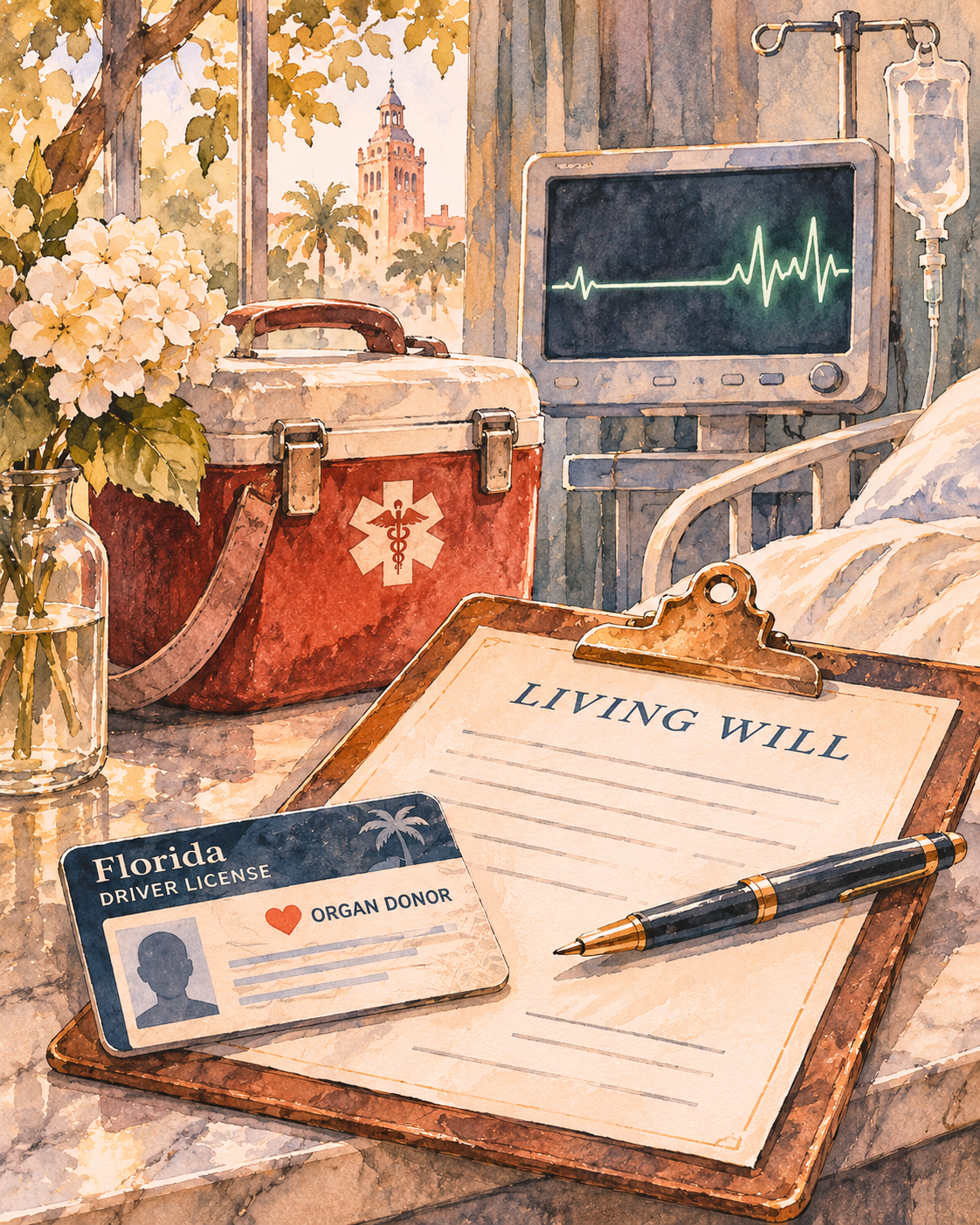
We can talk all about the living will and how the Sunshine State views organ donation. In Florida, organ donation is considered an anatomical gift, governed by Florida Statutes Chapter 765 and one can authorize organ donation through a driver's license, the donor registry, a living will, or several other legally recognized methods.
But what happens if those documents conflict or are inconsistent. Per FL rules, once someone has validly authorized organ donation and they haven't revoked that decision, their family and friends generally cannot override it after their death. Of course, in most instances, it’s a conversation with the medical team and the healthcare proxy, but once someone has stated that they’re an organ donor, they’ll need to take actual steps to stop being an organ donor (failure to renew a driver’s license will NOT prevent someone from being an organ donor…ugh! Couldn’t avoid the double negative there).
So now that we know that the little heart on driver's licenses actually carries some serious legal weight….what about procedures like NRP? If someone is an organ donor on their license will that include NRP? Most likely not, but that’s a great reason to make sure your living will is specific as to your intentions and most importantly, your healthcare proxy really knows your wishes in all the various scenarios.
So, there you have it. We learn that your living will should reflect your wishes, your values, and the things that matter to you. And your healthcare proxy should understand those wishes before they're faced with making difficult decisions. We also learn that there are at least two sides to every good discussion.
|