|
Arizona Voters Are Wary of Data Centers—but Are They Getting the Whole Story?
A new Arizona poll should get the attention of anyone involved in technology, energy, economic development or local government.
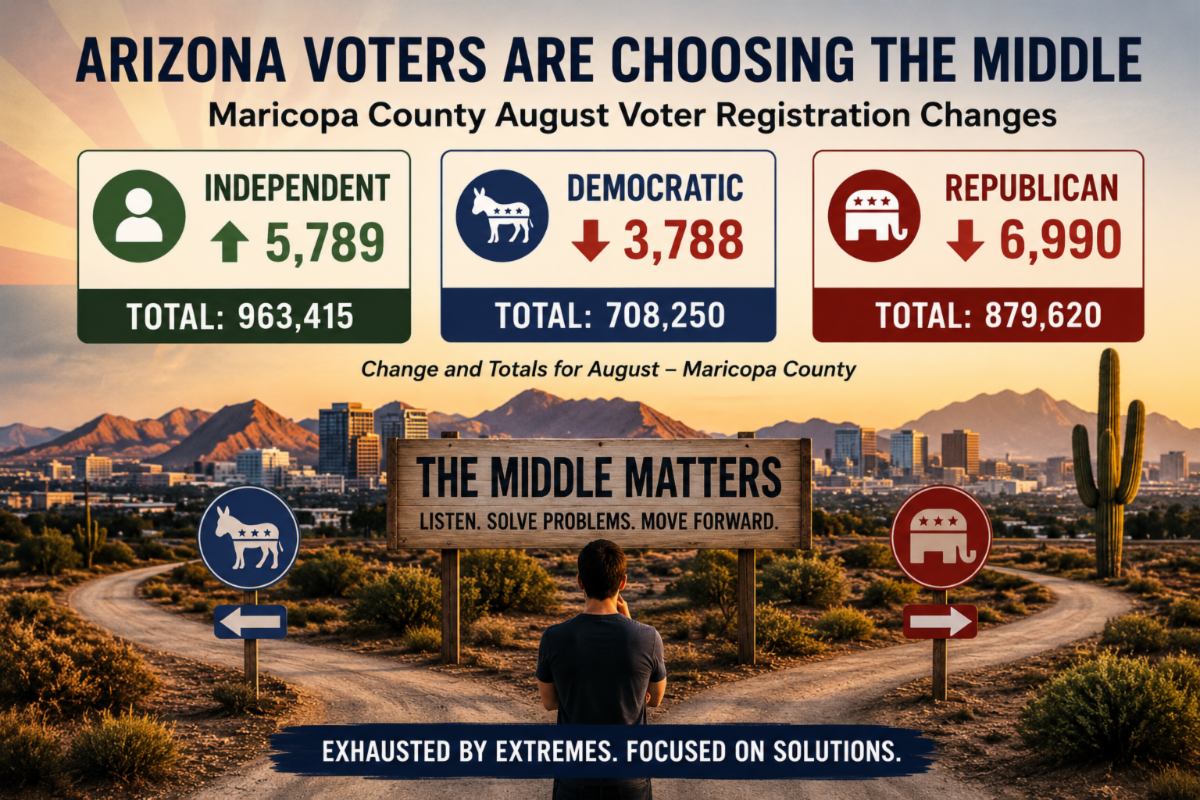
According to the latest Arizona Public Opinion Pulse from Noble Predictive Insights, a majority of registered Arizona voters oppose additional large data-center development. Only 30% support additional development, while 13% remain unsure. More strikingly, 35% strongly oppose additional data centers, compared with just 9% who strongly support them.
When voters were asked to weigh economic development against concerns about water, electricity and infrastructure, 61% favored limiting additional development, compared with only 18% who favored encouraging it for investment and tax revenue. That preference crossed party lines: 54% of Republicans, 71% of Democrats and 61% of Independents chose limits.
Those numbers matter. But they also raise another important question:
What information are voters using to form their opinions?
There is no question that data centers create legitimate policy challenges. They can consume enormous amounts of electricity, and some cooling technologies use significant amounts of water. Communities should ask hard questions before approving them.
But there is also an extraordinary amount of misinformation circulating about data centers—and we now have evidence that at least some of that information has been deliberately amplified by foreign-operated social-media accounts.
A Chinese Bot Farm Entered the Data-Center Debate
On August 28, reports emerged that X had identified what it described as a Chinese-operated bot farm consisting of approximately 200,000 accounts. According to X, about 200 accounts were posting material that could manipulate the American debate surrounding AI data centers and energy policy, including amplifying concerns about electricity prices and grid strain.
That deserves attention, particularly because America and China are competing for leadership in artificial intelligence.
But this discovery should not be interpreted to mean that Americans who oppose data centers are bots or that legitimate concerns aren't real. Independent researchers examining some of the identified accounts found very little engagement, and reporting indicates that genuine grassroots opposition to data centers exists across the country.
Both things can be true: Americans can have legitimate concerns about data centers, while foreign influence operations simultaneously attempt to exploit those concerns.
That is exactly why separating facts from fear is so important.
Let's Talk About the Facts
First, data centers use a lot of electricity.
There is no reason to pretend otherwise. The U.S. Department of Energy reported that data centers consumed approximately 4.4% of America's electricity in 2023 and projected that they could consume between 6.7% and 12% by 2028. A newer Lawrence Berkeley National Laboratory update estimates data centers could represent roughly 9.5% to 15.3% of U.S. electricity consumption by 2030.
That means Arizona absolutely must plan for generation, transmission and distribution before approving enormous new loads. But many data centers bring their own power generation and the excess is additional power generation that the ratepayers did not fund.
But another widespread claim—that ordinary Arizona families will simply be handed the bill for all that infrastructure—leaves out an important part of the story.
The Arizona Corporation Commission held a large-load workshop this year specifically addressing this issue. Participants discussed the principle that large users that cause additional system costs should pay those costs rather than shifting them onto other customers. Protections can include minimum bills, longer contracts, collateral requirements and direct assignment of generation and transmission costs.
SRP similarly says new large-load customers must pay upfront for infrastructure upgrades identified through its Large Customer Integration Process. Its pricing structure also imposes minimum billing requirements on qualifying large customers.
APS says it is pursuing the same basic principle. Its proposed structure would require extra-large customers to cover the infrastructure necessary to serve them rather than shifting those costs to residential customers. The APS rate case addressing these issues remains before the Arizona
Corporation Commission, so some proposed protections have not yet received a final decision.
What About Water?
This is probably the issue where the phrase "data center" is least useful by itself.
Data centers are not all built the same way.
Past cooling systems can consume substantial quantities of water through evaporation. DOE guidance specifically acknowledges that cooling towers can have significant water requirements.
But newer facilities can use very different technologies. The Department of Energy notes that modern facilities using closed-loop cooling can dramatically reduce water consumption because water is recirculated through the cooling system rather than continuously consumed through evaporation.
That distinction matters tremendously in Arizona.
Instead of asking simply, "How much water do data centers use?" we should be asking:
What cooling technology will this particular facility use? Where will its water come from? How much will it consume annually? Will it use potable or reclaimed water? What happens during extreme heat? And who pays for the infrastructure?
Those questions produce far more useful answers than blanket claims that every data center either consumes enormous quantities of water or uses virtually none.
President Trump Has Made Data Centers a National Priority
There is also a national-security component to this debate.
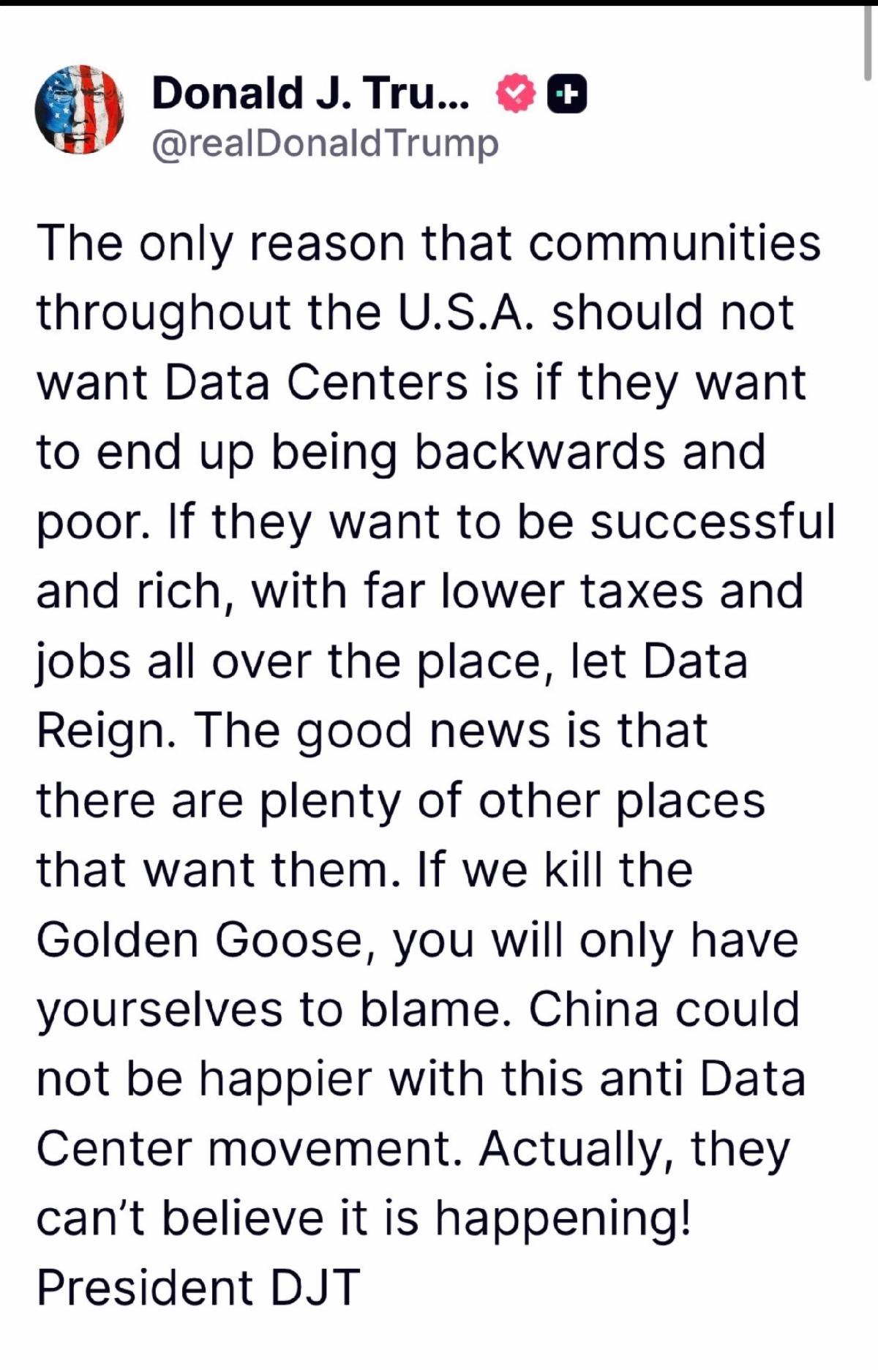
President Donald Trump has explicitly supported expanding American AI and data-center infrastructure. In July 2025, he signed an executive order making rapid data-center infrastructure development a priority and directing federal agencies to streamline permitting for qualifying projects. His administration described AI infrastructure as important to America's economic prosperity, scientific leadership and national security.
The administration also announced more than $90 billion in AI and energy investments in Pennsylvania, including billions for data centers and supporting energy infrastructure.
The policy argument is straightforward: artificial intelligence requires computing power, computing power requires data centers, and whichever nations control the technology and infrastructure underlying AI will have an enormous economic and strategic advantage.
China certainly understands that.
Americans should too.
Arizona Needs Facts, Not Fear
The Noble poll tells us something important: Arizona voters are concerned.
We shouldn't dismiss those concerns.
If residents are worried about water, show them the project's actual water requirements.
If they're worried about electricity, show them where the additional generation will come from.
If they're worried about their electric bills, explain the rate structures and contractual protections designed to prevent costs from being shifted onto existing customers.
If they're worried about infrastructure, show them who is paying for it.
And if a proposed project cannot satisfactorily answer those questions, local officials should
demand better answers.
But we should apply the same standard to claims made against data centers.
A meme is not evidence. A viral Facebook post is not an engineering study. A frightening number without context isn't analysis. And now that a foreign influence operation has reportedly attempted to insert itself into America's data-center debate, verifying information before sharing it becomes even more important.
Arizona does not have to choose between blindly approving every data center and banning them.
There is a third option:
Demand responsible development.
Require developers to disclose their water needs. Require realistic energy plans. Protect existing ratepayers. Require appropriate infrastructure. Evaluate each project based on its technology, location and actual impacts.
Then let the facts—not rumors, social-media algorithms, political narratives or foreign bot farms—drive the decision.
The future of technology is being built right now.
Arizona should make sure we understand exactly what we're saying yes to—and exactly what we're saying no to.
|