Get ready to rediscover your best self.
| |
|
Welcome to this week's EmBODY WELL Virtual Coach Newsletter!
Let's rediscover our best selves together!
With our newsletter relaunch, each second week of the month, we will focus on the topic of Nourish+Recover. Why? Optimizing the nourishment and recovery of both your mind and body are my next best prescriptions (after love and laughter) for managing stress, reducing inflammation and supporting your best self across all 8 dimensions of wellness.
| | |
October's NOURISH+RECOVER feature:
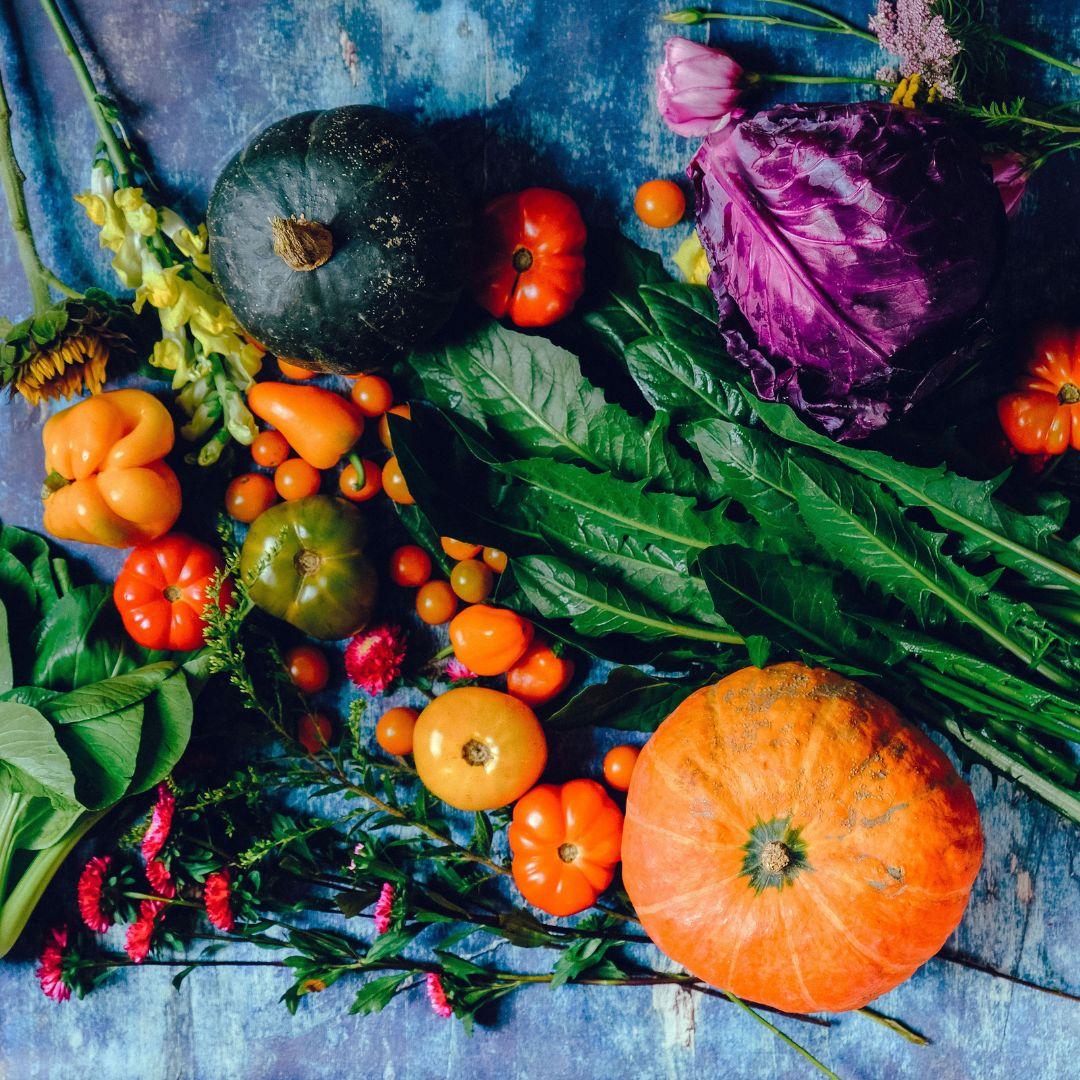
Eating Seasonal Produce
| |
|
We’ve all heard the classic saying, “Eat your veggies!” at some point, right? Well, here’s an additional tip you might not have heard: “Eat your veggies... seasonally!”
For those of you who have heard me speak on the topic of nutrition and healthy eating, you know I refer to myself as a "vegetablarian." In a nutshell, that means vegetables are my JAM! (For more specific details, see my blog post on vegetablarian.) In addition to advocating for eating more veggies daily, I also highly recommend taking advantage of opportunities to experiment with new veggie choices each season!
| | |
THE BENEFITS
What’s the big deal about eating seasonally? Let’s discuss a few of the potential benefits, some of which may surprise you. Once you understand the potential value, I hope you will be curious enough to explore eating seasonally for the rest of this month, or maybe even the rest of the season!
-
Can be healthier – Studies have proven that foods grown in optimal conditions – i.e. in-season - provide optimal quantities of nutrients. You are more likely to find produce at its peak ripeness and nutritional value when it is in-season and local (i.e. has not been preserved, stored or transported). And, of course, when you eat seasonally, you're naturally adding more variety to your diet.
-
Is likely fresher/tastier – In-season produce, harvested at peak ripeness, is typically fresher and tastier, especially local produce that it hasn't lost quality during long periods of storage, preservation, or transport.
-
Can save money – Without incurring the costs of preserving, storing, transporting, or artificial conditions to support out-of-season growth, produce is often less expensive in its respective season.
-
Supports local, healthy economy – When you purchase in-season produce grown locally, you support local farmers and economy. In addition, the more produce you buy, the more you help support a fresh food economy that supports better public health outcomes.
-
Encourages creativity in the kitchen – Exploring what’s in-season can inspire you to experiment with new recipes and cooking techniques. It’s also a great way to discover and enjoy vegetables you might not have tried before. You may even find a new favorite vegetable! Want some vegetable cooking inspo? Watch an episode of my vegetablarian cooking show, Grub and Groove, on YouTube!
| | | |
What veggies are in season when?
Keep in mind that what is in season may vary by region and, in some regions, certain veggies may grow year round. For a guide to seasonal produce by region, visit https://www.seasonalfoodguide.org/ where you can search by month and state of the US (they also have an app!), or, if you are outside the US, visit https://www.readychef.ie/global-seasonal-calendar/
The Center for Science in the Public Interest lists the following October vegetables in season in the U.S.:
- artichokes
- beets
- broccoli
- carrots
- celery
- corn
- cucumbers
- eggplant
- green beans
- kale
- peas (sugar snap, snow and English/green)
- pumpkin
- spinach
- sweet potato
Fruits in season now include apples, blackberries, canteloupe, figs, grapes, honeydew, pears, and plums.
| | |
What are some options for eating seasonally?
-
Farmer’s markets - My favorite option! In addition to the benefits above, the experience of the sights and sounds alone is worth the trip. It’s also a fun way to teach kids about selecting and preparing food. Find one near you at https://www.ams.usda.gov/local-food-directories/farmersmarkets (or Google it LOL).
-
Community Supported Agriculture (CSA)/Organic delivery services – My (other LOL) favorite option! Get a variety of regular, local produce delivered to your home or a nearby center while supporting your community. I have discovered some of my current favorite veggies from my CSA boxes. Explore options at https://www.ams.usda.gov/local-food-directories/csas (or, again, Google it!).
-
Local supermarkets – Although supermarkets typically source local as much as possible to cut costs, you can confirm local sourcing of in-season produce by checking produce labels (for state/country origin), going to supermarket sections featuring local produce, or inquiring with store management about local sourcing.
Questions to consider as you think about eating seasonally:
- How can you increase the quantity and variety of produce you consume?
- What veggies from the list above have you heard (good things) about but never tried?
- How could you start by exploring other varieties of veggies you already love?
Please share with us any recipes or veggies you have discovered that you love!
| | |
Did someone share this email with you? Sign up to join our list. |
| | | |