Love In The Time Of Corona
|
Humanity is facing one of its greatest crises, a global pandemic. It is easy to become so distressed that we get more self-centered, instead of the other way around. What can we do to mitigate that possibility?
Learning self-compassion prepares us for learning greater compassion toward others. With belly-breathing, self-compassion and then other-compassion exercises, we can strengthen the social engagement system of our vagus nerve. This will prepare us for a “tend and befriend” reaction to stress rather than “flight-or-fight.” We will be able to join in open-hearted, cooperative enterprises with others rather than hide away emotionally or psychically.
Other ideas about how to spend our physical distancing time are sprinkled throughout the newsletter.
We hope that the pandemic disruption will lead to greater cooperation and innovation to meet our other great challenge, global climate disruption.
Our best wishes for you and your family’s good health!
Darcia Narvaez, PhD
|
|
Should We Touch Our Children During A Pandemic?
|
|
How far should social distancing (i.e., body distancing) go?
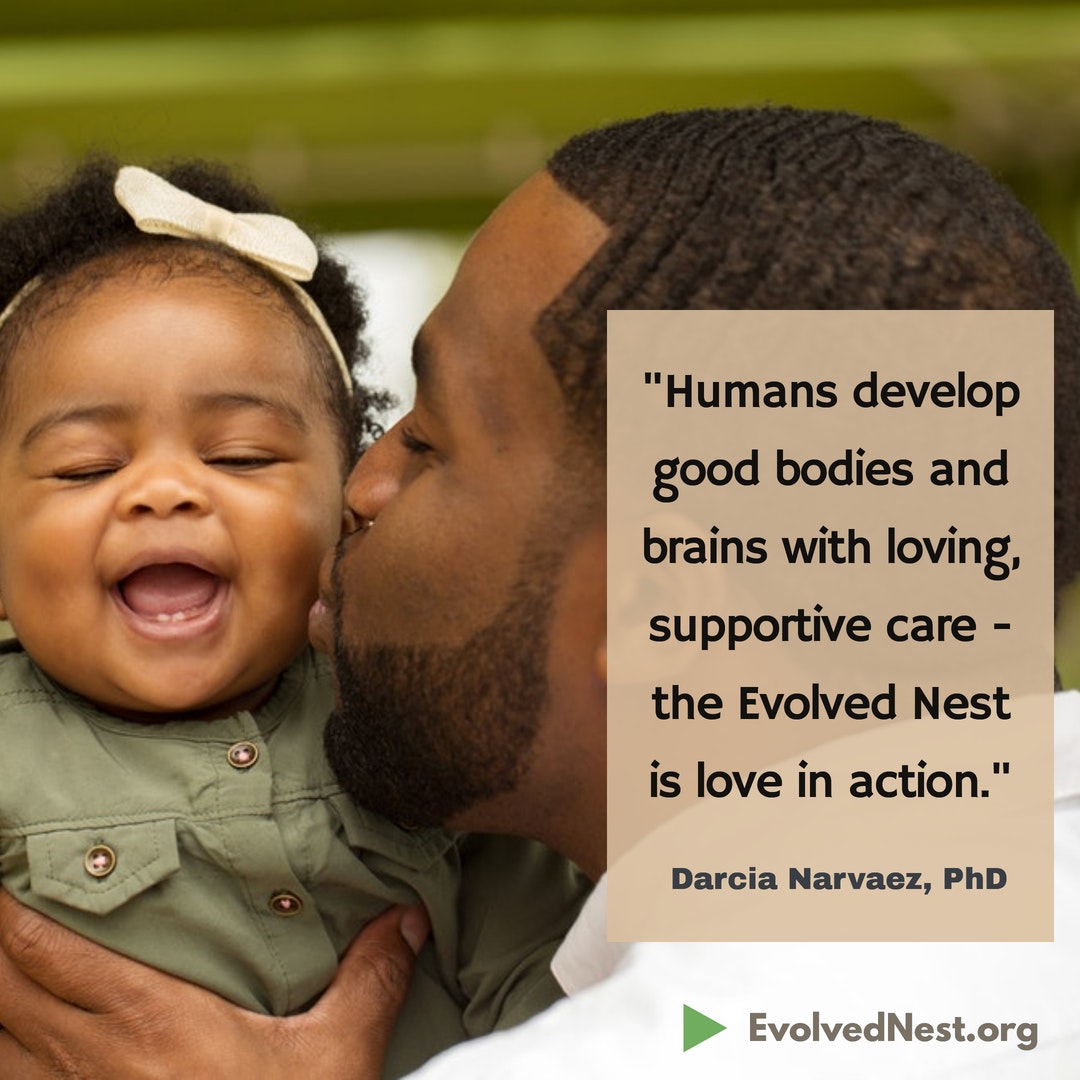
It will actually hurt children if we do not hug or cuddle them. Children’s brains and bodies expect it for promoting their sense of safety. Affectionate responsive touch is expected by young children’s bodies in order to grow well. We have seen the terrible extreme effects of monkeys and children who are not regularly cuddled, carried and rocked (Harlow, 1958; video below and
here
).
|
|
|
Parenting During A Social Crisis
Cocooning With Kids: Explaining and Redirecting
Where should we direct children’s attention?
If you've been waiting to hear Darcia sing an original children's song that helps them and us connect to nature, here go you! (the track is in the middle of the article).
This song, and singing, is one of the ways we can create an Evolved Nest of connection while we are together indoors at this time!
Cocooning With Kids: Schools Closed, What Now?
Take advantage of the moment with what helps kids grow.
How to Talk to Your Kids about Coronavirus
WVPE’s Jennifer Weingart spoke to Darcia Narvaez, a psychologist from the University of Notre Dame, about how to talk to kids about coronavirus.
C
OVID-19 Resources for Families:
|
|
Psychology Today's Moral Landscapes Blog
|
I write typically about research findings related to moral functioning and living a good life. Sometimes I muse on things that I puzzle about (politics). I am very concerned about how much our society doesn't seem to know about how to raise good, healthy and happy children, so I spend a great deal of time on parenting. I also write about things that I am working on myself--the endless quest for virtue! This is an opinion blog, not a set of research articles, intended for the public not scientists. For more nuanced and highly referenced work, look at my academic work.
As we socially distance ourselves, children may need to hear why this is important. We can direct their attention to how they can help.
What does toxic stress look like in childhood, and what problems does it cause? Here is a model to heal ourselves, together.
Why do parenting “experts” perpetuate such strange concepts for a social mammal who needs social support all life long to stay healthy?
The social, psychological, and ecological consequences of what we take for granted.
Suzy Hansen writes that she carried a white identity that blinded her to her country's history of injustice.
James Baldwin provoked American self-examination. A fan does the same in a post-American world.
|
|
The Evolved Nest's YouTube Channel
|
|
The Evolved Nest, Part 7: Attachment When It Goes Wrong
What happens when you do not receive what you need in early life? The effects of a nonresponsive and insensitive childhood are discussed.
Listen to award-winning neuroscience researcher, Darcia Narvaez, PhD, share foundational insights into the Evolved Nest.
Discover The Evolved Nest Podcast Series now available on our
Youtube channel
! Additionally, audio downloads are available on the website
here
, and on our Soundcloud link as a playlist
here
.
|
|
How to Talk to Your Kids about Coronavirus
|
|
WVPE’s Jennifer Weingart spoke to Darcia Narvaez, a psychologist from the University of Notre Dame, about how to talk to kids about coronavirus.
|
|
How a Strong Nest Can Lift a Society Higher
|
That's So Second Millennium's new interview with Darcia:
Based on her research and informed by her diverse experiences (spanning seven careers, as she puts it), she suggests several ideas for recapturing a sense of wholeness amid the woundedness in human nature. Several characteristics of modern society have arisen over the past few centuries to cause the wounds seen today in civic life, communities, families, and individuals, she says. Drawing upon lessons from cultures that existed a long time ago, her suggestions to restore wholeness include such often-forgotten basics as more frequent engagement with nature, thinking new thoughts, journaling, and free-spirited play. “People don’t know themselves,” she comments. “You can get a lot of work done if you take a break.”
|
|
|
Ethics in Early Life Care and Lactation Practice
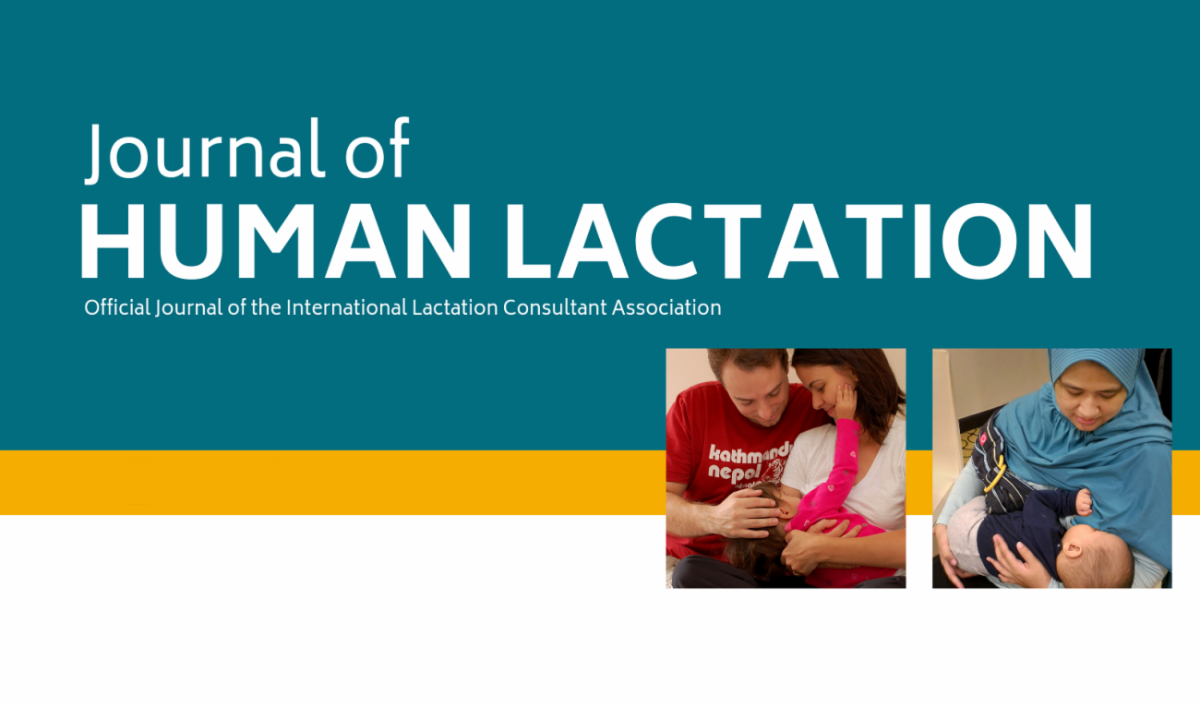
In this editorial, we review briefly principles and concepts within health care ethics and approaches to moral decision making and behavior. We apply these principles and concepts to the realm of breastfeeding and lactation and do so with an emphasis on young children’s needs because many adults are unaware of children’s evolved needs. In addition, we point out how ethical actions at each level of the social ecological model could help adults implement what children need in 2020 and beyond.
|
|
Nurture, Care, Respect, and Trust: Transformative Pedagogy Inspired by Janusz Korczak
|
|
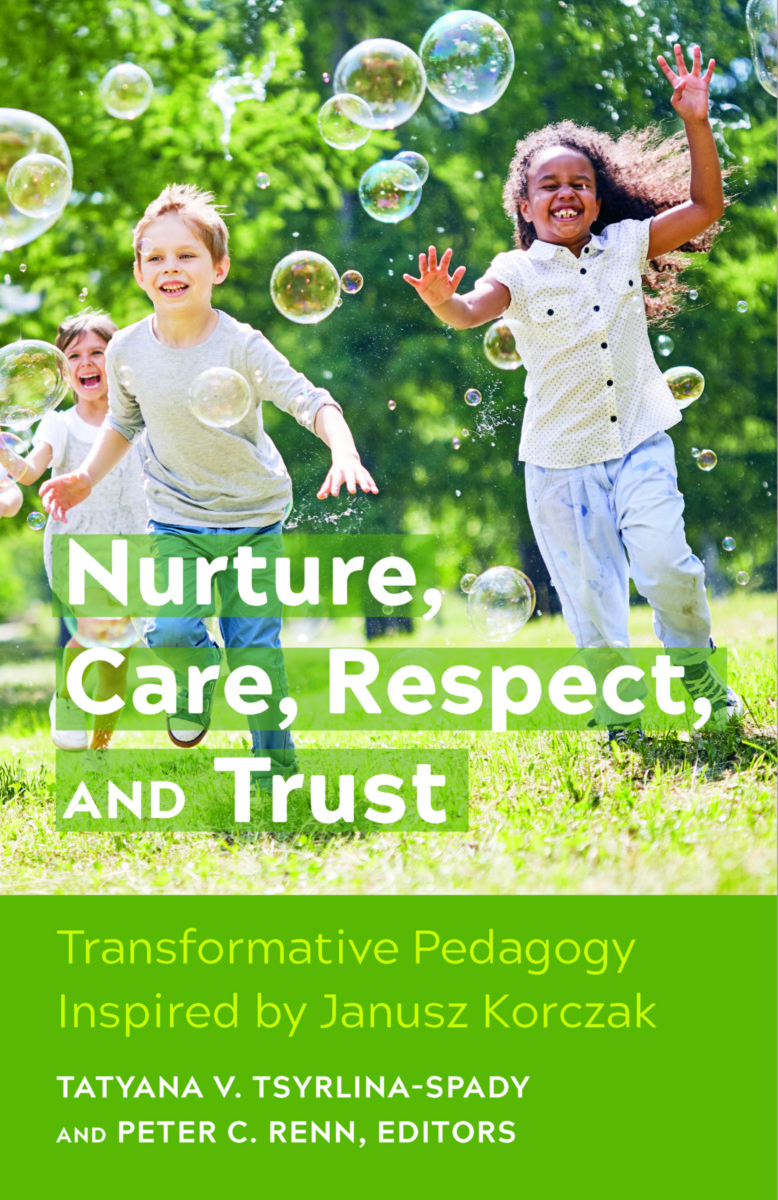
This new book for educators features two chapters from Darcia and her graduate students:
Meeting basic needs and getting kids on track to fulfill their potentia
l and
The nurturing classroom.
Nurture, Care, Respect, and Trust
is the first collection of interdisciplinary and logically interconnected papers from nationally and internationally acclaimed researchers in philosophy, psychology, history of education, teacher training, educational leaders and practitioners, child advocates, and educators who have been motivated by the philosophy and pedagogy of Dr. Janusz Korczak (1878-1942), a world famous moral exemplar and champion of children’s rights. The book provides answers to timely questions of how to respect children’s rights in K-12 schools, community centers, summer camps, and colleges; how to create an atmosphere of trust and safety, and provide social-emotional learning in the classroom; how to become a genuine child advocate; and how to support growing child agency. It also tells the story of Korczak, his life, and the lives of the children in his charge.
Nurture, Care, Respect, and Trust
details how Korczak’s legacy encourages and stimulates new projects and spreads around the world. The volume serves as a rich resource of practical materials for teachers and university instructors, introducing a number of innovative lesson plans, examples of students’ works, and school projects inspired by Korczak’s pedagogy.
|
|
This new textbook features two chapters from Darcia and her graduate students.
|
|
Fresh Eyes on the Evolved Nest
|
|
Follow the Fresh Eyes Series to discover how the next generation perceives the Evolved Nest and relates to children, before they become parents...
|
|
A children's story to inspire imagination, If I Could Be Anything, by Mara Bhalla, is ready in PDF form to share.
|
|
|
The Importance of Touch presentation was created by Lillian Merrigan and Samantha Loper for the Morality, Parenting and Nature Connection in the Anthropocene class at the University of Notre Dame. This class is taught by Dr. Darcia Narvaez.
This
presentation
includes a pre-test/post test for viewers as well as a handout.
|
|
|
Support The Evolved Nest!
|
|
The Evolved Nest is an educational initiative of the award-winning nonprofit
Kindred World
. Your tax-deductible donation helps us pay our team members for their contributions to our many outreach and educational efforts. Your donations also help us pay for our website as well as upcoming educational programs and materials.
Thank you for your support of The Evolved Nest!
|
|
Thank you for your support of The Evolved Nest!
|
|
Where to Find and Share The Evolved Nest
|
|
SOCIAL MEDIA
BLOGS
DONATE
And support The Evolved Nest's nonprofit work with your tax-deductible donations
here
.
CONTACT
Please contact The Evolved Nest with your questions
here
.
SUBSCRIBE
If you have forwarded this newsletter to a friend, and we hope you do, your friend can SUBSCRIBE to the Evolved Nest's monthly newsletter
here
.
|
|
|
The Evolved Nest | www.EvolvedNest.org
|
|
|
|
|
|
|
|