|
USDA's Value Added Producer Grant will open January 15th and close April 22
Learn more about Value Added Producer Grant to see if the program is right for you: Value-Added Producer Grants
If you are interested in learning more or applying for any of these programs, please contact Grace.
| | |
Worried about your fruit production with Montana's warm winters?
Check out this information from
MSU Western Ag Research Center and Extension:
| | |
Warm Winters
By: Zach Miller, Associate Professor/Superintendent MSU Western Agriculture Research Center
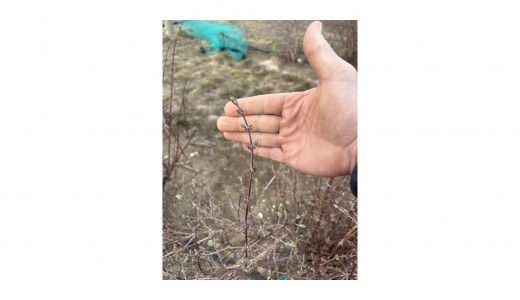
It’s been an extremely warm start to winter. Some fruit plants (Haskap/Honeyberry, Currants, Elderberry) are budding out and getting less cold tolerant. Other fruiting plants like cherries, apple, and pear are holding tight but will likely have an early as their (relatively higher) chill requirements will be met earlier than normal. For plants that are budding out like Haskap, we don’t know precisely what temperatures will damage these buds.
We did send some Honeyberry (Aurora and Blizzard) shoots to WSU-MT. Vernon a few weeks ago to be tested in a freeze chamber. The terminal buds (more open) had freeze damage somewhere between 0 and -18 F. Even at -18, the lateral buds (less swollen) were not damaged.
It’s going to be a worry filled end of winter. I put this cold temperature risk calendar together help define when we may be out of the woods and able to worry less.
Monitor your fruit plants for bud swell and break. As they come out of dormancy, they’ll loose some cold tolerance. I’ve included several relevant temperature thresholds and links to fruit bud killing temperatures at various stages of bud break.
Cold Risk in Winter Spring for the Bitterroot
Fruit Table
| |  | |
Pruning in Warm Winters
By: Dr. Peter Kolb, MSU Extension Forester
Such warm weather events are not entirely uncommon across Montana. Most of our native tree species need a minimum chilling period before they are able to break dormancy. There is a chance that this freezing requirement has not yet been met, which studies have shown can cause a delay in tree’s breaking dormancy. Some tree species are also triggered by diurnal daylight ratios rather than temperature. There are many factors that are regional, species and even genotypic in their response to cold dormancy.
Swelling buds in trees if pretty normal and high sugar content of swelling buds helps with frost resistance. Bud burst – leaf development however means game over and the new leaves and meristematic tissue is now very vulnerable to damage from severe cold (less than 30F).
So for those folks worried about your trees my advice is not to change the timing of what you normally do. If your soil is very dry watering trees is good, even this time of year, but do not fertilize as that can stimulate an earlier break in dormancy. That said, in most places the soil is still very frozen and will not absorb water so make certain the soil can take water or surface ice formation on a tree stem can cause damage.
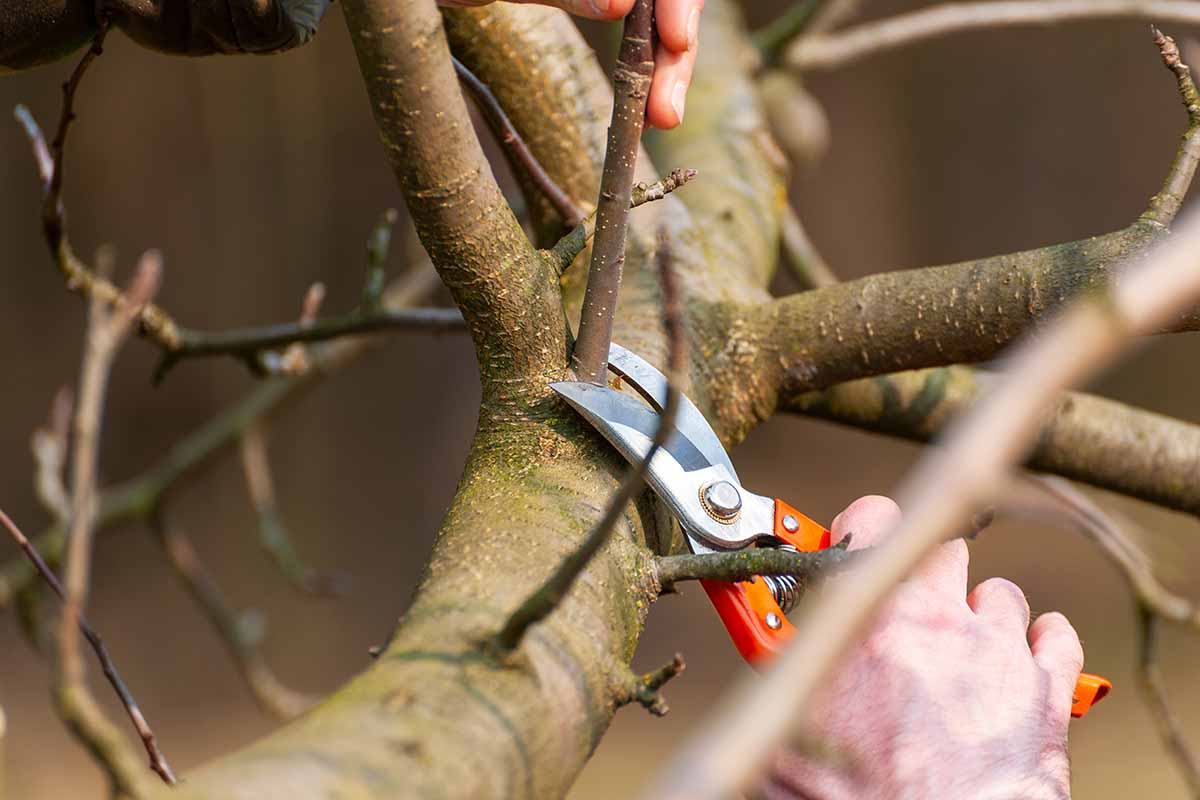
Pruning trees in March, especially epicormic sprouts should still be the protocol. If you prune now, which is also OK, use pruning paint on cuts larger than ½ inch as freeze thaw events can cause vascular tissue to freeze-dry before the tree becomes physiologically active and able to actively seal off injuries. If your trees start to leaf out, and below freezing temperatures start to occur spraying the leafed out area with water than then freezes on the leaves can slow the freezing injury by about 5 degrees. If your trees are small enough, tarping leafed out trees before an extreme cold event can help as even frozen soil radiates some warmth toward the tree under the tarp.
On the opposite spectrum, smaller trees next to the south side of your house can be tarped on very warm days as the heat radiated from your house wall or roof can exacerbate the problem – thus shielding them from the radiant heat of the house can help keep them dormant. Conifers, oaks and lindens should be Ok as they are strongly daylength triggered. Zone 4-5 fruit trees, green ash, poplar and Siberian elms are pretty easily fooled and the ones to keep an eye on.
A lot will depend on future weather and how fast and extreme any future cold snaps occur.
| | |
|
Warm Winter Weather IPM URBAN Alert
By: Abi Saaed, MSU Extension Horticulture Specialist
With unseasonably warm temperatures resembling spring more than winter in much of Montana, we have been receiving many pruning questions. To learn more about the accelerated development of plants that we have seen throughout the state over the past couple of months and gain a better understanding of the dormancy process in plants, check out the Urban IPM Alert from December 22nd.
With a state like Montana, our temperatures can be extremely unpredictable, and making decisions about plant health and productivity can be challenging to say the least. Late winter and early spring are common times to prune trees and shrubs in Montana. This winter has been much warmer than usual, and many are unsure how to proceed. Although it is difficult to say what might happen over the next few weeks (in terms of temperature and plant development), we hope that some of these suggestions may help you reduce potential damage to your woody plants as a result of pruning.
Once trees and shrubs begin active growth (including bud development) after dormancy, this process cannot be reversed. The buds at or near the tip of shoots come out of dormancy sooner and can slow development of buds lower on the shoot. Although dormant buds can withstand cold temperatures (see link to temperature tolerance of buds in resources), once they begin to swell, their cold tolerance is significantly reduced. Some of the woody plants that we are seeing early bud development this year (though it depends on your location in the state) include: Honeysuckle (including Haskap/Honeyberry), Forsythia, Red/Silver Maple, Ornamental Pears, Aspen, Willow, Elm, Birch, Currant, Elderberry, and Viburnum.
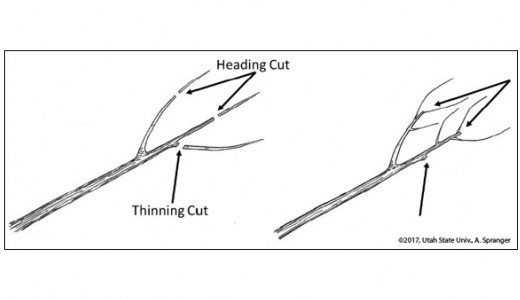
In plants that have begun bud growth: heading cuts (when you remove part of a stem/branch) at this time of year, could release the lower buds from dormancy (and potentially encourage additional growth that could be susceptible to freeze damage). Thinning cuts (when you remove an entire stem/branch up to a larger lateral branch and/or the trunk) should be fine to do during a favorable weather window (when temps are between 40 - 60 F, and ideally at least 2-5 days before temperatures are predicted to drop below 25 F, which can cause further damage at the pruning sites if the plants haven't been able to compartmentalize properly). Be careful not to disturb and damage existing buds when removing branches.
If you want to make heading cuts, it may be better to wait a few more weeks before doing so- when the risk of hard freeze or extreme temperature drops is lower than in months like February. The risks are: when heading cuts are made on a branch, the buds at nodes within a few to several inches below where the cut was made could be encouraged to begin new growth. This new growth is tender (less cold hardy than dormant buds) and susceptible to damage when temperatures are at or below freezing. Additionally, if pruning cuts were made and temperatures were to drop: cold injury at the site of the pruning cuts could potentially result in more freezing damage throughout the cut branch than if we wait to make those cuts when the risk of freezing temperatures is lower.
| | | |
Love staying up to date with RCEDA's events?
Watch us on the Bitterroot Valley Chamber's podcast, Around the Root with Dawn and Dominic on Tuesday at 9:00 AM!
Join them LIVE on Facebook, Youtube, and Instagram.
Watch them later on: Facebook, Youtube, Instagram, Spotify.
| |
Bitterroot Chamber
Ag & Local Foods Committee
Farmer Education Scholarship
The Ag & Local Foods Committee is proud to announce the launch of the Farmer Education Scholarship program. The Committee will continue to fund the scholarship through event proceeds, and the Chamber will distribute the funding.
The application is available online and is open year-round.
Click here to apply: Farmer Education Scholarship
|
Upcoming Ag Education by Our Friends
at Missoula Extension
Avian Influenza Local Update (Online Webinar)
MARCH 25
Learn more here
Control of Columbian Ground Squirrels (Frenchtown High School)
APRIL 29
Learn more here
Hay Farm Tour for Horse and Livestock Owners (Grass Valley Farm)
MAY 20
Learn more here
| |
Registration Open for the 2026 Montana Pesticide Waste Disposal Program
Accepted Materials
The Pesticide Waste Disposal Program can take pesticides, pesticide treated seed, other pesticide mixes, unknown pesticides, and metal pesticide containers. The program cannot accept rinsate, empty plastic containers, fertilizers, solvents, paint or oil or any other non-pesticide materials.
Cost and Registration
Costs for participating in the program are significantly lower than other pesticide disposal alternatives. The first 200 pounds of pesticide waste are free to dispose of, with a $1 per pound fee for amounts over 200 pounds (minimum charge of $5). Pesticides requiring special packaging, including products with dioxins or dioxin precursors, may incur additional fees.
Participants must pre-register with the Montana Department of Agriculture (MDA) by filling out the online registration form. Participants may select a day and location that is convenient for them to deliver pesticide waste. Acceptances are on a first-come, first-served basis. Late registrations are not considered. After submittal, registrants will receive a confirmation letter with a specific time to arrive on collection day.
April Collection Events
Pre-registration Deadline for April Events is March 31, 2026.
- April 7 - Kalispell
- April 8 - Plains
- April 9 - Missoula
July Collection Events
Pre-registration Deadline for July Events is June 30, 2026.
- July 7 - Polson
- July 8 - Hamilton
- July 9 - Butte
For More Information
You can register online or view a list of accepted materials and other information on the MDA Pesticide Waste Disposal Program website.
Contact Carli Davis for additional information regarding the MDA Pesticide Disposal and Container Recycling Programs at (406) 465-0531 or email carli.davis@mt.gov. For any other questions contact Cecil Tharp, Pesticide Education Specialist (406) 994-5067, ctharp@montana.edu.
| |
Interested in Cover Crops for Vegetable Production? Looking to Reduce Weeding?
Check out MSU's Integrated Weed Management YouTube series!
| | |
Do You Have a Recipe You'd Like to Turn into a Business?
Take Montana Department of Ag's Concept to Consumer!
To enroll, go to https://www.montanamoodle.org/ At the bottom right of your screen, select "Choose a program." From there, select "MT Dept of Agriculture - Food and Ag Development" and click "Choose program." It will direct you to a login page. If you have a Moodle account, go ahead and log in. If not, click on "Create new account" and follow the prompts to create an account. Once an account is created, log in and you will be brought to a main course page. Click on "Available Courses" then select "Concept to Consumer."
There will be a statement that "You cannot enroll yourself in this course." If you followed the instructions above, your request for enrollment will be received. Check back within 24-48 hours of your submission and Concept to Consumer will show up as one of the enrolled courses for your account.
| | Grant And Loan Opportunities | | |
Rural Energy for America Program
Purpose: The program provides guaranteed loan financing and grant funding to agricultural producers and rural small businesses for renewable energy systems or to make energy efficiency improvements. Agricultural producers may also apply for new energy efficient equipment and new system loans for agricultural production and processing.
Grant Amount-
Renewable Energy System Grants:
$2,500 minimum.
$1 million maximum.
Energy Efficiency Grants:
$1,500 minimum.
$500,000 maximum.
Guidelines: Click HERE for the program guidelines
Contact Grace to learn more!
Montana Dept of Ag Beginning Farm & Ranch Loans
The Montana Beginning Farm/Ranch Loan Program is a tax-exempt bond program designed to assist beginning farmers and ranchers to acquire agricultural property at lower interest rates.
Applicant Eligibility:
- The beginning farmer/rancher must be at least age 18. There is no upper age limit.
- A beginning farmer/rancher must be a first-time producer regardless of the loan purpose. A first-time farmer/rancher is a person who has never had any direct or indirect ownership interest in an operation of which he/she has materially participated. An ownership interest or material participation by a spouse or minor child will be attributed to the person as well.
- The beginning farmer/rancher must have a net worth not to exceed $450,000.
- The beginning farmer/rancher must be a Montana resident at the time the bond is issued.
- The beginning farmer/rancher must have documented, to the satisfaction of the bond purchaser and the authority, sufficient training and experience in the type of farming/ranching operation for which the bond is requested.
- The agricultural land, improvements and depreciable property must be used for farming/ranching by the beginning farmer/rancher, his or her spouse, or minor children.
- The beginning farmer/rancher may not have previously owned any substantial amount of farm/ranch land. Any parcel of land is substantial farm/ranch land unless the parcel is smaller than 30 percent of the median size of a farm or ranch in the county the parcel is located.
- Beginning Farm/Ranch Loan Program funds may be used to purchase agricultural land, agricultural improvements, and depreciable agricultural property.
- Property may be purchased from relatives only through third-party lenders.
-
The loan maximums under existing federal laws are:
- $558,000 for agricultural land and improvements.
- Of the possible $558,000, no more than $125,000 can be for depreciable agricultural property, of which no more than $62,500 can be for "used" property.
Learn More Here
| | | | |