|
|
Wednesday | April 14, 2021
|
|
|
|
Our FIRST IN-PERSON
Meeting since COVID Shutdowns
|
|
The 23rd annual meeting will be educational (providing much-needed CME credits), exciting, and will offer the long-awaited ability to leave our homes and attend meetings in a safe and responsible manner.
ASIPP is working to make the program highly relevant for our changing healthcare system and environment. We will also bring you cutting-edge lectures on exciting new technology, world-renowned speakers, and much, much more.
Topics will include COVID-19, economics, burnout, social media, metabolic health, regulatory issues, scientific advances in IPM, and much more!
|
|
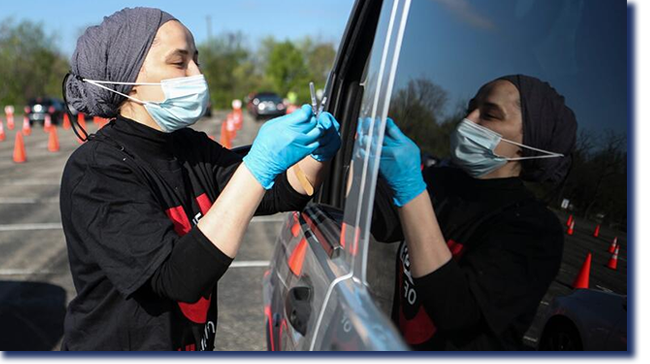
The FDA and CDC are recommending a pause on the Johnson & Johnson COVID vaccine after six women developed rare blood clots.
States began halting use of Johnson & Johnson's one-shot vaccine Tuesday after federal health officials recommended a pause "out of an abundance of caution" because of rare but dangerous blood clots.
California, New York, Ohio, Illinois, Pennsylvania and Florida were among more than a dozen states to almost immediately follow the guidance from the Food and Drug Administration and Centers for Disease Control and Prevention.
Jeff Zients, White House COVID-19 response coordinator, said the pause would have little impact on vaccine availability. The U.S will have enough Pfizer and Moderna vaccines for 300 million Americans by end of July, he said.
|
|
Infographic shows highest compensation, widest gaps for ABMS member boards
Top executives at medical boards frequently make more money than the average practicing physicians they regulate -- and sometimes it's a lot more.
MedPage Today looked at tax documents for ABMS and its 24 member boards to find executive compensation and compared those figures with data from the American Medical Group Association's latest physician salary survey.
The analysis found that for the 19 boards with complete data on both executive and physician pay, 12 of those executives made more than the median specialist salary.
|
|
If you have a question, please email Savannah Gold at sgold@asipp.org or call 270.554.9412, ext 4219.
|
- Selected manuscripts will be presented in an Electronic Poster Presentation
- Top 25 will be published in the Pain Physician journal.
- Top 10 will be selected for the Abstract Presentation at the Annual Meeting
|
|
The CEOs of some of the biggest hospital and health insurance companies saw their pay soar last year, despite challenges linked to the COVID-19 pandemic, according to Insider.
Cigna CEO David Cordani made nearly $79 million in 2020, up from $13.4 million a year earlier, according to an Insider analysis of the company's financial documents. The analysis also showed that Nashville, Tenn.-based HCA Healthcare CEO Samuel Hazen made $83.6 million in 2020, more than four times his compensation in 2019.
For its compensation analysis, Insider included CEOs' realized pay, which includes salary, bonus, non-equity incentive compensation, change in pension value, other compensation and options exercised and stock vested during 2020.
|
|
Measure addresses one of two pending Medicare cuts
The House voted 384-38 Tuesday evening to rescind one of two scheduled Medicare cuts, sending the bill on to President Biden for his signature.
"Today the house meets on the heels of huge milestones for our country -- more than 180 million vaccine shots in American arms, and more than 150 million rescue checks in Americans' bank accounts," said Rep. John Yarmuth (D-Ky.), chairman of the House Budget Committee. "Today's legislation will ensure our healthcare providers who have been on the front lines of this pandemic are supported during this difficult time."
|
|
By optimizing technology as part of a wider strategy, practices can help physicians better manage their day-to-day.
Prior to COVID-19, physician burnout was starting to decline. A January 2020 survey noted that 42% of physicians experienced feelings of burnout—down from 46% five years prior. Unfortunately, this initially promising statistic did not continue into a trend.
At the start of 2020, doctors were frustrated by too much paperwork, lack of time for patient-centric care and poor work-life balance. Fast forward 15 months. While all the same irritants still exist, there is the added stress of operating during a long-term and worldwide public health crisis.
Physician burnout continues to be a huge concern. When doctors are rushed to see patients or become bogged down in inefficiencies, they can get tired and frustrated, which can ultimately lead to burnout. Practices should look for ways to reduce this burden and free physician time to focus on patient care.
|
|
Pain Medicine Case Reports (PMCR) and Editor-in-Chief Alaa Abd-Elsayed, MD, PhD would like to invite you to submit case reports and case series to the PMCR journal. Your article will be published free of charge.
Open access journals are freely available online for immediate worldwide open access to the full text of published articles. There is no subscription fee for open access journals. Open access journals are no different from traditional subscription-based journals: they undergo the same peer-review and quality control as any other scholarly journal.
Interested in becoming a member of the PMCR Editorial Board?
Editorial board members are asked to review 2-6 manuscripts per year. Please submit your most up-to-date CV to sgold@asipp.org for consideration.
For more information or to submit your articles, click here.
|
|
Maria Menezes, MS, Vwaire Orhurhu, MD,
Raissa Quezado, MD, and Ahmed Shihab, MD
Abstract
BACKGROUND: BACKGROUND: Sacroiliac joint injection continues to play a role in the diagnosis and therapeutic management of patients with sacroiliac joint arthropathy, as it provides pain relief and improvement in function to those patients. It is considered a low-risk pain procedure with minimal to no adverse side effects. Although rare, serious com-plications such as infection and hematoma are a possibility, however. In anticoagulated patients, interventional pain physicians are advised to weigh the risks and benefits before discontinuing anticoagulation. The literature describes serious complications associated with stopping anticoagulation, such as myocardial infarction. However, we should also be mindful of the possibility of intramuscular hematoma formation in anticoagulated patients receiving a fluoroscopically guided sacroiliac joint injection.
CASE REPORT: This case exposes the development of a 300-mL hematoma in the right gluteus maximus muscle after a fluoroscopically guided sacroiliac joint injection in a patient who was taking warfarin. Consequently, she also developed neurologic symptoms such as new-onset urinary retention, weakness, and decreased sensation in her right leg.
|
|
Abstract
Background: Opioid abuse has been an increasing problem since the 1990s. With over 47,000 opioid related deaths recorded in 2017 alone, concerns have been raised regarding the dangers of introducing opioids perioperatively to patients undergoing major surgeries.
Objectives: The present study proposes to examine the frequency, amount, and trends in post-operative opioid consumption in patients undergoing orthopedic surgical procedures.
|
|
Abstract
Background: Practice guidelines recommend urine drug monitoring (UDM) at least annually in the setting of chronic opioid therapy as an objective assessment of substance use. However, empirical evidence on who gets tested and how often testing occurs is lacking.
Objectives: This study investigates 10-year UDM trends in the United States based on 2 factors: (1) the duration of prescription opioid treatment, and (2) having an opioid use disorder (OUD) diagnosis and medications for opioid use disorder (MOUD) prescriptions.
|
|
Since this malpractice insurance program officially launched in November 2018, ASIPP has signed up hundreds of providers with an average savings of 30%. This is professional liability insurance tailored to our specialty and will stand up for us and defend our practices.
Norcal Mutual is 'A' Rated by AM best and is license in all 50 states. To read a few important points to keep in mind about the program, including discounts, administrative defense, cyber coverage, aggressive claims handling, and complimentary award-winning risk management CME activities, click here.
|
|
ASIPP® is now offering our members the benefit of a unique revenue cycle management/ billing service. We have received a tremendous amount of interest in the ASIPP® billing and coding program.
Click here to learn more about the negotiated rate for practices and more!
|
ASIPP® has formed a partnership with Henry Schein and PedsPal, a national GPO that has a successful history of negotiating better prices on medical supplies and creating value-added services for the independent physician. Working with MedAssets, PedsPal provides excellent pricing on products like contrast media that alleviate some of the financial pressures you experience today.
|
|
up-to-date news related to you, your practice, and your patients!
|
|
|
|
|
|
|