|
Dear Community:
As we recognize Organ Donor Month, we are reminded of the vital need to support our neighbors. Unacceptable health disparities and life expectancy gaps persist across our region today. We cannot wait for broken systems to fix these inequities. By working together and increasing minority organ donation, we will directly address this divide.
We Must Save Us.
Blessings to all of you for a safe and healthy week ahead.
Renee Mahaffey Harris
President & CEO
| | |
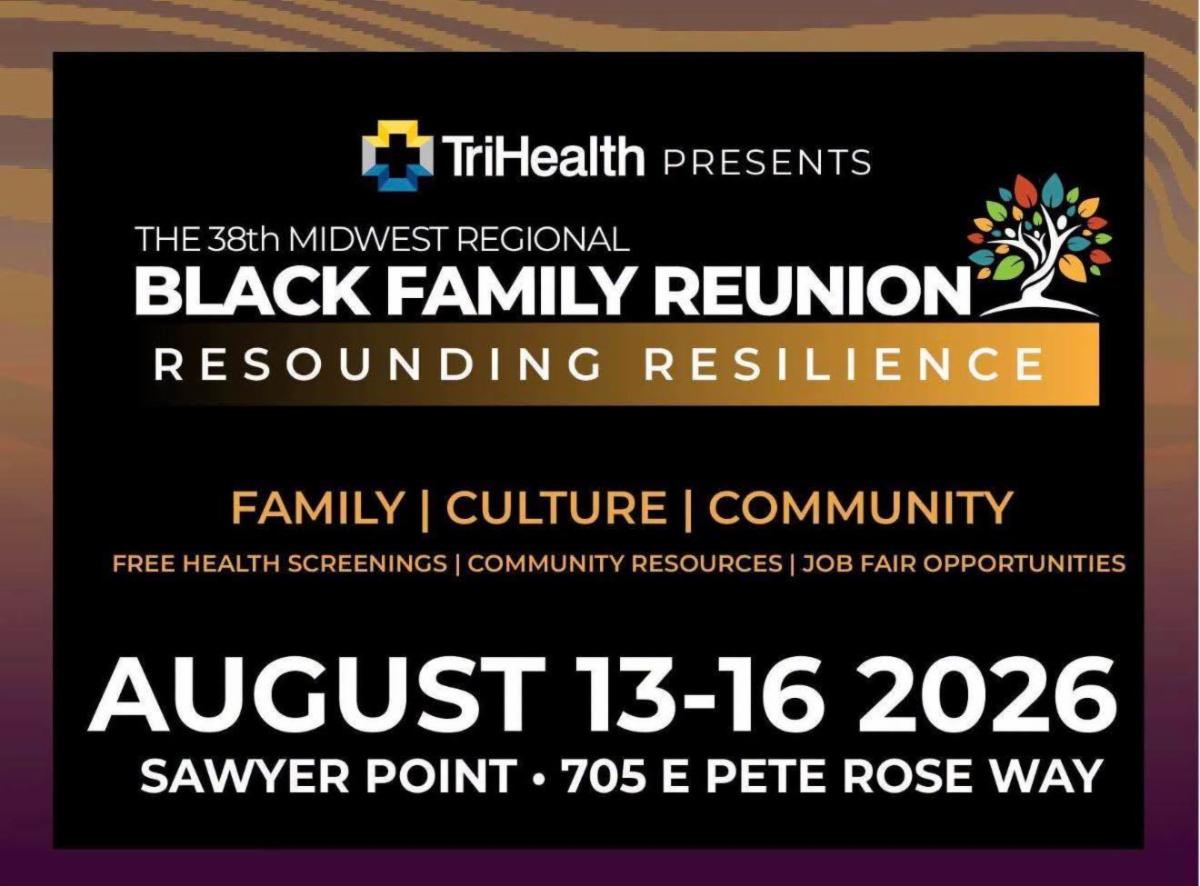
Midwest Black Family Reunion This Weekend!
Congratulations to Executive Director Tracey Artis for an Amazing BFR weekend! Congratulations, too, to the Shockley Family, the 2026 BFR Family of the Year. Rooted in service and guided by faith, the Shockleys exemplify a life committed to learning, leadership, and community impact.
| |
$20 Billion National Strategy Aims to Close the Women's Health Gap
A $20 billion, 10-year federal investment could close the gap in women’s health research and care. That’s the goal of the newly launched National Strategy to Close the Women's Health Gap, unveiled July 15, 2026, by the American College of Obstetricians & Gynecologists, Society for Women’s Health Research (SWHR), and the Women First Research Coalition.
Despite women comprising more than half the US population, women’s health is still understudied and underserved. Initially, the HHS planned to defund the Women’s Health Initiative (WHI) regional centers.2 However, soon after, the defunding decision was reversed.
“These studies represent critical contributions to our better understanding of women's health,” said a statement from Andrew Nixon, a spokesman for the Department of Health and Human Services.
WHI's Decades-Long Impact on Women's Health
WHI is the largest women’s health study in US history, running since 1991. Spanning across 40 clinical centers, the initiative enrolled more than 161,000 women (ages 50 to 79) and has globally influenced clinical practice and public health policy. The estrogen plus progestin hormone therapy trial led to the prevention of an estimated 126,000 breast cancer cases and 76,000 cardiovascular disease cases over a decade, saving more than $35 billion in medical costs.
| |
How Can We Reduce Disparities in Cancer Care?
Black patients with head and neck cancer often experience worse outcomes than white patients. Over the past year, the Disparity in Knowledge of Genetic Testing in Head and Neck Cancer team brought together students and faculty to better understand why advances in genetic testing and precision medicine have not benefited all patients with head and neck cancer equally. The project explored whether differences in tumors, along with barriers to genetic testing, may contribute to unequal outcomes. Through clinical research, literature reviews and studies of patient and provider perspectives, the team explored ways to make personalized cancer care more equitable for underserved populations.
|
Exclusive: NAACP Launches Health Equity Map, Pointing Out Disparities In Food, Healthcare, Clean Air And Water, And More
A first-of-its-kind tool has launched to drive investment in health equity.
The NAACP launched a health equity map, in partnership with global healthcare company Sanofi, to raise awareness of health disparities and prompt action from policymakers and healthcare systems. Map users will be able to discover data from nearly 23,000 residents across 4,000 ZIP codes in 47 states, including the District of Columbia and Puerto Rico, and filter it based on race and gender to examine correlations related to access to healthy food, quality healthcare, culturally responsive providers, safe neighborhoods, clean air and water, and stable housing, according to a press release shared with AFROTECH
|
How one hospital system is helping tackle health inequality
The Covid-19 pandemic brought increased awareness to health equity gaps in the US. But in the last couple of years, the Trump administration has targeted diversity, equity, and inclusion (DEI) initiatives across industries—and healthcare is no exception. The US Equal Employment Opportunity Commission has rolled back affirmative action guidelines and ended certain demographic data collection, for instance.
A report by the Commonwealth Fund, a healthcare nonprofit, found that measuring and reporting health disparities “enables states and health systems to assess how well they are using resources to improve health outcomes for everyone.”
Similarly, at Chicago’s Rush University System for Health, Chief DEI Officer Ildemaro González told us that his “work has a lot to do with data.” His office uses that information to try to close the gaps in access to healthcare for the community. Among the initiatives Rush organizes are food pantries for patients. It has also contributed to building the Sankofa Village Wellness Center, which provides primary care and dental services to residents in West Garfield Park, a low-income community on the western side of Chicago. The center also offers arts, financial education, and workforce development programs to 6,000 people each year, according to its website.
|
$16.9M NIH Award to Create New Health Disparities Research Center
The National Institutes of Health (NIH)/National Institutes of Minority Health and Health Disparities (NIMHD) has awarded North Carolina Agricultural and Technical State University a five-year $16.9 million award to create a research center that focuses on alleviating health disparities.
This funding is awarded by the NIH Research Centers in Minority Institutions (RCMI) mechanism. The RCMI at N.C. A&T will be housed in the John R. and Kathy R. Hairston College of Health and Human Sciences and will initially focus on brain health research, with support for two RO1-scale research projects.
“This $16.9 million RCMI is the largest single NIH award to the Hairston College of Health and Human Sciences and will be a game changer for team-science driven multidisciplinary health disparities research,” said Elimelda Moige Ongeri, Ph.D., Hairston College dean. “More importantly, the RCMI will advance N.C. A&T’s community engagement efforts, positioning us to partner with community organizations to lower the burden of chronic and infectious disease in underserved communities.”
|
Military Health System Sees Signs of Renewed Surgical Disparities Following COVID-19
The Military Health System (MHS) is often cited as a model for reducing healthcare disparities because every beneficiary is covered by the same insurance. For example, previous studies have indicated that, within the system, there has been no significant difference in rates of 90-day hospital readmissions after surgery—a measure of the effectiveness of the care provided—based upon race.
New research suggested, however, that disparities might be starting to reappear due to the MHS’s continued struggle with staff shortages, decreased number of surgeries being performed each year and long-term effects from the COVID-19 pandemic. The authors suggested their study is the first to examine racial disparities in surgical outcomes within the different environments of care of the MHS following the COVID-19 pandemic.
| | |
More Articles of Interest
American Hospital Association, August 11, 2026
Communications Health, August 6, 2026
Journal of the American College of Cardiology, August 12, 2026
| | | | |