|
Closed for the Holidays
All ECORP offices will be closed on:
Thursday, November 23 and Friday, November 24, 2023
and will reopen on Monday, November 27, 2023
All ECORP offices will be closed on:
Monday, December 25, 2023, through Monday, January 1, 2024
and will reopen on Tuesday, January 2, 2024.
| |
Bats Take Center Stage: ECORP Biologists Spread Awareness at Community Outreach Events | |
|
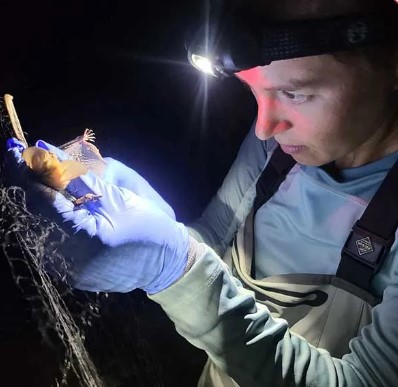
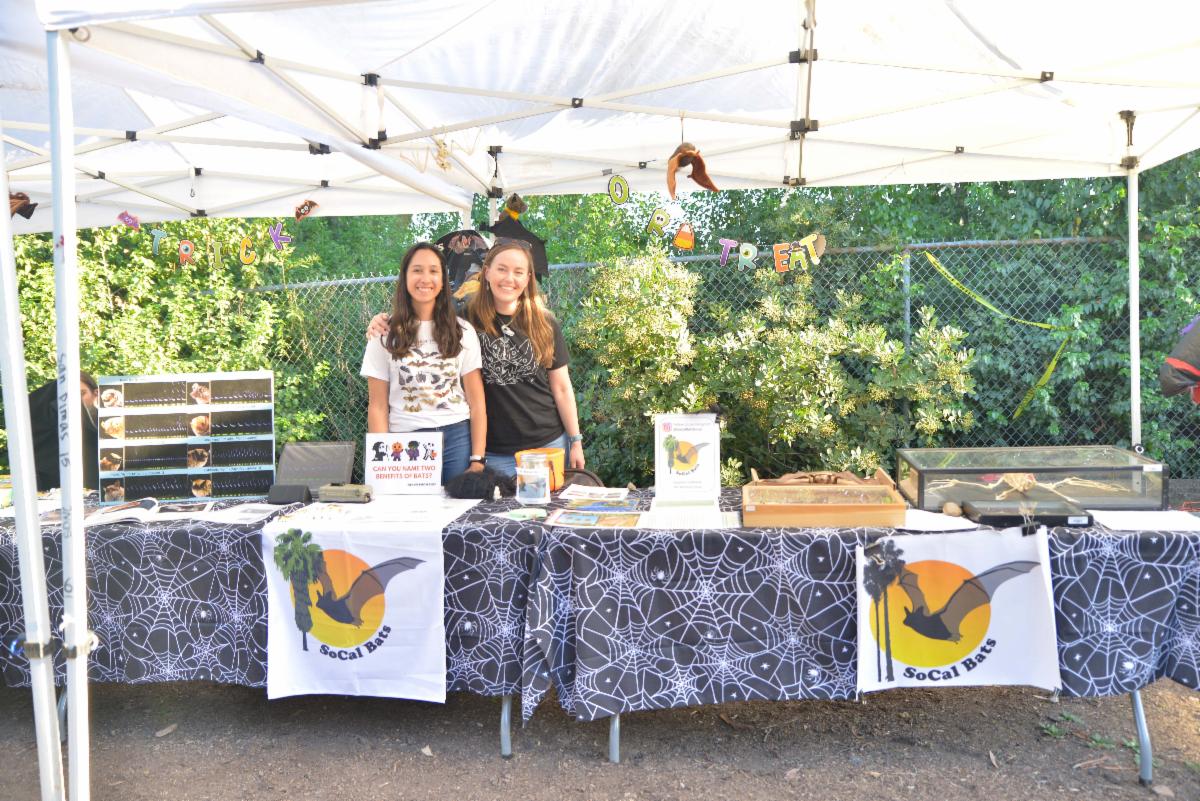
In the spirit of October's spooky season, our dedicated team of biologists recently took the opportunity to shed light on some of nature's most misunderstood creatures – bats! ECORP biologists Lauren Simpson, Corrina Tapia, and Alden Lovaas lent their expertise at two community outreach events, enlightening attendees about the vital role bats play in our ecosystems.
The first event, "Things That Go Bump in the Night," held at the California Botanic Garden in Claremont on October 6 and 7, 2023, saw our team in action. On October 14, 2023, Lauren and Corrina were at it again at the San Dimas Nature Center Halloween Crawl. At both events, the ECORP bat team shared their knowledge, debunking myths and emphasizing the crucial importance of bats in maintaining ecological balance. Their engaging presentations captivated participants of all ages, fostering a deeper appreciation for these incredible creatures.
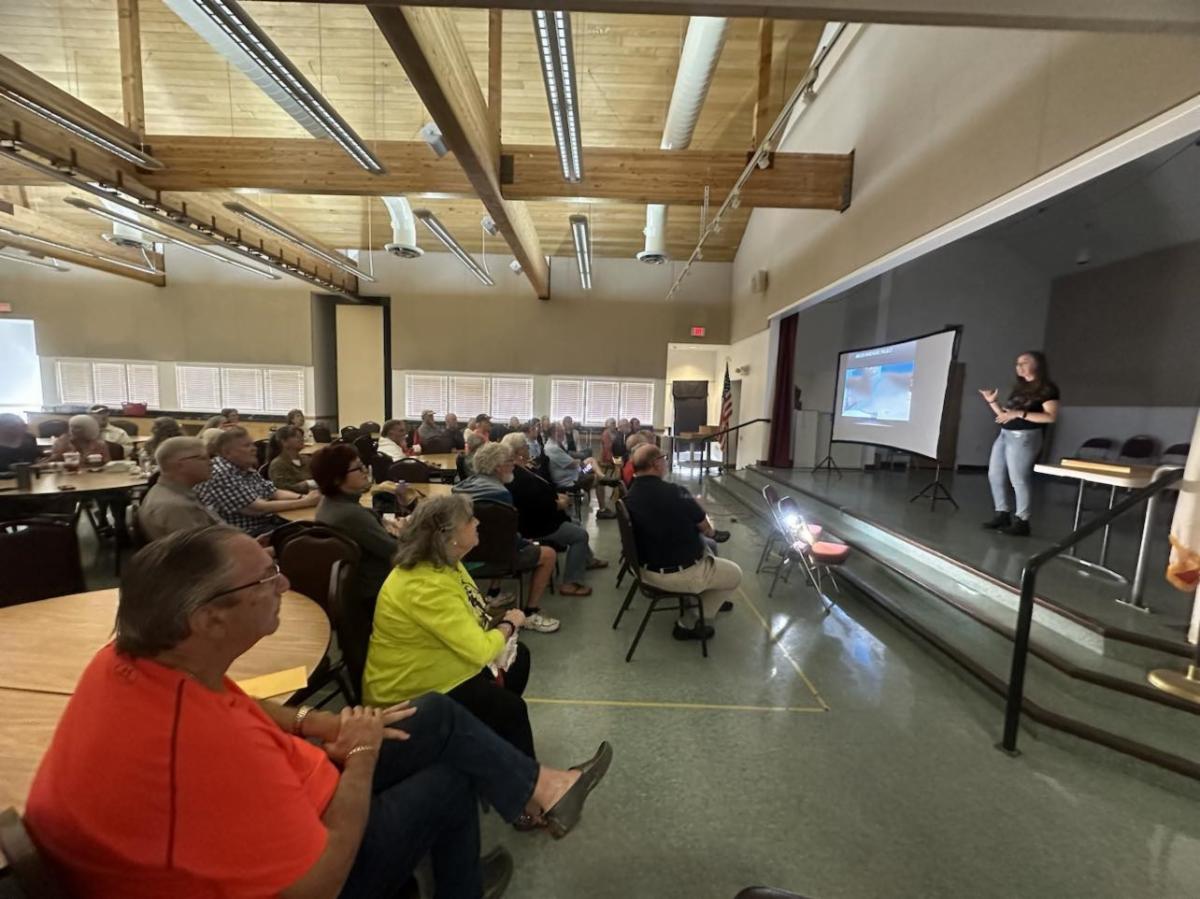
Following these Halloween-centered events, Lauren also further demonstrated her expertise by delivering a presentation in American Sign Language about bats to the Riverside Deaf Seniors community group on October 25, 2023.
In addition to the team’s outreach efforts, we are proud to announce that ECORP Senior Biologist Lauren Simpson recently obtained her CDFW Specific Use Permit for bat-capture and handling, adding a valuable skill to our team's repertoire! This development allows us to better serve our clients with specialized bat-related services.
ECORP provides the full suite of bat survey and management services including focused bat habitat assessments, acoustic and emergence surveys, and the development and implementation of bat mitigation and Bat Management and Monitoring Plans. For a deeper dive into our bat-related services, visit our dedicated page here.
For more information, contact Lauren Simpson at (714) 648-0630.
| |
Sackett v. EPA and the New Definition of Waters of the U.S. | |
|
Last May, the Supreme Court ruled unanimously in favor of Michael and Chantell Sackett, owners of a property near Priest Lake, Idaho. The ruling determined that wetlands on their property were not considered Waters of the U.S. (WOTUS), and therefore impacts to these wetlands would not require federal permits under Clean Water Act (CWA) Section 404. The Sackett ruling was a stark departure from the United States Army Corps of Engineers (USACE) and Environmental Protection Agency’s (EPA) prior interpretation of “adjacent wetlands” under the CWA, which has, by and large, remained consistent since the Rapanos decision (excluding brief periods during which the Obama and Trump era WOTUS definitions were in place).
The decision significantly narrowed the EPA's definition of WOTUS published in January, which was based on guidance issued after the Rapanos decision. In August, the EPA released a Final Rule redefining WOTUS to comply with the Supreme Court ruling. The Final Rule is consistent with the Sackett decision and limits federal jurisdiction over wetlands to only those adjacent to jurisdictional waters, meaning, those subject to interstate or foreign commerce, territorial seas, interstate waters, or “relatively permanent” tributaries to these waters. In the new definition, “adjacent” means “having a continuous surface connection to” (i.e., abutting with surface flow between the wetland and the jurisdictional water during periods of inundation). The Rapanos-era “significant nexus test,” which was previously used by the USACE and EPA to determine whether certain features were jurisdictional based on their effect on the chemical, physical, or biological integrity of jurisdictional waters, has been removed from the WOTUS definition and will no longer be used.
As a result of the new rule, many wetlands in California, including vernal pools, that were previously considered jurisdictional under the significant nexus test will no longer be federally regulated. However, California wetlands are protected regardless of federal jurisdiction under the state Porter-Cologne Water Quality Control Act. Where federal jurisdiction is lacking, project proponents must go through the Waste Discharge Requirements permit process with the State Water Resources Control Board (SWRCB) which includes a public review period. The SWRCB anticipates that a higher workload burden on the State and Regional Water Boards may result in increased permitting timelines (“Sackett v. EPA Frequently Asked Questions” presented by the SWRCB on October 23, 2023).
In addition, many vernal pools and wetlands in California are host to federally listed threatened and endangered species. When a CWA permit is required for a project’s impacts to federally jurisdictional wetlands, a more streamlined process for Endangered Species Act compliance is used. Under Section 7 of the Endangered Species Act, the USACE consults with the appropriate agency (U.S. Fish and Wildlife Service [USFWS] or National Marine Fisheries Service [NMFS]), and the consultation process is subject to a 135-day time limit. For projects that no longer require CWA permitting, and have no other federal nexus, project proponents will need to obtain coverage under Section 10 of the Endangered Species Act if federally listed species will be affected. Section 10 requires proponents to apply for an Incidental Take Permit directly from USFWS or NMFS and to prepare a Habitat Conservation Plan. Section 10 permitting is not subject to the same statutory timeline, which may also result in lengthier review periods.
In conclusion, although wetlands throughout much of the U.S. are losing federal protection under the CWA, wetlands in California will remain subject to regulation under state law and federal endangered species protections.
ECORP’s regulatory team continues to closely track this topic. Please contact Lourdes Gonzalez-Peralta at (916) 782-9100 or Scott Taylor at (909) 307-0046 for information on ECORP’s regulatory services.
| |
ECORP Provides Innovative Acoustic Services in West Sacramento | |
|
Uncommon challenges demand innovative solutions.
Picture the exhilaration of a first-time or new homeowner stepping into their expansive abode within a burgeoning, unfamiliar neighborhood. The locale is adorned with gleaming schools at every turn, offering more green spaces than grievances, and dense swathes of open land seemingly safeguarding the community from life's worries. This is a typical West Sacramento residential neighborhood. However, appearances can be deceiving.
In 1982, before West Sacramento earned its city status, the county’s administrative body approved Planned Development 21 in the Southport District. At a glance, one could easily mistake this area for open space, yet it was zoned for industrial use with no immediate development plans. But times change. Come the mid-2000s, the Southport Business Park, as it's known today, slowly sprang to life. It now predominantly hosts round-the-clock distribution and logistics centers, continuously expanding.
What was once thought of as open space has metamorphosed into industrial warehouses.
The neighborhood's tranquil existence was soon disrupted as evidenced by noise complaints, primarily stemming from business activities, such as loudspeakers and back-up beepers, as well as the heavy truck traffic, particularly during the night hours.
Enter ECORP.
In close collaboration with city planning staff and concerned residents from the affected community, ECORP has begun the process of establishing two permanent noise monitoring stations. These stations are strategically positioned between the Southport Business Park and the adjacent residential neighborhood, housing top-of-the-line, solar-powered noise meters. These advanced devices will ensure continuous noise monitoring, capable of recording specific disturbances if they breach the city’s noise thresholds. The data collected will empower the city to enforce noise standards around the clock, helping to address this escalating issue.
For more information on our Air Quality/Greenhouse Gas/Noise/Energy services, please contact Seth Myers at (530) 965-5925 or William Duvall at (619) 814-6997.
| |
ECORP Leads Historic Preservation Workshop | |
|
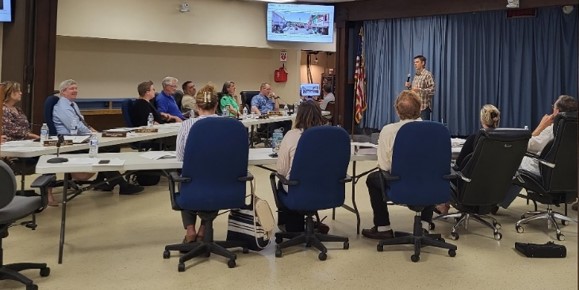
In August, the City of Placerville hosted a Historic Preservation workshop facilitated by ECORP’s Senior Architectural Historian, Nathan Hallam. Placerville is a historic El Dorado County mining town with numerous historic buildings and four residential historic districts. City staff receives many building permit requests that involve rehabilitating older homes in its historic districts. The city needed guidance on how to balance the needs of homeowners with its 40-year-old historic preservation code.
Currently, when homeowners make a permit request in a historic district, City staff uses the Secretary of the Interior’s Standards for the Treatment of Historic Properties to determine the request’s appropriateness. But the Secretary of the Interior’s Standards often seems too stringent. After several recent permit denials and appeals to the Planning Commission, Placerville’s planning staff reached out to ECORP for guidance on how to responsibly reconsider its preservation code. ECORP’s workshop at Placerville Town Hall was attended by Placerville’s mayor and city council, planning commissioners, city planning staff, and members of the public.
In his presentation, Nathan began by discussing historic preservation’s principals, history, and fundamentals. The historic preservation movement has its roots in the broader environmental movement of the 1960s. Demolition of historic buildings associated with freeway construction and urban renewal after 1950 led to grassroots concerns culminating in the National Historic Preservation Act of 1966. Over the years, small towns that retained historic character became increasingly popular with tourists. More recently they have become popular among people who work remotely. Placerville is a popular tourist stop along Highway 50. Since 2020 it has also seen a dramatic increase in new residents who acquire properties in historic districts and make building permit requests to rehabilitate their homes.
Nathan’s presentation also discussed the Secretary of the Interior’s Standards and the concept of integrity, the ability of properties to convey their historic significance. Retaining integrity is a crucial aspect of historic preservation. For properties to contribute to a historic district, they must retain a majority of their historic features. Nathan discussed ways in which Placerville could preserve the historic integrity of its buildings and maintain its historic districts while still authorizing many of its more benign building permit requests. Nathan shared examples of comparable California cities that created local preservation guidelines derived from the Secretary of the Interior’s Standards but that were tailored to meet unique local needs.
After Nathan’s presentation, the meeting turned into a Q&A and open discussion. Members of the public spoke and provided their own input. The workshop turned out to be a major success for Placerville thanks in large part to ECORP!
If you think your local government might benefit from rethinking its historic preservation program or simply would like a refresher on historic preservation principles and fundamentals, please contact Senior Architectural Historian Nathan Hallam at (916) 782-9100.
| |
ECORP New Hires & Employment Opportunities | |
ECORP feels fortunate to continue to increase our staff throughout 2023. Here are some staff members who have joined ECORP since September 2023. | |
|
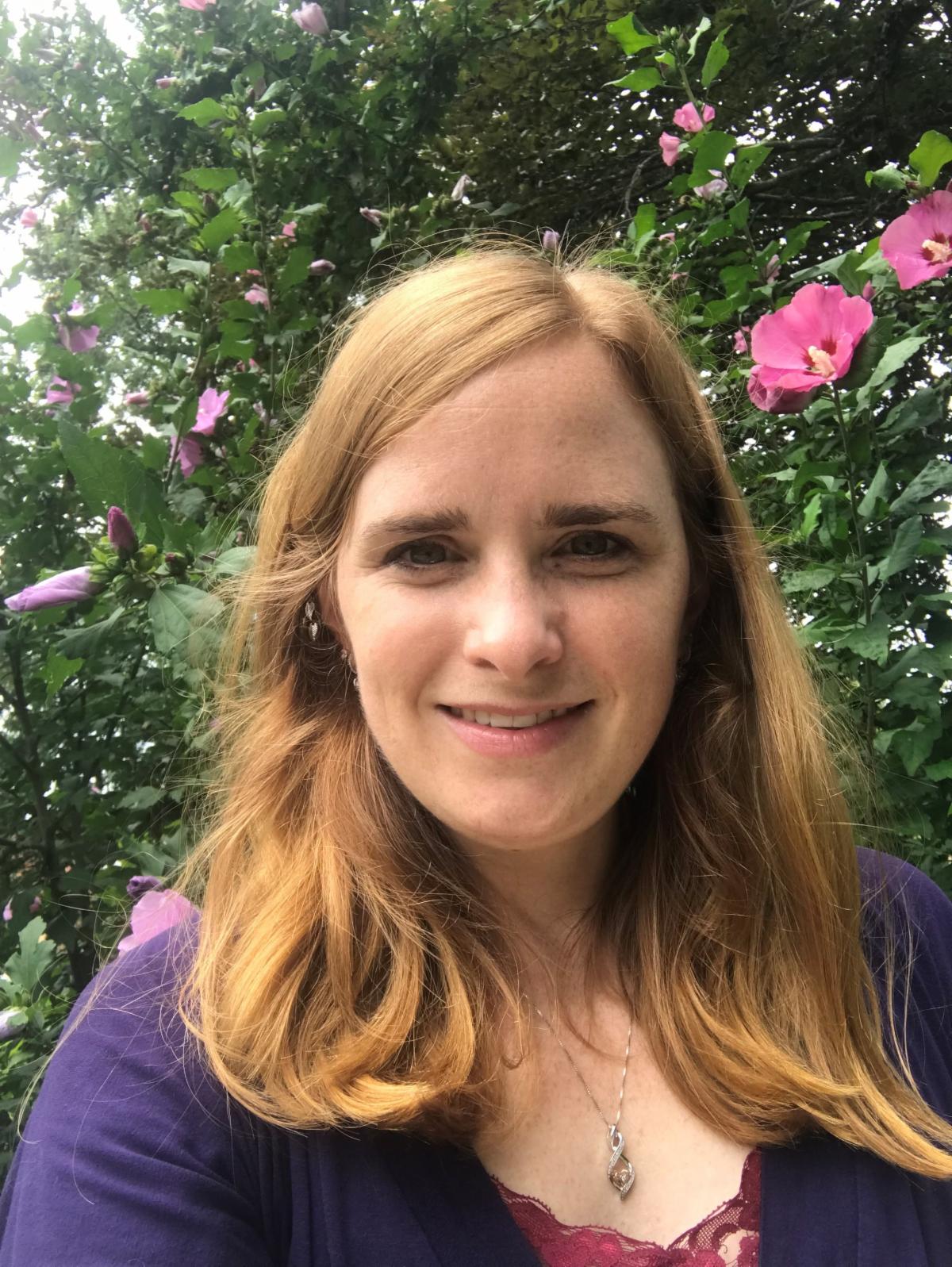
Alyse Oziolor – Senior Biologist/Project Manager – Rocklin Office
Alyse Oziolor is a returning member of the ECORP family, previously working under the alias of Alyse Yeager while she was employed in our Rocklin office in 2018 and 2019. She left ECORP due to her husband’s job relocation to the East Coast and her desire to get established in a new community there and has been living in Connecticut since. She has a B.S. in Environmental Studies from Gettysburg College and an M.S. in Biology from Baylor University, focusing on aquatic ecology. She has worked as an environmental consultant in various states (CA, TX, CT, MA, RI) performing wetland delineations, threatened and endangered species assessments, and regulatory permitting for 6 years. However, for the past 3 years she has been working as a municipal planner with a particular focus on environmental planning and development project review for the Town of Westerly, Rhode Island. In May 2022, her life changed when her son Avi (almost 1.5 years old now) was born. She is excited to return to ECORP in a part-time capacity to spend more time with her family while returning to a group of people she’s always missed. She loves to hike and enjoy nature with the family and explore all the fun things you can do with a toddler. She also enjoys playing volleyball and softball and trying new beers and new (vegetarian) foods.
| |
|
Also joining our staff are:
- Andrew Bursan - Staff Architectural Historian
- Kimberly Edwards - GIS Specialist
- Lorenzo Galvez - GIS Specialist
- Brianna Gustafson - Staff Environmental Planner
- Sara Jones - Administrative Assistant
- John Rashid - Staff Biologist/Workload Coordinator
- Megan Williams - GIS Technician
| |
For more information contact
(714) 648-0630
|
| | | | |