THURSDAY | OCTOBER 8, 2020
|
|
Citing COVID-19, ASIPP and SIPMS Push back on CMS 2021 Payment Rules, Rate Cuts, and other Requirements
PHYSICIAN FEE SCHEDULE
ASIPP urges CMS to continue and make permanent several telehealth services, including telephone only services, CPT codes 99441, 99442, 99443, to remove barriers to access based on geography and site of service, and to continue the coverage and payment policies that it has put in place for audio-video and audio only services during the COVID-19 public health emergency through the end of the year following the year in which PHE ends.
PROCEDURAL PAYMENT POLICIES
Numerous discrepancies continue with the site of service differentials in office, hospital outpatient department (HOPD) and ambulatory surgery centers (ASCs). The majority of the procedures performed in an office setting are synonymous to HOPD procedures, because most procedures in hospital settings are performed in their offices. In fact, office setting conditions may be superior to those provided in hospitals. Surgery centers, of course, require additional requirements and an overwhelming majority of the procedures are performed in an operating room.
For interventional pain management procedures performed in hospital settings, hospitals often do not utilize operating rooms. Consequently, their estimations are much lower than what it would be if they were performed in an operating room and these inaccurate prices are translated to ASCs at a much lower rate, which in turn are translated to physician payment policies. Despite multiple recommendations from MedPAC and the Office of Inspector General, it appears that CMS is unable to change these policies.
ASC PROPOSED RULE
Despite multiple recommendations from MedPAC and the Office of Inspector General, it appears that CMS is unable to change these policies. Overall, physicians are facing as high as 11% cuts in their reimbursement for providing interventional techniques, which is extremely difficult to handle considering the pandemic and a perfect storm created by numerous factors.
INTERSPINOUS PROSTHESIS
At this time, we request that prices be increased to 2019 levels.
DISC DECOMPRESSION
At this time, we request that prices be increased to 2019 levels.
PERIPHERAL NERVE BLOCKS AND NEUROLYTIC BLOCKS
There is disproportionate payment variable with site-of-service differential which needs to be addressed.
PERIPHERAL NEUROSTIMULATION
At this time, we request that prices be increased to 2020 levels.
HOPD PROPOSED RULE
For HOPD proposed rule we have 2 major concerns in relation to payment policies for interspinous prosthesis and preauthorization requirements for spinal cord stimulator trials and implants.
As a result of the Coronavirus Pandemic, hospitals and physician practices are already under a significant strain financially and otherwise. Thus, it makes little sense to burdens further with a new regulatory requirement for which ultimate may decrease access to care.
We are concerned that prior authorization would create an undue hurdle for providers/patients, while creating a barrier to non-opioid alternatives. The Coronavirus Pandemic has significantly changed and affected how hospitals, physicians, and patients manage medical care. Increasing the cost of care and stress on physician practices and hospitals while decreasing access to a therapy that is clinically beneficial, improves pain, function, and decreases opioids seems counterproductive to our citizens well-being who are under increased stressors due to COVID 19.
To read complete comment letter
|
|
Recordings of Virtual Annual Meeting Now Available
If you missed the ASIPP Virtual Annual Meeting in September, you may still register to view the recorded version. All sessions from the September 4-6, 2020 meeting are available through June 2021 for a reduced fee. On-demand registration also provides access to all of the great resources available in the exhibit hall.
A significantly reduced add-on fee is available for those who pre-registered for the live meeting, as well as for fellows, residents and medical students. Registrations for those who did not pre-register for the live meeting will also be accepted.
CME Statement
Recorded sessions for this meeting are not eligible for CME credits.
|
|
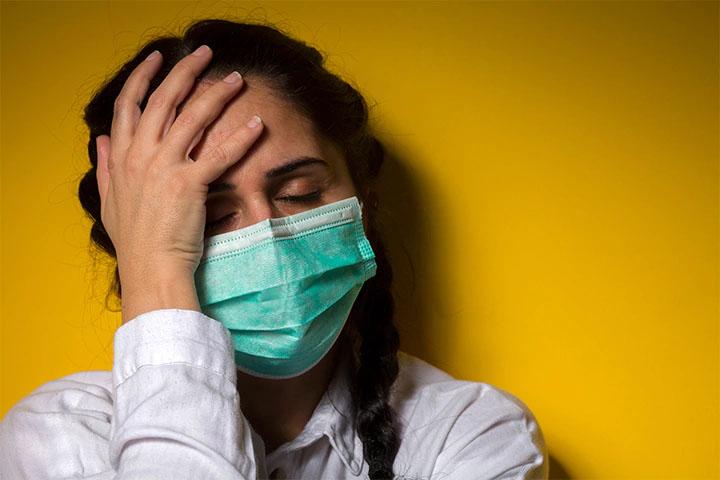
82% of Hospitalized COVID-19 Patients Had Neurologic Symptoms
— Nearly one-third showed encephalopathy in major U.S. healthcare system
More than 80% of hospitalized COVID-19 patients had neurologic symptoms during their disease course, a retrospective Chicago-area study showed.
Neurologic manifestations were present at COVID-19 onset in 42.2% of 509 consecutive hospitalized COVID-19 patients, at hospitalization in 62.7%, and at anytime during the disease course in 82.3%, reported Igor Koralnik, MD, of Northwestern Medicine in Chicago, and colleagues in the Annals of Clinical and Translational Neurology.
Myalgia (44.8%), headache (37.7%), encephalopathy (31.8%), and dizziness (29.7%) were the most frequent neurologic manifestations, followed by dysgeusia (15.9%) and anosmia (11.4%).
|
|
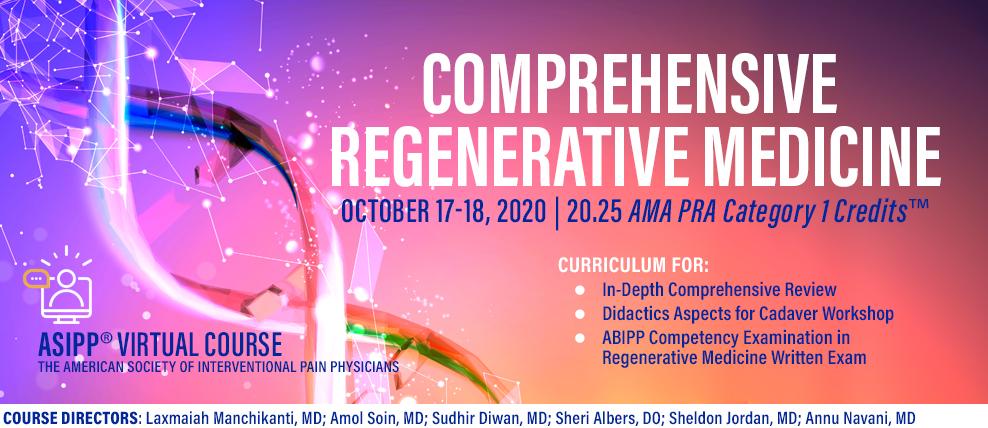
Course Title:
Regenerative Medicine Comprehensive Review Course
Date:
October 17-18, 2020
Credit:
21 AMA PRA Category 1 Credits™
Course Directors:
Laxmaiah Manchikanti, MD; Amol Soin, MD; Sudhir Diwan, MD; Sheri Albers, DO; Sheldon Jordan, MD; Annu Navani, MD
|
|
Upcoming Courses - Order Below |
|
|
|
Course Title:
Comprehensive Review Course Documentation,
Coding, Compliance, and Practice Management
Date:
October 24-25, 2020
Credit:
21 AMA PRA Category 1 Credits™
Course Directors:
Laxmaiah Manchikanti, MD; Amol Soin, MD; Hans Hansen, MD
|
|
|
|
Course Title:
Pain Medicine and Interventional Pain Management Comprehensive Review Course
Date:
November 6-8 and 13-15, 2020
Credit:
51 AMA PRA Category 1 Credits™
Course Information:
This course, promoted in collaboration with PainExam.com and PainCast, offers preparation for ABMS Pain Medicine Board Examination, Controlled Substance Management Competency, ABIPP-Pathway, and the ABIPP Board Examination
|
|
Controlled Substance Management
Only purchase if you attended the live webinar course
|
|
|
Board Review Course
Only purchase if you attended the live webinar course
|
|
|
Documentation, Coding, Compliance, and
Practice Management
|
|
|
Controlled Substance Management |
|
|
ABIPP Recognizes Your Knowledge and Expertise
The American Board of Interventional Pain Physicians (ABIPP) has developed certification programs that recognize accepted levels of knowledge and expertise in the interventional pain management profession, with the goal of improved patient care. Hundreds of qualified physicians have made the commitment to become ABIPP certified.
ABIPP now offers the only competency
certification program for regenerative medicine.
For complete information about the examination requirements and to obtain an application packet, visit www.abipp.org or call 270-554-9412 x4217 or by email at summer@asipp.org.
|
|
TESTS OFFERED
ABIPP Part I - Theoretical written exam - TBD
ABIPP Part II - Oral and Hands-on practical exam - TBD
ABIPP Competency Exam - includes written, oral, and hands-on practical examinations TBD
Combined CSM/CCPM Exam for ABIPP Path – TBD
Competency Exam in Controlled Substance Management – TBD
Competency Exam in Coding, Compliance, and Practice Management - TBD
Regenerative Medicine Competency Exam - includes written, oral, and hands-on practical examinations – TBD
|
|
|
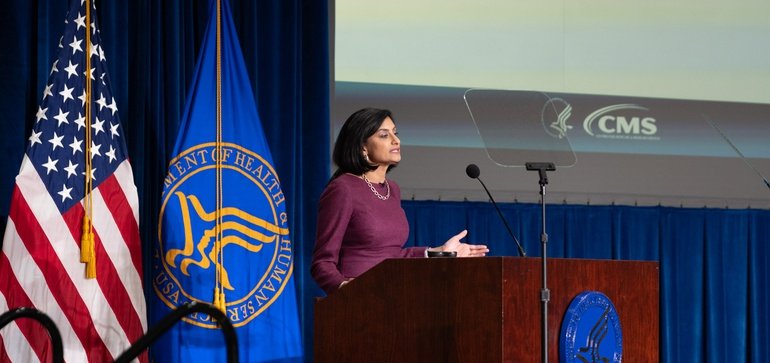
HHS will require hospitals to report flu information, in addition to COVID-19 |
|
The U.S. Department of Health and Human Services announced Tuesday afternoon that it would begin requiring hospitals to include data elements about influenza patients to their daily COVID-19 reporting.
Starting Wednesday, hospitals will have 14 weeks to come into compliance with the requirements, said Centers for Medicare and Medicaid Services Administrator Seema Verma on a call with reporters.
"Noncompliance could result in termination for both Medicare and Medicaid, meaning the hospital would not receive reimbursement from these programs," said Verma, who said that termination is the only sanction the agency has available for hospitals.
|
|
ASIPP® Partners with Fedora Billing And Revenue Cycle Management Company
|
|
ASIPP is now able to offer unique benefits for revenue cycle management with billing, etc.
Fedora is a company known to many of our board members and others. ASIPP® has reached an agreement with Fedora to provide exclusive discounts on billing or revenue cycle management that will decrease practice costs and promote growth, or at least stop deterioration. It is not just a billing company; they streamline the billing and receivable process and constantly update payor regulations keeping your practice up to on date on a daily basis.
Some of the ASIPP® Billing Program highlights are below:
Up to 50% savings for ASIPP® members for their billing or revenue cycle management for their offices and surgery centers:
- Expertise in interventional pain management billing for all types of services
- 99% Clearing House Rate
- 95% First-Time Claim Passage
- 23.4 Average Days in A/R
- Eligibility and Benefits Verification
- Pre-Certification/Prior Authorization
- Denials and A/R Management
|
|
Join The Group Purchasing
Organization Today
|
|
ASIPP® has formed a partnership with Henry Schein and PedsPal, a national GPO that has a successful history of negotiating better prices on medical supplies and creating value added services for the independent physician. Working with MedAssets, PedsPal provides excellent pricing on products like contrast media that alleviate some of the financial pressures you experience today. While the cost of contrast media has skyrocketed due to the single dose vial issue, because we have partnered with Henry Schein, this could enable you to purchase Omnipaque 240mg/50mL for slightly above $4.50.
Click on “view our discounted supplier prices” (Username: ASIPPmember and Password: Save) or click on the words "join for free now" and begin saving today!
|
|
Essentials of Regenerative Medicine in Interventional
Pain Management
|
|
|
|
Essentials of Regenerative Medicine in Interventional Pain Management is a book to bring concise, collective, and comprehensive information to interventional pain physicians practicing regenerative medicine in managing chronic pain. Regenerative medicine is an integral part of interventional pain management within the definitions of interventional pain management and interventional techniques.
Each chapter contains an introduction of the subject, historical context,pathophysiology, applicability of regenerative medicine with its evidence base, indications, anatomy, technical aspects, complications, and precautions for each topic when available and applicable. This comprehensive book consists of 35 chapters, more than 350 figures, and 50 tables.
|
|
| ORDER | Essentials of Regenerative Medicine in IPM
|
|
Control Your Waiting Room TV
Customized waiting room TV exclusively for ASIPP® members. Create your own ad-free television broadcasts using our videos, custom informational slides and your own YouTube videos. Even add local weather reports, news and live messages.
|
|
|
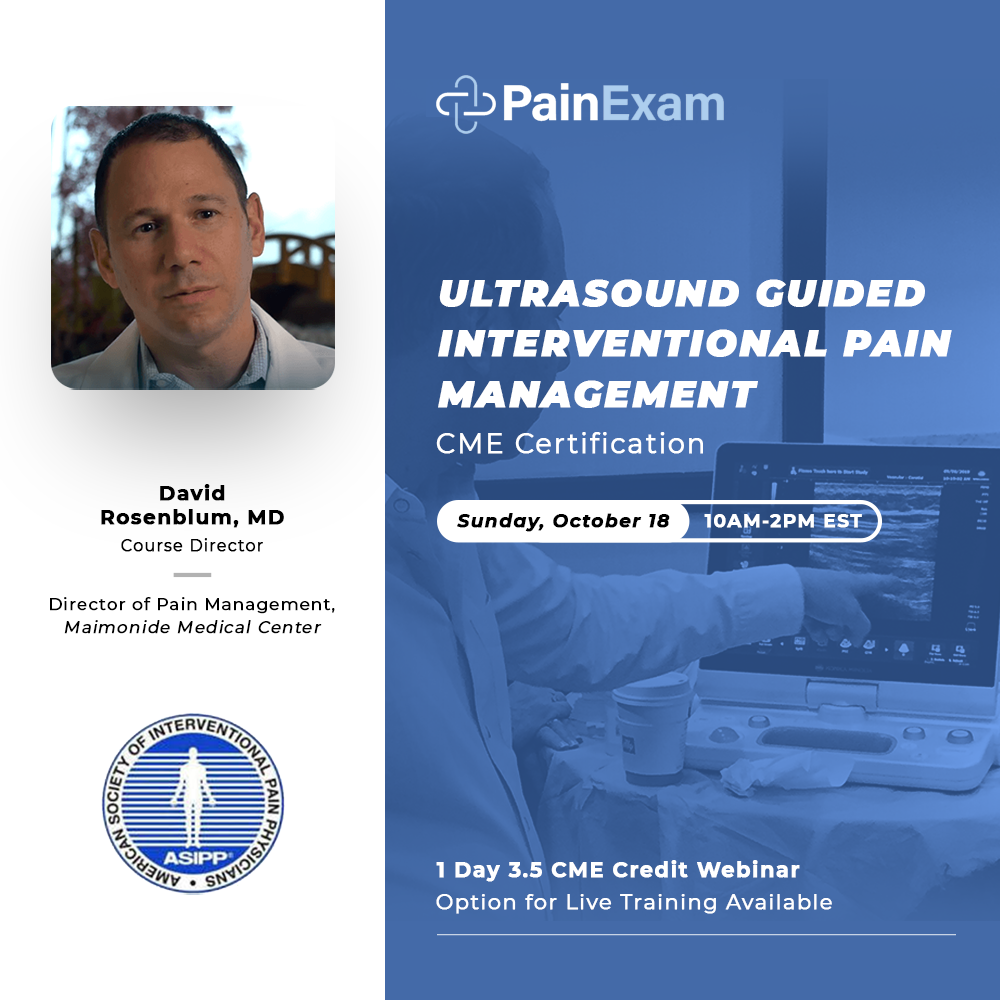
In addition, PainExam has now collaborated with ASIPP and offer 2 new programs:
|
|
|
|
|
2020 12th Annual Scientific
Meeting
|
|
|
|
|
|
|
|
|
|