| |
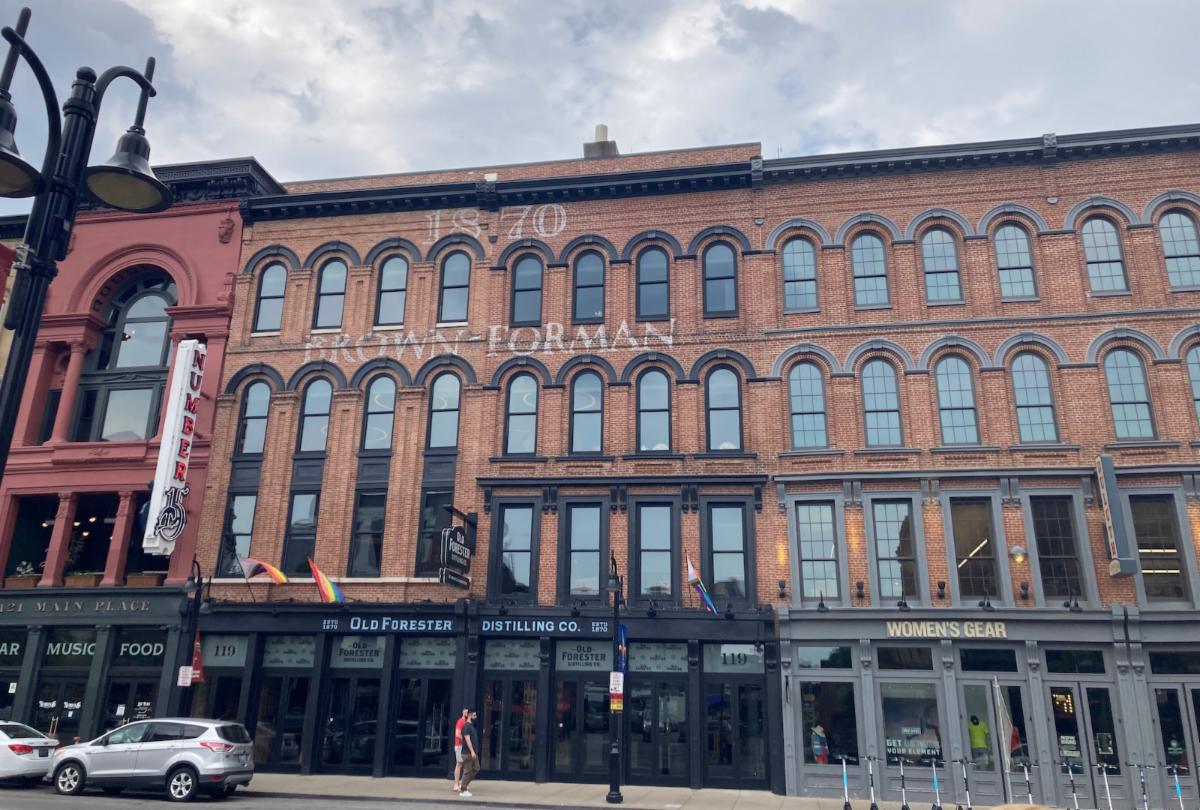
The first article below highlights a fact that those in the masonry industry have been struggling with ever since building life cycle assessments (LCAs) began to take hold. That is, the commonly assumed building lifespan of 60 to 75 years in LCAs does not reflect the reality of most masonry construction; and in fact, it negatively influences the reported environmental impacts of masonry buildings which have lifespans of over 100 years. While the article focuses on brick, other masonry materials face the same challenges.
One way to address this is by documenting the lifespan of masonry buildings in North America. If you have such information, whether that be from case studies, a portfolio database, research paper, or other source, I'd love to know more about it. You can email me at the address below.
| |
Christine "Tina" Subasic, PE, LEED AP, FTMS
CSubasicPE@gmail.com
| | |
Bricks are best
Create Streets
This report shows that current whole-life carbon standards are factually wrong in their treatment of Britain’s most popular building material, bricks, and are leading to perverse outcomes. They risk driving higher long-term carbon emissions, poorer places, and serious damage to the British brick industry. By applying a default 60-year lifespan to housing, prevailing methodologies systematically disadvantage durable, low-maintenance materials such as brick, despite clear evidence that brick buildings routinely last well over a century. When assessed over realistic lifespans, brick construction performs better on whole-life carbon than many alternatives that require frequent maintenance, replacement or demolition. This incorrect industry standard is banning Britain's favorite building material and may destroy the British brick industry.
| |
ASCE to create Manual-of-Practice on Nature-based Solutions (NbS) for infrastructure
ASCE/NOAA Task Force
The ASCE NbS Task Force aims to create ASCE's first-ever free-access Manual-of-Practice (MOP) to inform the design and construction of infrastructure projects that incorporate nature. This MOP is essential because engineers currently cite the lack of available design and construction guidance for NbS as a limit to its widespread adoption. Learn how the NbS Task Force aims to collaborate across disciplines to build consensus on best practices to rapidly scale NbS with rigor and confidence by watching this recording.
| |
Carbon Leadership Forum 2026-2029 strategic plan
Carbon Leadership Forum (CLF)
CLF has outlined a plan to leverage key opportunities that scale demand and adoption of low-carbon planning, design, and procurement strategies to achieve their 2050 Climate Goals. Accomplishing these goals relies on ambitious collective leadership at scale. CLF will continue collaborating with our regional hubs, partner NGOs, academia, funders, policymakers, and professionals from across the building sector to identify and scale the highest impact embodied carbon reduction strategies. Read more.
| |
USGBC and HPDC partner to streamline materials documentation under LEED v5
USGBC
USGBC recently announced a next step in its collaboration with HPDC (Health Product Declaration Collaborative) to simplify how project teams and manufacturers document materials under LEED v5. Material Ingredients is no longer a standalone credit in LEED v5. It has now been incorporated across five criteria areas inside the new Building Product Selection & Procurement (BPSP) credit — Health, Climate, Ecosystem, Social Health & Equity, and Circular Economy. The new features introduced for the HPDC Materials ToolSuite(TM) have been built to make it easier to access all relevant documentation sources to fully score the BPSP credit. The new BPSP Product Scoring PreCheck, running inside the HPD Builder, uses the data manufacturers already maintain in their Health Product Declarations and supports adding an expanded data range to cover the entire multi-attribute scope of BPSP documentation. Read more.
| |
New prestandard standardizes embodied carbon math
STRUCTURE magazine
The ASCE/SEI Prestandard for Assessing the Embodied Carbon of Structural Systems for Buildings, developed by the SEI Sustainability Committee in support of the SE 2050 Commitment Program's goal of eliminating embodied carbon in building structures by 2050, provides a consistent scope and calculation methodology that standardizes how structural engineers measure embodied carbon. The Prestandard defines three Assessment Tiers of increasing rigor, ranging from simplified cradle-to-gate assessments for early design decisions to detailed lifecycle assessments, and specifies acceptable material quantity sources and carbon data, with Environmental Product Declarations preferred at all tiers. Read more.
| |
Toward standardized EPDs for reused materials
Carbon Leadership Forum (CLF)
Reusing construction materials offers significant embodied carbon savings, but current life cycle assessment (LCA) and EPD frameworks lack consistent guidance for measuring and reporting those benefits. The new Reclaimed and Reused: Recommended LCA Modeling Guidance to Support EPDs for Reused Construction Materials report proposes a framework for developing EPDs for salvaged materials and provides initial modeling for reclaimed wood, steel, and brick to support broader adoption and policy integration. Read more.
| |
TMS 302-26
Open for Public Comment
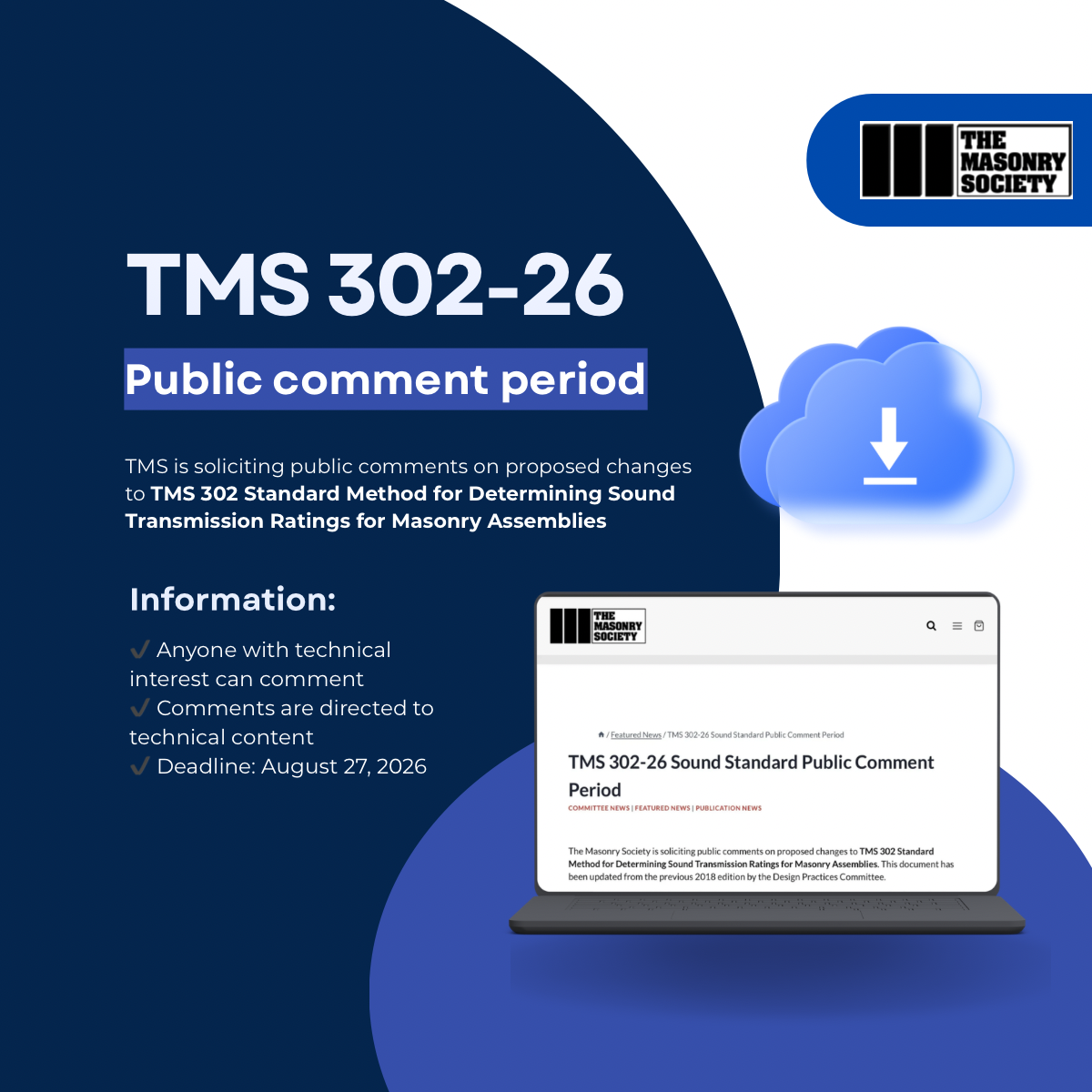
TMS is seeking public comments on proposed changes to TMS 302-26, Standard Method for Determining Sound Transmission Ratings for Masonry Assemblies. The updated document, developed by the TMS Design Practices Committee, is available for review during a 45-day public comment period.
Comments Deadline: August 27, 2026
at 11:59 p.m. ET.
Review the draft and submit comments
| |
|
North American Masonry Conference
Call for Abstracts
Abstract submissions are being accepted for the 15th North American Masonry Conference (NAMC 2027), to be held June 13–16, 2027, in San Antonio, Texas.
Researchers, educators, design professionals, contractors, manufacturers, students, and other industry professionals are invited to submit abstracts on masonry design, construction, performance, sustainability, resilience, emerging technologies, and related topics.
| | Sustainability News Sponsors | | Articles included in this publication are for informational purposes only and do not constitute endorsement by The Masonry Society. Questions, comments, or article submissions may be sent to: sustainability@masonrysociety.org | | | The Masonry Society | 2629 Redwing Road Suite 136 | Fort Collins, CO 80526 US | | | | |