|
Over the past year, I have emphasized one central message to our membership: ASES must become a nationally recognized, public-facing organization. Our expertise, research, and advocacy cannot remain confined to our institutions and annual meetings. Patients across this country are facing a growing healthcare crisis in shoulder and elbow care — and we are uniquely positioned to lead the response.
The burden is real, and it is accelerating. Rising rates of shoulder arthritis, rotator cuff disease, instability, trauma, and work-related injuries are converging with limited access to specialized care. At the same time, the demand for shoulder replacement and complex reconstructive procedures continues to grow at a remarkable pace.
Behind every statistic is a patient: an older adult losing independence because of pain, a worker unable to return to a job, an athlete unable to compete, or a parent struggling with the simplest daily activities. These conditions affect mobility, sleep, productivity, quality of life, and emotional well-being for millions of Americans every year.
National Shoulder & Elbow Week must become more than an annual event. It must become a nationally recognized movement — one that patients, employers, policymakers, insurers, and communities immediately recognize as a trusted voice for shoulder and elbow health.
NATIONAL SHOULDER & ELBOW WEEK: BUILDING A NATIONAL MOVEMENT
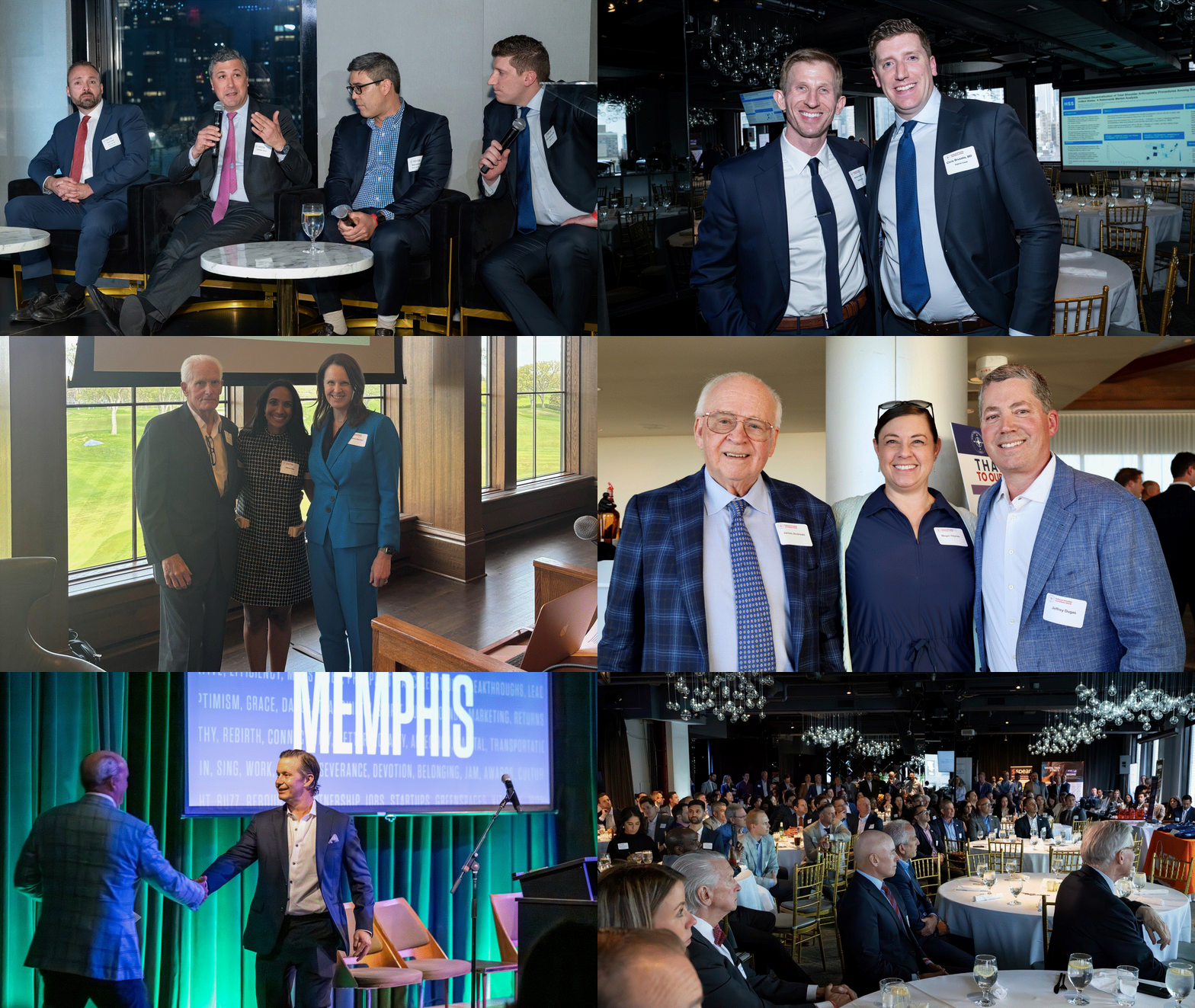
We have now completed five successful years of National Shoulder & Elbow Week. Events across Seattle, Minneapolis, New York, Louisville, Birmingham, New Orleans, Houston, and Memphis have brought surgeons, therapists, patients, and communities together around one shared purpose: improving patient care through education, research, and awareness.
This year was another extraordinary success. While final numbers are still being compiled, more than one thousand attendees participated across our sites, with countless additional volunteers, healthcare professionals, industry partners, and community members contributing behind the scenes to make these events possible.
Awareness is growing — but we are only at the beginning of what this campaign can become.
The vision is clear: National Shoulder & Elbow Week should ultimately achieve the same level of public recognition as Heart Month or Breast Cancer Awareness Month. That level of awareness does not happen organically. It requires infrastructure, sustained investment, consistent messaging, and — most importantly — the active participation of every ASES member.
Getting there requires us to think beyond a single week on the calendar. Shoulder and elbow awareness must become visible year-round through patient education materials, digital outreach, local media engagement, employer partnerships, community events, and everyday conversations within our practices.
Every waiting room is an opportunity. Every patient interaction is a chance to build recognition and trust.
If each member commits to making National Shoulder & Elbow Week visible in their practice and community, the cumulative impact across the country will be transformative.
WHY THIS MATTERS: A GROWING PUBLIC HEALTH NEED
Shoulder and elbow conditions affect tens of millions of Americans each year and remain among the leading causes of pain, disability, and lost workplace productivity.
Shoulder arthroplasty volume has surged dramatically. An estimated 193,500 procedures were performed in 2022 alone — already surpassing earlier projections for 2025 — and growth continues to outpace both hip and knee replacement. Rotator cuff surgery rates are rising similarly, reflecting both an aging population and increasing expectations for mobility and function later in life.
Yet despite this explosion in need, awareness of who provides specialized shoulder and elbow care — and why specialization matters — remains limited among patients, employers, insurers, and policymakers.
Many patients still do not realize that outcomes can vary significantly depending on surgeon training, experience, and procedural volume. That knowledge gap has real consequences for patient safety and long-term outcomes.
National Shoulder & Elbow Week provides us with the platform to change that. It allows us to place a face and a name on shoulder and elbow subspecialty care and helps patients identify surgeons specifically trained to deliver it.
THE RESEARCH BEHIND THE MISSION: WHY SPECIALIZATION MATTERS
The case for recognizing shoulder and elbow surgery as a distinct subspecialty is no longer simply a matter of professional identity — it is supported by rigorous, large-scale scientific evidence demonstrating that specialization measurably improves patient outcomes.
A landmark meta-analysis by Daher, Ilyas, Gonzalez-Morgado, Steinmann, Abboud, and Kassam — analyzing outcomes from 332,542 patients — provides some of the strongest evidence to date. For the first time, the study established meaningful surgeon experience thresholds associated with improved outcomes after shoulder arthroplasty.
Key findings included:
- Surgeons performing at least 28 shoulder arthroplasties annually demonstrated significantly lower complication and revision rates
- Outcomes continued to improve as surgeon volume increased beyond this threshold
- The consistency of findings across more than 332,000 patients makes this one of the most compelling analyses in shoulder arthroplasty literature
Daher M, Ilyas MH, Gonzalez-Morgado D, Steinmann SP, Abboud JA, Kassam HF. Defining Surgeon Experience Thresholds for the Reduction in Complications and Revisions after Shoulder Arthroplasty: A Meta-Analysis of 332,542 Patients. J Shoulder Elbow Arthroplasty. 2024.
A complementary national analysis by Best, Fedorka, Haas, and colleagues — utilizing Medicare claims data across thousands of U.S. surgeons — independently confirmed that higher surgeon volume is associated with meaningfully lower revision rates at two years for both anatomic and reverse total shoulder arthroplasty.
Best MJ, Fedorka CJ, Haas DA, et al. Higher Surgeon Volume is Associated With a Lower Rate of Subsequent Revision Procedures After Total Shoulder Arthroplasty: A National Analysis. Clin Orthop Relat Res. 2023;481(8):1572–1580.
This evidence extends well beyond the operating room. It provides a foundation for discussions with hospitals, insurers, employers, policymakers, and patients themselves. It reinforces an essential message: shoulder arthroplasty is a specialized procedure, and outcomes depend in part on who performs it.
Access to experienced shoulder and elbow surgeons is not simply a professional issue. It is a patient safety issue.
We now have the data. The next step is ensuring the public hears it.
CERTIFICATION: CREATING A RECOGNIZABLE STANDARD OF EXCELLENCE
This growing evidence base directly supports one of our most important ongoing initiatives: the development of a formal certification process for shoulder and elbow surgeons.
Certification will establish a clear, credible, and publicly recognizable standard for subspecialty expertise — one that patients can seek out, hospitals can value, and insurers can recognize.
Importantly, certification is not about exclusivity. It is about accountability, transparency, and helping patients identify surgeons with demonstrated experience and commitment to shoulder and elbow care.
Certification accomplishes several goals simultaneously:
- It helps protect patients by identifying surgeons with focused expertise
- It elevates the field through recognized standards and accountability
- It provides ASES members with a meaningful credential that distinguishes advanced subspecialty training and experience
- It strengthens the broader public understanding that shoulder and elbow surgery is a true subspecialty requiring dedicated expertise
When paired with the growing body of volume-outcomes research, certification transforms a professional aspiration into a public health imperative.
As patients, payers, and policymakers increasingly understand that higher-volume, specialized surgeons produce fewer complications and revisions, the importance of ensuring access to subspecialty care becomes increasingly difficult to ignore.
YOUR ROLE: THIS REQUIRES ALL OF US
None of this happens without the engagement of every ASES member.
The research is published. The campaign framework is established. The certification process is underway. What determines whether National Shoulder & Elbow Week becomes a nationally recognized movement is what each of us does — in our practices, communities, institutions, and professional networks — throughout the entire year.
Here is how every member can help:
- Make National Shoulder & Elbow Week visible year-round through patient-facing materials, educational content, and digital outreach
- Share the volume-outcomes research with hospitals, referral networks, employers, and payers to support recognition of subspecialty expertise
- Participate in or host community outreach events and engage local media and community leaders in the conversation
- Support the ASES Foundation and encourage patients to connect with its mission of advancing research, education, and patient care
- Pursue and advocate for surgeon certification as an important standard of excellence within our specialty
Awareness campaigns of national scale are not built in one week. They are built through consistent effort across all fifty-two weeks of the year.
That groundwork begins with each of us.
THE MISSION AHEAD
We have the evidence. We have the expertise. We have the momentum.
What we are building together is a future in which every patient who needs shoulder or elbow care understands that there is a specialty dedicated to that care, knows how to identify experienced surgeons, and has access to the highest standard of treatment possible.
National Shoulder & Elbow Week is our public-facing platform.
The ASES Foundation is our engine for sustained investment and outreach.
Certification is our emerging standard of excellence.
And the research produced by our membership is our proof.
National Shoulder & Elbow Week must continue to evolve from a week into a movement — one centered on patient care, public awareness, scientific evidence, and access to specialized treatment.
Thank you for everything this membership has accomplished over the past five years. Together, we are not simply advancing a specialty — we are elevating the standard of care for patients across the country.
The best is still ahead.
Anthony Miniaci, MD, FRCSC
President, American Shoulder and Elbow Surgeons
|