|
This month, we’re diving into the economics of housing finance—and why building new homes costs so much.
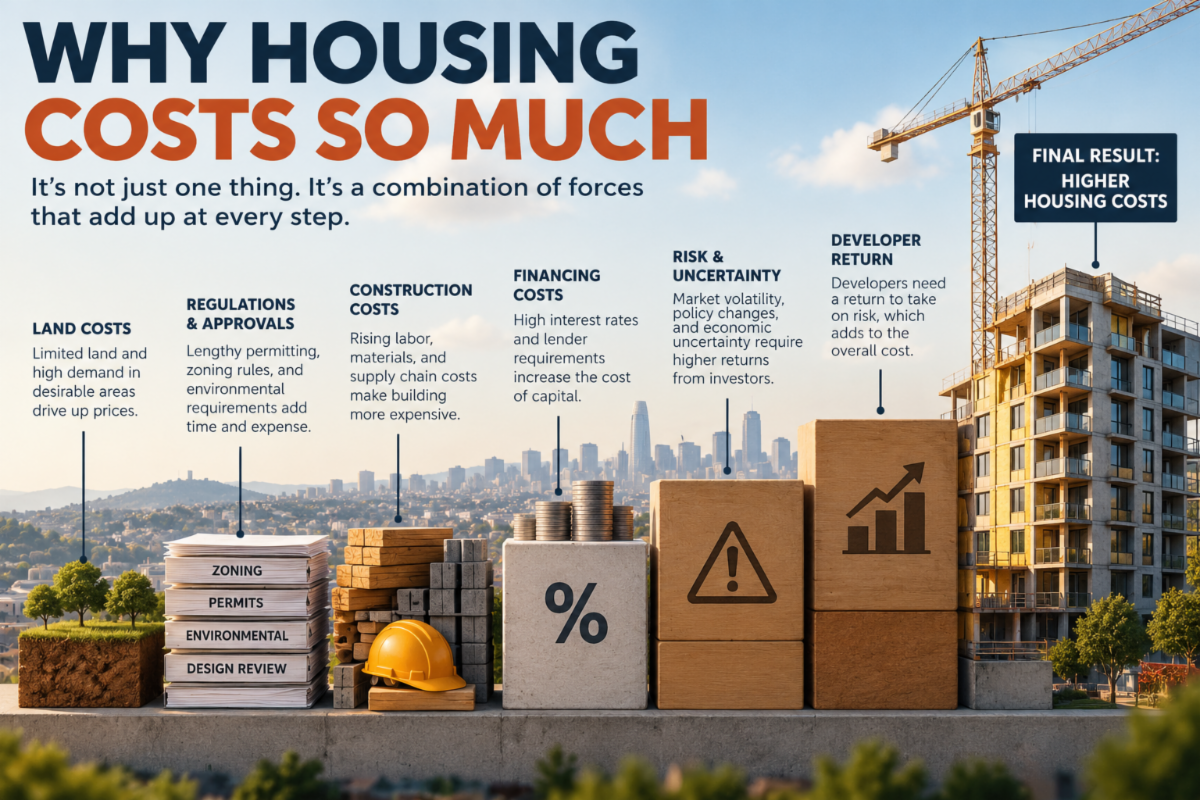
As the graphic above illustrates, there is no single cause. Land, regulations and approvals, construction, financing, risk, and developer returns all add costs along the way. The conventional real estate market is structured to account for these costs while generating a competitive financial return. That isn’t inherently a bad thing. Real estate has historically provided investors with stable returns while creating homes, jobs, and economic activity. But when we talk about housing affordability, we also have to recognize that every layer of cost ultimately influences what residents pay.
What if we could change that equation?
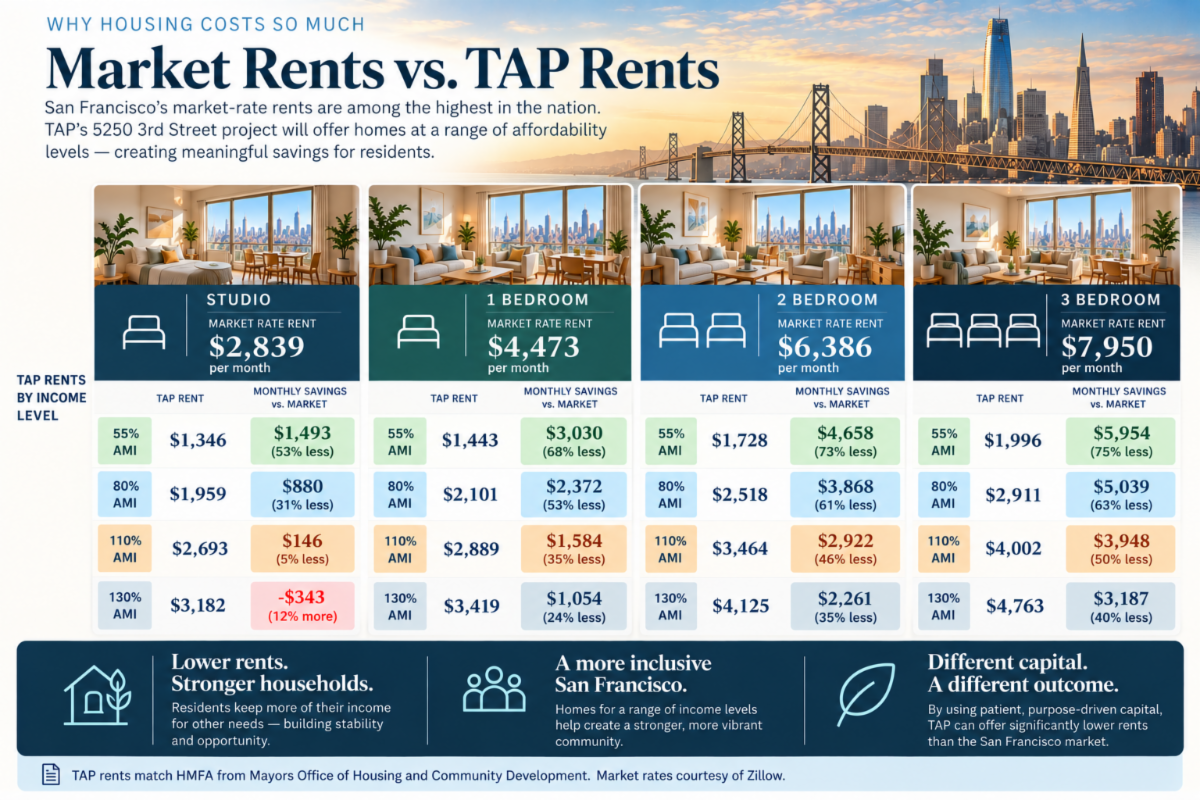
At The Affordability Project, we are already testing what happens when we approach these costs differently through 0ur inaugural project at 5250 3rd Street. Donors contributed the land, professionals volunteered expertise to help navigate planning and permitting, and labor and material partners reduced costs because they believe in our mission. And because TAP is the nonprofit developer, we do not take a traditional market developer fee. Instead, income from the completed project will support our organization and help fund future projects.
Together, these contributions have eliminated or significantly reduced the impact of four of the six major cost centers illustrated above.
That leaves us with one of the most consequential pieces of the equation: capital.
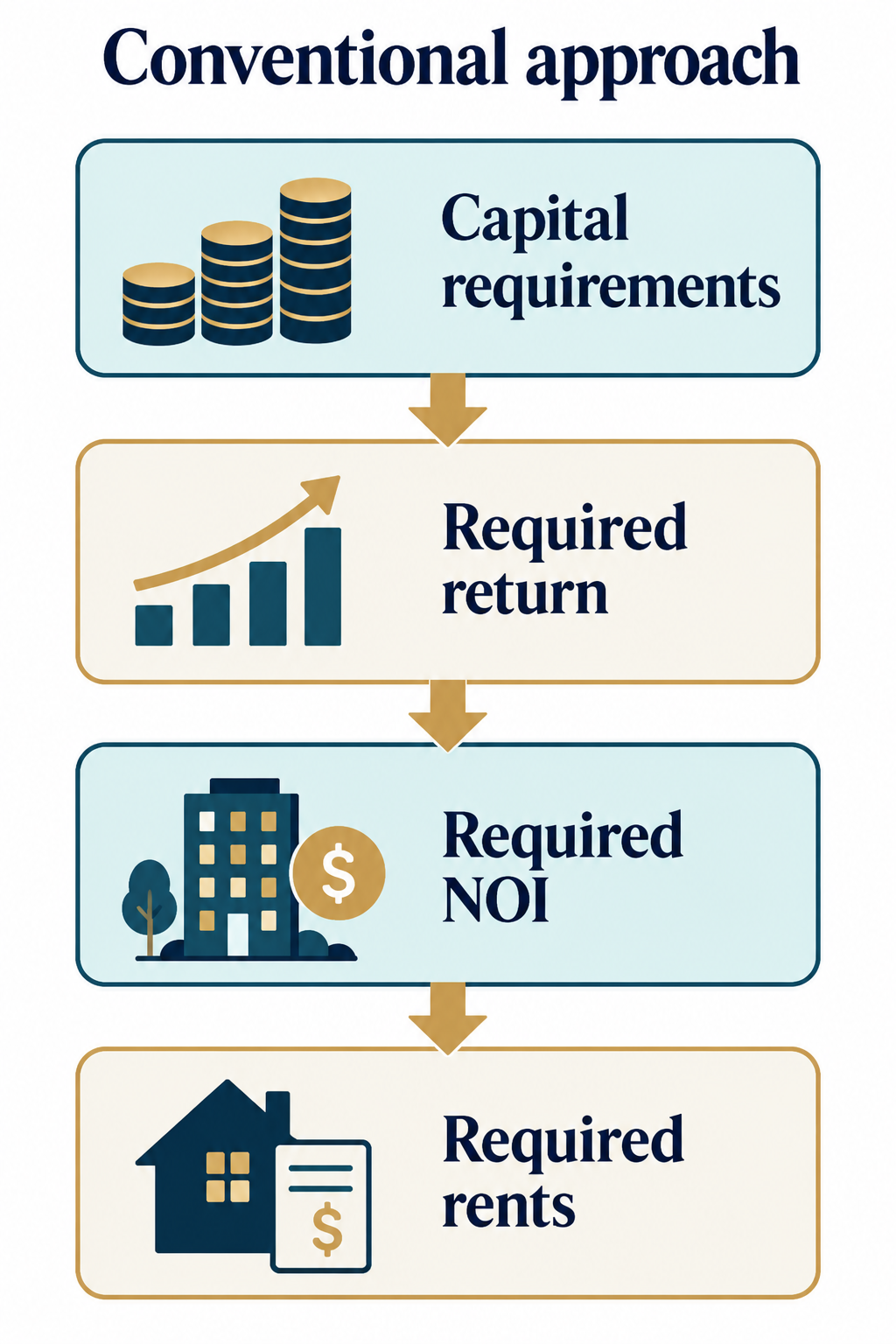
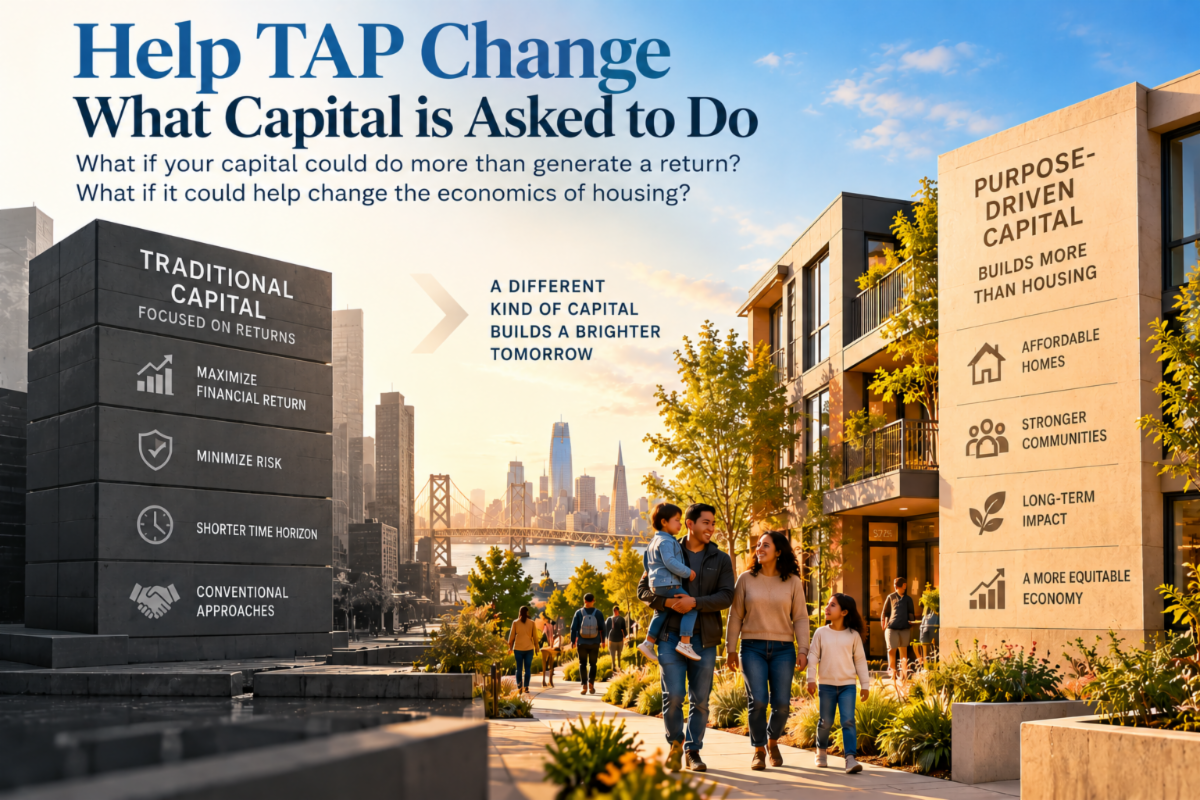
TAP must still navigate a conventional financing market with traditional expectations around risk and return. What if we could approach capital differently, too? What if capital could generate a reasonable return while also helping lower the cost of housing?
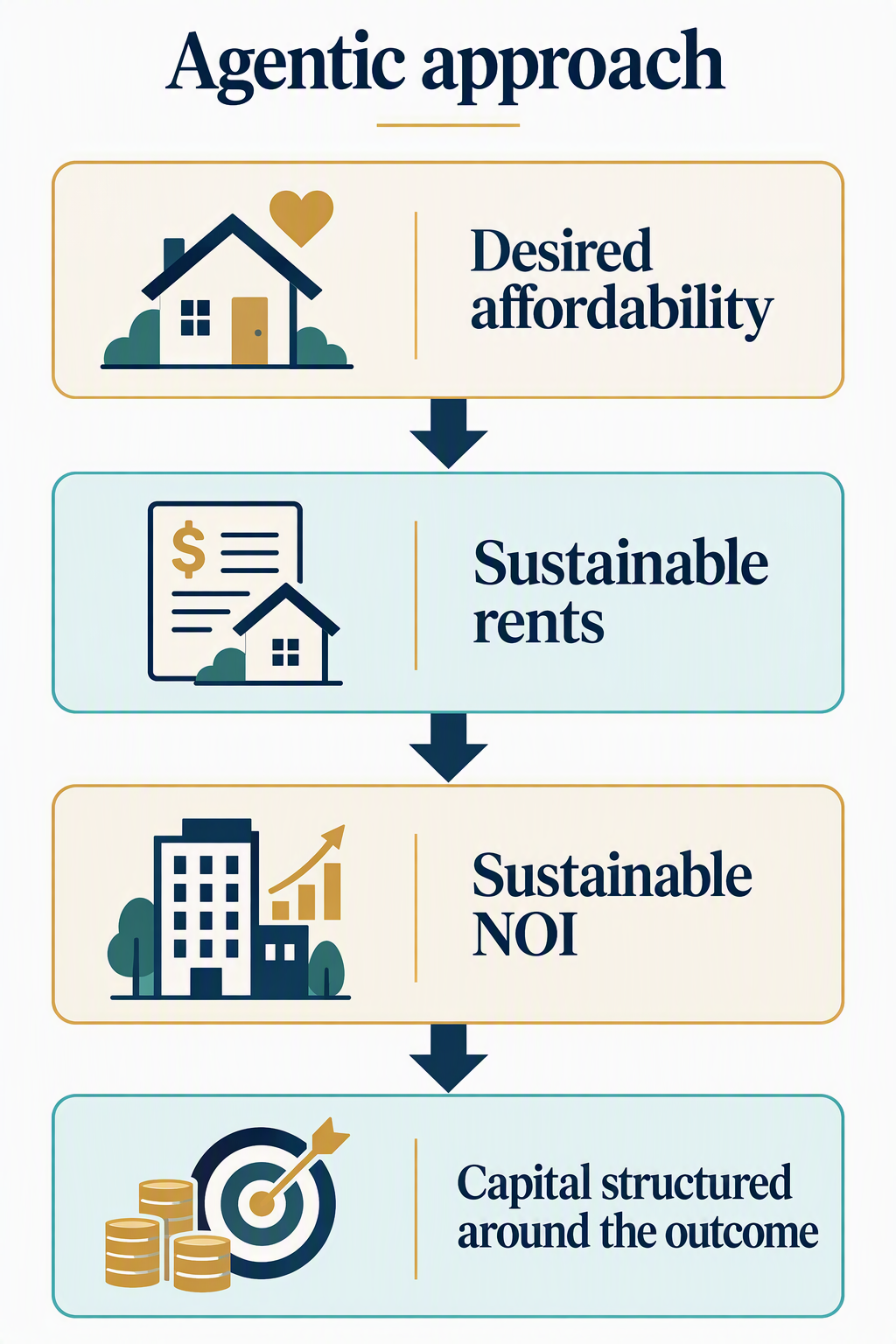
In the months ahead, we look forward to sharing more about a new strategy designed to do exactly that—lowering the cost of capital while aligning investments with TAP’s mission.
Because changing what housing costs
may begin with changing what we ask capital to do.
|