Two good reads here as we close out Teacher Appreciation Week:
one
underscoring teachers’ amazing adaptation skills, and a
personal essay
that gives new meaning to the phrase,
above and beyond
.
|
|
"When I first learned I wouldn’t be returning to school to complete the year, I immediately felt defeated and overwhelmed. The coronavirus has not brought any hospitalizations or untimely deaths to my family. But there has been increased stress, dashed plans and little quiet. Along with my 12-year-old sister and parents, I have to homeschool my younger brothers for the next two months and figure out a way to keep them engaged through August, since local summer programs will likely be canceled... I work on my schoolwork late into the evening, usually past midnight. Like many other students, my sleep schedule has been derailed. I’ve heard from friends who are only children about how lonely and isolated they feel. That makes me feel lucky, even in my loud and turbulent home. At times, I relax by making illustrations and practicing hand lettering. I also journal when I can."
|
|
|
State funding cuts
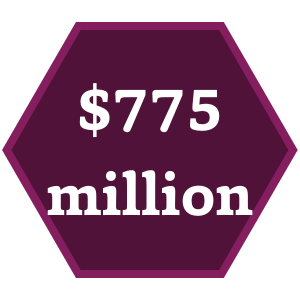
The biggest policy news this week has to do with unfortunate impending state budget cuts, to the tune of
$775 million
. This is the reality when state tax receipts fall well below projections (April’s fell $867 million short, or 35% below where Ohio expected to be) and when states are required to balance their budgets (unlike the feds). A big chunk of this will be felt by schools, as the
Dispatch
describes
here
(and lays out Franklin County district projections
here
). Medicaid-funded health care, higher education, and other state agencies will also see reductions.
Funding cuts to
health, education, and vital services
to Ohioans are always tough news, and can cause much frustration with our policy leaders. These programs also constitute the largest portion of our overall state budget; they’ve seen sizeable cuts in recent history for similar reasons (the late
2000s recession
). Overall, constitutionally
required
balanced budgets don’t care who’s in charge, and neither do viruses. Policy leaders at all levels right now face a tough road ahead.
More on schooling
If you’re like me (overwhelmed!), you may want to sit down before reading think-pieces or projections on what schooling will look like this fall. Gov. DeWine
went there
,
throwing out a suggestion (only a suggestion!) for schools to consider toggled schedules. Ohio, being the local-control state that it is, will likely leave at least some of the decision making up to districts, but DeWine is encouraging them to begin considering alternatives now. Here are a few more reads on the topic, to tuck away for when you’re ready to think about this:
- A piece from Education Dive, outlining various considerations and their costs (like high-efficiency HVACS or an immense amount of cleaning supplies);
- A look at what big education players are saying on the topic, by Chalkbeat;
- Another look from Chalkbeat on what it would mean to “reimagine” education, at least according to Bill Gates.
Columbus City
According to a Council update this week, the City will invest $1.7 million in high-quality pre-kindergarten organizations to continue supporting centers and teachers and “to preserve the local early childhood infrastructure” in Columbus.
|
|
Our executive director Dr. Laura Justice has penned the first in a three-part series, “Our Broken Child Care System and How to Fix It,” for the
Early Learning Nation
. The series of articles will cover the fragmented child care landscape in America that was problematic even before the pandemic.
Read part one
.
|
|
|
Here’s a great
essay
from the National Institute for Children’s Health Quality on the “unprecedented opportunity to revisit the need for a coordinated early childhood system, intentionally outline and define what this system should look like, and identify and accelerate opportunities for improvement.”
A few important reads here on the state of child care: HuffPost
looks at
what’s at stake, post-pandemic, if child care doesn’t receive the support it needs; a
reminder
from Ed Surge on the child care needs of essential workers; a
collection
of stories from the field, as put together by New America; and one local
example
of as single mother being called back to work despite having no child care option available.
The
New York Times
is focusing on the challenges of e-learning during the pandemic through “
learning special reports
.” They asked both students and teachers about their experiences shifting to online learning. Check out what teachers and students
had to say
.
Columbus City Council Pro Tem Elizabeth Brown pens
an excellent essay for CNN
, reminding us not to forget about people who were struggling even before COVID-19.
|
|
Here’s a great read in the Child and Family Blog by play experts Drs. Kathy Hirsh-Pasek and Roberta Golinkoff. While there is
potential for learning loss
during the pandemic, play with family can stem the decline and boost parental mental health. Disadvantaged children are at a higher risk for learning loss compared to middle-income peers. The authors offer tips like virtual play with grandparents, creative play options even within small spaces, and how play can help parents just as much as kids.
|
|
|
This edition written by: Jamie Davies O'Leary, Associate Director of Policy and Caitlin Lennon, Communications & Policy Specialist
|
|
Follow us on Twitter @CraneCenterOSU
|
|
|
|
|
|
|