Faulkner County Agriculture Update
November 21, 2025
| | |
|
General Update
There will not be an Agriculture Update next Friday November 28, 2025. The next one will be on December 5. Also I will be out of the office all next week (November 24-28) and will return to the office on December 1.
| | |
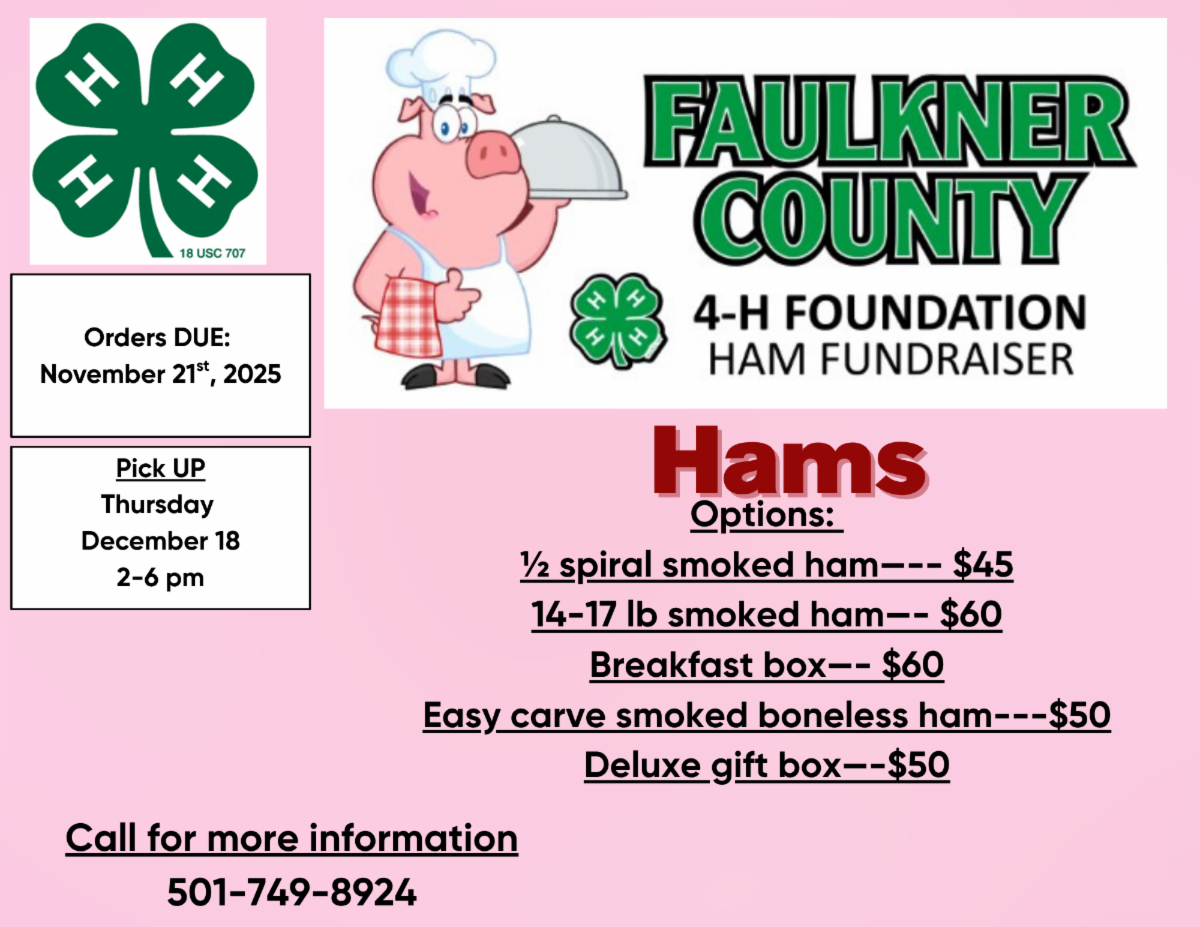
4-H Fundraiser
HAM ORDERS ARE DUE TODAY!
| | |
Weather
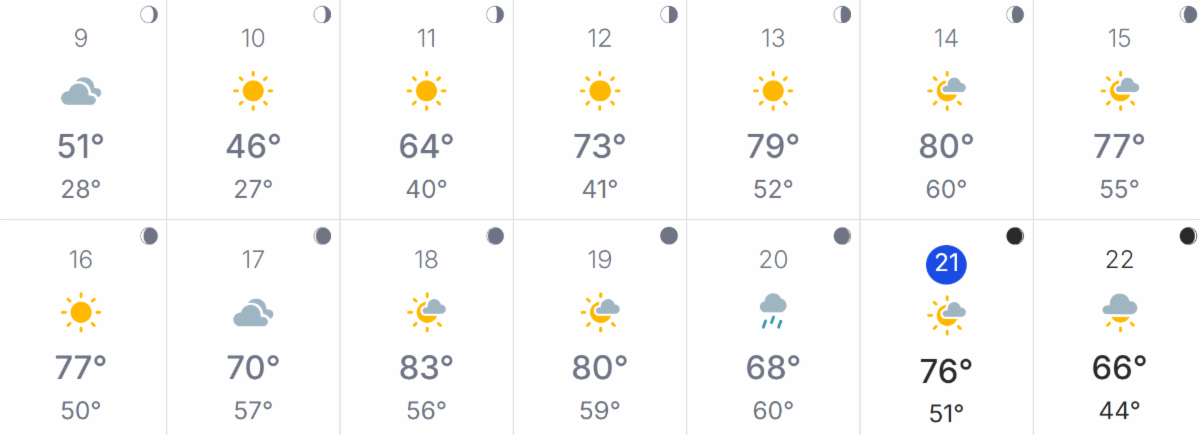
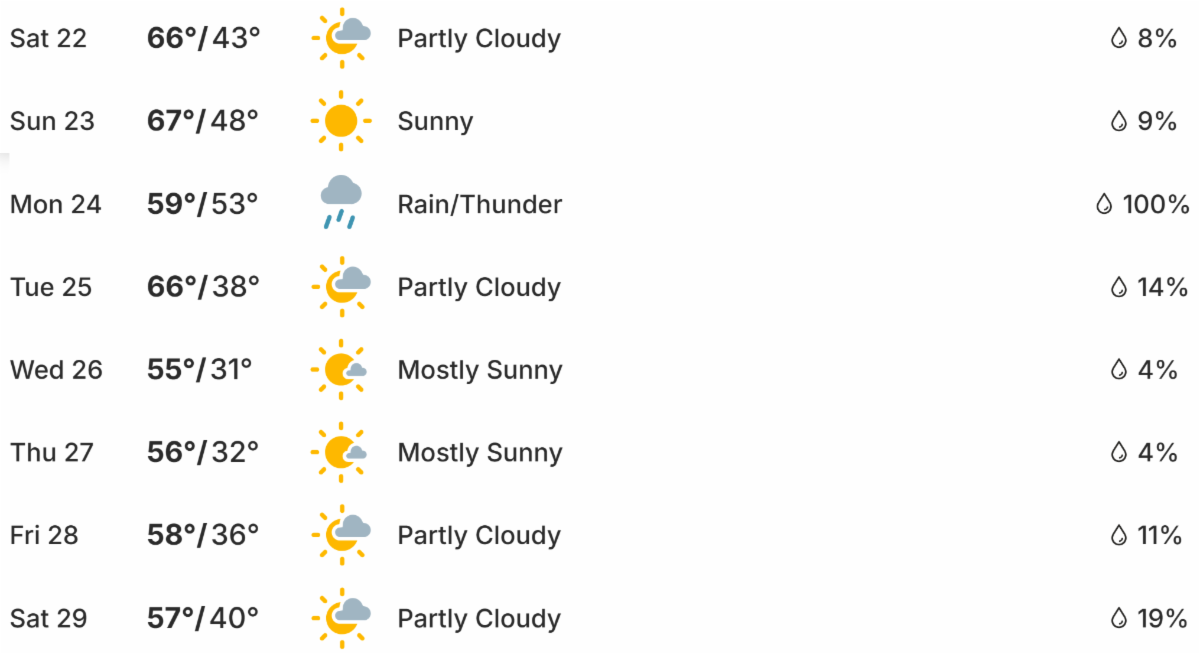
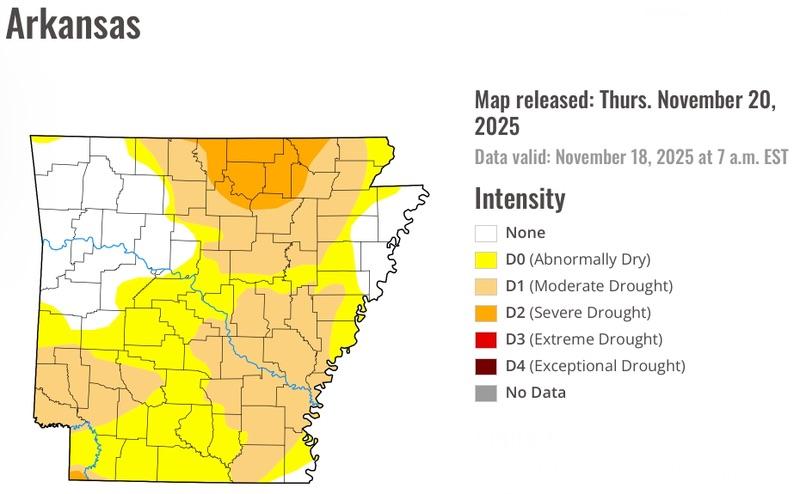
Last week it seemed like everyone was predicting us to see 5 to 7 inches of rain this week. As it got closer all of that started to change and sure enough we got less than an inch of rain. That was enough to settle the dust and help with wheat and winter annuals planted. We are looking at 100% chance of rain on Monday then temperatures fall with night time temperatures in the 30's.
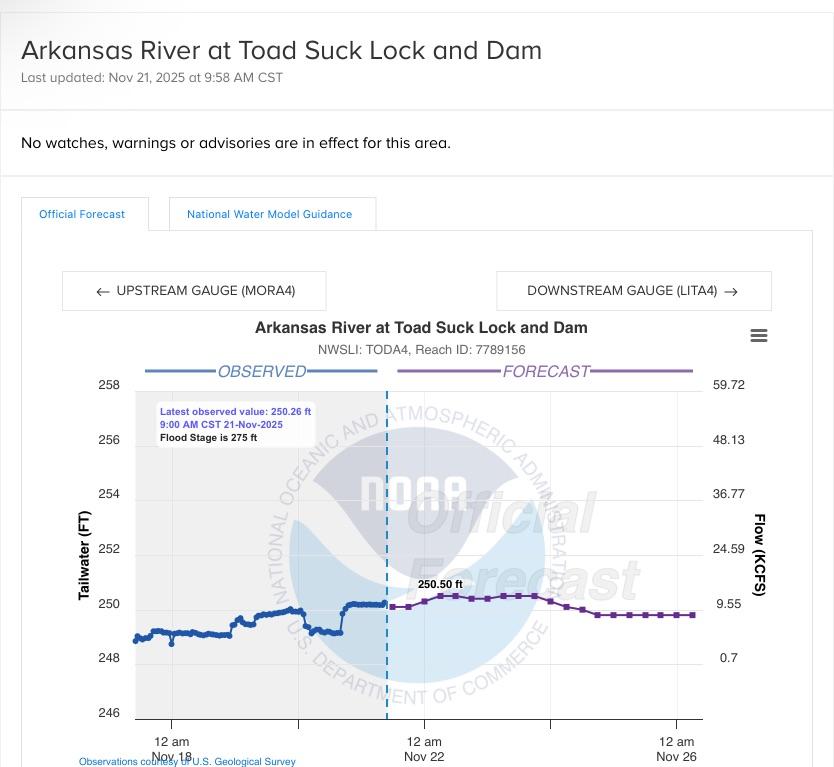
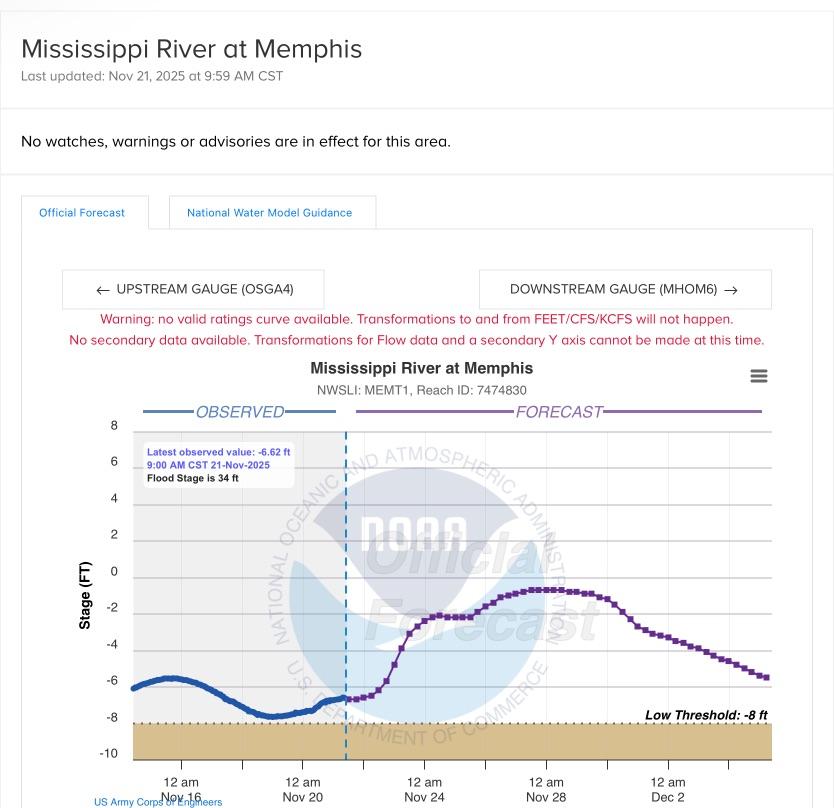
| | Arkansas and Mississippi River | |
Wheat
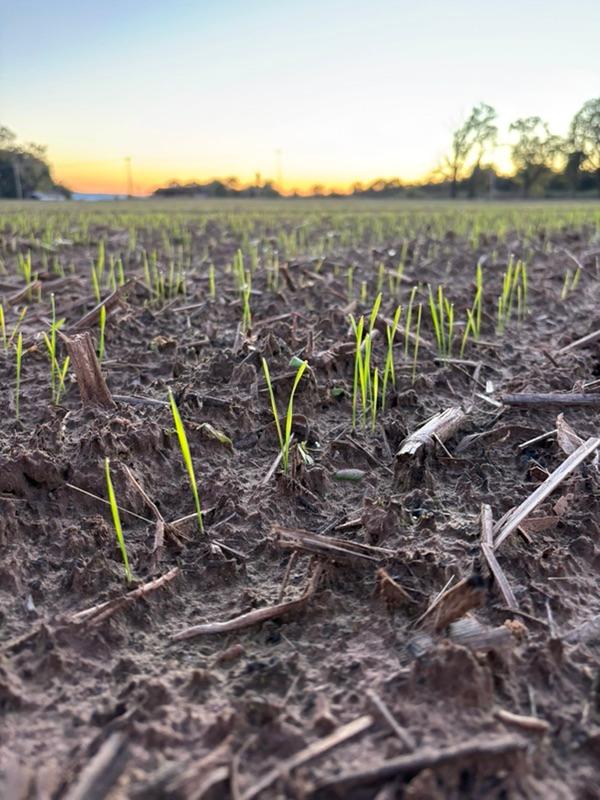
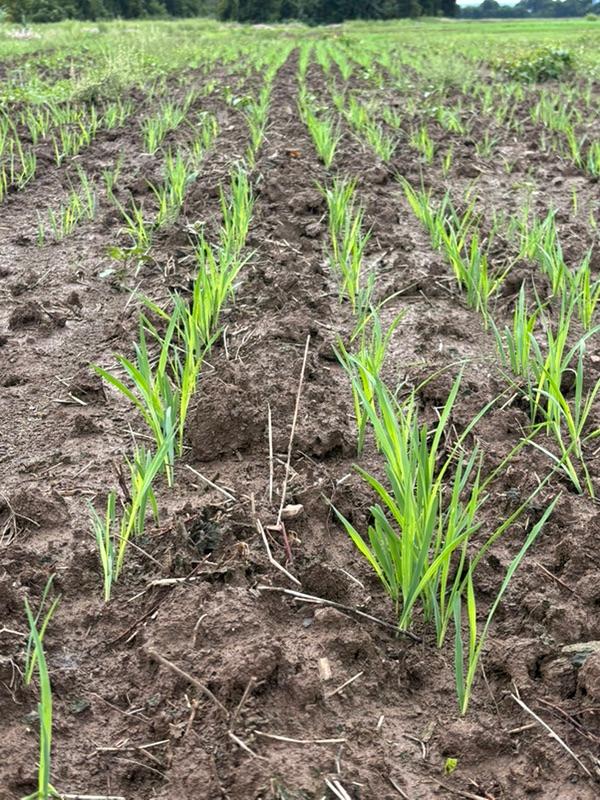
Wheat is looking good around the county. The warm temperatures have allowed for rapid growth. We should be just about done with planting. There were a few more acres added last week.
| | |
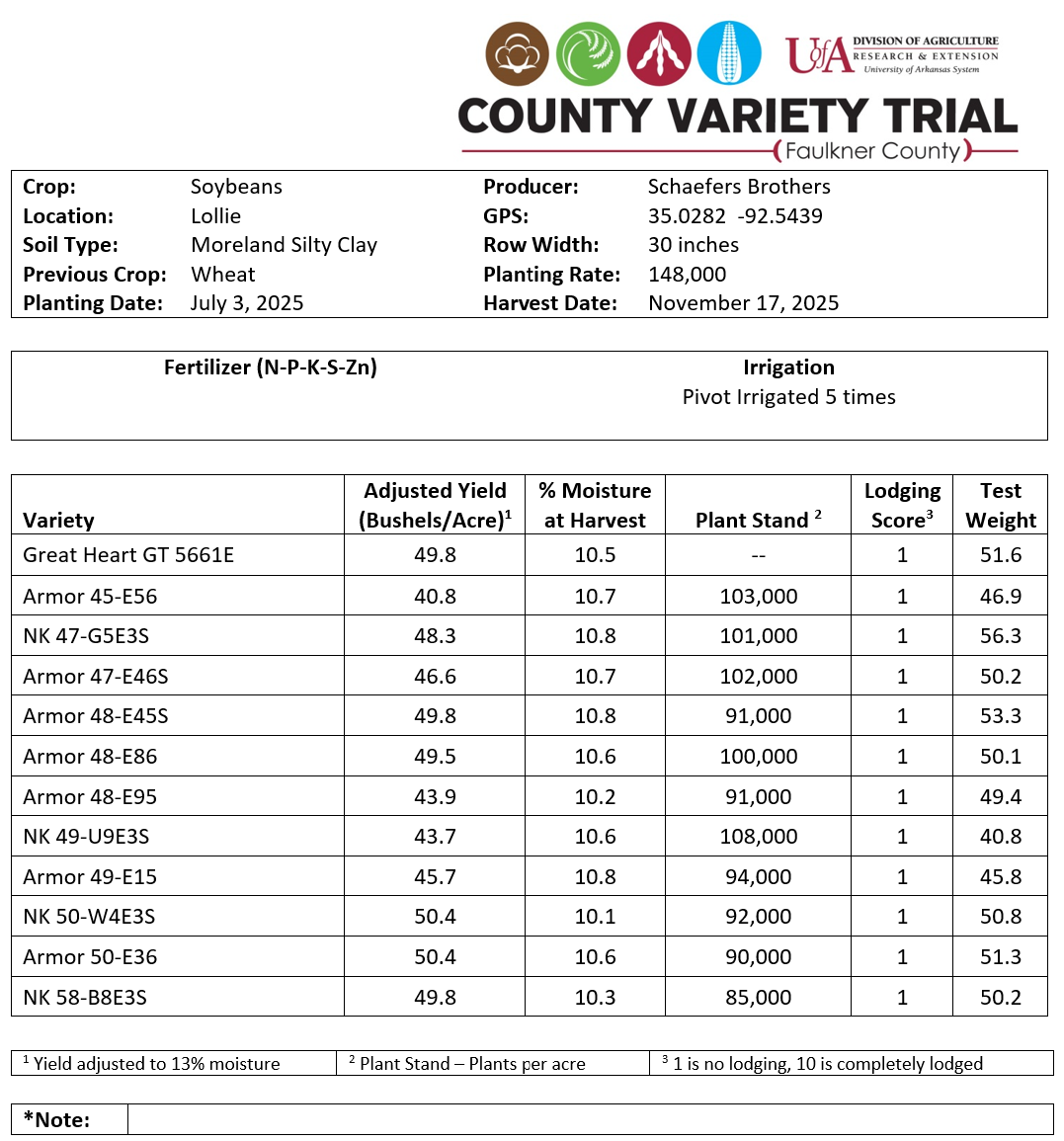
2025 Faulkner County Soybean Variety Trial
We harvested the soybean variety trial on November 17. I have posted the results here. I wanted to note that the test weights are a little low. I think some of that is attributed to soybean hulls in the samples. It could be for other reasons, but I think if these samples were taken to a grain elevator the test weights would be higher.
This was a good soybean trial and I think it shows that we can plant late Group 4's and Group 5's and make good yields in the River Valley. This year it seemed like all of the higher yielding soybeans were planted later.
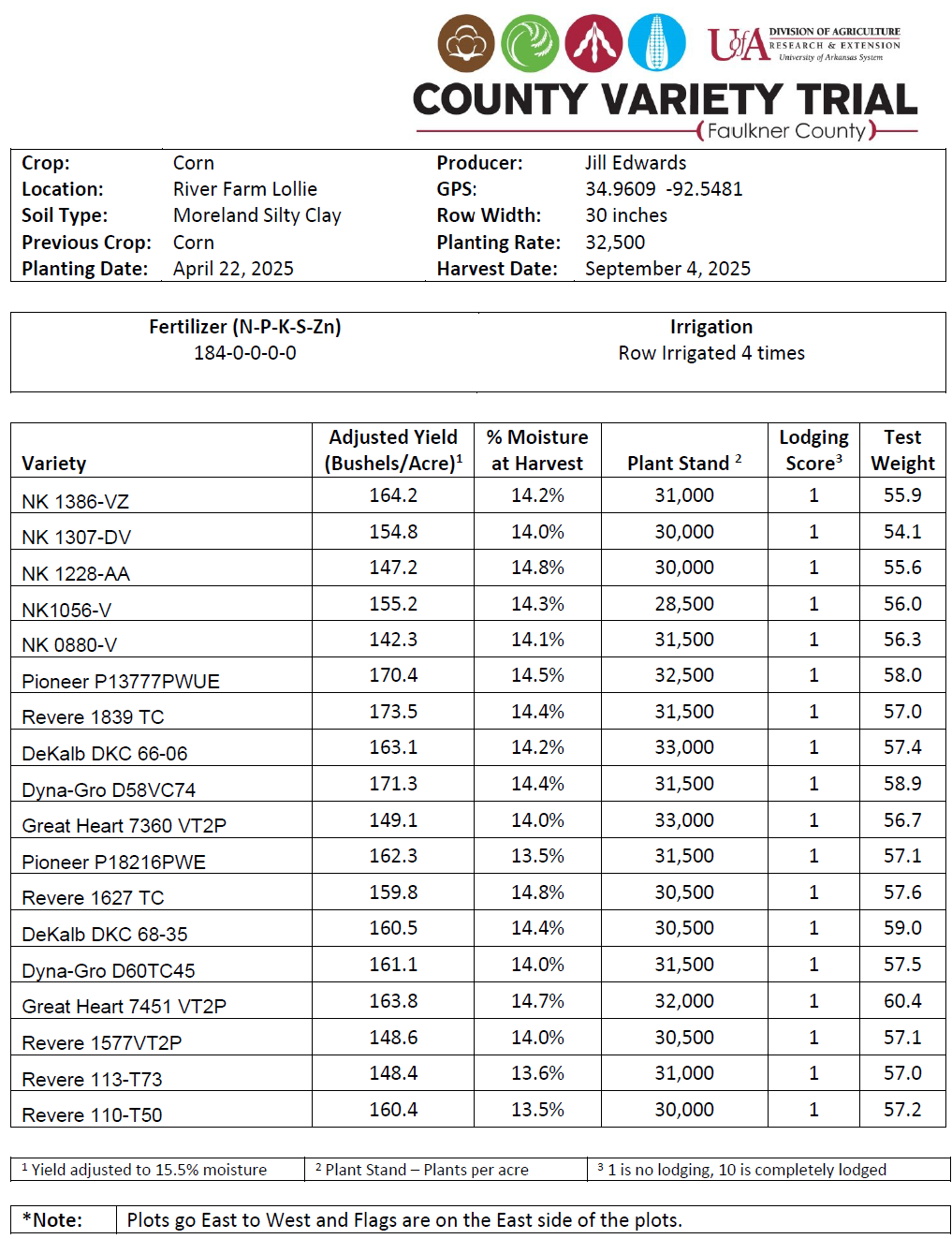
| | 2025 Arkansas Corn Performance Tests Preliminary Results | |
2025 Arkansas Rice Performance Trials
Jarrod Hardke, Rice Extension Agronomist
The link to Rice Information Sheet No. 185 Arkansas Rice Performance Trials 2025 is provided below. This contains the final results of the Arkansas Rice Performance Trials (ARPT) and DD50 Planting Date studies, as well as updated cultivar descriptions and disease ratings.
| | |
Row Crop Production Meetings
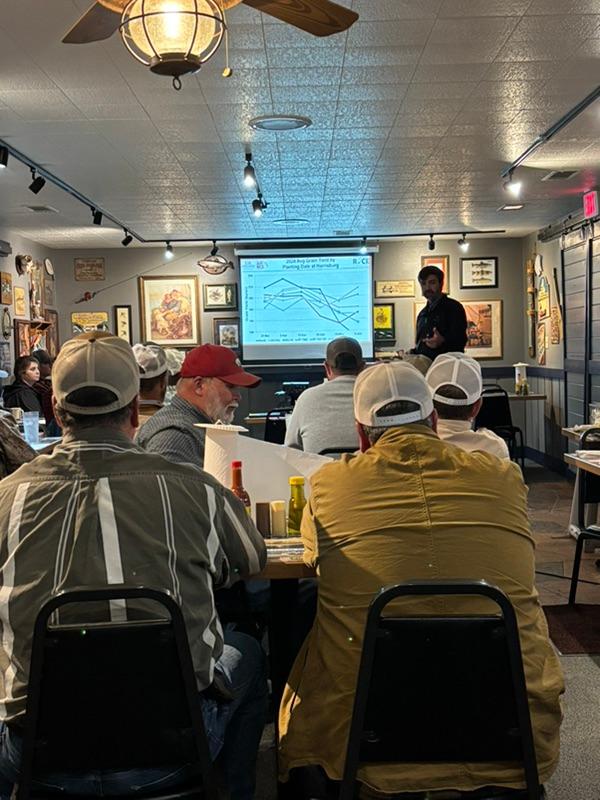
Our annual row crop production meetings will be coming up in early 2026. Save theses dates and I will share more information as we get it.
Corn and Soybean Production Meeting - January 22, 2026 - Morrilton (Place TBA)
Rice Production Meeting - February 24, 2026 - The Barn at Lollie
| |
Crop Enterprise Budgets
Below is a link to the 2026 Crop Enterprise Budgets. If anyone needs assistance with these budgets please let me know.
| | |
The 2025 Arkansas State Net Farm Income Projection is Adjusted $850 Million Downward in its Fall Revision
Dr. Hunter D. Biram, Assistant Professor and Extension Agricultural Economist, University of Arkansas
Dr. Ryan Loy, Assistant Professor and Extension Agricultural Economist, University of Arkansas
Dr. James L. Mitchell, Assistant Professor and Extension Agricultural Economist, Associate Director - Extension, Fryar Price Risk Management Center of Excellence, University of Arkansas
Background
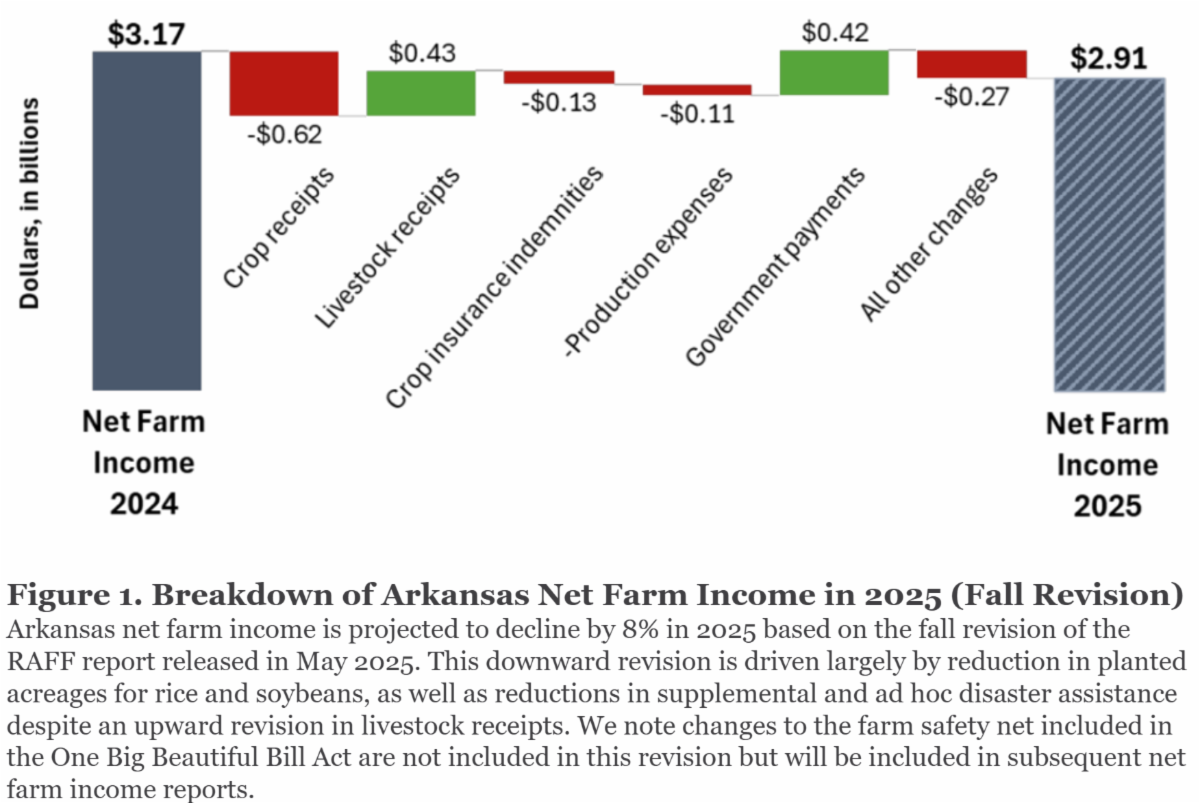
The University of Arkansas, Division of Agriculture (UADA) in partnership with the University of Missouri, Rural and Farm Finance Policy Analysis Center (RAFF) since 2023 have released a spring projection and fall revision for Arkansas net farm income (see link to Rural and Farm Finance Policy Analysis Center). The 2025 spring projection released in May suggested a 22% increase in Arkansas net farm income largely driven by a $670 million increase in supplemental and ad hoc government assistance (Plastina et al., 2025; Biram and Loy, 2025). This government assistance was from the Emergency Commodity Assistance Program (ECAP), the Supplemental Disaster Relief Program (SDRP), and the Emergency Livestock Relief Program (ELRP) all authorized by the American Relief Act passed in December 2024. This increase in government assistance was projected to more than offset a decline of $470 million in crop receipts (i.e., the total value of crop production in Arkansas) driven largely by record low crop prices across major crops produced in the state. The fall revision released in October 29, 2025 provides a significant downward revision of $3.76 billion to $2.91 billion (i.e., $850 million) in Arkansas net farm income in 2025 which we provide details on below (Wongpiyabovorn et al., 2025).
Downward Revision in Crop Receipts and Government Payments
Total 2025 Arkansas cash crop receipts are projected to fall for the second consecutive year from $4.797 billion to $4.180 billion (i.e., $617 million) which is a revision from the projected decline of $465 million released in the spring. This revision reflects the wet planting season faced by rice and soybean farmers with well over a 0.5 million downward revision in planted acres. Rice planted acres were revised downward by 0.17 million resulting in a $0.165 billion downward revision in receipts. Soybean acres were revised downward by 0.4 million resulting in a $0.137 billion downward revision in receipts. Total 2025 government assistance, which includes market-based programs (i.e., Price Loss Coverage (PLC) and Agricultural Risk Coverage (ARC)), Conservation programs (i.e., Conservation Reserve Program), and supplemental and ad hoc disaster assistance (i.e., ECAP, SDRP, and ELRP), is projected to be $680.1 million and is a $340 million downward revision from $1.02 billion spring projection. The spring projection had supplemental and ad hoc disaster assistance coming in at $883.4 with roughly one-third coming from the ECAP and the remaining from SDRP and ELRP. The estimates for SDRP and ELRP have been downward revised from nearly $600 million to $251 million (i.e., 58%) due largely to timing of the payments driven by the government shutdown and the less-than-anticipated payment rate from SDRP. The remainder of these projected payments are now accounted for in the 2026 crop year.
Results
| | |
Upward Revision in Livestock Receipts
Livestock cash receipts are forecast at $8.33 billion for 2025, an increase of $430 million from 2024. The fall 2025 forecast represents an upward revision, with the spring 2025 release showing only a $50 million increase in projected livestock receipts. The year-over-year gain is primarily driven by broiler and egg receipts, which reflect higher prices, including a forecasted $0.49 per dozen increase in 2025 egg prices. Turkey prices are also expected to strengthen due to ongoing HPAI-related supply disruptions in the latter half of 2025. Going forward, however, 2026 cash receipt forecasts for turkeys and eggs should be interpreted with caution, as HPAI continues to introduce significant uncertainty into production and price outlooks.
A First Look at Arkansas Net Farm Income in 2026
The RAFF report includes a projection of net farm income in Arkansas heading into next year with essentially no change in 2026. There will likely be reductions in rice and cotton acreage with acreage shifting more into corn and soybeans on more favorable margins. All crop margins are still negative for 2026 according to the recently released 2026 UADA Crop Enterprise Budgets, but soybeans and corn appear to show the lowest likely loss (UADA, 2025). Soybeans show a near breakeven potential when looking at production expenses and rent at 25% crop share. Peanut production shows a healthy positive return at more than $100 per acre but accounts for less than 1 percent of total planted acreage across the state and will not significantly impact total state-level net farm income. The provisions for the updated farm safety net in the One Big Beautiful Bill Act show a projection of about $477 million in PLC and ARC payments which more than offsets a $388 million year-over-year decline in ad hoc and supplemental disaster assistance.
| | Beef, Small Ruminants, & Forages | | |
Faulkner County Cattlemen's Meeting
The next Faulkner County Cattlemen's Meeting will be on December 11, 2025 starting at 6:00 pm. Please note this is a change from the previous announced date.
The meeting will be held at the Faulkner County Extension office located at 844 Faulkner Street. If the parking lot behind the office is full, participants can park at the Faulkner County Courthouse and walk over to the meeting. If anyone has questions about the office or parking please feel free to give me a call, email, or text.
| | |
Brucellosis Vaccination Update
On November 12 and 14th, we held our fall brucellosis vaccination schedule. We vaccinated almost 170 heifers this fall, with several stops having big groups. There is a lot of talk at these stops about retaining heifers on the farm with the price of replacements being so high.
| | |
Selection for Improved Performance Does Not Reduce Hardiness of Beef Cattle
Paul Beck, Oklahoma State University Extension Beef Cattle Nutrition Specialist
Genetic selection has driven improved growth, carcass weight, and milk production in beef cattle. In many livestock species, intensive selection for production traits has been shown to reduce disease resistance and weaken immune function, raising concerns that similar patterns may be emerging in the beef industry. Research across species demonstrates that when resources are biologically allocated toward production, animals may have fewer resources available to maintain a strong immune system. This is feared to potentially result in cattle that are less resilient to stress and disease.
At the same time, record-low national cattle inventories and strong beef demand continue to push the industry toward greater biological efficiency and longer days on feed during finishing steadily increasing finished body weights, and hot carcass weights. As the industry places greater emphasis on lean yield and meat quality, there is a growing need to better understand how genetics, nutrition, and management interact to shape animal performance and hardiness.
This study investigated whether sires selected for higher growth and milk expected progeny differences produce post-weaning calves with different immune competence, growth efficiency, and carcass outcomes.
What we found.
As expected, selection of sires for increased post-weaning growth resulted in offspring that were heavier at weaning and had higher average daily gains from weaning through harvest. High growth steers were 86 pounds heavier at harvest and had 35 pounds heavier hot carcass weights in 10 less days on feed. The high growth steers consumed more feed but feed efficiency was similar to steers from sires with lower post-weaning growth. Lower growth steers had more marbling and carcasses that graded Prime.
Somewhat surprisingly, we did not find any differences in immune function, but high growth steers had higher pro-inflammatory cytokines. This may be important because pro-inflammatory cytokines are chemical messengers that help activate the immune response. When levels differ between animals, it shows that some calves mount a stronger or quicker immune reaction than others. That can help us understand which animals may be more resilient during the post-weaning period. The lower growth steers had greater respiratory disease incidence during the late finishing period with greater death loss and more steers deemed to be chronically sick.
This research highlights the impact of genetic selection and management on performance and carcass quality. We have seen no evidence to date that increased selection for performance has a negative impact on livestock resilience to disease and marketing stresses.
| | |
Breeding Objectives and Selection Pressure
Build Back Better – Replacement Heifers Series – Article 2
Mark Z. Johnson, Oklahoma State University Extension Beef Cattle Breeding Specialist
A breeding objective is the general goal of a breeding program – the notion of what constitutes the best animal. Selection pressure is applied to specific traits in order to meet breeding objectives. Selection pressure is a precious commodity and should not be squandered. Especially in beef cattle breeding programs where the biological time lag from selection and mating decisions until replacement heifers become cows is lengthy, as compared to other meat animal species. Determining the correct selection criterion and breeding objectives for your cow-calf operation is critically important (especially as it pertains to generating replacement heifers) as these have long-term impact on cowherd productivity and profit potential. For example, applying all selection pressure to weaning and yearling growth with no consideration of (strongly genetically correlated) mature cow size can leave a producer tethered to an excessively sized, higher maintenance input cowherd for at least a decade. Thereby, selection pressure applied to weaning and yearling growth relative to an acceptable upper limit of mature weight or mature height may lead to a more optimum outcome with regard to the value of calves sold annually and maintenance cost of the cowherd year-around.
Whether it is the purchase of herd bulls, picking AI sires, or which heifers will be kept from this calf crop to develop as herd replacements, over time, 80 – 90% of genetic change is the result of sire selection. Additive genetic change is cumulative and permanent.
Four facts should be known about a trait before applying selection pressure to it or including it in your breeding objectives, these are:
1. Heritability of the trait
2. Economic importance of the trait
3. Genetic correlation of the trait to other economically important traits
4. Measurability of the trait
The final take home point is this, determining breeding objectives and where selection pressure should be applied is unique to your operation. It should not be determined by your seedstock vendor who sells you bulls, or your neighboring cow-calf operation whose financial situation, forage base and marketing endpoint for calves may be different from your own. Now is the time to consider the unique nature of your operation and give thought to breeding goals and where selection pressure should be applied in the next bull buying season. More on that topic next week in an article addressing the analysis of your production system.
| | |
Pasture to Plate Update
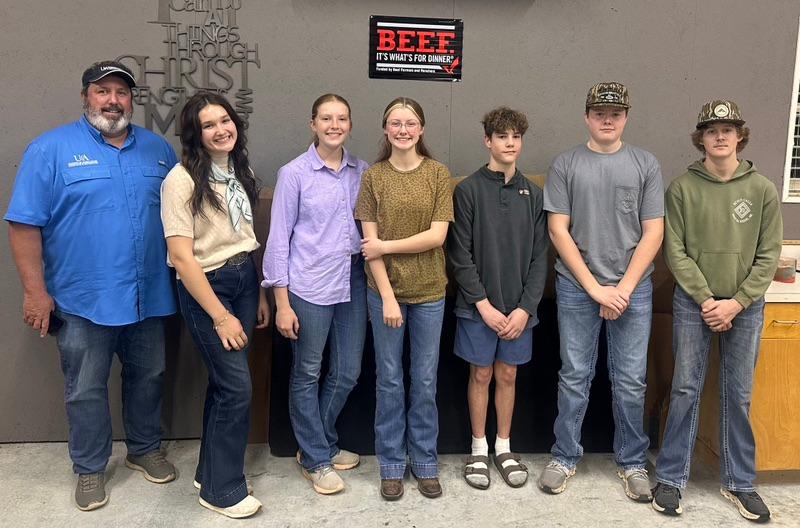
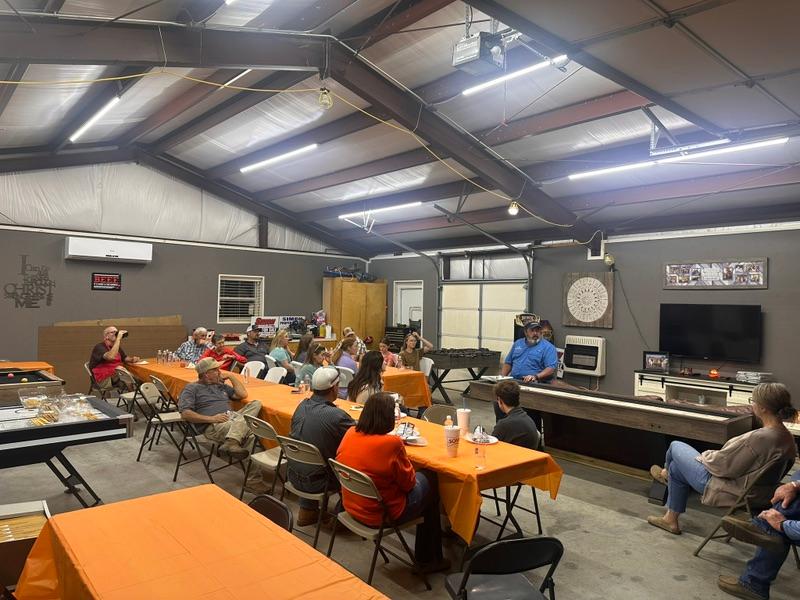
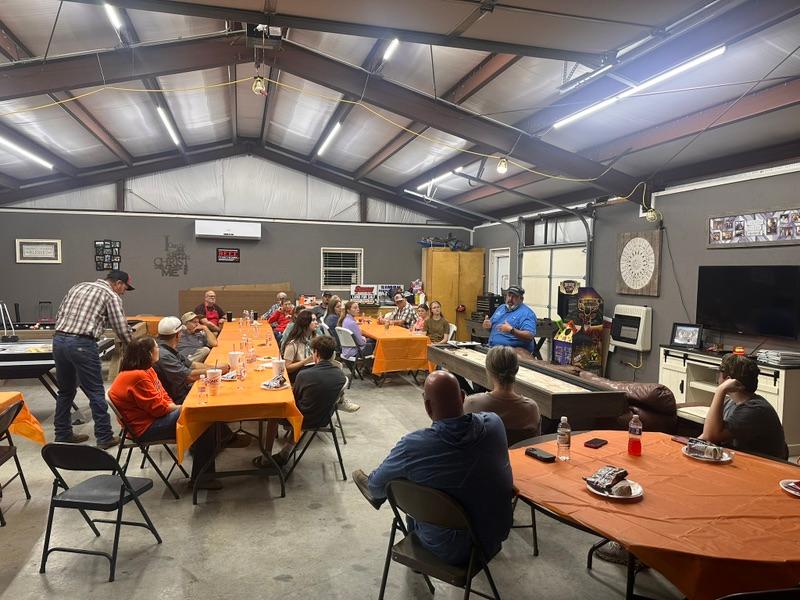
On November 18 we held a Pasture to Plate Results Cookout at Simon Farms in Saltillo. The farm cooked hamburgers for us (thank you to Simon Farms for providing the beef!) and we had a discussion about this year's program and what the youth and parents thought we could do better. We made some plans for the 2026 year which will start off in December.
After the discussion we gave out the top three winners from the four categories in the project. The overall winner will be announced at the 4-H Banquet at the end of January. Here is a list of the top three winners in each category.
Average Daily Gain
- Ella Sanson
- Avery Garner
- Harlee Sanson
Fair Show
- Kendra Simon
- Harlee Sanson
- Ella Sanson
Carcass
- Landree Hartness
- Ty Mullins
- Audrey Thomason
Record book and Talks
- Kendra Simon
- Eli Matthews
- Audrey Thomason
| | |
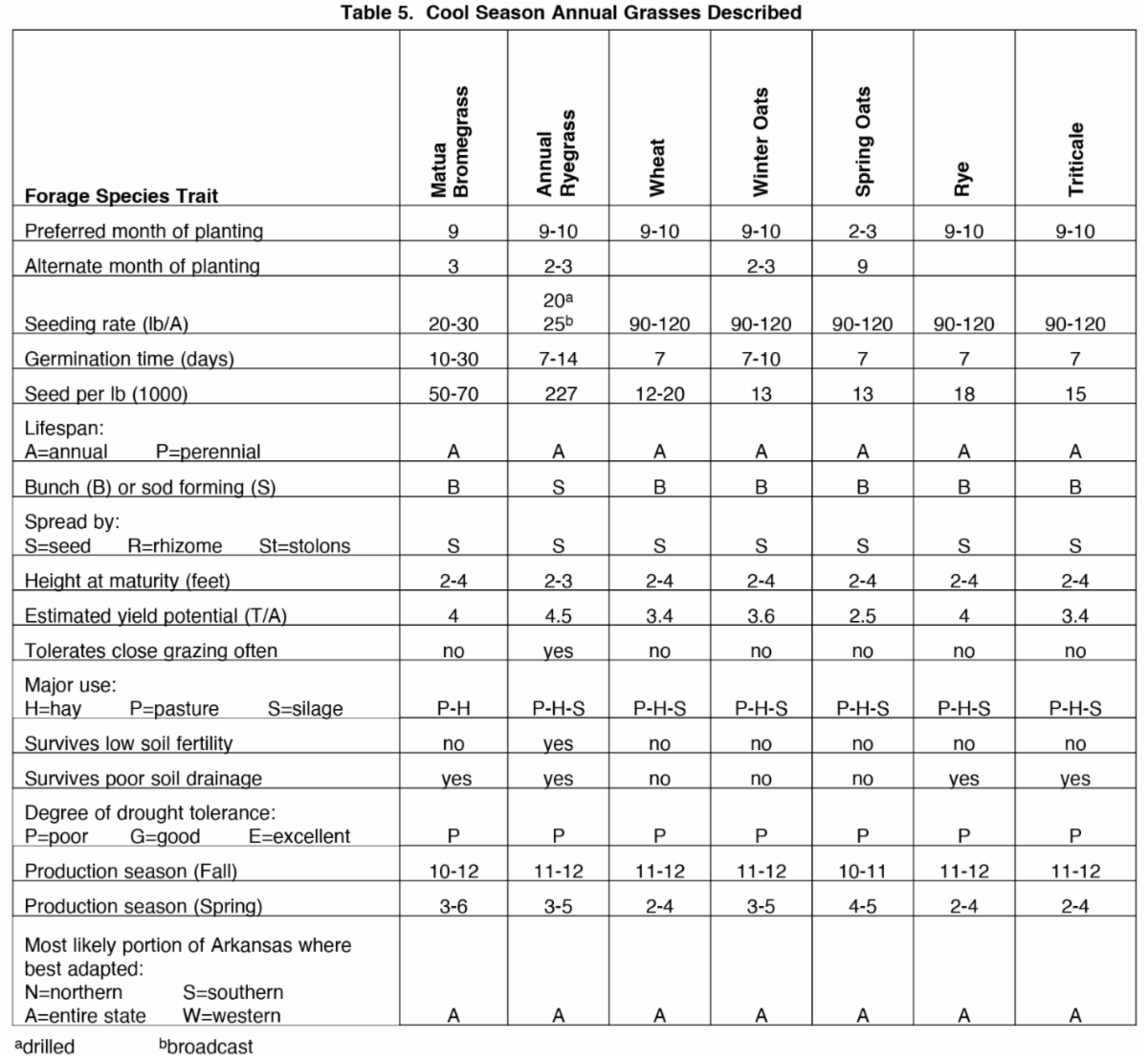
Cool Season Annual Resources
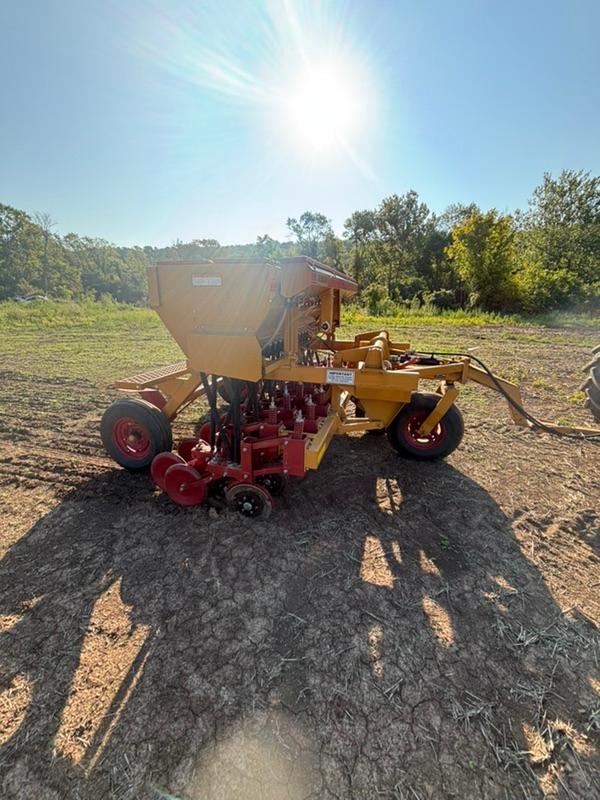
I have gotten a few questions on planting cool season annuals this week about how late can I plant. I would say if we can get it in by the first of December I would go ahead and put it in the ground. We still have time and it looks like next week is a good week to get things planted.
| | |
Pesticide Applicator Trainings
In order to purchase restricted use pesticides (herbicides, insecticides, fungicides, etc) you must have a private applicators license. The license is good for 5 years.
To obtain a license you must first attend a certification training. Certification trainings are done in person by a County Extension Agent or you can go online and be certified. Below is a link to the online training.
In person trainings this year will all be at the Faulkner County Extension Office and will be on:
December 11 - 2:00 PM
January 29 - 6:00 PM
March 12 - 6:00 PM
April 30 - 2:00 PM
A certification training costs $20 and is due the day of the training.
Once a producer is certified, they will go through the Arkansas Department of Agriculture to obtain the license which is $45.
Please call the Extension office at 501-329-8344 to sign up for one of these dates.
There will be other opportunities for trainings in Perry and Conway County and I will post those as soon as those dates are available.
If you have a question about your license, please follow the License Search and Verification link below to find your license.
| | |
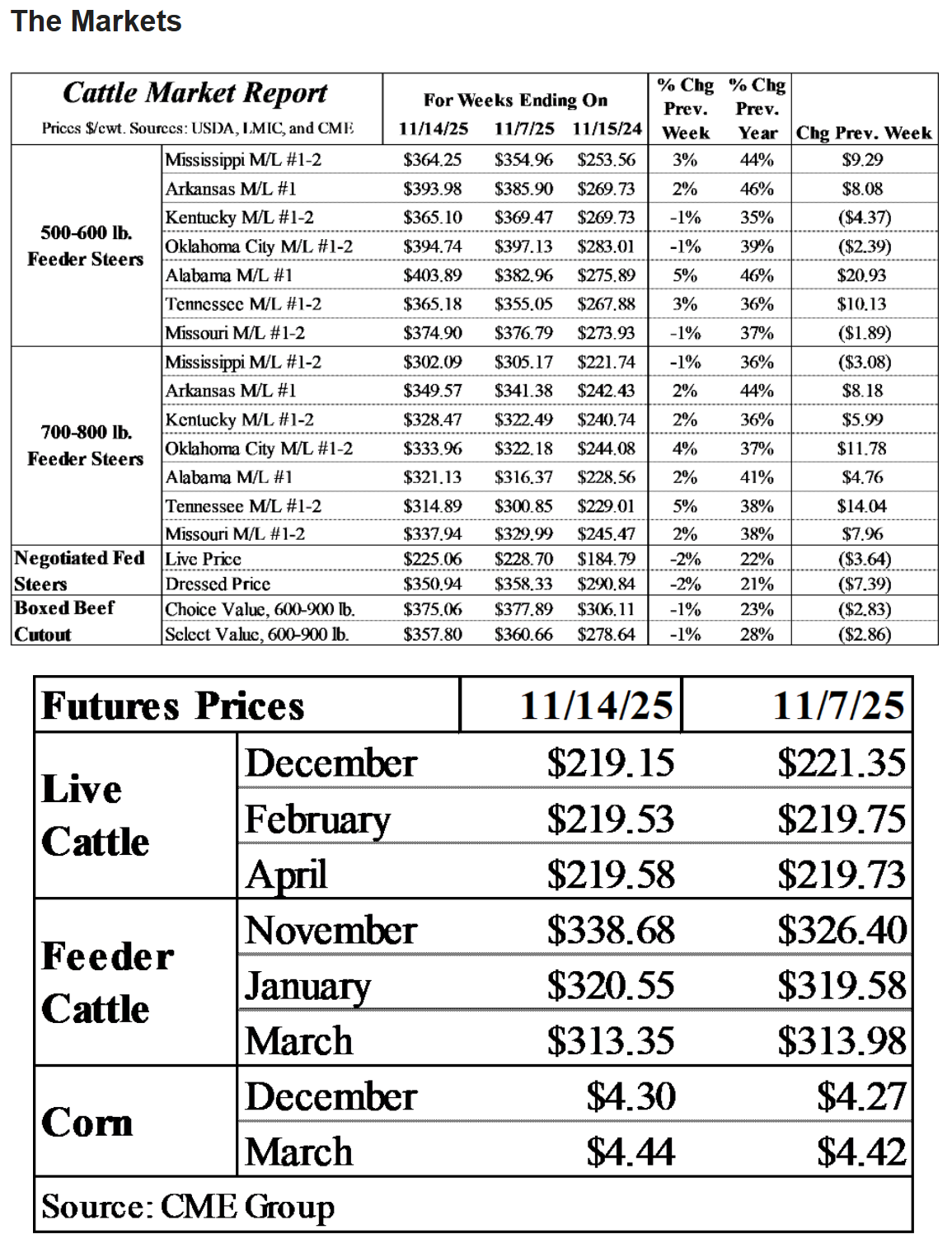
Livestock Market Report
The weekly livestock market report is available on the Arkansas Department of Agriculture website.
| | |
Sign up for Text Alerts
You can now sign up for text alerts from me throughout the year. I have two areas you can sign up for which includes Faulkner Livestock or Faulkner Ag (Row Crop Updates). To sign up you can follow one of these links or use the QR Codes below.
| | Pursuant to 7 CFR § 15.3, the University of Arkansas System Division of Agriculture offers all its Extension and Research programs and services (including employment) without regard to race, color, sex, national origin, religion, age, disability, marital or veteran status, genetic information, sexual preference, pregnancy or any other legally protected status, and is an equal opportunity institution. | | | | |