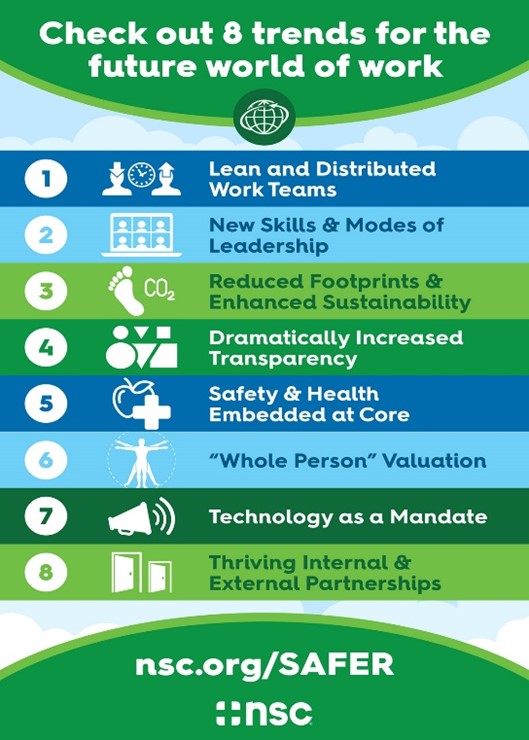
The National Safety Council (NSC) launched National Safety Month in 1996 to promote safe behaviors around the leading causes of preventable injuries and deaths at work, on the roads, and in communities. Part of being safe is taking care of the physical and mental well-being of our workers. During increased times of stress, as we are currently experiencing due to the ongoing COVID-19 pandemic, it can be more difficult to handle day-to-day activities. Increased levels of stress, uncertainty and anxiety can also potentially lead to an increase in substance misuse or substance use disorders, or an increased risk for relapse for those already in treatment or recovery.
The National Institute for Occupational Safety and Health (NIOSH) has partnered with NSC to utilizes its Total Worker Health approach to improve the well-being of the U.S. workforce. Their list of priority areas and emerging issues include opioid and other substance use disorders in the workplace. Drug overdose is the leading cause of unintentional death in the U.S., with opioids being the most common drug. The CDC currently estimates more than 1,000 emergency department visits daily related to the misuse of opioids and about 91 opioid overdose deaths every day.
Resources: The NIOSH webpage on Opioids in the Workplace provides information on how work can be associated with opioids use and steps employers can take to help prevent misuse and aid workers in recovery. Additionally, the NSC provides support to help employers navigate their role in addressing mental health, which includes working with benefits providers. NSC also provides an Opioids at Work: Employer Toolkit and Substance Use Cost Calculator for Employers to help equip them with the tools and resources they need to assist workers with substance use disorders.
|
|
PARTNER RESOURCE: ECHO Idaho |
|
Learn, Share, Engage, Connect |
|
Project ECHO is dedicated to increasing your capacity to manage complex health issues by using technology to bring interdisciplinary professionals together to share knowledge, experiences, and viewpoints with one another.
ECHO Idaho offers multiple drop-in opportunities to connect with a network of specialists and colleagues over your lunch hour. Earn free CME/CE at any of these series: Opioid, Pain and Substance Use Disorders; Counseling Techniques for Substance Use Disorders; Hepatitis C; and Perinatal Substance Use Disorder.
Spotlight Session: Join our Opioid, Pain and Substance Use Disorders series on June 24 at 12:15 pm MST to hear Todd Palmer, MD – addiction medicine specialist and ECHO’s X-Waiver trainer – discuss micro-dosing to convert patients from full-agonist opioids to Buprenorphine/Suboxone. Register for free here.
New Podcast: Now you can earn CE/CME on-the-go with ECHO’s new podcast, Something for the Pain. Tune in to hear the latest trends and best practices in opioid and substance use disorder prevention, treatment, and recovery in Idaho. Available wherever you get your podcasts and on the web: www.uidaho.edu/echo-podcast
|
|
GRANTEE SPOTLIGHT: Lewiston School District |
|
Whole School, Whole Community, Whole Child |
|
Research shows providing youth with constructive and healthy activities offsets the attraction to substance misuse. Working from the premise that schools are one of the most efficient systems to engage with youth to provide health services and prevention programming, the Lewiston School District took on the challenge of integrating these programs into the day-to-day life of their students by adopting a Whole School, Whole Community, Whole Child (WSCC) model. WSCC provides a comprehensive and collaborative approach to student learning, student health, and evidence-based substance misuse prevention education.
A before and after school open gym fitness program with staff supports now provides a safe place for students to learn to lead a healthy and drug-free lifestyle. After one year, Christi Meyer, Department Chair, reports, “We have more students accessing our program than ever before. Prior to ODP funding, our after-school program averaged approximately 5-10 students. This year, we grew from 55 participants in Qtr1 to 119 participants in Qtr2 and our daily average attendance has doubled.”
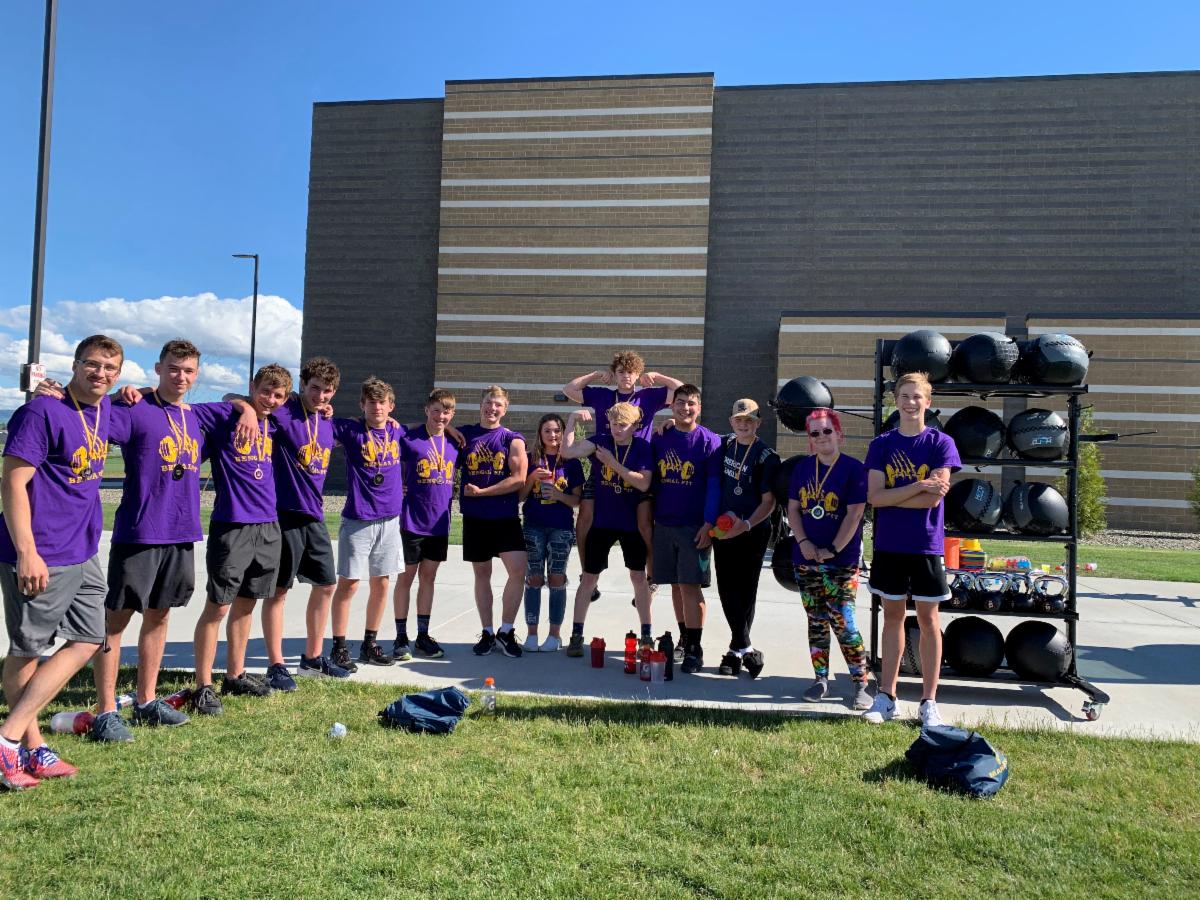
At the end of the year, youth participated in the Bengal Fit Games, a CrossFit style fitness challenge, to celebrate the After School program’s success. Donations of Bengal Fit t-shirts and participant "swag bags" served as a great example of community support for the youth.
With the potential to reach 100% of the students in the school setting, Lewiston School District has a limitless capacity to make a large impact by helping youth develop social-emotional and life skills to make healthy choices.
|
|
2021 Update: Idaho Opioid Misuse and Overdose Strategic Plan
In April 2017, the Governor’s Office of Drug Policy convened a multifaceted group of stakeholders deeply concerned and committed to reducing the burden of the opioid crisis in Idaho. The workgroup gathered for a two-day retreat, followed by additional meetings and phone calls, to create a statewide, collaborative opioid misuse and overdose prevention blueprint; leading to the development of the “2017-2022 Idaho Opioid Misuse and Overdose Strategic Plan.” The five-year Strategic Plan identifies three key goal areas that address the epidemic with a comprehensive, multi-sector approach to support the workgroup’s 2022 vision:
“A safe and healthy Idaho, free of opioid misuse and untreated opioid use disorders.”
The Idaho Opioid Misuse & Overdose workgroup continues to reconvene annually to review and revise the Strategic Plan. The group held its fifth annual retreat and plan update in April 2021, this document outlines those efforts and revisions. Read the full report.
|
|
National Prescription Drug Take Back Day Results
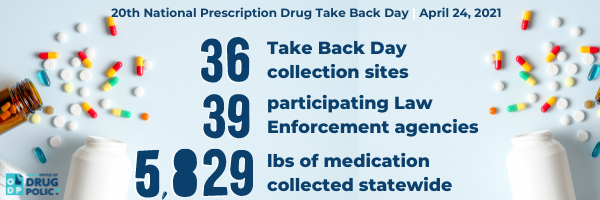
The 20th National Prescription Drug Take Back Day took place on April 24, 2021, and outcomes demonstrate our success in continuing to increase statewide participation. In total, there were 36 Take Back Day Collection Sites organized in partnership with 39 Law Enforcement Agencies, which collected a total of 5,829 lbs. of medication.
While these outcomes were just shy of our original goals for participation, they do continue the trend of an impressive increase in engagement across Idaho. Over the last five years (2016-2021) the total number of National Prescription Drug Take Back Day collection site events in Idaho have increased by 56%, the number of Law Enforcement partners has increased 63%, and the total weight of drugs collected has increased a staggering 89%.
ODP appreciates the efforts of our Law Enforcement and Prevention Partners that helped make National Prescription Drug Take Back Day such a huge success!
|
|
NEWS STORIES & REPORTS | UPCOMING EVENTS |
|
 |
Local News Stories
National News Stories
Reports
|
|
|
|
Upcoming Events
Region 10 Opioid Summit | August 3-5
The 2021 Summit is an opportunity for professionals from Alaska, Idaho, Oregon, Washington, Indian Nations, urban Indian health programs, and recognized American Indian organizations to meet and explore ways to address the opioid crisis. Learn more.
3rd Annual Prevention Training Institute | August 12-13
Professional Development Training for Prevention Providers, Certified Prevention Specialists, Counselors, Educators. Certified Prevention Specialist credits and NBCC Continuing Education Hours available. Learn more.
|
|
|
|
What's new with you?
Have an update, story, or other news you'd like to share in a future newsletter?
|
|
We envision a safe and healthy Idaho free from the devastating impact of substance use on youth, families, and communities. |
|
|
|
|
|
|