Volume 6 Issue 7 | July 2025 | | This month we celebrate spots... | | The Root of It newsletter ends with our monthly quotation. If you find your newsletter has been clipped by your email provider please click HERE for a webpage version of the newsletter. | | |
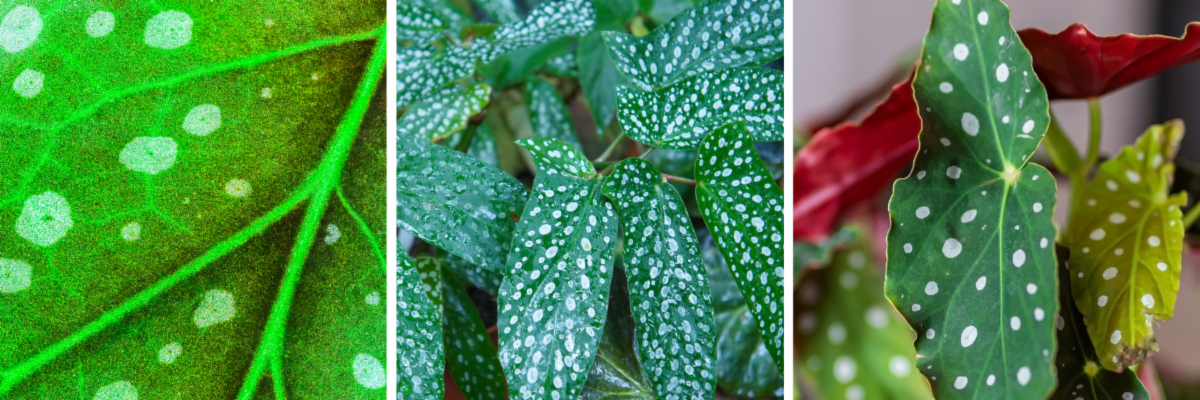
Close-up of Angelwing begonia, Coral begonia, Polka Dot begonia
photos by E Barth-Elias
| | |
Plants with spots grab the ‘spotlight’. More erudite writers may call them mottled, and botanists would call them maculated, but whatever the name, spotted plants are eye-catching and a great way to bring interest to swaths of green. Fungally generated spots, such as powdery mildew, are a cause for alarm, but bring on the white patterns of arum, pulmonaria, brunnera, and a host of others.
In some cases, spotted leaves are written into plant DNA. Naturally occurring, the plant’s progeny will have the same characteristics. Some, like Pulmonaria officinalis, have spots that result from leaf blisters, spaces between the top layers of cells (reflective variegation). The light that is reflected off the air pocket is a silvery color. These plants retain their chlorophyll in lower leaf areas. But most mottled-leafed plants have leaf areas with a distinct lack of chlorophyll, Erythronium spp. (trout lily) for instance.
Why would plants evolve to have these inefficient leaf surfaces? Ongoing research points to several strategies. One is camouflage to prevent herbivory (plant muching). Approaching animals may see the lighter colored plants as less nutritious or as having pest or disease damage, and those with black and white vision may not see the variegated plants as a food source. Some spotted plants have patterns designed to attract pollinators. Still others develop mottled foliage as a defense against the sun’s energy, reducing an unacceptable light load. It is thought that the leaf blisters on plants such as Begonia coccinea hybrids (Angel Wing begonias) serve to cool the leaf.
Gardeners love spotted plants, so breeders focus time and resources developing cultivars that exhibit them. Ulmus parviflora ‘Variegata’ (variegated lacebark elm) is a case in point. Selected from a chance seedling in China in the 1970s, it was cloned and has been reproduced asexually since to provide an ethereal cloud of white-speckled leaves that hover over the garden. Cultivars such as Mottled Molly have been selected to offer an even lovelier display.
As in the variegated lacebark elm, spotted plants can be the result of a random genetic mutation, or chimera, that reduces the leaf cell’s ability to produce chlorophyll, causing a light green or yellow color if the chlorophyll is reduced, or white if it is eliminated altogether. If that mutation is stable and persists throughout the plant, it can be reproduced by cloning (asexual reproduction using grafting, layering, cuttings or tissue culture).
Another way of producing mottle-leaved plants is by crossing two species or cultivars of plants to accentuate or manipulate the variegation present in each. The hybrid produced must be cloned, as its seed will not come true to type. Plants such as Begonia maculata (polka dot begonia) arrive on nursery shelves via hybridization.
Viral infections can cause mottled leaves, but for the most part compromise plant health. The Dutch Tulip Mania of the 1600s created a very vibrant market for virus-infected, streaked tulips, but the market disappeared as the infection produced tulips with less and less vigor. Today there are virus-created plants on the market. Some hosta cultivars result from viral infections, and you will find Lonicera japonica 'Aureoreticulata' (Golden Honeysuckle), with its bright yellow markings, in the trade.
Whatever the reason for the variegation, mottled leaves are arresting, and easily “spotted”. Look Around!
K Edgington
| | |
Leaf Brief
Pulmonaria - A Breath of Fresh Air
| | |
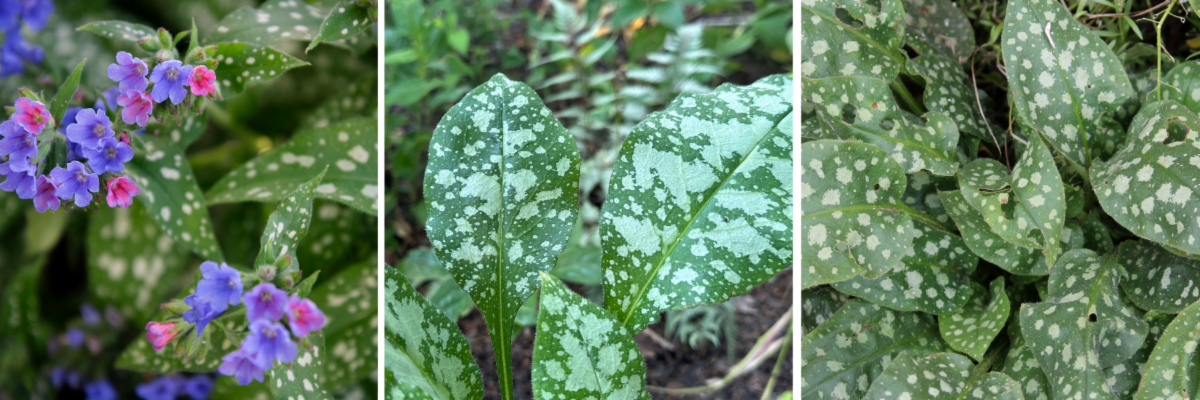
Raspberry Splash, Trevi Fountain, and Bethlehem Sage pulmonarias
photos by E Barth-Elias
| | |
Pulmonaria, also known as lungwort, is an underused perennial that brings early spring blooms and speckled foliage to shady garden areas. Belonging to the borage family, the genus Pulmonaria comprises approximately 16 species native to Europe and Western Asia. They are a natural choice for woodland gardens and shaded borders, a worthy alternative to the widely planted hosta.
The common name, lungwort, and the scientific name, Pulmonaria, both allude to the plant's reputation of treating lung ailments (for which there is no scientific basis). The spotted leaves were thought to resemble diseased lungs—not a great visual for such a lovely plant!
Lungworts are among the first perennials to flower in spring, offering a splash of color when many other plants are still dormant. Their pink buds transition to shades of blue, purple, or white, providing a unique two-toned effect that adds pizzazz to shade.
Beyond their spring flowers, pulmonarias offer year-round interest with their unique spotted foliage. Many varieties feature striking leaf patterns, from classic green with silver spots (like Mrs. Moon or Pulmonaria saccharata, also known as Bethlehem sage) to almost completely silver foliage (Majeste). The silver spotting on the leaves is a fascinating characteristic, caused by air pockets that help cool the lower leaf surface, potentially making cultivars with more silver spotting more tolerant of heat and direct sun.
Pulmonarias provide a vital early food source for pollinators, especially bumblebee queens and solitary bees. The blooms play a crucial role in supporting these beneficial insects as they start their breeding season. Thankfully, lungwort is generally not a favorite of deer and rabbits, allowing one to enjoy its beauty without constant vigilance—a big plus over hosta.
Pulmonarias are easy to grow and maintain, provided their basic needs are met. These include partial shade to full shade. While they can tolerate some morning sun, excessive direct sun will scorch the leaves. Pulmonarias love moist, well-drained soils rich in organic matter. Avoid planting in overly wet or dry conditions, or you will regret it.
Consistent moisture is crucial during the growing season. Water deeply every 7-10 days during dry periods. A light application of an all-purpose garden fertilizer in early spring is usually sufficient.
While pulmonarias are generally pest-free, watch for slugs and powdery mildew. (Spots on spots – oh no!) Powdery mildew can occur in areas with poor air circulation; remove and discard infected leaves. Look for mildew-resistant cultivars.
Lungworts are an excellent choice for woodland settings. They pair beautifully with astilbes, ferns, hellebores, and hostas. Consider planting varieties like Trevi Fountain with its cobalt blue flowers and silver-spotted foliage, or Raspberry Splash for its vivid pink-purple blooms.
In the right location, you can enjoy the captivating blooms and striking foliage of pulmonaria year after year, adding brightness to a dark corner, attracting pollinators, and breaking out of the hosta habit.
PULMONARIA OFFICINALIS: NC State Extension
J Gramlich
| |
|
CREATURE FEATURE
WELCOME BACK BOBCATS!
| |
This Root issue is a bit, er, spotty, and since I’m covered with spots which make me difficult to spot, I’m the perfect creature to, er, spotlight. I am also beautiful, fierce and more successful than the other 6 wild cat species in North America. (And humble).
Bobcats (Lynus rufus) are native to Ohio, but by 1850 hunting and destruction of habitat extirpated (wiped out) us from the state. We didn’t hold a grudge—we ADAPTED— and returned around 1960. We’ve established populations in south and southeast Ohio, and were recently spotted in Cleveland and Summit County Metro Parks. Read about it HERE.
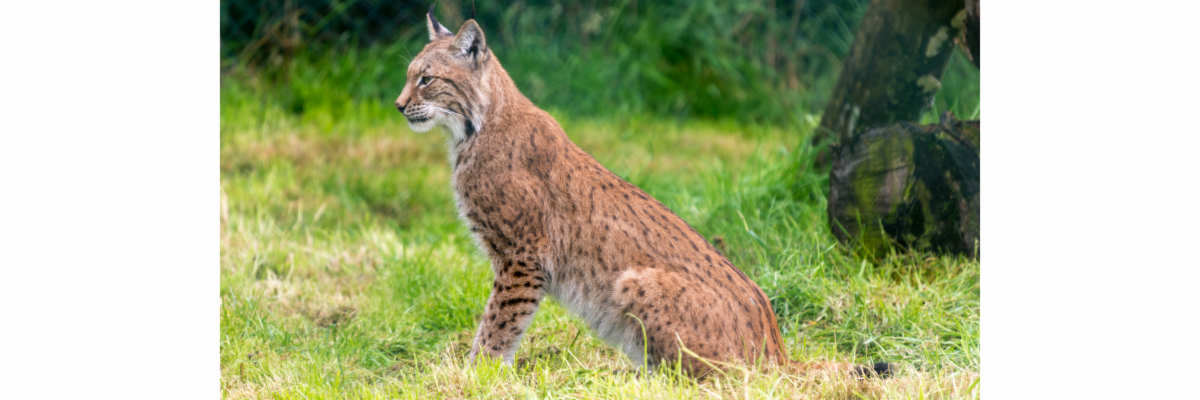
My big personality is barely contained in a body about twice the size of your Fluffy, reaching a maximum of 30 pounds. My gorgeous coat varies from gray to buff to reddish-brown, with dark marks and bars. Humans love my stunning fur and pay LOTS for it. Sadly, bobcat trapping is legal in many states (happily not Ohio). A fur coat IS fabulous—but only if you’re born in it.
I am stealthy, elusive and run super-fast (up to 30 mph), with excellent vision, hearing and sense of smell. I can out-leap NBA record-holder Michael Jordan (his 4 feet to my 10), climb trees and swim. My spots provide camouflage from predators and prey (according to legend also keep me from casting a shadow). I’m mostly active at dawn and dusk (crepuscular), and night. All this, plus claws and teeth, makes me very good at take out.
I eat small mammals like rabbits and rodents, and whatever else I can take (out), including reptiles, birds, fish and insects. I silently stalk, carefully placing my back paws where the front ones were to reduce noise. THIS VIDEO shows how patient I can be. THIS ONE'S embarrassing…
I also hunt deer (even though they’re ten times my size), pouncing when they’re at rest. Think about that before your next nap in the garden. (Editor’s correction: Bobcats rarely attack humans. The few documented cases generally involve rabid animals—so nap away). I might eat Fluffy or Fido given the opportunity. Sorry—not sorry! Keep pets indoors at night. WATCH.
My family (Felidae) has 41 species; smaller cats like me and Fluffy are in subfamily Felinae, while big cats (lions and tigers) comprise subfamily Pantherinae. Ever wonder why Fluffy doesn’t roar? The Felinae family has a hyoid bone (like humans), that vibrates against the larynx, producing purring but no roar; the Pantherinae family’s is more flexible, enabling a roar but no purr.
I can’t roar, but boy can I scream. Humans find my scream terrifying, which is my revenge for the extirpation and trapping. Listen HERE.
I’m incredibly adaptable, modifying my behavior to live in varied habitats, including suburbs and even urban areas; just give me dense vegetation or rocky areas for cover and dens, and proximity to FOOD. Look for prey to locate me (maybe). One clue: my paw prints are round with no claw marks and four toes. HERE is a video about bobcats in Dallas.
I live alone. My territory is around 25 square miles (smaller for females), and can overlap with other cats. I defend it fiercely and mark it with everything I’ve got—urine, feces and anal gland secretions. Bobcats mate in winter, and 2-4 kittens are born two months thereafter. Dad gets the boot, while Mom nurses the babies for two months, then hangs with them for another 3-5 months. (White spots on the backs of our ears and tail help kittens follow Mom in the dark.) WATCH Mom teach her kittens to hunt.
As an apex predator, my #1 enemy is you—your vehicles, poisons used to kill rodents which I ingest, hunting, and destruction of my habitat. Fortunately, your scientists are finally realizing how important I am to our ecosystem. More bobcats mean more biodiversity, which can diminish zoonoses (diseases spread between species). Bobcats (and most large mammals) are poor disease vectors, while rodents are great at spreading pathogens. Bobcats regulate prey populations, and by eating disease-transmitting prey reduce disease. Lyme disease is a good example: mice are a primary vector for the Lyme bacteria. Ticks feed on mice and transmit that bacteria to other animals and humans. Bobcats eat mice—viola!—less disease for ticks to transmit!
Scientists are using this valuable effect of healthy bobcat populations to convince folks to ban hunting. In the meantime…I am coming to your neighborhood. Keep both eyes open to SPOT me. If you do, help our scientists help me and report your sighting on the online WILDLIFE REPORTING SYSTEM.
C Christian
| | |
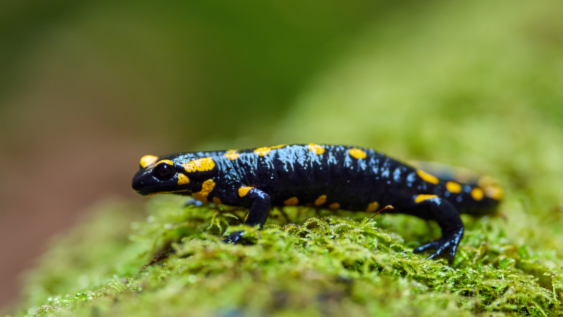
A fire salamander "spotted" in the woods
photo by E Barth-Elias
| | |
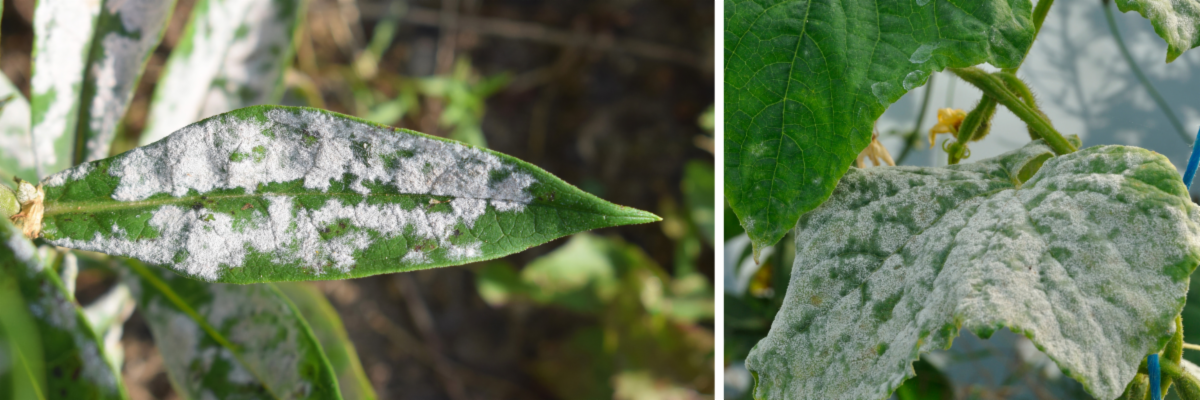
While the powdery mildew on these phlox and cucumber leaves looks the same, they are different species and will not spread one to the other.
Photos by E Barth-Elias
| | |
Have spots in the garden caught your eye? Interesting, alluring—they demand your attention. But what if those white spots are fuzzy, and what if the plants sporting them seem to be declining? Powdery mildew is likely the culprit. This fungal disease infects a range of plants, and, while rarely fatal, it weakens the plant overall, affecting fruit or flower production.
Powdery mildew is host specific—one species of powdery mildew, for example the fungus targeting lilacs, cannot infect another. Powdery mildew can attack fruits and fruit trees, broadleaf forest trees, snapdragons, zinnias, roses, rhododendrons, squash, azaleas, wisteria, and a host of other plants.
Infection occurs when the overall spring temperature rises above 60° F. Spores overwinter in leaf litter, making it important to clear leaves from infected plants in the fall. While the fungus does not need water to infect, spores need high humidity to germinate.
Signs of infection include white, fuzzy spots on the leaf surface that can merge into a powdery coating. As the fungus progresses, leaves and flowers become yellow, twisted, and distorted. If the spots are on just a few leaves, removing infected plant material can offer some control. The mycelia produced by the fungus stay on the surface and produce the signature “powder,” but the fungus itself develops structures that penetrate the leaf’s epidermal layer, extracting nutrients and producing spores. As the disease progresses, the plant weakens. This lack of vigor can mean less fruit or flower production, or decline in cold hardiness.
Cultural controls offer the best protection. These include buying plants that have been bred for disease resistance and spacing them to ensure enough air circulation to prevent high humidity. Prune suckers as they appear to slow fungal spread upward on the plant. Avoid overhead watering, which raises relative humidity. At the end of the season, cut out and destroy all infected tissue to avoid reinfection the following year.
Fungicides can help if used at the first signs of infection. Some are systemic but most require several applications throughout the season, especially after rain. The fungicides do not address plant parts already infected, but they prevent further infection. As with all chemicals, follow the directions on the label.
Those fuzzy white spots are no cause for panic. They signal the need for extra vigilance to keep the mildew at bay, ensuring a successful gardening season.
POWDERY MILDEW: Colorado State University Extension
POWDERY MILDEW: Clemson Cooperative Extension
S Vradenburg
| | |
July Checklist:
- Deadhead and fertilize roses and other perennials to encourage reblooming.
- Succession plant basil, beans, cucumbers, cilantro, and radishes from seed in any open garden space.
- Pinch back mum buds to prevent premature blooming and encourage bushier plants.
- Stake delphiniums, dahlias, and hollyhocks.
-
Control invasive Japanese beetles by handpicking, spraying, or using barriers. Read our article about Japanese beetles HERE.
- Start broccoli, cabbage, Brussels sprouts, and ornamental cabbage seeds for late-summer plantings and fall harvest.
- Water during dry spells, less often but deeply.
J Gramlich
| | |
More learning opportunities:
| | |
Each place its own mind, its own psyche! Oak, Madrone, Douglas fir, red-tailed hawk, serpentine in the sandstone, a certain scale to the topography, drenching rains in the winters, fog off-shore in the summers, salmon surging up the streams - all these together make up a particular state of mind, a place-specific intelligence shared by all the humans that dwell therein, but also by the coyotes yapping in those valleys, by the bobcats and the ferns and the spiders, by all beings who live and make their way in that zone. Each place its own psyche. Each sky its own blue.
David Abram
| | We invite you to share The Root of It with your friends and family. If you would like to subscribe to our mailing list please visit our website, scroll to the bottom, and follow the link under Join our email list. | | The Root of It staff: Karen Edgington (Editor), Emma Barth-Elias (Photo Editor), Carolyn Christian, Jennifer Gramlich, Sarah Vradenburg, and Geoff Kennedy (Technical Advisor) | |
We Would Like your Feedback
Contact us at: newsletterscmg@gmail.com
To discontinue receiving this newsletter please click on the UPDATE YOUR PROFILE link below. You may then choose what types of information you would like to receive from us.
| | | | |