Rail & Labor News from RWU
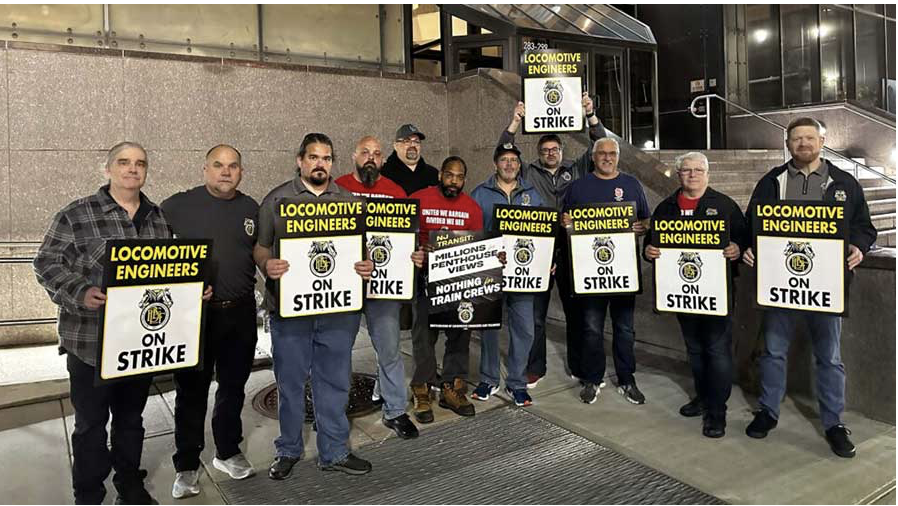
| | Weekly Digest Number 21 - May 20th, 2025 | | Welcome to the RWU Rail & Labor News! This news bulletin is produced and emailed out each Tuesday morning. We hope you find each week's news and information useful. If so, please share with co-workers, friends, and colleagues. If you like, you can sign them up to get all the news from RWU HERE. Or forward them the link. Got a hot tip? Please forward the article and a link to raillabornews@gmail.com. Note: If you read over this news bulletin each week, you will be sure to never miss the important news of what is going on in the railroad world from a worker's perspective! | | THIS WEEK'S RAIL AND LABOR NEWS | | Editor's Note: When NJ Transit engineers walked, it was not about greed. It was about five years of being taken for granted. Management touts numbers like $172,856 as if they tell the whole story, but these workers were already behind their peers and they knew it. The March deal was rejected by 87 percent because dignity is not measured in raw figures. It is measured in fairness. When the company walked out of talks, the engineers simply followed their lead. | |
Progressive Railroading / May 16th
NJ Transit service was suspended on May 16th after engineers represented by the Brotherhood of Locomotive Engineers and Trainmen went on strike. Unsuccessful wage negotiations ended yesterday shortly before 10 p.m. Eastern time when NJ Transit managers left the talks.
Members rejected an agreement in March that would have increased engineers' total annual earnings from $135,000 to $172,856. This would be higher than the wages of at SEPTA, but lower than Metro-North and Long Island Railroad wages in New York.
| | Editor's Note: At VIA Rail, the company is holding the line on concessions while workers prepare to draw one of their own. Unifor is not striking over dollars alone but over protections, schedules, and job security; core safeguards that management is quietly trying to gut. When a carrier calls that “negotiation,” it usually means workers are being told to give up what little stability they have left. | |
Progressive Railroading / May 14th
Unifor is preparing a vote to strike at VIA Rail Canada in the coming weeks, after the union and the railroad failed to agree on a labor contract during negotiations.
If a tentative agreement is not reached, Unifor could begin a legal strike on June 22. Strike votes will take place over the coming weeks.
VIA Rail maintained nearly all its concessionary proposals, dropping a few minor items, union officials said. The proposals include changes to working rules that would “strip away protections, weaken scheduling rights, and undermine job security,” Unifor officials said.
| | Editor's Note: Trump calling high-speed rail a disaster says more about politics than infrastructure. The real disaster is a country that can spend billions on wars and tax cuts but balks at building modern, clean transportation. California’s project has been slow and costly, but abandoning it entirely is not about fiscal responsibility.. it is about keeping working people stuck in a system built for oil, asphalt, and delay. | |
RT&S / May 7th
During his meeting with the Canadian Prime Minister, Mark Carney, President Trump announced that he will eliminate funding for the California High Speed Rail Project.
Regarding the high-speed line slated to run from San Francisco to Los Angeles, Trump said, “This government is not going to pay".
Initially, the entire project was going to cost $40 billion, but over time increased to $89 billion, then to $128 billion. In 2019, Trump revoked a grant of $929 million for the project that Biden restored in 2021. Trump called the project a “disaster.”
|
| Editor's Note: This presents one more argument for public rail ownership. The economies gained by creating a transcontinental system in the U.S. are enormous, and such systems should have been developed years ago. However, given the current privately held infrastructural arrangements, such mergers of any of the six existing Class One railroads would reduce competition even further, increase monopoly power of the remaining systems, and see the enormous benefits largely accrue to hedge funds and stockholders, not to workers, passengers, communities, shippers or the national economy. | |
Trains Magazine / May 12th
It’s been two years since CPKC CEO Keith Creel celebrated the merger of CP and Kansas City Southern. The event marked what rail executives, regulators, and analysts all expected would be the last merger involving two Class I railroads.
There are whispers across the railroad industry that some of the big systems are dusting off their merger playbooks and evaluating their options. Mergers are a hot topic in Class I boardrooms, second only to talk about the potential impact of tariffs.
“We haven’t seen any growth any growth in market share, any growth in volumes, any growth in market capitalization,” Independent Analysis Anthony Hatch says. Some see a U.S. transcontinental merger as a way to jumpstart volume and earnings growth.
| | Editor's Note: This development is of concern to not only every truck driver, but to every railroad worker. The rail industry will no doubt use the wholesale advent of self-driving trucks in its propaganda as to why freight trains can run with only one - if not any - live rail worker. | |
Freight Waves / May 12th
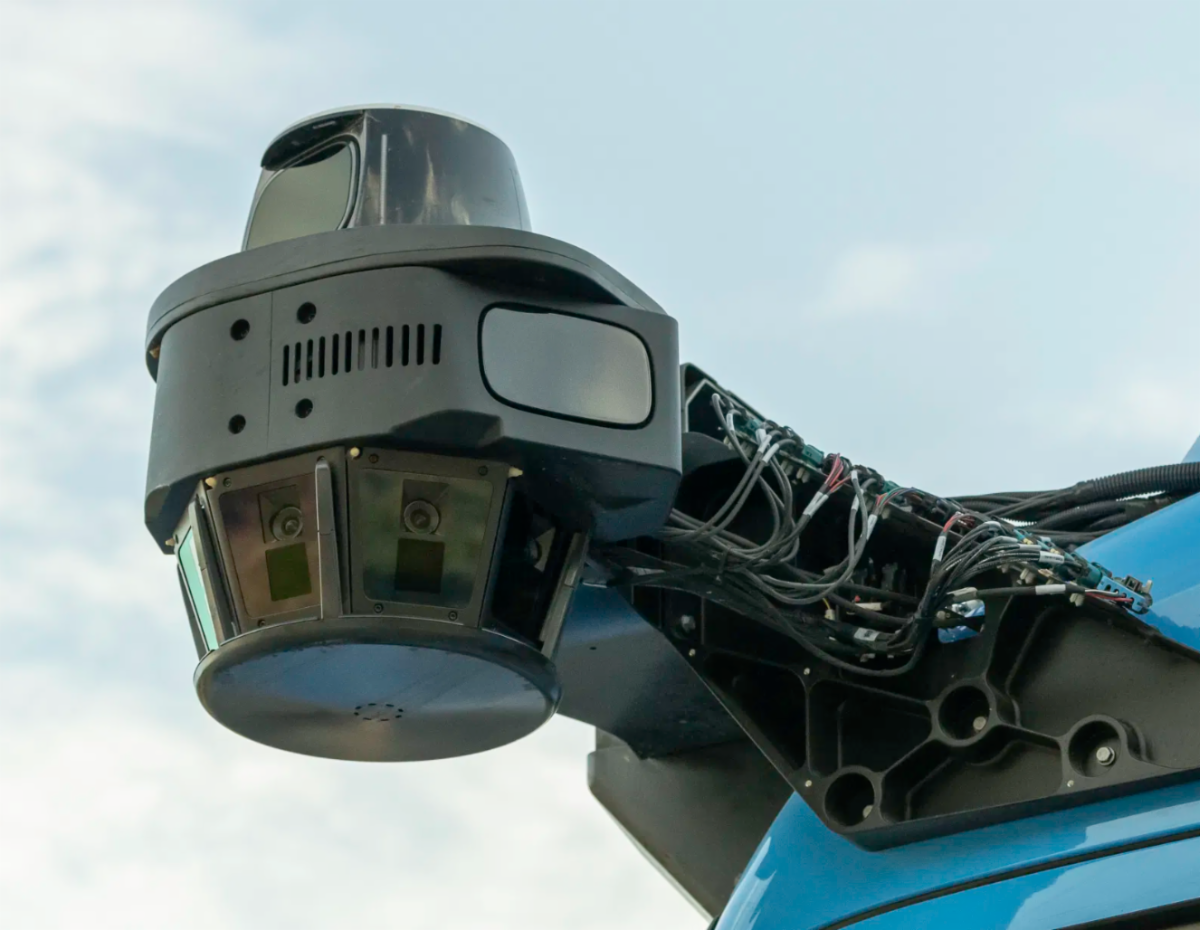
A truck industry lobbying group is urging the Trump administration to modify and streamline federal regulations to spark the deployment of driverless trucks on the nation’s highways.
The Autonomous Vehicle Industry Association, whose members include autonomous truck tech companies Aurora, Kodiak & Plus, as well as FedEx, told the U.S. DOT that making changes to the current regulations to remove hurdles to deploying driverless trucks will “provide both regulatory certainty and greater operational flexibility” for autonomous vehicle developers.
| |
NARVRE & RRB / May 15th
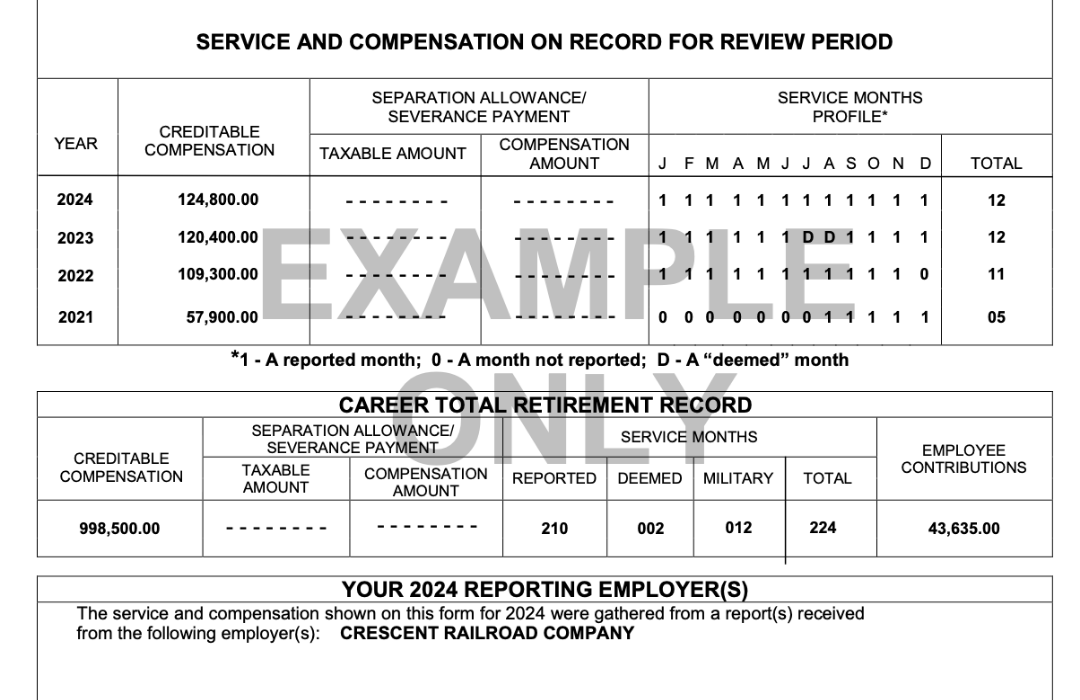
Each year, the U.S. Railroad Retirement Board prepares a Form BA-6, Certificate of Service Months and Compensation, for every railroad employee with creditable railroad compensation in the previous calendar year.
The RRB mails the forms to employees during the first half of June.
Anyone with compensation reported in 2024 who has not received Form BA-6 by July 1, or who needs a replacement, should contact an RRB field office by calling 1-877-772-5772.
| | Editor's Note: The Crescent case is not just about schedules, it is about priorities. When a freight carrier shrugs off its legal obligation to give Amtrak preference, it is a reminder that public service always comes second to private profit in this system. NS wants the case moved to friendlier turf, but the real venue is public opinion; and workers know which trains get parked when the margins are tight. | |
Trains Magazine / May 15th
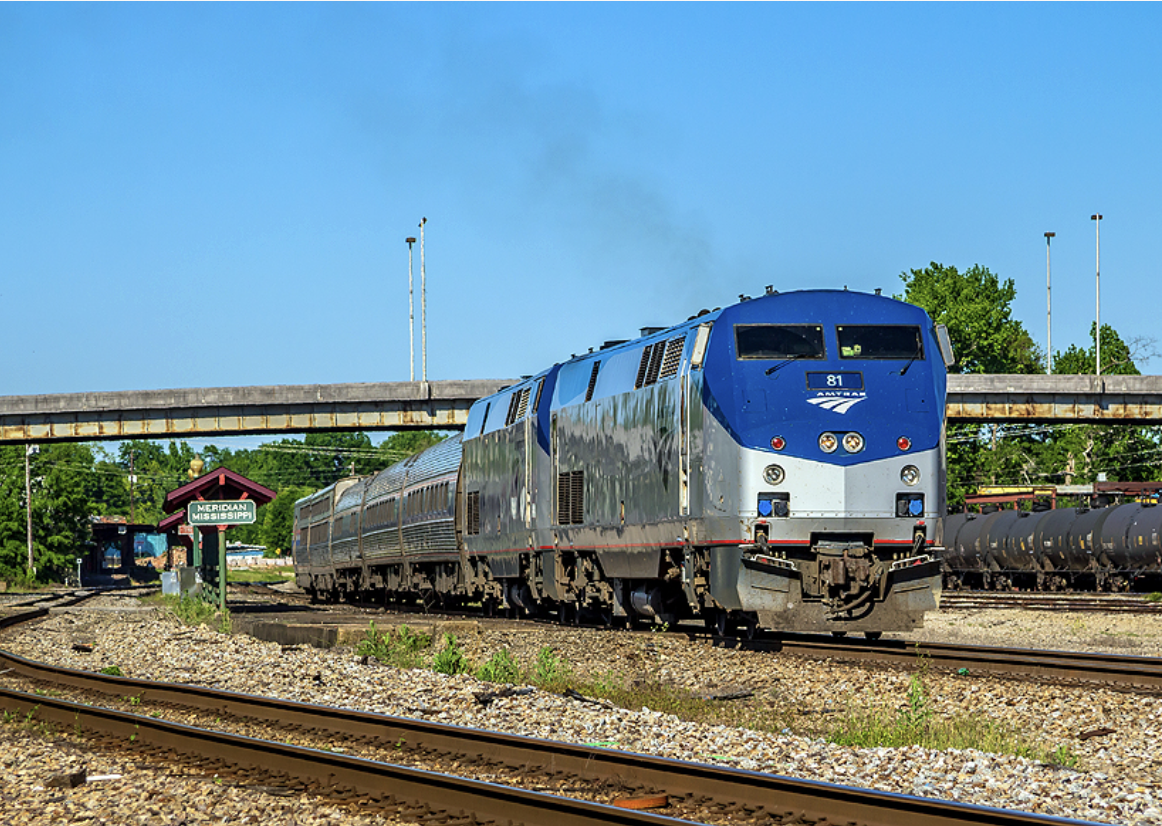
NS and the Justice Department remain in settlement talks over the railroad’s handling of Amtrak’s Crescent.
The Justice Department took NS to federal court in July, contending that it regularly fails to give the Crescent preference over freight trains, negatively affecting Amtrak’s financial performance.
NS has sought to have the case dismissed or transferred to a federal court in Atlanta, where the railroad is based. In a filing earlier this month with the U.S. District Court for DC, the Justice Department requested an extension of a deadline to respond to the railroad’s request to dismiss the case.
| | Editor's Note: Plans to modernize the Northeast Corridor for a fraction of the usual price always sound great.. on paper. But “smarter scheduling” and “low-cost upgrades” often translate to speed-ups for workers, not just trains. If this plan cuts corners on labor, safety, or long-term reliability, then it is not a solution. It is just austerity in a new wrap | |
High Speed Rail Alliance / May 7th
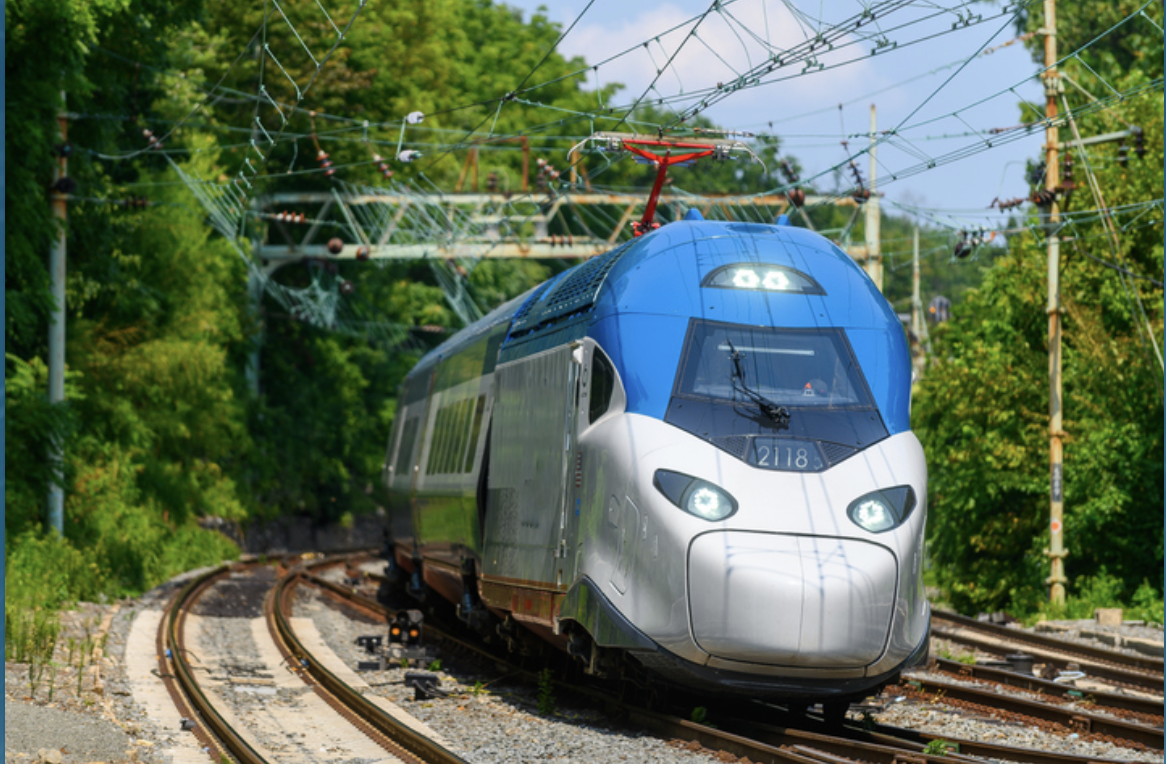
The Transit Costs Project at New York University released a plan this week to slash travel time by train from Boston to D.C. to about 4 hours.
The segments of the trip would take approximately 1 hour and 45 minutes each. The estimated cost is approximately $17 billion, compared to $110 billion for an alternative high-speed rail proposal for the Northeast Corridor. These time and cost savings will be achieved through smarter, simplified scheduling and high-impact, relatively low-cost upgrades to infrastructure and rolling stock.
| | Editor's Note: Behind every nomination is a choice about the future of rail.. who it serves, who it listens to, and who gets left behind. Fink and Gleason may wear new titles, but rail labor has learned the hard way that appointments mean little if they do not come with a spine for safety, public investment, and worker voice. Titles are easy. Accountability is rare. | |
Railway Age / May 14th
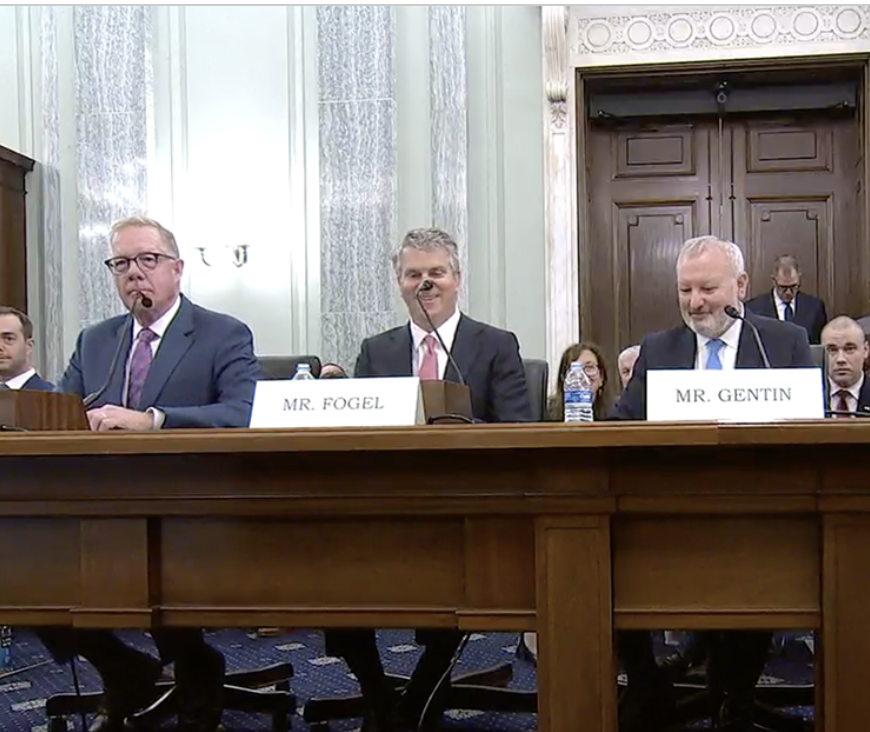
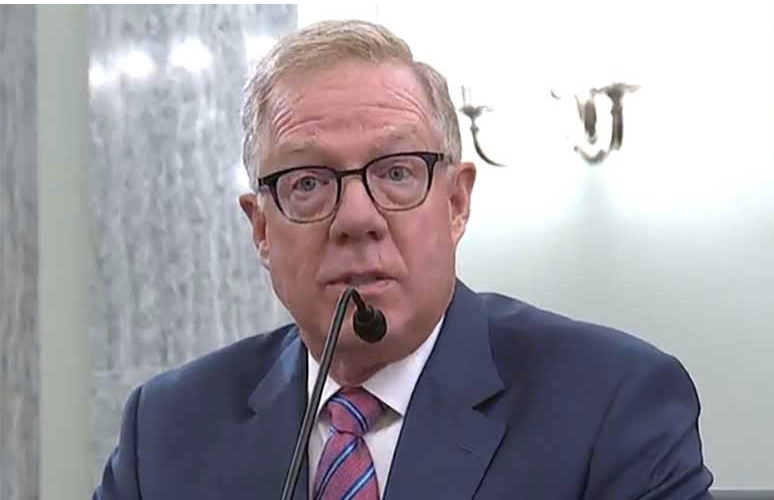
Sen. Ted Cruz (R-Tex.), Chairman of the Senate Committee on Commerce, Science, and Transportation, on May 13 convened a nominations hearing for David Armstrong Fink to be FRA Administrator, Robert A. Gleason Jr. to be an Amtrak Board Director, and for two executives to serve in the Commerce Department.
POTUS 47 in January nominated Fink to head up the Federal Railroad Administration, succeeding Amit Bose, who resigned; and in March nominated Gleason for a five-year term on the Amtrak Board, succeeding Albert DiClemente, whose term expired.
| | Editor's Note: Support for two-person crews is easy to voice in a hearing. The real test is whether that promise holds when industry lobbyists come knocking. After East Palestine, even the loudest deregulators found a microphone to back crew size, but workers know how quickly that tune changes behind closed doors. Rail safety should not hinge on press optics or campaign timing. It should be the floor, not the bargaining chip. | |
Railway Age / May 16th
FRA Administrator Nominee David Fink told a Senate committee during his confirmation hearing this week that he would uphold the FRA's two-person train crew rule.
The rule mandates a second crew member on Class I freight and passenger trains. A two-person train crew requirement was also included in the Rail Safety Act bills introduced in Congress in response to the February 2023 derailment of an NS Railway train in East Palestine, Ohio.
Vice President J.D. Vance, who was a senator from Ohio when the derailment occurred, was one of the lawmakers who introduced the legislation after the accident. In 2023, President Donald Trump said he supported the two-person train crew requirement.
| | Editor's Note: Expanding Amtrak Cascades is a step in the right direction... but only if it comes with the staffing, investment, and labor standards to make it work. More trips mean more jobs, more maintenance, and more pressure on an already stretched workforce. The promise of better service should not come at the cost of the people who make it possible. Growth without a labor plan is just wishful scheduling. | |
Trains Magazine / May 16th
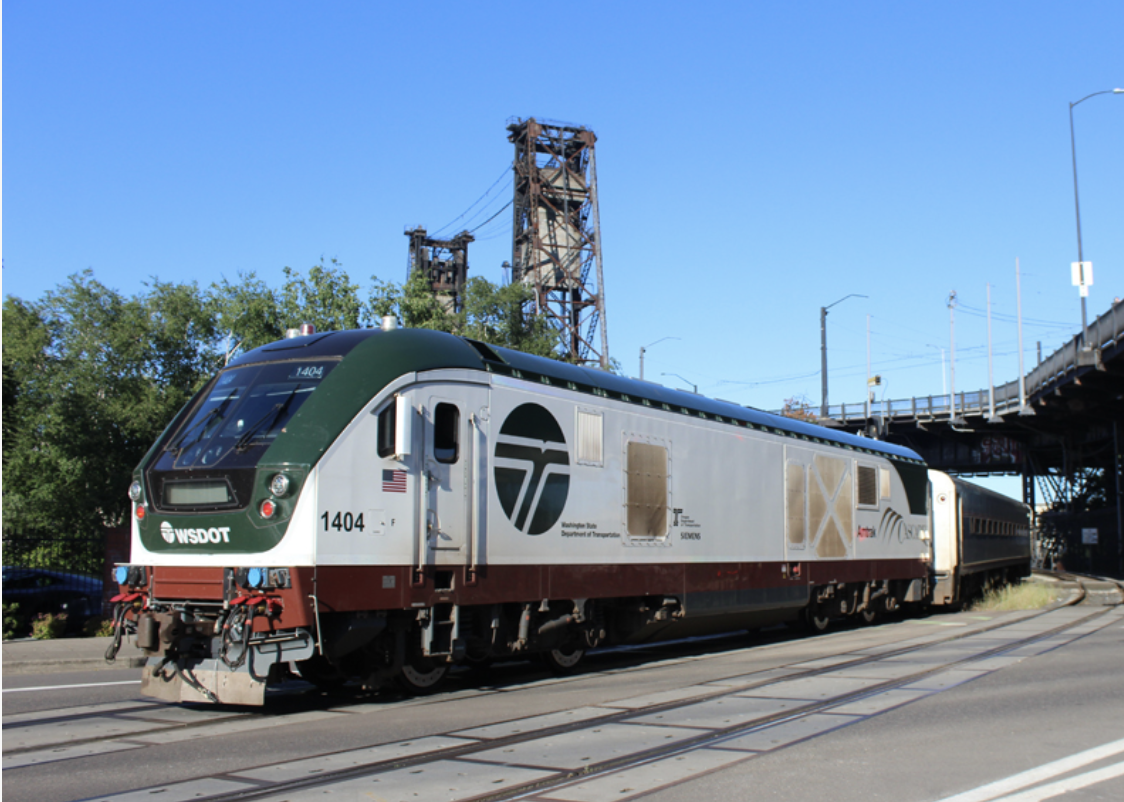
A bill calling for an expansion of Amtrak Cascades service and improved travel time is awaiting the signature of Washington Gov. Bob Fergus
House Bill 1857 sets a minimum target of 14 daily round trips between Seattle and Portland, Ore., and five daily between Seattle and Vancouver, British Columbia. Currently, there are six Seattle-Portland round-trip trips and two between Seattle and Vancouver.
The bill also calls for an independent study by the legislature’s Joint Transportation Committee, which will review plans developed by Washington State DOT.
| |
Railway Age / May 16th
Workers have been told that cuts are progress, longer trains with fewer people are innovation, and that dissent is a lack of understanding. You can’t ask for “radical empathy” when the boots on the ground haven’t been given so much as basic respect.
Yes, it would be eye-opening for a VP to see what it takes to manage a steel leviathan winding through mountain grades on failing gear, with an ever-shifting lineup and no real support, and step into the conductor’s boots when the beast breaks down in the middle of a storm.
And yes, it would be equally useful for a rail worker to understand the constant pressure management faces from Wall Street’s quarterly stopwatch. But conversations don’t happen in a vacuum. They happen in a workplace where the imbalance of power is not an abstract problem, but a daily fact.
| |
BLET / May 16th
The U.S. DOT solicited public feedback on federal safety regulations that could be repealed or modified to achieve “meaningful burden reduction while continuing to ensure the safety of the U.S. transportation system.”
Class I railroads jumped at the chance to put their profit agenda ahead of the safety of workers and the public by advocating to remove 80 safety rules from the books.
At the top of the list is to repeal the FRA's two-person train crew rule. The AAR believes that it is less costly to operate trains with one person. However, doing so disregards proven safety advantages, such as faster response times during derailments & incidents.
| | NEWS FROM AROUND THE LABOR MOVEMENT | | Each week, RWU includes a few articles about advances and developments in the larger labor movement that are of interest to railroad workers. Got an artcile to submit for possible inclusion next week? Email it along to raillabornews@gmail.com. Thank you! | | Editor's Note: Many workers and their unions are groping for a direction forward, a strategy to organize, to fight back against corporate America and its politicians, and win. Here is one seasoned union activist's take on how to do that. | |
Workday Magazine / May 12th
Just one week after taking office, President Trump fired Jennifer Abruzzo, the general counsel of the NRLB. She led the agency with a bold, worker-centered interpretation, resulting in wins for workers, regardless of their immigration status.
Workday Magazine interviewed Abruzzo, who has since returned to the Communications Workers of America as a senior advisor to the president. We talked about how protected activity can include Gaza protests, why domestic workers and farm workers are excluded from the National Labor Relations Act, and what workers can do to fight back in the Trump era.
“It’s up to the people to use their power and flex their muscles to get the changes that they deem are appropriate,” she says, “so that they can live the lives that they deserve with dignity and respect.
| |
Confined Space / April 23rd
AFL-CIO has released its annual Death on the Job report. The report delivers a condemnation of President Trump’s anti-worker, anti-health & safety agenda, along with facts to fight against widespread attacks on union workers
DOGE has launched a full-scale attack on workers by eliminating entire government agencies, firing tens of thousands of federal workers and removing union representation from hundreds of thousands. All under the guise of eliminating waste.
| | |
Labor Notes / May 15th
Dear Troublemaker,
We wanted to let you know about a special, limited-time offer that you are eligible to take advantage of if you are based in the U.S.
In These Times is offering free, 10-issue magazine subscriptions to union members.
In These Times has covered movements for social and economic justice, as well as elections, culture, and more. It’s also one of the premier sources for reporting on the labor movement and worker organizing.
| | WEEKLY DERAILMENT DEPARTMENT | | Each Tuesday in this news bulletin, RWU does our best to present a picture of what has been happening over the course of the previous week in terms of derailments in North America, and investigation determinations of previous accidents. NOTE: This list is by no means comprehensive. Smaller and less consequential mishaps are generally not reported here. If the wreck results in injury or fatality, or is especially damaging/extreme, a full article will appear as a feature in the dozen or so rail articles above. Know of a train wreck? Please feel free to forward a link to raillabornews@gmail.com for possible inclusion next week. Thanks! |
| | | |