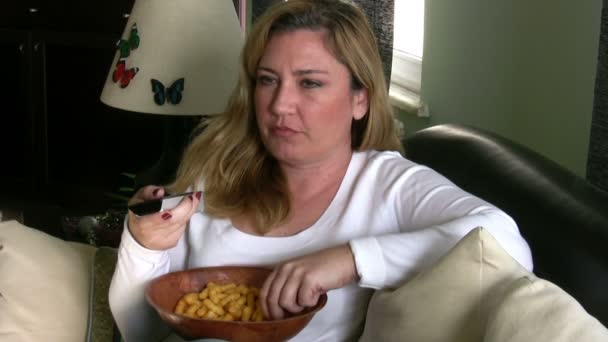
Try these tips for outsmarting the after-dinner munchies.
You start the day with good intentions: oatmeal and fruit for breakfast, a perfectly-seasoned grilled chicken salad for lunch and plenty of fresh veggie sticks for snacks. You even eat a healthy dinner. Then darkness falls, and all good intentions fade. One trip to the freezer for a scoop of ice cream becomes two, followed by a few handfuls of chips and then some sugary cereal straight from the box.
What’s going on here? While sticking to any healthy eating plan takes work, many people report that they most often get tripped up in the evening hours, when they finish work or other daytime duties and loosen their belt.
The good news is that eating at night doesn’t necessarily lead to weight gain: Despite the die-hard myth that calories consumed at night are metabolized more slowly than those consumed by day, the truth is that it’s how many calories you consume—not when you consume them—that matters. The real danger of nighttime eating is that it often results from unhealthy meal patterns, not hunger. Here we take a look at some of the reasons why you may head for the kitchen after the sun goes down—and offer simple solutions to keep you on track until morning.
"I had a really stressful day at work and I deserve some junk food.”
In the middle of a crazy day at the office, you’re too busy to think about how stressed you are. Then at night the stress catches up with you. “At night many people unwind by indulging in the foods they crave,” says Kelly C. Allison, Ph.D., an associate professor of psychiatry at the University of Pennsylvania School of Medicine. The best plan of attack? Develop a food-free strategy for de-stressing.
-
Find alternative tension tamers. Post on your refrigerator a list of 10 non-food stress relievers (like curling up with a good book and taking a hot bath). Before you give in to an urge to splurge, check the list and choose one thing to do.
-
Connect with someone. Try calling a friend or relative instead of hitting the fridge. You may find out that you were really hungry but for a chance to rehash your day.
“I have to have something sweet before bed.”
If you’ve had a sweet treat every night before bed since you were a kid, the habit is hard to break. A good first step, though, is to brush your teeth right after dinner—it’s your mouth (and your brain’s) cue that you’re done eating for the day. Then, replace your evening sweet ritual with one of these:
-
Take a walk. Go for a stroll around the neighborhood with your spouse, or make a regular walking date with a pal. Not only will you burn calories instead of consuming them, but you’ll also get farther away from the fridge.
-
Have some hands-on fun. Bust out the Scrabble board and challenge your kids to a game. Or find a project that inspires you: Knit a sweater or start a photo album. Making sure your hands are occupied will make you less likely to pick up that fork or spoon, says Tara Gidus, M.S., R.D., a dietitian in private practice in Orlando, Florida.
-
Think ahead to a healthy tomorrow. Instead of hitting the kitchen for a late-night snack, hit the kitchen to prep tomorrow’s healthy breakfast and lunch.
“I’m so careful about what I eat all day that by nighttime I’m starving!”
Maybe you’re too good during the daylight hours. If you don’t take in enough calories during the day, your body will remind you at night that it’s still hungry. Incorporate these daily habits, and you’ll be able to resist the after-dinner munchies:
-
Make breakfast a routine. Even if you’re not hungry, ditching breakfast will backfire. “Skipping daytime meals is directly linked to overeating at night,” says Gidus. Not a morning person? Start small. On day 1, have just a piece of fruit; then gradually add lean protein (like fat-free yogurt or cheese) and whole grains (granola bars, cereal, or oatmeal) until you’re eating a balanced meal every morning.
-
Schedule snacks. Eating at regular intervals ensures that you won’t be famished by nightfall. Aim to have a snack between each meal so you’re never starving when you sit down to eat. Just make sure your snacks pack protein, healthful fats, and carbs for extra staying power (think apples with peanut butter or nuts with yogurt).
-
Treat yourself. Work a small splurge into your day, and you’ll be less likely to overdo it at night. Try 1 ounce of dark chocolate or 1⁄2 cup of frozen yogurt in the afternoon.
“I pour myself a glass of wine before bed to relax.”
Sure, that Chardonnay might help you unwind, but the problems with this strategy are twofold: “Alcohol has a significant amount of calories and no nutritional value—plus, it may inhibit your ability to regulate your food intake,” says Marisa Moore, R.D., an Atlanta-based spokesperson for the American Dietetic Association. In other words, wine packs empty calories and may make the pint of cookie dough in the freezer seem more appealing. Try to imbibe wisely:
-
Stop at one glass. The easiest way to do this is to switch from white to red. A full-bodied Shiraz is much harder to drink quickly than a light Pinot Grigio.
-
Switch glasses. Today’s wine glasses are supersize, meaning you might be pouring yourself more calories than you realize. Although a serving is considered 5 ounces, glasses can hold anywhere from 8 to 14 ounces. Use a champagne glass instead; it holds only 6 to 7 ounces. Plus, since it’s taller, it tricks you into thinking you’re drinking more than you are.