E-Newsletter | October 9, 2020 |
|
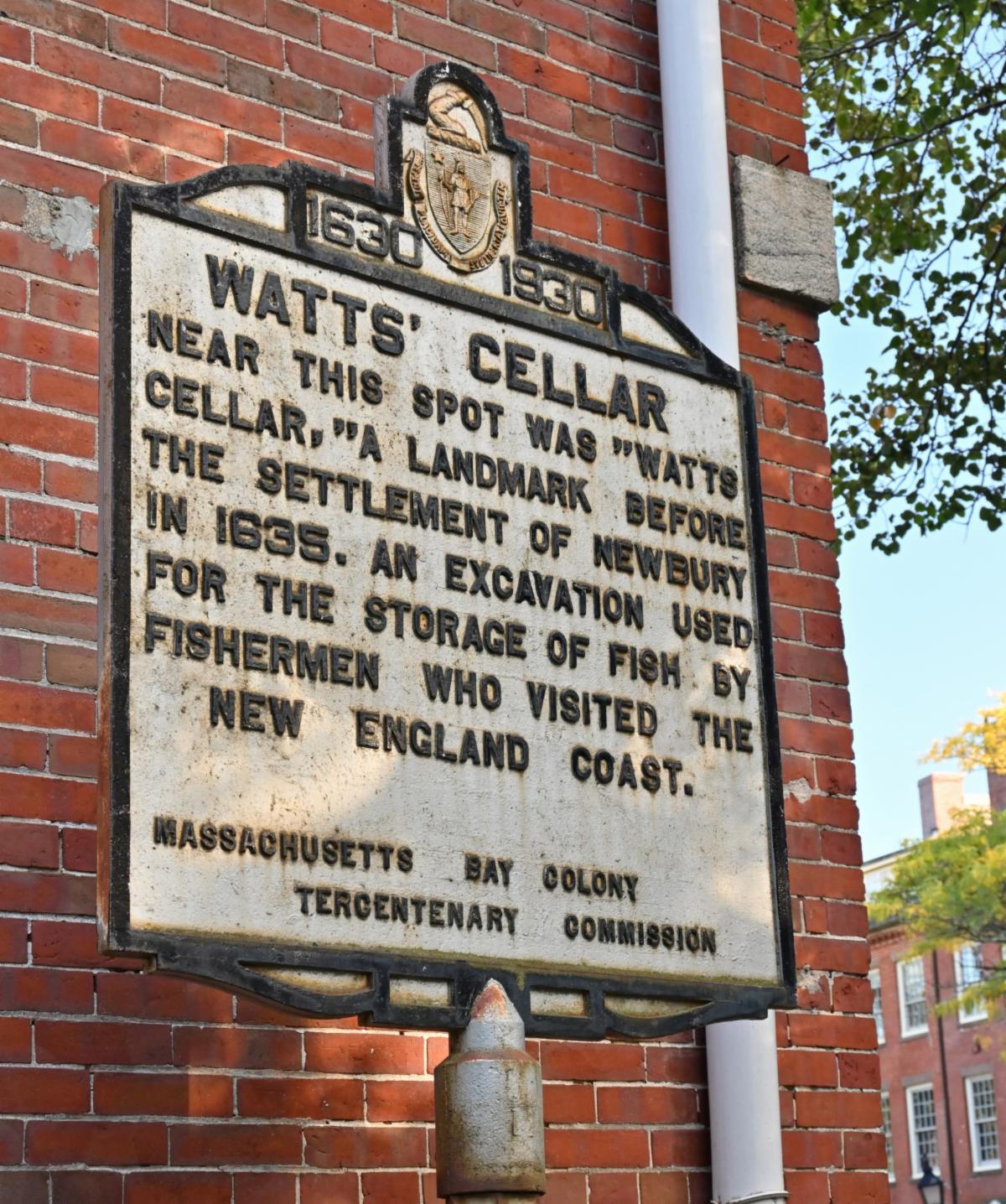
The earliest maps of the banks of the Merrimack include a landmark that has been lost to time. Before the roads, wharves, buildings, warehouses, railroads and parks, the unattributed 1640 map of Newburyport’s waterside was marked by one significant identifying feature, “Watts' Cellar.”
What this place was and who used it has been hidden by the intervening centuries, but its presence serves as an interesting clue to land use before 1635.
|
|
Photo credit: Bob Watts (no relation). |
|
The story of Old Newbury’s past, our typical historical narrative, begins with the arrival of the first English settlers on the banks of the Parker River. There were, however, native peoples living on and utilizing this land far before Thomas Parker and his congregation made this area home. Surviving archival documents, such as early town records and maps, begin with the establishment of the immigrant English community, but can also give us many clues about land use and previous settlement patterns.
The lower Merrimack Valley was ancestrally the domain of the Pennacook, a North American people of the Wabanaki Confederacy. This Algonquian-speaking group, also known locally as the Pawtucket, inhabited the area we now call Newbury, as well as areas in Southern New Hampshire and Maine. Passing the winters in the eastern forests, their seasonal migration brought them to the tidal banks of the Merrimack for fishing and trading.
English trappers and fishermen were also using the Merrimack’s edge as a landing area before Newbury settlers arrived. One of these enterprising souls may have lent his name to the structure marked on early maps. Recorded as both “cellar” and “sellar,” it was probably a drying and storage area for fish. It could have been as simple as a dug-out cache and slatted wooden deck, as was typical of early outposts. However, it may have been as extensive as an entire structure or trading post used by both English and Native peoples alike.
Many historians have attempted to discover the identity of “Watts” to no avail. Dr. Dena Dincauze has made a convincing case for Walter Bagnall, an early trader in NE who arrived in 1625 in Braintree as part of a trading venture and was killed in 1631 at Richmond Island, Maine. As “Watt” was a common nickname for Walter, Bagnall was also known to the local people as the “Great Watt.” He was known as an opportunistic, dishonest frontiersman and would have been in the local vicinity during his travels up the coast. However, “Watts” could have also been the last name of another unrecorded trader or even an anglicized moniker of a Pawtucket fisherman.
Like its namesake, the exact location of Watts' Cellar is also unknown. Early colonial records note that a place called “Watts Cellar” was at the end of a path that began at the Frog Pond and ended at the river – the path was known as “the way to Watts Cellar.” Today that path is known as State Street. Because of this, a plaque now stands in Market Square, approximating its possible pre-settlement position. However, there is also a strong argument that it was actually located closer to what was once Ferry Wharf, a parcel of land adjacent to Captain White's wharf, deeded in 1655.
Recent dives into the archival record and extensive archaeological digs, though fruitful, have also failed to prove exactly where it may have been.
Whoever Watts was, whatever his cellar was used for, and wherever its exact location may have been, all remain in doubt.
What we do know, however, is its importance as an early landmark in the colonial settlement. Without this well-established use of land, the Waterside community may have not developed where it did. With its constant appearance as a reference point in the early town records, the enigmatic structure was obviously a known boundary marker and river access point.
Newburyport was built around the very idea of “Watts Cellar” and we have it to thank for our thriving city.
(Editor's note: A special thanks to Marge and Skip Motes for their exhaustive research on this and many other subjects in Newburyport’s history. Emily Hoffman contributed to this story.)
|
|
This 1640 map of Newbury, Massachusetts, is from John J. Currier's "History of Newbury, Mass. 1635-1902." This unattributed image can be found on page 83. Currier's preface in the book states, "Many of the maps...are reproductions of old prints..." Image courtesy of the Newburyport Preservation Trust. |
|
A Poem (Yeats we are not!) |
|
|
|
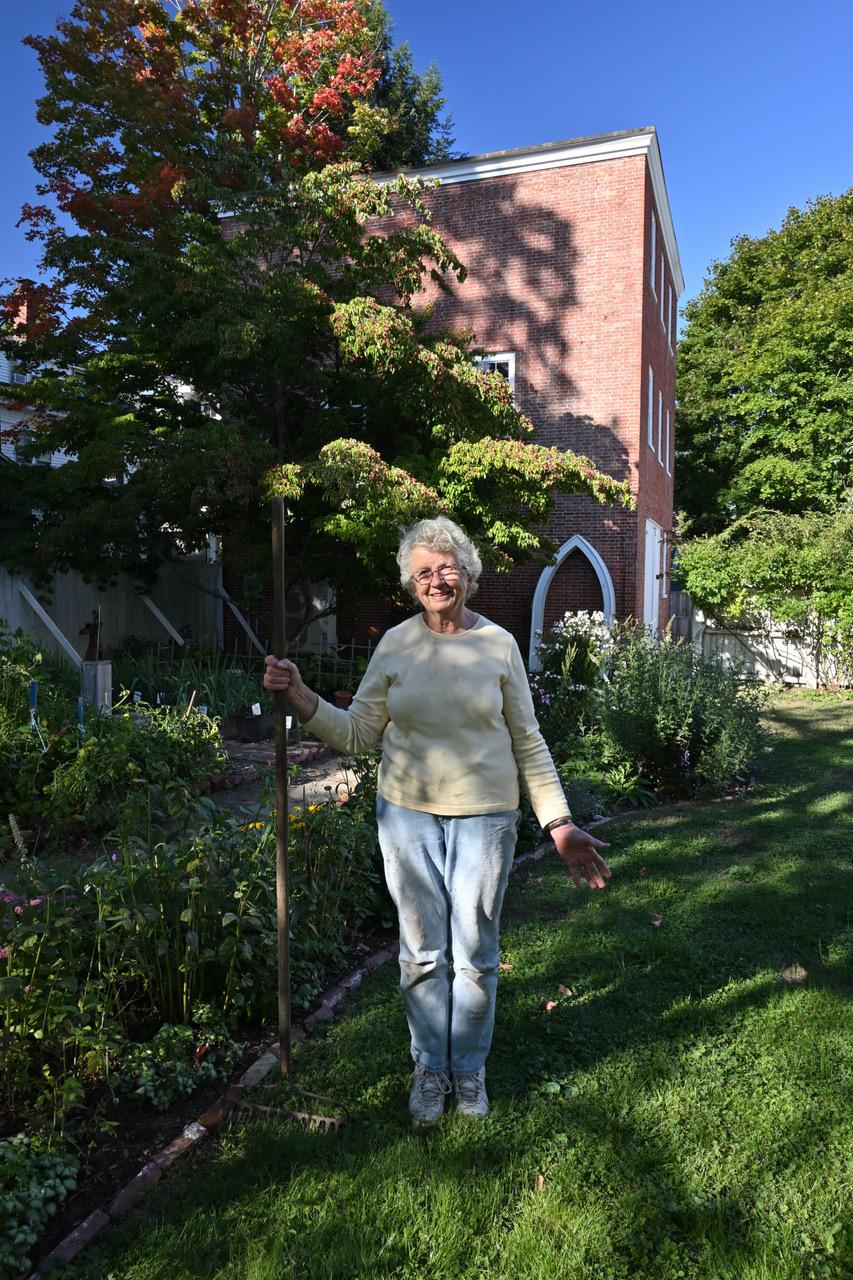
Nancy, Nancy, your face all aglow!
Tell us, oh tell us, how does your garden grow?
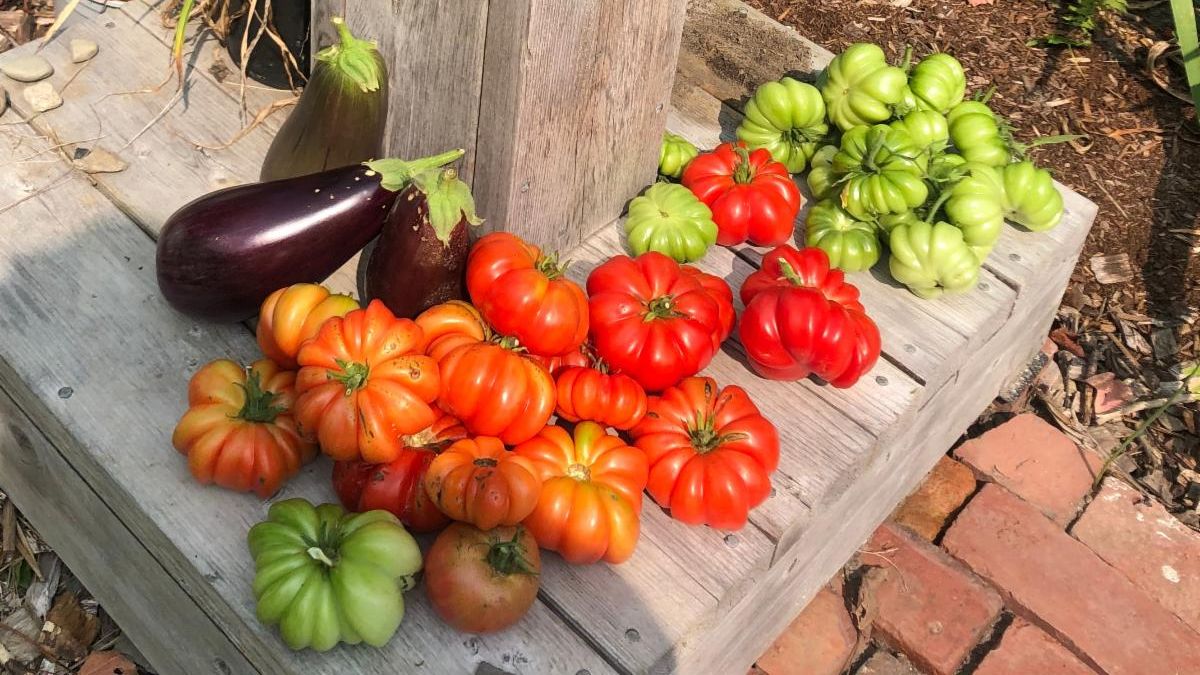
The veggies are grand,
The best in the land.
The herbs smell so sweet,
They sure can't be beat!
You, Fred and Margie all doing your part,
The MOON thanks you so from the bottom of its heart.
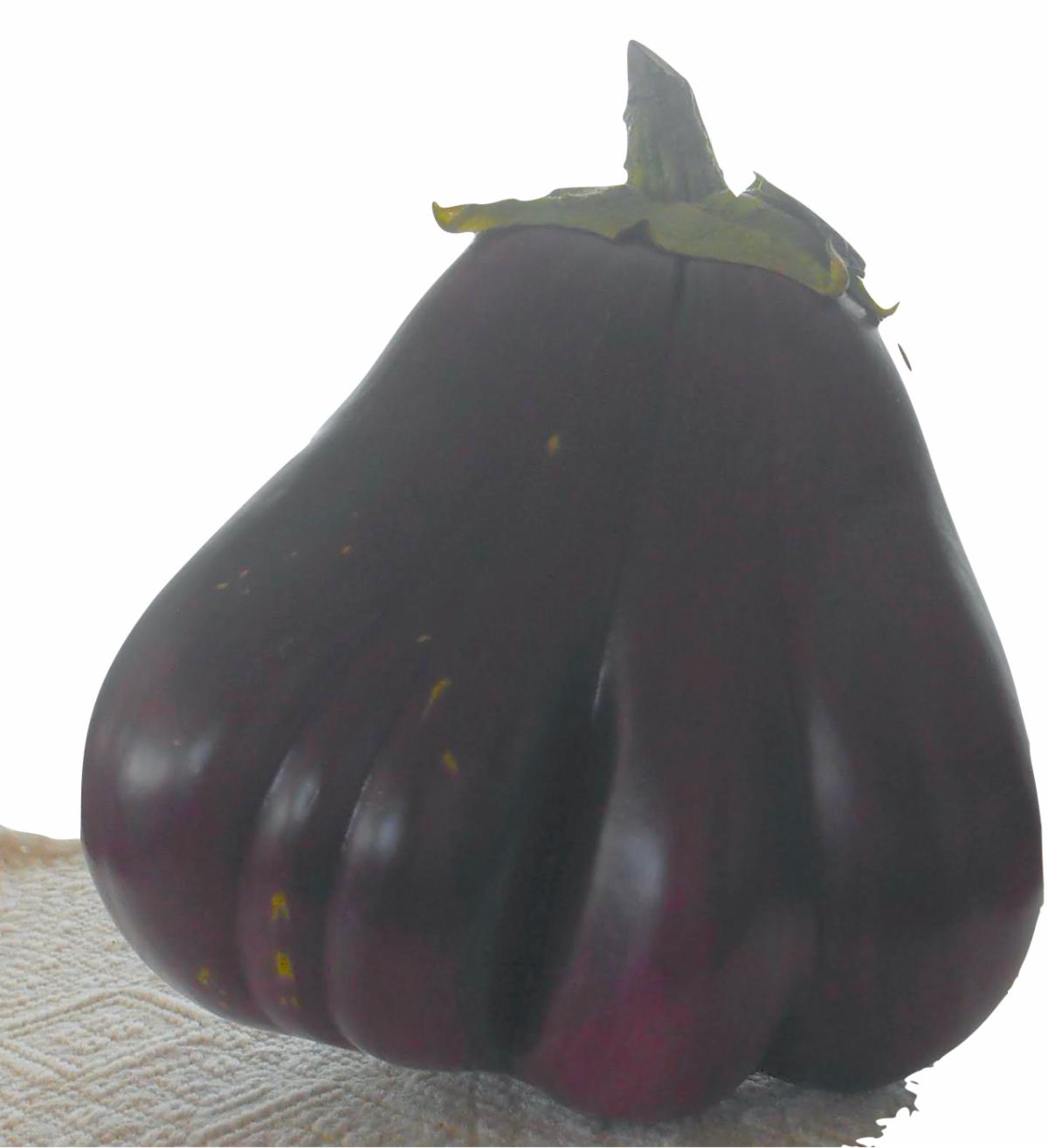
(Editor's note: Can you believe the size of that eggplant? Left, Nancy and our garden's bounty. A gracious thanks to newcomer Annie Roy for her garden support and Bob Watts for capturing the MOON gardens through the entire season, see many of his images here.)
|
|
Thanks a Bill-ion!
Many thanks to Bill Roy and Bill Quigley for their brains and brawn!
During the ongoing electrical project at the museum, many pieces of our collection are being moved around in order to give the electricians access to wall and floor space. Their help moving the archives earlier this week is greatly appreciated.
We are so thankful to have these ever-willing and dedicated people supporting our museum.
|
|
Did you miss "Yeat Yeat, Don't Tell Me!" Last Week?
Play along here.
Try your hand at the questions (note: there are pictures relating to the select queries on page 2), then watch co-hosts Jack Santos, Custom House Maritime Museum, and Colleen Turner Secino, Museum of Old Newbury, for the area's most informative and fast-paced trivia show. Save the date: Friday, October 16, 2020, and Zoom in here.
|
|
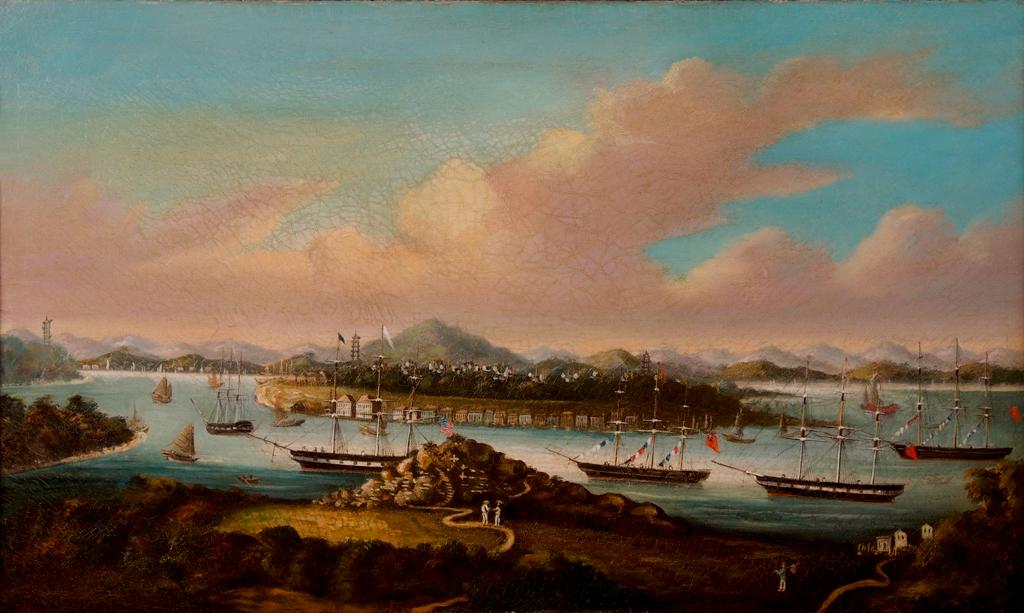
Puzzle Me This...Of Ports and Pearls
One of a set of four paintings of Chinese Hongs from the estate of Caleb Cushing. Cushing may have purchased these when he traveled to China in 1843.
In the 19th century, the Whampoa Anchorage for foreign ships is about 15 miles below Canton. Cushing was dispatched by President Tyler, to serve as Envoy Extraordinary and Minister Plenipotentiary to China. He was responsible for negotiating the Treaty of Wanghia, between the Qing Dynasty of China and the U.S. Signed on July 3, 1844 in the Kun Iam Temple, the treaty was named after a village in northern Macau where the temple is located. The treaty officially established diplomatic relations between the two countries and granted most-favored-nation trade status to the U.S.
About "Whampoa Anchorage on the Pearl River” - Oil on canvas, Chinese school, 19th century, from the collections of the Museum of Old Newbury.
Click on the image to begin.
|
|
Something is Always Cooking at the Museum
Lillian Newbert's crusty, cheesy gnocchi dish sounds heavenly...extremely fattening, but very, very tempting.
Gratinéed Gnocchi with Spinach & Ricotta
1 (1-pound) package potato gnocchi
2/3 cup heavy cream
1/2 teaspoon flour
1/2 teaspoon salt
1/2 teaspoon pepper
1/8 teaspoon nutmeg
3 (5-ounce) packages baby spinach or 2 bunches of Swiss chard
1/2 cup ricotta cheese
2/3 cup shredded mozzarella
Preheat broiler. Cook gnocchi according to package directions. Drain in colander. Whisk together cream, flour, salt, pepper and nutmeg in a 12-inch ovenproof skillet. Bring to a boil over moderate heat, whisking. Continue to boil, whisking frequently, until reduced by half, about 2 minutes. Add spinach by handfuls, tossing with tongs. Cook until wilted, about 2-4 minutes. Remove from heat. Stir in gnocchi. Spoon ricotta over gnocchi in 5 dollops. Sprinkle with mozzarella. Broil 5-6 inches from heat until cheese is browned and bubbly in spots, about 2 minutes. Season with additional pepper. Serves 6.
|
|
During this difficult period of COVID-19, we rely on your support more than ever. We are working to reschedule many of the programs that we have had to postpone, as well as develop new, online programs for you to enjoy and keep us connected. We hope, if you are able, that you will consider a donation to the museum. Thank you for your continued support.
|
|
Museum e-Newsletter made possible through the
generosity of our sponsors:
|
|
|
Museum of Old Newbury
98 High Street
Newburyport, MA 01950
978-462-2681
|
|
|
|
|
|
|
|