MIVASERET MERCAZ
מבשרת מרכז
|
|
Mercaz Academy waved goodbye, wove halacha into our fabric, and handled our feelings. We built playgrounds, researched indigenous New Yorkers, and celebrated a siyum. Mercaz Academy drove cars, tinted rainbows, and came in like lions. Scroll down for a glimpse of the last weeks at Mercaz Academy...
|
|
We Say Goodbye to Visiting Israeli Students |
|
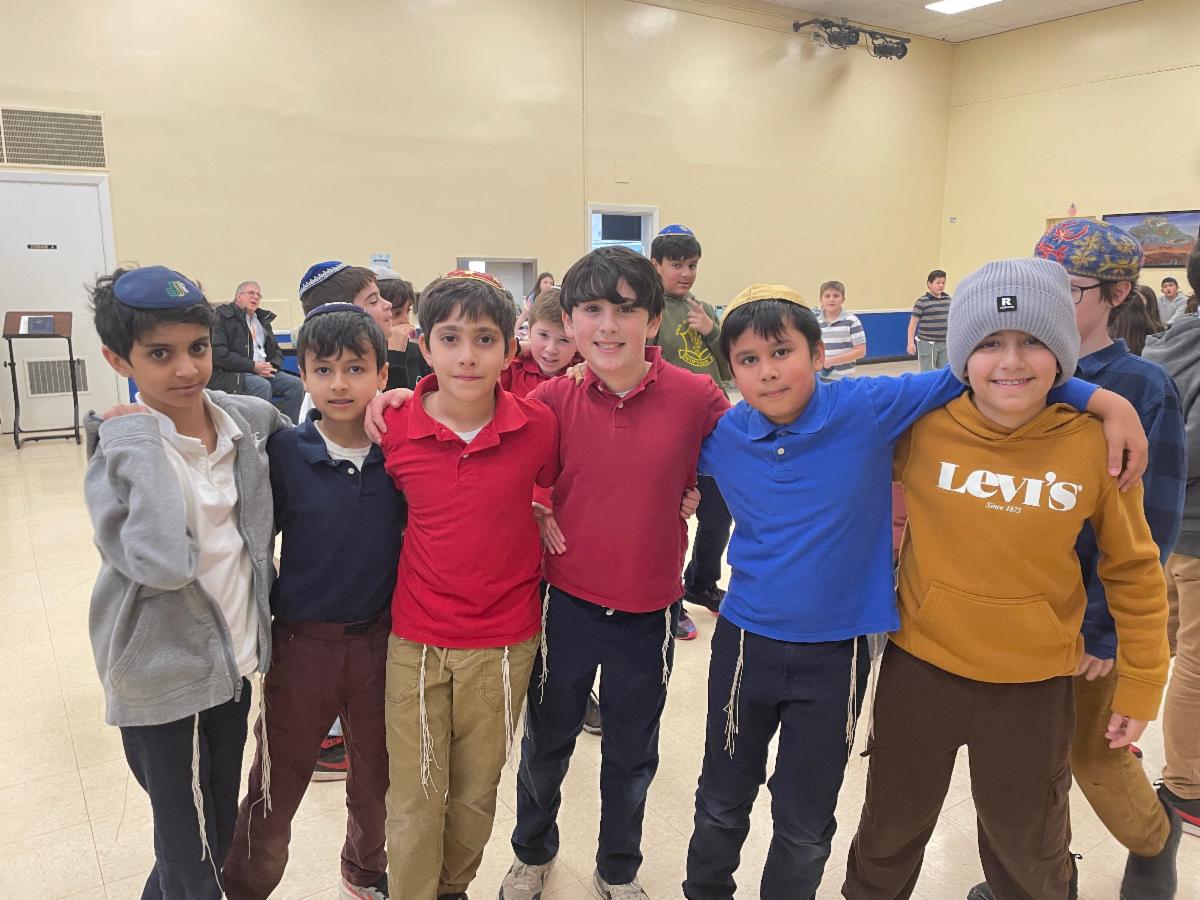
Students Plan to Visit Friends in Israel Who Have Gone Home |
When the war in Israel started on October 7, the administration, staff, and students at Mercaz Academy were determined to help. Funds were raised, supplies were donated and shipped, and tehillim was (and still is) recited at every school gathering. When Israeli schools were closed, Mrs. Kirschenbaum invited Israeli students into her classroom via Zoom for an hour a week. Our students wrote and sent videos to IDF soldiers, to injured Israeli children in ALYN hospital, and to U.S. politicians pleading for support for Israel.
However, one ramification of October 7 was brought home when Rabbi Fogel received the first call from a family in Israel. No decisions had yet been made, the tearful caller explained, but might we have room for a student from Israel at Mercaz Academy, for however long the family needed to stay?
Rabbi Fogel and the lay leadership eagerly agreed to welcome the Israeli family escaping the war at home, for the nominal tuition of $1.00.
It wasn’t long before another family called, and another...READ MORE
|
|
Everyone at Mercaz has a friend in Israel to visit |
|
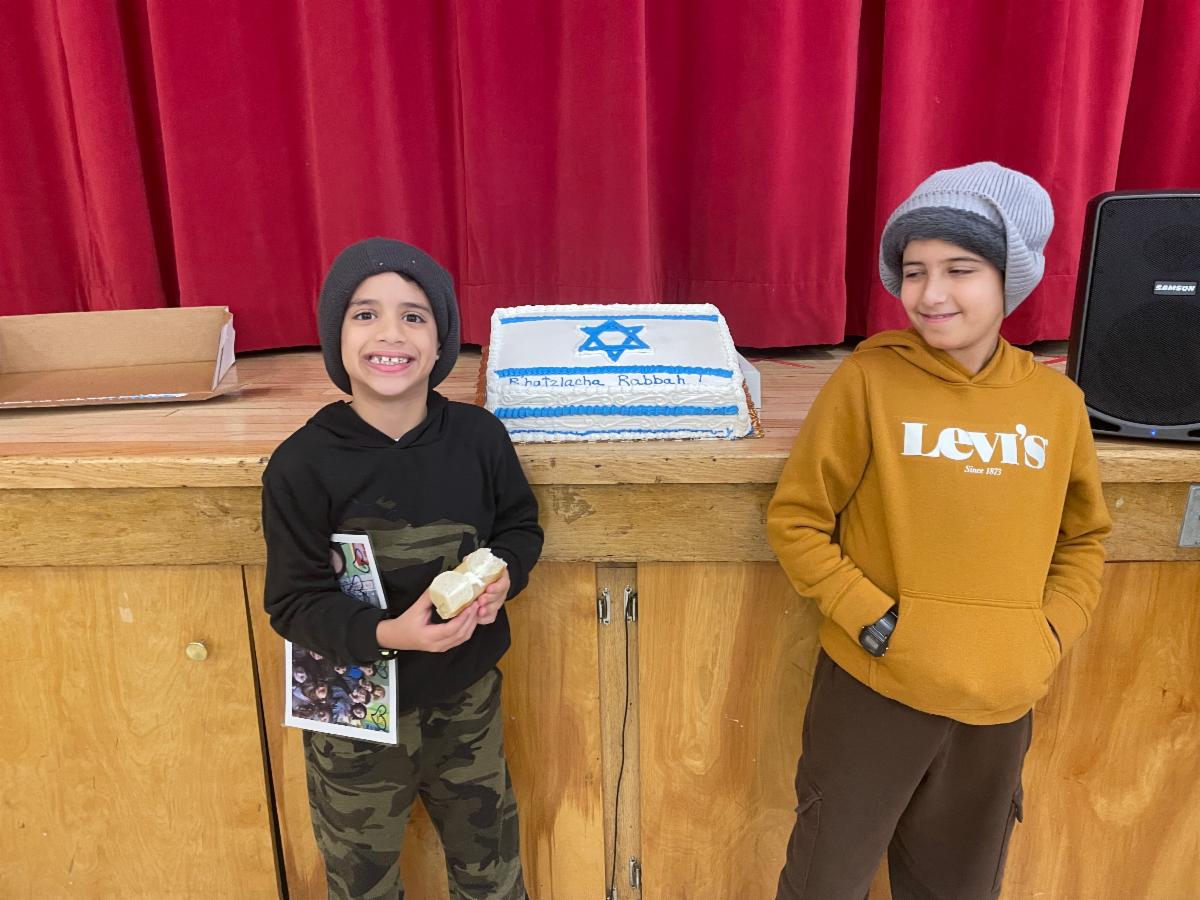
"Hatzlacha Rabbah" cake for the departing students |
|
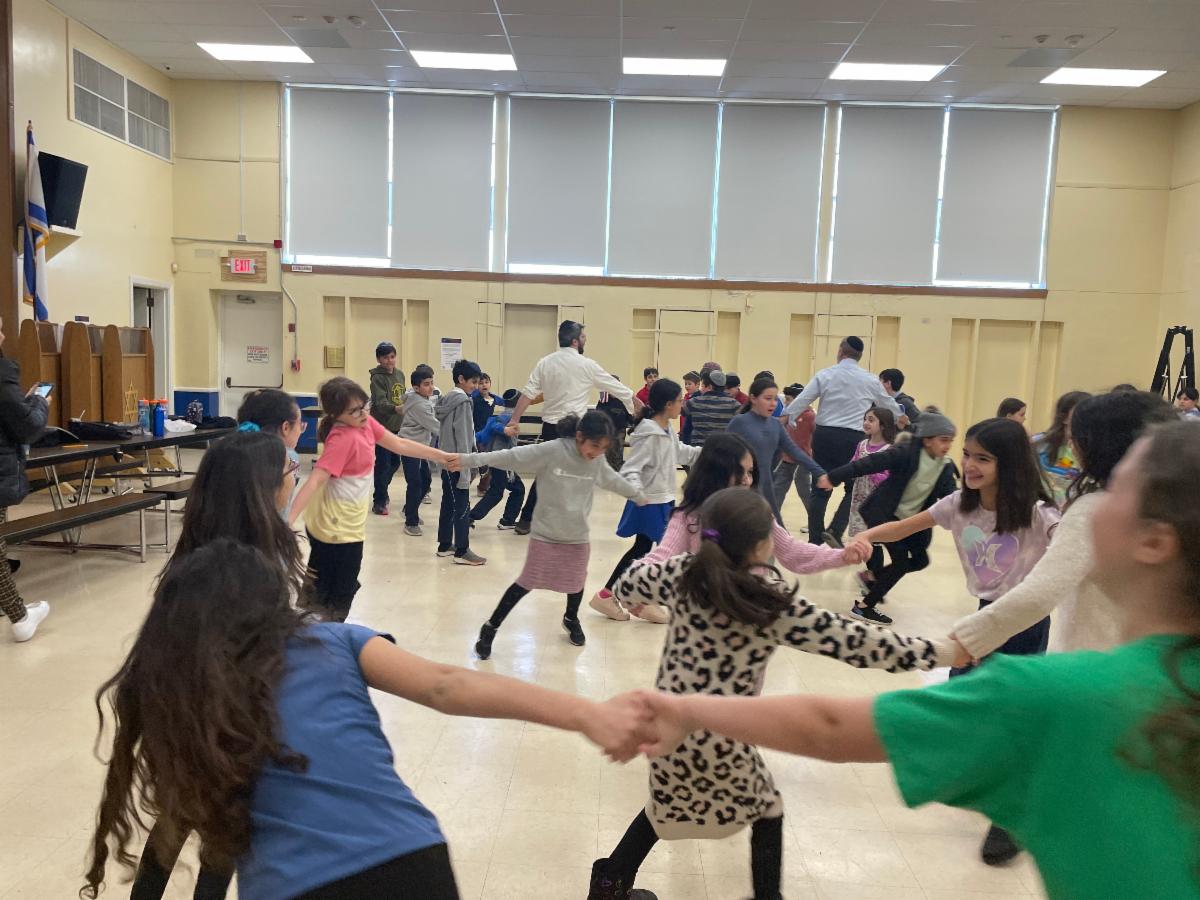
Spontaneous dancing as we say goodbye |
|
Getting Ready for the Bracha Bee |
|
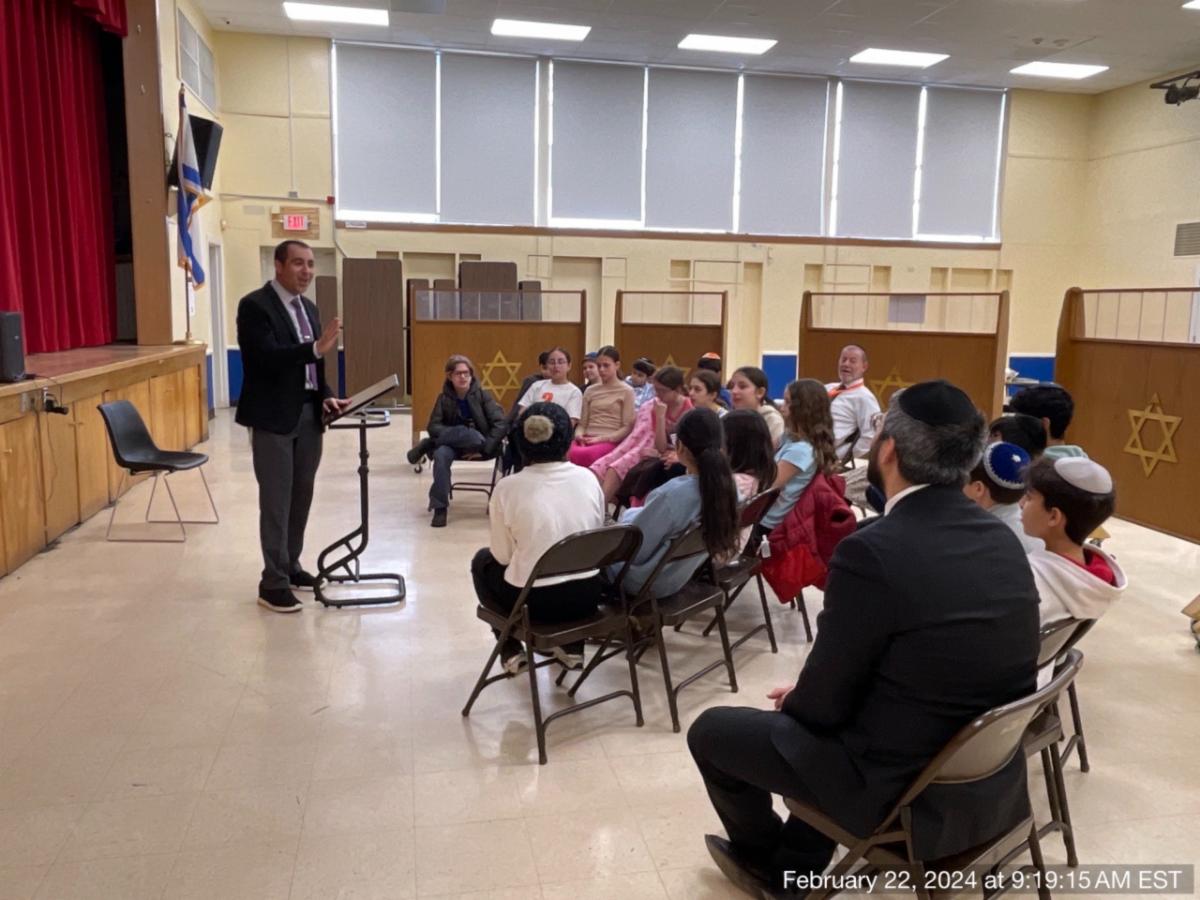
Rabbi Weissman Visits to Prepare Students for Bracha Bee |
To prepare for our recent class Bracha Bees, students were given a card that listed foods by category according to their brachot, and, while challenging, digesting that information allowed diligent students to win their class competitions. For the upcoming schoolwide Bracha Bee for the class winners of grades two through six, students will have to level up their effort. Questions regarding the proper blessing to be said before eating more complex foods–for example, foods requiring multiple brachot or a decision on what bracha to make–will be included in the school-wide Bracha Bee this coming Wednesday, and memorization just won’t be enough. Fortunately, Rabbi Elie Weissman, the rabbi of the Young Israel of Plainview and halachic decisor for Mercaz Academy, assisted fifth and sixth graders when he met with them last week to discuss these more complicated questions.
Students learned that food preferences and how the food is usually eaten can affect which bracha is chosen, but then were stumped when Rabbi Weissman presented them with the Oreo dilemma. Is there a correct way to eat an Oreo–and how does that determine the correct bracha to be recited? What if you prefer the creamy filling to the cookie? After a great deal of spirited discussion, Rabbi Weissman explained that, in a compound food in which one bracha is mezonot, mezonot always wins. He then extrapolated the formula to chicken nuggets which, contrary to the opinion of the OU, he believes require a mezonot due to their breading. He also disagrees with the OU about Twizzlers, pointing out that a look at the ingredients exposes the candy as basically sweetened and colored pasta–a notion that gave the Mercaz students serious pause.
Rabbi Weissman will be returning to coach the younger students as well.
As we look forward to the bracha competition, we congratulate the class winners from grades one through six. May the best bracha-reciter win!
|
|
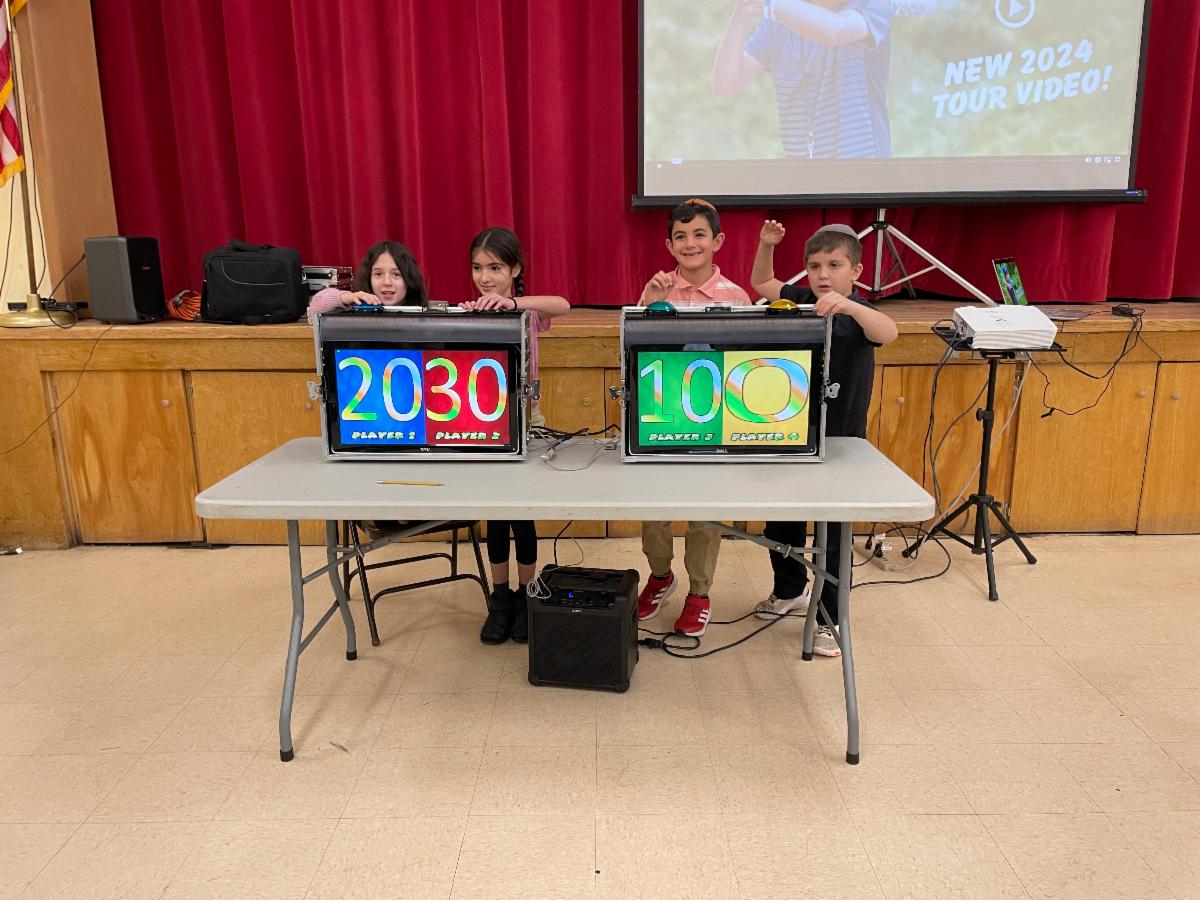
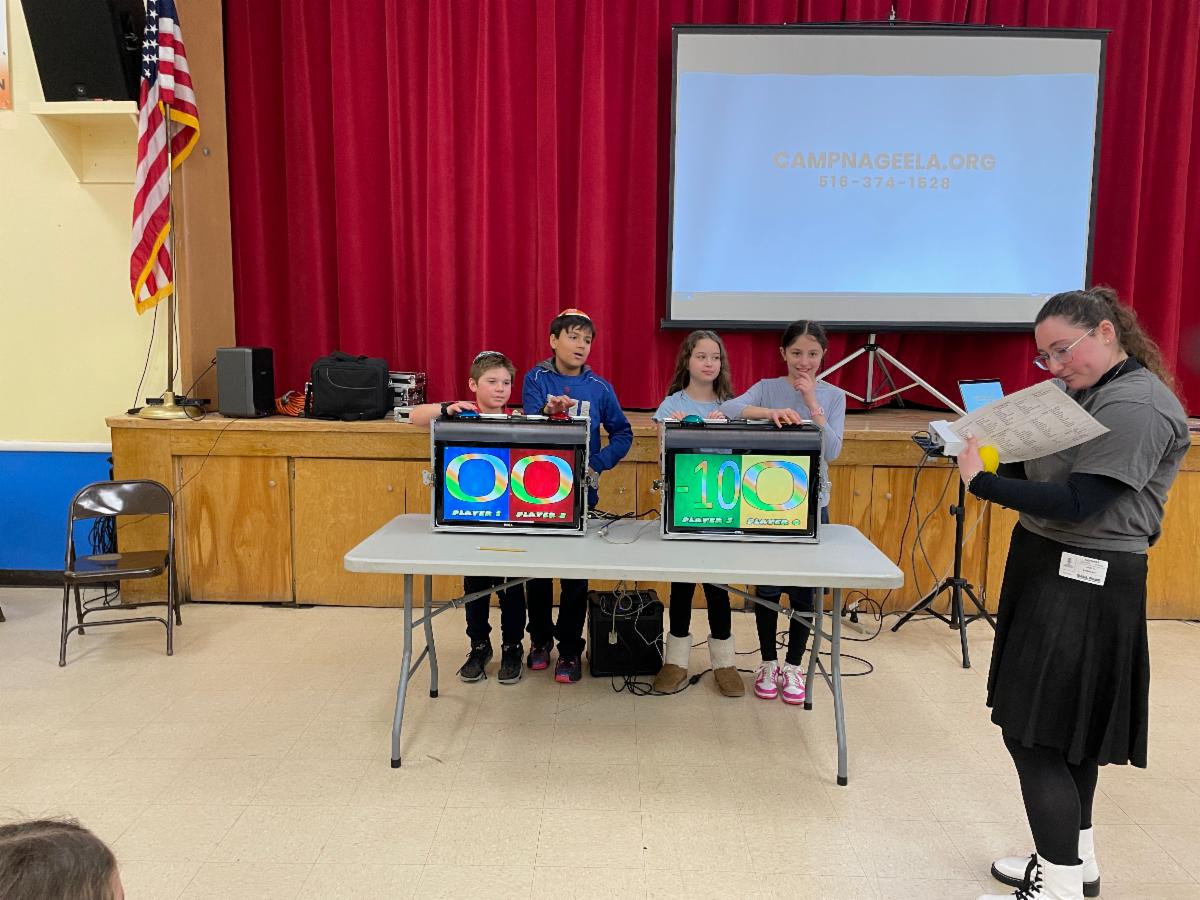
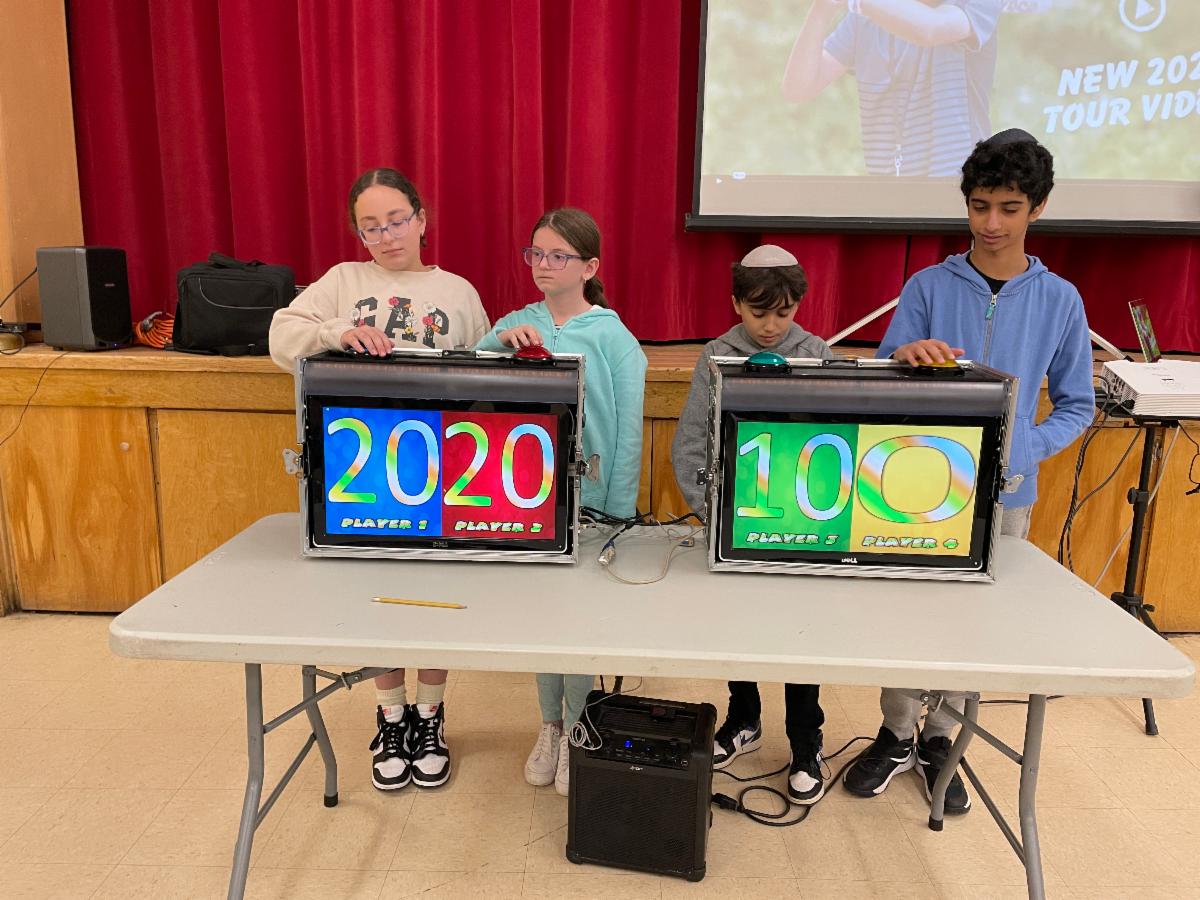
JEP LI helped us practice our brachot... |
|
...by bringing their Bracha Game Show to Mercaz Academy... |
|
|
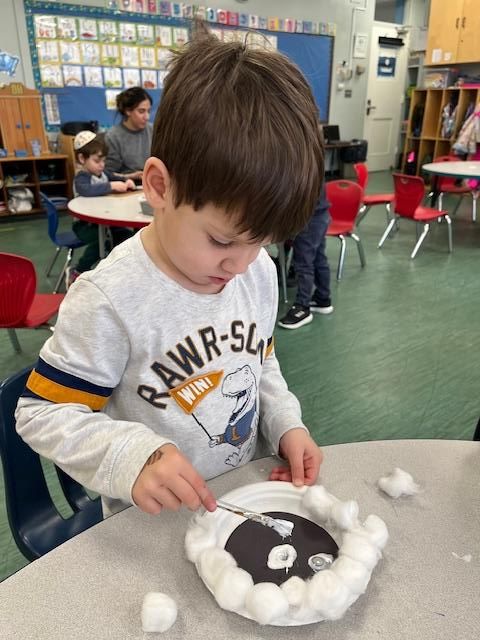
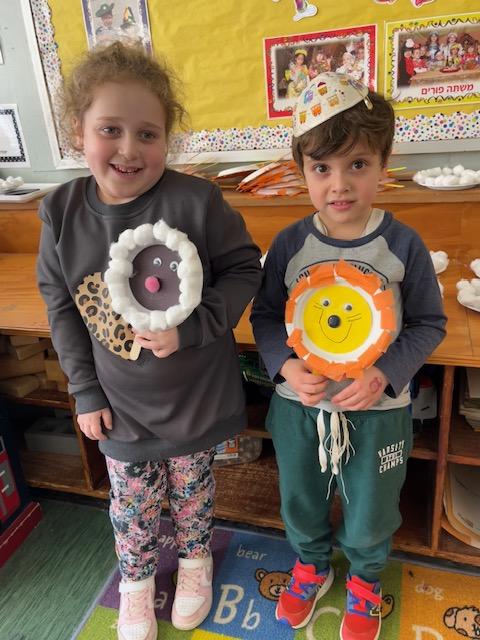
Nursery Bet Reminds Us That March Comes In Like a Lion, Goes Out Like a Lamb |
|
Nursery Bet students created their own lions... |
|
|
...to remind us that spring is coming soon! |
|
Kindergarteners Borrow the Car for Reading Practice |
It is never a surprise when kindergarten students practice reading, but today’s exercise was a little unexpected because it involved coding…and driving a car.
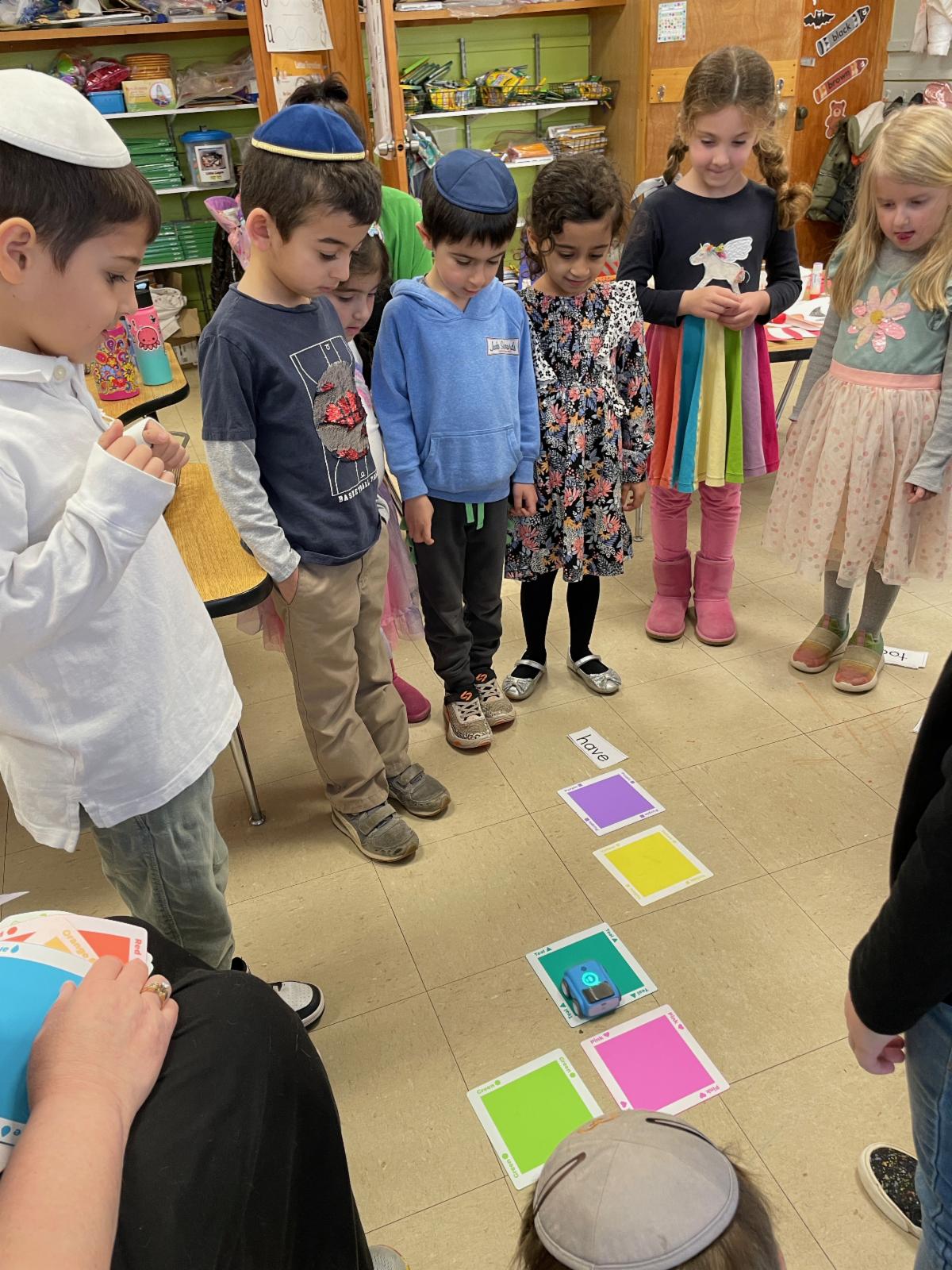
The car in question was an “indi” robot car, designed to introduce younger students to coding concepts like sequencing and problem solving that are necessary to develop coding algorithms. To make this car go, students lay out square silicone mats in different colors to create a path for the car. The “indi” robot car has a color sensor that detects the color of the mat and triggers the appropriate command; for example, green causes it to go and red makes it stop.
Ed Tech Director Mrs. Last explained that robots can’t plan what to do on their own; they need programmers to think about the desired steps and set them up in the correct order (that is, develop an algorithm), or there will be a mistake that requires a fix (debugging).
Mrs. Reinhardt scattered cards on the floor with four different “sight words,” words that students have practiced recognizing with no need to sound them out. She asked groups of four kindergarten students to work together in teams to set up the mats so the “indi” robot car would drive to the correct sight word.
The kindergarten teams discussed which colors they needed, and, with some trial and error, navigated the car to the identified sight words. The words were recognized, the steps were identified, and the cars were programmed…and best of all, no licenses were required.
|
|
Mercaz Academy Interweaves Religion and General Studies in Art |
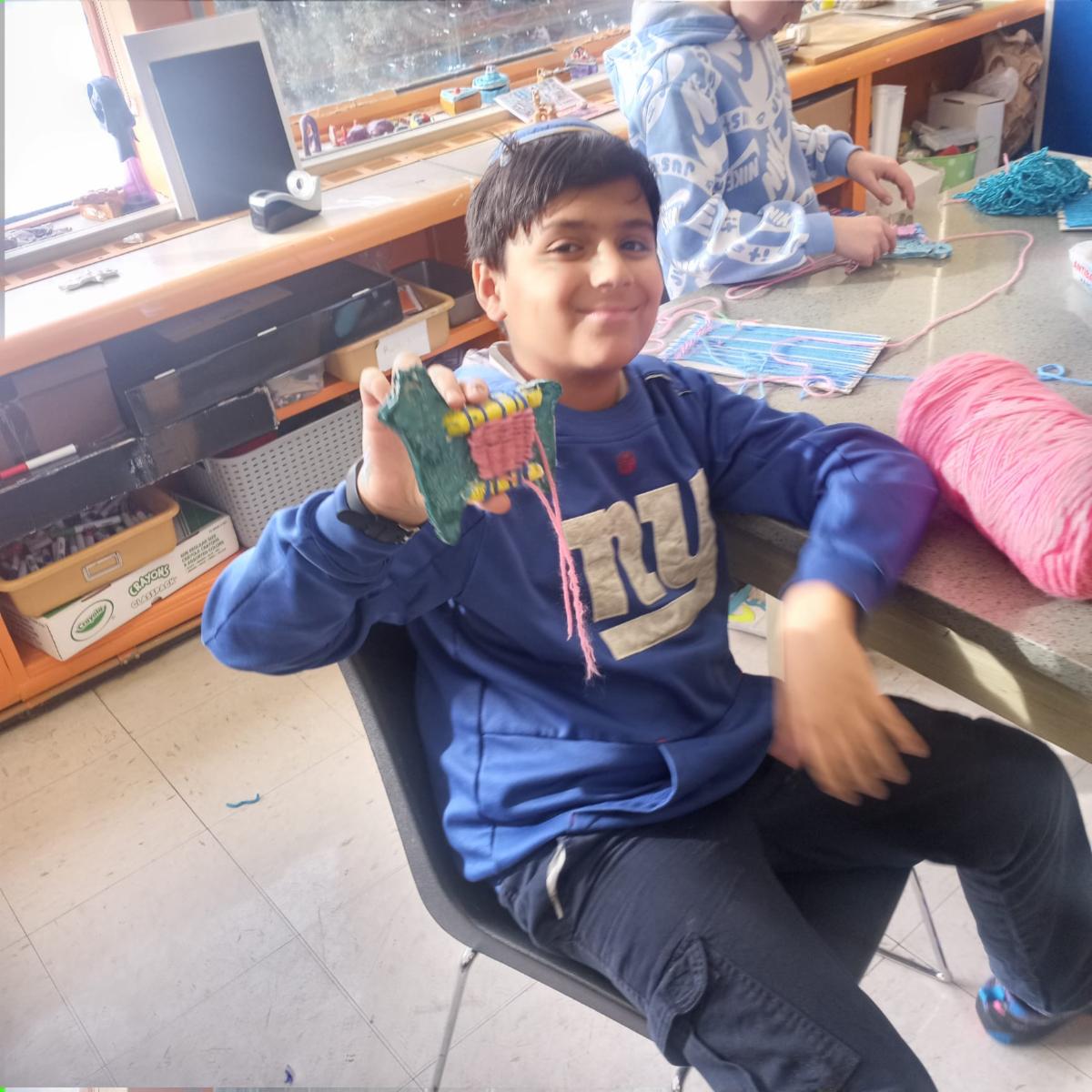
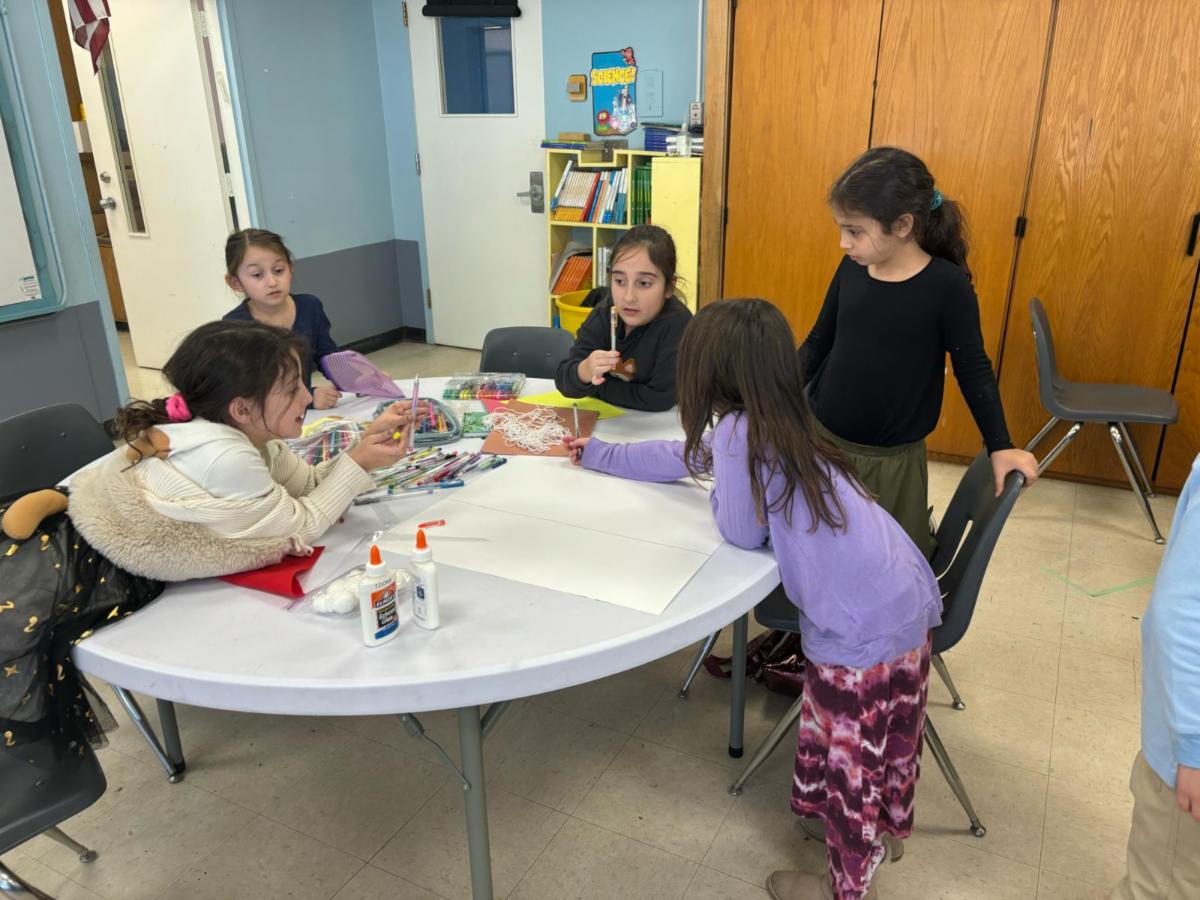
Students at Mercaz Academy love intercurricular projects, especially when they incorporate Torah studies and art! Fifth graders just completed a very ambitious, multifaceted art project that began with ceramic and ended with fiber arts, with a dose of Torah throughout. First, art teacher Mrs. Liz Danziger explained how weaving works, defining terms like “warp” and “weft” and showing them how a small and simple hand loom keeps the threads straight to enable threads to cross them accurately, creating fabric. Using ceramic clay, fifth graders were excited to make their own hand looms with slab construction and additive methods. To incorporate their artistic skills, the fifth graders chose to shape their looms into animals and add textural enhancements. After these were painted and fired, each student had his or her own hand loom, ready to weave a piece of fabric.
This served as a springboard into a discussion of the acts to create fabric as prohibited on Shabbat, and the derivation of the 39 melachot from the activities necessary to set up and maintain the Mishkan. Last week’s parshat hashavua, Terumah, introduced the instructions for the Mishkan, and fifth grade Torah teacher Rabbi Avi Kramer worked with students as they set up their looms to demonstrate each step of the process of creating a fabric as a separate melachah. The fifth graders finished the project by weaving their own small piece of cloth, tying their religious studies and general studies together into a beautiful and functional whole.
|
|
Kitah Bet Completes First Chapter in Chumash |
Kitah Bet students started learning Torah from a text–their new Chumash, distributed at the Chag Hachumash–in January, and have already completed their first perek (chapter) of Parshat Lech Lecha this week. At Mercaz Academy, when a class completes a section of Torah, Rabbi Fogel broadcasts the class reciting the last pasuk (sentence) of the completed perek and the first pasuk of the next perek over the loudspeaker system. When they’ve finished, the entire school opens their classroom doors to shout their congratulations and applaud the accomplishment. Kitah Bet was excited to participate in this school tradition for the first time!
To further celebrate their accomplishment, the students of Kitah Bet are planning a siyum (completion) party next week. They are designing posters and writing skits to display their knowledge of the perek in addition to planning a delicious menu of snacks. Mazel tov on your accomplishment, Kitah Bet, and may you all enjoy many more.
|
|
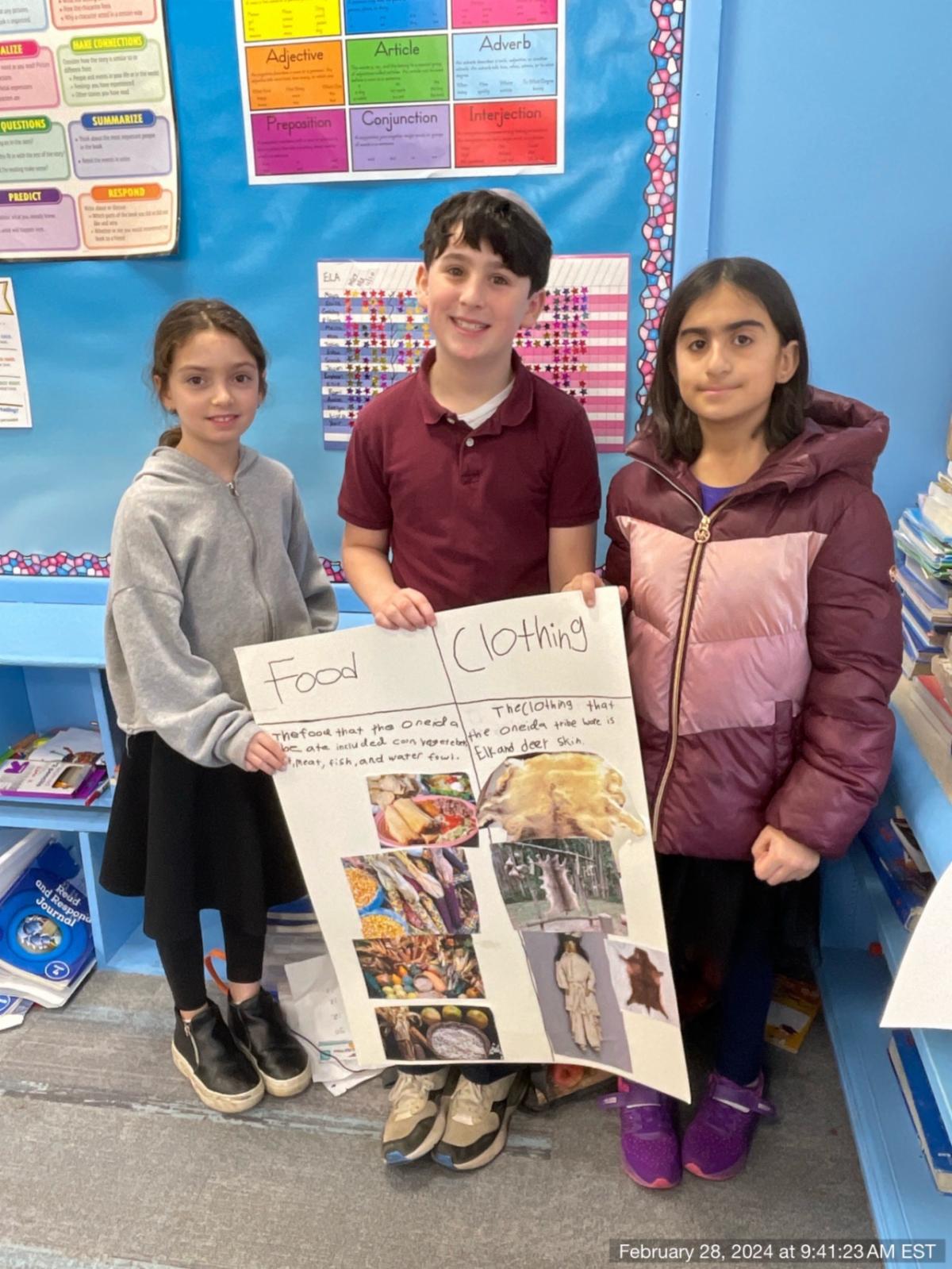
Fourth Grade Social Studies: Researching Tribes Indigenous to New York |
The fourth grade Social Studies class has been learning about Native American tribes that are indigenous to New York by taking on the roles of historians, geographers, or anthropologists. After choosing their areas of expertise, students divided into groups that included at least one fourth grader representing each of these academic specialties. Selecting a New York tribe to research, these groups studied native clothing and food; the customary tribal roles and lifestyles of men, women, and children; their native terrain and geographic locations; language; methods of transportation; weapons and prey; and how the tribe lives today.
Each group will teach the rest of the class all about their specific tribes, and have “published” their research findings as group essays. To engage the class and teach their topics, our fourth grade academicians will use Google Slides presentations as well as posters and models. Unfortunately, tenure will not be offered, no matter how well deserved.
|
|
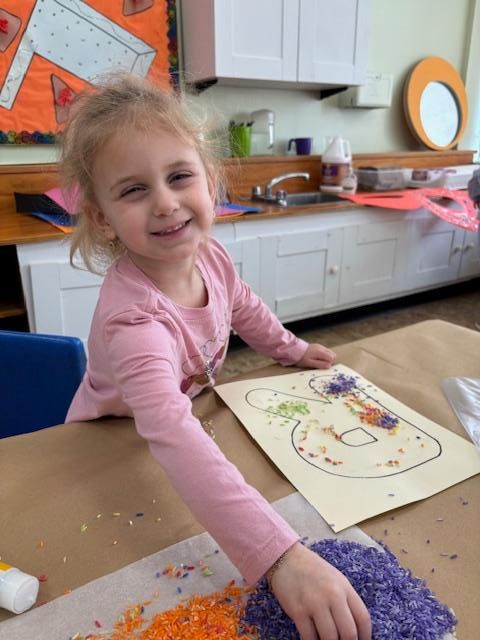
R Is For Rainbow Rice in Nursery Aleph |
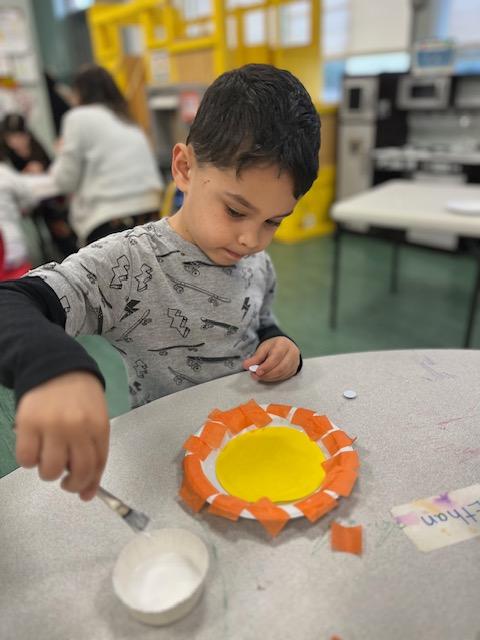
Nursery Aleph has reached the letter R in their study of the alphabet, and have learned many words that start with R (including the name of a classmate). However, the most exciting Rs they’ve come across are definitely in Rainbow Rice. Morah Esther Vaknin showed her students how to add food coloring to different bags of raw rice to tint it all the colors of the rainbow. This created the perfect medium for sensory play, as well as sorting and mixing colors. The students in Nursery Aleph particularly enjoyed gluing mixed-up rainbow rice on a template of the letter R.
Now that they are moving on to the letter S, the Rainbow Rice has been mixed together in a large bin. Morah Esther sets up cards with numbers printed on them on one side of the bin, and the Nursery Aleph students use their fingers to copy the number in the rice. This exercise helps develop the tactile movements in letter formation–and Rainbow Rice makes learning a more colorful exercise!
|
|
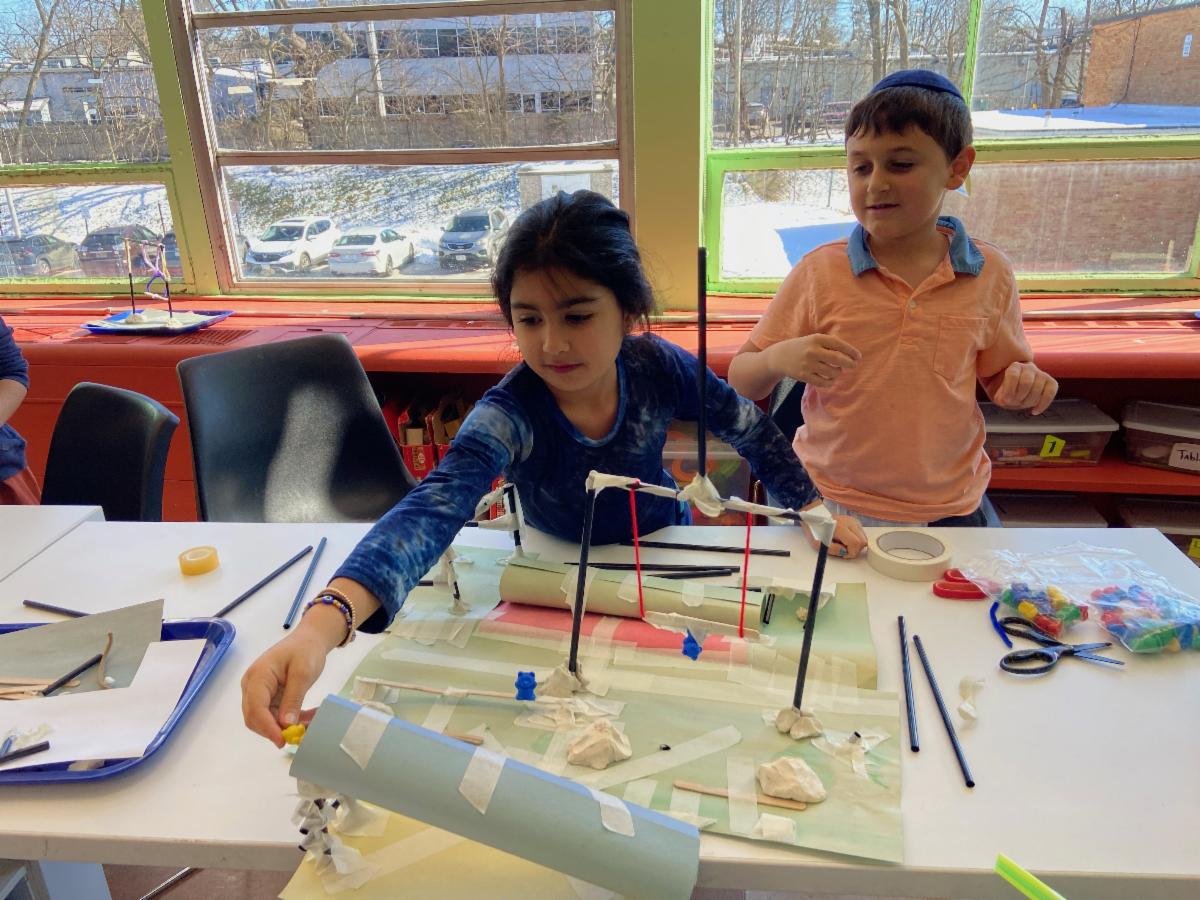
Second Grade Scientists Test Their Playground Equipment |
Second graders have been learning about the properties of materials in science class, describing their color, weight, flexibility, elasticity, reflectivity, hardness, texture, and absorbency. Recently, they used this knowledge to design, build, and finally test a multi-part engineering project: a model playground! Over the course of a few classes, these second graders used a wide variety of materials–including cardboard tubes, wooden tongue depressors, plastic straws, metal pipe cleaners, rubber bands, and paper masking tape–to design and build small scale models of one or two pieces of playground equipment.
Did they design the items correctly and choose the right materials? The only way to find out was to test the swings, slides, and other playground equipment that they had built. Alas, the second graders were too big to test it themselves. Fortunately, Mrs. Vasiliou had a jar full of small plastic bears that were perfectly sized to try the playground, and those little bears probably had at least as much fun as their playground engineers. After minor tweaks of design and some substitutions of building materials for others with more necessary qualities, the playground equipment was ready for safe bear fun, and the second graders are very proud of their accomplishments.
|
|
Kindergarten Incorporates Social-Emotional Learning Into Parshat Ki Tisa |
Parshat Hashavua, the weekly Torah portion, is always a big part of the kindergarten’s Torah learning, and this week was no exception. The kindergarten students were learning about this week’s reading, Ki Tisa, which provides details about the special sink used by the kohanim to wash before working in the Beit Hamikdash. Students deduced that it’s very important to prepare themselves before doing something special and holy, like prayer.
Another incident in Ki Tisa that particularly struck the kindergarten students was when Moshe came down from Har Sinai and was upset to see B’nei Yisrael worshiping the Golden Calf. All the students were able to relate to his anger and frustration, and this led to an interesting discussion about how the students themselves deal with those emotions. The kindergarteners suggested several excellent ideas to regulate emotional turmoil, some of which can be seen by scrolling down to “Heard in the (Kindergarten) Hallway,” below. Their answers were thoughtful and sometimes surprising, revealing a great deal of personal insight and, not least, the Torah’s timeless ability to inspire insight and discussion.
|
|
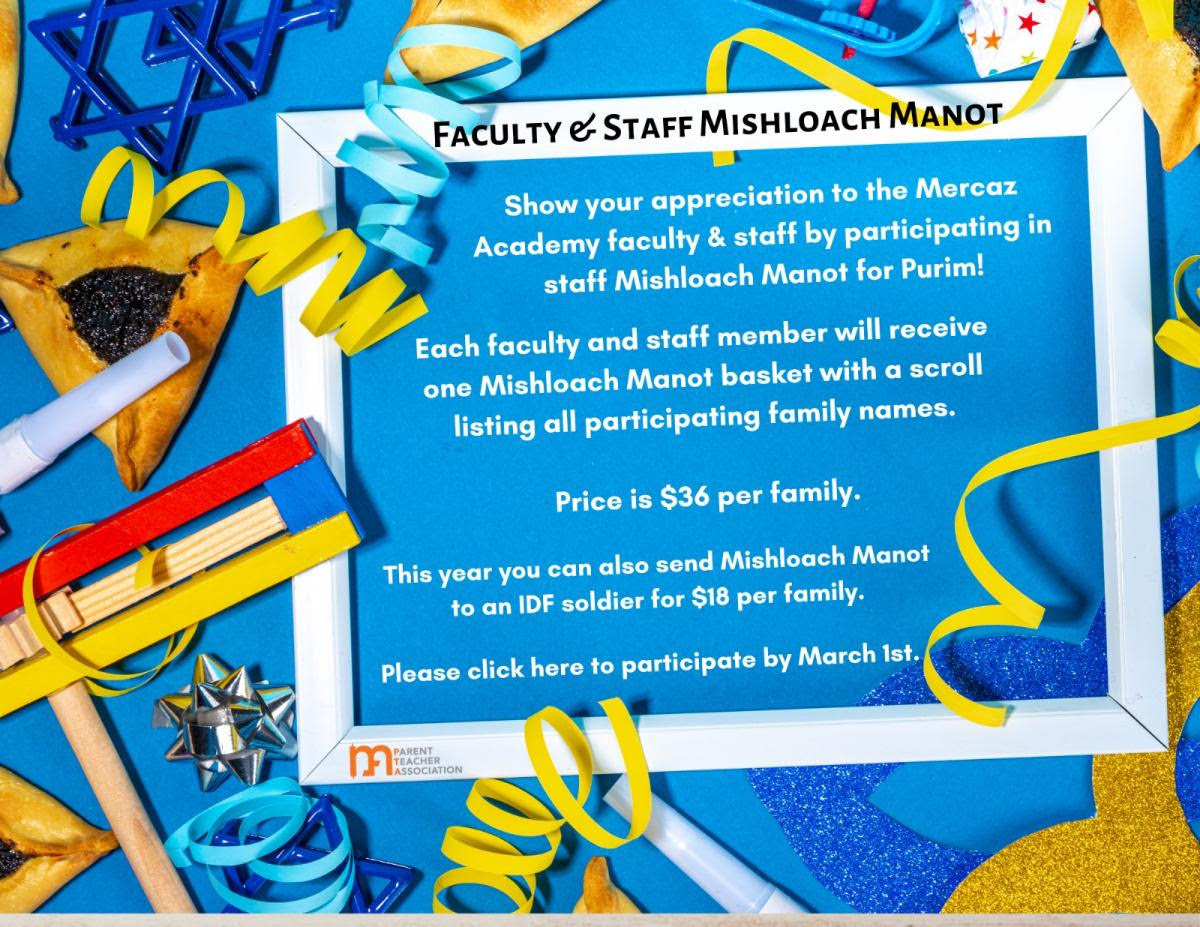
Last Chance to Order Mishloach Manot! |
|
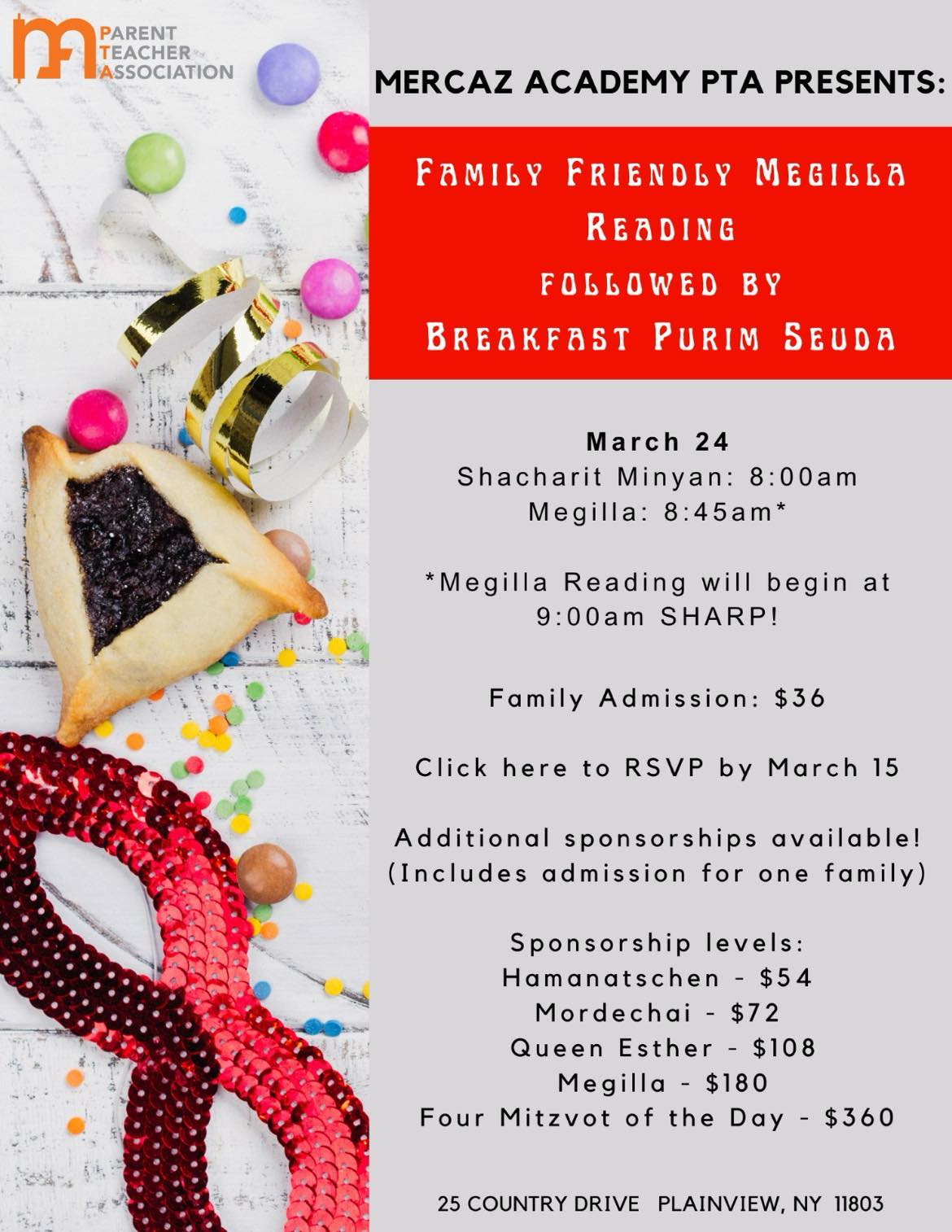
After the Family Friendly Megillah Reading and Seudah on March 24, visit the Mercaz Academy booth at Mid-Island Y-JCC's Purim Carnival, with face painting and games! |
|
|
|
Monday, March 4-Wednesday, March 6
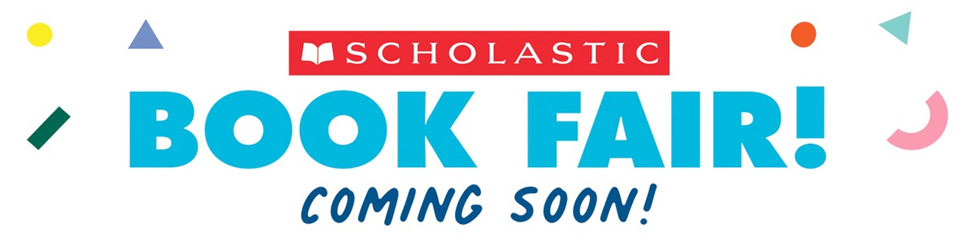
- Scholastic Book Fair (PTA)
Monday, March 11
- PTA-sponsored Schoolwide Pizza Lunch
- ECC-Grade 6 In-Person Parent Teacher Conferences
Tuesday, March 19
- ECC-Grade 6 Remote Parent Teacher Conferences
Thursday, March 21
- Regular dismissal, ECC-Grade 6: Ta'anit Esther
Sunday, March 24
- Purim
- PTA Family-Friendly Megillah Reading and Breakfast Purim Seudah, ECC-Grade 6 (and friends)
Wednesday, April 3
- Grade 5 State Fair (note change in date)
Wednesday, April 17
Friday, April 19-Wednesday, May 1
|
|
|
|
|
|
|