|
Upcoming Events
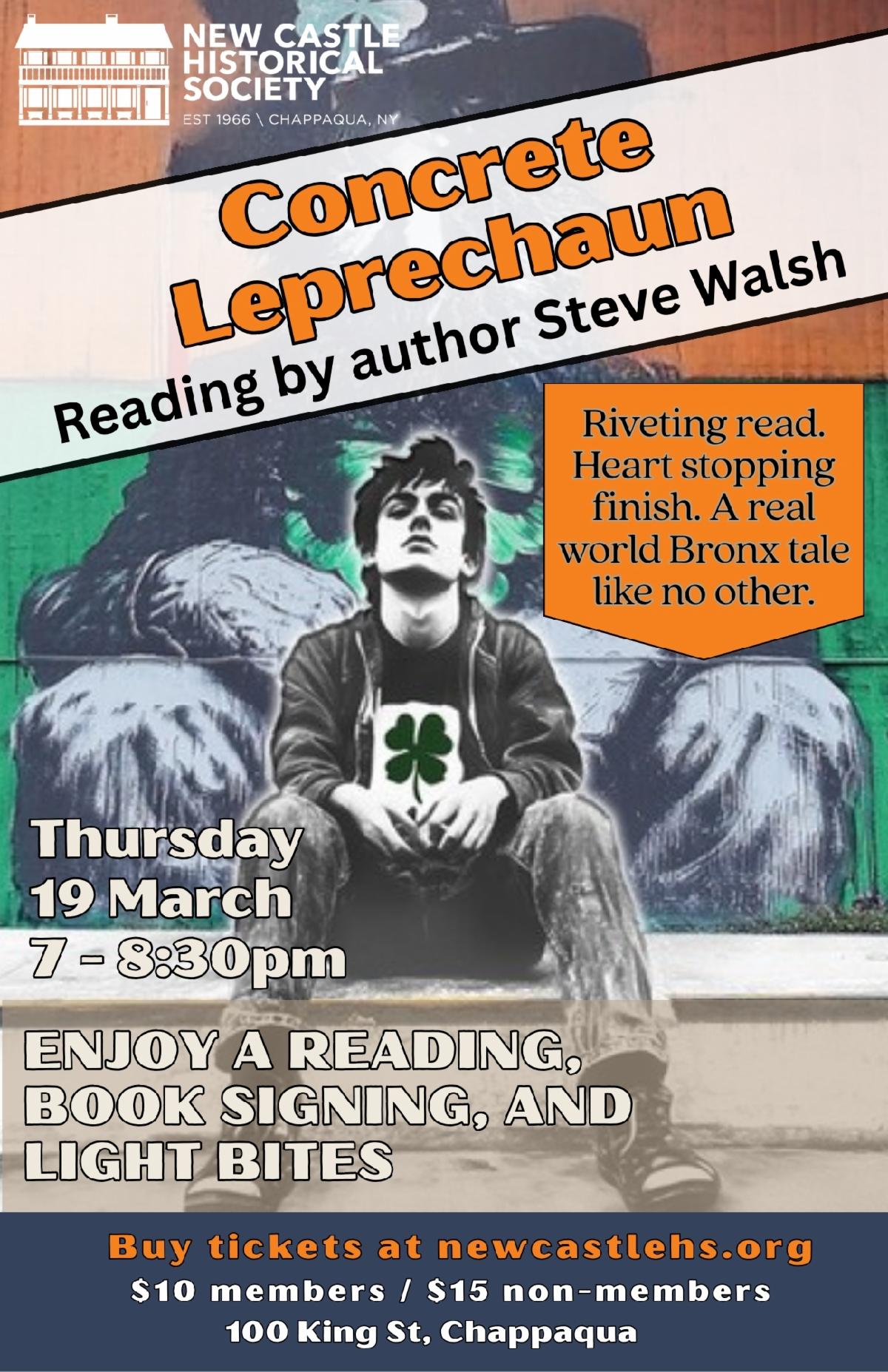
Concrete Leprechaun Author Reading
Thursday, March 19 at the Greeley House - Buy Tickets
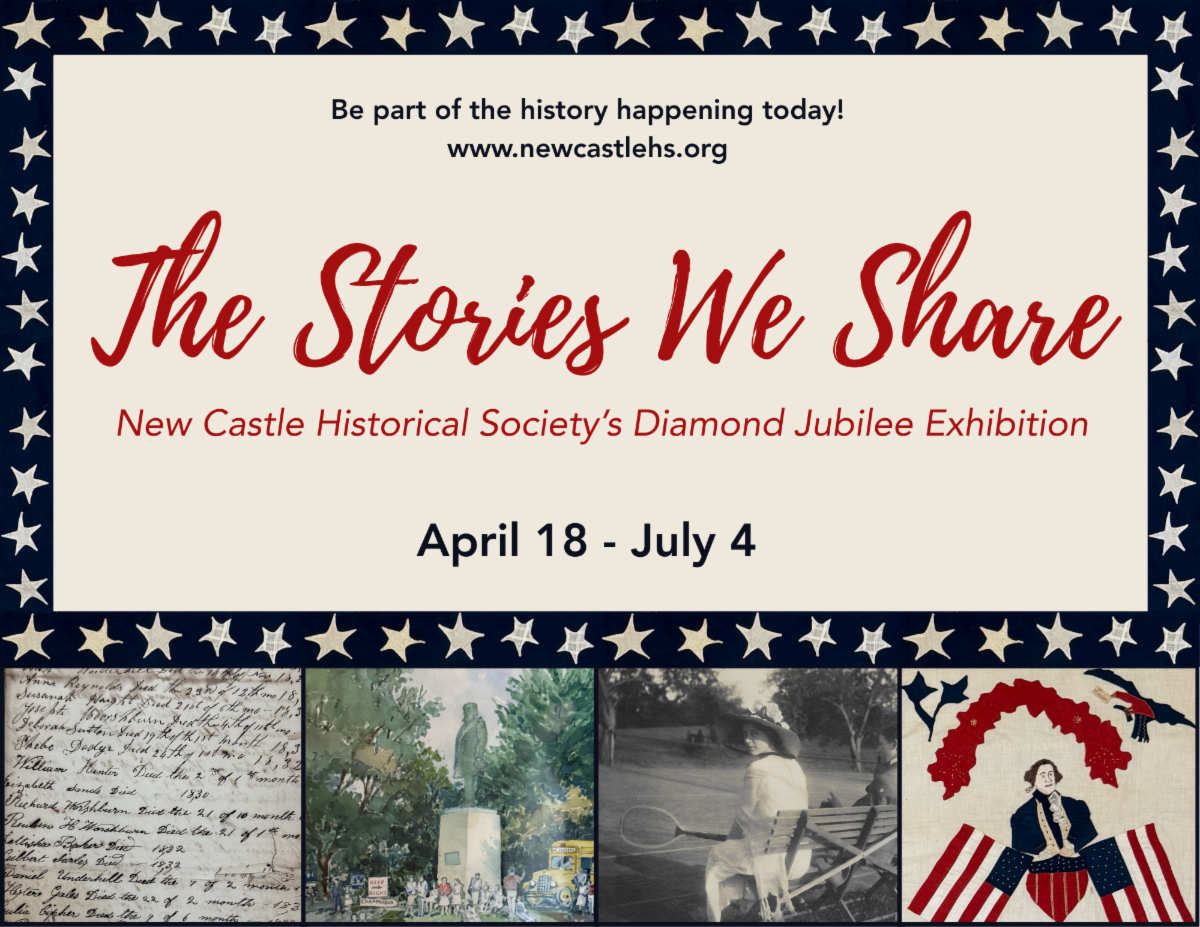
The Stories We Share
New Castle Historical Society's Diamond Jubilee Exhibition
April 18 - July 4 at the Greeley House
NCHS Annual Meeting and Lecture
Sunday, April 26, 2pm at the New Castle Community Center
| |
| |
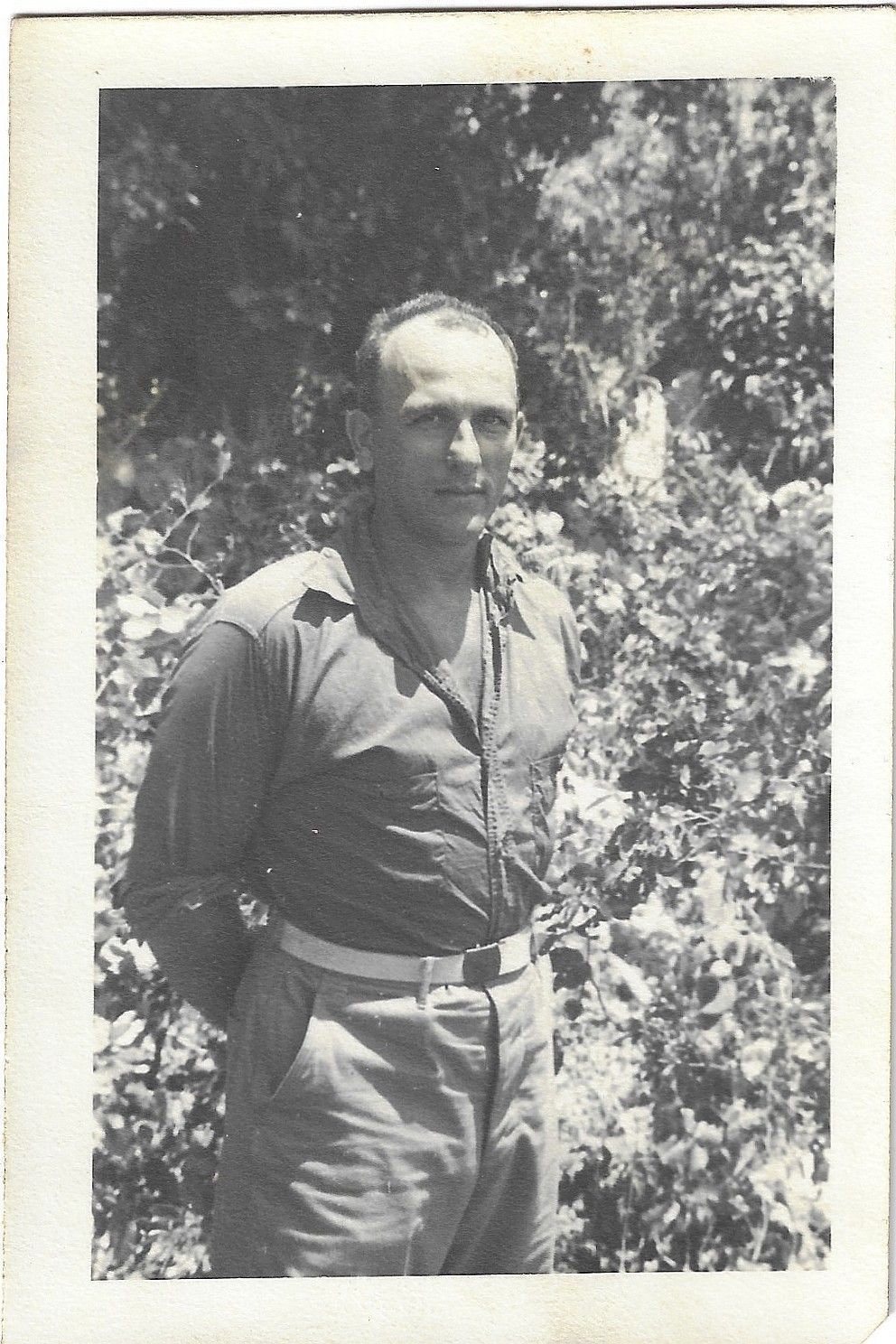
Exciting 2026 Acquisition: The Emil W. Burkhart Collection
Our first acquisition of 2026 is a remarkable donation documenting New Castle resident Emil W. Burkhart’s service with the United States Navy Seabees during World War II.
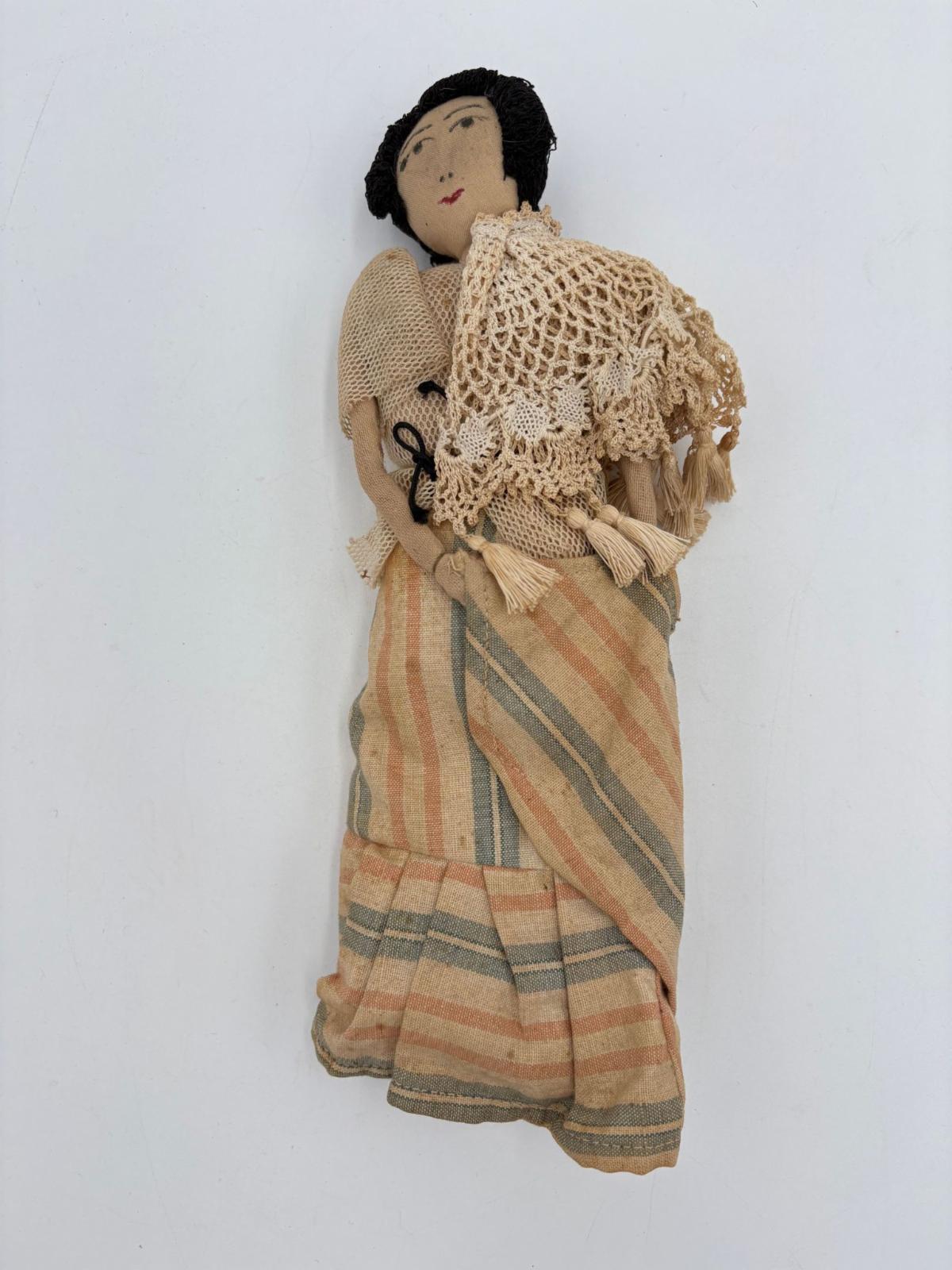
Serving from 1942–1945, Burkhart was deployed to Dutch Harbor/Unalaska in the Aleutian Islands and later to Saipan in the Pacific. During his deployment, he collected several mementos of his travels and time overseas, including five handmade cloth dolls reflecting the cultures and regional dress of the communities he encountered. Intended as gifts for his daughter, the dolls are powerful reminders of both wartime service and global connection.
| |
|
The donation also includes photographs, postcards, letters exchanged with family, military papers, service stripes, and his Naval Honorable Discharge card.
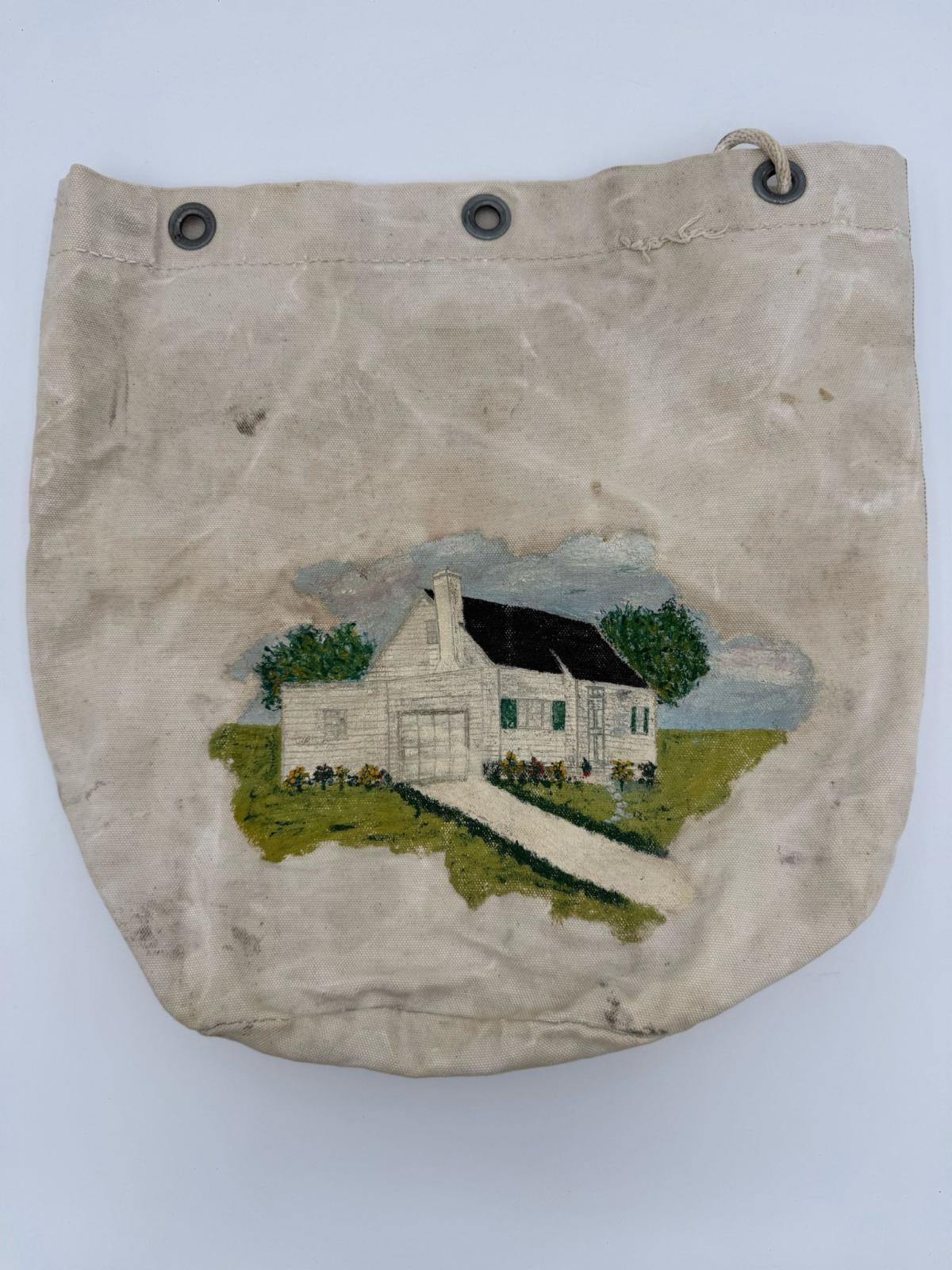
A highlight of the collection is Burkhart’s WWII-era Seabees white canvas sea bag, marked with his name and hand-painted with an image of the family home. Later used by his wife and granddaughter, the bag evolved from military gear into a treasured family keepsake.
| | |
Burkhart returned home to Chappaqua after the war to work for the New York Telephone Company until his death in 1952.
We are pleased to share that selected objects from this collection will be featured in our upcoming exhibition, The Stories We Share: New Castle Historical Society’s Diamond Jubilee Exhibition, celebrating 60 years of preserving and sharing our local history.
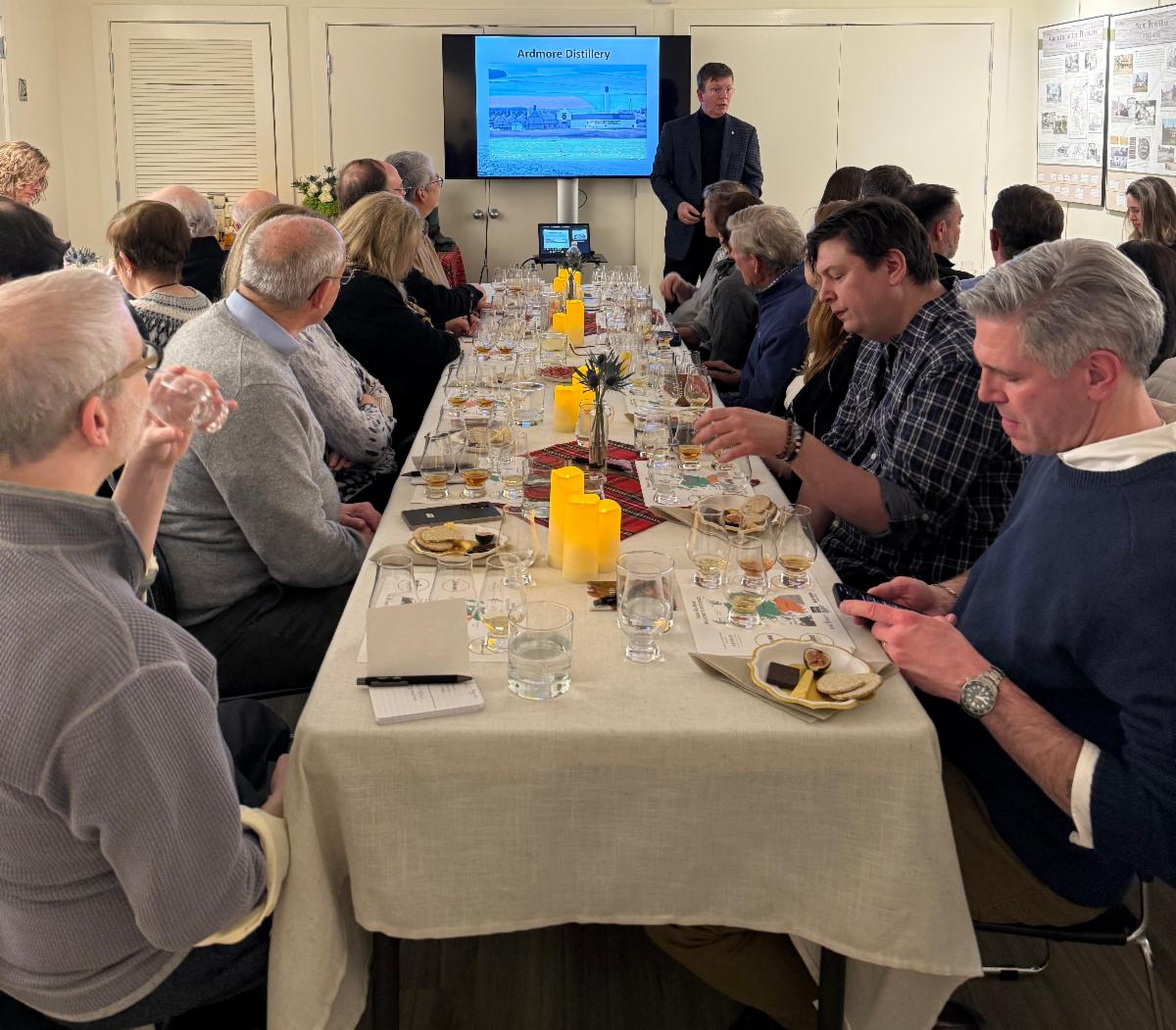
| | A Wonderful Whisky Tasting | | Our sold out February Whisky Tasting event was a wonderful success. The evening began with a reception downstairs. Town Historian Gray Williams guided guests through the Greeley House, sharing insights into its history. Guests then moved upstairs for the tasting portion of the event. Thank you to Simon Brooking for leading the tasting and to local businesses including Mentor’s Steakhouse, Susan Lawrence, Jardin du Roi, and A&S for generously donating food. Finally, thank you to the NCHS staff and volunteers who organized this fundraiser event. | |
|
Exhibition: The Stories We Share
April 18 - July 4
| This spring, the New Castle Historical Society celebrates it 60th anniversary with a jubilee exhibition, The Stories We Share. Featuring rarely-exhibited objects from our collection, this exhibition will showcase New Castle stories from the the past 250 years, marking our local milestone alongside America250. | |
New Castle Historical Society Annual Meeting and Lecture
Sunday, April 26 at 2pm
New Castle Community Center
| |
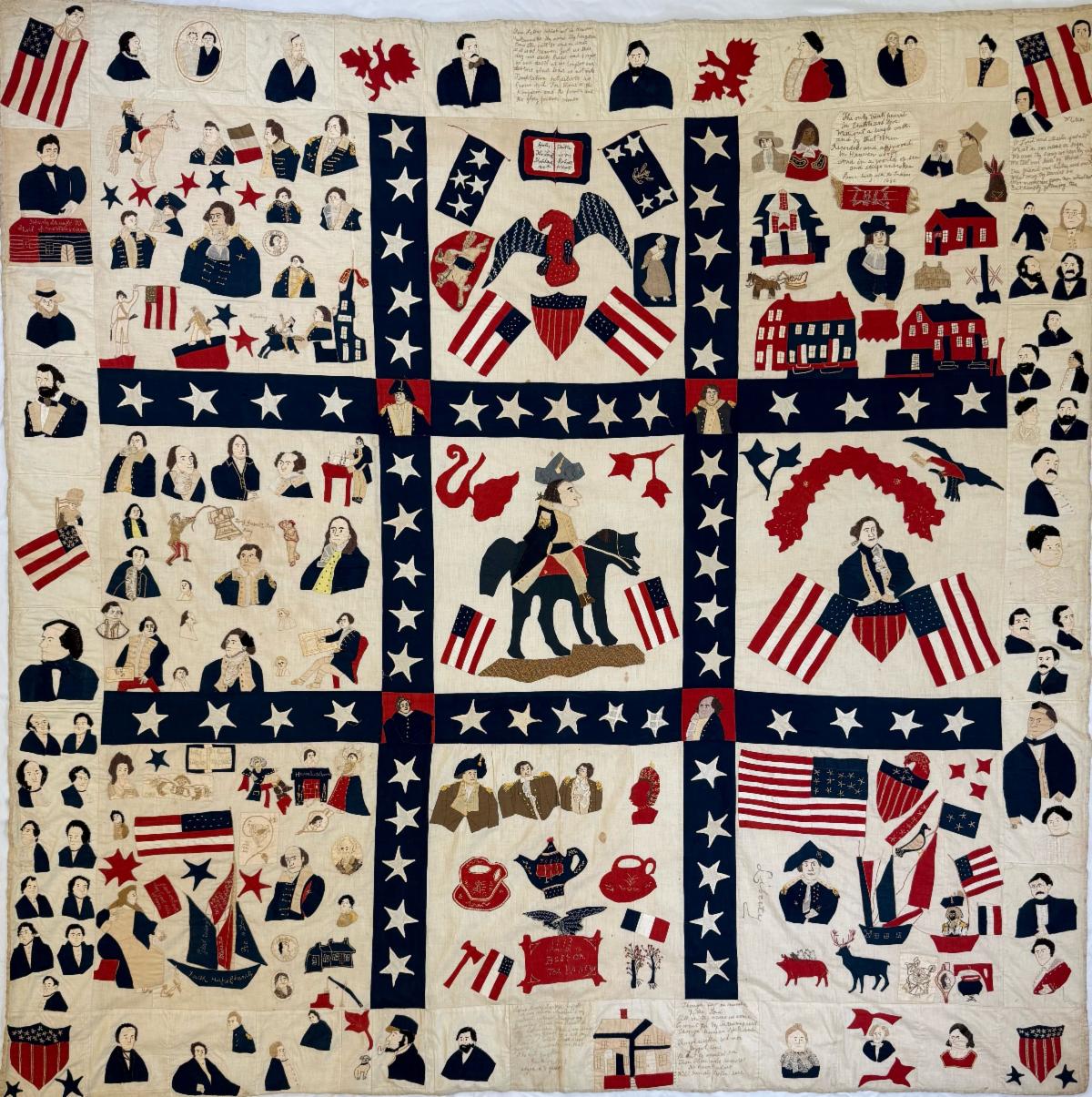
Join us for New Castle Historical Society's Annual Meeting and Lecture on Sunday, April 26 at 2pm at the New Castle Community Center. The lecture will be presented by quilt expert Peggy Norris and New Castle Town Historian Gray Williams, who will discuss a jewel of the New Castle Historical Society collection: the 1903 Patriotic Quilt by Sarah Birdsall Griffith. This illuminating talk will weave together local stories and a celebration of 250 years of American history! | |
|
Skating on the Duck Pond
by Gray Williams, Town Historian
| | |
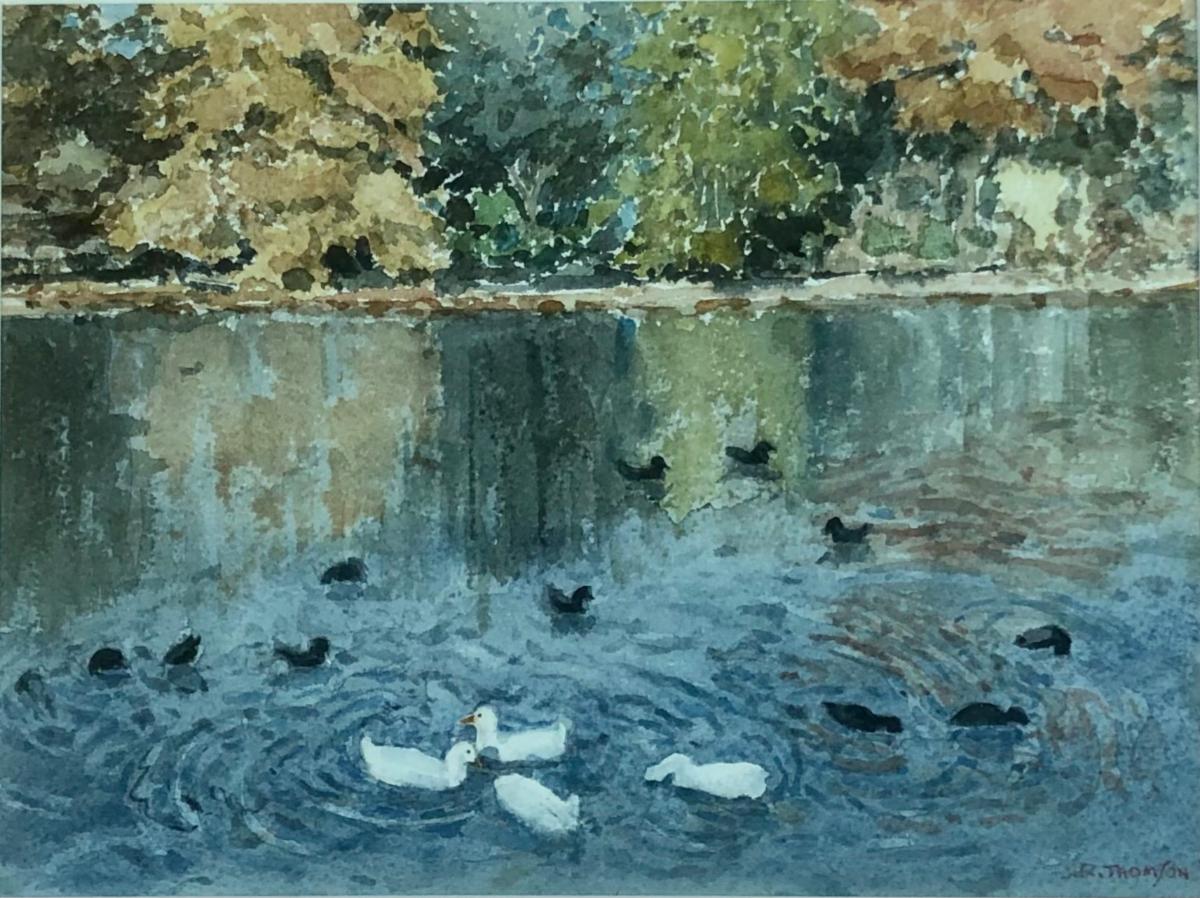
The picturesque Duck Pond between Quaker and Douglas Roads in Chappaqua was originally a millpond. The mill was situated a short distance below the dam, and a mill race diverted water from the pond to the mill wheel and then downstream. The mill ceased operation about 1900, but the dam and pond remained, and is now a prominent New Castle Landmark.
And yes, there were once ducks on the Duck Pond. Enough vegetation thrived on its shallow bottom to sustain them from spring through fall, and grain was fed to those few that chose not to migrate south in the winter. In spring these were joined by larger numbers of returning migrants, mostly mallards but other species as well. Only when the pond was dredged to a much greater depth in the 1960s, did the bottom vegetation die out and the ducks move away not long after.
| | The Duck Pond, painting by James Renwick Thomson. | |
| |
When my family moved to Chappaqua in the 1930s, the pond reliably froze deep enough before the arrival of winter snow that the ice could be kept clear for skating, and the pond became the most popular rink in this part of Chappaqua. It was not an ideal venue, for it was relatively small to begin with and further limited by treacherous areas of thin ice at its inlet and outlet. Nonetheless, it attracted crowds of enthusiastic skaters, particularly on weekends. From the time I put on my first pair of double runners at the age of four, I was one of them.
I was never a very good skater, but I made up for my meager skills with devotion. I skated on the Duck Pond whenever the ice became thick enough. I skated at any hour on weekends and in late afternoons after school, when the streetlamps provided enough light well into dusk.
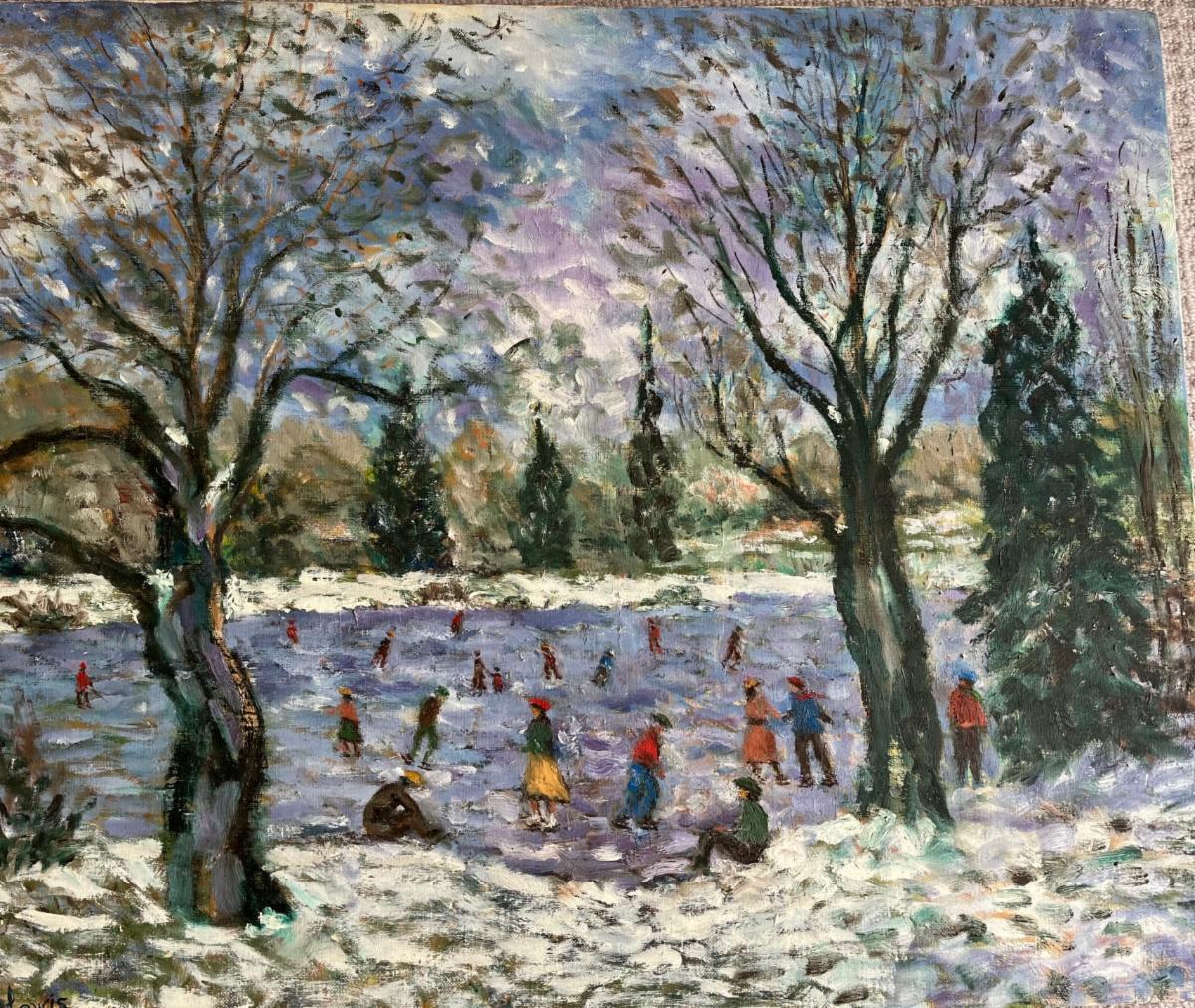
In the early 1940s, the Duck Pond got new competition. About a mile further north on Quaker Road, the wet meadow near the entrance to the Children’s Aid Society children’s hospital (later Wagon Road Camp) was mowed close during the fall, and a valve at the outlet was shut off, so that a large, shallow pool rose over the whole area. Because it was so shallow, it froze early, with few thin spots, and offered skating that was much more extensive and also much safer.
| |
| Skating on the Children’s Aid Society’s flooded meadow, painted by Lewis Bennett. | |
| |
Our home on Commodore Road lay roughly halfway between the two ponds, and for a time I skated on both. I had a slight preference for the Duck Pond, for it was a little closer in walking distance and had become less favored than the big pond at the Children’s Aid Society. I often had it to myself, especially late in the day. I don’t remember precisely when, but eventually the town stopped maintaining it, and I switched over permanently to the larger facility.
I now live on Quaker Road, a short distance from the home I grew up in. I frequently drive by the Duck Pond, and it never fails to bring back a flood of memories. I remember the springtime return of the migrating ducks, when I would search eagerly for unusual species, such as the spectacularly colorful wood ducks that appeared on rare occasions. But mainly I recall sitting on the bank next to the dam, pulling off boots, pulling on heavy woolen socks, tightening skate laces with as much of a grip as I was capable of, and then skating in broad circles around the perimeter as closely as I dared. In later years I’ve skated on the only pond the town maintains, at Gedney Park. It’s big. It’s beautiful. The ice, once frozen, is smooth. But somehow it is just not quite the same as skating on the Duck Pond.
| |
| | | |