|
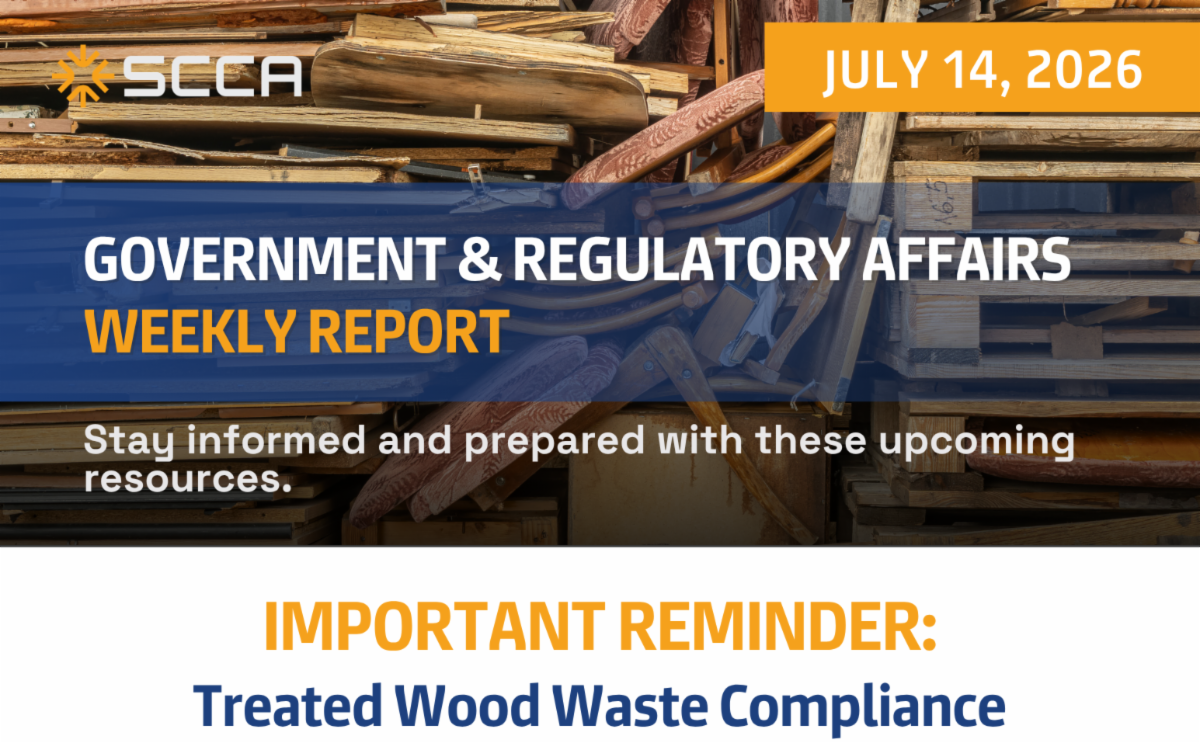
SCCA would like to remind contractors that treated wood waste (TWW) must be handled, stored, and disposed of in accordance with California state law and regulations. Most critically, TWW may only be disposed of at authorized landfills. Those that handle more than 10,000 pounds per month are considered “large generators” and are subject to additional requirements for storage, labeling, and manifesting.
The current framework for TWW management stems from 2015 state legislation which mandated a comprehensive evaluation of compliance with TWW handling and disposal rules. That evaluation revealed widespread noncompliance, prompting additional requirements enacted in 2021. The 2021 legislation also emphasized increased outreach and education efforts by the treated wood industry.
TWW is considered hazardous under California standards because it can contain arsenic, chromium, copper compounds, creosote, and pentachlorophenol. Many of these chemicals are known or suspected carcinogens. Contractors engaged in demolition work are more likely to encounter TWW. Common examples include utility poles, railroad ties, marine pilings, retaining walls, and other wood products designed for prolonged exposure to soil or water.
As part of the 2021 legislation’s focus on improved communication with the construction industry, the Contractors State License Board issued an Industry Bulletin on July 9. The bulletin highlights the Western Wood Preservers Institute’s efforts to educate contractors on the proper disposal of TWW.
If your company handles TWW, please take time to familiarize yourself with the applicable rules and regulations. Additional resources are available on the California Department of Toxic Substances Control (DTSC) website.
|