Pollinators like bees, birds and bats can do so much for ecosystems and benefit people. Imagine a world without any pollinators! No bumblebees or hummingbirds or even wasps to carry pollen from one plant to the next. While we may not notice their hard work, we would certainly notice it if they were gone. Without pollinators, we would also have a hard time meeting the demand for food around the world.
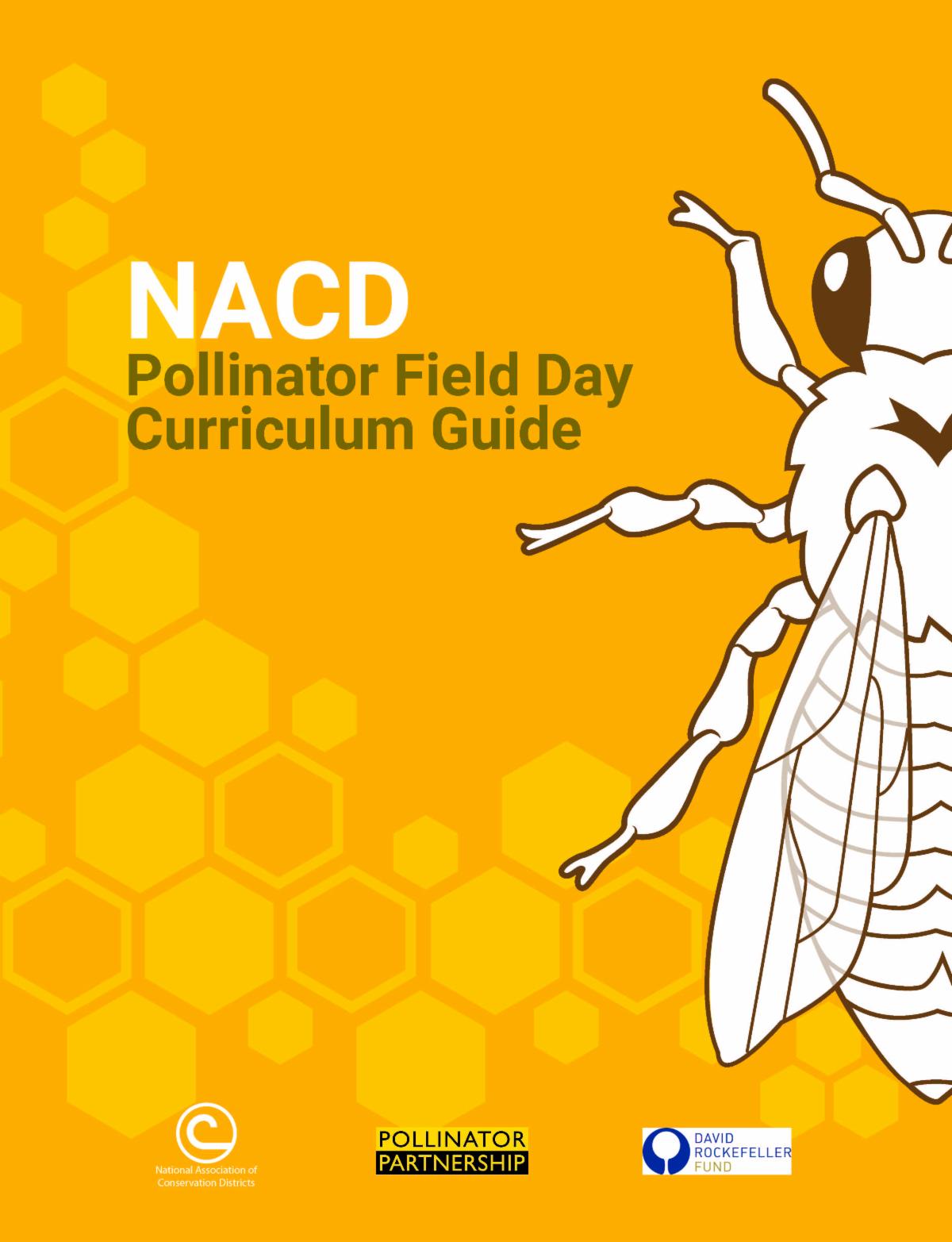
This is why teaching youth about the importance of pollinators and how to protect them is crucial. Educators and parents who are looking for fun and hands-on ways to engage students in pollinator activities can access our Pollinator Field Day Curriculum Guide. This K-8 curriculum provides a variety of resources for you to explain the connection between pollinators, plants and people. With the pollinator guide, students will learn about the importance of pollinators and plants, as well as have access to pollinator activities that can be done right in the classroom or at home. Browse through the multiple pollinator lessons and stations, crossword puzzles and challenge spelling, coloring pages and much more.
The guide is an excellent resource and can be downloaded for free as a PDF, both in color and in black and white. NACD also provides both English and Spanish translations from the NACD Conservation Education Hub.
In addition, the Richland County and the Richland Soil and Water Conservation District (SWCD) in South Carolina recently released a great educational video called " What’s Blooming?," featuring three of their pollinator demonstration garden’s plant species: lemon bee balm, blanket flower and clasping coneflower. This is another video from their “Watch & Learn” video series, which can be found on Richland SWCD's website. |
NWTF, COVID-19
AND BEYOND
|
With more than 47 years as a leader in wildlife conservation, science-based wildlife and habitat management, and an advocate for hunters’ rights, the National Wild Turkey Federation (NWTF) is a respected voice in the conservation community throughout the United States.
As with many businesses and nonprofit organizations around the world, the NWTF is facing unprecedented financial challenges as a result of COVID-19 (coronavirus). Prior to the pandemic, the NWTF was on track to complete the fiscal year at or ahead of budget. Fundraising was up, membership was up, and this past February, it had a record-breaking Convention and Sport Show with over 57,000 attendees in Nashville.
Social distancing guidelines and stay-at-home orders put in place to counter the spread of COVID-19 hit as NWTF was entering its busiest fundraising season, and the pandemic has had a near-catastrophic impact on NWTF's income. The cancellation or postponement of banquets and events across America has threatened the organization's ability to fulfill its mission with the momentum of 47 years’ experience and collaboration.
As a result, the NWTF is adapting its business model and operations to address today’s circumstances, as it still has to raise $5 million by Aug. 31 to sustain its mission for the future. NWTF's “Call for All” campaign fund drive hopes to reach this goal by encouraging membership renewal, attracting new members and increased giving on a personal level like never before.
How You Can Help Support NWTF:
- Annual calendar program: Call 1-800-THE-NWTF and pre-order the 2021 NWTF wild turkey calendar through its membership department. This year’s calendar features our 2020 Turkey Country photography contest winners and other notable entries.
- Online Auctions and Raffles: NWTF chapters across the country are doing their part by hosting virtual auctions and raffles online. Go to NWTF.org to find one of these online events in your area.
- Hunting Heritage Banquets: Some of NWTF's in-person banquets are ramping up again in accordance with the Centers for Disease Control and Prevention (CDC), state and local guidelines to reduce the risk of exposure to COVID-19 by participants and staff. These events are great ways to meet other conservation-minded individuals in your communities while supporting our noble mission. Go to NWTF.org to find one of these in-person events in your area.
|
FSA LAUNCHES URBAN AND SUBURBAN COUNTY COMMITTEES |
In rural counties, the U.S. Department of Agriculture's Farm Service Agency (FSA)’s county committees allow elected farmers to help govern operations and set priorities. However, urban and suburban producers have not had the opportunity to serve on these committees. The 2018 Farm Bill directed FSA to create ten pilot county committees in urban and suburban areas.
Last week, FSA announced the first five of these committees and began recruiting farmers to serve on them.
According to FSA, “[t]he urban and suburban county committees will work to encourage and promote urban, indoor, and other emerging agricultural production practices. Additionally, the new county committees may address areas such as food access, community engagement, support of local activities to promote and encourage community compost, and food waste reduction.”
The first five pilot communities will be located in Albuquerque, N.M.; Cleveland, Ohio; Philadelphia, Pa.; Portland, Ore.; and Richmond, Va. FSA expects to announce the remaining five pilot committees later this fall.
With the creation of the committee, FSA is now looking for local producers to run for a committee seat. In order to run, a producer must participate in an FSA program, including commodity programs and farm loan programs, within the county in question.
Full details on the election process and necessary paperwork are available on FSA's website. Applications are due by Friday, Oct. 2, and ballots will be sent out later that month. NACD encourages all conservation-minded farmers in those counties to consider running. |
MADISON SWCD HOLDS ANNUAL WATERSHED TOUR |
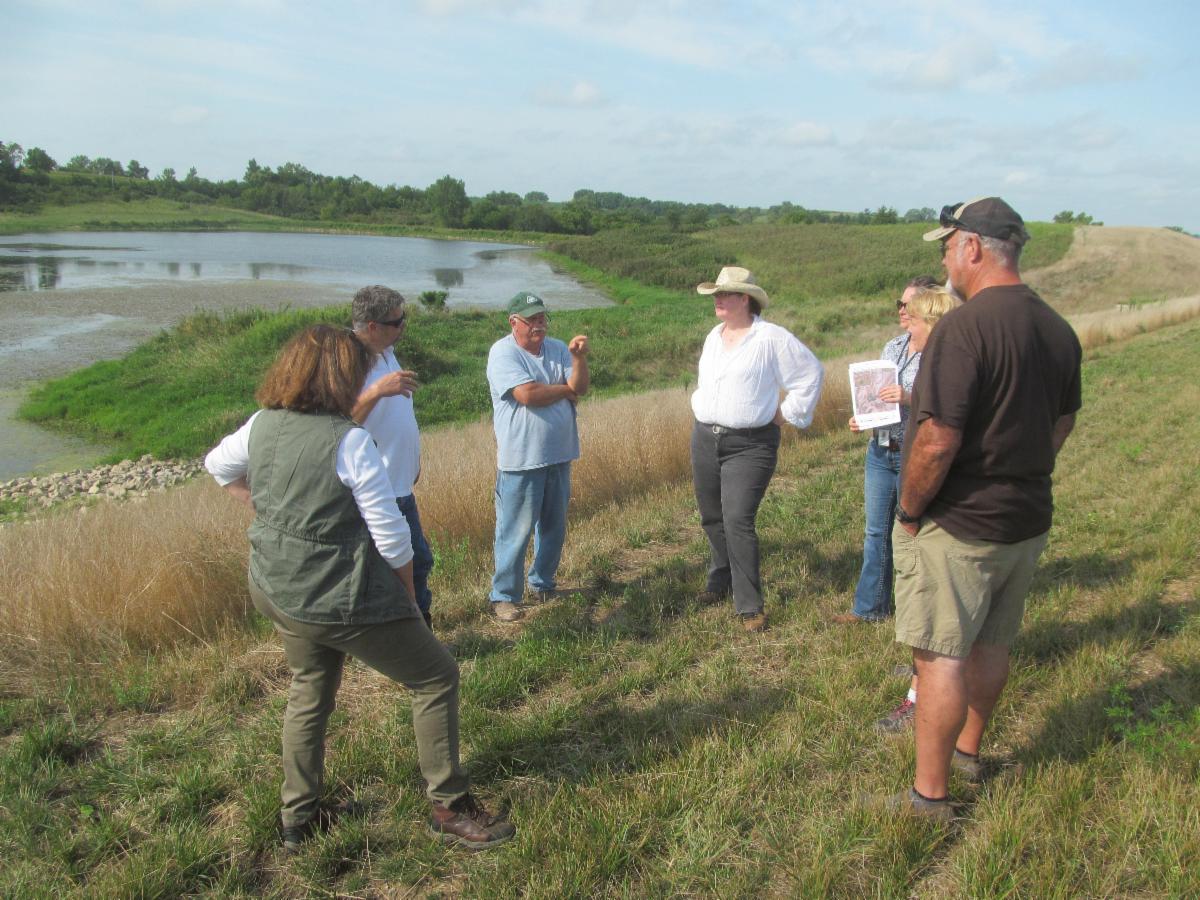
On Aug. 12, the Madison County Soil and Water Conservation District (SWCD) in Iowa hosted their Annual Operation and Maintenance Tour (O&M) for Badger Creek Watershed.
Badger Creek Watershed received funding from PL-566, the U.S. Department of Agriculture's (USDA) Watershed Protection and Flood Prevention Program, to plan, design and install 43 structures to reduce flooding and siltation in the watershed, which includes portions of Madison, Dallas and Warren Counties in central Iowa.
The Subdistrict (made up of Madison, Dallas and Warren SWCDs) is responsible for the operation and maintenance of the structures, most of which were constructed in the 1960s and 1970s. The O&M Tour gives the project co-sponsors (SWCDs and boards of supervisors from the three counties) an opportunity to visit sites of interest, which are often in need of or have recently received repairs.
The tour was led by the Badger Creek O&M coordinator with help from the Natural Resources Conservation Service (NRCS) and attended by SWCD commissioners and representatives from the boards of supervisors for all three counties, as well as two candidates from the Madison County board of supervisors. In addition to visiting sites in the watershed, the O&M Tour also provides a valuable opportunity for the watershed partners to network, learn about watershed history and recent repair activities, and to discuss maintenance needs, funding and other issues that may affect the watershed structures.
|
|
S.T.A.R. Releases Inaugural Annual Report |
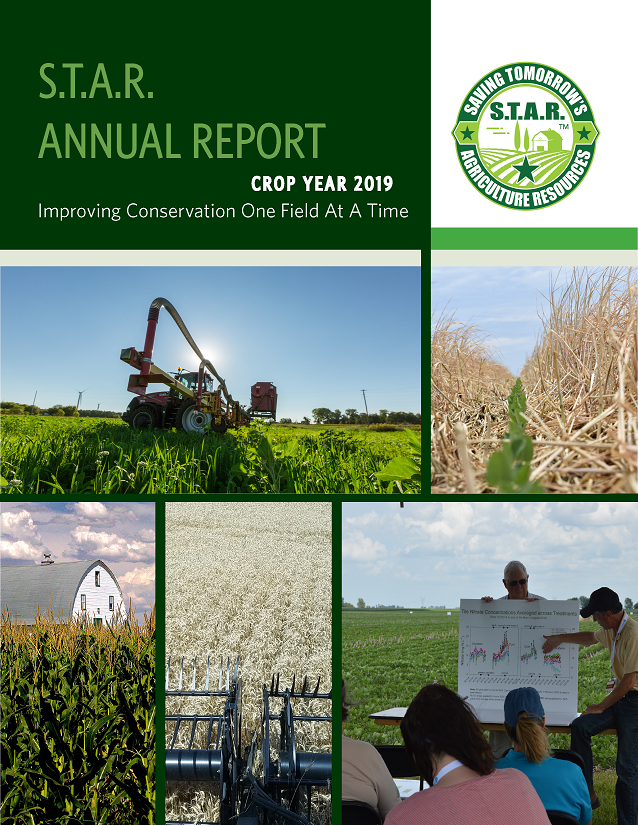
Last week, the S.T.A.R. (Saving Tomorrow's Agriculture Resources) initiative announced the release of its first Annual Report for the 2019 crop year.
The report provides an overview of S.T.A.R., and documents the program's expansion and impact and the benefits of transforming in-field practices into metrics that are useful to a diversity of audiences.
Developed by the Champaign County Soil and Water Conservation District (CCSWCD) in 2017, S.T.A.R. is an innovative conservation program in Illinois and several other states that helps farmers and landowners track how well they are caring for our soil and water while producing their crops, via the free, handy S.T.A.R. field evaluation tool.
To read the full report and learn more about the S.T.A.R. initiative, visit their website. |
NGLI Provides COVID-19 Program Update |
The National Conservation Foundation (NCF)'s Next Generation Leadership Institute (NGLI) has adapted to the COVID-19 (coronavirus) pandemic to best serve the inaugural cohort.
The program has recently shifted plans so that the current seven members are able to continue with in-person trainings during 2021, after the cancellation of three 2020 sessions, originally planned in the comprehensive curriculum.
Due to this shift, the program organizers anticipate that applications for the next cohort will be announced in the Spring of 2021. To receive updates and learn more, visit NGLI's webpage.
|
NHRC to Hold Virtual Environmental
Film Festival
|
On Thursday, Aug. 27, the New Hampshire Rivers Council (NHRC) will hold its virtual Wild and Scenic Film Festival, beginning at 7:00 p.m. Eastern.
Now in its 10th year, this film festival provides environmentally-conscious organizations an opportunity to showcase films as a way to reach into their communities and inspire citizens to effect environmental change.
NHRC helps protect and restore 17,000 miles of river throughout the state. To learn more about the organization and the festival, visit NHRC's website. |
Register Now:
NACD's August
U&C Webinar
|
Space is still available to register for this month's NACD Urban and Community (U&C) Conservation webinar, scheduled for 12:00-1:00 p.m. Eastern, this Thursday, Aug. 20, 2020.
August's webinar will feature Washington State's Pacific Conservation District (CD)'s North Cove Coastal Project, which is tackling shoreline erosion along the Washington and Oregon coasts.
These popular webinars, held on the third Thursday of each month, are sponsored by The Scotts Miracle-Gro Foundation in partnership with the NACD Urban and Community Resource Policy Group.
To register, click here. If you have difficulty, please contact NACD Senior Advisor Debra Bogar.
|
Jefferson County SWCD Releases Podcast |
The Jefferson County Soil and Water Conservation District (SWCD) in Kentucky recently launched a podcast series that covers various topics in natural resources, urban agriculture and conservation management.
In the most recent podcast episode, retired Natural Resources Conservation Service (NRCS) Conservationist for Kentucky and former Lead District Conservationist Kurt Mason chats with Jefferson County SWCD Environmental Educator Erin M. James about the history and future of conservation work in Jefferson County.
These monthly podcasts will continue to share information on the SWCD's expanding programming, as well as stories from local conservationists. farmers and people passionate about conservation. All podcast episodes can be found here. To learn more, visit Jefferson County SWCD's website. |
Promote your conservation district or state association's tree sale, annual meeting, webinar, field day or more on NACD's Calendar of Events!
|
|